
Gulf liquidity outpaces Syria’s financial reconnection
16 June 2026

Syria has the capital it needs to begin rebuilding. What it lacks is a banking system capable of moving that money at scale, and through 2026, the gap between the availability and mobility of funds has set the ceiling on recovery.
The capital itself is overwhelmingly Gulf and Turkish, deployed along clear lines rather than in a scramble. The $216bn rebuild estimated by the World Bank in its October 2025 damage assessment has room for several principals, and so far they are not competing for the same ground.
Qatar’s UCC Holding anchors two of the largest commitments: a $7bn power generation programme and a $4bn rebuild of Damascus International airport, both under contract since late 2025. The consortiums lean heavily on Turkish contractors, Cengiz and Kalyon among them.
Saudi Arabia’s package, announced in Damascus on 7 February, tilts to infrastructure and services: a SR7.5bn ($2bn) phased rebuild of Aleppo’s airports through the newly launched Elaf Investment Fund, and an STC fibre-optic and datacentre build worth more than SR3bn ($800m).
Regional diplomacy is taking precedence over the commercial carve-up: Turkish President Recep Erdogan and Saudi Crown Prince Mohammed Bin Salman agreed in Riyadh in early February to coordinate on Syrian reconstruction.
Abu Dhabi’s political embrace came more slowly than Riyadh’s or Doha’s – out of caution over the Islamist-led government– but the UAE’s major ports groups moved decisively.
Dubai’s DP World signed for Tartous in July 2025 and its 30-year concession went operational in mid-November. AD Ports followed on 6 November with a $22m purchase of 20% of the Latakia container terminal – run by France’s CMA CGM – which handles over 95% of Syria’s container volumes.
The wider UAE play has since broadened amid the US-Iran conflict in the Gulf, during which Syrian President Ahmed Al-Sharaa repeatedly voiced solidarity with the UAE.
In May, Dubai stepped up institutionally. Investment Corporation of Dubai managing director Mohammed Ibrahim Al-Shaibani met Al-Sharaa to discuss channelling UAE capital into real estate, tourism and financial services, while Abu Dhabi’s Eagle Hills presented plans for two urban schemes in Damascus and Latakia, with a reported budget of $50bn.
Syria’s railway establishment has meanwhile signed a framework with the Latakia terminal’s operators to study moving containers by rail to dry ports at Adra, Hisyah and Aleppo – the first thread connecting a Gulf-invested port to the inland network.
Certification is key
Saudi Arabia and Qatar cleared Syria’s $15.5m World Bank arrears in mid-2025, restoring its eligibility for grants. International financial institutions are reciprocating and returning, but cautiously – and not with a view to driving cash volume.
The World Bank portfolio comprises 10 grant-funded projects worth just over $1bn over three years. The approvals so far are foundational: a $146m electricity grant restoring transmission lines and 400kV interconnections with Turkiye and Jordan; $225m across two grants for water and health; and $20m for public financial management.
Transport is next in the queue rather than in hand. Syrian Transport Minister Yarub Badr said in June that Syria is seeking World Bank grants of between $65m and $200m for railway rehabilitation, to restore a transit corridor that reportedly moved up to 115,000 trucks a year between the Turkish and Jordanian borders before 2011.
Broader financing has not followed, however. The IMF’s February mission extended no loan programme, nor was lending discussed, despite the fund noting tight fiscal management and a 2025 budget surplus.
The IMF, and the World Bank alongside it, named the blockage: a banking sector that needs rehabilitating, central bank independence yet to be built, and restricted banking access still obstructing wider recovery.
Gulf backers, for their part, can commit capital in a signing ceremony, but they cannot readily push it through a system only beginning to reconnect to the outside world.
Piecemeal reopening
A few key developments have occurred. In November 2025, the central bank (pictured) sent its first Swift message in 14 years to the US Federal Reserve, and its dormant account there was reactivated. Visa and Mastercard processing then resumed in May after a 15-year hiatus.
These networks were never the key constraint, however. Correspondent banks must agree to clear Syrian transactions – and many institutions will likely continue to hold back on compliance and financial-crime grounds until proposed reforms are in place.
The moves by foreign banks have been expectedly thin as a result, and Doha has led. Qatar National Bank’s Syrian unit – a legacy presence that rode out the war – became the first to switch card acceptance on, while Qatar’s Estithmar Holding has taken a 49% stake in Syria’s Shahba Bank, becoming the sole new foreign equity entry into the sector so far.
The pound, trading near £Syr13,700 to the dollar, still sits slightly weaker than it did in 2024 – the last year of the old regime.
The fragility of the machinery showed again in May, when Al-Sharaa moved central bank governor Abdulkader Husrieh – who had overseen the Swift reconnection – to the ambassadorship to Canada; instead installing Safwat Raslan, the head of the state reconstruction fund, as his successor.
Some analysts read it as a sign of tension within the leadership over monetary policy and governance. It also flashed a warning: an institution the IMF wants independent had just changed hands at the president’s discretion.
At a June conference, the new governor pledged “institutional work and well-studied planning” with no “improvised or unilateral decisions”, defining himself against the tenure he replaced.
Raslan’s first measures constituted delays and institutional loosening. He reversed a Husrieh restriction that had confined the banknote changeover to bank branches – readmitting exchange companies and money-transfer firms – and extended the exchange deadline to the end of July. It marked the third such extension of a window first set at 90 days from the 1 January launch, with the original deadline having slipped by four months.
Conditional funding
The cashflow blockage is moulding Damascus’s financing strategy: take the institutions’ endorsement, but decline their direct lending, and lean on funding with fewer strings.
Rather than qualifying for an IMF programme and accepting its conditions, it is routing donor money through the Syrian Development Fund, which is now run by the man just made central bank governor – concentrating the reconstruction purse and monetary authority in one pair of hands.
The approach spares Syria a debt overhang, but it also leaves reconstruction dependent on Gulf commitments that arrive at the pace of politics rather than as drawable finance.
The near-term tests are already dated. The banknote changeover – at 63% as of early June – must close by 31 July, and the banking reforms specified by the IMF must be implemented.
If both hold, the pledged billions will gain a financial system to land in. If either slips, Syria’s reconstruction remains a stack of signed announcements waiting on the financial machinery to catch up.
This month’s special report on Syria also includes:
> PROJECTS: Momentum builds for Syrian projects
> OIL & GAS: Activity ramps up in Syria’s oil and gas sector
> CONSTRUCTION: Prospects improve for Levant construction

Register for MEED's guest program now to access this article.
Exclusive from Meed
-
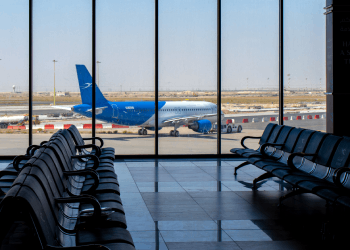 Lowest bidder emerges for Kuwait Airport Terminal 2 operations
19 October 2026
-
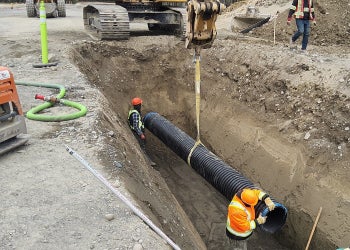 Dubai tenders Al-Maktoum-Dubai South drainage scheme
19 October 2026
-
 Contractor wins $44m Morocco rail stations deal
19 October 2026
-
 Firms submit Dubai multibillion-dollar road scheme interest
19 October 2026
-
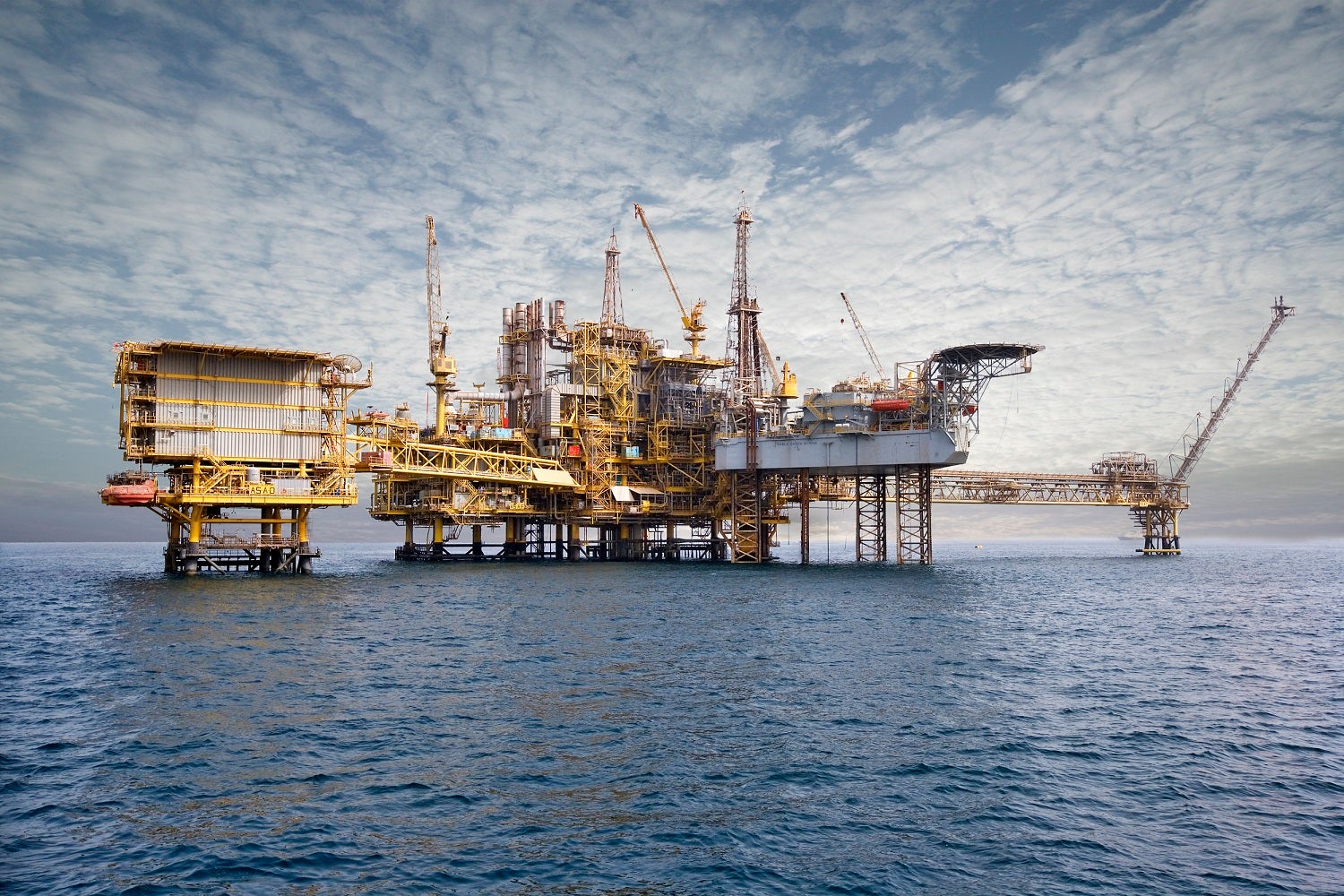 Libya seeks offshore contractors for $8bn gas project
19 October 2026
All of this is only 1% of what MEED.com has to offer
Subscribe now and unlock all the 153,671 articles on MEED.com
- All the latest news, data, and market intelligence across MENA at your fingerprints
- First-hand updates and inside information on projects, clients and competitors that matter to you
- 20 years' archive of information, data, and news for you to access at your convenience
- Strategize to succeed and minimise risks with timely analysis of current and future market trends

Related Articles
-
Lowest bidder emerges for Kuwait Airport Terminal 2 operations
19 October 2026
Ireland’s DAA International has emerged as the lowest bidder for the contract to operate, manage and maintain the new passenger Terminal 2 (T2) at Kuwait International airport, submitting an offer of KD419m ($1.35bn).
Official price-opening records released by Kuwait’s Central Agency for Public Tenders on behalf of the Directorate General of Civil Aviation show three international airport operators submitted commercial bids for the tender.
DAA International’s proposal undercut its nearest rival by about 45%. Turkiye’s TAV Airports Holding submitted the second-lowest offer at KD764.15m ($2.46bn), while South Korea’s Incheon International Airport Corporation bid KD959.48m ($3.1bn).
All three proposals were marked as approved in the tender committee’s price disclosure.
The contract entails the operation, management and improvement of training, maintenance and development services across Terminal 2 and its associated aircraft parking aprons.
The remit also includes corporate management of centralised operation and maintenance across the broader Kuwait International airport model, centralising operational procedures, systems integration and service delivery across the aviation hub.
Technical documents indicate the winning operator will oversee facility management, terminal operational readiness, passenger processing systems, apron operations and staff development programmes before and after the complex’s commercial launch.
MEED reported in June 2023 that six airport operators had initially been invited to bid for the Terminal 2 operating concession.
Terminal 2 is the centrepiece of Kuwait International airport’s multibillion-dollar expansion, aimed at boosting total handling capacity to 25 million passengers a year.
Turkish contractor Limak Insaat is executing the main terminal building under an estimated $4.34bn contract awarded in 2016.
https://image.digitalinsightresearch.in/uploads/NewsArticle/20747061/main.png -
Dubai tenders Al-Maktoum-Dubai South drainage scheme
19 October 2026
Dubai Municipality has invited contractors to submit bids by 5 November for the construction of a stormwater drainage system connecting Al-Maktoum Airport and Dubai South
The project, designated TF-06-C2, involves approximately 20 kilometres of pipelines with diameters ranging from 400mm to 3,000mm. The works will use deep trenchless construction and conventional open-cut methods.
The scheme is one of four projects, for which a project management consultancy (PMC) tender was issued earlier this month.
The tender for TF-06-S1 Supervision of Stormwater Drainage System Projects – Package 4 was issued on 6 October.
The consultancy covers the following projects:
- TF-06-C1: Construction of a stormwater pond connecting Al-Maktoum Airport and Dubai South
- TF-06-C2: Construction of a stormwater drainage system connecting Al-Maktoum Airport and Dubai South
- TF-07-C1: Construction of a stormwater drainage system on Sheikh Zayed Bin Hamdan Road connecting developers
- TF-24-C1: Connecting developers’ areas to the stormwater networks in Dubailand
The projects are part of Dubai Municipality’s wider Tasreef programme, intended to increase Dubai’s rainwater drainage capacity by 700% by 2033 and provide capacity for the emirate’s needs for the next 100 years.
Investment in the UAE water sector has been dominated by stormwater drainage and network resilience schemes this year, as Dubai Municipality advances procurement under its AED30bn ($8.1bn) Tasreef programme.
TF-07-C1
As previously reported, contractors are preparing to submit bids on 22 October for the main construction contract for TF-07-C1.
The project covers more than 100 million square metres between Sheikh Mohammed Bin Zayed Road and Emirates Road, and from Expo Road to Dubailand.
It will provide stormwater infrastructure and service connections for more than 20 private developers and Al-Yalayis 5, as well as supporting major roads in the Jebel Ali area. The construction scope includes a major gravity drainage system with pipeline diameters of up to 3,000mm.
TF-24-C1
Bids for TF-24-C1 were submitted on 1 October, with Nael Construction & Contracting, Al-Nasr Contracting Company and Al-Kharafi & Sons understood to be among the bidders.
The project will connect developers’ areas in Dubailand to the stormwater network. It includes 18km of stormwater drainage pipelines with diameters of up to 1,800mm and 3.5km of gravity sewer pipelines with diameters of up to 1,000mm.
As MEED understands, the main contract tender for TF-06-C1 has yet to be released.
https://image.digitalinsightresearch.in/uploads/NewsArticle/20746611/main.jpg -
Contractor wins $44m Morocco rail stations deal
19 October 2026
Morocco’s national railway operator, Office National des Chemins de Fer (ONCF), has awarded a MD437.6m ($44.5m) contract to local firm Jet Contractors to build five railway stations along the Benguerir-Marrakech corridor.
The project forms part of the wider Kenitra-Marrakech high-speed rail development programme.
Jet Contractors will build one high-speed rail station and four regional express rail stations.
These include two stations in Benguerir, and one each at Sidi Bou Othmane, Sidi Ghanem and Marrakech Stadium.
The scope of work includes construction and fit-out of the stations and associated infrastructure, including concrete structures, platforms, ancillary facilities, passageways, circulation areas and connection zones within the stations.
It also covers architectural finishing works; testing and commissioning of electrical networks; and all mechanical, electrical and plumbing services.
The contractor will also provide all safety, security and protection systems, including alarms, fire detection and firefighting systems, and surveillance systems.
Morocco awarded multiple civil works contracts in 2024 to international and local firms to build its Kenitra-Marrakech high-speed railway line.
The rail project is part of a $37bn strategy to connect more of Morocco’s cities, ports and airports by rail. It will stretch 375 kilometres from Kenitra on the northwest coast to Marrakech in the south.
The project is divided into seven lots, each measuring 36km to 64km. The rail link will pass through cities including Rabat, Sale and Casablanca.
The link will extend the Al-Boraq high-speed rail line between Tangier, Rabat and Casablanca. The line began operating in 2018 and was Africa’s first high-speed railway system.
https://image.digitalinsightresearch.in/uploads/NewsArticle/20745963/main.jpg -
Firms submit Dubai multibillion-dollar road scheme interest
19 October 2026
Register for MEED’s 14-day trial access
Contractors submitted expressions of interest on 10 October for a design-and-build contract for a multibillion-dollar new road that will run parallel to Sheikh Zayed Road.
Dubai’s Roads & Transport Authority (RTA) held an online meeting after the submissions to prepare for the prequalification phase of tendering, expected to start in a few weeks.
The scope covers about 30 kilometres (km) of works.
These include about 15km of viaduct along First Al-Khail Street and more than 14.5km of bridge ramps, along with other associated infrastructure works.
The RTA floated the expression of interest notice to contractors in early September.
The project is another significant initiative aimed at alleviating pressure on the existing Sheikh Zayed Road section from Hadiqa Street to Hessa Street.
Dubai has previously explored bold concepts to expand capacity on Sheikh Zayed Road, including proposals to introduce double-decker sections to add extra lanes without widening the existing corridor.
The idea was discussed in the context of rising congestion and limited right-of-way along one of the city’s busiest arterial roads, with elevated decks potentially carrying through traffic while existing at-grade lanes served local access.
The plans ultimately became standalone schemes, with subsequent efforts focusing instead on corridor-wide upgrades, interchange improvements and complementary public transport expansions to manage demand more sustainably.
The latest project aligns with Dubai’s continued investment in upgrading and expanding its road network to keep pace with rapid population growth and rising commuting demand.
Planning for growth
Dubai launched the 2040 Urban Master Plan in March 2021, referencing studies indicating that the emirate’s population will reach 5.8 million by 2040, up from 3.3 million in 2020. The daytime population is set to increase from 4.5 million in 2020 to 7.8 million in 2040.
In December 2022, Sheikh Mohammed Bin Rashid Al-Maktoum, Vice President and Prime Minister of the UAE and Ruler of Dubai, approved the 20-Minute City Policy as part of the second phase of the Dubai 2040 Urban Master Plan.
In addition to the road projects, the RTA’s Dubai Metro Blue Line extension and Dubai Metro Gold Line form part of Dubai’s plans to improve residents’ quality of life by cutting journey times, as outlined in the policy.
The policy aims for residents to have 80% of their daily requirements within a 20-minute journey, on foot or by bicycle. This goal will be achieved by developing integrated service centres with all necessary facilities and increasing population density around mass transit stations.
 READ THE OCTOBER 2026 MEED BUSINESS REVIEW – click here to view PDF
Industry and logistics drive development at Neom; Saudi Arabia’s investment priorities realign amid conflict; MEED’s 2026 power developer ranking.
Distributed to senior decision-makers in the region and around the world, the October 2026 edition of MEED Business Review includes:
> AGENDA: Oxagon takes centre stage at Neom> MARKET FOCUS: Saudi projects hold steady> INDUSTRY REPORT: MEED’s 2026 GCC power developer ranking> LEADERSHIP: The future city does not need to hang above the groundTo see previous issues of MEED Business Review, please click herehttps://image.digitalinsightresearch.in/uploads/NewsArticle/20745908/main.jpg -
Libya seeks offshore contractors for $8bn gas project
19 October 2026
Libya’s Mellitah Oil & Gas Company (MOG) has invited companies to prequalify for a major offshore package as part of its Mellitah Complex Expansion & CO2 Management Integrated Development Project, which is estimated to be worth about $8bn.
The package is estimated at around $3bn and focuses on developing offshore pipelines and subsea systems for the “E” Offshore Installation Project and CO2 project.
The deadline to submit prequalification documents is 5 November. The contract will use the engineering, procurement, installation and commissioning (EPIC) model.
MOG is a joint venture of Libya’s National Oil Corporation and Italian oil and gas company Eni.
This is not the first time MOG has invited submissions for the offshore pipelines and subsea systems package. The company originally launched a prequalification process for the EPIC contract in 2021, but the project experienced delays and the process was eventually cancelled. The prequalification process was restarted nearly three years later, but it was also ultimately abandoned.
Complex expansion
As part of the Mellitah Complex Expansion & CO2 Management Integrated Development Project, two offshore structures – Structure A and Structure E – will be developed in Libya’s offshore block NC 41.
Structure A is in the central-western part of the area, about 80 kilometres (km) from the Libyan coast, with a water depth of 95-105 metres.
Structure E is located in the central-eastern part of the area, about 130km from the Libyan coast, in a water depth of 205-235 metres.
The scope of the wider project includes:
- A new wellhead platform installed in 96 metres of water as part of the development of Structure A
- A new production platform installed in about 220 metres of water depth as part of the development of Structure E
- Modification of the existing Sabratha platform
- Sealines and subsea systems for structures A and E
- Upgrading the existing onshore Mellitah complex
Project contract awards
In June 2024, MOG awarded an offshore engineering, procurement and construction (EPC) contract worth €1.2bn ($1.28bn), which was part of the Mellitah Complex Expansion & CO2 Management Integrated Development Project.
The contract was awarded to a consortium of three Italian companies: Rosetti Marino, Kerry Project Logistics and Gruppo Antonini.
In a statement, Rosetti Marino said its share of the project contract was worth €400m ($428m), comprising 33% of the total contract value.
Rosetti Marino said its scope of work includes EPC and load-out activities to deliver the topside of the approximately 6,000-tonne gas production wellhead platform, named WHP-A, to be installed off the coast of Libya.
Project setbacks
During 2023 and 2024, several setbacks affected the Mellitah Complex Expansion & CO2 Management Integrated Development Project.
In November 2023, MOG restarted the prequalification process for an upstream offshore package worth an estimated $700m.
The project scope involves modifications to the offshore Sabratha platform at the Bahr Essalam field.
Less than two months later, MOG restarted prequalification for a second package as part of the integrated development project.
The scope of the second package covers key sealine and subsea systems.
No reason was given for restarting the prequalification process for two of the project’s packages.
https://image.digitalinsightresearch.in/uploads/NewsArticle/20738707/main.jpg