GE Vernova invests in Xlinks

2 May 2024

US-headquartered GE Vernova has invested $10.2m in Xlinks First, the investment company established by UK-based startup Xlinks to deliver the $18bn Morocco-UK power project.

This investment equates to a minority shareholding in the company, which is developing a project comprising wind and solar generation as well as battery storage, with a total combined capacity of 3,600MW, to be transmitted from Morocco to the UK.

Xlinks said the investment will “further accelerate delivery and buildout of the project”.

GE Vernova joins at least four other investors in the project.

Other investors include Africa Finance Corporation, which invested $14.1m in April; Abu Dhabi National Energy Company (Taqa), $30.7m; the UK’s Octopus Energy, $6.23m; and France’s Total Energies, $25.4m.

The planned electricity generation and battery storage facilities, located in south Morocco, will be connected exclusively to the UK via 4,000-kilometre high-voltage, direct current (HVDC) cables.

In December last year, Xlinks signed a contract with Canada-headquartered WSP to provide technical advisory services for the project.

WSP will support Xlinks with route optimisation, power systems and interface management for the plan to construct the project.

The Morocco-UK power project entails building 10,500MW solar and wind farms in Morocco’s Guelmim-Oued Noun region and sending 3,600MW a day of energy exclusively to the UK via four 3,800-kilometre HVDC cables.

The HVDC network is envisaged to run from the UK’s south coast, passing France, Spain and Portugal undersea and then onshore to a planned solar and wind energy project in Morocco.

This renewable energy-sourced electricity amounts to nearly 8% of the UK’s current requirements, equivalent to powering 7 million homes by 2030.

https://image.digitalinsightresearch.in/uploads/NewsArticle/11734222/main5830.jpg
Jennifer Aguinaldo
Related Articles
  • Middle East stocks recover unevenly

    1 June 2026


    The combined market capitalisation of the MEED Top 100 largest listed companies in the Middle East and North Africa rose to $3.73tn in mid-May 2026, against $3.48tn a year earlier – a 7.2% gain that recovers most of the value lost in the prior two years’ editions. The aggregate is not the story.

    Saudi Aramco recovered by $181bn, rising from $1.64tn to $1.82tn and providing substantial support to the aggregate Top 100 valuation. The broader movements in the list differentiated along sectoral lines, with key trends including the continued growth of regional banks, the upward repricing for fertiliser and logistics names amid the Hormuz crisis, and the correction of Saudi mid-tier stocks as valuation peaks have failed to hold.

    Oil and gas reweights

    Aramco’s share price recovered from about SR25 to SR30, lifting the company’s market cap by 11% and raising the oil and gas sector’s share of the list back to 54.5%. 

    The company reported first-quarter 2026 net profit of $32.5bn, up 25%, on revenue of $115.5bn – giving it a price-to-earnings ratio of about 18, in line with the Saudi market average as of April. 

    Aramco’s diversion of crude to Yanbu through its 7 million-barrels-a-day West-to-East pipeline has supported a higher volume of sales at the now elevated prices compared to its Gulf peers, the exports of which have been more seriously affected by the blockade of the Strait of Hormuz.

    Other Saudi names also benefiting from this combination of ongoing access through Yanbu and energy repricing produced the cleanest gains, with Rabigh Refining more than doubling in value to $11.7bn despite a $1.1bn loss, Ades Holding rising 40% to $5.8bn, Luberef rising 28% to $5.8bn and Yansab also seeing double-digit returns. 

    In the UAE, by contrast, Adnoc Gas has remained broadly flat at $66.7bn, with its Q1 2026 net income dropping 15% and conflict damage estimates indicating that full capacity will not be restored until 2027. Borouge meanwhile held, while Adnoc Drilling and Adnoc Distribution gained by 14% and 8%, respectively. 

    There was some slippage in the petrochemicals sub-cluster, with Saudi Basic Industries Corporation (Sabic) posting a net loss of $6.96bn and sliding 3%, alongside a 2% slide for the energy sector-adjacent Industries Qatar.

    Banking and industry

    The banking sector, which accounts for 33 of the 100 entries and 18% of the list by value, expanded by an aggregate 6.3% in absolute terms. Al-Rajhi Bank, the largest banking entry at $107.9bn, reported FY2025 net profit up 26% to SR24.8bn ($6.6bn); total assets passed SR1tn for the first time and Q1 2026 net profit rose a further 14%. 

    Emirates NBD, up 23% year-on-year to $47.1bn, reported FY2025 record profit before tax of AED29.8bn ($8.1bn) and likewise crossed AED1tn in total assets. 

    Kuwait Finance House also rose by 19%, Abu Dhabi Commercial Bank 19% to $28.7bn and Saudi National Bank 11%. Qatar National Bank stalled and slid 1%, while several smaller banks saw gains. Egypt’s Commercial International Bank rose 74% to $8.4bn off a depressed base, Jordan’s Arab Bank meanwhile rose 55%, Oman’s Bank Muscat by 52% and RakBank by 32%. 

    Several sectors have gained significantly owing to their direct exposure to the Iran conflict’s supply-chain repricing, including logistics, fertilisers and mining. 

    Logistics firms in the list gained 44% in absolute terms, with Saudi Arabia’s Bahri reporting Q1 2026 net profits up 303% year and revenue up 129%. 

    Marsa Maroc, the Casablanca-listed port operator, also entered the list at $6.6bn, up 85% on an African expansion that spans 34 terminals across 20 ports following a Liberia management deal signed in February. 

    Adnoc Logistics rose 32% to $11.6bn, while Air Arabia, the Sharjah-based low-cost carrier, joined the list at $6.1bn as it absorbed redirected long-haul flows. Nakilat, the Qatari liquefied natural gas shipping operator, was the sector’s sole softener, down 12% on slower throughput.

    Mining and fertiliser entries sit alongside the logistics gainers. Jordan Phosphate Mines is the cleanest single expression of the post-Hormuz repricing visible on the list – up 127% year on year to $13.2bn, as the World Bank’s April 2026 Commodity Markets Outlook projects fertiliser prices to rise nearly 31% in 2026. 

    Maaden rose 23% to $65.3bn after FY2025 net profit jumped 156%, backed by record phosphate production; high aluminium output; and rising silver, copper and aluminium prices linked to artificial intelligence, data centre, solar and electric vehicle demand. 

    Morocco’s Managem also entered the list at $19.7bn, having almost tripled in value in the past two years on cobalt, silver and copper prices and African expansion. 

    Sabic Agri-Nutrients rose 44% on a 30% 2025 net profit increase, while Fertiglobe rose by 40% – both potentially anticipating a 60% forecasted rise in urea prices.

    Property and other trends

    The direction of the property and real estate sector has been uniformly downward. The Iran conflict has driven both a slump in UAE property sales and prices and a similar tourism-adjacent correction in Saudi Arabia. Both the Mecca-focused Umm Al-Qura and Jabal Omar development firms have seen their valuations slashed by more than a third, while Makkah Construction & Development slid by 15%. 

    The UAE’s Emaar Properties and Dar Al-Arkan and Qatar’s Ezdan Holding have also all seen slides of more than 15%. Kuwait’s Mabanee, which rose by 22%, is the one exception in the sector.

    In Saudi Arabia’s mid-tier, Acwa Power shed 29% in value even as its revenue rose 18% and its net income 5.4%. Elm Company likewise shed 33%, Dr Sulaiman Al-Habib 19% and the Saudi Tadawul Group 21%. 

    Mouwasat Medical Services, MBC Group, Nahdi Medical and Saudi Logistics Services fell out of the list entirely on the same trajectory. Each had reported FY2025 earnings rises before the decline. What corrected was the valuation, not the operations.

    Acwa Power’s trailing four-quarter average price-to-earnings ratio was 166x, and even after this year’s decline sits at 88x against the Saudi market average of 17.8x. Elm sits at 26x, Al-Habib at 33x, Saudi Tadawul Group at 42x – all rich by any comparable benchmark.

    Many of these entries have fallen away from their peak valuations as the cooling of the gigaproject programme since early 2025 has undermined sentiment. 

    One example that sits on the same axis from the UAE side is Abu Dhabi National Energy Company (Taqa), which fell by 28% from $95.3bn to $69.0bn despite a 6% net income rise, even as capital expenditure also expanded by 50%.

    There are now nine entries from Morocco’s Casablanca bourse against six a year ago, with an aggregate value of $74.7bn, up from $50.8bn. Industrial contractor Societe Generale des Travaux du Maroc,entered via a December 2025 initial public offering (IPO). Several Moroccan stocks have also slipped, however, including Taqa Morocco, down 42%; Maroc Telecom, down 18%; Banque Populaire, down 13%; and Bank of Africa, down 10%.

    There has been a similarly divergent trend among 2024 IPO entrants. While OQ Exploration & Production rose 68% to $10.1bn and is now the largest stock on the Muscat Securities Market, the UAE’s Talabat – 2024’s second-largest IPO at $9.2bn – has corrected 33% to $6.1bn.

    The Multiply Group has been replaced on the list through its November 2025 merger into 2PointZero Group, which now sits in the top 30 entries at $19.6bn.

    Regional repricing

    Four trends underpin the list’s 7.2% recovery. The conflict has repriced specific cohorts sharply higher – logistics up 44%, mining and fertilisers up 43%, the Yanbu refiners returning, and Aramco recovering to $181bn – with gains contingent on the Strait of Hormuz remaining closed.

    Regional banks have maintained last year’s momentum, with assets crossing trillion-unit thresholds and loan books supported by project activity. Six names have posted double-digit gains that are unlikely to reverse if conditions normalise.

    Saudi mid-tier stocks have corrected largely on valuation rather than operations, despite many reporting earnings growth through 2025, as confidence in gigaproject-driven growth has weakened. Property has also softened in the region as conflict has reduced routine and religious tourism.

    The 12-month outlook depends on whether Hormuz reopens, whether Saudi mid-tier valuations stabilise, and whether banking expansion holds under broader repricing.

    https://image.digitalinsightresearch.in/uploads/NewsArticle/17057545/main.gif
    John Bambridge
  • Gulf races to reroute trade

    1 June 2026


    The Strait of Hormuz has been the jugular vein of global energy markets for decades. A mere 33 kilometres (km) wide at its narrowest point, the maritime chokepoint has historically carried roughly one-sixth of the world’s oil consumption and one-third of its liquefied natural gas.

    With Iran effectively closing the strait in 2026, the Gulf has been forced into an accelerated search for alternative shipping routes – not only for oil exports leaving the region, but also for the imports of food, consumer goods and industrial inputs that keep Gulf economies running.

    Fujairah expansion

    The importance of alternative logistics routes was illustrated on 17 April, when UAE President Sheikh Mohamed Bin Zayed Al-Nahyan conducted a high-profile inspection of Fujairah port. During the tour, the leadership reviewed operations intended to ensure business continuity at the highest levels of efficiency and affirmed the port’s role as a key UAE asset supporting the international energy market. 

    Data released after a visit by the Minister of Energy and Infrastructure Suhail Mohamed Al-Mazrouei on 30 April underscored the scale of the shift. He said that since the spike in tensions, container handling had surged past 262,000 units at eastern ports. To sustain flows, about 4,800 trucks are operating daily, supported by a network monitoring 1,200 vessels within UAE waters.

    Fujairah port’s throughput has increased twentyfold, while daily truck movements have risen thirtyfold compared to pre-crisis levels. The storage footprint has expanded to over 7 million square metres. Crucially for regional partners, Fujairah has dedicated areas to handle more than 2.8 million metric tonnes of bulk cargo arriving from other GCC countries.

    The strategic importance of Fujairah was underlined on 4 May when Iran launched 12 ballistic missiles, three cruise missiles and four drones targeting the emirate, setting an oil facility ablaze and injuring three Indian nationals. 

    On the same day, an Adnoc- affiliated crude oil tanker was struck by drones while transiting the strait.

    The attack on the Fujairah Oil Industry Zone targeted a hub hosting major midstream players including Saudi Aramco, Vopak Horizon and Adnoc.

    Fujairah also serves as the terminus for the 300km Abu Dhabi Crude Oil Pipeline (ADCOP), linking the Habshan oil facility to the eastern seaboard and enabling the UAE to export a significant portion of Murban crude without entering the Gulf.

    Fujairah’s strategic importance will grow further. The West-East crude oil pipeline that Abu Dhabi National Oil Company (Adnoc) is building from Jebel Dhanna in Abu Dhabi to the emirate of Fujairah is set to be commissioned in 2027.

    Following a meeting of Adnoc Group’s board of directors on 15 May, the Abu Dhabi Media Office issued a statement saying that Sheikh Khaled Bin Mohamed Bin Zayed Al-Nahyan, Crown Prince of Abu Dhabi and Chairman of the Abu Dhabi Executive Council,  “directed Adnoc to accelerate delivery of the project, as the company moves forward into a new phase of world-scale project execution to meet global energy demand”.

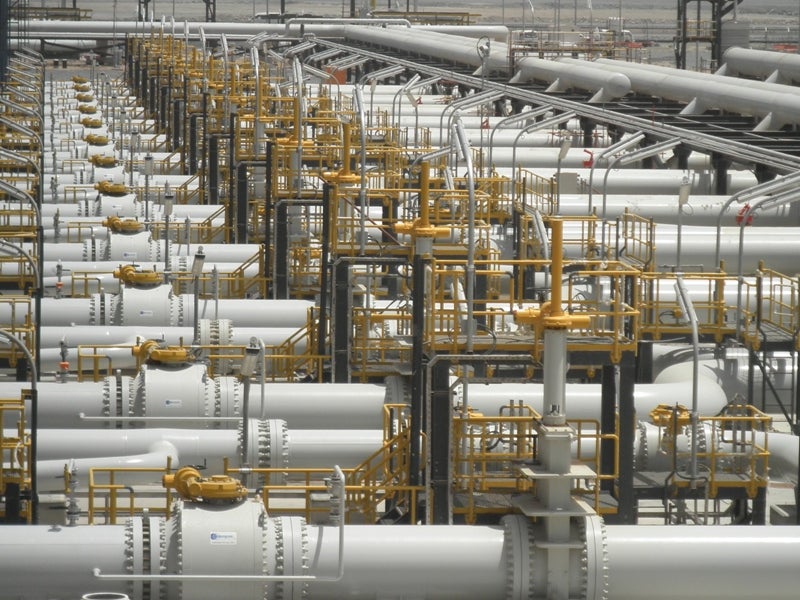
    The cross-country project involves constructing a pipeline to transport crude from Adnoc’s main export terminal at Jebel Dhanna to the Fujairah terminal, a distance of about 520km. Once commissioned, it will double Adnoc’s crude export capacity through Fujairah on the Indian Ocean coast, enabling shipments to bypass the geopolitically sensitive Strait of Hormuz.

    The West-East crude oil pipeline will double Adnoc’s crude export capacity through Fujairah

    Import routes

    Diversifying export routes for crude is only one dimension of the post-Hormuz landscape.

    The broader GCC economy must also keep goods flowing in. Food, consumer goods, construction materials, medical supplies and spare parts are all vital to Gulf economies. To help maintain a steady stream of imports, a ‘Green Corridor’ was activated on 13 March between Dubai and Oman. It allows goods destined for the UAE to be offloaded at Omani seaports such as Sohar or Salalah and transported by land through the Hatta border.

    Retail and logistics players have tested unconventional routes as well. UAE supermarket chain Spinneys conducted a trial shipment of dry goods from the UK involving Mediterranean Sea crossings to Egypt and overland transit through Saudi Arabia, including the use of the Port of Neom on the Red Sea coast.

    Logistics hub

    On 20 May, Fujairah Terminals, part of AD Ports Group, announced the signing of three strategic land lease agreements with Fujairah International airport, Fujairah Free Zone Authority and Al-Dahra Agriculture Trading. The agreements aim to enhance connectivity and unlock new commercial opportunities across regional and international markets, while supporting the development of logistics and industrial capabilities and enabling more efficient use of port and adjacent infrastructure.

    The leased lands have a combined area of 130,000 square metres and will be used to enhance Fujairah Terminals’ logistics capabilities, reinforcing Fujairah’s role as a key gateway for regional and global trade and supporting the UAE’s position as a leading hub for logistics, maritime services and industrial growth.

    Saudi Arabia is also using its pipelines to bypass the Hormuz. Saudi Aramco’s East-West pipeline has reached its maximum capacity of 7 million barrels a day. Aramco president and CEO Amin Nasser recently said the company’s first-quarter performance reflected “strong resilience and operational flexibility in a complex geopolitical environment”, describing the pipeline as a “critical supply artery” that mitigated the impact of a global energy shock.

    For other Gulf countries the options are more limited. Shipping monitors have reported that Kuwait recorded zero crude exports in April – the first such occurrence since the 1991 Gulf War. Kuwait normally ships almost all of its 3 million barrels a day (b/d) of exports through Hormuz. Output reportedly fell to 500,000 b/d in March as storage reached capacity. With oil sales accounting for roughly 90% of government revenue, the effect on the Kuwaiti treasury has been severe. 

    Bahrain and Qatar have similar geographical challenges.

    The crisis has revived talk of multinational pipelines bypassing the strait. A working paper from Rice University’s Baker Institute for Public Policy proposes a Gulf Super Express Pipeline that would begin in southern Iraq’s Basra oil fields, cross Kuwait, run along the Saudi coast to pick up additional volumes, then cross the UAE and terminate on Oman’s Arabian Sea coast at Duqm and Salalah. The proposal envisages twin 56-inch lines with a combined capacity of 10 million b/d, and includes $10.1bn for defence and hardening. Total capital expenditure is estimated at $55.6bn. 

    Proponents argue the security premium could be $1-$2 a barrel to ensure that half the region’s exportable capacity remains accessible should the Strait of Hormuz be closed.

    These projects will create a steady workload for the construction industry in the years ahead

    Rail revival

    For other goods, rail is increasingly being promoted as the key to resilience. 

    The GCC has upcoming rail projects worth more than $140bn. An important project is the Hafeet Rail scheme, which is a 238km line connecting Oman’s port of Sohar to the UAE’s Etihad Rail network. As of April 2026, the project is 40% complete. Once operational, a single freight train would be able to transport 15,000 tonnes of cargo – equivalent to 270 standard containers – providing a high-capacity, land-based alternative to coastal shipping.

    Future projects linking GCC states are being accelerated too. On 7 May, Saudi Arabia Railways began the procurement process to deliver its portion of the GCC railway, which will connect all six member states. The kingdom’s section of the railway will start at Al-Khafji in the Eastern Province, near the border with Kuwait, and end at Al-Batha, at Saudi Arabia’s border with the UAE. The Saudi section will span approximately 672km and interface with the Kuwait National Rail Road project on the Kuwaiti side. 

    The wider GCC railway network will span 2,186km, beginning in Kuwait, passing through Dammam in Saudi Arabia, reaching Bahrain via a planned causeway, and continuing onwards to Qatar, the UAE and Oman through the Hafeet Rail link.

    These projects – encompassing pipelines, ports, railways and associated roads – will  create a steady workload for the region’s construction industry in the years ahead and, more importantly, will enhance the GCC’s economic resilience following the closure of the Strait of Hormuz. 

    https://image.digitalinsightresearch.in/uploads/NewsArticle/17056903/main.gif
    Colin Foreman
  • Egypt prepares to tender five water treatment plants

    25 May 2026

    Egypt is preparing to tender five seawater desalination and industrial wastewater treatment plants under its public-private partnership (PPP) programme.

    The projects will be offered to local and international investors through competitive PPP tenders, Atter Hannoura, head of the PPP unit at the Finance Ministry, has told a local Arabic news channel.

    The first of these involves a plant in the Suez Canal Economic Zone, which will be launched “immediately after the Eid Al-Adha holiday”, Hannoura said.

    In January 2025, MEED exclusively reported that SCZone Istithmar had invited interested firms to prequalify to bid for a contract to develop a seawater desalination plant in the Suez Canal Economic Zone.

    SCZOne Istithmar is wholly owned by the General Authority for Suez Canal Economic Zone.

    The Finance Ministry’s PPP Central Unit, along with the European Bank for Reconstruction & Development, is supporting SCZone Isthithmar in the project’s tender proceedings.

    The opportunity entails a long-term water-purchase agreement to design, finance, build, operate, maintain and transfer the plant’s ownership.

    It was previously reported that this planned seawater desalination plant will have a capacity of 250,000 cubic metres a day (cm/d). 

    Hannoura added that the government is in negotiations with several companies, including Saudi Arabia-based Acwa, regarding large-scale desalination projects.

    Additionally, the government plans to tender four industrial wastewater treatment plants, with the first two projects expected to be launched “within 45 days”.

    One of these will be located in the Amreya industrial area in Alexandria, while the other will be in the Abu Rawash area in Giza, Hannoura said. Details of the other projects were not disclosed.

    Alexandria wastewater treatment plant

    The Authority for Potable Water and Wastewater is planning to build a wastewater treatment plant in eastern Alexandria.

    The $150m facility will have a water treatment capacity of 300,000 cm/d.

    In June 2025, Egypt’s government approved a financing and grant agreement for the project, with financing from the French Development Agency amounting to €68m and a grant of €2m.

    Expression of interest documents were previously submitted in September 2024.

    The main contract for this plant had been expected to be released in June.

    Wastewater upgrades

    Separately, the Construction Authority for Potable Water & Wastewater retendered the phase four expansion of the Abu Rawash wastewater treatment plant in Giza Governorate in January.

    The $157m scheme will be developed under a design, build, operate and maintain contract.

    The plant will have a treatment capacity of 400,000 cm/d, rising to peak flows of 520,000 cm/d. The authority issued the initial main contract tender last August. 

    It is unconfirmed whether this has moved beyond the bidding stage.

    Egypt currently produces between 1.5 million cm/d and 2 million cm/d of desalinated water. The country aims to increase capacity to between 8 million cm/d and 9 million cm/d by 2050.

    In March, Egypt’s cabinet approved a $1.2m grant agreement with the European Investment Bank to support wastewater treatment upgrades in Alexandria and Damietta.

    Part of the funding will support plans to expand the Hanovil wastewater treatment plant in Alexandria Governorate.

    The project will add 50,000 cm/d of treatment capacity in two phases within the plant’s existing footprint. Once completed, the facility will reach a total capacity of 100,000 cm/d.

    The grant will also support expansion works at the Kafr El-Battikh wastewater treatment plant in Damietta Governorate.

    The facility currently receives more than 7,000 cm/d of wastewater, while its treatment capacity is 3,000 cm/d.

    https://image.digitalinsightresearch.in/uploads/NewsArticle/16980726/main.jpg
    Mark Dowdall
  • Momentum builds for Syrian projects

    25 May 2026


    Support from the US, as well as the closure of the Strait of Hormuz, has increased expectations about the development of infrastructure projects in Syria.

    On 22 May, the US published guides to investing in Syria, funded by the US Department of State, that pointed investors towards 590 planned projects in the country.

    The permanent removal of US sanctions in December last year, combined with fallout from the closure and disruption to shipping through the Strait of Hormuz, has boosted interest in planned projects in the country.

    Shipping through the Strait of Hormuz has been disrupted since the US and Israel attacked Iran on 28 February.

    The route normally transports about 11 million barrels a day of oil and around 20% of the world’s liquefied natural gas, as well as a range of other key materials and consumer goods.

    The disruption to shipping through the strait has left nations in the Middle East scrambling to find new routes for imports and exports – and Syria plays a role in many of these new plans.

    This has bolstered the country’s plans to become a regional trade hub.

    Energy corridors

    Already, Iraq is moving a large volume of oil by truck across the country to export it from Syria’s Mediterranean ports, such as Latakia or Tartous.

    In April, Iraq’s state-owned oil marketing company, Somo, said it had awarded contracts to supply about 650,000 metric tonnes of fuel oil per month for overland trucking across Syria.

    On top of this, Iraq is currently looking into reestablishing a pipeline route that transported oil from Kirkuk to the port of Baniyas in Syria.

    The pipeline originally went into operation in April 1952.

    During the 2003 invasion of Iraq, the pipeline was damaged by US air strikes and has remained out of operation since then.

    There have been repeated attempts to either refurbish the existing pipeline or build a new one along the same route, but none has been successful.

    In December 2007, Syria and Iraq agreed to rehabilitate the pipeline. The pipeline was to be reconstructed by Stroytransgaz, a subsidiary of Russia’s Gazprom.

    However, Stroytransgaz failed to start the rehabilitation, and the contract was nullified in April 2009.

    The disruption to shipping through the Strait of Hormuz has added a new urgency to the project to reestablish pipeline flows from Iraq to Baniyas.

    Syria could also play a role in plans for a pipeline to transport gas from Qatar to Europe via Syria and Turkiye.

    The country could additionally form part of plans to rehabilitate and expand the Arab Gas Pipeline.

    The pipeline connects Egypt, Jordan, Syria and Lebanon, although the Lebanese section is not currently operational.

    Trade routes

    Beyond oil and gas, Syria is emerging as a key part of other plans for new trade routes.

    Earlier this month, Syria’s Transport Minister Yarub Badr said the country was seeking to restore its role as a regional transit corridor linking Europe and the Gulf by reviving cross-border trucking and rehabilitating railway connections with neighbouring countries.

    He said the overland corridor between the Turkish and Jordanian borders handled between 100,000 and 115,000 trucks annually in both directions before 2011. Freight rail services also operated between Tartous port and Iraq’s Umm Qasr port via Baghdad in 2009, he added.

    He said Syria was coordinating with Turkiye, Jordan and Saudi Arabia to simplify customs and border-crossing procedures and facilitate freight movement.

    Railway rehabilitation is expected to take longer due to extensive infrastructure damage and the suspension of cross-border rail links over the past decade.

    Badr said Syria is working with the World Bank to secure grants ranging between $65m and $200m to support railway rehabilitation and restore Syria’s role as a regional transit route linking Turkiye, Syria, Jordan and Iraq.

    Earlier this month, Syria’s state-owned railway company, the General Establishment for Syrian Railways, and the operator of Syria’s Latakia International Container Terminal signed a memorandum of understanding to coordinate container traffic between the Mediterranean port of Latakia and inland freight hubs.

    The framework covers feasibility studies for moving containers by rail from Latakia to dry ports in Adra, Hasiya and Aleppo.

    The feasibility studies are expected to take four months to complete.

    Tartous port

    Also this month, executives from the UAE’s DP World and Syria’s General Authority for Borders and Customs (GABC) met to discuss accelerating the development of Syria’s Port of Tartous.

    Essa Kazim, chairman of DP World, met with Qutaiba Ahmed Badawi, chairman of GABC, to discuss opportunities to enhance infrastructure and logistics efficiency, ensuring the Port of Tartous is well-equipped to handle the anticipated rise in trade and cargo volume.

    DP World’s plans to develop the Port of Tartous form part of a 30-year concession agreement signed in July 2025 with the Syrian government.

    Under the agreement, DP World committed to invest $800m to upgrade infrastructure, expand capacity, and introduce modern cargo-handling and advanced digital systems.

    DP World has said that, by fast-tracking the development of the Port of Tartous, it aims to boost its operational efficiency and capacity to handle diverse cargo types, including general cargo, containers, breakbulk and roll-on/roll-off traffic.

    Rizwan Soomar, DP World’s chief executive and managing director for Central Asia, the Levant and Egypt, said: “The Port of Tartous development marks a defining moment in Syria’s journey of economic recovery and modernisation of its trade infrastructure. We are proud to contribute to this vital phase of growth.”

    Located on Syria’s Mediterranean coast, the Port of Tartus is the country’s second-largest port and a key maritime gateway to trade routes across Europe, the Levant and North Africa.

    Beyond the port itself, DP World is exploring other opportunities to develop infrastructure in Syria with local stakeholders. These include logistics zones, inland freight hubs and transit corridors.

    US interest

    US-based companies are also showing significant interest in participating in new projects in the country.

    On 19 May, a delegation from the Houston-headquartered engineering company KBR travelled to Damascus to discuss road networks and infrastructure projects in Syria.

    During one meeting, Syria’s transport minister outlined strategic projects currently underway, including north-south and east-west corridor projects, the Damascus-Aleppo highway and railway initiatives.

    Badr said that companies were needed to update economic and technical studies for some projects.

    While Syria and the US both have bold ambitions to expand Syria into a regional trade and logistics hub, the poor state of the country’s infrastructure is likely to be a key challenge.

    It is likely that billions of dollars will need to be invested to rehabilitate the country so that its capacity to transport goods returns to levels seen prior to the civil war that began in March 2011.

    https://image.digitalinsightresearch.in/uploads/NewsArticle/16975219/main.jpg
    Wil Crisp
  • Alec confirms Sphere Abu Dhabi contract award

    25 May 2026

    Alec Holdings has confirmed that its subsidiary Alec Engineering & Contracting has received a letter of award for the construction contract for the $1.7bn Sphere Abu Dhabi project.

    MEED had previously reported that Alec was the selected contractor and had been working on the project during the pre-construction phase. The construction is due to be completed in the third quarter of the financial year 2029.

    Abu Dhabi’s Department of Culture & Tourism (DCT Abu Dhabi) and US-based Sphere Entertainment announced earlier in May that they have selected Yas Island as the location for the project.

    The venue will be built on a plot between Yas Mall and SeaWorld Abu Dhabi, close to Yas Island’s theme parks and attractions. The project will be the first Sphere venue outside the US. It is expected to echo the scale of Sphere Las Vegas, with a capacity of up to 20,000 depending on configuration.

    DCT and Sphere Entertainment finalised an agreement last year for the construction, development and operation of the Sphere entertainment venue in Abu Dhabi. According to the agreement, Sphere Entertainment granted DCT the exclusive rights to build and operate the Sphere Abu Dhabi entertainment venue.


    > Be recognised among the best in the industry at the MEED Projects Awards 2026 …

    https://image.digitalinsightresearch.in/uploads/NewsArticle/16973522/main.jpg
    Colin Foreman