
GCC enters pivotal year for IPPs
26 September 2025

> This package also includes: MEED's 2025 power developer ranking
Almost 24.4GW of independent power generation capacity is now under tender across the GCC, spread across 29 projects that are in either the bidding or bid evaluation stages.
This highlights how the next 12 months will be decisive for contract awards. Of the total, 20 projects with 17.5GW of capacity are still in the main bid stage, while nine schemes with a combined 6.8GW are being evaluated.
The projects under evaluation are the clearest signal of near-term awards. In Abu Dhabi, bids are being assessed for the 1.5GW Al-Zarraf and Al-Khazna solar independent power projects (IPPs).
The Al-Zarraf solar photovoltaic (PV) scheme, Emirates Water & Electricity Company’s (Ewec) fifth utility-scale solar project, is part of the authority’s plan to build an average of 1.4GW of new solar PV capacity annually between 2027 and 2037.
Several developers are also competing for the Al-Khazna contract, with France’s Engie understood to be the frontrunner, having submitted the lowest bid last year.
 Near-term awards
In Saudi Arabia, evaluation is under way for the 1.5GW Dawadmi wind IPP and the 1.4GW Najran solar PV IPP – both part of round six of the kingdom’s National Renewable Energy Programme (NREP).
Oman has four smaller IPPs, including a 280MW solar plant and two mid-scale wind projects. If evaluation cycles follow the typical two- to six-month pattern, these projects could be awarded in late 2025 or early 2026.
In the UAE capital, Abu Dhabi National Energy Company (Taqa) and Abu Dhabi Future Energy Company (Masdar) are likely to play key roles in future solar projects. Partners such as Japan’s Marubeni and Mitsui, China’s Jinko Power and France’s EDF have all worked with Taqa and Masdar in recent years, but their position in the GCC developer ranking ultimately depends on how much equity they secure.
In Saudi Arabia, the government has set a target of tendering about 20GW of renewables capacity each year, with the Public Investment Fund (PIF) leading about 70% of these schemes through the NREP. As its preferred partner, Acwa Power will likely continue to strengthen its already commanding lead in the regional developer ranking.
Other developers are also positioning themselves as credible contenders. Marubeni has built a track record in Saudi wind projects, securing the 600MW Al-Ghat and 500MW Waad Al-Shama IPPs with Ajlan & Bros in 2024 and winning the 700MW Yanbu wind IPP in July.
South Korea’s Kepco has also been a standout winner in the past year, securing stakes in four regional IPPs. Notably, it took 30% equity in both Saudi Power Procurement Company’s (SPPC) 1,800MW gas-fired power plants Nairiyah-1 and Rumah-1 in consortiums led jointly by Acwa Power and Saudi Electricity Company. It also teamed up with Masdar to take a part ownership of the 200MW Al-Sadawi 1 solar IPP.
The main bid stage still accounts for most of the pipeline, however. Saudi Arabia leads, with 14 projects totalling 12.6GW, all under the PIF and SPPC framework. These range in size from 1.5GW to 3GW and reflect the scale of Riyadh’s renewables push.
The UAE has two projects at bid stage, led by the 3.3GW Al-Nouf 1 combined-cycle gas turbine (CCGT) scheme, which is the single largest in the pipeline. This project is being tendered as an IPP, with Ewec as the offtaker under a long-term power-purchase agreement. Kepco, Saudi Arabia’s Aljomaih and Japan’s Sumitomo have been prequalified to bid for the project, along with state-owned Etihad Water & Electricity (Etihad WE).
Revealing trends
Saudi Arabia is clearly dominant in terms of volume, while the UAE’s near-term focus is on fewer but larger projects. In total, solar makes up the largest share, with about 16.8GW in the pipeline. Developers with strong solar portfolios, such as Jinko Power, EDF, Engie and TotalEnergies, stand to gain the most as the push for solar continues apace, but the Al-Nouf 1 CCGT project in Abu Dhabi shows that conventional power is still relevant. A win here could lift the standing of Japanese or Korean entities that are seeking balance between renewables and thermal generation.
Battery storage is also emerging later in the cycle. Abu Dhabi’s 400MW battery project is the region’s first standalone large-scale battery energy storage project to be tendered under an IPP model. In Saudi Arabia, SPPC is expected to follow with its own programme, which could reach gigawatt scale. These projects may wish to bring in developers with experience in storage technology, showing how the IPP model is being extended beyond generation.
Overall, the GCC’s IPP and independent water and power project market is set for another busy round of awards. The composition of the pipeline ensures that solar developers will continue to expand their portfolios, while conventional players could still win large capacities through Abu Dhabi’s CCGT programme.
Acwa Power’s partnership with the PIF means its position at the top of the ranking will only strengthen as more Saudi projects are awarded. For others, progress depends on equity access through partnerships.
While these projects will matter in proportion to how much equity they open to partners, this year’s movers have shown that smart bidding and strong partnerships can still shift the balance.
 MEED's 2025 power developer ranking


Register for MEED's guest program now to access this article.
Exclusive from Meed
-
 Contractor groups prequalify for Dubai Metro Gold Line
13 October 2026
-
 Egypt discusses technology cooperation with SLB
13 October 2026
-
 Kuwait tenders gas export pipeline
13 October 2026
-
 Developers prepare bids for 1GW Oman bess scheme
12 October 2026
-
 Frontrunner emerges for Saudi Arabia’s GCC rail link design
12 October 2026
All of this is only 1% of what MEED.com has to offer
Subscribe now and unlock all the 153,671 articles on MEED.com
- All the latest news, data, and market intelligence across MENA at your fingerprints
- First-hand updates and inside information on projects, clients and competitors that matter to you
- 20 years' archive of information, data, and news for you to access at your convenience
- Strategize to succeed and minimise risks with timely analysis of current and future market trends

Related Articles
-
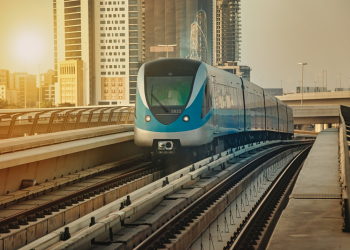
Contractor groups prequalify for Dubai Metro Gold Line
13 October 2026
Six contracting groups submitted prequalification statements on 9 October for the contract to build Dubai Metro’s new Gold Line.
The Roads & Transport Authority (RTA) issued the request for qualification notice for the project in June, as MEED exclusively reported.
The consortiums formed to bid for the main contract are:
- Alstom / China Railway Engineering Corporation / National Projects Construction / Dogus Construction (France/China/local/Turkiye)
- CRRC / Limak / Mapa Group (China/Turkiye/Turkiye)
- Hitachi / China Harbour Engineering Company / China State Construction Engineering Corporation (Japan/China/China)
- Siemens / Petrojet / Concord Engineering & Contracting / Rowad Modern Engineering (Germany/Egypt/Egypt/Egypt)
- Hassan Allam / IC Ictas / Siemens (Egypt/Turkiye/Germany)
- Larsen & Toubro / Powerchina / Wade Adams (India/China/local)
Dubai officially announced the Gold Line in April.
In a post on social media site X, Sheikh Mohammed Bin Rashid Al-Maktoum, UAE Vice President and Prime Minister and Ruler of Dubai, said the project would cost about AED34bn ($9.2bn).
The Gold Line will increase the Dubai Metro network’s total length by 35%. The project is scheduled to be completed in September 2032.
The fully underground line will extend for more than 42 kilometres and include 18 stations. It will pass through 15 areas of Dubai and serve 1.5 million residents.
The project is expected to connect more than 55 under-construction real estate developments.
The Gold Line will begin at Al-Ghubaiba in Bur Dubai and terminate at Jumeirah Golf Estates. It will connect with the existing Red and Green lines and integrate with the Etihad Rail passenger network.
The contractor will be responsible for the design and construction of all civil works, electromechanical equipment, rolling stock and rail systems. The selected contractor will also be required to support systems maintenance and operations during an initial three-year period.
In October last year, MEED exclusively reported that the RTA had selected US-based engineering firm Aecom to provide consultancy services for the Dubai Metro Gold Line project.
Stage one covers concept design; stage two, preliminary design; stage three, tender-document preparation; stage four, construction supervision; and stage five, the defects-liability period.
 READ THE OCTOBER 2026 MEED BUSINESS REVIEW – click here to view PDF
Industry and logistics drive development at Neom; Saudi Arabia’s investment priorities realign amid conflict; MEED’s 2026 power developer ranking.
Distributed to senior decision-makers in the region and around the world, the October 2026 edition of MEED Business Review includes:
> AGENDA: Oxagon takes centre stage at Neom> MARKET FOCUS: Saudi projects hold steady> INDUSTRY REPORT: MEED’s 2026 GCC power developer ranking> LEADERSHIP: The future city does not need to hang above the groundTo see previous issues of MEED Business Review, please click herehttps://image.digitalinsightresearch.in/uploads/NewsArticle/20531469/main.png -
Egypt discusses technology cooperation with SLB
13 October 2026
Egypt is in talks with US-based oilfield services company SLB to expand technical cooperation in the country’s oil and gas sector, according to a statement from the Ministry of Petroleum & Mineral Resources.
Egyptian Minister of Petroleum and Mineral Resources Karim Badawi met SLB chief executive Olivier Le Peuch in Riyadh, the ministry said.
During the meeting, they discussed ways to strengthen their strategic partnership and expand cooperation in technology and digital transformation.
They also discussed how SLB could support exploration and production activities, with the aim of increasing output and attracting further investment in Egypt’s oil and gas sector.
Badawi emphasised the importance of extending the existing partnership with SLB, including its role in technology transfer and the development of technical capabilities in Egypt’s oil sector, according to the statement.
He said Egypt should build on existing areas of cooperation and deploy advanced technological solutions to reduce exploration risk, increase recovery and production rates from existing fields, and improve operational efficiency.
Badawi and Le Peuch also discussed progress on a seismic survey project being undertaken by SLB in partnership with France-based Viridien.
The project includes an ocean-bottom node seismic survey covering about 95,000 square kilometres of Egypt’s eastern Mediterranean waters.
The discussion focused on the data processing and analysis schedule, the steps required to prepare and release preliminary results, and the drilling schedule.
Badawi and Le Peuch also discussed expanding the use of horizontal drilling technologies in Egypt. This would involve identifying suitable locations and developing a commercial and contractual model for their deployment.
The Ministry of Petroleum & Mineral Resources and SLB are also exploring opportunities to expand the use of artificial intelligence in reservoir management and production optimisation.
This work is being explored in partnership with the Egyptian General Petroleum Corporation and Egyptian Natural Gas Holding Company.
READ THE OCTOBER 2026 MEED BUSINESS REVIEW – click here to view PDFIndustry and logistics drive development at Neom; Saudi Arabia’s investment priorities realign amid conflict; MEED’s 2026 power developer ranking.
Distributed to senior decision-makers in the region and around the world, the October 2026 edition of MEED Business Review includes:
> AGENDA: Oxagon takes centre stage at Neom> MARKET FOCUS: Saudi projects hold steady> INDUSTRY REPORT: MEED’s 2026 GCC power developer ranking> LEADERSHIP: The future city does not need to hang above the groundTo see previous issues of MEED Business Review, please click herehttps://image.digitalinsightresearch.in/uploads/NewsArticle/20517735/main.jpg -
Kuwait tenders gas export pipeline
13 October 2026
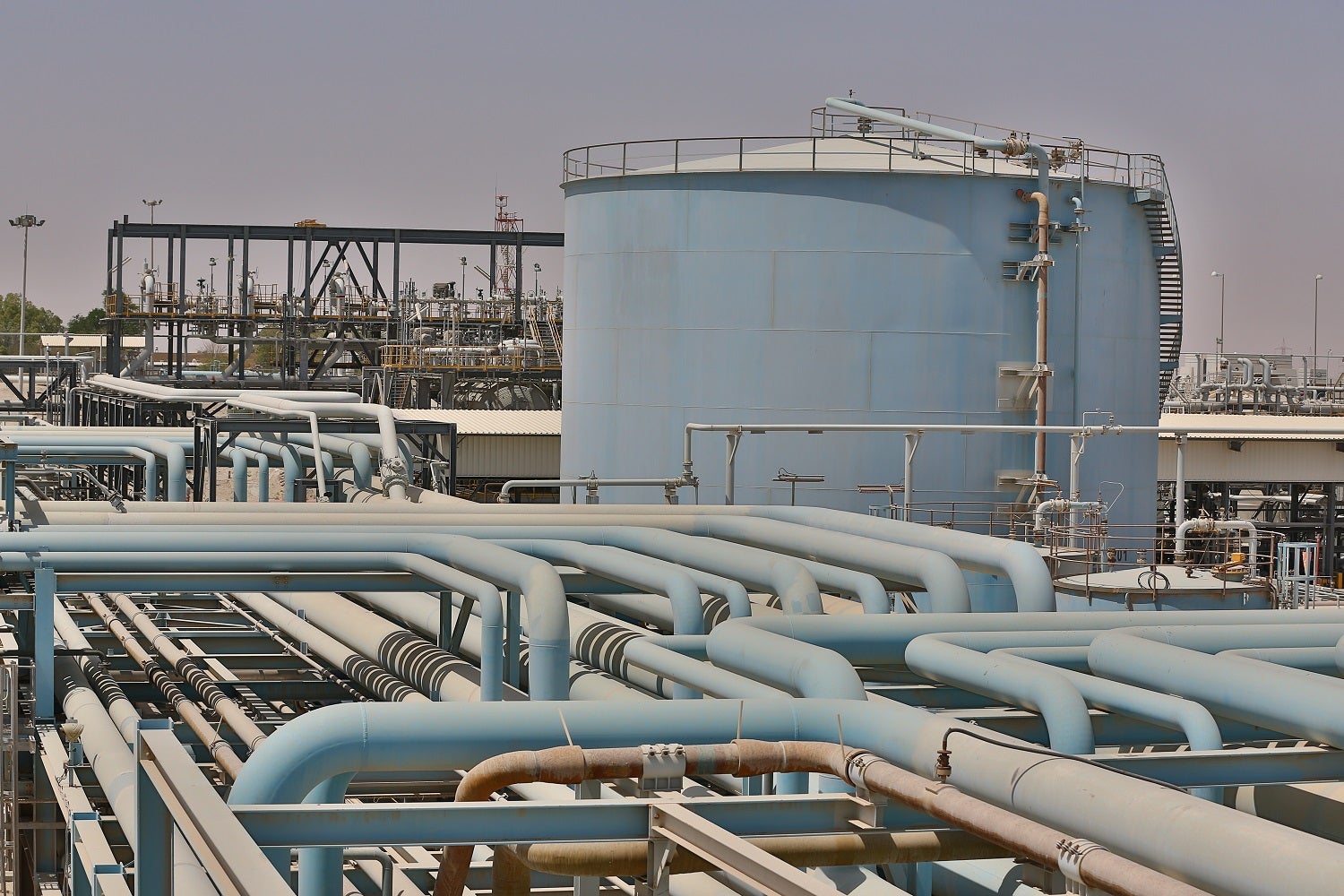
State-owned upstream operator Kuwait Oil Company (KOC) has tendered a contract to develop a gas export pipeline.
The 24-inch-diameter pipeline will extend from Booster Station 171 (BS-171) to the Intermediate Slug Catcher (ISC) facility in southeastern Kuwait, passing through the tie-in point known as TP-1.
The bid deadline is 5 January 2027. A preliminary online meeting to discuss the project is scheduled for mid-November.
BS-171 was inaugurated in February 2018. It serves as a central gas-treatment facility for gas and condensate from several gathering centres in West Kuwait and other areas.
The feeder gathering centres include GC-17, GC-27, GC-28 and GC-16.
BS-171 was Kuwait’s first facility designed specifically to handle acid gas.
The ISC facility is located about 80 kilometres from BS-171.
KOC announced plans to tender the project last year. At the time, it said that the scope would include the installation of bidirectional pig traps above the new pipeline.
A pig trap is a section of piping that enables a pipeline pig – a device used to clean, inspect or maintain a pipeline – to be launched or received.
The chosen contractor will need to provide:
- Valves
- Piping
- Fittings
- Civil services
- Structural services
- Electrical and instrumentation services
- Tie-ins
- Testing services
- Pre-commissioning services
- Commissioning services
The ISC facility is a major gas-handling facility in Kuwait’s Burgan area. It receives sour gas from West Kuwait oil fields before the gas is transported onwards to the Mina Al-Ahmadi gas-processing facilities.
READ THE OCTOBER 2026 MEED BUSINESS REVIEW – click here to view PDFIndustry and logistics drive development at Neom; Saudi Arabia’s investment priorities realign amid conflict; MEED’s 2026 power developer ranking.
Distributed to senior decision-makers in the region and around the world, the October 2026 edition of MEED Business Review includes:
> AGENDA: Oxagon takes centre stage at Neom> MARKET FOCUS: Saudi projects hold steady> INDUSTRY REPORT: MEED’s 2026 GCC power developer ranking> LEADERSHIP: The future city does not need to hang above the groundTo see previous issues of MEED Business Review, please click herehttps://image.digitalinsightresearch.in/uploads/NewsArticle/20517716/main.jpg -
Developers prepare bids for 1GW Oman bess scheme
12 October 2026
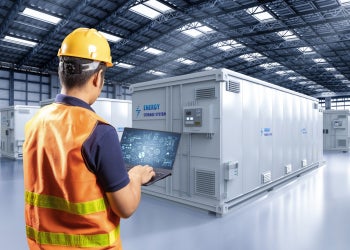
Developers are preparing to submit bids for almost 1GW of standalone battery energy storage (bess) projects in Oman, a source close to the project has confirmed to MEED.
The independent power producer (IPP) scheme includes the installation of five bess facilities with a combined power capacity of 950MW and storage capacity of 3,800MWh. Nama Power & Water Procurement Company (PWP) is procuring it.
According to sources close to the project, a developer’s tender was floated in the summer. An initial bid submission deadline has since been extended, with bids expected to be submitted in the coming weeks.
The largest project is a 500MW facility in Sohar, Al-Batinah North governorate, with a storage capacity of 2,000MWh. The Sohar facility is expected to connect to the grid at 220kV. The site covers approximately 149,535 square metres.
Four further installations are planned at Al-Mabellah in Muscat governorate, Ayjah in South Al-Sharqiyah, the Jalan Bani Bu Ali wind farm site in South Al-Sharqiyah, and Sadah in Dhofar.
The Al-Mabellah and Ayjah facilities are each planned to have a capacity of 100MW and storage capacity of 400MWh. Both are expected to connect to the grid at 132kV.
The Jalan Bani Bu Ali installation is planned to have a capacity of 150MW and storage capacity of 600MWh. It is expected to connect to the Sadah wind farm and Jalan Bani Bu Ali wind farm substations.
The Sadah installation is planned to have a capacity of 100MW and storage capacity of 400MWh. It is expected to connect to the Sadah wind farm substations at 132kV.
US/India-based Synergy Consulting is the financial adviser for the procurement; Germany’s Fichtner is the technical adviser; and Germany-headquartered CMS is the legal adviser.
Utility-scale storage
In May, Oman’s Authority for Public Services Regulation (APSR) opened technical bids for a consultancy contract supporting a planned 1,000MW/four-hour bess project.
As previously reported, APSR issued the request for proposals in April as part of wider plans to increase the share of renewable energy in the sultanate.
The sultanate’s first utility-scale solar photovoltaic (PV) plant integrated with battery energy storage (Ibri 3) entered construction at the beginning of the year, comprising a 500MW solar PV plant and a 100MWh bess system.
Also in May, state offtaker Nama Power & Water Procurement Company signed a power purchase agreement with local firm O-Green for Oman’s first round-the-clock renewable energy project.
Renewable energy is expected to increase from 4% of the generation mix in 2024 to 30% by 2030, driving the push for more utility-scale storage projects.
Over roughly the same period, demand is forecast to double, reaching 10 terawatt-hours by 2031.
https://image.digitalinsightresearch.in/uploads/NewsArticle/20511976/main.jpg -
Frontrunner emerges for Saudi Arabia’s GCC rail link design
12 October 2026
French engineering firm Systra has emerged as the frontrunner to provide design consultancy services for the Saudi Arabian section of the GCC railway network, which is intended to link all six member states.
The tender covers the concept, preliminary and issued-for-construction design stages. Saudi Arabia Railways (SAR) requires the selected consultant to review, update and complete the existing preliminary design.
Consultants submitted proposals on 14 July, as MEED reported.
The consultants who submitted bids included:
- AtkinsRealis with Khatib & Alami
- Deutsche Bahn with ARX
- Egis with Sener
- Idom with Dar Al-Handasah
- Systra
Saudi Arabia’s section of the railway will start at Al-Khafji in the Eastern Province, near the border with Kuwait, and end at Al-Batha, on Saudi Arabia’s border with the UAE.
Tendering is also ongoing for a separate contract involving design management and review to oversee engineering works on the GCC railway network.
The tender was issued on 9 September, with a submission deadline of 18 October, as MEED exclusively reported.
The tender seeks a consultant to manage, audit and verify deliverables produced by SAR’s separately appointed design services consultant, rather than carry out the design itself.
Construction will be tendered separately through competitive bidding once designs are approved.
The GCC railway will run for about 672km inside Saudi Arabia, linking the kingdom’s existing network to Kuwait, Qatar, the UAE and Bahrain, with four sections of about 141km, 200km, 151km and 21km, respectively.
The line is planned as a single-track, non-electrified corridor for mixed freight and passenger traffic, with a maximum axle load of 32.4 tonnes and passing loops for bidirectional working.
GCC railway line
Under the overall plan, the railway will run from Kuwait, pass through Dammam in Saudi Arabia, reach Bahrain via a planned causeway, and continue from Dammam to Qatar, the UAE and, ultimately, Muscat via Sohar in Oman. The railway is reported to cover about 2,186km in total.
The route length within each member state is as follows:
- UAE – 684km
- Saudi Arabia – 672km
- Oman – 306km
- Qatar – 283km
- Kuwait – 145km
- Bahrain – 36km
The railway is designed for passenger trains travelling at 220 kilometres an hour (km/h) and freight trains operating at 80km/h–120km/h.
With high levels of project activity, governments in spending mode and renewed cooperation under the Al-Ula Declaration, the latest efforts to restart the GCC railway project may make more progress than previous attempts. If completed, the railway could prove transformational for a region that is globally connected but still divided by national borders.
https://image.digitalinsightresearch.in/uploads/NewsArticle/20510318/main.gif