
Egypt’s economy gets its mojo back
14 February 2025

Egypt’s economy is in stronger fettle than for at least a couple of years, and there is a sense of optimism about how things will transpire in 2025, even as recent pronouncements from the White House about Gaza weigh on policymakers in Cairo.
In a manifestation of that upbeat economic sentiment, Egypt in January staged a return to the international debt capital market for the first time in two years, with a $2bn issuance that was five-times oversubscribed. That was a straw in the wind that foreign investors’ concerns over the economy are finally abating.
After a battering inflicted on Egypt’s economy last year, when economic growth slipped to 2.4%, reflective of a weak currency, surging inflation and tougher public spending restrictions, analysts see a recovery in play that will drive stronger GDP growth in the coming year.
One key contributor to this improvement is the recovery in Suez Canal receipts, which dropped by about three-quarters last year after the Houthi attacks on shipping in the Red Sea. That loss of $7bn in revenues shaved off more than a percentage point from Egypt’s overall GDP growth rate, noted Moody’s Investors Service.
Growth dynamics are now improving, even if events in the region remain in flux. According to Capital Economics, there was a rise in real GDP growth to 3.5% in Q3 2024, up from 2.4% in Q2 2024. The manufacturing, transport and storage, and finance sectors were the key drivers of that improvement.
Egyptian banks are feeling the positive impact. Credit growth is reviving, with bank lending to the non-government sector growing by 2.9% in October 2024 – the fastest pace in two years.
Operating conditions for Egyptian lenders will continue improve in 2025, according to Fitch Ratings, underpinned by a sharp fall in inflation, along with an expected broadly stable currency, improved investor confidence and healthy foreign currency liquidity conditions. This should also support lower interest rates as inflation declines.
Foreign capital injection
Douglas Winslow, senior director at Fitch Ratings, says the improvement in market sentiment follows a combination of factors and is also seen in the return of non-resident inflows totalling more than $10bn into the domestic debt market since early last year.
 Egypt's external finances have benefitted from Gulf state interventions, notably the UAE sovereign wealth fund ADQ’s major foreign investment in the Mediterranean resort of Ras El-Hekma, which was announced in 2024.
That deal injected $24bn of new foreign currency into Egypt, the remaining $11bn converting existing UAE foreign currency deposits held at the Central Bank of Egypt (CBE).
Saudi Arabia’s Public Investment Fund has also committed to invest $5bn in Egypt’s economy.
Such investments, eased by the weaker Egyptian pound – rendering assets more affordable – will also help to address Egypt’s dollar shortages, and assuage residual investor concerns about default risk.
“The huge Ras El-Hekma investment was a very important factor in the turnaround, and Fitch projects further foreign direct investment (FDI) of $7bn a year above the pre-ADQ position. The lion’s share of that is GCC investment,” says Winslow.
The $24bn of fresh foreign currency puts Egypt in a better place to move to a more flexible exchange rate.
The combination of these factors has enabled a rapid rebuilding of Egypt’s external coffers, which was the key risk facing near-term external financing. Fitch forecasts FDI to average $16.5bn across the fiscal year ending June 2025 and fiscal year 2026, with new investment from Saudi Arabia having an impact.
Alongside the Gulf support has come multilateral financing, including from Europe. Since March 2024, an $8bn IMF Extended Fund Facility and a €7.4bn ($7.64bn) three-year EU support package have been unlocked.
Together, these capital injections will also help cover Egypt’s current account deficit, which widened to 5.4% of GDP in 2024. Inflation is also headed in the right direction, after reaching a peak of 36% in February 2024. The expectation is that inflation will have more than halved by the end of financial year 2025-26.
Strong growth upside
Looking ahead, the more optimistic prognosis foresees GDP growth accelerating to 5% in the current fiscal year. Others are more circumspect, noting the recent recovery in Suez Canal receipts is very partial and that the government still needs to implement structural economic reform measures.
Fitch Rating’s forecast for GDP growth is 4% for fiscal year 2025. A pickup in growth is already detectable.
“Growth was 3.5% in Q1 of the current fiscal year and we expect it accelerates to just above 5% in fiscal year 2026, close to our assessment of the potential and rate of the Egyptian economy. That’s partly due to further falling inflation and a positive impact on real income,” says Winslow.
Despite these stronger macro metrics, the wider credit assessment is still constrained, due to relatively weak external finances. While the central bank can call upon larger foreign exchange reserves to support the currency, Capital Economics has warned that a return to a heavily managed exchange rate would worry investors and may also call into question IMF and Gulf willingness to provide further financing.
“The IMF programme does contain some wider structural reform measures to improve private sector competitiveness, but in our view, they're not particularly far-reaching, and we're not seeing really sizeable momentum in terms of delivering in this area,” Winslow says.
There is a need for measures to stimulate private sector growth and also to improve the competitiveness of the economy, support the trade balance and reduce the current deficit over the medium term.
“A better track record of ongoing political commitment to curbing off-budget spending pressures would also help Egypt’s rating,” says Winslow.
As to the potential for regional events to upset things, Egypt's credit fundamentals are at least better insulated from further geopolitical stress.
This, in turn, should give comfort to commercial banks in Egypt. Fitch upgraded the long-term issuer default ratings of all rated banks in November 2024, following the upgrade of Egypt’s sovereign rating.
There are other things that will need to be seen for the Egyptian economy’s recovery to sustain itself over the long-term.
“From a credit perspective, the composition of growth is equally important,” says Winslow.
“What we’ve seen in the past is that very large government off-budget megaprojects have not just led to weaker public finances, they've also contributed to external financing stress. So, what's particularly important is that the recent steps to try and better monitor and contain these off-budget infrastructure projects continues.”
MEED’s March special report on Egypt also includes:
> GOVERNMENT: Egypt is in the eye of Trump’s Gaza storm
> POWER & WATER: Egypt’s utility projects keep pace
> CONSTRUCTION: Coastal city scheme is a boon to Egypt construction
 READ THE FEBRUARY MEED BUSINESS REVIEW
Trump unleashes tech opportunities; Doha achieves diplomatic prowess and economic resilience; GCC water developers eye uptick in award activity in 2025.
Published on 1 February 2025 and distributed to senior decision-makers in the region and around the world, the February MEED Business Review includes:
|
> AGENDA 1: Trump 2.0 targets technology
> AGENDA 2: Trump’s new trial in the Middle East
> AGENDA 3: Unlocking AI’s carbon conundrum
> GAZA: Gaza ceasefire goes into effect
> LEBANON: New Lebanese PM raises political hopes
> WATER DEVELOPERS: Acwa Power improves lead as IWP contract awards slow
> WATER & WASTEWATER: Water projects require innovation
> INTERVIEW: Omran’s tourism strategies help deliver Oman 2040
> PROJECTS RECORD: 2024 breaks all project records
> REAL ESTATE: Ras Al-Khaimah’s robust real estate boom continues
> QATAR: Doha works to reclaim spotlight
> GULF PROJECTS INDEX: Gulf projects market enters 2025 in state of growth
> CONTRACT AWARDS: Monthly haul cements record-breaking total for 2024
> ECONOMIC DATA: Data drives regional projects
> OPINION: Between the extremes as spring approaches
|

Register for MEED's guest program now to access this article.
Exclusive from Meed
-
 Algeria tenders upstream oil project contract
25 June 2026
-
-
 Chinese firm wins $265m Saudi hospital contract
24 June 2026
-
 Kuwait extends deadline for $718m drainage tender
24 June 2026
-
 Contractor wins Emaar Dubai Harbour project deal
24 June 2026
All of this is only 1% of what MEED.com has to offer
Subscribe now and unlock all the 153,671 articles on MEED.com
- All the latest news, data, and market intelligence across MENA at your fingerprints
- First-hand updates and inside information on projects, clients and competitors that matter to you
- 20 years' archive of information, data, and news for you to access at your convenience
- Strategize to succeed and minimise risks with timely analysis of current and future market trends

Related Articles
-
Algeria tenders upstream oil project contract
25 June 2026
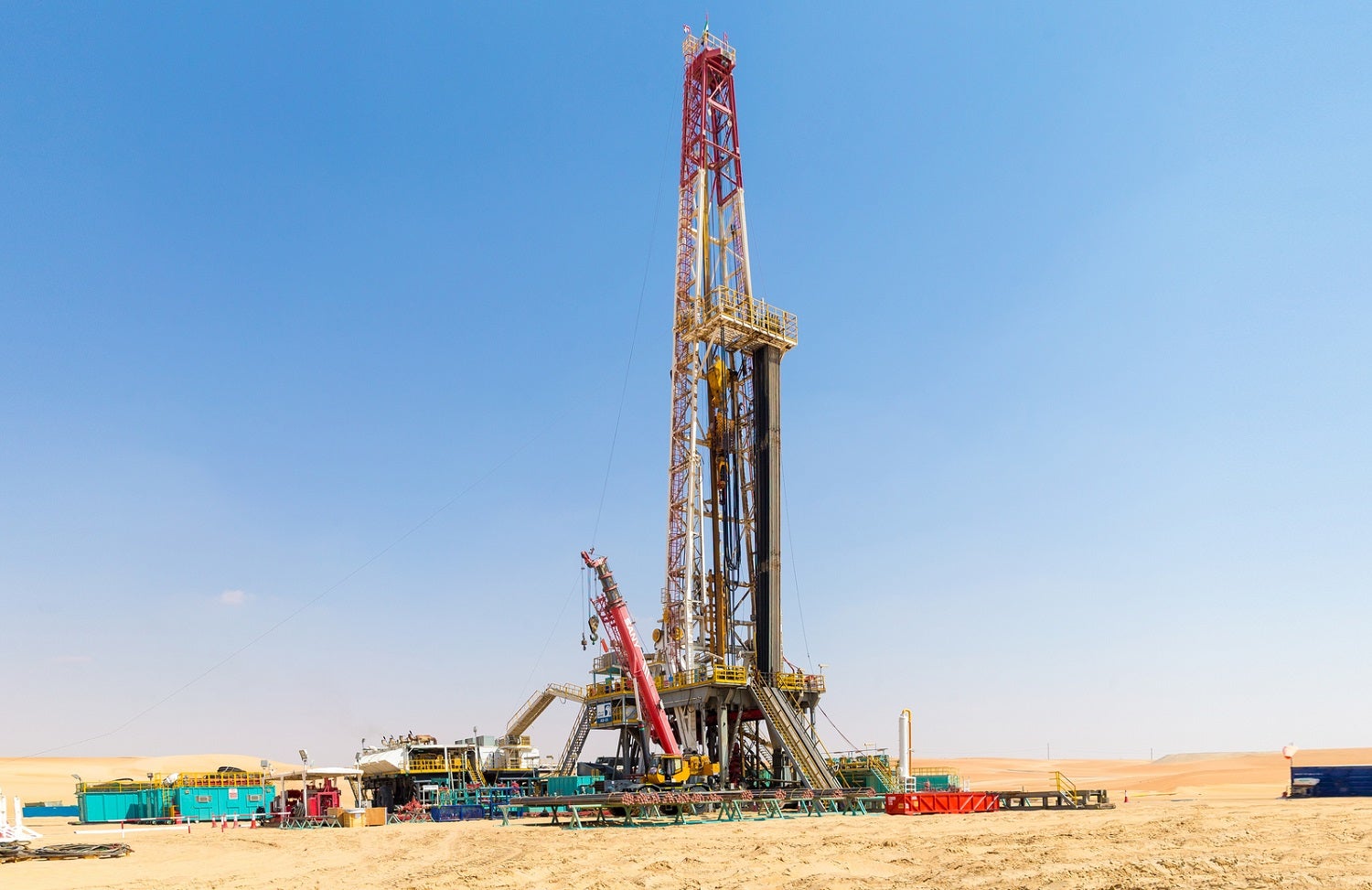
Algeria’s state-owned national oil and gas company, Sonatrach, has tendered a contract for the development and rehabilitation of the central processing facility (CPF) at the Bir Berkine oil and gas field.
The scope of the contract includes the study, supply, construction and commissioning of a project to rehabilitate the CPF facilities at the field, which is located in the Hassi Mesaoud region.
Sonatrach says in the tender documents that the objective of the project is to ensure the continuity of production activities “under stable and secure operating conditions”.
It also says the project aims to improve production yields and quality.
The contract includes both initial and detailed studies as well as the supply of all equipment and materials.
It also includes the execution of works, the assembly of all equipment and materials, and the commissioning of all relevant facilities.
The tender has a two-stage submission process, with the first stage requiring technical bids to be submitted by 23 August.
https://image.digitalinsightresearch.in/uploads/NewsArticle/17423013/main3916.jpg -
MECC submits lowest bid on three Kuwaiti oil and gas contracts
25 June 2026
Kuwait-based Mechanical Engineering & Contracting Company (MECC) has submitted the lowest bid across three separate contracts tendered by the state-owned upstream operator Kuwait Oil Company (KOC).
The total value of the low bids is $427m, and all of the contracts are focused on developing substations to power industrial lift pumps and remote header manifolds
Five companies submitted bids for a contract to develop several substations to power industrial lift pumps and remote header manifolds in areas 6, 10 and 12 in southern and eastern Kuwait.
The bidders were:
- MECC: KD65,760,000 ($212m)
- Heavy Engineering Industries & Shipbuilding Company: KD70,630,000 ($228m)
- Amco Engineering & Construction: KD73,446,100 ($237m)
- Combined Group Contracting Company: KD76,186,000 ($246m)
- Nasser Mohammed Al-Badah & Partner General Trading & Contracting: KD79,332,417 ($256m)
Six companies submitted bids for a contract to develop several substations to power industrial lift pumps and remote header manifolds in areas 8 and 13 in southern and eastern Kuwait.
The bidders were:
- MECC: KD30,760,000 ($99m)
- Badr Al-Mulla & Brothers: KD32,662,040 ($106m)
- Heavy Engineering Industries & Shipbuilding Company: KD34,139,000 ($110m)
- Industrial Company for Electrical Projects: KD36,375,520 ($118m)
- Nasser Mohammed Al-Badah & Partner General Trading & Contracting: KD37,278,526 ($120m)
- Combined Group Contracting Company: KD37,790,000 ($122m)
Eight companies submitted bids for a contract focused on developing several substations to power industrial lift pumps and remote header manifolds in areas 7, 9, and 11 in southern and eastern Kuwait.
The bidders were:
- MECC: KD35,760,000 ($116m)
- Badr Al-Mulla & Brothers: KD39,447,165 ($127m)
- Amco Engineering & Construction: KD39,736,800 ($128m)
- Heavy Engineering Industries & Shipbuilding Company: KD40,105,000 ($130m)
- Industrial Company for Electrical Projects: KD43,238,265 ($140m)
- Engineering Company for Petroleum & Chemical Industries (Enppi): KD43,514,805 ($141m)
- Combined Group Contracting Company: KD43,650,000 ($141m)
- Nasser Mohammed Al-Badah & Partner General Trading & Contracting: KD43,706,826 ($141m)
Kuwait’s oil and gas sector has been in crisis in recent months due to disruption from the regional conflict that started after the US and Israel attacked Iran on 28 February 2026.
A preliminary peace agreement between the US and Iran, which was announced on 14 June, has increased optimism that disruption to the sector will decrease in the coming weeks.
Under the terms of the agreement, both sides have stated that the free flow of vessels will be permitted through the Strait of Hormuz, through which nearly all of Kuwait’s crude oil is normally exported.
 READ THE JUNE 2026 MEED BUSINESS REVIEW – click here to view PDF
GCC looks beyond the Strait; Iraq’s reform window narrows as fiscal assumptions shatter; MEED Top 100 companies.
Distributed to senior decision-makers in the region and around the world, the June 2026 edition of MEED Business Review includes:
> AGENDA: Gulf races to reroute trade> EXPORT ROUTES: Regional war boosts oil and gas pipeline project activity> CURRENT AFFAIRS: UAE’s Opec departure fulfils multiple ends> MEED TOP 100: Middle East stocks recover unevenly> LEADERSHIP: Building the infrastructure that makes net zero possible> TRADE DEAL: UK-GCC trade deal talks concludeTo see previous issues of MEED Business Review, please click herehttps://image.digitalinsightresearch.in/uploads/NewsArticle/17423009/main.jpg -
Chinese firm wins $265m Saudi hospital contract
24 June 2026
Zhejiang Construction International, the local subsidiary of Chinese contractor Zhejiang Construction Investment Group, has won a $265m contract to build the Prince Mohammed Bin Fahd University Speciality Hospital in Al-Khobar.
Construction is expected to take three years from the start date.
Prince Mohammed Bin Fahd University awarded the contract.
Located in Al-Raja district, Al-Khobar, in Saudi Arabia’s Eastern Province, the hospital project will cover about 60,000 square metres.
The contract covers the construction of a 10-storey hospital building, two five-storey auxiliary buildings connected by corridors and a basement.
Work will include civil works, mechanical and electrical installation, curtain walling, landscaping, detailed design and the procurement of medical equipment.
The award is the latest in a series of contracts secured by Chinese contractors from Saudi entities in recent months.
Last week, MEED reported that Saudi Arabia’s Ministry of Municipalities & Housing awarded contracts worth more than SR1.9bn ($506m) to Chinese contractors for two residential developments in the kingdom.
China Architectural Construction Corporation won the first contract, valued at SR875m ($233m), to build 2,010 housing units at the Al-Ruba residential project in Riyadh.
China State Construction Engineering Corporation secured the other contract, valued at more than SR1bn ($266m), for the Al-Rasha Al-Faisaliah residential project in Dammam, comprising 2,426 housing units.
GlobalData expects Saudi Arabia’s construction industry to record average annual growth of 5.2% in 2025-28, supported by investments in transport, electricity, housing and tourism infrastructure, as well as the $850bn-plus gigaprojects programme.
https://image.digitalinsightresearch.in/uploads/NewsArticle/17412846/main.jpg -
Kuwait extends deadline for $718m drainage tender
24 June 2026
Kuwait’s Ministry of Public Works (MPW) has extended the deadline for a major drainage tender estimated to be worth about KD222m ($718m).
The new bid submission deadline is 19 July.
The tender scope covers the construction of rainwater drainage networks across the residential areas of Sabah Al-Ahmad, South Sabah Al-Ahmad, Al-Khairan and Al-Wafra.
The MPW floated the tender on 22 March. The most recent deadline was 21 June.
According to regional projects tracker MEED Projects, the works include the construction of a major concrete sewer, three collection basins and extensive stormwater drainage basins.
Rainwater collection tanks will be connected through an independent network, with outlets to the sea via the Nuwaiseeb exit to manage overflow.
The infrastructure will also filter pollutants such as oils, minerals and sediments to protect water quality and support environmental sustainability.
The project aims to reduce surface runoff, prevent street and urban flooding, and improve groundwater recharge.
Kuwait’s MPW currently has several contracts out for tender for infrastructure works across various parts of the country.
Also, in March, the client released two additional tenders covering the construction of a treated water system in Kuwait’s southern region and another in Kuwait’s northern region.
Bids for both projects are due by 28 June.
Meanwhile, the MPW is planning to begin construction of the $3.3bn North Kabd sewage treatment plant, which has a planned capacity of up to 1 million cubic metres a day.
China State Construction Engineering Corporation (CSCEC) won the contract to build the plant earlier this year.
> Be recognised among the best in the industry at the MEED Projects Awards 2026 …
 https://image.digitalinsightresearch.in/uploads/NewsArticle/17411675/main.jpg
 -
Contractor wins Emaar Dubai Harbour project deal
24 June 2026
Register for MEED’s 14-day trial access
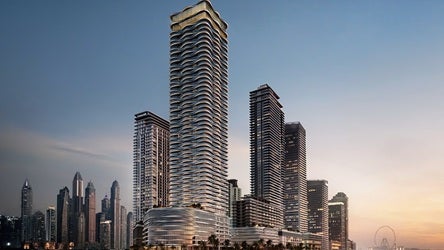
Local construction firm Al-Sahel Contracting Company has won a contract to build The Bristol Luxury Hotels & Resorts project in Dubai.
The contract was awarded by local real estate developer Emaar Properties.
The Bristol Luxury Hotels & Resorts is located at Emaar Beachfront in Dubai Harbour.
The project comprises a 54-storey mixed-use building with about 150 hotel keys and 227 one- to four-bedroom apartments.
Enabling works have been completed by local firm Dutch Foundation.
Dubai-based Mirage Leisure & Development is the project’s consultant.
Construction is expected to be completed by 2028.
The contract award follows Emaar’s appointment of Dubai-based Aroma International Building Contracting to build the Address Grand Downtown tower.
The award also comes shortly after Emaar reported strong operating momentum in 2025, led by record property sales of AED80.4bn ($21.9bn), up 16% year on year.
The company’s revenue backlog from property sales rose to AED155bn ($42bn), supporting visibility on future revenue recognition.
Total revenue for 2025 reached AED49.6bn ($13.5bn), a 40% year-on-year increase. Earnings before interest, taxes, depreciation and amortisation grew 33% to AED25.6bn ($7bn), while net profit before tax rose 36% to AED25.7bn ($7bn).
Emaar’s platform continued to support performance across property development, malls, hospitality, leisure and international operations.
> Be recognised among the best in the industry at the MEED Projects Awards 2026 …
https://image.digitalinsightresearch.in/uploads/NewsArticle/17411104/main.jpg