
Egypt’s crisis mode gives way to cautious revival
26 February 2026
 Commentary
John Bambridge
Analysis editor
In the past three years, Egypt has faced pressures that would test any market, with collapsed staple revenues, currency volatility and escalating debt pushing it to the fiscal brink. Yet if 2023 and 2024 were years of crisis management, 2025 was a year of economic policy and geopolitical realignment.
Egypt’s foreign policy has always been rooted in pragmatism, but mounting economic fragility has sharpened that instinct. In 2022, Cairo faced just one geopolitical fracas on its borders: Libya. Since 2023 – amid the emergence of conflicts in Sudan and Israel-Palestine – the Egyptian government has become the unwilling inheritor of instability along all three of its land borders. This has eaten into regional trade and Egypt’s stake in it.
In response, Cairo has retrenched around a few simple principles: insulating the domestic economy from geopolitical shocks, preserving internal stability, and leveraging Egypt’s strategic location and role in the region’s security architecture to pursue a more transactional foreign policy. This is inseparable from Egypt’s quest to restore macroeconomic credibility after successive devaluations and inflationary pressure. External actors, meanwhile, see Egypt as too vital a regional lynchpin to fail; US-based funds and Gulf governments have moved quickly to help stabilise Cairo’s finances.
Looking ahead, Egypt’s stated ambition is to move back towards a more routine, predictable monetary policy framework by 2027, with an inflation target of 7% by Q4 2026. This is as much about signalling as substance, but so far investors appear to be buying it. The oil and gas sector is showing renewed momentum, supported by upstream incentives and improved payment discipline towards international operators. Utility infrastructure contracts, meanwhile, reached a decade-high $5bn in 2025, dominated by renewable energy schemes. The water sector is also full of potential, with projects worth about $4.5bn at the prequalification or bid stage.
Beyond energy and utilities, coastal real estate is re-emerging as a hotspot, driven by huge new masterplans across the Mediterranean and Red Sea, supported by public and private entities in the UAE, Saudi Arabia and Qatar. These foreign-backed schemes offer a welcome counterweight to the slowdown in domestically financed projects and are a boon for a construction market that has otherwise cooled.
Egypt remains highly fiscally vulnerable. However, if Cairo can maintain disciplined economic management and continue to use foreign policy pragmatism to secure investment and financial support from its neighbours and the international community, it may yet convert today’s fiscal strain into the foundation for a genuinely investable future.

MEED’s March 2026 report on Egypt includes:
> GOVERNMENT: Egypt adapts its foreign policy approach
> ECONOMY & BANKING: Egypt nears return to economic stability
> OIL & GAS: Egypt’s oil and gas sector shows bright spots
> POWER & WATER: Egypt utility contracts hit $5bn decade peak
> CONSTRUCTION: Coastal destinations are a boon to Egyptian construction

Register for MEED's guest program now to access this article.
Exclusive from Meed
-
 Dubai seeks consultants to develop drainage strategy
18 March 2026
-
 Oman awards power purchase agreements
18 March 2026
-
 DP World awards Jafza warehouse construction deal
18 March 2026
-
-
 Jabal Omar plans next phase of its Mecca development
18 March 2026
All of this is only 1% of what MEED.com has to offer
Subscribe now and unlock all the 153,671 articles on MEED.com
- All the latest news, data, and market intelligence across MENA at your fingerprints
- First-hand updates and inside information on projects, clients and competitors that matter to you
- 20 years' archive of information, data, and news for you to access at your convenience
- Strategize to succeed and minimise risks with timely analysis of current and future market trends

Related Articles
-
Dubai seeks consultants to develop drainage strategy
18 March 2026
Dubai Municipality has issued a request for qualifications (RFQ) for a study to develop a sustainable urban drainage systems (Suds) strategy across the emirate.
The bid submission deadline is 9 April.
The tender, issued through the Sewerage and Recycled Water Projects Department, covers the development of a strategy and conceptual implementation plan for Suds in Dubai.
It follows a separate RFQ issued by the municipality in March for consultancy services to study the emirate’s sewage treatment strategy.
The Suds project, designated TF-23-D1, aims to support the emirate’s flood protection and drainage infrastructure by promoting a more sustainable approach to stormwater management.
The scope of work includes a review of international best practices in Suds and their applicability to Dubai. It also involves undertaking a Suds opportunity study and carrying out catchment-scale modelling and financial evaluation for a pilot study area.
Consultants will be required to develop Suds design guidelines, specifications and standard drawings. The project also includes establishing a strategy, policy, legal and regulatory framework to support a Suds implementation roadmap.
Dubai Municipality said the initiative represents “a significant step towards a more resilient, sustainable and forward-looking stormwater management approach for Dubai.”
The study forms part of a broader review of Dubai’s water and wastewater infrastructure. Earlier this month, the municipality issued a separate consultancy tender (P115-D1) to assess the emirate’s sewage treatment and recycled water distribution strategy.
The study will focus on infrastructure requirements to support future population growth.
This includes identifying locations for potential future facilities such as treatment plants and pumping stations.
The bid submission deadline is 23 March.
https://image.digitalinsightresearch.in/uploads/NewsArticle/16027434/main.jpg -
Oman awards power purchase agreements
18 March 2026
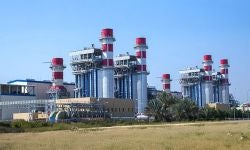
Oman’s Nama Power & Water Procurement Company (PWP) has issued letters of award (LoA) for new power purchase agreements (PPAs) to three independent power producers (IPPs), according to regulatory filings.
The new PPAs will extend the operating life of existing gas-fired power plants beyond the expiry of their current contracts.
The projects have a combined capacity of about 3,500MW.
The agreements have been awarded to Phoenix Power Company, Al-Batinah Power Company and Al-Suwadi Power Company.
Phoenix Power Company operates the 2,000MW Sur IPP. It is owned by a consortium of international and regional investors, including Japan’s Marubeni Corporation and Chubu Electric Power, Qatar’s Nebras Power, Qatar Electricity & Water Company and Multitech of Oman’s Bahwan Engineering Company.
Al-Batinah Power Company and Al-Suwadi Power Company operate the 750MW Sohar 2 IPP and the 750MW Barka 3 IPP, respectively.
According to regional projects tracker MEED Projects, Nama PWP signed the original PPA for the Barka 3 project in 2010 with a consortium led by Gaz de France (GDF) Suez under a special purpose vehicle (SPC) called Al-Suwadi Power Company.
The shareholders comprised GDF Suez (46%), Bahwan Engineering Company (22%), Shikoku Electric Power Corporation (11%), Sojitz Corporation (11%) and the Public Authority for Social Insurance (10%).
In 2015, GDF Suez was rebranded as Engie following a strategic shift towards low-carbon energy and utilities.
All three companies said the new PPAs will run for 15 years under agreed commercial terms. Acceptance of the LOAs has been requested by 18 March 2026.
The new agreements for Sohar 2 and Barka 3 will take effect on 1 April 2028 and run until 31 March 2043. The agreement for the Sur IPP will commence on 1 April 2029 and run until 31 March 2044.
The awards form part of Nama PWP’s 2028-29 procurement programme. The programme aims to secure firm generation capacity from existing assets whose current PPAs are due to expire during that period.
In Oman, IPP projects are developed under a build-own-operate model. This allows plant operators to continue running assets beyond the initial PPA term, either through contract extensions or by selling power into a future electricity market.
https://image.digitalinsightresearch.in/uploads/NewsArticle/16027001/main.jpg -
DP World awards Jafza warehouse construction deal
18 March 2026
Dubai-based ports operator DP World has awarded a contract to build a multi-tenant warehouse development at Jebel Ali Freezone in Dubai, UAE.
The contract was awarded to local firm Group Amana.
The development spans 141,916 square metres (sq m) and comprises 187 units across seven blocks.
These comprise warehouses, light industrial units, a retail shop, a mosque and other associated infrastructure.
The new contract builds on their existing partnership to deliver the logistics park at Jeddah Islamic Port in Saudi Arabia.
In February last year, MEED exclusively reported that Dubai’s DP World and the Saudi Ports Authority (Mawani) had awarded a SR347m ($92m) design-and-build contract to Group Amana for the project.
The scope of the contract covers construction work on the buildings under package two of the project’s first phase.
Earlier this week, MEED reported that DP World has kept its 2026 capital expenditure budget at nearly $3bn, focusing on two domestic assets and four overseas projects.
The company said in a statement that the priority developments include Jebel Ali and Drydocks World in Dubai.
Earlier this month, the group announced record financial results for 2025, with revenue up 22% to $24.4bn and adjusted earnings before interest, taxes, depreciation and amortisation (Ebitda) up 18% to $6.4bn, delivering a 26.3% margin.
DP World said this performance was driven by strong momentum across its ports and terminals and logistics business.
The group’s gross throughput rose 5.8% to 93.4 million 20-foot equivalent units.
Profit for the year increased 32.2% to $1.96bn, and operating cash flow grew 14% to $6.3bn.
Return on capital employed increased to 9.9% in 2025, up from 8.9% in 2024, reflecting stronger earnings despite ongoing geopolitical and trade uncertainty.
https://image.digitalinsightresearch.in/uploads/NewsArticle/16026660/main.png -
Egyptian firm starts building Sal’s Riyadh logistics centre
18 March 2026
Egyptian contractor Rowad Modern Engineering, a subsidiary of the Elsewedy Electric Group, has begun construction on the expansion of Saudi Logistics Services Company (Sal) facilities at King Khalid International airport in Riyadh.
The scope of work includes the rehabilitation and upgrade of existing infrastructure, as well as the construction of new supporting facilities and services.
Sal started the tendering process for its SR4.2bn ($1bn) logistics zone in the north of Riyadh in September last year, as MEED reported.
UAE-based Global Engineering Consultants is the project consultant.
The logistics hub aims to meet the demand for customised warehouses located near King Khalid International airport and the Riyadh Metro.
The project is in line with Vision 2030 and the National Transport & Logistics Strategy, which aims to support the kingdom’s logistics sector and enhance Saudi Arabia’s position as a global logistics hub.
Sal and Sela signed an agreement to develop the project in March last year.
This was followed by another lease agreement for the project, which will span about 1.57 million square metres.
According to an official statement: “The lease will extend for 30 years, which is further extendable to an additional 15 years upon agreement of both parties.”
GlobalData expects the kingdom’s construction industry to record an annual average growth rate of 5.2% in 2025-28, supported by investments in transport, electricity, housing and tourism infrastructure projects, as well as the $850bn-plus gigaprojects programme.
Growth will also be supported by government investments in rail, dams, industrial and road infrastructure projects.
The industrial sector is estimated to grow by 3.3% in 2025-28, supported by investments in the development of manufacturing, logistics, chemicals and pharmaceuticals plants.
https://image.digitalinsightresearch.in/uploads/NewsArticle/16026154/main.gif -
Jabal Omar plans next phase of its Mecca development
18 March 2026
Saudi Arabian developer Jabal Omar Development Company is carrying out planning for phase seven of its Jabal Omar master development in Mecca, according to a fourth-quarter 2025 financial presentation.
The company said phase seven will be a mixed-use scheme comprising hotels, retail and residential components, but did not disclose a breakdown of the project elements.
Jabal Omar plans to use a development partnership model for the phase to minimise capital expenditure.
Separately, the developer said it is targeting the delivery of 1,346 hotel keys and more than 20,000 square metres of gross leasing area in phase four by 2027.
Rotana Jabal Omar Makkah, comprising 655 keys, is due to be fully operational in the first quarter of 2026, after 450 keys began operating in the final week of December 2025.
The 1,141-key Sofitel is scheduled to become operational in the fourth quarter of 2026, while the 20,000 square metres of gross leasable area is expected to be ready in 2027.
Jabal Omar estimates its 2026 capital expenditure at SR1.1bn ($293m), with spending expected to fall once the phase four hotels are completed.
https://image.digitalinsightresearch.in/uploads/NewsArticle/16026145/main.png