
Dukhan solar award drives Qatar’s utility sector
13 January 2026

South Korea’s Samsung C&T won a contract with state-owned petroleum firm QatarEnergy in September to build a 2,000MW solar photovoltaic (PV) power plant in Dukhan, accelerating the country’s renewable generation strategy.
Once completed, the project will double Qatar’s solar generation capacity and is expected to supply up to 30% of the country’s total peak electricity demand.
The Dukhan solar PV project will be delivered in two phases and is scheduled to be fully operational by mid-2029. The first 1,000MW phase is due to be connected to the Qatar General Electricity & Water Corporation (Kahramaa) grid by the end of 2028, with the second phase following a year later.
The award reflects a broader acceleration in Qatar’s renewable energy programme, which began with the 800MW Al-Kharsaah solar independent power producer (IPP) project.
Al-Kharsaah, Qatar’s first utility-scale solar PV facility, entered commercial operation in 2022 and marked a structural shift in the country’s approach to power generation planning. The project established solar PV as a core component of the national energy mix, rather than a supplementary source of capacity.
Expanding solar capacity
Since then, progress has focused on scaling capacity at pace. In 2025, construction was completed on two additional solar PV plants, located in Ras Laffan and Mesaieed, adding a combined 875MW of capacity.
The Ras Laffan plant has a capacity of 458MW, while the Mesaieed facility contributes a further 417MW. Samsung C&T was also the contractor for these projects, reinforcing its role as the dominant solar engineering, procurement and construction (EPC) contractor in the country.
With Al-Kharsaah, Ras Laffan and Mesaieed now operational, Qatar’s installed solar generation capacity stands at about 1,675MW. This is in line with its long-term objective to install 5,000MW in renewable energy capacity by 2035.
Peak electricity demand remains driven by summer cooling loads. On the supply side, Qatar’s total contracted electricity capacity now exceeds 13,000MW following the award of the Dukhan project.
As in the previous year, the utilities market in 2025 was dominated by a single large power generation scheme.
In 2024, Japan’s Sumitomo Corporation won the contract to develop and operate the $2.3bn Facility E independent water and power project (IWPP), accounting for more than half of total contract awards. The project, which entered construction in September, will have a power generation capacity of 2,300MW and a water desalination capacity of 100 million imperial gallons a day.
In 2025, the Dukhan solar project played a comparable role, driving the overall value of awarded contracts in Qatar’s utilities sector to about $2.7bn and accounting for approximately 39% of total awards.
Although this fell short of the previous year’s peak, it still made 2025 the second-strongest year for Qatar’s utilities sector since 2017, with a lower degree of concentration.
The level of activity points to a more sustained flow of awards following a slowdown linked to the completion of World Cup-related infrastructure and disruption during the Covid-19 period.
Grid investment
In parallel, Qatar also continued to advance its thermal power generation programme to support system flexibility and peak demand management.
Qatar Electricity & Water Company (QEWC), in collaboration with Kahramaa, is undertaking the construction of a 511MW single-cycle gas turbine plant at Ras Abu Fontas Industrial Zone on the south side of Doha.
The main EPC contract was awarded to a consortium led by South Korea’s Doosan Enerbility. The peak power plant, valued at about QR1.6bn ($439.5m), is scheduled to become operational by January 2027.
Qatar’s efforts to expand both thermal and solar power generation capacity have also driven investment in its transmission and distribution network, with two contracts exceeding $100m in value.
Kahramaa awarded Elsewedy Cables Qatar the $274m main EPC contract for the construction of 132kV cables. Separately, UK-headquartered Best & Betas won the main contract for the construction of five substations and one new transformer centre, with a combined installed capacity of 1,700MVA.
Water transmission focus
Over the next 12 months, large power generation projects will take a back seat in Qatar’s utilities sector as the focus shifts towards power and water transmission infrastructure.
Qatar’s Public Works Authority, Ashghal, is expected to issue the request for proposals by mid-2025 for four construction contracts that form part of the South of Wakrah and New District of Doha pumping station scheme. Together, the four projects have an estimated combined value of about $1.1bn.
The scheme is part of Qatar’s longer-term drainage and flood-resilience strategy. In 2013, Ashghal developed the Qatar Integrated Drainage Master Plan, which set out a 50-year roadmap for foul water, groundwater, stormwater and treated sewage effluent systems across the country.
The plan identified several major groundwater and stormwater projects required to support urban expansion and climate resilience, including the South of Wakrah and New District of Doha pumping station and outfall scheme.
Progress on these projects has slowed since 2022, when Ashghal received prequalification submissions from construction companies interested in bidding for the four packages. However, with power generation capacity now largely secured in the near term, the renewed emphasis on transmission, drainage and water infrastructure will shape the next phase of activity in Qatar’s utilities market.

Register for MEED's guest program now to access this article.
Exclusive from Meed
-
 Ruwais industrial complex struck by drones
10 March 2026
-
-
 Abu Dhabi receives bids for 3.3GW Al-Nouf IPP
10 March 2026
-
 Eighty-nine firms express Qassim airport interest
10 March 2026
-
 Egypt brings new gas wells online
10 March 2026
All of this is only 1% of what MEED.com has to offer
Subscribe now and unlock all the 153,671 articles on MEED.com
- All the latest news, data, and market intelligence across MENA at your fingerprints
- First-hand updates and inside information on projects, clients and competitors that matter to you
- 20 years' archive of information, data, and news for you to access at your convenience
- Strategize to succeed and minimise risks with timely analysis of current and future market trends

Related Articles
-
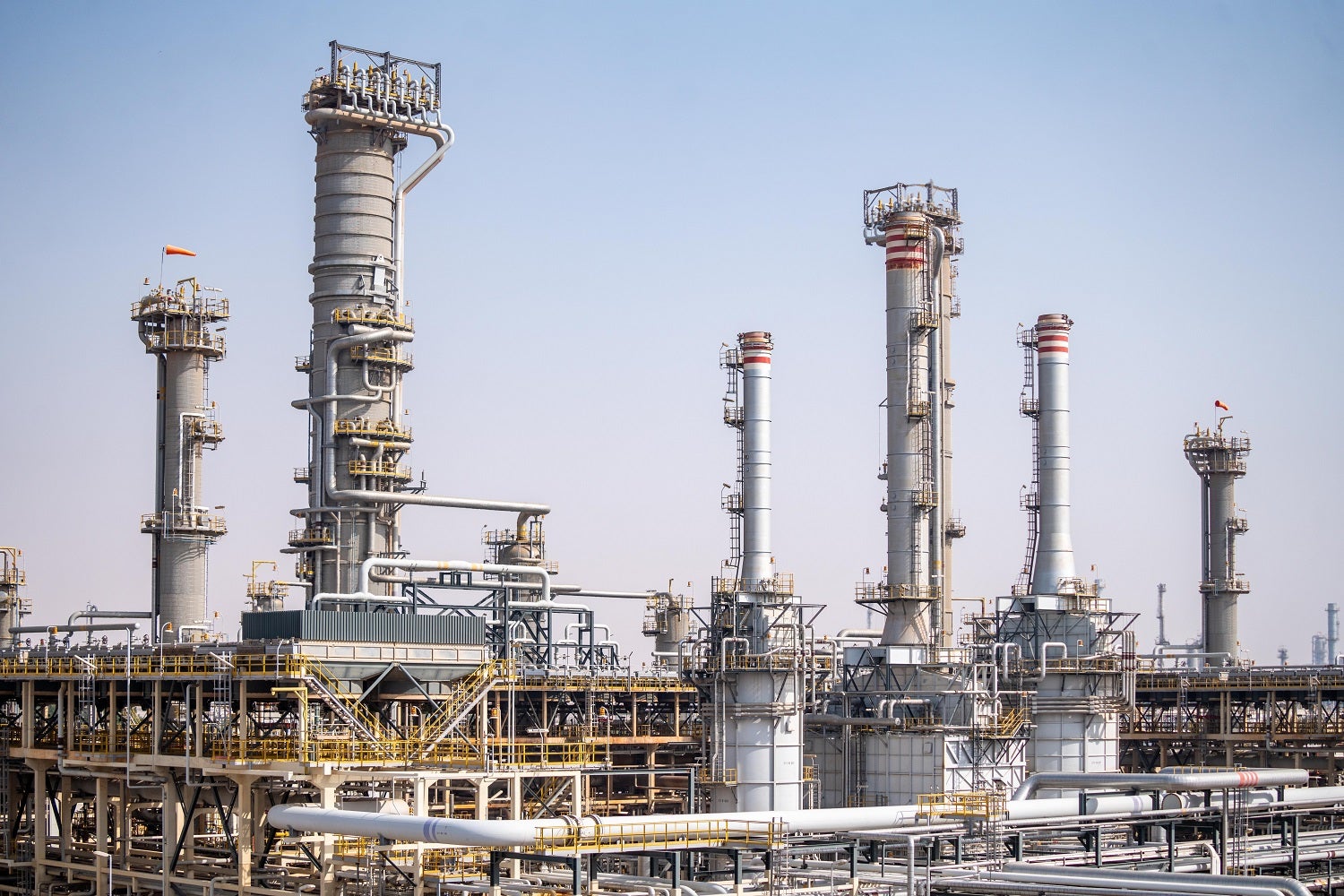
Ruwais industrial complex struck by drones
10 March 2026
Register for MEED’s 14-day trial access
Abu Dhabi authorities are responding to a fire that has broken out at a facility in Ruwais industrial complex, caused by a drone attack.
The Ruwais industrial complex, located in Abu Dhabi's Al-Dhafra region, houses the world's fourth-largest single-site oil refinery and is operated by Abu Dhabi National Oil Company (Adnoc).
No injuries have been reported at this time, the Abu Dhabi Media Office said.
The UAE continues to intercept drones and missiles fired from Iran, as attacks on the Gulf countries continue for a 11th day in the ongoing regional conflict.
Apart from the Ruwais refining complex, which has a capacity of 922,000 barrels a day (b/d) of crude oil and condensates, Ruwais industrial complex is also home to petrochemicals producer Borouge’s main production complex.
Additionally, Adnoc is in an advanced stage of engineering, procurement and construction (EPC) on a liquefied natural gas (LNG) project within the Ruwais industrial complex, which will have the capacity to produce about 9.6 million tonnes a year (t/y) of LNG from two processing trains, each with a capacity of 4.8 million t/y. When the project is commissioned, which is due to take place in 2028, Adnoc’s LNG production capacity will more than double to about 15 million t/y.
Separately, Taziz – a 60:40 joint venture of Adnoc Group and Abu Dhabi’s industrial holding company ADQ – is overseeing the development of at least seven specialty chemicals plants in its planned derivatives zone in Ruwais Industrial City.
https://image.digitalinsightresearch.in/uploads/NewsArticle/15926385/main2738.jpg -
Contractors submit bids for Dorra offshore gas project packages
10 March 2026
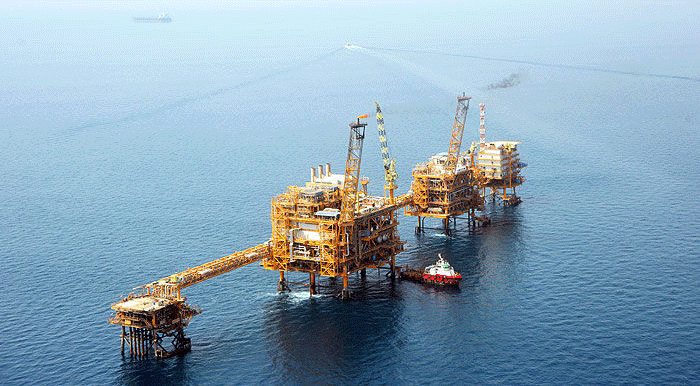
Contractors have submitted bids to Al-Khafji Joint Operations (KJO) for engineering, procurement and construction (EPC) works on a project to develop natural gas from the Dorra gas field, located in the waters of the Saudi-Kuwait Neutral Zone.
KJO, which is jointly owned by Saudi Aramco subsidiary Aramco Gulf Operations Company and Kuwait Petroleum Corporation (KPC) subsidiary Kuwait Gulf Oil Company (KGOC), has divided the project’s scope of work into four EPC packages – three offshore and one onshore.
Indian contractor Larsen & Toubro Energy Hydrocarbon (L&TEH) has won package one of the Dorra facilities project, which covers the EPC of seven offshore jackets and the laying of intra-field pipelines. The contract awarded by KJO to L&TEH is estimated to be valued at $140m-$150m, MEED reported in October.
Contractors submitted bids for the remaining three packages – offshore packages 2A and 2B and onshore package three by the final deadline of 9 March, according to sources.
Two consortiums of contractors submitted bids for the packages, sources told MEED:
- NMDC Energy (UAE) / Hyundai Heavy Industries (South Korea)
- Saipem (Italy) / Larsen and Toubro Energy Hydrocarbon (India)
KJO had extended the bid submission deadlines for these packages several times since last year.
The EPC scope of work for package 2A includes Dorra gas field wellhead topsides, flowlines and umbilicals. Package 2B involves the central gathering platform complex, export pipelines and cables. Package three includes the EPC of onshore gas processing facilities.
Saudi Arabia and Kuwait are pressing ahead with their plan to jointly produce 1 billion cubic feet a day (cf/d) of gas from the Dorra gas field.
The two countries have been producing oil from the Neutral Zone – primarily from the onshore Wafra field and offshore Khafji field – since at least the 1950s. With a growing need to increase natural gas production, they have been working to exploit the Dorra offshore field, understood to be the only gas field in the Neutral Zone.
Discovered in 1965, the Dorra gas field is estimated to hold 20 trillion cubic metres of gas and 310 million barrels of oil.
The Dorra facilities scheme is one of three multibillion-dollar projects launched by subsidiaries of Saudi Aramco and KPC to produce and process gas from the Dorra field that has advanced in the past few months.
AGOC onshore Khafji gas plant
AGOC has set a current bid submission deadline of 22 April for seven EPC packages as part of a project to construct the Khafji gas plant, which will process gas from the Dorra field onshore Saudi Arabia.
MEED previously reported that AGOC issued main tenders for the seven EPC packages in 2025. Contractors were initially set deadlines of 24 October for technical bid submissions and 9 November for the submission of commercial bids, which was then extended by AGOC until 22 December.
The seven EPC packages cover a range of works, including open-art and licensed process facilities, pipelines, industrial support infrastructure, site preparation, overhead transmission lines, power supply systems and main operational and administrative buildings.
France-based Technip Energies has carried out a concept study and front-end engineering and design (feed) work on the entire Dorra gas field development programme.
Progress has been hampered by a geopolitical dispute over ownership of the Dorra gas field. Iran, which refers to the field as Arash, claims it partially extends into Iranian territory and asserts that Tehran should be a stakeholder in its development. Kuwait and Saudi Arabia maintain that the field lies entirely within their jointly administered Neutral Zone – also known as the Divided Zone – and that Iran has no legal basis for its claim.
In February 2024, Kuwait and Saudi Arabia reiterated their claim to the Dorra field in a joint statement issued during an official meeting in Riyadh of Kuwaiti Emir Sheikh Mishal Al-Ahmad Al-Jaber Al-Sabah and Saudi Crown Prince and Prime Minister Mohammed Bin Salman Bin Abdulaziz Al-Saud.
Since that show of strength and unity, projects targeting the production and processing of gas from the Dorra field have gained momentum.
KGOC onshore processing facilities
KGOC has initiated early engagement with contractors for the main EPC tendering process for a planned Dorra onshore gas processing facility, which is to be located in Kuwait.
KGOC is at the feed stage of the project, which is estimated to be valued at up to $3.3bn. The firm is now expected to issue the main EPC tender within the first quarter of this year, MEED recently reported.
The proposed facility will receive gas from a pipeline from the Dorra offshore field, which is being separately developed by KJO. The complex will have the capacity to process up to 632 million cf/d of gas and 88.9 million barrels a day of condensates from the Dorra field.
The facility will be located near the Al-Zour refinery, owned by another KPC subsidiary, Kuwait Integrated Petroleum Industries Company.
A 700,000-square-metre plot has been allocated next to the Al-Zour refinery for the gas processing facility and discussions regarding survey work are ongoing. The site could require shoring, backfilling and dewatering.
The onshore gas processing plant will also supply surplus gas to KPC’s upstream business, Kuwait Oil Company, for possible injection into its oil fields.
Additionally, KGOC plans to award licensed technology contracts to US-based Honeywell UOP and Shell subsidiary Shell Catalysts & Technologies for the plant’s acid gas removal unit and sulphur recovery unit, respectively.
https://image.digitalinsightresearch.in/uploads/NewsArticle/15926065/main5801.gif -
Abu Dhabi receives bids for 3.3GW Al-Nouf IPP
10 March 2026
Two joint ventures have submitted bids for the development of the 3.3GW Al-Nouf independent power producer (IPP) project in Abu Dhabi.
Located within the newly established Al-Nouf complex, the facility will be the largest single-site, carbon-capture-ready, combined-cycle gas turbine plant in the UAE.
State utility and offtaker Emirates Water & Electricity Company (Ewec) issued a request for proposals for the project last August.
Ewec received statements of qualifications for the contract in April 2025.
The groups that submitted bids are:
- Aljomaih Energy & Water (Saudi Arabia) and China Energy Engineering Corporation
- Orascom (Egypt) and Sumitomo (Japan)
As MEED previosuly reported, the project will follow the model of Abu Dhabi’s IPP programme, in which developers enter into a long-term agreement with Ewec as the sole procurer.
This involves the development, financing, construction, operation, maintenance and ownership of the plant, with the successful developer or developer consortium owning up to 40% of the entity. The remaining equity will be held indirectly by the Abu Dhabi government.
The project site was selected for its ability to accommodate both seawater-cooled power generation and reverse osmosis desalination technologies.
The plant will have the capacity to support several utility-scale energy and desalination projects in the future.
The facility is scheduled to begin commercial operations in the third quarter of 2029.
Taweelah C IPP
Last year, the Taweelah C IPP became the first gas-fired power plant project to be procured by Abu Dhabi since 2020, when Ewec awarded Japan’s Marubeni Corporation the contract to develop the Fujairah 3 IPP.
Ewec is procuring the 2,500MW gas-fired IPP, which will be located in the Al-Taweelah power and desalination complex, approximately 50 kilometres to the northeast of Abu Dhabi.
It is understood that three groups have submitted bids for the developer contract. These are:
- Sumitomo (Japan) / Korean Midland Power / Korea Overseas Infrastructure & Urban Development Corporation
- Aljomaih Energy & Water (Saudi Arabia) / Sembcorp (Singapore)
- Etihad Water & Electricity (UAE) / Korea Western Power (Kowepo) / Kyuden (Japan)
A team of UK-based Alderbrook Finance and US-based Sargent & Lundy is providing financial and technical advisory services to Ewec for the Taweelah C IPP
The power purchase agreement for the project was previously expected to be signed by the end of 2025, with the project scheduled to begin commercial operations in the fourth quarter of 2028.
https://image.digitalinsightresearch.in/uploads/NewsArticle/15924159/main.jpg -
Eighty-nine firms express Qassim airport interest
10 March 2026
Eighty-nine local and international firms have expressed interest in a contract to develop Prince Naif Bin Abdulaziz International airport in Qassim, Saudi Arabia.
The project is being developed by Saudi Arabia’s Civil Aviation Holding Company (Matarat), through the National Centre for Privatisation & PPP (NCP).
In a statement, NCP said the list includes 55 local companies and 34 international firms comprising 19 developers; 33 engineering, procurement and construction (EPC) contractors; 13 operators; 11 advisors; nine equity investors; three financial institutions and one in the other category.
These are:
Developers
- Ports Projects Management & Development Company (local)
- Tamasuk Holding (local)
- Makyol (Turkiye)
- Al-Gihaz Holding (local)
- Alfanar Company (local)
- Nesma Infrastructure & Technology (local)
- Plenary (Australia)
- WCT International (Malaysia)
- Al-Bawani (local)
- Egis (France)
- Mada International Holding (local)
- Vision Invest (local)
- Almutlaq Real Estate Investment Company (local)
- Samsung C&T (South Korea)
- Sarh Developments (local)
- IC Ictas (Turkiye)
- Kalyon (Turkiye)
- Saudi Binladin Group (local)
- Lamar Holding (Bahrain)
EPC Contractors
- SkyBridge (US)
- Avic (China)
- Saudi Pan Kingdom Company (local)
- Fas Energy & Infrastructure (local)
- Alghanim International (Kuwait)
- Abdul Ali Al-Ajmi (local)
- Technical Development Company for Contracting (local)
- China Civil Engineering Construction Corporation (China)
- Almansouryah General Contracting (local)
- Al-Fahd Company (local)
- YDA Insaat (Turkiye)
- China Harbour Engineering Company (China)
- Rowad Modern Engineering (Egypt)
- Abdullah Fahad Al-Khaledi Company for General Contracting (Saudi Arabia)
- Shade Corporation (local)
- Al-Ayuni Investment & Contracting (local)
- Setec (France)
- International Hospitals Construction Company (local)
- Arkad Engineering & Construction Company (local)
- Alrawaf Trading & Contracting (local)
- Abdulrahman Saad Alrashid & Sons (local)
- Mistacoglu Holding (Turkiye)
- Al-Jaber Contracting (Qatar)
- Mobco Construction (local)
- Sateaa Al-Tameer for Real Estate Development & Investment (local)
- China State Construction Engineering Corporation Ltd (China)
- China Construction Excellence Company (China)
- Safari Company (Saudi Arabia)
- Al-Sharif Group Holdings (local)
- Nayef Abdulkarim Company Al-Rakhis Contracting Company (local)
- Al-Yamama (local)
- Almabani (local)
- Buna Al-Khaleej Contracting (local)
Operators
- Annasban Group (local)
- Indiza Airport Management (South Africa)
- GMR Airports (India)
- Flynas (local)
- Bangalore International Airport Limited (India)
- Idemia Public Security (France)
- Saudi Ground Services (local)
- Oman Airports Management Company (Oman)
- Al-Qussie International (local)
- Serco Saudi Arabia (local)
- Al-Shams National Global Energy (local)
- DAA International (Ireland)
- TAV Airports (Turkiye)
Advisors
- Contrax International (UAE)
- Typsa (Spain)
- Ghesa Ingenieria Y Tecnologia (Spain)
- Pini Group (Switzerland)
- Hill International (United States)
- Walter P Moore Engineering Consultants (United States)
- Foster + Partners (UK)
- Arabtech Jardaneh (Jordan)
- Currie & Brown (UK)
- Meinhardt (Singapore)
- Populous (UK)
Equity Investors
- Namaya International Investment Company (local)
- Zamil Group Investment Company (local)
- Buhur for investment (local)
- Asyad Holding (local)
- IDS Consulting (local)
- Al-Gassim Investment Holding (local)
- Erada Advanced Projects (local)
- Sumou Global Investment (local)
- Abrdn Investcorp Infrastructure Partners (Bahrain)
Financial Institutions
- Bank Aljazira (local)
- Arab National Bank (local)
- Piper Sandler Companies (United States)
Other
- Middle East Tasks Company Metco (local)
The project scope includes the redevelopment of the passenger terminal as well as other associated facilities such as airside infrastructure, including runway, taxiways and aprons.
The project will be developed on a design, finance, construction, operations, maintenance and transfer basis.
The clients issued an expression of interest notice for the project on 9 February, and companies were given until 23 February to submit responses.
The latest development follows Matarat Holding and NCP prequalifying five teams to bid for a contract to develop the new Taif international airport project in Mecca Province in January.
According to local media reports, four consortiums and one standalone company have been prequalified to proceed to the next stage of the project.
The new Taif International airport will be located 21 kilometres southeast of the existing Taif airport, with a capacity to accommodate 2.5 million passengers by 2030.
The clients opted for a 30-year build-transfer-operate (BTO) contract model, including the construction period.
Previous tenders
The Taif, Hail and Qassim airport schemes were previously tendered and awarded as public-private partnership (PPP) projects using a BTO model.
Saudi Arabia’s General Authority of Civil Aviation (Gaca) awarded the contracts to develop four airport PPP projects to two separate consortiums in 2017.
A team of Tukiye’s TAV Airports and the local Al-Rajhi Holding Group won the 30-year concession agreement to build, transfer and operate airport passenger terminals in Yanbu, Qassim and Hail.
A second team, comprising Lebanon’s Consolidated Contractors Company, Germany’s Munich Airport International and local firm Asyad Group, won the BTO contract to develop Taif International airport.
However, these projects stalled following the restructuring of the kingdom’s aviation sector.
Saudi Arabia has already privatised airports, including the $1.2bn Prince Mohammed Bin Abdulaziz International airport in Medina, which was developed as a PPP and opened in 2015.
https://image.digitalinsightresearch.in/uploads/NewsArticle/15922809/main.png -
Egypt brings new gas wells online
10 March 2026
Egypt has brought new wells online in the Mediterranean Sea and the country’s Western Desert region, according to a statement from Egypt’s Petroleum & Mineral Resources Ministry.
In the Mediterranean, the second well in the West El-Burullus (WEB) offshore field was brought online, increasing the field’s output from about 25 to 37 million cubic feet a day (cf/d).
The project is being developed and produced through a joint‑venture vehicle known as PetroWeb, in which the lead partner is US-based Cheiron.
The production is forecast to exceed 70 million cf/d following the connection of the third well in the coming days, while the drilling of the fourth well has been completed with promising results, according to the ministry.
The development plan includes drilling two additional wells on the Papyrus platform, linked to WEB, to maximise the utilisation of the concession area's resources and accelerate production.
The well in the Western Desert has been brought on by Badr El-Din Petroleum Company (Bapetco), which is a joint venture of London-headquartered Shell and state-owned Egyptian General Petroleum Corporation.
Production tests showed rates of 10-15 million cf/d, in addition to 300–650 b/d of condensate, according to Egypt’s Petroleum & Mineral Resources Ministry.
The latest well has increased the confirmed reserves in the area from 15 billion cubic feet to 25 billion cubic feet.
Four more production wells are planned for in the Badr El-Din concession as Bapetco continues its push to ramp up production from the field.
Egypt is pushing to increase domestic production of gas amid soaring global prices due to the US and Israel’s war with Iran.
https://image.digitalinsightresearch.in/uploads/NewsArticle/15916500/main.jpg