
Dubai entities sign bridge construction deal
14 September 2023
Dubai’s Roads & Transport Authority (RTA) has signed an agreement with local developer Nakheel to construct a bridge connecting the offshore Dubai Islands development with Bur Dubai.
The 1,425-metre-long bridge has been planned for several years. It will have four lanes in each direction and will be built between the Infinity Bridge and Port Rashid.
It will be 15.5 metres above the Dubai Creek waterline with a 75-metre-wide canal allowing tall ships to pass. The project is set to be completed in 2026.
It is part of the larger AED5.3bn ($1.4bn) Shindagha Corridor Improvement Project, which is split into five phases and includes the construction of 15 intersections spanning 13 kilometres in total. US firm Parsons is the consultant for the Shindagha Corridor scheme.
In 2018, the local Wade Adams Contracting was awarded another contract to build road access bridges to Dubai Islands, then called Deira Islands.
Development of the offshore islands was given renewed impetus in 2022 when Nakheel released details of a new masterplan and changed the name to Dubai Islands.
The reclaimed islands were originally part of the Palm Deira project that was partially completed and then put on hold in 2008.
Dubai Islands comprises five islands with a total area of 17 square kilometres. The initial renderings show that the development plans are more low-rise than the earlier Deira Islands scheme, and a golf course has been added to the masterplan.

Register for MEED's guest program now to access this article.
Exclusive from Meed
-
 Mecca university tenders water infrastructure projects
24 November 2026
-
 Two contractors pursue Kuwait refinery project
23 November 2026
-
 Kuwait schedules Terminal 2 operator price negotiations
23 November 2026
-
 Contractors express interest in Qiddiya wastewater projects
23 November 2026
-
 OQEP and Petronas sign offshore block study deal
23 November 2026
All of this is only 1% of what MEED.com has to offer
Subscribe now and unlock all the 153,671 articles on MEED.com
- All the latest news, data, and market intelligence across MENA at your fingerprints
- First-hand updates and inside information on projects, clients and competitors that matter to you
- 20 years' archive of information, data, and news for you to access at your convenience
- Strategize to succeed and minimise risks with timely analysis of current and future market trends
Related Articles
-
Mecca university tenders water infrastructure projects
24 November 2026
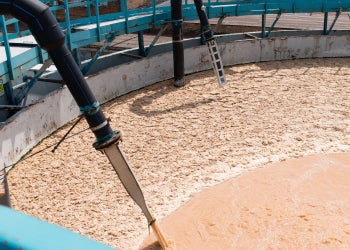
Mecca-based Umm Al-Qura University has issued two tenders for wastewater and water storage infrastructure at its student campus in Al-Abidiyah district.
The first tender covers the second phase of the university’s main water storage scheme. The project involves building seven tanks with a combined capacity of 14,700 cubic metres (m³).
The scope includes three ground-level tanks with a total capacity of 7,500m³ and four elevated tanks with a combined capacity of 7,200m³.
It also includes a 2.1-kilometre backup water supply pipeline with a diameter of 400 millimetres, pumping stations, inlet and outlet pipework, valves and water control systems.
The second tender covers the construction of a wastewater treatment plant with a capacity of 4,000 cubic metres a day (cm/d) at the university’s student campus. The contract duration is listed as two years.
The projects will expand the campus’s water infrastructure, adding storage capacity and wastewater treatment facilities to support its operational requirements.
Both tenders were issued in November. Bids for the water storage tanks and wastewater plant are due by 14 December and 13 December, respectively.
https://image.digitalinsightresearch.in/uploads/NewsArticle/21752745/main.jpg -
Two contractors pursue Kuwait refinery project
23 November 2026

Register for MEED’s 14-day trial access
Two companies are engaging with the tender process for the first phase of the project to develop an alternative feed system for the Al-Zour refinery’s hydrogen production units (HPUs), according to industry sources.
The two companies that are competing for the contract are:
- Larsen & Toubro (L&T), India
- Tecnicas Reunidas (TR), Spain
Representatives from both companies attended a pre-tender meeting to discuss the project, which saw its bid deadline extended earlier this month.
The contract was re-tendered by state-owned Kuwait Integrated Petroleum Industries Company (Kipic) on 1 February.
In the latest rescheduling of the bid deadline, Kipic announced on 10 November that it was moving the submission date from 15 December 2026 to 19 January 2027.
The first phase of the project will enable the HPUs to use natural gas from the liquefied natural gas import terminal as an alternative to naphtha.
The contract is estimated to be worth $150m-$200m.
Kipic has been attempting to make progress with the project since at least 2023, when it first issued the tender. It set an initial bid submission deadline of 20 June 2023, which was then pushed back several times.
The original tender covered engineering, procurement and construction, along with pre-commissioning, start-up and quality testing.
The main element was the construction of Unit 38, a compression facility, including piping tie-ins and connections to process and utility headers in the existing interconnecting pipe racks.
The scope also included modifications and associated tie-ins for Unit 33, the existing HPU, and construction of Unit 60, a steam generation unit. It also covered the construction of two new boilers, modifications to extend the existing steam generation unit with all associated tie-ins, and associated facilities.
Kipic had initially contacted the following contractors, among others, to solicit their interest in the planned project:
- Hyundai Engineering & Construction (South Korea)
- Larsen & Toubro Energy Hydrocarbon (India)
- Petrofac (UK)
- Samsung Engineering (South Korea)
- SK Engineering & Contracting (South Korea)
On 12 March 2024, MEED reported that a study was needed to determine how the refinery would process heavy oil and the exact specifications for several different units.
Ultimately, none of the contractors that were initially invited by Kipic to express interest in the project submitted bids, with only the following contractors submitting proposals in September 2024:
- China Tianchen Engineering (China)
- Gulf Spic General Trading & Contracting (Kuwait)
- Heisco (Kuwait)
- Jereh Oil & Gas Engineering Corporation (China)
- Sinopec Luoyang Engineering (China)
All five of the technical bids received were deemed ineligible. Sinopec Luoyang Engineering’s bid was excluded for non-compliance with tender instructions, while the other four bids were rejected because Kipic determined that “none of the bidding companies met the technical qualifications required”.
The issuance of the latest tender for the project came nearly one and a half years after the first tendering round was shelved, during which time Kipic is understood to have been holding internal meetings about re-tendering the project, as well as working with relevant committees to secure the approvals required to initiate the new tendering process.
https://image.digitalinsightresearch.in/uploads/NewsArticle/21723933/main.png -
Kuwait schedules Terminal 2 operator price negotiations
23 November 2026
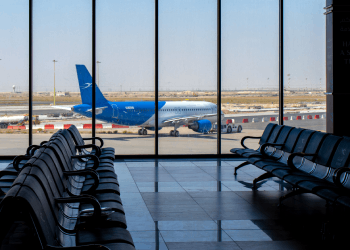
Kuwait's Central Agency for Public Tenders (Capt) has scheduled a price negotiation session for a contract to operate, manage and develop the new passenger Terminal 2 (T2) at Kuwait International airport.
According to local media reports, Capt's board members have approved holding the session on 30 November.
The decision responds to a request from the Public Authority for Civil Aviation (Paca) to establish suitable pricing agreements.
The negotiations will involve two pre-qualified companies.
The contract covers the operation, management and service development of T2 and its associated aircraft aprons, as well as centralised operations and maintenance management across the airport.
Lowest bidder
Ireland's DAA International was the lowest bidder for the contract, submitting an offer of KD419m ($1.35bn), according to official price-opening records released by Capt on behalf of the Directorate General of Civil Aviation.
Three international airport operators submitted commercial bids.
DAA International's proposal undercut its nearest rival by about 45%. Turkiye's TAV Airports Holding submitted the second-lowest offer of KD764.15m ($2.46bn), while South Korea's Incheon International Airport Corporation bid KD959.48m ($3.1bn). All three proposals were marked as approved in the tender committee's price disclosure.
The remit includes corporate management of centralised operations and maintenance across the wider Kuwait International airport complex, centralising operational procedures, systems integration and service delivery.
Technical documents indicate that the winning operator will oversee facility management, terminal operational readiness, passenger processing systems, apron operations and staff development programmes before and after the terminal's commercial launch.
The session forms part of Paca's efforts to take over the new terminal from the Ministry of Public Works, which is currently overseeing the project on the authority's behalf.
Responsibility for management and operations will transfer to Paca once the project is complete.
MEED reported in June 2023 that six airport operators had initially been invited to bid for the T2 operating concession.
T2 is the centrepiece of Kuwait International airport's multibillion-dollar expansion, which aims to increase total handling capacity to 25 million passengers a year. Turkish contractor Limak Insaat is executing the main terminal building under an estimated $4.34bn contract awarded in 2016.
https://image.digitalinsightresearch.in/uploads/NewsArticle/21716345/main.png -
Contractors express interest in Qiddiya wastewater projects
23 November 2026
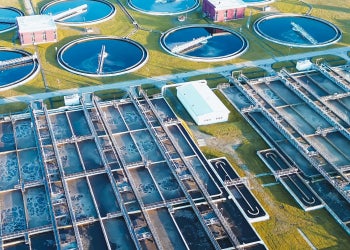
Contractors have expressed interest with Qiddiya Investment Company (QIC) for two wastewater infrastructure packages at Qiddiya City, southwest of Riyadh.
According to a source, expressions of interest (EoI) were submitted on 22 November, with at least eight contractors understood be interested in the project.
The scope covers the design, construction, commissioning and operation of two wastewater treatment plants (WWTPs), as well as a centralised sludge treatment facility.
The first package covers WWTP11 in District 24, with a treatment capacity of 60,000 cubic metres a day (cm/d), alongside a sludge treatment facility.
The second package involves WWTP2 in District 18, with a capacity of 9,000 cm/d. It will also include a reverse osmosis facility to provide tertiary treatment and produce treated sewage effluent suitable for reuse.
The following contractors have submitted EoIs for the project, industry sources told MEED:
- AlFanar (Saudi Arabia)
- AlKhorayef (Saudi Arabia)
- Aqualia (Spain)
- Cox (Spain)
- Lantania (Spain)
- Nesma (Saudi Arabia)
- Tawzea (Saudi Arabia)
- Wetico (Saudi Arabia)
The deadline had initially been set for 8 November. It was extended to 18 November and then to 22 November to allow additional contractors to participate in the process, upon request.
Included in the second wastwater package is a sludge treatment facility, which will have an initial processing capacity of approximately 415 cm/d of thickened sludge. Its scope comprises sludge stabilisation, dewatering, anaerobic digestion, biogas recovery and combined heat and power generation. The facility will also incorporate solar sludge drying, with a capacity of approximately 172 cm/d, to produce Class A biosolids.
QIC has said it intends to procure the works under a design, build and operate model. The initial operations and maintenance period will be two years, with an option for QIC to extend this to five years.
The two packages will be tendered under a single request for proposals (RFP). Contractors will be required to submit separate technical and commercial proposals for each package, as well as a combined proposal. QIC said it may award the packages separately or collectively.
The release of the RFP had initially been scheduled for December, with contract awards targeted for June 2027.
The infrastructure package will cater to Saudi Arabia’s 360-square-kilometre Qiddiya entertainment city.
QIC, which is owned by Saudi sovereign wealth vehicle the Public Investment Fund, is overseeing the development of Qiddiya City, including its supporting utilities infrastructure.
https://image.digitalinsightresearch.in/uploads/NewsArticle/21714953/main.jpg -
OQEP and Petronas sign offshore block study deal
23 November 2026
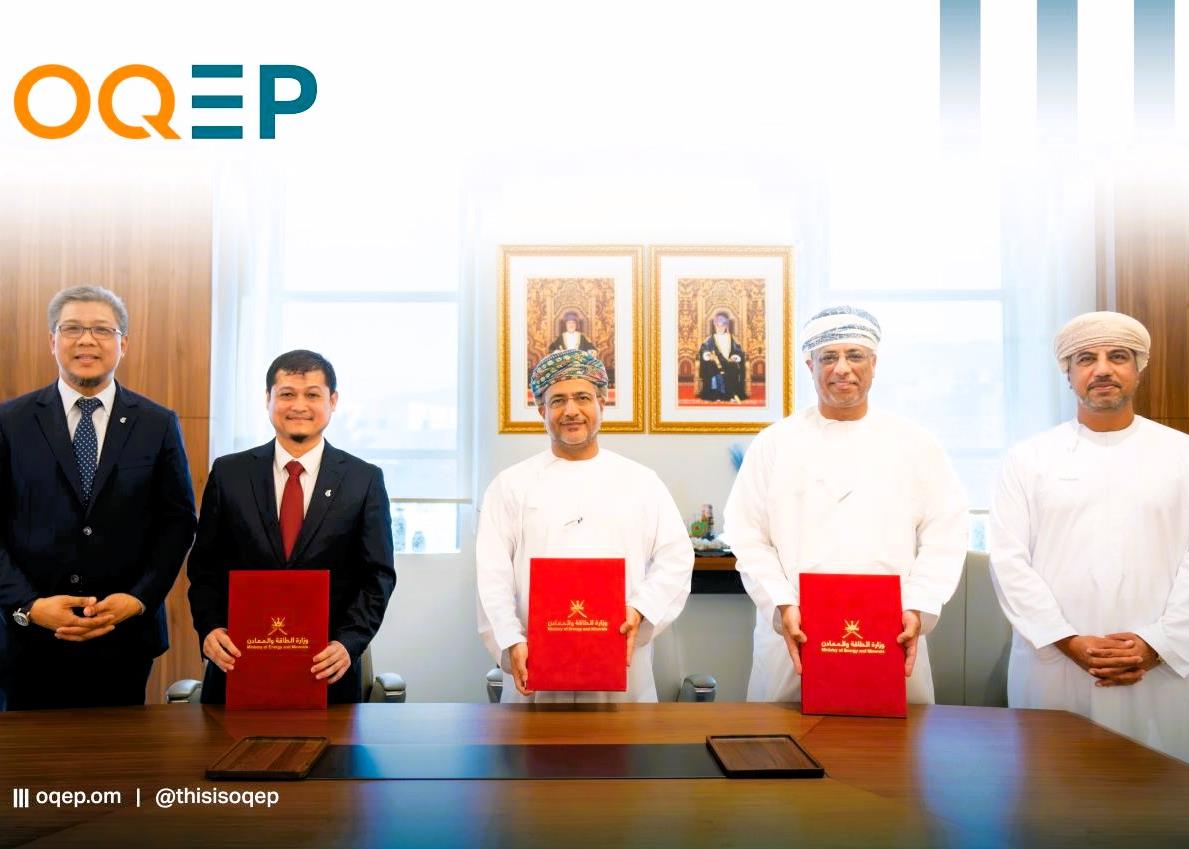
Oman’s state-owned upstream firm OQ Exploration & Production (OQEP) and Malaysia’s state energy company Petronas have signed an agreement to jointly study hydrocarbons resources in offshore blocks 83 and 84.
Blocks 83 and 84 cover 10,875 square kilometres (sq km) and 14,147 sq km, respectively, in waters of the Gulf of Oman, off the sultanate’s Qurayyat coast near Muscat.
The joint study agreement between OQEP and Petronas covers geological and geophysical studies to evaluate the resource potential and commercial viability of the two blocks.
After failing to discover hydrocarbons earlier in this decade in Oman’s first deepwater exploration well in Block 52, in which OQEP had been a minority stakeholder, the sultanate has been pushing hard in its campaign to find oil and gas reserves in its territorial waters.
In February this year, OQEP acquired a 30% participating interest in offshore Block 18, following the Energy & Minerals Ministry’s award of exploration rights to a joint venture of OQEP subsidiary OQ Exploration & Production Al-Batinah Offshore and PC Oman Ventures, a wholly owned subsidiary of Petronas.
Located off Oman’s northeastern coast, Block 18 covers more than 21,000 sq km in the Sea of Oman, with water depths of 50-3,000 metres. No confirmed discoveries have previously been reported in the block.
ALSO READ: Oman and ExxonMobil partner for integrated gas and LNG project
Under the concession agreement, Petronas holds a 70% participating interest and operatorship, while OQEP holds the remaining 30%.
In June, the ministry signed an with OQEP and state-owned Turkiye Petroller AO, granting the companies exclusive exploration, appraisal, development and production rights for offshore Block 80.
The block covers approximately 5,737 sq km in the Gulf of Oman, near the Strait of Hormuz and off Musandam Governorate. It includes the producing Bukha and West Bukha oil and gas fields.
The agreement stipulates a minimum exploration investment commitment of $90m over an initial eight-year exploration period. The work programme is divided into two phases to evaluate the block’s hydrocarbons potential.
Separately, the ministry awarded OQEP exploration rights for three hydrocarbons blocks – 36, 43A and 66 – in the sultanate.
Under the agreements, OQEP will conduct geological and geophysical surveys, analysis and modelling, and will drill exploratory wells at the three blocks, with the aim of developing recoverable reserves.
Neither the ministry nor OQEP disclosed the blocks’ locations, areas or prospective reserves in their statement.
OQEP portfolio
Omani state energy group OQ Group holds the majority 75% stake in OQEP, with the remaining 25% shares trading on the Muscat Stock Exchange since October 2024, following an initial public offering from which OQ earned proceeds of $2bn.
OQEP’s portfolio comprises 14 upstream oil and gas exploration and production assets in Oman, covering onshore and offshore operations and assets held under service contracts.
Formerly known as Oman Oil Company Exploration & Production, OQEP’s flagship assets include Block 60, which contains the Abu Tubul and Bisat oil fields, and Block 48. The company also holds strategic interests in gas-producing blocks 9, 10 and 61.
OQEP also expanded its producing portfolio in April this year through the acquisition of a 35% interest in onshore Block 27 from Japan's Mitsui E&P Middle East. The transaction was valued at RO28.8m ($75m).
Block 27 is operated by US-based Occidental Petroleum, which holds a 65% participating interest under an exploration and production sharing agreement valid until 2035.
ALSO READ: OQEP signs agreement with Indonesian state energy firm
https://image.digitalinsightresearch.in/uploads/NewsArticle/21714285/main5234.jpeg