
Dewa to seek advisers for next solar phase
7 October 2024

State utility Dubai Electricity & Water Authority (Dewa) is expected to issue a request for proposals for the contract to provide transaction advisory services for phase seven of Dubai's Mohammed Bin Rashid Al-Maktoum (MBR) Solar Park.
According to a source familiar with the plan, the tender could be issued before the end of the year.
MEED previously reported that phase seven of the 5,000MW complex could include a battery energy storage system (bess), although this has yet to be confirmed.
MEED understands an estimated 1,913MW of solar photovoltaic (PV) capacity and 950MW of hybrid solar PV and concentrated solar power (CSP) capacity from the solar park are now connected to the grid.
A further 1,800MW of capacity for the project’s sixth phase is under construction.
MEED understands that the project's phase seven will likely have a capacity of more than 400MW, the remainder of the planned total capacity of 5,000MW.
Sixth phase
In February, Dewa and Abu Dhabi Future Energy Company (Masdar) reached financial close for the 1,800MW sixth phase of MBR Solar Park, which is expected to cost up to AED5.51bn ($1.5bn).
Once completed in 2026, the 1,800MW sixth phase will increase the solar park’s total production capacity to 4,660MW.
Located in Saih Al-Dahal on the outskirts of Dubai, the construction status of the phases of the MBR Solar Park project are as follows:
- 13MW solar PV phase one: Completed in 2013
- 200MW solar PV phase two: Commissioned in 2017
- 800MW solar PV phase three: Commissioned in 2020
- 950MW hybrid CSP/solar PV phase four: Inaugurated in 2023
- 900MW solar PV phase five: Commissioned in 2023
- 1,800MW solar PV phase six: Under construction
The state utility aims to have about 27% of the generation mix delivered by clean energy sources by 2030.
Photo: Dewa

Register for MEED's guest program now to access this article.
Exclusive from Meed
-
 Kuwait appoints KPMG for ports strategic plan
4 November 2026
-
 Combined Group signs Kuwait upstream contract
4 November 2026
-
 Qiddiya seeks interest for water infrastructure packages
4 November 2026
-
 Riyadh plans multibillion northern roads network overhaul
4 November 2026
-
 Aramco Q3 profit rises 9% despite attacks on facilities
3 November 2026
All of this is only 1% of what MEED.com has to offer
Subscribe now and unlock all the 153,671 articles on MEED.com
- All the latest news, data, and market intelligence across MENA at your fingerprints
- First-hand updates and inside information on projects, clients and competitors that matter to you
- 20 years' archive of information, data, and news for you to access at your convenience
- Strategize to succeed and minimise risks with timely analysis of current and future market trends
Related Articles
-
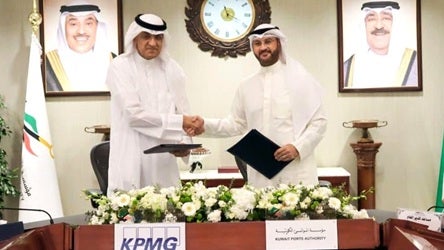
Kuwait appoints KPMG for ports strategic plan
4 November 2026
Register for MEED’s 14-day trial access
Kuwait Ports Authority (KPA) has appointed the local office of UK-headquartered KPMG to develop its ports strategic plan, which aims to improve the competitiveness, connectivity and performance of Kuwait’s commercial ports.
KPMG will act as lead consultant on the strategic consultancy engagement, with Netherlands-based Haskoning Nederland and local engineering firm Dar Gulf Consult providing engineering consultancy support.
KPMG will consolidate the three consultants’ work into a single strategic plan. It will lead the market, commercial and organisational analysis, as well as develop and implement the strategy.
The scope is split into two workstreams. The first covers strategy development, planning and an implementation framework, including an assessment of KPA’s current market position and performance.
The resulting strategic options and roadmap will be developed into detailed functional plans, supported by key performance indicators, a risk framework and a monitoring plan.
Under the second workstream, KPMG will set up and lead a strategic technical support office for 36 months. The office will provide KPA with strategic oversight, technical advisory services and integrated project management support.
KPA operates Kuwait’s three main commercial ports: Shuwaikh Port, Shuaiba Port and Doha Port.
In line with the New Kuwait Vision 2035 development strategy, KPA is transitioning its operations into high-efficiency smart ports by investing heavily in automated machinery, deeper navigational channels and significant berth capacity expansions.
https://image.digitalinsightresearch.in/uploads/NewsArticle/21106611/main.jpg -
Combined Group signs Kuwait upstream contract
4 November 2026
Register for MEED’s 14-day trial access
Kuwait-headquartered Combined Group Contracting Company has signed a contract to repair and revamp production facilities in West Kuwait, according to a company statement.
State-owned upstream operator Kuwait Oil Company (KOC) awarded the contract, valued at KD9.7m ($31.4m).
The contract has a five-year term.
KOC issued the invitation to bid on 5 October 2025. The initial bid deadline was 4 January 2026, and a pre-tender meeting was scheduled for 4 November 2025.
The contract award to Combined Group was approved on 13 September 2026.
Kuwait’s oil and gas sector is currently in the midst of a major crisis, as disruptions to shipping through the Strait of Hormuz have dramatically reduced exported crude oil volumes.
The disruptions are the result of a regional war that started on 28 February when the US and Israel attacked Iran.
The disruptions to shipping in the Strait of Hormuz are also creating significant challenges for oil and gas construction projects, which normally import equipment and materials through the waterway.
https://image.digitalinsightresearch.in/uploads/NewsArticle/21120792/main.png -
Qiddiya seeks interest for water infrastructure packages
4 November 2026
Register for MEED’s 14-day trial access
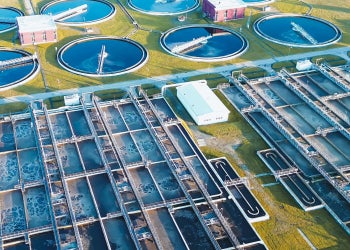
Qiddiya Investment Company (QIC) has issued an expression of interest for two water infrastructure packages at Qiddiya City, southwest of Riyadh.
According to a source, the first package covers a wastewater treatment plant with a capacity of 60,000 cubic metres a day (cm/d).
The second package involves a wastewater treatment plant with a capacity of 9,000 cm/d. It will also include a “sizeable” reverse osmosis (RO) facility, a source close to the project told MEED.
The deadline for submissions of interest is 8 November.
The infrastructure package will cater to Saudi Arabia’s 360-square-kilometre Qiddiya entertainment city.
QIC, which is owned by Saudi Arabia’s Public Investment Fund (PIF), is overseeing the development of Qiddiya City, including its supporting utilities infrastructure.
In October 2024, MEED reported exclusively that QIC planned to tender its utilities packages individually under an engineering, procurement and construction model.
QIC had previously planned to procure the infrastructure through a public-private partnership (PPP). However, it cancelled this approach despite receiving two bids for a multi-utility package in 2020.
The original utilities package covered power generation, water desalination, sewage treatment and water transmission networks.
In September 2023, QIC signed infrastructure contracts worth SR2.29bn ($611m) with a joint venture of Saudi Real Estate Infrastructure Company (Binyah) and InfraRoad Contracting.
The contracts covered a wider infrastructure package at Qiddiya’s Resort Core, including roads, utility networks, water storage facilities and pumping stations, as well as the construction of a sewage treatment plant (STP).
Two other major PIF-backed developments, the Red Sea project and Amaala, have each awarded multi-utility packages using a PPP model, while contractors are preparing to bid for two separate wastewater treatment plants for Oxagon, Neom’s industrial cluster.
In September, the utilities system serving Saudi Arabia’s Red Sea tourism destination reached commercial operation, marking the start of a 25-year concession for one of the world’s largest integrated off-grid utilities projects.
The project, known as the Marafiq Red Sea Project or Red Sea Utilities Multi-Utilities Project, includes three seawater RO plants, an STP, a waste management centre and 32,500 refrigeration tonnes of district cooling capacity.
https://image.digitalinsightresearch.in/uploads/NewsArticle/21111446/main.jpg -
Riyadh plans multibillion northern roads network overhaul
4 November 2026
Register for MEED’s 14-day trial access
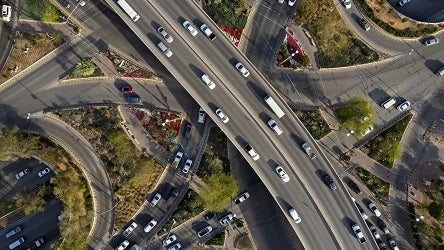
Saudi Arabia’s Royal Commission for Riyadh City (RCRC) is preparing to implement a 189-kilometre (km) programme of road upgrades and extensions in the north of the capital as part of a comprehensive restructuring of the capital’s northern transport infrastructure.
The programme comprises 19 road projects and 33 interchanges serving the airport and 16 surrounding developments, including the Expo 2030 site, Roshn’s Sedra and Plot 1 communities and King Salman Stadium.
Once complete, the upgraded network will have the capacity for 4.2 million daily trips.
Fifteen of the links, totalling 162km, will be funded from the Riyadh City Strategy budget and procured across three waves and five packages.
The remaining four links, covering 27km of roads within and around the airport campus, will be developed by King Salman International Airport (KSIA).
Wave one
Wave one is the most immediate phase, covering seven links totalling 49km around the airport terminals, Expo 2030 and Roshn’s developments.
Fast-tracked for design completion in August 2026, Wave 1 comprises critical primary conduits split across two packages:
Package 1: Covers 11km, comprising an initial 8km stretch of Sheikh Jaber Al-Ahmad Al-Sabah Road and the first extension phase of King Salman Road.
RCRC has already begun implementing the Sheikh Jaber Al-Ahmad Al-Sabah Road scheme, awarding multimillion-dollar contracts for the project this year.
The centrepiece of this wave is the extension of King Salman Road, which will be realigned south along the boundary between KSIA and Roshn.
The new road will have six main lanes and three service-road lanes in each direction, with three full interchanges where Airport Road, a Roshn Sedra link and Sheikh Jaber Road cross it on bridges.
The interchanges will also give separate access to the airport support facilities and terminals, and are each forecast to handle 300,000-400,000 vehicles a day by 2040.
Sheikh Jaber Al-Ahmad Al-Sabah Road will be upgraded along an 8km section and extended by a further 5km. Three grade-separated T-intersections will provide access to Roshn Sedra.
The existing 6km section of King Salman Road will be widened to six main lanes in each direction, with tunnels beneath it at the Prince Saud Bin Jalawi interchange and between Expo 2030 and Roshn Plot 1.
Package 2: Covers 28km of core alignment updates across King Salman Road, the Expo South link, Airport Road, Prince Badr Bin Abdulmohsen Road and Anas Bin Malik Road.
A new 6km road south of the Expo site will extend Prince Saud Bin Jalawi Road through three grade-separated junctions, relieving King Salman Road of Expo and Roshn traffic.
The 8km Airport Road upgrade will add five main lanes and four service-road lanes in each direction, an underpass interchange at Expo Road, a bridge linking Expo with Roshn Sedra and new elevated ramps serving Princess Nourah Bint Abdulrahman University.
Prince Badr Bin Abdulmohsen Bin Abdulaziz Road will be widened from three to four lanes in each direction for 5km, with an underpass to King Salman Stadium.
A tunnel-and-bridge junction will carry it beneath the upgraded 3km Anas Bin Malik Road.
Wave one also includes a main bridge over Riyadh Metro Line 4.
Wave two
Wave two comprises two further packages totalling 72km that extend the network west and south of the airport.
Package 3: Covers 38km and includes the 33km upgrade of Al-Janadriyah Road, the longest single link in the programme, together with the 5km western section of Mohammed Bin Faraj Road. Its design submission is due in November 2026.
Package 4: Covers 34km and comprises the extension of King Salman Road to Al-Janadriyah Road, the 10km upgrade of the Airport Extension Road serving the airport support functions and the 16km upgrade of Prince Saud Bin Abdullah Bin Jalawi Road.
Design is scheduled for submission in March 2027.
Wave three
Wave three is a single 52km package covering the outer northern and eastern corridors. It comprises the 11km upgrade of Al-Thumamah Road, the 17km upgrade of Khuzam Road and the 19km extension of Jabal Azid Road, with design due for submission in August 2027.
Alongside the RCRC-led schemes, KSIA will deliver four links totalling 27km on its own campus. These are the 10km upgrade of the Airport Extension Road adjacent to the terminals, a 6km upgrade of Mohammed Bin Faraj Road, a 5km road to the cargo and aviation services area and a 6km road to the Iconic Terminal.
All three waves are scheduled to reach tender by 2028.
Programme rationale
Designed by Lebanon-headquartered engineering firm Dar Al-Handasah, Taiwan’s Wiecon Consulting Engineers and Germany’s Bodeker, the programme responds to the concentration of Riyadh’s flagship schemes on the city’s northern edge.
Riyadh is planning major developments in the north, with most due for completion by 2030. Daily trips in the area are forecast to rise from about 775,000 today to 1.7 million by 2030 and 3.7 million by 2050.
Roshn’s projects account for 37% of that demand, with Roshn Sedra alone generating more than 520,000 daily trips by 2030.
The sequencing is driven by Riyadh’s event timetable. Wave one targets the links that unlock KSIA’s new terminals, the Expo 2030 site and King Salman Stadium, a venue for the 2034 Fifa World Cup.
The later waves then build capacity for the housing, logistics and mixed-use districts expected to drive traffic growth after 2030, sustaining a pipeline of road contracts in the capital well into the next decade.
https://image.digitalinsightresearch.in/uploads/NewsArticle/21109126/main.jpg -
Aramco Q3 profit rises 9% despite attacks on facilities
3 November 2026
Register for MEED’s 14-day trial access
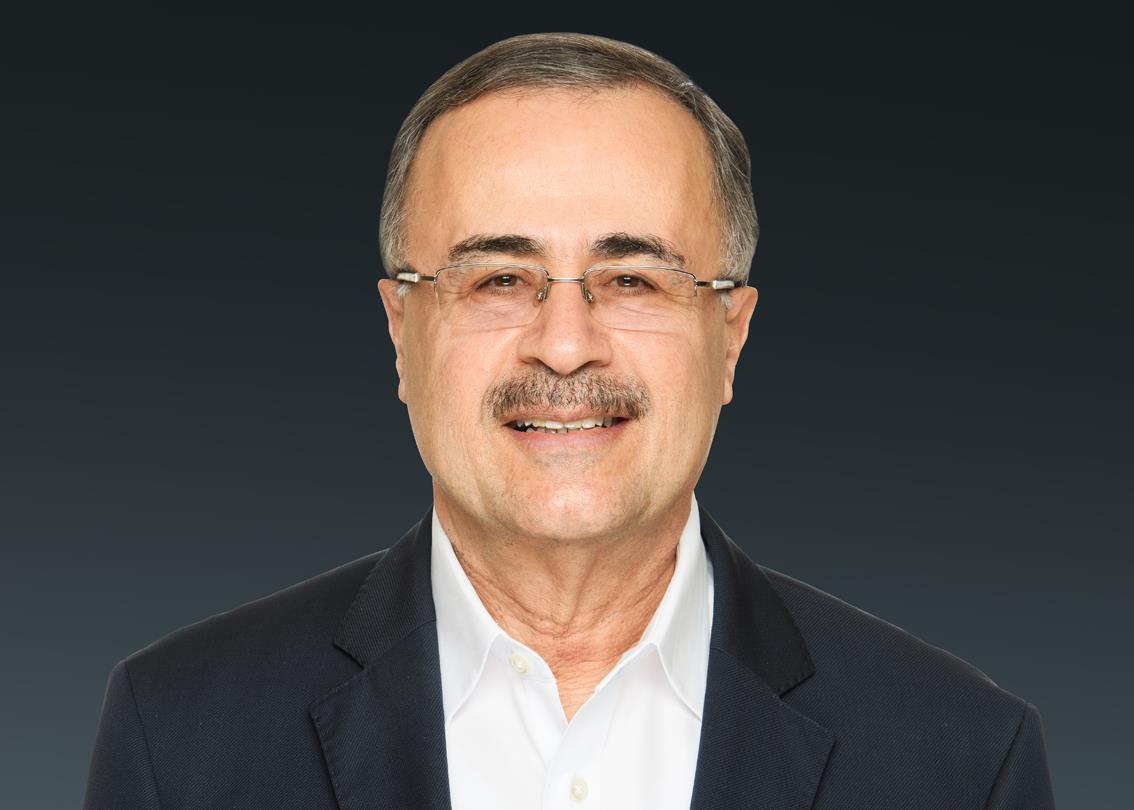
Saudi Aramco reported a 9% year-on-year increase in adjusted net income to $31.2bn in the third quarter of 2026, supported by stronger financial performance across its businesses, particularly downstream operations, and despite persistent attacks by the Yemen-based Houthi rebels on its facilities across the kingdom.
The company’s revenue and other income from sales reached $140.492bn in Q3 2026, up from $111.509bn in the same period last year.
Downstream adjusted earnings before interest and taxes (ebit) increased by 234% year-on-year, reflecting stronger refining margins.
Cash flow from operating activities increased to $38.7bn in Q3, compared to $36.1bn a year earlier, while free cash flow rose to $28.2bn from $23.6bn over the same period.
The company maintained a gearing ratio of 5.5% at the end of the first nine months of the year, compared to 6.2% at the end of the first half of the year.
Return on average capital employed in Q3 remained the same as in the previous quarter at 22.1%.
Aramco’s capital expenditure in Q3 2026 declined to $10.52bn from $12.55bn in the same period last year, while capex in the first nine months of the year stood at $35.78bn.
Commenting on the Q3 financial results, Aramco’s president and CEO, Amin H Nasser, said: “Geopolitical uncertainty and attacks on key energy facilities continued to amplify the global energy supply crisis in the third quarter of 2026, with serious implications for global energy security.
“Despite challenges, the unwavering dedication of our workforce, our operational excellence, the flexibility of our system and the strength of a supply network built over decades enabled us to continue delivering reliably to our customers through this extraordinary period.
“We continue to explore additional overseas storage capacity and alternative export routes to further strengthen our global supply network, and our robust operational and financial performance during this volatile period demonstrates the value of our resilience.
“Backed by our strong balance sheet, we remain focused on the disciplined execution of priority projects and on leveraging advanced technologies to enhance performance and unlock new opportunities. This is how we will continue to meet the world’s evolving energy needs and deliver value for our shareholders and customers.”
ALSO READ: Sabic swings back to profit in Q3 with $224m net income
https://image.digitalinsightresearch.in/uploads/NewsArticle/21121169/main.jpg