
Damac founder pledges $20bn for US data centres
8 January 2025
Register for MEED's 14-day trial access
UAE-based Damac Properties and Damac Group founder Hussain Sajwani has pledged $20bn to develop data centres across the US.
Sajwani and US President-Elect Donald Trump announced the plan on 7 January in Florida, a day after the US Congress certified Trump as the US 2024 presidential election winner.
Trump said the project’s initial phase covers establishing data centres in Texas, Arizona, Oklahoma, Louisiana, Ohio, Illinois, Michigan and Indiana.
Speaking briefly after Trump at a news conference on 7 January, Sajwani said Trump’s successful bid to win the US presidential election in November “has been amazing news for me and my family”.
Trump and Sajwani’s announcement follows a December pledge by the Japanese billionaire investor Masayoshi Son to invest $100bn in the US.
Data centre foray
It was previously reported that the Dubai-based property developer plans to develop $1bn-worth of data centres in countries in Europe, Asia, Africa, the Middle East and the Commonwealth of Independent States.
Damac subsidiary Edgnex is constructing two data centre facilities in Dammam and Riyadh in Saudi Arabia that will deliver 55MW by 2025. There are also plans for a data centre in Amman, Jordan, and another in Turkiye in partnership with Vodafone.
In May, Damac announced its entry into the Indonesian market with plans to build a 15MW data centre in Jakarta. Located along MT Haryono, the facility is scheduled to complete its first construction phase in the fourth quarter of 2025.

Register for MEED's guest program now to access this article.
Exclusive from Meed
-
 Riyadh Expo sets November bid deadline for Souq construction
29 October 2026
-
 Iraq oilfield water scheme to hit milestone next year
29 October 2026
-
 Dubai tenders Al-Awir sewerage and stormwater works
29 October 2026
-
 Contractors bid for QatarEnergy’s North Field West topsides
28 October 2026
-
 US military approaches contractors for Qatar air base project
28 October 2026
All of this is only 1% of what MEED.com has to offer
Subscribe now and unlock all the 153,671 articles on MEED.com
- All the latest news, data, and market intelligence across MENA at your fingerprints
- First-hand updates and inside information on projects, clients and competitors that matter to you
- 20 years' archive of information, data, and news for you to access at your convenience
- Strategize to succeed and minimise risks with timely analysis of current and future market trends
Related Articles
-
Riyadh Expo sets November bid deadline for Souq construction
29 October 2026

Expo 2030 Riyadh Company (ERC), responsible for delivering the Expo 2030 Riyadh venue, has allowed contractors until 11 November to submit bids for a contract to deliver the Souq areas within the Expo site.
The tender was floated on 30 July, with an initial submission deadline of 9 October.
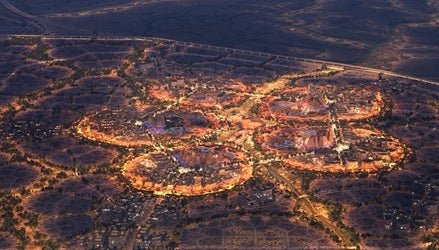
The Souq areas are divided into five distinct precincts, with a total development area of about 300,000 square metres (sq m).
The scope includes the five precincts and their associated vertical elements, infrastructure and public realm works.
The precincts comprise:
- Precinct 1 – The Icon: 41,417 sq m
- Precinct 2 – Place & Planet: 62,306 sq m
- Precinct 3 – Culture of Wisdom: 67,112 sq m
- Precinct 4 – Kingdom of Saudi Arabia: 45,967 sq m
- Precinct 5 – Adaptation & Innovation: 82,358 sq m
The package will interface with three public parks. It will also tie into the Natural Corridor, including bridges.
The Souq areas will form a mixed-use destination at the centre of Expo 2030 Riyadh, connecting the site’s iconic and thematic assets.
The development will include rented and partnership pavilions, alongside a range of food and beverage, retail and visitor-experience offerings.
Site progress
Construction activity at the Expo site is accelerating, with Riyadh moving to award its first major vertical contracts and advancing infrastructure works across the programme.
Earlier this month, Saudi Arabia’s Royal Commission for Riyadh City awarded a design-and-build contract to build a new metro station serving the Expo 2030 site.
In April, ERC awarded two contracts to local firm Al-Yamama Company for the next phase of infrastructure works at the site.
The scope covered the construction of road networks and infrastructure for water, sewage, electricity, telecommunications and electric vehicle charging.
These awards followed ERC’s January award of an estimated SR1bn ($267m) contract for initial infrastructure works at the site to local firm Nesma & Partners.
That scope covered about 50 kilometres of integrated infrastructure networks, including internal roads and essential utilities such as water, sewage, electrical and communications systems, and electric vehicle charging stations.
The masterplan covers 6 square kilometres, making it one of the largest sites ever designated for a World Expo event. Situated to the north of the Saudi capital, the site will be located near the future King Salman International airport and will provide direct access to landmarks within Riyadh.
The Public Investment Fund, Saudi Arabia’s sovereign wealth vehicle, launched ERC – a wholly owned subsidiary – in June 2025 to build and operate facilities for Expo 2030.
https://image.digitalinsightresearch.in/uploads/NewsArticle/20998514/main.jpg -
Iraq oilfield water scheme to hit milestone next year
29 October 2026
China Petroleum Pipeline Engineering (CPP) expects to start laying pipeline for Iraq’s Common Seawater Supply Project (CSSP) in Basra in mid- or late next year, according to industry sources.
The project is behind schedule, partly because importing sections of pipeline is proving challenging due to disruptions to shipping through the Strait of Hormuz.
The project is being managed by state-owned Basra Oil Company (BOC), with Australia’s ILF acting as a project management consultant after completing the front-end engineering design (feed).
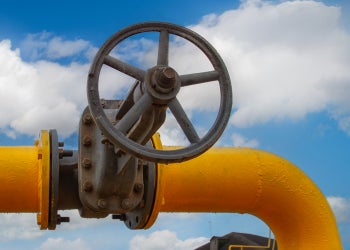
Under current plans, the pipelines will be buried, which is expected to make them more secure than if they were installed on the surface.
Phased development
The client for the first phase of the CSSP is France’s TotalEnergies in partnership with QatarEnergy and BOC.
The first phase is split into two packages currently under execution and will ultimately have the capacity to transport 5 million barrels a day (b/d) of water.
The first package focuses on developing pipelines, and the second on developing a water treatment facility.
CPP is executing the pipeline package contract.
It signed a $2.5bn contract with BOC for the package in September last year.
Also in September 2025, South Korea’s Hyundai announced that it had signed a contract worth 4.39tn won ($3.16bn) for the processing plant package.
In September this year, MEED reported that early groundworks had started for both packages of the first phase of the CSSP.
Phase one of the project is scheduled to start up in late 2028 or early 2029.
Earlier this month, US-headquartered Exxon Mobil signed a memorandum of understanding related to the project’s second phase, which is expected to add 2.5 million b/d of water capacity.
The CSSP will inject processed water into several of Iraq’s biggest oil fields. These include Rumaila, Zubair, West Qurna 1, West Qurna 2 and Majnoon. Water from the project will also be used in the Maysan and Dhi Qar fields.
https://image.digitalinsightresearch.in/uploads/NewsArticle/20981033/main.jpg -
Dubai tenders Al-Awir sewerage and stormwater works
29 October 2026
Dubai Municipality has invited contractors to bid for a contract to build sewerage and stormwater infrastructure in New Al-Awir 1st.
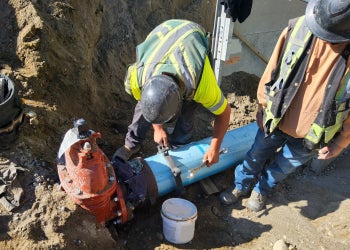
The project (DS317-C1) comprises about 95 kilometres of sewerage gravity network, excluding house connections, and about 105km of stormwater pipelines. The scope also includes house connection pipes, a stormwater pond and oil interceptors.
According to tender documents seen by MEED, the tender was issued on 23 October, with a bid submission deadline of 12 November.
The project comes amid wider residential and infrastructure development in Al-Awir 1. In January 2025, Dubai’s Roads & Transport Authority (RTA) announced plans to build 16.5km of internal roads in the area, including a new entrance from Emirates Road.
In February 2025, MEED exclusively reported that the RTA had selected a local firm to undertake the road construction works.
The Mohammed Bin Rashid Housing Establishment has also reported progress on housing projects in Al-Awir as part of a wider programme to develop residential communities across Dubai.
The sewerage and stormwater project is relatively large compared with recent stormwater tenders, with the total cost estimated at up to AED1bn ($272m).
The works will include approximately 69.2km of house connection pipes and 4,630 inspection chambers. The sewerage network will also include about 1,511 manholes, while the stormwater network will comprise approximately 1,247 manholes.
Contractors will also be required to use no-dig construction methods for sections of the pipeline. The scope includes ground investigations, utility protection and traffic management.
The bill of quantities specifies a stormwater pond with a composite volume of approximately 1.2 million cubic metres.
Earlier this week, Dubai Municipality confirmed it had awarded contracts worth AED3bn ($817m) to expand the emirate’s stormwater drainage network by about 100 square kilometres under phase three of the Tasreef programme.
The projects are part of Dubai’s AED30bn Tasreef programme and will cover Jumeirah, Umm Suqeim, Al-Quoz, Al-Barsha, Al-Wasl and Al-Marmoom.
The overall programme aims to increase the emirate’s stormwater drainage capacity by 700% and reduce costs associated with pumping stations, network operations and maintenance by 20%.
https://image.digitalinsightresearch.in/uploads/NewsArticle/20977734/main.jpg -
Contractors bid for QatarEnergy’s North Field West topsides
28 October 2026
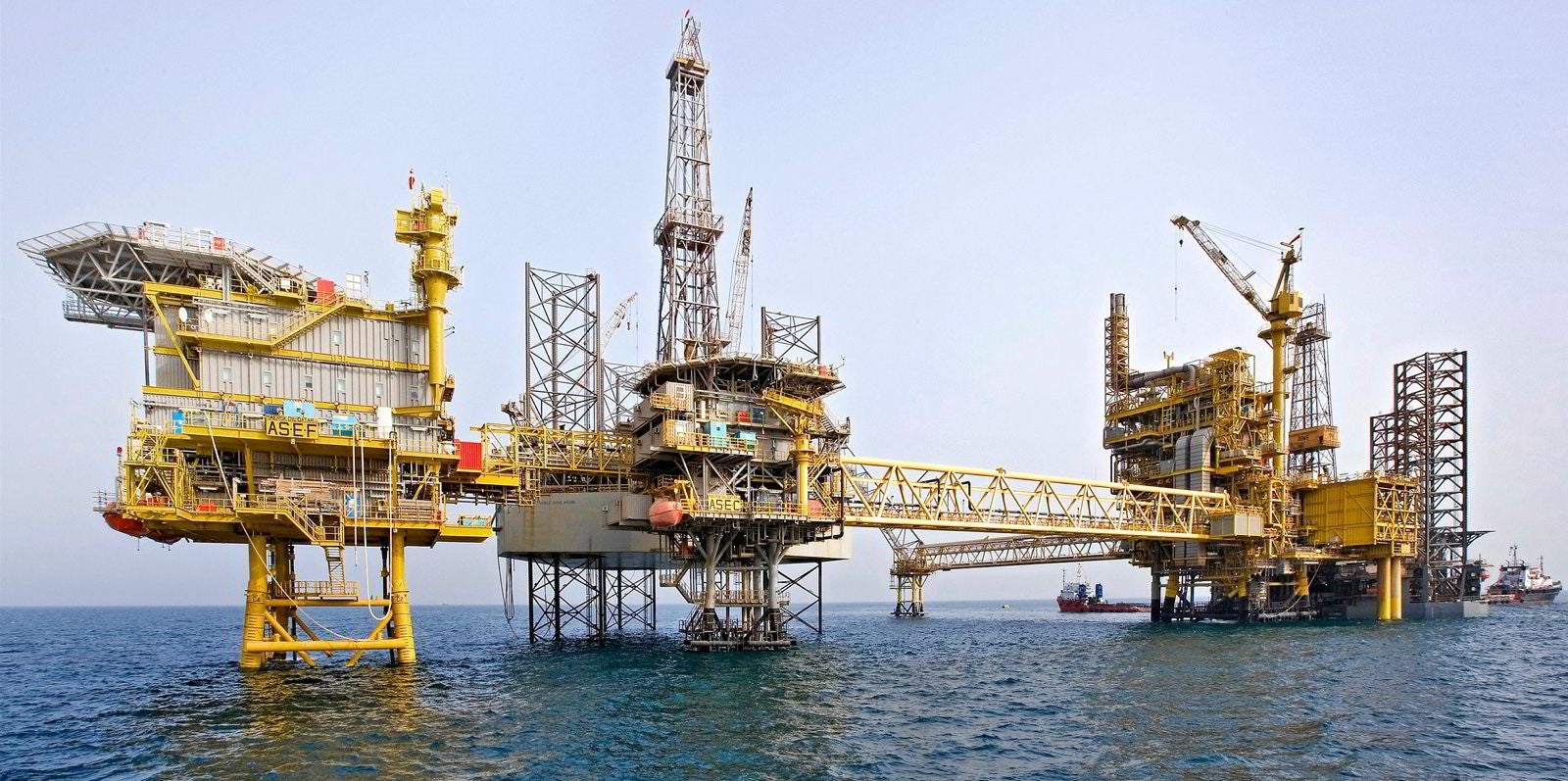
QatarEnergy has received technical bids from contractors for a key tender covering the engineering, procurement, construction and installation (EPCI) of large platforms for the North Field gas field in Qatari waters.
Contractors submitted their technical bids by the 26 October deadline, according to sources.
Commercial bids are currently due on 10 November.
The following contractors, among others, are understood to be bidding for the North Field West (NFW) production deck modules (PDMs) tender:
- China Offshore Oil Engineering Company (China)
- Larsen & Toubro Energy Hydrocarbon (India)
- McDermott (US)
- Saipem (Italy)
The core scope comprises the EPCI of four PDMs and associated structures. The modules will increase gas production from North Field reservoirs and supply additional gas feedstock to the NFW liquefied natural gas (LNG) development.
Issued earlier this year, the tender forms part of the wider NFW project, the third and final phase of QatarEnergy’s North Field LNG expansion programme.
The technical-bid deadline has been extended several times, from 30 August to 15 September, 28 September, 12 October and 19 October. Commercial bids were previously due on 25 October, as MEED reported.
Before issuing the PDMs tender, QatarEnergy awarded US firm McDermott an EPCI contract for four offshore jackets to support gas feedstock supply for the NFW LNG project. The contract is estimated to be worth about $200m, MEED reported in January.
North Field LNG expansion
QatarEnergy is advancing the three phases of its estimated $40bn North Field LNG expansion project. EPC works on all three projects are progressing.
QatarEnergy is understood to have committed nearly $30bn to the first two phases – North Field East (NFE) and North Field South (NFS) – which will lift Qatar’s LNG production capacity from 77.5 million tonnes a year (t/y) to 126 million t/y by 2028.
QatarEnergy awarded the main EPC contracts for NFE in 2021. The project was intended to raise LNG output to 110 million t/y by 2025. The $13bn EPC package – covering the EPCI of four LNG trains, each with a capacity of 8 million t/y – was awarded in February 2021 to a consortium of Japan’s Chiyoda and France’s Technip Energies.
In May 2023, QatarEnergy awarded the $10bn main EPC contract for NFS to a consortium of Technip Energies and Consolidated Contractors Company (CCC). The contract includes two LNG trains, each with a capacity of 7.8 million t/y.
Once fully operational, the first two phases are expected to add 48 million t/y of LNG supply to the global market.
QatarEnergy took the final investment decision on NFW earlier this year, awarding an EPC contract estimated at $8bn to a joint venture comprising Technip Energies, CCC and Gulf Asia Contracting in February.
Chiyoda carried out the front-end engineering and design work for the NFW LNG project.
The NFW scope covers the EPC of two LNG trains with a combined capacity of 16 million t/y, as well as associated facilities for gas treatment, natural gas liquids recovery and helium extraction.
In addition to LNG, NFW is expected to produce about 175,000 barrels of oil equivalent a day of condensate, ethane and liquefied petroleum gas.
With all three phases under EPC execution – and NFE scheduled for commissioning later this year – QatarEnergy is positioning itself to remain one of the world’s largest LNG suppliers in the long term.
https://image.digitalinsightresearch.in/uploads/NewsArticle/20973187/main.jpg -
US military approaches contractors for Qatar air base project
28 October 2026
The US Army Corps of Engineers (USACE) has begun market engagement for an anticipated contract to design and build a Space Campus at Al-Udeid Air Base in Qatar.
USACE’s Southwestern Division, Middle East District, has issued a sources-sought notice to identify contractors capable of delivering an integrated design-and-construction (IDaC) contract.
The successful contractor will provide pre-construction services and build secure facilities that comply with Intelligence Community Directive 705 (ICD 705) standards.
Interested firms must submit capability statements by 30 October.
The construction market engagement follows USACE’s procurement of architect-engineer services for the development. The authority intends to award a single-award, task-order contract covering planning, design, site investigations and construction-phase support. The contract will have a five-year base period, with a two-year option, and a capacity of up to $100m.
USACE expects to award the design contract in April 2028, alongside an IDaC construction contract following completion of the planning activities.
The Space Campus is being developed to meet an operational requirement of the US Air Force and forms part of the Al-Udeid Air Base 2040 Strategic Master Plan.
It will include a secure administrative headquarters, coalition operations centre, secure warehouse, conference centre, storage facilities, access-control and guardhouse complex, antenna yards, shelters and multiple unit buildings.
The scope also includes secure perimeter fencing, intrusion-detection and closed-circuit television systems, roads, parking, site preparation, utility networks, substations, generators, chilled-water systems, fuelling facilities, and secure and unclassified communications networks.
The project will require hardened and potentially underground structures. Contractors are expected to demonstrate expertise in managing saline groundwater, dewatering, underground waterproofing and Qatar’s geotechnical conditions.
The latest procurement activity comes as Qatar’s Public Works Authority, Ashghal, tenders a contract for roads and associated infrastructure serving Al-Udeid Air Base.
The project in Zone 95 of Al-Wakra Municipality includes a dual-lane carriageway, three roundabouts, electrical substations, drainage, lighting, intelligent transport systems and utility works.
The road will link Al-Majd Road to the east with Street 203 in Zone 95 to the west.
According to GlobalData’s Qatar Defence Market 2026-2031 report, Qatar allocated an estimated $17bn to defence in 2026, representing a compound annual growth rate (CAGR) of 2.5% between 2022 and 2026.
The defence budget is projected to grow at a CAGR of 3.8% over the 2027-31 forecast period, reaching an estimated $20.8bn in 2031.
Defence diplomacy is also a key factor in military procurement, with Doha strengthening bilateral ties through acquisitions from the US, France and Turkiye.
https://image.digitalinsightresearch.in/uploads/NewsArticle/20971169/main.jpg