Contractors submit Neom rail depot bids
15 April 2024

Register for MEED's guest programme
Neom received the post-tender clarification bids from contractors on 4 April for the relocated Connector Depot of the rail line that links Oxagon Industrial City to the Spine.
The facility will have two separate depots, one for the high-speed rail rolling stock and one for the freight and infrastructure rolling stock maintenance.
The infrastructure depot will provide facilities for storing and distributing materials required for the railway infrastructure at Neom.
The Spine is the infrastructure corridor running parallel to The Line that includes a high-speed rail and the Connector South, which links the industrial zone, Oxagon, to The Line.
US-based Aecom is the design consultant, and Bechtel is the project management consultant for The Spine railway network project.
Construction work on the railway network at Neom has already started.
In early May 2023, a joint venture of Italy-based Webuild and Riyadh-headquartered Shibh Al Jazira Contracting (Sajco) secured a $1.5bn contract to build the Connector South line.
The contract involves the construction of a 75-kilometre railway line, including earthworks, 14 viaducts, seven roads, nine rail underpasses, 152 pipe and box culverts, a freight line, infrastructure maintenance depots and associated facilities.
Neom was also expected to receive bids by the end of March for the contract to provide rolling stock for the high-speed and freight railways running alongside The Line and connecting to the Oxagon.
The infrastructure corridor will run south from The Line to Neom City Station through Neom Bay Mansions, Neom Bay airport and on to Oxagon.
MEED reported in May last year that Neom is prioritising railway construction work as it reduces the scope of work for upcoming construction contracts on the infrastructure corridor alongside The Line.


Register for MEED's guest program now to access this article.
Exclusive from Meed
-
 SAR tenders railway track design framework
5 November 2026
-
 Aramco commissions Zuluf field oil increment project
5 November 2026
-
 BP and PetroChina cut budgets for Iraq oil projects
5 November 2026
-
 Read the November 2026 MEED Business Review
4 November 2026
-
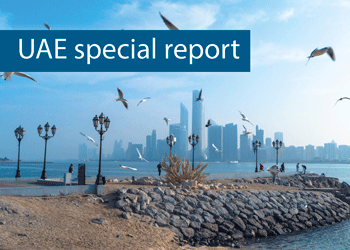 UAE economy shows resilience
4 November 2026
All of this is only 1% of what MEED.com has to offer
Subscribe now and unlock all the 153,671 articles on MEED.com
- All the latest news, data, and market intelligence across MENA at your fingerprints
- First-hand updates and inside information on projects, clients and competitors that matter to you
- 20 years' archive of information, data, and news for you to access at your convenience
- Strategize to succeed and minimise risks with timely analysis of current and future market trends
Related Articles
-
SAR tenders railway track design framework
5 November 2026
Register for MEED’s 14-day trial access
Saudi Arabia Railways (SAR) has invited consultants to bid by 14 December for a framework agreement covering railway track design services.
The state-owned operator is seeking to accelerate the delivery of smaller projects across its network.
SAR has scheduled a pre-tender meeting for 12 November.
Under the framework, SAR will appoint a panel of specialist consultants to carry out design work through work orders or task orders issued as required. This will remove the need for SAR to launch a separate tender for each project.
SAR said a long-term contract with several specialist service providers would benefit all parties, particularly for smaller projects.
SAR will detail the required works and communicate them to the selected consultants through each work order or task order.
The scope covers engineering studies, as well as concept, preliminary and detailed design for railway infrastructure. Services will include surveys, alignment design, geotechnical assessments, cost estimation and construction support.
Consultants will be expected to produce drawings, reports, risk registers, bills of quantities and other design documentation. All deliverables must comply with SAR standards for UIC 60 track systems and associated infrastructure.
SAR said it is seeking partnerships with competent consultants to supply track and track infrastructure design services under the terms of the tender document.
https://image.digitalinsightresearch.in/uploads/NewsArticle/21168500/main.jpg -
Aramco commissions Zuluf field oil increment project
5 November 2026
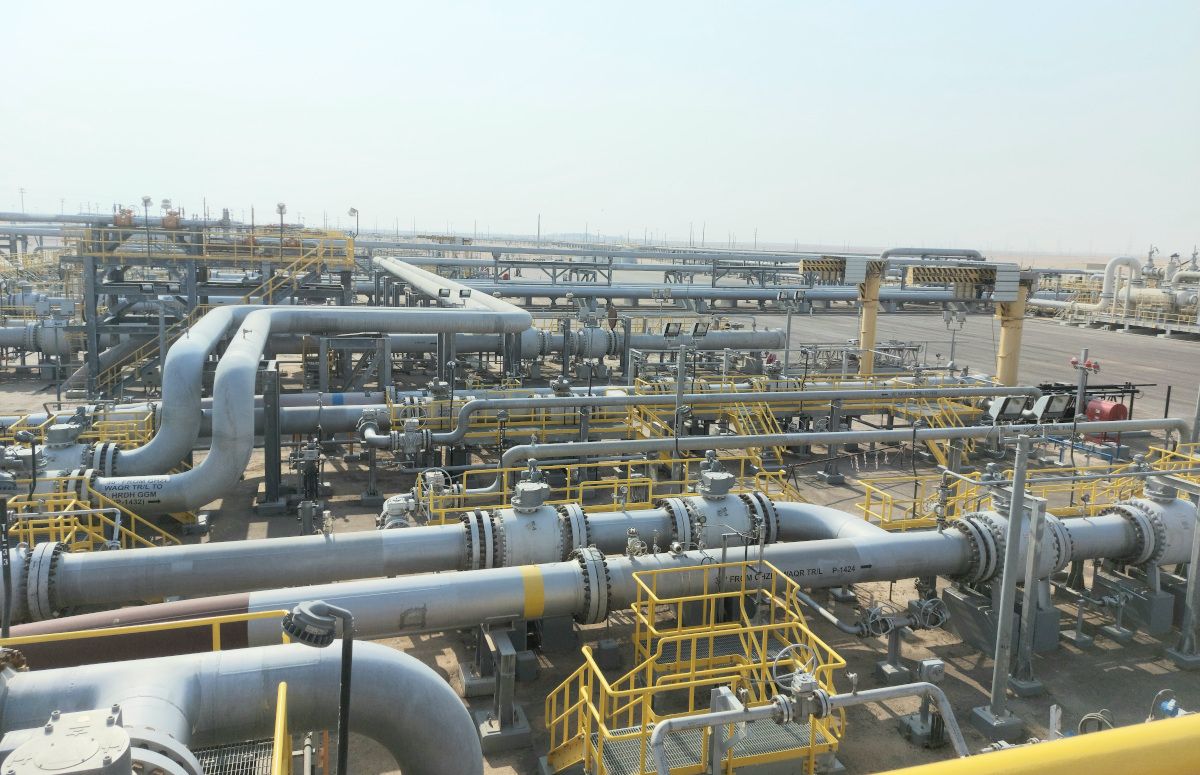
Saudi Aramco has announced the start of oil production at the Zuluf oil increment project in Saudi Arabia, on which it is estimated to have spent about $7bn in 2022.
The Saudi energy company made the announcement as part of its third-quarter 2026 financial results, in which it reported adjusted net income of $31.2bn, up 9% year on year.
The Zuluf oil increment project involved substantial onshore and offshore work at the field, located in the Gulf about 40 kilometres off Saudi Arabia’s northeastern coast.
The engineering, procurement and construction (EPC) scope was divided into two onshore packages and five offshore packages.
Aramco selected Japan’s JGC Holdings Corporation in May 2022 for the two main onshore packages of the Zuluf field development. Together, the packages were estimated to be worth up to $3.5bn.
Package 1 was estimated to be the larger of the two onshore packages, with a contract value of about $2bn-$2.5bn. It covered EPC work to build hydrocarbon-processing facilities for the Zuluf development, principally an onshore gas-oil separation plant.
Package 2 covered utilities and water-injection facilities and was estimated to be worth about $1bn.
Before awarding the onshore contracts, Aramco had awarded more than $4bn of contracts across five main offshore engineering, procurement, construction and installation packages. The awards went to US-headquartered McDermott International; a consortium of India’s Larsen & Toubro Hydrocarbon Engineering and UK-headquartered Subsea7; and Abu Dhabi’s NMDC Energy, then known as National Petroleum Construction Company.
Since the 2022 EPC awards, Aramco has invested further in maintaining and upgrading infrastructure at the Zuluf field. The work supports the company’s objective of maintaining its maximum sustained crude oil production capacity at 12 million barrels a day (b/d).
Other upstream projects
In its Q3 2026 results statement, Aramco also announced EPC progress on other key upstream oil and gas projects, including:
Jafurah phase two – Aramco awarded 16 contracts, worth a combined total of about $12.4bn, on 30 June 2024 for the second expansion phase of the Jafurah unconventional gas development programme in the Eastern Province.
The second phase aims to raise the field’s processing potential to up to 2 billion cubic feet a day (cf/d) of raw gas. The EPC scope of work includes constructing gas compression facilities and associated pipelines, and expanding the Jafurah gas plant, including the construction of gas processing trains, utilities, sulphur and export facilities, Aramco said in a statement.
Fadhili gas plant expansion – Through the estimated $7.7bn project, Aramco aims to increase the Fadhili gas plant’s processing capacity from 2.5 billion cf/d to up to 4 billion cf/d. The expansion includes three new processing trains, each with a capacity of 500 million cf/d.
Aramco awarded contracts for four main EPC packages of the Fadhili gas plant expansion project in April 2024 to South Korean contractors Samsung E&A and GS Engineering & Construction and Saudi contractor Nesma & Partners.
Dammam development project – The project represents the second development phase of the Dammam field. Its objective is to install infrastructure, including pipelines, trunklines and pumps, to increase the field’s crude oil production capacity by 25,000 b/d and 50,000 b/d in separate phases.
Al-Khobar-based Denys Arabia won the main EPC contract for the Dammam second field development phase in July 2024. The contract was estimated to be worth more than $500m.
https://image.digitalinsightresearch.in/uploads/NewsArticle/21156386/main4222.jpeg -
BP and PetroChina cut budgets for Iraq oil projects
5 November 2026
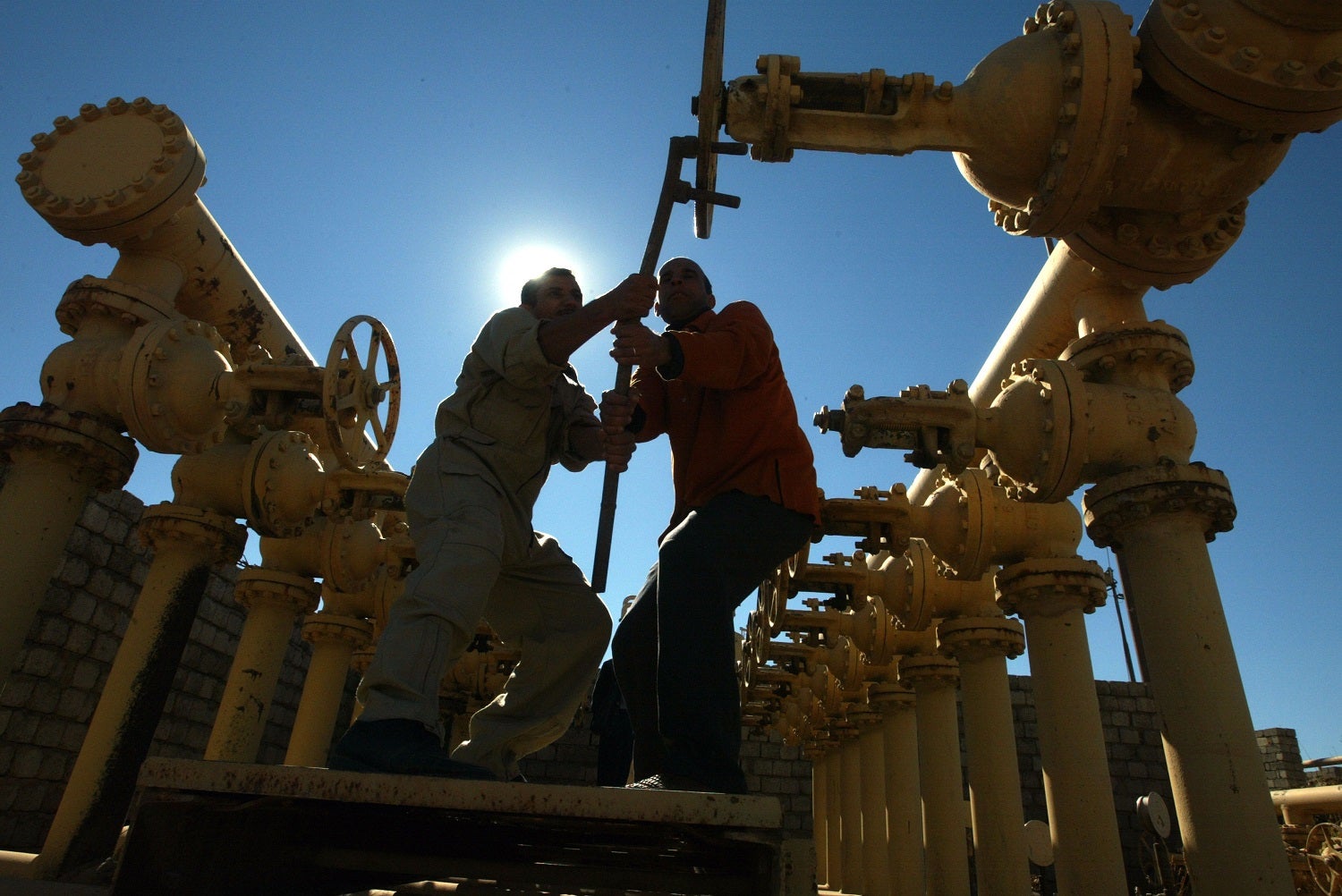
London-headquartered BP and PetroChina have agreed with Turkish contractor Tekfen to reduce the monthly allocated budgets for two upstream oil projects at the Rumaila field, according to industry sources.
Rumaila Operating Organisation (ROO) operates the Rumaila field.
ROO is a joint venture formed by state-owned Basra Oil Company; Iraq’s State Oil Marketing Organisation (Somo); and Basra Energy Company, a joint venture owned by UK-based oil company BP and PetroChina.
PetroChina is the listed arm of state-owned China National Petroleum Corporation.
As part of the agreement between ROO and Tekfen, progress on the projects will continue at a slower pace.
The two projects are both also suffering from delays due to problems importing equipment through the Strait of Hormuz, sources said.
One source said: “These projects are really barely alive. They are progressing very slowly after the monthly budgets were cut by the client. The project is still continuing, but at a slow pace. The budgets are very limited.”
Sources said that although the monthly budget payments were reduced, they were still being made on time.
Most of the problems that the projects at the oil field are facing are connected to the regional war, which started on 28 February when the US and Israel attacked Iran.
One source said: “The budget issues and financial problems are significant. There are also security concerns connected to reported US plans for a potential strategic nuclear strike on Iran and how that might impact operations at the Rumaila field, which is only around 60 kilometres from the Iranian border.”
The two projects have a combined value of less than $100m, and the project scopes include developing new facilities as well as upgrading and repairing existing upstream infrastructure.
https://image.digitalinsightresearch.in/uploads/NewsArticle/21153848/main.jpg -
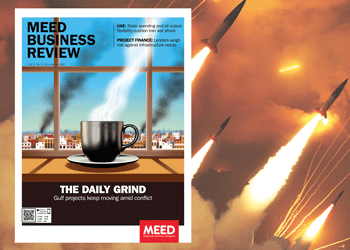
Read the November 2026 MEED Business Review
4 November 2026
Download / Subscribe / 14-day trial access The GCC projects market continues to show resilience against a deteriorating macroeconomic backdrop, with clients committing capital despite the regional fallout from the US-Iran conflict.
 According to the IMF, every GCC economy except Oman is projected to contract in 2026. Yet government-backed infrastructure spending has cushioned the blow, led by the UAE, where contract awards are up 6.1% year-on-year.
But beneath the headline figures, signs of a slowdown are emerging. Falling residential activity, a retreat in Saudi Arabia’s gigaproject spending and a sharp decline in tendering suggest that the market faces a tougher test as the conflict continues.
Read more in our November issue Agenda feature.
Our 22-page market focus on the UAE examines how state-backed capital, greater freedom to increase oil production following the UAE’s exit from Opec, and continued investment in energy, transport and water infrastructure are helping the country absorb the economic shock of the Iran conflict.
It also looks at how Abu Dhabi is adjusting its diplomatic approach, and the risks that remain for the wider economy.
This month’s industry report turns to project finance, examining how Gulf lenders are reassessing risk amid regional instability, higher costs and tighter credit limits. While infrastructure funding needs remain undiminished, the conflict is changing the way projects are financed, with lenders paying closer attention to physical security, insurance and risk allocation.
The report also examines the slowdown in public-private partnership activity across the Middle East and North Africa, where the value of awards has fallen sharply despite a pipeline of major deals still to come.
We also speak to WSP’s regional president Dean McGrail about the resilience of the Gulf construction market, the shift towards infrastructure investment and the opportunities emerging in aviation.
H&H chairman Shahab Lutfi discusses how the Dubai developer is pressing ahead with contract awards despite rising costs and softer sales, while the UAE Ministry of Energy & Infrastructure’s Mohammed Al-Mansoori explains how the country is strengthening supply-chain resilience and maintaining infrastructure delivery in the face of disruption.
Elsewhere, we examine the global stadium construction market, where annual spending is forecast to jump by 39% in 2027 as governments prepare for major sporting events, and look at the economic consequences of the Strait of Hormuz closure.
We hope our valued subscribers enjoy the November 2026 issue of MEED Business Review.
Must-read sections in the November 2026 issue of MEED Business Review include:
> AGENDA: GCC projects market holds its nerve
> INTERVIEW: Stability holds as project work continues
> INTERVIEW: H&H continues to deliver Dubai projects
INDUSTRY REPORT:
Project finance
> Project financiers hold the line
> PPP activity fades amid regional instability> INTERVIEW: Building resilience into infrastructure delivery
> STADIUMS: Stadium spending set to jump 39% in 2027
> REGIONAL CONFLICT: Hormuz closure wipes out growth in 2026
 > UAE MARKET FOCUS:
> GOVERNMENT: Abu Dhabi mends fences with Riyadh
> ECONOMY: UAE growth holds up as regional risks persist
> BANKING: UAE banks profit as credit growth surges
> UPSTREAM: Adnoc steps up crude expansion
> DOWNSTREAM: Adnoc funnels billions into boosting gas processing
> POWER: Gas-fired projects drive resilience in UAE power sector
> WATER: Tasreef scheme drives UAE water investment
> CONSTRUCTION: State-backed spending cushions UAE construction slowdown
> TRANSPORT: Infrastructure drives UAE growth agenda
> MANUFACTURING: UAE vehicle manufacturing push moves into production> MEED COMMENTS:
> Regional tensions strengthen the case for GCC rail
> Focus turns to the Northern Emirates
> Gulf data centre ambitions face delivery test
> Qatar buys LNG reliability beyond Hormuz> GULF PROJECTS INDEX: Saudi Arabia drives Gulf projects market higher
> SEPTEMBER 2026 CONTRACTS: Middle East contract awards
> ECONOMIC DATA: Data drives regional projects
> OPINION: When football meets politics
> BUSINESS OUTLOOK: Finance, oil and gas, construction, power and water contracts
To see previous issues of MEED Business Review, please click herehttps://image.digitalinsightresearch.in/uploads/NewsArticle/21089562/main.gif -
UAE economy shows resilience
4 November 2026
 Commentary
Colin Foreman
EditorState-backed capital is carrying the UAE projects market through the economic shock of the Iran conflict. Government and government-related entities have accounted for $22.4bn of the $34.6bn of contracts awarded in Dubai so far this year, almost two-thirds of the total, according to regional project tracker MEED Projects. Private developers have deferred new launches, and off-plan residential sales in the emirate fell from $9bn in February to $4bn in August.
In Abu Dhabi, state-affiliated developers and cultural agencies are accelerating destination projects on Yas and Saadiyat islands, including the $1.7bn Sphere Abu Dhabi venue.
The energy sector is adding momentum. The UAE’s exit from Opec in May has freed Abu Dhabi National Oil Company (Adnoc) to make greater use of its spare crude capacity, and the company is on course to exceed its 2024 upstream project spending this year. Adnoc Gas has awarded $8.2bn of contracts for the second and third phases of its rich gas development programme.
The $3bn Taweelah C combined-cycle gas turbine plant accounted for most of the $4.17bn of power contracts awarded by early September, while Dubai’s AED30bn ($8.1bn) Tasreef stormwater programme is driving water sector activity.
MEED Projects tracks $103bn of transport schemes at pre-execution stages, including rail links that would give exporters routes that avoid the Strait of Hormuz.
Non-oil activity is also holding up. The UAE purchasing managers’ index compiled by financial information and analytics provider S&P Global reached a 20-month high of 55.3 in September. Net profits at the 10 biggest UAE banks rose 7% to AED47.8bn ($13bn) in the first half, supported by loan growth of 21%.
Meanwhile, Abu Dhabi is repairing relations with Riyadh after a year of friction over Yemen and Sudan. On 8 October, the two countries signed a memorandum of understanding covering power grid interconnection and freight rail.
Risks remain. The Washington-based IMF expects the GCC economy to contract by 3.8% this year, with recovery dependent on shipping through Hormuz returning to normal. US scrutiny of Iran-linked transactions is also tightening compliance demands on UAE banks. That said, there are reasons to be hopeful. The IMF expects the economy to rebound in 2027 with 7.7% GDP growth.
MEED’s November 2026 report on the UAE includes:
> GOVERNMENT: Abu Dhabi mends fences with Riyadh
> ECONOMY: UAE growth holds up as regional risks persist
> BANKING: UAE banks profit as credit growth surges
> UPSTREAM: Adnoc steps up crude expansion
> DOWNSTREAM: Adnoc funnels billions into boosting gas processing
> POWER: Gas-fired projects drive resilience in UAE power sector
> WATER: Tasreef scheme drives UAE water investment
> CONSTRUCTION: State-backed spending cushions UAE construction slowdown
> TRANSPORT: Infrastructure drives UAE growth agenda
> MANUFACTURING: UAE vehicle manufacturing push moves into productionTo see previous issues of MEED Business Review, please click herehttps://image.digitalinsightresearch.in/uploads/NewsArticle/20947110/main.gif