
Contractors submit bids for Taziz’s Project Salt
16 July 2025

Register for MEED’s 14-day trial access
Contractors have submitted technical bids to Abu Dhabi National Oil Company (Adnoc) for a project to build a cluster of three chemicals-producing plants in the Taziz Industrial Chemicals Zone in Ruwais, Abu Dhabi.
The three chemicals plants will produce ethylene dichloride (EDC), chlor alkali and polyvinyl chloride (PVC) and are part of a scheme known as Project Salt.
The project is among the main investments in the first phase of development for the upcoming petrochemicals derivatives complex by Taziz.
Contractors submitted technical bids for engineering, procurement and construction (EPC) works on Project Salt by Adnoc's deadline of 15 July, according to sources.
The following contractors, among others, are understood to be bidding for Project Salt, sources told MEED:
- China National Chemical Engineering Company / China Chengda Engineering Company / China Tianchen Engineering Corporation
- Larsen & Toubro Energy Hydrocarbon (India)
- Samsung E&A (South Korea)
The previous deadlines for contractors to submit technical and commercial bids for the project were 15 June and 23 July, respectively.
Taziz – a 60:40 joint venture of Adnoc and Abu Dhabi’s industrial holding company ADQ – first announced the EDC, chlor alkali and PVC plants in December 2021. India’s Reliance Industries was named as the main investor in the chemicals plants at the time.
Reliance is understood to have pulled out of Project Salt and has been replaced by France-based Kem One, MEED previously reported.
MEED reported in June last year on the award of front-end engineering and design (feed) contracts for the three chemicals production plants.
Germany-headquartered Thyssenkrupp Uhde won feed contracts for the EDC and chlor alkali plants. France-based Technip Energies won the feed contract for the PVC facility.
The planned EDC plant will utilise chlorine from the associated chlor alkali plant as its main feedstock and will have a production capacity of up to 1.2 million tonnes a year (t/y).
Part of the EDC output will, in turn, be used as feedstock by the PVC plant, which is planned to have a production capacity of 350,000 t/y.
Surplus quantities of EDC and caustic soda from the chlor alkali plant are intended to be exported.
Taziz Industrial Chemicals Zone
Since 2021, Taziz has attracted investments from several foreign investors for its planned chemicals projects in the under-construction Taziz Industrial Chemicals Zone in Ruwais.
Taziz has planned seven petrochemicals derivatives projects as part of the first phase of its industrial chemicals zone.
UK-headquartered Wood Group has performed the feed works on the seven projects, which are:
|
Anchor product |
End use |
|---|---|
|
Chlor alkali |
Water treatment, metallurgy and textiles |
|
Ethylene dichloride |
Housing, infrastructure and consumer goods |
|
Maleic anhydride |
Piping, construction and heavy transport |
|
Methanol |
Energy, consumer goods and pharmaceuticals |
|
Blue ammonia |
Agriculture, apparel and energy |
|
Isopropyl alcohol |
Healthcare and cosmetics |
|
Elastomers |
Automobiles, adhesives, food production and storage |
Chemicals production is a priority sector for Operation 300bn, the UAE’s industrial growth strategy.
The strategy is being overseen by the Industry & Advanced Technology Ministry, which aims to raise the UAE industrial sector’s contribution to the national GDP to AED300bn ($81.7bn) by 2031.
In December 2021, Taziz secured agreements from eight UAE-based entities for investments in its planned chemicals projects in Ruwais. The agreements marked the first domestic public-private partnership in Abu Dhabi’s downstream oil, gas and petrochemicals sector.
ALSO READ: Local firms invest in Taziz industrial complex
In addition to the three chemicals plants planned under Project Salt, a joint venture of UAE-based Fertiglobe, South Korea’s GS Energy Corporation and Japanese investment firm Mitsui & Company has invested in a “world-scale” blue ammonia production facility in the Ruwais petrochemicals derivatives complex.
The Fertiglobe/GS Energy/Mistui joint venture awarded Italian contractor Tecnimont the EPC contract for the project in May 2024. Construction on the facility started in June last year.
Separately, in February, Taziz awarded South Korean contractor Samsung E&A the main EPC contract to build the UAE’s first methanol plant in the Taziz Industrial Chemicals Zone. The value of the EPC contract won by Samsung E&A is $1.7bn, and the duration of works is 44 months.
The nameplate production capacity of the planned methanol complex is 5,000 metric tonnes a day, or 1.8 million metric t/y. Switzerland-based energy and chemicals company Proman is a joint investor in the methanol project.
Regarding infrastructure to support the various projects, Taziz awarded three EPC contracts totalling $2bn in November.
Abu Dhabi government-owned NMDC Group was awarded the EPC contract to build a chemicals port. Once complete, the port will facilitate the export of chemicals and fuels.
Singapore-based Rotary Engineering won the EPC contract for a chemicals terminal known as Project Landing. The contract includes developing storage facilities, tank-to-jetty pipelines, jetty-to-tank pipelines, inter-site pipelines and liquid product storage. Taziz is building the chemicals-handling terminal in partnership with Netherlands-based midstream energy company Advario.
Abu Dhabi-based Al-Geemi Contracting was awarded the EPC contract to develop essential infrastructure for the 17-square-kilometre Taziz chemicals production site, including internal roads, security fencing and buildings.
Contracts have also been awarded for developing a centralised utilities facility for the Taziz Industrial Chemicals Zone, which will include power transmission, steam, cooling water and water units.
Adnoc signed an agreement with Abu Dhabi National Energy Company (Taqa) in June 2021 to develop a cogeneration power facility in Ruwais. In December, the partners awarded a $1bn contract to Kuwait-based Alghanim International for the project, and the contractor started construction of the facility in February this year.
Alghanim International, in turn, awarded a $67m sub-contract to Riyadh-based water utility developer Water & Environment Technologies Company (Wetico) for the comprehensive water facilities package of the cogeneration power facility, which includes the construction of a seawater desalination plant, demineralisation plant, condensate polishing unit and effluent treatment plant.
ALSO READ: Fertiglobe expects Rabdan final investment decision in 2026
 READ THE JULY 2025 MEED BUSINESS REVIEW – click here to view PDF
UAE and Turkiye expand business links; Renewed hope lies on the horizon for trouble-beset Levant region; Gulf real estate momentum continues even as concerns emerge
Distributed to senior decision-makers in the region and around the world, the July 2025 edition of MEED Business Review includes:
|
> AGENDA: UAE-Turkiye trade gains momentum
> INTERVIEW 1: Building on UAE-Turkiye trade
> INTERVIEW 2: Turkiye's Kalyon goes global
> INTERVIEW 3: Strengthening UAE-Turkiye financial links
> INTERVIEW 4: Turkish Airlines plans further growth
> CURRENT AFFAIRS: Middle East tensions could reduce gas investments
> GCC REAL ESTATE: Gulf real estate faces a more nuanced reality
> PROJECTS MARKET: GCC projects market collapses
> INTERVIEW 5: Hassan Allam eyes role in Saudi Arabia’s transformation
> INTERVIEW 6: Aseer region seeks new investments for Saudi Arabia
> LEADERSHIP: Nuclear power makes a global comeback
> LEVANT MARKET FOCUS: Levant states wrestle regional pressures
> GULF PROJECTS INDEX: Gulf projects index continues climb
> CONTRACT AWARDS: Mena contract award activity remains subdued
> ECONOMIC DATA: Data drives regional projects
> OPINION: A farcical tragedy that no one can end
|

Register for MEED's guest program now to access this article.
Exclusive from Meed
-
 Brent hits $112 a barrel following Saudi oil field attack
22 October 2026
-
 Riyadh awards $301m Sheikh Jaber Road contract
22 October 2026
-
 Dewa International signs energy and infrastructure MoUs
22 October 2026
-
 QatarEnergy and TotalEnergies to develop Lebanon solar plant
22 October 2026
-
 Deal signed for 1,620-home Baghdad residential scheme
22 October 2026
All of this is only 1% of what MEED.com has to offer
Subscribe now and unlock all the 153,671 articles on MEED.com
- All the latest news, data, and market intelligence across MENA at your fingerprints
- First-hand updates and inside information on projects, clients and competitors that matter to you
- 20 years' archive of information, data, and news for you to access at your convenience
- Strategize to succeed and minimise risks with timely analysis of current and future market trends

Related Articles
-
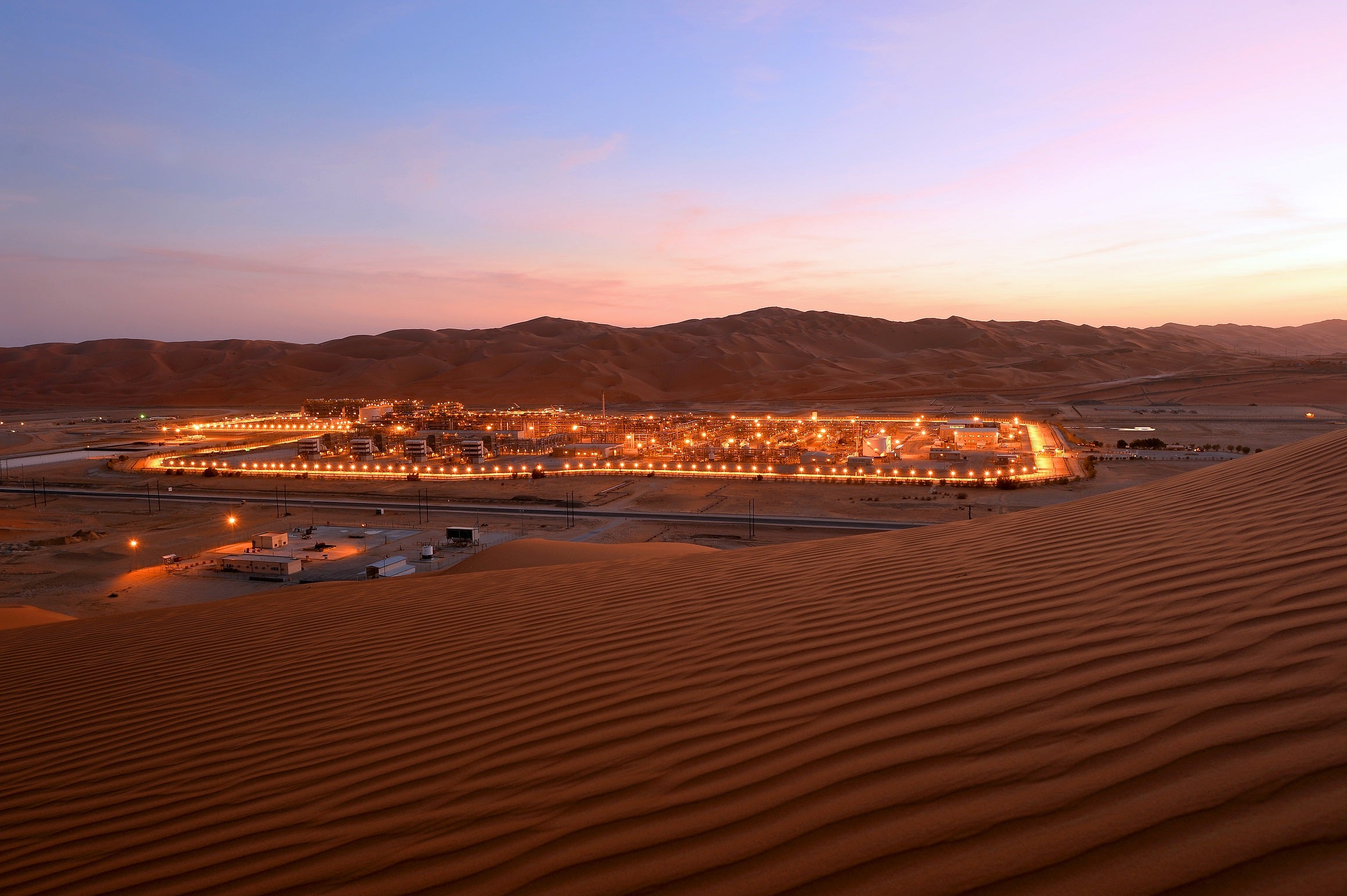
Brent hits $112 a barrel following Saudi oil field attack
22 October 2026
Register for MEED’s 14-day trial access
Oil prices climbed more than 3% on 22 October after a drone targeting Saudi Aramco’s Shaybah oil field development killed two people and injured two others a day earlier, adding to concerns over energy supplies as attacks on Saudi energy infrastructure intensified.
Global benchmark Brent crude hit $112.30 in early trading on 22 October, but later pared gains and was trading at $111.52 a barrel as of 11am GST.
Three residents and a Saudi citizen were killed in two separate incidents in Saudi Arabia’s Eastern Province on 21 October, authorities said, as attacks on the kingdom accelerated following an escalation of hostilities with the Iran-backed Houthi group in neighbouring Yemen.
Overnight, the Saudi-led coalition fighting the Houthis in Yemen announced that it had intercepted and destroyed four drones in the Eastern Province.
Saudi air defences intercepted a drone attempting to target a processing facility at Saudi Aramco’s Shaybah oil field development on the morning of 21 October, the Saudi Ministry of Energy said.
The official Saudi Press Agency (SPA) carried a statement quoting an energy ministry official as saying the attempted attack resulted in the deaths of two residents – a Filipino and a Nepali – and injuries to two others – an Indian and a Pakistani – after debris fell due to the interception.
Following the interception, a fire broke out in a vehicle belonging to a contractor at the Shaybah oil field, outside the facility’s perimeter, with no impact on operations.
Dammam airport attack
Separately, a Houthi attack on King Fahd International airport in Dammam on the evening of 21 October killed an Indian resident and a Saudi citizen.
Eight people were also injured in the attack, including a Saudi national, a Nepali, and two nationals each from India, Yemen and Bangladesh. Injuries ranged from minor to critical, the Saudi General Authority of Civil Aviation (Gaca) said the next day.
“The attack also caused property damage, the extent of which is currently being assessed. Further updates will be provided,” Gaca said, adding that operations had since resumed at Dammam airport.
Saudi Arabia has come under sustained attack from the Iran-aligned Houthi rebel group in October, including strikes on Riyadh’s international airport in what authorities described as the kingdom’s deadliest incidents in years, as the war with the group escalates.
The Houthi militias also struck an administrative building at Aramco’s headquarters in Dhahran, in the Eastern Province, on 13 October, resulting in a limited fire.
The Houthi rebels opened a new front in the regional war between Iran and the US in mid-July, when they breached a four-year truce with Saudi Arabia in Yemen’s civil war, which began in 2014, and started attacking Saudi vessels and Aramco energy assets along the Red Sea, including repeated strikes on the Jizan refinery.
The 1,200-kilometre East-West pipeline operated by Aramco was also hit by Houthi missiles in September, and once directly by Iran in April.
The East-West pipeline transports crude from Saudi Arabia’s Eastern Province oil fields to the Red Sea port city of Yanbu on the kingdom’s west coast. It has a pumping capacity of 7 million barrels a day.
Saudi Arabia relies heavily on the East-West pipeline to bypass the volatile Strait of Hormuz maritime chokepoint and ship crude from its Red Sea coast. Riyadh has increasingly used the line to route exports away from Hormuz since the US-Iran conflict began on 28 February – a tactical advantage most of its Gulf neighbours lack.
Aramco resumed crude exports via the pipeline at the start of October.
https://image.digitalinsightresearch.in/uploads/NewsArticle/20841984/main.jpg -
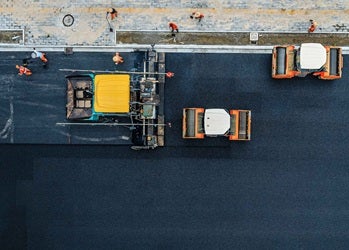
Riyadh awards $301m Sheikh Jaber Road contract
22 October 2026
Register for MEED’s 14-day trial access
The Royal Commission for Riyadh City (RCRC) has awarded an estimated SR1.13bn ($301m) contract to local firm Alomaier Trading & Contracting Company to upgrade a section of Sheikh Jaber Al-Ahmad Al-Sabah Road in the capital.
The project covers the construction of an urban road about 3 kilometres (km) long, with a right-of-way width of about 120 metres.
The scope of work includes the delivery of three interchanges featuring post-tensioned, voided-slab concrete bridges; a cut-and-cover tunnel; and three box culverts designated IC02, IC03 and IC04.
The contract also encompasses pumping and lifting stations, stormwater drainage and irrigation networks, earthworks, asphalt paving, roadway lighting, power distribution systems, mechanically stabilised earth retaining walls and landscaping works.
The award forms part of RCRC’s wider programme to upgrade Riyadh’s arterial road network, decongest critical bottlenecks and expand transportation capacity in the city ahead of Expo 2030 and the 2034 Fifa World Cup.
The contract award follows RCRC’s appointment in May of a joint venture of Riyadh-based Al-Rashid Trading & Contracting Company and Turkiye’s IC Ictas for an estimated SR5bn ($1.3bn) contract to construct another section of Sheikh Jaber Al-Sabah Road.
That project covers 12km from Khurais Road to Al-Thumama Road and is a component of Riyadh’s Second Eastern Ring Road scheme.
Alomaier Trading & Contracting Company has secured several contracts in recent months.
In August, Saudi Arabian Railways awarded the contractor an estimated SR4bn-plus ($1.1bn) contract to add a second track to the first section of the existing phosphate railway in the kingdom’s Eastern Province.
The railway package covers about 100km between AZ1/Nariyah Yard and Ras Al-Khair. Works include track doubling, alignment modifications, utility bridges, culvert widening, hydrological structures, conversion of the AZ1 siding into a mainline track, and enabling works for signalling and telecommunications systems.
 READ THE OCTOBER 2026 MEED BUSINESS REVIEW – click here to view PDF
Industry and logistics drive development at Neom; Saudi Arabia’s investment priorities realign amid conflict; MEED’s 2026 power developer ranking.
Distributed to senior decision-makers in the region and around the world, the October 2026 edition of MEED Business Review includes:
> AGENDA: Oxagon takes centre stage at Neom> MARKET FOCUS: Saudi projects hold steady> INDUSTRY REPORT: MEED’s 2026 GCC power developer ranking> LEADERSHIP: The future city does not need to hang above the groundTo see previous issues of MEED Business Review, please click herehttps://image.digitalinsightresearch.in/uploads/NewsArticle/20833960/main.jpg -
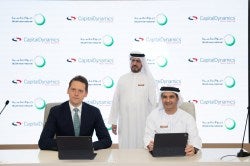
Dewa International signs energy and infrastructure MoUs
22 October 2026
Dubai Electricity & Water Authority’s (Dewa) new development arm, Dewa International, has signed four memorandums of understanding (MoUs) with international partners to explore investment and project development opportunities in the energy, water and infrastructure sectors.
The agreements, signed during Dubai’s Water, Energy, Technology and Environment Exhibition (Wetex 2026), follow the launch of the wholly owned subsidiary in June, as reported by MEED.
At the time, the utility said the arm would be used to export Dubai’s energy and water infrastructure model, with a focus on developing conventional and clean energy projects for global markets.
At Wetex, Dewa International signed an MoU with France’s EDF Power Solutions to explore potential joint participation in solar, wind, battery energy storage and pumped-storage hydropower projects.
A separate agreement with China Energy International Group explores the company’s potential role as an engineering, procurement and construction (EPC) partner for major energy, water and infrastructure projects. The MoU also covers cooperation in project development and EPC services.
A further agreement with UK-based Capital Dynamics focuses on potential joint investments in operational clean energy assets in Europe. The parties will also explore establishing an investment vehicle for future clean energy infrastructure investments.
Dewa International also signed a fourth agreement with Mumbai-Headquartered Tata Consultancy Services, exploring the company’s potential role as a technical consultancy partner. The scope covers technology strategy, information technology and operational technology integration, and asset performance management solutions.
Dewa currently has almost $7bn-worth of power and water projects under execution across the UAE, according to regional projects tracker MEED Projects.
Its flagship Mohammed Bin Rashid Al-Maktoum Solar Park is the largest single-site solar park in the world. The utility is currently advancing the project’s seventh phase, with Abu Dhabi Future Energy Company (Masdar) recently submitting the lowest bid for the project, as exclusively reported by MEED.
https://image.digitalinsightresearch.in/uploads/NewsArticle/20828111/main0128.jpg -
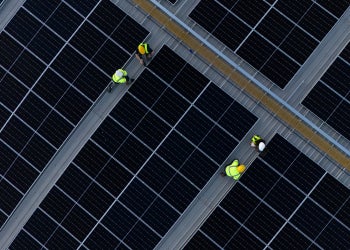
QatarEnergy and TotalEnergies to develop Lebanon solar plant
22 October 2026
Register for MEED’s 14-day trial access
State-owned QatarEnergy and France’s TotalEnergies have agreed to jointly develop a solar power plant in Lebanon.
The agreement was announced on 16 October during the Qatari prime minister’s official visit to Beirut, where he held a joint press conference with Lebanese Prime Minister Nawaf Salam.
According to a statement published by the Lebanese Prime Minister's Office, the plant will be an initial project under a broader framework for energy cooperation between Qatar and Lebanon. Its capacity, location, investment value and implementation schedule have yet to be disclosed.
Qatar’s Prime Minister Sheikh Mohammed Bin Abdulrahman Bin Jassim Al-Thani said: “The aim is to develop a major investment project that benefits the Lebanese economy, as well as the Qatari companies and entities participating in it.”
Separately, Salam said the Lebanese and Qatari governments were “close to reaching an agreement” to rehabilitate, develop and modernise Lebanon’s electricity-generation infrastructure.
The proposed project would cover the country’s various electricity-generation sources and associated infrastructure, aiming to improve the reliability of electricity supplies and reduce costs.
The project would use a build, operate and transfer model, under which Qatari entities would finance, implement and operate the facilities without upfront investment costs for the Lebanese treasury, Salam said.
Salam also said the proposal was being prepared with support from the International Finance Corporation, and that he hoped to present it to the Lebanese government soon.
The wider initiative is intended to address Lebanon’s longstanding electricity-generation shortfall and overcome financing constraints that have delayed infrastructure projects in the sector.
As MEED previously reported, the Lebanese government continues to advance broader reforms to the country’s electricity sector.
In August, Lebanon’s Electricity Regulatory Authority invited private sector companies to submit expressions of interest (EoIs) for several upcoming power-generation projects.
The EoIs cover up to five grid-connected solar photovoltaic projects with a combined installed capacity of 350 megawatts-peak. The projects are also expected to include battery energy storage systems with a combined capacity of 1,000 megawatt-hours.
The regulator is also seeking proposals for distributed dual-fired thermal power plants with net capacities of 20MW-100MW.
READ THE OCTOBER 2026 MEED BUSINESS REVIEW – click here to view PDFIndustry and logistics drive development at Neom; Saudi Arabia’s investment priorities realign amid conflict; MEED’s 2026 power developer ranking.
Distributed to senior decision-makers in the region and around the world, the October 2026 edition of MEED Business Review includes:
> AGENDA: Oxagon takes centre stage at Neom> MARKET FOCUS: Saudi projects hold steady> INDUSTRY REPORT: MEED’s 2026 GCC power developer ranking> LEADERSHIP: The future city does not need to hang above the groundTo see previous issues of MEED Business Review, please click herehttps://image.digitalinsightresearch.in/uploads/NewsArticle/20827458/main.jpg -
Deal signed for 1,620-home Baghdad residential scheme
22 October 2026
Iraq’s National Investment Commission (NIC) has signed an investment contract with local developer Al-Ab’ad Al-Dhahabiya for Investment & Real Estate Development to construct the Abraaj Al-Ameriya residential project in Baghdad.
The development will comprise 1,620 housing units in the Ameriya district of the capital, located behind the American University of Baghdad.
Al-Ab’ad Al-Dhahabiya is a subsidiary of Iraq-based Al-Kamil Holding Group.
The signing was attended by NIC chairman Adel Dakhil Muhammad Al-Yasiri and deputy chairman Salar Muhammad Amin, in addition to a delegation from Al-Kamil Holding Group led by chairman Mustafa Kamil Abboud and Al-Ab’ad Al-Dhahabiya managing director Muhannad Kamil Abboud.
The project forms part of Iraq’s broader programme to engage private sector developers and international investors to address a nationwide housing deficit of an estimated 3 million units through new residential compounds and masterplanned satellite cities.
READ THE OCTOBER 2026 MEED BUSINESS REVIEW – click here to view PDFIndustry and logistics drive development at Neom; Saudi Arabia’s investment priorities realign amid conflict; MEED’s 2026 power developer ranking.
Distributed to senior decision-makers in the region and around the world, the October 2026 edition of MEED Business Review includes:
> AGENDA: Oxagon takes centre stage at Neom> MARKET FOCUS: Saudi projects hold steady> INDUSTRY REPORT: MEED’s 2026 GCC power developer ranking> LEADERSHIP: The future city does not need to hang above the groundTo see previous issues of MEED Business Review, please click herehttps://image.digitalinsightresearch.in/uploads/NewsArticle/20809147/main.jpg