
Contractors submit bids for Taziz feedstock pipeline
10 September 2024

Register for MEED's 14-day trial access
Contractors have submitted technical bids for an Adnoc Gas project that involves building a pipeline network that will supply feedstocks to chemicals manufacturers at the Taziz Industrial Chemicals Zone in Abu Dhabi’s Ruwais.
Adnoc Gas, the natural gas production and processing business of Abu Dhabi National Oil Company (Adnoc Group), intends to supply fuel gas, nitrogen and other gaseous streams as feedstock for planned chemicals plants in the Taziz derivatives complex.
In the early stage of development of the Taziz chemicals zone, Adnoc Gas planned to deliver 226,600 million British thermal units a day (MMBtu/d) of peak sales gas, and 138,000 normal cubic metres an hour (Nm3/hr) of nitrogen to Taziz consumers.
Taziz – a 60:40 joint venture of Adnoc and Abu Dhabi’s industrial holding company ADQ – later announced its intention to expand the chemicals production complex and launched a second expansion phase.
In light of these expansion projects, Adnoc Gas has decided to increase its feedstock supply to Taziz investors to 720,280 MMBtu/d of sales gas and 319,500 Nm3/hr of nitrogen.
Contractors invited to bid for the project submitted technical bids by the deadline of 8 September, sources told MEED.
MEED previously reported that Adnoc Gas had issued the expression of interest document for the new Taziz feedstock pipeline project by 8 May, with contractors submitting responses by 15 May.
Adnoc Gas then issued the main tender for engineering, procurement and construction works on the project on 28 June, according to sources.
The main objective of the project is to install a new 42-inch sales gas pipeline measuring 3.14 kilometres (km), and a 20-inch nitrogen pipeline covering 2.21km, along with associated facilities, from the existing Adnoc Gas pipeline network to the new customer receiving station near the Taziz Industrial Chemicals Zone.
News about other Taziz projects:

Register for MEED's guest program now to access this article.
Exclusive from Meed
-
-
-
 Qiddiya awards estimated $1bn racecourse deal
1 July 2026
-
-
All of this is only 1% of what MEED.com has to offer
Subscribe now and unlock all the 153,671 articles on MEED.com
- All the latest news, data, and market intelligence across MENA at your fingerprints
- First-hand updates and inside information on projects, clients and competitors that matter to you
- 20 years' archive of information, data, and news for you to access at your convenience
- Strategize to succeed and minimise risks with timely analysis of current and future market trends
Related Articles
-
Contractor appointed for Abu Dhabi Riviera residences
1 July 2026
Dubai-based real estate developer Mered has appointed Turkiye’s Sera Group as the main contractor for its Riviera Residences project on Al-Reem Island in Abu Dhabi.
The development will comprise more than 400 one- to three-bedroom apartments and 11 villas.
Lebanese engineering firm Dar Al-Handasah is the project consultant, while Switzerland’s Herzog & de Meuron is the architect.
The enabling works are being carried out by local contractor NSCC International.
Mered and Sera Group are also working together on the Iconic Tower project in Dubai Internet City, where the developer awarded the main contract in December 2024.
The 67-storey tower is being built on a site covering about 6,368 square metres.
Local firm Mirage is the project consultant, while Singapore-based Hirsch Bedner Associates is the project architect.
Dubai-based Chawla Architectural & Consulting Engineers is the architect of record, and Omnium International is the quantity surveyor.
The foundation works were carried out by local firm Dutch Foundations.
Mered’s latest contract awards in the UAE market come amid heightened real estate and construction activity, with schemes worth more than $323bn at the execution or planning stages, according to UK-based analytics firm GlobalData.
GlobalData forecasts that output from the UAE’s residential construction sector will grow by 3% in real terms in 2026-29, supported by infrastructure, energy and utilities developments, as well as residential construction projects.
 READ THE JULY 2026 MEED BUSINESS REVIEW – click here to view PDF
Stress test for Gulf aviation; Mixed performance as country outlooks diverge in the Levant; GCC tourism sector pivots from crisis to recovery mode.
Distributed to senior decision-makers in the region and around the world, the July 2026 edition of MEED Business Review includes:
> AIRPORTS: Dubai and Riyadh reaffirm airport ambitions> INDUSTRY REPORT: Dubai eyes tourism sector recovery> DATA CENTRES: Big Tech falls short on data centre promise> LEADERSHIP: Aramco’s citizen developers accelerate digital changeTo see previous issues of MEED Business Review, please click herehttps://image.digitalinsightresearch.in/uploads/NewsArticle/17509888/main.jpg -
Siemens Energy to supply turbines for Oman IPP projects
1 July 2026
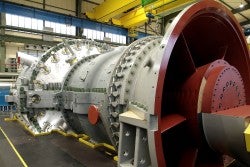
Germany’s Siemens Energy has announced it will supply power generation technology and long-term service agreements for the 2.6GW Misfah and Duqm independent power producer (IPP) projects in Oman.
The scope includes the supply of six F-class gas turbines, six generators and 20-year long-term service agreements for the equipment.
The combined-cycle gas-fired plants will add almost 20% to the sultanate’s electricity generation capacity. They are expected to provide electricity to more than two million people.
Oman’s Nama Power & Water Procurement (Nama PWP) signed power-purchase agreements (PPAs) for the development and operation of the plants in January.
The two combined-cycle gas turbine plants are being developed by a consortium comprising Korea Western Power (Kowepo), Qatar’s Nebras Power, the UAE’s Etihad Water & Electricity (EtihadWE) and Oman’s Bhawan Infrastructure Services.
The Misfah IPP will be led by Nebras Power and located in Wilayat Bousher in Muscat Governorate, with a planned capacity of 1,600MW.
The Duqm IPP will be led by Kowepo and located in Wilayat Duqm in Al-Wusta Governorate, with a capacity of 800MW.
In May, MEED exclusively reported that a consortium of China-headquartered Shandong Electric Power Construction No. 3 Company (Sepco 3) and South Korea’s Doosan Enerbility had been appointed as the main contractor.
The gas turbines will have hydrogen co-firing capability, providing flexibility to increase hydrogen use over time, Siemens said in a statement.
The turbines will be manufactured at Siemens Energy’s facility in Berlin. The generators will be produced at the company’s plant in Muelheim, Germany.
READ THE JULY 2026 MEED BUSINESS REVIEW – click here to view PDFStress test for Gulf aviation; Mixed performance as country outlooks diverge in the Levant; GCC tourism sector pivots from crisis to recovery mode.
Distributed to senior decision-makers in the region and around the world, the July 2026 edition of MEED Business Review includes:
> AIRPORTS: Dubai and Riyadh reaffirm airport ambitions> INDUSTRY REPORT: Dubai eyes tourism sector recovery> DATA CENTRES: Big Tech falls short on data centre promise> LEADERSHIP: Aramco’s citizen developers accelerate digital changeTo see previous issues of MEED Business Review, please click herehttps://image.digitalinsightresearch.in/uploads/NewsArticle/17506190/main.jpg -
Qiddiya awards estimated $1bn racecourse deal
1 July 2026
Register for MEED’s 14-day trial access
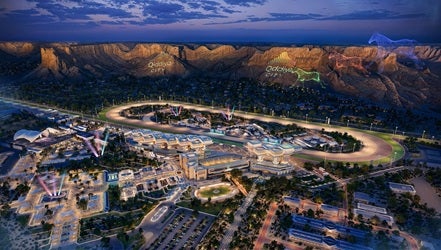
Saudi gigaproject developer Qiddiya Investment Company (QIC) has awarded an estimated SR4.3bn ($1.1bn) contract for the construction of a racecourse at Qiddiya entertainment city, on the outskirts of Riyadh.
The contract was awarded to Taj Dhabi, a local subsidiary of UAE-based Trojan Construction.
The racecourse venue will cover 1.3 million square metres and accommodate 70,000 spectators.
QIC issued the tender for the construction works in December last year, but formally announced the project only on 10 February. Contractors submitted their bids on 15 February, MEED previously reported.
According to a statement published on QIC’s website: “The venue will include the region’s first straight-mile turf course, alongside a 2.2 kilometre (km) main turf track and a 2.4km inner dirt track.
“A 21,000-seat grandstand will anchor the venue, with the ability to expand capacity to up to 70,000 guests through event overlays during major race days,” the statement added.
A centrepiece of the venue will be a 110-metre central parade ring, located in the middle of the racecourse.
The project also includes an equine hospital that will provide advanced veterinary services, including diagnostics, surgery, rehabilitation and emergency care for horses.
The Qiddiya City horse racing venue is one of several major projects within the greater Qiddiya development. Other projects include an e-games arena, the Prince Mohammed Bin Salman Stadium, a motorsports track, a performing arts centre, the Dragon Ball and Six Flags theme parks, and Aquarabia.
The project is a key part of Riyadh’s strategy to boost leisure tourism in the kingdom. According to GlobalData, leisure tourism in Saudi Arabia has experienced significant growth in recent years.
 GCC presses ahead with tourism projects
READ THE JULY 2026 MEED BUSINESS REVIEW – click here to view PDFStress test for Gulf aviation; Mixed performance as country outlooks diverge in the Levant; GCC tourism sector pivots from crisis to recovery mode.
Distributed to senior decision-makers in the region and around the world, the July 2026 edition of MEED Business Review includes:
> AIRPORTS: Dubai and Riyadh reaffirm airport ambitions> INDUSTRY REPORT: Dubai eyes tourism sector recovery> DATA CENTRES: Big Tech falls short on data centre promise> LEADERSHIP: Aramco’s citizen developers accelerate digital changeTo see previous issues of MEED Business Review, please click herehttps://image.digitalinsightresearch.in/uploads/NewsArticle/17506035/main.jpg -
NCP seeks firms for Saudi Arabia university hospital PPP
1 July 2026
Saudi Arabia’s Umm Al-Qura University, in collaboration with the National Centre for Privatisation & PPP (NCP), has launched an expression of interest for the completion of the construction and operation of the Umm Al-Qura University Hospital in Mecca.
Issued to contractors on 30 June, the notice has a submission deadline of 21 July.
The scope includes completing the remaining construction works, as well as the subsequent operation of the hospital.
Upon completion, the hospital will have a capacity of 391 beds.
The project will be delivered as a public-private partnership (PPP) under a design, build, finance, operate and maintain model.
The contract duration is 30 years.
The project is the latest healthcare project to be procured on a PPP basis in the kingdom. In June, MEED reported that Saudi Arabia’s Ministry of Health and NCP had awarded a PPP contract for the operation and management of the Sabic Specialised Behavioural Healthcare Hospital in Riyadh.
That contract was awarded to SEH Healthcare, a consortium comprising local firms Specialised Medical Company (SMC Healthcare) and Health Gates Complex, and Germany’s Dr Ebel Fachkliniken.
In a filing with the Saudi Exchange (Tadawul), SMC Healthcare said the total estimated project value is about SR3.8bn ($1bn).
In January, Saudi Arabia launched a national privatisation strategy aimed at mobilising $64bn in private sector capital by 2030.
Building on the privatisation programme first introduced in 2018, the strategy focuses on unlocking state-owned assets for private investment and privatising selected government services.
In a statement, NCP said the strategy comprises 147 opportunities drawn from a broader pipeline of more than 500 projects across 18 sectors.
 https://image.digitalinsightresearch.in/uploads/NewsArticle/17506381/main.jpg
 -
 On-site work starts for $5.4bn gas project in Algeria
1 July 2026
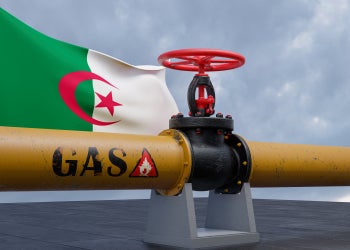
On-site work has started for the $5.4bn gas project in Algeria’s Illizi South block, days after a key meeting between Algeria’s Oil and Gas Minister Mohamed Arkab and the chief executive of the Saudi company Midad Energy, Sheikh Abdulelah Bin Mohammed Bin Abdullah Al-Aiban.
The total investment of about $5.4bn will be fully financed by Midad Energy, including approximately $288m allocated to the exploration phase.
It is being developed in partnership with Algeria’s national oil and gas company Sonatrach.
Structured under Algeria’s Hydrocarbon Law No. 19-13, the agreement spans 30 years, with a 10-year extension option. It includes a seven-year exploration phase.
The initial exploration phase is worth $288m and will involve 2D and 3D seismic exploration as well as drilling more than 13 appraisal wells, according to a report by the local news service Algerie360.
The second phase, with an investment value of approximately $5.1bn, will involve drilling approximately 60 wells and constructing four natural gas compression units.
The project is projected to produce a cumulative total of 125 billion cubic metres of natural gas and 204 million barrels of liquid hydrocarbons over 30 years.
This will include 103 million barrels of liquefied petroleum gas and 101 million barrels of condensate.
Midad Energy has also stated its intention to further expand its investment in Algeria’s oil and gas industry and explore new joint investment opportunities with Sonatrach.
Algeria’s president, Abdelmadjid Tebboune, signed a presidential decree ratifying the development agreement in March.
Presidential Decree No. 26-113 was issued on 8 March 2026 and underpinned by Articles 91-7 and 141.
It approved a contract signed in Algiers on 13 October 2025 between Sonatrach and Midad Energy.
The contract granted both companies the rights to explore and exploit hydrocarbons in the Illizi South area. Algeria’s National Agency for the Valorisation of Hydrocarbon Resources (Alnaft) announced the contract award on 11 October 2025.
The block is located about 100 kilometres south of In Amenas, which was raided by Al-Qaeda-linked terrorists in 2013, leading to a hostage crisis.
READ THE JULY 2026 MEED BUSINESS REVIEW – click here to view PDFStress test for Gulf aviation; Mixed performance as country outlooks diverge in the Levant; GCC tourism sector pivots from crisis to recovery mode.
Distributed to senior decision-makers in the region and around the world, the July 2026 edition of MEED Business Review includes:
> AIRPORTS: Dubai and Riyadh reaffirm airport ambitions> INDUSTRY REPORT: Dubai eyes tourism sector recovery> DATA CENTRES: Big Tech falls short on data centre promise> LEADERSHIP: Aramco’s citizen developers accelerate digital changeTo see previous issues of MEED Business Review, please click herehttps://image.digitalinsightresearch.in/uploads/NewsArticle/17505309/main.jpg