
Contractor progresses with Qatar LNG decarbonisation project
30 October 2025

Engineering, procurement and construction (EPC) works are progressing on an estimated $2bn to $2.5bn carbon dioxide (CO2) sequestration complex project of QatarEnergy LNG covering its liquefied natural gas (LNG) production operations in Qatar’s Ras Laffan Industrial City (RLIC).
Once commissioned, the planned sequestration facility will be capable of capturing 4.3 million tonnes a year (t/y) of CO2 from QatarEnergy LNG’s production operations in RLIC.
QatarEnergy LNG, a subsidiary of state enterprise QatarEnergy, awarded the main EPC contract for the CO2 sequestration project to South Korean contractor Samsung C&T, sources told MEED.
The letter of award for the EPC contract was issued by QatarEnergy LNG to Samsung C&T on 27 May, according to a source.
The following contractors are among those that are understood to have submitted bids in April for EPC works on the QatarEnergy LNG CO2 sequestration project:
- Chiyoda (Japan) / Consolidated Contractors Company (Greece/Lebanon)
- Larsen & Toubro Energy Hydrocarbon (India)
- Samsung C&T (South Korea)
Based on the initial evaluation of bids, Larsen & Toubro Energy Hydrocarbon is understood to have pulled ahead in the race for the project’s contract, MEED previously reported. However, sources, at the time, added that the situation could change.
QatarEnergy LNG awarded Australia-headquartered consultancy Worley a contract in September 2023 to execute the front-end engineering and design (feed) work on the project and to prepare the EPC scope of work.
CO2 sequestration facility
The planned sequestration facility will capture CO2 from seven LNG trains at the QG North complex and three LNG trains at the QG South complex.
The CO2 captured from the trains is to be dehydrated, compressed and transferred via a new 154-kilometre pipeline, to be injected into wells at the Dukhan oil field development onshore Qatar for a related enhanced oil recovery pilot scheme.
The pilot project is part of QatarEnergy’s long-term strategy for the redevelopment of the Dukhan fields that will contribute to the recovery of additional crude.
The detailed EPC scope of work on the CO2 sequestration project covers the following:
- QG North complex:
- Installation of four new electric-driven compressors
- New power substation for power import from Kahramaa 65MW
- New ITR for DCS/ESD/F&G
- Tie-ins with utility units
- Dehydration package
- Pig launcher
- QG South complex:
- Installation of two new electric-driven compressors
- Integration with South injection system unit 85
- Solvent reformulation for South trains 1/23
- New power substation for power import from Kahramaa 35MW
- New SIH for DCS/ESD/F&G
- Tie-ins with utility units
- Dehydration package
- Chillers package
- Pig launcher
- RLIC corridors
- Common 22-inch export pipeline stretching 18 kilometres
- Power tie-in RLF3 with Kahramaa
- Electric cables
- Fiber optic cable
- Lot W15
- Six injection wells by QatarEnergy LNG subsurface
- Six injection flowlines and metring skid
- Six wellhead control panels
- Power tie-in from Barzan
- Substation
- Pig receiver
- Access road and fencing
The project will directly reduce CO2 emissions because some of the CO2 injected into wells at the Dukhan oil field will remain in the reservoir after injection.
The CO2 sequestration complex in RLIC is expected to start operations by the end of 2027.
North Field LNG expansion
Meanwhile, QatarEnergy LNG continues to press forward with its North Field LNG expansion programme.
The estimated $40bn North Field LNG expansion programme aims to raise Qatar’s total LNG production capacity from 77.5 million t/y to 142 million t/y in three phases.
QatarEnergy is understood to have spent almost $30bn on the two phases of the North Field LNG expansion programme, North Field East and North Field South, which will increase its LNG production capacity from 77.5 million t/y to 126 million t/y by 2028.
EPC works on the two projects are making progress.
QatarEnergy awarded the main EPC contracts in 2021 for the North Field East project, which is projected to increase LNG output to 110 million t/y by this year. The main $13bn EPC package, which covers the engineering, procurement, construction and installation of four LNG trains with capacities of 8 million t/y each, was awarded to a consortium of Japan’s Chiyoda Corporation and France’s Technip Energies in February 2021.
QatarEnergy awarded the main EPC contract for the North Field South LNG project, worth $10bn, in May 2023. The contract covers two large LNG processing trains, each with a capacity of 7.8 million t/y, and was awarded to a consortium of Technip Energies and Lebanon-based Consolidated Contractors Company.
When fully commissioned, the first two phases of the North Field LNG expansion programme will contribute a total supply capacity of 48 million t/y to the global LNG market.
In February 2024, QatarEnergy announced the third phase of its North Field LNG expansion programme. To be called North Field West, the project will further increase QatarEnergy’s LNG production capacity to 142 million t/y when it is commissioned by 2030.
The North Field West project will have an LNG production capacity of 16 million t/y, which is expected to be achieved through two 8 million t/y LNG processing trains, based on the two earlier phases of QatarEnergy’s LNG expansion programme. The new project will draw feedstock for LNG production from the western zone of Qatar’s North Field offshore gas reserve.
The state enterprise recently started a prequalification process for the main tendering exercise for dredging works on the North Field West project.

Register for MEED's guest program now to access this article.
Exclusive from Meed
-
 Frontrunner emerges for Saudi sewage treatment project
13 March 2026
-
 Medina tenders Sikkah Al-Hadid PPP project
13 March 2026
-
 Fuel storage facility attacked in Bahrain
13 March 2026
-
-
 Italian consultant wins Egypt battery storage contract
13 March 2026
All of this is only 1% of what MEED.com has to offer
Subscribe now and unlock all the 153,671 articles on MEED.com
- All the latest news, data, and market intelligence across MENA at your fingerprints
- First-hand updates and inside information on projects, clients and competitors that matter to you
- 20 years' archive of information, data, and news for you to access at your convenience
- Strategize to succeed and minimise risks with timely analysis of current and future market trends

Related Articles
-
Frontrunner emerges for Saudi sewage treatment project
13 March 2026
A consortium led by China’s Jiangsu United Water Technology has emerged as the frontrunner for a contract to build and upgrade two sewage treatment plants in Saudi Arabia, according to sources.
The contract covers the North Western A Cluster Sewage Treatment Plants Package 11 (LTOM11), part of the next phase of National Water Company’s (NWC) long-term operations and maintenance (LTOM) sewage treatment programme.
The consortium comprising United Water, Prosus Energy (UAE) and Armada Holding (Saudi Arabia) offered “the lowest tariff” for the project, sources told MEED.
It is understood that Turkey’s Kuzu has made the next-lowest bid.
The development, estimated to cost about $211m, will have a combined capacity of about 440,000 cubic metres a day (cm/d).
In February, MEED exclusively reported that six bidders were competing for the contract.
The other companies that have submitted proposals include:
- Alkhorayef Water & Power Technologies (Saudi Arabia)
- Civil Works Company (Saudi Arabia)
- VA Tech Wabag (India)
- Aguas de Valencia (Spain)
LTOM11, also known as the North Western A Cluster, forms part of the second phase of NWC’s rehabilitation of sewage treatment plants programme.
The scheme is being procured on an engineering, procurement and construction (EPC) basis with a long-term operations component.
The main contract was tendered last year, with an award initially expected by the end of 2025.
It is now understood that NWC is preparing to offer the main contract in the second quarter.
As previously reported, Saudi Arabia’s NWC is also evaluating five bids for package 12 of its long-term operations and maintenance (LTOM12) sewage treatment programme.
Known as the North Western B Cluster, LTOM12 forms part of the second phase of NWC’s rehabilitation of sewage treatment plants programme.
In January, the same United Water-led consortium won the main contract for the Northern Cluster Sewage Treatment Plants Package 10 (LTOM10).
That project includes the rehabilitation and operation of nine sewage treatment plants located across the Hail, Qassim, Al-Jouf and Northern Borders provinces
NWC is also preparing to tender a contract for the construction of 10 sewage treatment plants as part of package 14 of the programme.
The final details of the Eastern A Cluster (LTOM14) package are being finalised, with a tender likely to be issued in March or April, sources told MEED.
 READ THE MARCH 2026 MEED BUSINESS REVIEW – click here to view PDF
Riyadh urges private sector to take greater role; Chemical players look to spend rationally; Economic uptick lends confidence to Cairo’s reforms.
Distributed to senior decision-makers in the region and around the world, the March 2026 edition of MEED Business Review includes:
> RAMADAN: Data disproves the Ramadan slowdown story> INDUSTRY REPORT: Chemicals producers look to cut spending> INDUSTRY REPORT: Global petrochemical project capex set to rise until 2030> MARKET FOCUS: Egypt’s crisis mode gives way to cautious revival> LEADERSHIP: Delivering Saudi Arabia’s next phase of rail growth> INTERVIEW: Abu Dhabi’s Enersol charts acquisitions pathTo see previous issues of MEED Business Review, please click herehttps://image.digitalinsightresearch.in/uploads/NewsArticle/15968035/main.jpg -
Medina tenders Sikkah Al-Hadid PPP project
13 March 2026
Saudi entities including Al-Madinah Regional Municipality, in collaboration with the Ministry of Municipalities & Housing and the National Centre for Privatisation & PPP (NCP), have floated a request for proposal (RFP) notice for the development of the Sikkah Al-Hadid project.
The project will be procured through build-own-operate-transfer contracts with a 50-year duration, using a public-private partnership (PPP) model.
The deadline for bid submission is 23 June.
The project will be located to the west of Medina on an 84,657-square-metre (sq m) site.
It includes a four-storey medical centre with a capacity of up to 200 beds and a shopping mall offering retail, food and beverage, and other entertainment facilities.
In January last year, NCP asked firms to express their interest and prequalify for a contract to develop two mixed-use developments in Medina, which included the Sikkah Al-Hadid project and the Dhul Hulaifah project.
The Dhul Hulaifah project will be built on a 30,112 sq m site located six kilometres from the Prophet’s Mosque.
The development will consist of a four-star hotel integrated with retail and healthcare facilities.
MEED previously reported that Saudi Arabia had announced a P&PPP pipeline comprising 200 projects across 16 sectors.
This pipeline aims to attract local and international investors and ensure their readiness to participate in the schemes tendered to the market.
The initiative comes as the kingdom strives to increase the attractiveness of its economy and raise the private sector’s contribution to GDP.
 https://image.digitalinsightresearch.in/uploads/NewsArticle/15968021/main.jpg
 -
Fuel storage facility attacked in Bahrain
13 March 2026
Register for MEED’s 14-day trial access
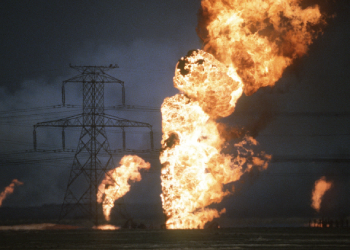
Fuel storage tanks at a facility on Bahrain’s Muharraq Island were targeted in an attack attributed to Iran, according to a statement from Bahrain’s Interior Ministry.
The ministry put out an alert for people in surrounding neighbourhoods “to remain in their homes, close windows and ventilation openings, as a precautionary measure against possible exposure to smoke”.
Videos of the incident, which took place on 12 March, showed a large fire emitting black smoke. The fire was later extinguished by teams of firefighters.
Bahrain’s international airport is also located on Muharraq Island.
Iran has been firing missiles at a range of targets in nearby countries since it was attacked by the US and Israel on 28 February.
On 11 March, a similar attack on fuel storage tanks in Oman led to the closure of some terminals at the port of Salalah.
Footage recorded by vessel crews at the port, which is the largest in the country, showed explosions and a large fire.
https://image.digitalinsightresearch.in/uploads/NewsArticle/15963333/main.png -
Bahrain contacts engineering companies over Sitra refinery damage
13 March 2026
Register for MEED’s 14-day trial access
Bahrain’s national oil and gas company Bapco Energies is in touch with international engineering companies about damage done to the Sitra refinery by Iranian strikes, according to industry sources.
In a statement on 9 March, Bapco Energies said its decision to issue the force majeure notice followed “the recent attack on its refinery complex”, without providing details.
Bapco Energies is yet to share full details about the extent of the damage caused to the refinery, sources said.
One source said: “Bapco has been corresponding with several companies with regard to the damage. It is being careful not to share confidential information, but it has reached out.”
Prior to Bapco’s 9 March statement, the Sitra refinery was hit by a strike earlier in the day.
That strike on the Sitra refinery was the second strike on the complex in days.
Iranian missiles hit the facility on 5 March, resulting in parts of the refinery being engulfed in flames.
Iran has been firing missiles at a range of targets in nearby countries since it was attacked by the US and Israel on 28 February.
In November last year, MEED reported that Bapco Energies was in the final stages of ramping up volumes processed by new units that were installed as part of the Bapco Modernisation Programme (BMP).
The project at the Sitra refinery in Bahrain is estimated to have been worth $7bn and was inaugurated by Bahrain’s King Hamad Bin Isa Al-Khalifa in December 2024.
At the time, the companies involved in the engineering, procurement and construction (EPC) contract for the project were still working on the site to assist with efforts to increase volumes.
Bapco Energies awarded the main $4.2bn contract to perform EPC works on the BMP to a consortium led by France’s Technip Energies in February 2018.
The consortium also included Spain’s Tecnicas Reunidas and South Korea’s Samsung E&A.
Technip Energies also performed the project’s front-end engineering and design work. US oil and gas producer Chevron acted as a consultant on the BMP, while Australia-based Worley was the project management consultant.
In March 2024, after a series of setbacks and delays, France’s Total Energies was brought in to support Bapco in “optimising” the project.
The BMP is central to Bahrain’s Vision 2030 economic development strategy, and Bapco has said that it is crucial to boosting the country’s long-term downstream potential.
The BMP was originally expected to reach mechanical completion in 2023, with operations set to begin in 2024.
The core objective of the BMP was to upgrade the Sitra refinery – Bahrain’s only oil refining asset, which is 90 years old.
One of the key units to be built as part of the BMP was a residual hydrocracking unit (RHCU) powered by technology licensed from US-based Chevron Lummus Global. The BMP team has built a two-train RHCU with a capacity of 65,000 barrels a day.
The Sitra refinery includes seven crude distillation units (CDUs) and vacuum distillation units (VDUs) as part of the BMP.
The new 225,000 b/d integrated crude and vacuum unit replaced CDUs 1, 2 and 3 and VDUs 1 and 3, which had served Bapco Energies for over 80 years.
https://image.digitalinsightresearch.in/uploads/NewsArticle/15963329/main.jpg -
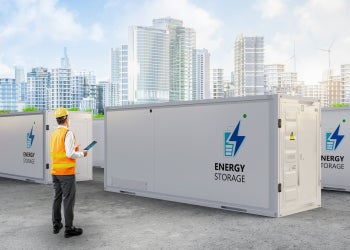
Italian consultant wins Egypt battery storage contract
13 March 2026
Italy-headquartered consultancy Rina has announced its appointment as owner’s engineer for the 1 gigawatt-hour Nefertiti battery energy storage system (bess) project in Egypt.
The project is being developed by Dubai-based firm Amea Power and is located in the Benban Photovoltaic Industrial Park in Aswan.
The scheme will deploy a 500MW/1,000 megawatt-hour (MWh) utility-scale bess, making it the largest independent energy storage project in Africa.
In March, a group comprising China Energy Engineering International Group, Zhejiang Thermal Power Construction and Southwest Electric Power Design & Research Institute was appointed as the main engineering, procurement and construction contractor.
The $250m project also includes the construction of a 220kV substation, upgrades to an adjacent substation and development of grid network connection infrastructure.
Under the owner’s engineer scope, Rina will deliver engineering design review, construction monitoring and commissioning support. The company will also undertake performance verification.
Egypt’s utilities sector had its strongest year in over a decade in 2025, hitting $5bn in contract awards for the first time since 2015.
Last July, Amea Power commissioned Egypt’s first-ever utility-scale bess.
The 300MWh project had previously reached financial close in June.
The bess project is an extension of Amea Power’s operational 500MW solar photovoltaic plant in Aswan Governorate, which was commissioned in December 2024.
https://image.digitalinsightresearch.in/uploads/NewsArticle/15954234/main.jpg