
Chinese company approves $68.5m biotech project in Egypt
22 April 2026
China’s Tongling Jieya Biotechnology is planning to develop a factory that will produce disposable sanitary products in Egypt, according to a stock market filing.
As part of the plan to develop and operate the facility, the company is establishing a subsidiary in the North African country.
The total investment in the project is estimated to be approximately RMB467,101,200 ($68.5m).
In its statement, Tongling Jieya Biotechnology said that it would “implement the investment in stages based on market demand and business progress, adjusting the investment amount and method as needed, and fulfilling the corresponding review procedures and information disclosure obligations”.
The facility is expected to produce up to 10 billion wet wipes a year, as well as 2 billion baby diapers and 100,000 tonnes of nonwoven fabrics.
This is expected to generate about $270m in annual revenue and employ around 1,000 people when the facility is operating at full capacity.
The plan to establish the subsidiary and develop the factory was approved at a company board meeting on 8 April 2026.
In its statement, the company said: “The management was authorised to handle the signing of agreements and documents related to this investment and construction, and to apply for administrative permits or filings with the relevant authorities such as the Ministry of Commerce and the State Administration of Foreign Exchange.”
The construction and implementation of the project still requires approval from Egyptian government departments.
Under current plans, the factory will be developed in the China-Egypt TEDA Suez Economic and Trade Cooperation Zone, located within the wider Suez Canal Economic Zone (SC Zone).
The land for the project has already been purchased, covering an area of 160,000 square metres.
The scope of the project will include developing:
- 14 production lines
- Quality control facilities
- Auxiliary equipment
The statement from Tongling Jieya Biotechnology estimates a two-year construction period for the project.
The contract for the land on which the project will be built was signed with TEDA Special Economic Zone Development Company on 23 December 2025, with a value of $8,465,400.
Tongling Jieya Biotechnology said the planned facility in Egypt is important for the company’s “globalisation strategy”.
It said: “Egypt is located at the crossroads of Asia, Africa and Europe, with a superior geographical location, and has signed a number of free trade agreements with major European and American markets, which is conducive to the company’s further expansion and coverage of global markets outside the United States.”
Established in 2008, the China-Egypt TEDA Suez Economic and Trade Cooperation Zone has become one of the SCZone’s most prominent industrial hubs.
By July last year, it had attracted 185 companies and over $3bn in cumulative investment.
The land deal for this project was one of three agreements announced in December last year relating to the zone, with a total value of more than a billion dollars.
At the time, SC Zone chairman Walid Gamal El-Din said that the largest was a project led by the Chinese chemical fibre specialist Xin Feng Ming.
This will involve the construction of an integrated polyester fiber and polymer complex with investments exceeding $800m.
The facility is expected to be built over about 400,000 square meters and developed in three phases, with a combined annual production capacity of 1.08 million tonnes.
It is expected to create around 3,000 jobs.
A second project with Chaoyang Langma will establish a $190m tyre manufacturing complex producing heavy-duty truck and passenger car tyres.
The facility will span 200,000 square meters and employ about 1,400 workers.

Register for MEED's guest program now to access this article.
Exclusive from Meed
-
 Dubai evaluates Tasreef drainage bids
24 November 2026
-
 Muscat financial centre opens for business
24 November 2026
-
 Mecca university tenders water infrastructure projects
24 November 2026
-
 Oman’s OQT formalises Pakistan fuel supply agreement
24 November 2026
-
 Contractors bid for Aramco-backed logistics hub
24 November 2026
All of this is only 1% of what MEED.com has to offer
Subscribe now and unlock all the 153,671 articles on MEED.com
- All the latest news, data, and market intelligence across MENA at your fingerprints
- First-hand updates and inside information on projects, clients and competitors that matter to you
- 20 years' archive of information, data, and news for you to access at your convenience
- Strategize to succeed and minimise risks with timely analysis of current and future market trends
Related Articles
-
Dubai evaluates Tasreef drainage bids
24 November 2026

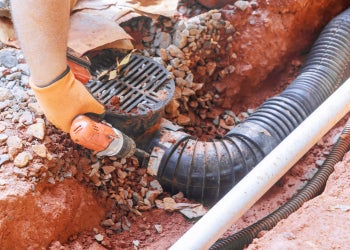
Up to eight stormwater and drainage projects under the next phase of Dubai Municipality’s AED30bn ($8.2bn) Tasreef programme have moved into the bid evaluation stage in recent weeks as procurement activity continues to drive the wider water infrastructure sector.
The projects cover major stormwater drainage networks, pumping stations, storage tanks and sewerage infrastructure. They include schemes serving Dubai South, Abu Hail, the area surrounding Dubai International airport, Dubailand and Al-Awir.
According to regional project tracker MEED Projects, the eight tenders have an estimated combined value of at least $800m. The tenders cover the following projects:
- DS-316-C1: Drainage networks serving Hind 4
- TF-24-C1: Connections to the stormwater network in Dubailand
- TF-25-C1: Stormwater trunk line serving Hind 3, Hind 4 and Umm Al-Daman
- TF-07-C1: Strategic stormwater drainage network between Sheikh Mohammed bin Zayed Road and Emirates Road
- TF-21-C1: Stormwater system upgrade and rehabilitation in Abu Hail
- TF-30-C1: Stormwater storage tanks serving the Dubai International airport area
- TF-06-C2: Stormwater drainage system connecting Al-Maktoum International airport and Dubai South
- DS317-C1: Sewerage and stormwater infrastructure in New Al-Awir 1st
According to sources, local firms Nael Construction & Contracting, Al-Nasr Contracting and Arifco Building Contracting are among those that submitted bids for the Dubailand stormwater network project (TF-24-C1) in October. The bidders for this tender do not include the local DeTech Contracting, which won the estimated $350m engineering, procurement and construction contract for a package on Al-Wasl Road (TF-15-C1), earlier this year.
On 29 October, DeTech, Mohammed Abdulmohsin Al-Kharafi & Sons and Green Oasis General Contracting Company were among those that submitted bids for TF-07-C1, sources told MEED.
It is undersood that both DeTech and Kharafi also submitted offers on 12 November for a contract to upgrade and rehabilitate the stormwater system in Abu Hail (TF-21-C1). The Abu Hail project comprises a stormwater pumping station with a total discharge capacity of 26 cubic metres a second. The wider project involves a major stormwater gravity drainage network, including large-diameter pipelines, and is estimated to cost up to $163m.
Meanwhile, the the municipality is preparing to receive bids for a further scheme (TF-06-C1) on 26 November, involving the construction of a stormwater pond connecting Al-Maktoum airport and Dubai South. Al-Nasr Contracting and Green Oasis are among those preparing to bid, sources said.
In October, the municipality confirmed it had awarded four contracts worth AED3bn ($817m) to expand the emirate’s stormwater drainage network by about 100 square kilometres under phase three of the Tasreef programme.
The projects will cover Jumeirah, Umm Suqeim, Al-Quoz, Al-Barsha, Al-Wasl and Al-Marmoom. The works include constructing and extending main stormwater drainage lines with diameters of up to 3 metres.
The Tasreef programme aims to increase the emirate’s stormwater drainage capacity by 700% and reduce costs associated with pumping stations, network operations and maintenance by 20%.
https://image.digitalinsightresearch.in/uploads/NewsArticle/21756439/main.jpg -
Muscat financial centre opens for business
24 November 2026
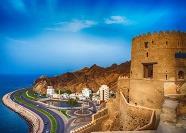
The International Financial Centre of Oman (IFC Oman) has opened its headquarters at Al-Mouj Business Park in Muscat and registered its first 13 companies.
Sayyid Theyazin bin Haitham Al-Said, Oman's Deputy Prime Minister for Economic Affairs and chairman of IFC Oman, opened the headquarters on 23 November. The ceremony also marked the official start of company registration, which allows local and international businesses to set up within the centre's jurisdiction.
The first 13 companies received their certificates of incorporation at the event. The centre was set up by Royal Decree No. 8/2026 in January, so the move from setting up a legal framework to taking in businesses has taken 10 months.
Registration follows royal decrees that put in place IFC Oman's operating law, regulatory law and courts law. Five core regulations sit alongside them and cover operations, companies, partnerships, foundations and interpretation. Together they set the rules for setting up and running a business in the centre, including corporate governance, regulatory obligations and dispute resolution.
Businesses can apply through a new digital registry platform. A separate regulatory framework for financial services is still being drafted, and licensing for those activities is expected to start in early 2027.
Finance Minister Sultan bin Salim Al-Habsi, who is vice-chairman of IFC Oman, said the decision by 13 companies to join from the start "reflects the strength of the business and investment environment the centre offers".
"We will maintain this momentum as we complete the regulatory framework ahead of the start of financial services licensing early next year," he said.
Sayyid Theyazin said the framework "lays the foundation for a stable and competitive business environment" and will strengthen Oman's appeal to international investors and financial institutions.
He also chaired a board meeting. It reviewed progress on finishing the centre's legal, regulatory and operational infrastructure and set priorities for attracting companies and investment.
IFC Oman aims to connect the national economy more closely to international capital and to support growth in financial and professional services, in line with the Oman Vision 2040 economic diversification programme.
The centre goes up against established regional financial hubs, including Dubai International Financial Centre, Abu Dhabi Global Market and Qatar Financial Centre.
https://image.digitalinsightresearch.in/uploads/NewsArticle/21756636/main5305.gif -
Mecca university tenders water infrastructure projects
24 November 2026
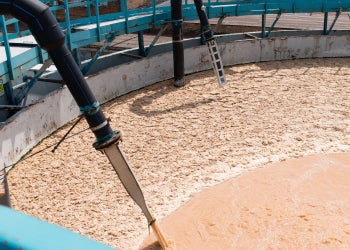
Mecca-based Umm Al-Qura University has issued two tenders for wastewater and water storage infrastructure at its student campus in the Al-Abidiyah district.
The first tender covers the second phase of the university’s main water storage scheme. The project involves building seven tanks with a combined capacity of 14,700 cubic metres.
The scope includes three ground-level tanks with a total capacity of 7,500 cubic metres and four elevated tanks with a combined capacity of 7,200 cubic metres.
It also includes a 2.1-kilometre backup water supply pipeline with a diameter of 400 millimetres, as well as pumping stations, inlet and outlet pipework, valves and water control systems.
The second tender covers the construction of a wastewater treatment plant with a capacity of 4,000 cubic metres a day at the university’s student campus. The contract duration is listed as two years.
The projects will expand the campus’s water infrastructure, adding storage capacity and wastewater treatment facilities to support its operational requirements.
Both tenders were issued in November. Bids for the water storage tanks and wastewater plant are due by 14 December and 13 December, respectively.
https://image.digitalinsightresearch.in/uploads/NewsArticle/21752745/main.jpg -
Oman’s OQT formalises Pakistan fuel supply agreement
24 November 2026
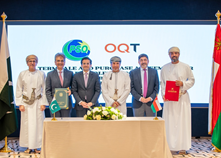
Oman's state-owned commodity trader OQT has signed a petroleum products supply agreement with Pakistan State Oil (PSO), the South Asian country's national oil marketing company.
The deal was signed on 8 October and formally marked at a ceremony in Muscat on 22 November. It was made under the Oman-Pakistan intergovernmental framework and gives OQT a structured arrangement for supplying petroleum products to PSO.
The two companies have yet to disclose the agreement's value, volumes or duration.
The agreement builds on an existing trading relationship. OQT says it has supplied more than 1 million tonnes of gasoline to PSO in 2026.
OQT also supplies Pakistan's liquefied petroleum gas (LPG) market, selling to both state-owned and private buyers. The company expects its LPG deliveries to Pakistan to pass 120,000 tonnes by the end of the year.
"This agreement gives us a stronger framework to build on that relationship, combining OQT's international trading capabilities with PSO's position in the Pakistani market," said OQT chief executive Wail Al-Jamali.
PSO chief executive Jawwad Ahmed Cheema said the partnership is now "formal, government-backed and built for the long term under the Oman-Pakistan Intergovernmental Agreement".
"For PSO, this is about more than supply. It is about ensuring that Pakistan has the fuel it needs, when it needs it, on terms that protect our national interest," he said.
Oman's Energy & Minerals Minister Salim Al-Aufi and Pakistan's Petroleum Minister Ali Pervaiz Malik attended the ceremony, along with Mulham Al-Jarf, deputy president of investment at the Oman Investment Authority, which owns OQT.
The companies said the agreement will support reliable supply at a time of continued volatility in regional energy markets. They will now focus on implementation and deliveries, and will continue talks on wider petroleum and energy cooperation.
OQT trades crude oil, refined products, petrochemicals, LPG, liquefied natural gas, fertilisers and carbon-related products, and is expanding into metals. It has offices in Muscat, Dubai, London, Rotterdam, Singapore, Houston and Shanghai.
https://image.digitalinsightresearch.in/uploads/NewsArticle/21750539/main1214.jpeg -
Contractors bid for Aramco-backed logistics hub
24 November 2026
Asmo, the logistics joint venture of Saudi Aramco and DHL Supply Chain, received proposals from contractors on 15 November for a contract to expand the logistics complex at King Salman Energy Park (Spark) in Saudi Arabia’s Eastern Province.
The logistics hub will add over 124,000 square metres (sq m) at Spark.
Al-Khobar-based engineering firm House of Consulting Office is the project consultant.
The tender for the expansion works comes after Asmo awarded an estimated SR820m ($218m) contract to build the logistics complex’s first phase in May this year.
The overall project will feature a 43,000 sq m, temperature-controlled Grade A warehouse; more than 3,000 sq m of offices and staff amenities; 5,300 sq m dedicated to chemicals storage; and an open yard covering about 1.2 million sq m.
Asmo signed an agreement with Bahrain‑headquartered Arcapita Group Holdings in February to deliver the project at Spark.
Planned for large-scale industrial use, the site is expected to incorporate advanced warehouse and building management systems, end-to-end digital connectivity, automation and robotics.
It will also be developed in line with internationally recognised sustainability standards, featuring solar photovoltaic readiness, electric-vehicle charging infrastructure and a target of Leed Gold certification.
The development aims to support the next stage of Saudi Arabia’s logistics and supply chain expansion.
Under the deal structure, Arcapita will provide funding and retain ownership of the asset, while Asmo will develop the facility and then lease and operate it under a 22-year occupational lease.
According to a statement, “the scheme will be executed via a forward-funding model, underscoring a long-term commitment to national infrastructure”.
Asmo added that this will be its first purpose-built logistics centre and one of four strategic locations planned to anchor its nationwide logistics network, aligned with the National Transport and Logistics Strategy under Saudi Vision 2030.
https://image.digitalinsightresearch.in/uploads/NewsArticle/21747071/main.gif