
Caution governs Jordanian bank lending
12 June 2026

In a region where geopolitical turbulence has amplified by an order of magnitude, Jordan is managing to stand out as a beacon of relative stability, with the Hashemite kingdom’s banking sector acting as a case in point.
Lending has grown in recent years, with credit up by an average 4.9% between 2020 and 2025, according to the Central Bank of Jordan (CBJ) – a faster rate than average nominal GDP growth of 2.3% over the same period.
The IMF took care to note an increase in credit to the private sector in its latest Article IV assessment of Jordan, standing at 80.1% of GDP at end-2024, compared to just 66.6% 10 years earlier.
Banks in the kingdom ended 2025 in a liquid state, but caution remains the watchword for local lenders. The loan-to-deposit relationship bears that out. For that year, deposits ended up 7.1% to JD50bn ($70.5bn), while credit facilities were up just 3.7% to JD36.1bn ($50.9bn).
Analysts see this as a case of Jordanian banks being prudent, given the tricky operating environment and limited lending opportunities, rather than banks being excessively defensive.
According to Christos Theofilou, an analyst at Moody’s Investors Service, it is cautious lending in fraught macroeconomic conditions.
“On the one hand, we’ve seen a structurally strong and stable deposit base that has been growing more compared to lending. That indicates a certain degree of limited risk appetite, but also the fact that, given the challenging operating conditions, there were limited business opportunities in the market,” says Theofilou.
Liquidity banked
Jordan’s banks look able to withstand further shocks, given solid capital positions and relatively strong earnings performances. Arab Bank, the largest lender, saw net profits grow 12% last year to $1.13bn, despite a highly charged geopolitical situation across Jordan and the neighbouring Palestinian territories.
As Moody’s notes, Jordanian banks’ funding base remains stable, with banks mainly deposit-funded – with deposits at 67% of total assets as of December 2025 – mostly comprising well-diversified retail deposits. The ratings agency noted that banks retain the capacity to increase lending without relying on more volatile and costly external funding, as indicated by the 72% loan-to-deposit ratio.
The earnings outlook in Jordan may be better than other banking sectors in the immediate region, but this does not translate into a picture of booming profits going forward.
“Profits should remain resilient, but we’re not expecting any significant improvement,” says Theofilou. “We have the challenging operating conditions, and the lower interest rates that have come down over the past few years. On the other hand, banks have had lower provisioning in the past 12 to 18 months compared to the period prior to that.”
Asset quality remains a strong point, despite some weakening over recent years. Moody’s sees non-performing loans (NPLs) falling below 5.5% this year from 5.8% in June 2025.
However, the continuing Iran conflict and its deleterious regional impacts – including on the West Bank, where about 9% of Jordanian banks’ loans are located – suggest that bank exposures to troubled sectors will require focus.
Concentration bites
Another challenge is the banks’ high credit concentration among large corporates, with a noted high exposure to real estate.
Commercial and residential real estate loans accounted for 17.4% of total credit facilities as of year-end 2024, while residential mortgages accounted for 40.9% of household credit. Regulatory oversight may limit the impacts – the CBJ caps loans for real estate at 20% of local currency customer deposits.
The real estate exposures are meaningful, but Moody’s views overall concentration risk as more material rather than real estate risk per se.
“So, on the one hand, Jordanian banks have real estate loans, both commercial and residential, slightly below a fifth of the total credit facilities,” says Theofilou. “Banks also face challenges in quickly disposing of properties, but within the context of a relatively lengthy foreclosure process. On the flipside, we see Jordanian banks having fairly high collateralisation, so they do hold a lot of collateral against the real estate exposures.”
The CBJ has earned plaudits for its regulatory oversight, with the IMF lauding its strengthening of the Financial Stability Committee, while refocusing its role on macroprudential policies and systemic risks.
Jordanian banks’ brisk uptake of digital technologies has also been a positive.
Last year, digital payment systems in Jordan recorded over 184 million digital transactions, exceeding $38bn in value. The CBJ has introduced an AI regulatory framework for the sector and the authorities are now working to burnish the country’s credentials as a fintech hub, based on a 90% plus internet penetration.
In the year ahead, Jordanian banks will be looking to find exposures to new lending opportunities, given the past risk aversion that has prevented them from building stronger growth avenues.
Projects beckon
Big new infrastructure projects could yet come to the fore as bankable opportunities for local players. For example, the National Water Carrier Project, costed at $5.8bn and aiming to increase water supply by 40%, is looking to achieve financial close this summer. It is the type of project that could prove significant in helping diversify local lenders’ exposure away from real estate towards infrastructure.
“If we see a lot of these infrastructure projects requiring financing coming to the market, then we could see a bit of a pickup in lending growth as well,” says Theofilou.
New lending opportunities will come from large corporates and infrastructure-related lending. Those will play the key role in any significant pickup in credit growth, says the Moody’s analyst, in contrast to the small- and medium-enterprise (SME) sector, which poses a different challenge for banks.
“The SME segment does represent a potential growth opportunity and it’s supported by policy focus, however its expansion is constrained by the operating environment. The sector is exposed to high overall credit risks, and when conditions are challenging, banks tend to be more cautious in lending to the SME markets,” says Theofilou.
So long as the regional conflict persists, banks will be inclined more towards caution than exuberance in their lending approaches. And yet that strong and stable inclination may be what serves them best in a notably turbulent year in the Middle East’s recent history.

Register for MEED's guest program now to access this article.
Exclusive from Meed
-
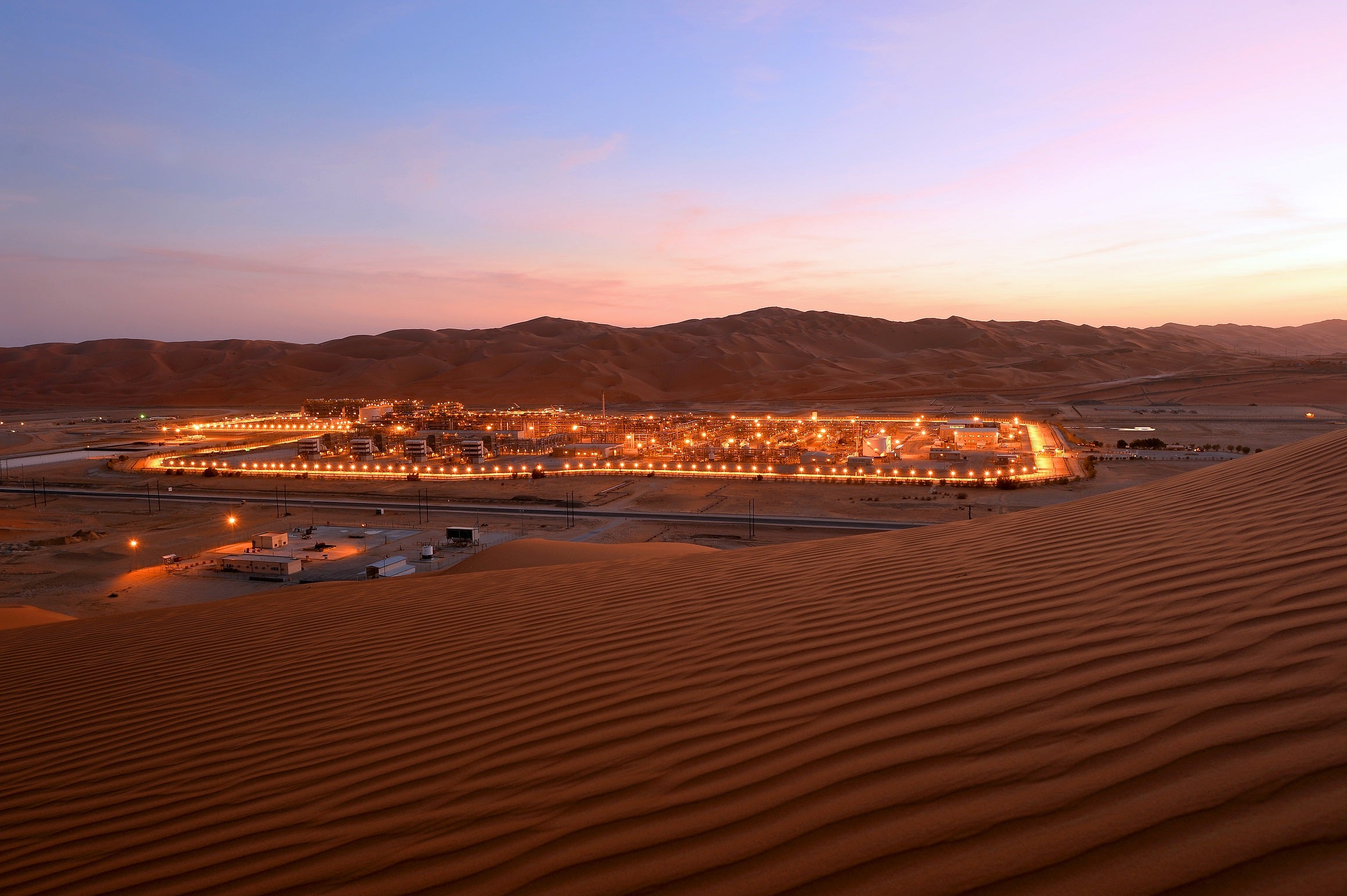 Brent hits $112 a barrel following Saudi oil field attack
22 October 2026
-
 Dewa International signs energy and infrastructure MoUs
22 October 2026
-
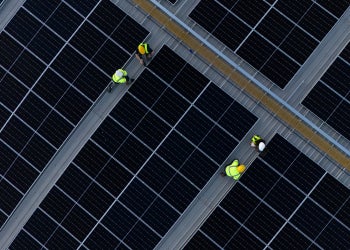 QatarEnergy and TotalEnergies to develop Lebanon solar plant
22 October 2026
-
 Building resilience into infrastructure delivery
21 October 2026
-
 Riyadh tenders Expo 2030 Adaptation and Innovation Pavilion
21 October 2026
All of this is only 1% of what MEED.com has to offer
Subscribe now and unlock all the 153,671 articles on MEED.com
- All the latest news, data, and market intelligence across MENA at your fingerprints
- First-hand updates and inside information on projects, clients and competitors that matter to you
- 20 years' archive of information, data, and news for you to access at your convenience
- Strategize to succeed and minimise risks with timely analysis of current and future market trends

Related Articles
-
Brent hits $112 a barrel following Saudi oil field attack
22 October 2026
Oil prices climbed more than 3% on 22 October after a drone targeting Saudi Aramco’s Shaybah oil field development killed two people and injured two others a day earlier, adding to concerns over energy supplies as attacks on Saudi energy infrastructure intensified.
Global benchmark Brent crude hit $112.30 in early trading on 22 October, but later pared gains and was trading at $111.52 a barrel as of 11am GST.
Three residents and a Saudi citizen were killed in two separate incidents in Saudi Arabia’s Eastern Province on 21 October, authorities said, as attacks on the kingdom accelerated following an escalation of hostilities with the Iran-backed Houthi group in neighbouring Yemen.
Overnight, the Saudi-led coalition fighting the Houthis in Yemen announced that it had intercepted and destroyed four drones in the Eastern Province.
Saudi air defences intercepted a drone attempting to target a processing facility at Saudi Aramco’s Shaybah oil field development on the morning of 21 October, the Saudi Ministry of Energy said.
The official Saudi Press Agency (SPA) carried a statement quoting an energy ministry official as saying the attempted attack resulted in the deaths of two residents – a Filipino and a Nepali – and injuries to two others – an Indian and a Pakistani – after debris fell due to the interception.
Following the interception, a fire broke out in a vehicle belonging to a contractor at the Shaybah oil field, outside the facility’s perimeter, with no impact on operations.
Dammam airport attack
Separately, a Houthi attack on King Fahd International airport in Dammam on the evening of 21 October killed an Indian resident and a Saudi citizen.
Eight people were also injured in the attack, including a Saudi national, a Nepali, and two nationals each from India, Yemen and Bangladesh. Injuries ranged from minor to critical, the Saudi General Authority of Civil Aviation (Gaca) said the next day.
“The attack also caused property damage, the extent of which is currently being assessed. Further updates will be provided,” Gaca said, adding that operations had since resumed at Dammam airport.
Saudi Arabia has come under sustained attack from the Iran-aligned Houthi rebel group in October, including strikes on Riyadh’s international airport in what authorities described as the kingdom’s deadliest incidents in years, as the war with the group escalates.
The Houthi militias also struck an administrative building at Aramco’s headquarters in Dhahran, in the Eastern Province, on 13 October, resulting in a limited fire.
The Houthi rebels opened a new front in the regional war between Iran and the US in mid-July, when they breached a four-year truce with Saudi Arabia in Yemen’s civil war, which began in 2014, and started attacking Saudi vessels and Aramco energy assets along the Red Sea, including repeated strikes on the Jizan refinery.
The 1,200-kilometre East-West pipeline operated by Aramco was also hit by Houthi missiles in September, and once directly by Iran in April.
The East-West pipeline transports crude from Saudi Arabia’s Eastern Province oil fields to the Red Sea port city of Yanbu on the kingdom’s west coast. It has a pumping capacity of 7 million barrels a day.
Saudi Arabia relies heavily on the East-West pipeline to bypass the volatile Strait of Hormuz maritime chokepoint and ship crude from its Red Sea coast. Riyadh has increasingly used the line to route exports away from Hormuz since the US-Iran conflict began on 28 February – a tactical advantage most of its Gulf neighbours lack.
Aramco resumed crude exports via the pipeline at the start of October.
https://image.digitalinsightresearch.in/uploads/NewsArticle/20841984/main.jpg -
Dewa International signs energy and infrastructure MoUs
22 October 2026
Dubai Electricity & Water Authority’s (Dewa) new development arm, Dewa International, has signed four memorandums of understanding (MoUs) with international partners to explore investment and project development opportunities in the energy, water and infrastructure sectors.
The agreements, signed during Dubai’s Water, Energy, Technology and Environment Exhibition (Wetex 2026), follow the launch of the wholly owned subsidiary in June, as reported by MEED.
At the time, the utility said the arm would be used to export Dubai’s energy and water infrastructure model, with a focus on developing conventional and clean energy projects for global markets.
At Wetex, Dewa International signed an MoU with France’s EDF Power Solutions to explore potential joint participation in solar, wind, battery energy storage and pumped-storage hydropower projects.
A separate agreement with China Energy International Group explores the company’s potential role as an engineering, procurement and construction (EPC) partner for major energy, water and infrastructure projects. The MoU also covers cooperation in project development and EPC services.
A further agreement with UK-based Capital Dynamics focuses on potential joint investments in operational clean energy assets in Europe. The parties will also explore establishing an investment vehicle for future clean energy infrastructure investments.
Dewa International also signed a fourth agreement with Mumbai-Headquartered Tata Consultancy Services, exploring the company’s potential role as a technical consultancy partner. The scope covers technology strategy, information technology and operational technology integration, and asset performance management solutions.
Dewa currently has almost $7bn-worth of power and water projects under execution across the UAE, according to regional projects tracker MEED Projects.
Its flagship Mohammed Bin Rashid Al-Maktoum Solar Park is the largest single-site solar park in the world. The utility is currently advancing the project’s seventh phase, with Abu Dhabi Future Energy Company (Masdar) recently submitting the lowest bid for the project, as exclusively reported by MEED.
https://image.digitalinsightresearch.in/uploads/NewsArticle/20828111/main0128.jpg -
QatarEnergy and TotalEnergies to develop Lebanon solar plant
22 October 2026
Register for MEED’s 14-day trial access
State-owned QatarEnergy and France’s TotalEnergies have agreed to jointly develop a solar power plant in Lebanon.
The agreement was announced on 16 October during the Qatari prime minister’s official visit to Beirut, where he held a joint press conference with Lebanese Prime Minister Nawaf Salam.
According to a statement published by the Lebanese Prime Minister's Office, the plant will be an initial project under a broader framework for energy cooperation between Qatar and Lebanon. Its capacity, location, investment value and implementation schedule have yet to be disclosed.
Qatar’s Prime Minister Sheikh Mohammed Bin Abdulrahman Bin Jassim Al-Thani said: “The aim is to develop a major investment project that benefits the Lebanese economy, as well as the Qatari companies and entities participating in it.”
Separately, Salam said the Lebanese and Qatari governments were “close to reaching an agreement” to rehabilitate, develop and modernise Lebanon’s electricity-generation infrastructure.
The proposed project would cover the country’s various electricity-generation sources and associated infrastructure, aiming to improve the reliability of electricity supplies and reduce costs.
The project would use a build, operate and transfer model, under which Qatari entities would finance, implement and operate the facilities without upfront investment costs for the Lebanese treasury, Salam said.
Salam also said the proposal was being prepared with support from the International Finance Corporation, and that he hoped to present it to the Lebanese government soon.
The wider initiative is intended to address Lebanon’s longstanding electricity-generation shortfall and overcome financing constraints that have delayed infrastructure projects in the sector.
As MEED previously reported, the Lebanese government continues to advance broader reforms to the country’s electricity sector.
In August, Lebanon’s Electricity Regulatory Authority invited private sector companies to submit expressions of interest (EoIs) for several upcoming power-generation projects.
The EoIs cover up to five grid-connected solar photovoltaic projects with a combined installed capacity of 350 megawatts-peak. The projects are also expected to include battery energy storage systems with a combined capacity of 1,000 megawatt-hours.
The regulator is also seeking proposals for distributed dual-fired thermal power plants with net capacities of 20MW-100MW.
 READ THE OCTOBER 2026 MEED BUSINESS REVIEW – click here to view PDF
Industry and logistics drive development at Neom; Saudi Arabia’s investment priorities realign amid conflict; MEED’s 2026 power developer ranking.
Distributed to senior decision-makers in the region and around the world, the October 2026 edition of MEED Business Review includes:
> AGENDA: Oxagon takes centre stage at Neom> MARKET FOCUS: Saudi projects hold steady> INDUSTRY REPORT: MEED’s 2026 GCC power developer ranking> LEADERSHIP: The future city does not need to hang above the groundTo see previous issues of MEED Business Review, please click herehttps://image.digitalinsightresearch.in/uploads/NewsArticle/20827458/main.jpg -
Building resilience into infrastructure delivery
21 October 2026
The regional disruptions earlier this year tested Gulf supply chains, challenging the movement of goods and construction materials and raising questions about the ability of infrastructure programmes to maintain momentum.
For the UAE Ministry of Energy & Infrastructure, the experience reinforced the importance of the systems that support project delivery, from transport networks and customs procedures to domestic manufacturers and international suppliers.
“The disruption reinforced an important principle: infrastructure resilience is ultimately about the ability of the national system to continue operating under pressure,” says Mohammed Al-Mansoori, undersecretary for infrastructure and transport affairs.
Supply resilience
The ministry worked with ports, customs authorities, transport and rail operators, contractors, suppliers and the private sector to maintain the flow of essential goods and construction materials. It monitored critical materials and project schedules, identified alternative sources and adjusted procurement and delivery arrangements.
The response included movement exemptions and facilitation measures for more than 6,600 lorries, while rail freight operations increased from approximately one journey a week to as many as seven journeys a day. Priority and green corridors were activated, customs procedures facilitated and critical shipments prioritised at ports.
According to Al-Mansoori, these measures contributed to an estimated 25% reduction in transport costs, a 40% improvement in customs clearance times and an increase of approximately 15% in port capacity during the response period.
For infrastructure projects, the ministry worked with local manufacturers and suppliers to identify alternative sources of road and construction materials meeting the required technical specifications and quality standards. This helped reduce reliance on disrupted international supply routes and support ongoing projects.
The experience also highlighted the value of existing coordination mechanisms and partnerships.
“It also reinforced a fundamental principle: resilience means ensuring that critical infrastructure delivery does not depend on a single supplier, a single route or a single mode of transport,” Al-Mansoori says.
The ministry is planning to build on this experience by diversifying suppliers, strengthening domestic manufacturing and improving supply-chain monitoring.
Resilience is increasingly being incorporated into procurement planning. For critical materials and services, the ministry aims to identify risks early, broaden the pool of qualified suppliers and ensure viable alternatives are available.
The approach supports the UAE’s wider industrial objectives, including the national in-country value programme, which seeks to direct a greater share of procurement expenditure into the national economy.
“Our objective is not simply to purchase more locally. It is to help create competitive national supply chains,” Al-Mansoori says.
Domestic suppliers must be able to meet the technical requirements, quality standards and volumes demanded by major infrastructure programmes. Localisation is therefore about developing competitive industrial capabilities while shortening supply chains, improving responsiveness and encouraging investment.
“Localisation is not simply a procurement choice; it is an investment in national capability and long-term resilience,” Al-Mansoori says.
The ministry is also working with contractors to manage pressures from fluctuating material, insurance and transport costs. Its approach combines commercial discipline with early engagement to prevent external pressures from affecting project delivery.
“Our approach is based on early engagement, transparency and disciplined commercial management,” Al-Mansoori says. “Long-term infrastructure delivery depends on strong contractors as much as it depends on strong contracts.”
Contractors remain responsible for normal market and contractual risks, but the ministry seeks to assess exceptional pressures objectively, supported by evidence of their impact on costs and schedules. Realistic planning, early procurement and proactive risk management also help maintain momentum.
“The objective is to strike the right balance between protecting the government’s commercial interests and securing best value for money, while maintaining an efficient, sustainable contracting market capable of continuing to deliver strategic infrastructure projects,” Al-Mansoori says.
Resilience means ensuring that critical infrastructure delivery does not depend on a single supplier, a single route or a single mode of transport
Project delivery
The ministry’s focus on measurable outcomes is reflected in the Emirates Road enhancement project, which involves widening approximately 25 kilometres of Emirates Road from three to five lanes in each direction, alongside major improvements to Interchange No. 7.
The works are expected to increase road capacity by up to 65% and reduce journey times by up to 45%.
The project illustrates the ministry’s emphasis on assessing infrastructure by the benefits it delivers, rather than simply the scale of construction.
“Infrastructure success should be measured by the value it creates – not just by the kilometres we build,” Al-Mansoori says.
That principle is increasingly important as the UAE balances new construction with the long-term costs of operating and maintaining its assets. Decisions made during planning and construction can influence maintenance requirements, operating costs and performance for decades.
For Al-Mansoori, resilience, domestic capability and effective delivery are closely connected. Stronger local supply chains can reduce exposure to external shocks, while closer engagement with contractors can help projects withstand cost pressures.
Don’t miss MEED’s MENA Construction Summit 2026, taking place under the patronage of the UAE Ministry of Energy & Infrastructure
Secure your place as an attendee or request the sponsorship deck by clicking here or emailing us at meedevents@meed.com
https://image.digitalinsightresearch.in/uploads/NewsArticle/20810056/main.gif -
Riyadh tenders Expo 2030 Adaptation and Innovation Pavilion
21 October 2026
Register for MEED’s 14-day trial access
Expo 2030 Riyadh has tendered the design-and-build main contract for the Adaptation and Innovation Pavilion in the exhibition’s Technology District.
The pavilion will be built on a plot of at least 12,710 square metres and will feature a two-level basement, ground-level public areas, an elevated skywalk, visitor experience areas, food and beverage outlets, retail space, VIP facilities, offices, back-of-house areas, exhibition spaces, an amphitheatre and a resonance hall.
The facility is being designed to accommodate a minimum of 20,000 visitors a day at peak periods, with an anticipated average of about 15,000 visitors a day. The project targets LEED Gold certification.
The tender was issued on 1 October, with bids due on 6 January 2027.
The design-and-build contractor will be responsible for completing, reviewing, verifying, coordinating and technically integrating the design, including specialist contractor design portions and coordination with the novated lead design consultant.
The scope includes completing early works and substructure activities, including grading, bulk earthworks, excavation, cut and fill, soil improvement, raft foundations, reinforced-concrete basement walls, basement columns through to the ground-floor slab, waterproofing, mechanical, electrical and plumbing (MEP) provisions, and backfilling.
The contractor will also deliver the superstructure and building envelope, including structural works, facade engineering and installation, roofs, waterproofing, external finishes, and permanent facade access and maintenance systems. The internal works will cover front-of-house and back-of-house areas, public and core spaces, internal finishes, fixtures, fixed fittings, joinery, circulation areas, lobbies, stairs, toilets, storage, waste areas and associated builder’s works.
The building services package includes MEP systems, information and communications technology, extra-low-voltage systems, building management systems, security, fire and life safety systems, specialist lighting and vertical transportation.
The contract also covers the visitor experience package, including procurement, installation, integration, testing, commissioning and handover of visitor-facing environments, media, immersive and audiovisual technologies, interactive elements, experiential lighting, digital content, interpretive and wayfinding systems, controls and supporting infrastructure.
Within-plot infrastructure and utilities, landscaping, public realm works, paving, planting, irrigation, signage, street furniture, drainage, stormwater systems, external lighting, security, and fire and life safety systems are also included.
The contractor will be responsible for procurement, off-site fabrication, construction, testing and commissioning, performance verification, training, operations and maintenance documentation, operational readiness, handover, defects rectification and close-out.
The main works tender is based on a 60% RIBA Stage 3 design, with the Stage 3 design to be completed to 100% through an addendum.
Early works and substructure works, as well as the lead design consultant, will be novated to the contractor. Visitor experience works are included as a provisional sum.
https://image.digitalinsightresearch.in/uploads/NewsArticle/20801465/main.jpeg