
Aramco Stadium races towards completion
12 November 2025

Register for MEED’s 14-day trial access
The Aramco Stadium in Khobar is moving forward at an impressive pace as the fast-track project races towards completion in 2026.
The 47,000-seat stadium will be the new home for the Aramco-owned Al-Qadsiah Club and a key venue for the 2027 AFC Asian Cup and the 2034 Fifa World Cup.
The project’s progress stems from detailed planning and an accelerated delivery strategy. The project was conceived in May 2023, with the design process, managed by Aramco, commencing shortly thereafter.
“We completed the design within six months,” said Mohammed Subhi, the Aramco Stadium’s project manager.

The project advanced quickly due to thorough planning and a fast-track delivery approach. Initiated in May 2023, the design phase—overseen by Aramco—was completed within six months
An early engagement approach with the main contractor – a joint venture of Besix and Al-Bawani – was instrumental in maintaining momentum. This partnership began early in 2024, allowing for collaborative input on critical construction elements.
This upfront collaboration minimised pre-construction time, ensuring a rapid transition to site work.
Engineering challenges
 The stadium’s architectural design, inspired by the natural whirlpools of the Gulf and featuring interwoven transparent sails, presents significant engineering challenges, particularly in the structural steel and façade work. For spectator comfort, the stadium is equipped with full cooling systems and designed to the highest international standards.
Logistics management is another crucial facet of the project, which is located in central Khobar. With thousands of workers on site, the movement of materials is tightly controlled to minimise community disruption.
“We control how many trucks can enter the site and at what time. For example, we cannot cast concrete during the day. It has to be after 6pm, up until the early morning,” said Subhi.
A key priority on site is health and safety, an area where the organisation’s legacy from its oil and gas operations is clearly visible. Subhi explains that the principle of health and safety is part of the company’s DNA and is embodied in the deployment of advanced technology and rigorous standards, which have collectively resulted in over 10 million safe working hours to date.
The project employs a sophisticated Smart Safety Command Centre (SCC), which utilises artificial intelligence-based monitoring and 24/7 surveillance. One key feature of the centre is the crane collision prevention system – a key technological advancement in heavy machinery coordination and a first for the region.
“We have tower cranes and crawler cranes talking to each other. The anti-collision system means cranes talk to each other without human interference, and they automatically shut down when they are too close to each other,” said Subhi.

A key technological advancement is the crane collision prevention system, which means the cranes talk to each other and shut down if they become too close
In addition to ground operations, the project is leveraging aerial technology to mitigate risk in high-altitude work.
“We have used drones for the inspection of the cranes and inspection of the steel structure itself to minimise the risk of working at height,” said Subhi.

Drones have been adopted on-site to mitigate the risk of working at height
Worker welfare
The project’s commitment extends beyond mere regulatory compliance to comprehensive worker welfare, establishing a high standard for construction sites in the region.
With current staffing reaching approximately 11,000 direct and indirect workers, welfare provisions are a core priority, linking directly back to Aramco’s corporate standards.
In a region where extreme heat is a constant challenge, the project has implemented advanced heat stress management protocols. This includes the installation of heat sensors with alarm systems, mandatory work stoppage during peak heat hours and regular briefings on heat exhaustion symptoms. Fully air-conditioned rest areas are provided for breaks and meals.
Aramco is also committed to developing national talent. A significant proportion of the staff are young, and about 20% of the team are women.
The relationship with the joint-venture contractor is defined by collaboration rather than traditional client-contractor hierarchy. “We are one team, working together,” said Subhi. This approach has fostered a cooperative environment that is accelerating the on-site progress towards the 2026 completion goal.

Register for MEED's guest program now to access this article.
Exclusive from Meed
-
 Iran launches regional attacks after US and Israel strikes start
28 February 2026
-
 Egypt’s Obelisk equity move merits attention
27 February 2026
-
 Petrokemya awards contract for ethylene oxide project
27 February 2026
-
 Regulatory environment shifting for Kuwait oil and gas tenders
27 February 2026
-
 Local firms win $378m Qatar project contracts
27 February 2026
All of this is only 1% of what MEED.com has to offer
Subscribe now and unlock all the 153,671 articles on MEED.com
- All the latest news, data, and market intelligence across MENA at your fingerprints
- First-hand updates and inside information on projects, clients and competitors that matter to you
- 20 years' archive of information, data, and news for you to access at your convenience
- Strategize to succeed and minimise risks with timely analysis of current and future market trends

Related Articles
-
Iran launches regional attacks after US and Israel strikes start
28 February 2026
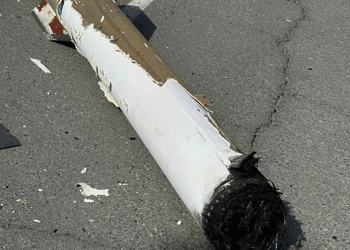
Iran launched missiles aimed at Bahrain, Jordan, Kuwait, Qatar and the UAE on Saturday, 28 February, after the US and Israel began airstrikes on the Islamic Republic earlier in the day.
Official news agencies in the countries targeted by Iran have confirmed the attacks and that missiles have been intercepted by air defences. There has been limited damage reported from the strikes, although one fatality has been reported in the UAE.
The UAE’s Ministry of Defence (MoD) said there was a blatant attack involving Iranian ballistic missiles and that UAE air defence systems intercepted a number of missiles. It also confirmed that missile debris falling into a residential area resulted in the death of one civilian of Asian nationality. The UAE also said it reserves its full right to respond to this escalation and to take all necessary measures to protect itself.
In Bahrain, the National Communication Centre (NCC) confirmed external attacks targeting sites and installations within Bahrain’s borders. It said the security and military authorities had immediately activated established emergency protocols and were taking all necessary operational measures on the ground.
In Doha, the Ministry of Defence confirmed that Qatar had been attacked and that all missiles were intercepted before reaching Qatari territory.
In Kuwait, the official Kuwait News Agency reported that air defence systems had dealt with missiles detected in Kuwaiti airspace.
Meanwhile, in Amman, a senior military official from the Jordanian Armed Forces (JAF) confirmed that air defences had intercepted and neutralised two ballistic missiles targeting Jordanian territory.
Saudi Arabia has condemned the attacks and has “affirmed its full solidarity with and unwavering support for the brotherly countries, and its readiness to place all its capabilities at their disposal in support of any measures they may undertake”.
Main image: UAE announces successful interception of new wave of Iranian missiles. Credit: Wam
https://image.digitalinsightresearch.in/uploads/NewsArticle/15813394/main.gif -
Egypt’s Obelisk equity move merits attention
27 February 2026
 Commentary
Mark Dowdall
Power & water editorThe first phase of Africa’s planned largest hybrid solar and battery installation project reached commercial operations this week. While the 1.1GW Obelisk facility in Egypt is significant in capacity terms, the more interesting detail may lie in its ownership structure.
Scatec secured the 25-year US dollar-denominated power purchase agreement in 2024 and moved the project into construction as majority shareholder with Norwegian Investment Fund for Developing Countries (Norfund).
In November, France’s EDF acquired a 20% equity stake to join the project as a shareholder, while discussions with additional equity partners are at an “advanced” stage.
With the development risk largely already absorbed and revenues secured under a long-term, dollar-denominated contract, the question arises: how are developers approaching capital allocation in the renewables market?
Especially in emerging markets, sponsors must consider currency convertibility, sovereign exposure and overall balance sheet concentration. Bringing in partners after key milestones reduces that exposure without abandoning the asset.
However, risk mitigation is not the only driver behind these decisions.
This week, Masdar agreed to sell a 60% stake in a portfolio of wind assets in Portugal, a more mature European market with stable regulation and limited currency risk.
Given the developer’s 100GW global target, this would seem a prudent way to recycle capital as part of an aggressive growth strategy.
Meeting global climate targets will require sustained and rapid expansion of renewable capacity. Estimates suggest the world must add more than 1,100GW of renewables annually through 2030 to remain on track.
Increasingly, as pipelines expand and capacity targets rise, developers are likely to weigh carefully when to hold assets and when to release capital.
https://image.digitalinsightresearch.in/uploads/NewsArticle/15798541/main.jpg -
Petrokemya awards contract for ethylene oxide project
27 February 2026
Register for MEED’s 14-day trial access
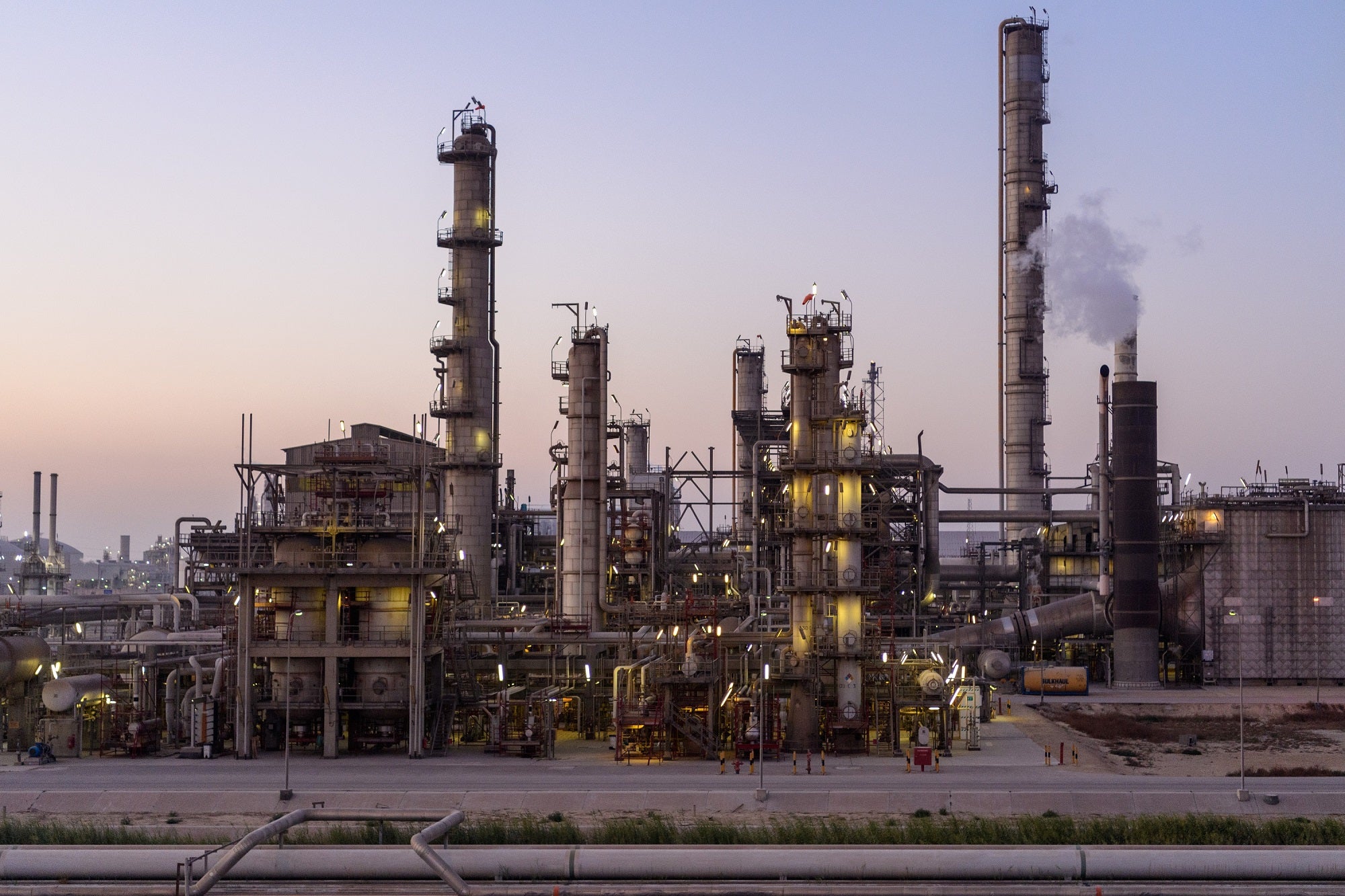
Petrokemya, an affiliate of Saudi Basic Industries Corporation (Sabic), has awarded China National Chemical Engineering Group Corporation (CNCEC) the main contract for an ethylene oxide catalyst project.
The project covers engineering, procurement and construction (EPC) of a new 4,000-tonne-a-year (t/y) ethylene oxide catalyst production unit, encompassing multiple units for catalyst carrier washing and drying, as well as supporting utilities.
Ethylene oxide catalysts are the core technology of the ethylene oxide industry chain, directly determining production efficiency, product quality and energy consumption of the process unit.
Petrokemya is a wholly owned affiliate of Sabic, with its main petrochemical production complex located in Jubail Industrial City, in Saudi Arabia’s Eastern Province.
The ethylene oxide catalyst project is the ninth contract awarded by Petrokemya to CNCEC since 2015. Previous jobs cover EPC works on seven specialty chemical projects and a project to upgrade and expand output capacity at Petrokemya’s main methyl tert-butyl ether (MTBE) production unit.
Petrokemya awarded CNCEC the contract for the MTBE plant expansion project in November 2022, with the contractor starting work the following month.
Through the project, the output potential of Petrokemya’s MTBE unit will increase from 700,000 t/y to 1 million t/y, purportedly making it the world’s largest single-unit MTBE plant.
CNCEC achieved mechanical completion of the MTBE plant expansion project in August last year, and the project is now understood to have been commissioned.
 https://image.digitalinsightresearch.in/uploads/NewsArticle/15797372/main4837.jpg
 -
Regulatory environment shifting for Kuwait oil and gas tenders
27 February 2026
Changes to the way key contracts are tendered in Kuwait have increased expectations that the country is shifting to a new regulatory environment for oil and gas projects.
Contractors interested in bidding for Kuwait’s planned tender for a $3.3bn gas processing facility have been briefed that the country’s Central Agency for Public Tenders (Capt) will not be involved in the tender process.
The exclusion of Capt from participating in the tender process has come at a time of increasing concerns surrounding the role of the agency, and has sparked speculation that it could be excluded from an increasing number of strategic tenders in future.
Capt is responsible for reviewing technical and commercial evaluations of bids and verifying that bidding is competitive.
Prior to its suspension in May 2024, Kuwait’s parliament was often blamed for blocking projects and halting the initiatives of Kuwait Petroleum Corporation (KPC).
However, the suspension of parliament has not triggered an uptick in project activity at KPC, indicating that other problems are holding back decision-making.
As time has passed, many stakeholders have started to view Capt as a key sticking point in the tendering process.
One source said: “There is a lot of frustration within some parts of the country’s oil and gas sector about the time it takes for Capt to review everything and approve a tender.”
Although this is not completely unheard of for small contracts tendered by Kuwait Gulf Oil Company (KGOC) to bypass Capt, it is unusual to see very large contracts bypass the agency.
“A lot of people were very surprised when they heard that Capt would not be involved in this process,” said one source.
“While the agency is resented by many in the sector that see it as a big reason for a lot of delays, it’s also highly respected for stopping corruption and bad practices.
“If you look historically at which large contracts avoided a review by Capt or its predecessor, it was only the most critical and urgent projects.
“The fact that this project is being permitted to side-step the agency’s process seems to mark a shift – and we could well see more big contracts following the same route in the future.”
Past exceptions
An example of a time period when key contracts were allowed to bypass Kuwait’s Central Tenders Committee (CTC), the predecessor to Capt, was in 1991.
During this time, in the wake of the Gulf War, urgent contracts needed to be tendered by Kuwait Oil Company (KOC), including some related to extinguishing fires at oil wells, which were lit by retreating Iraqi troops.
One source said: “I think the early nineties was the last time that large contracts were tendered by KOC without going through the relevant agency.
“It is easier to bypass Capt when it is a KGOC contract, but it’s still very surprising to see it with a contract of this size.”
If more contracts in the future are “fast-tracked” in the same way, it is likely that many stakeholders will welcome the effort to speed up tendering.
However, some are worried that if the streamlined tendering model is replicated too widely, it could undermine checks and balances that stop corruption.
“Kuwait is lucky as it has a system that makes corrupt practices very difficult to participate in,” said one source.
“The country needs to be careful and make sure that it doesn’t undermine the rigour of the system by prioritising convenience.”
Direct awards
Another factor that has impacted expectations about the future of project tendering in Kuwait’s oil and gas sector is that the methods used for several large contracts have been recently tendered in other sectors.
Key tenders that are impacting the discussions surrounding Kuwait’s oil and gas sector are the award of the $4bn Grand Mubarak Port contract to China Harbour Engineering Company in December and the award of a $3.3bn wastewater treatment plant contract to China State Construction Engineering Corporation in January.
Both of those direct contract awards were government-to-government agreements that did not have an open tender process in Kuwait and were not approved by Capt.
One source said: “These huge contract awards to Chinese companies without open tenders in Kuwait were extremely surprising.
“If you had asked me at the start of last year whether this kind of thing would be signed off, I would have told you it’s highly unlikely.
“I think there is no reason why we couldn’t see similar contract awards coming in the future in Kuwait’s oil and gas sector.”
Another source said: “Just like the gas processing contract, these contracts awarded to Chinese firms seem to have side-stepped Capt in a way that is very surprising.”
The planned $3.3bn gas processing facility is not the first time that KPC has tried to reduce its reliance on Capt for processing tenders.
In April 2024, KPC launched its own tendering portal in an effort to streamline the tendering process for projects in the oil and gas sector.
The portal was named the “KPC and Subsidiaries K-Tendering Portal” and is referred to as “K-Tender” by contractors.
The portal gave KPC a way of tendering and communicating with contractors without relying on the Capt website.
“The K-Tender portal was a step towards reducing reliance on Capt and gave KPC the flexibility to tender projects without Capt, even though, at the time, KPC made it clear that it intended to list all tenders both on the Capt website and its own portal.”
The recent direct contract awards to Chinese contractors and the tendering process for the $3.3bn gas processing facility have sent a signal to contractors in the Kuwaiti market that more unusual tenders could be in the pipeline.
https://image.digitalinsightresearch.in/uploads/NewsArticle/15791028/main.gif -
 Kuwait awards oil pier contract
27 February 2026
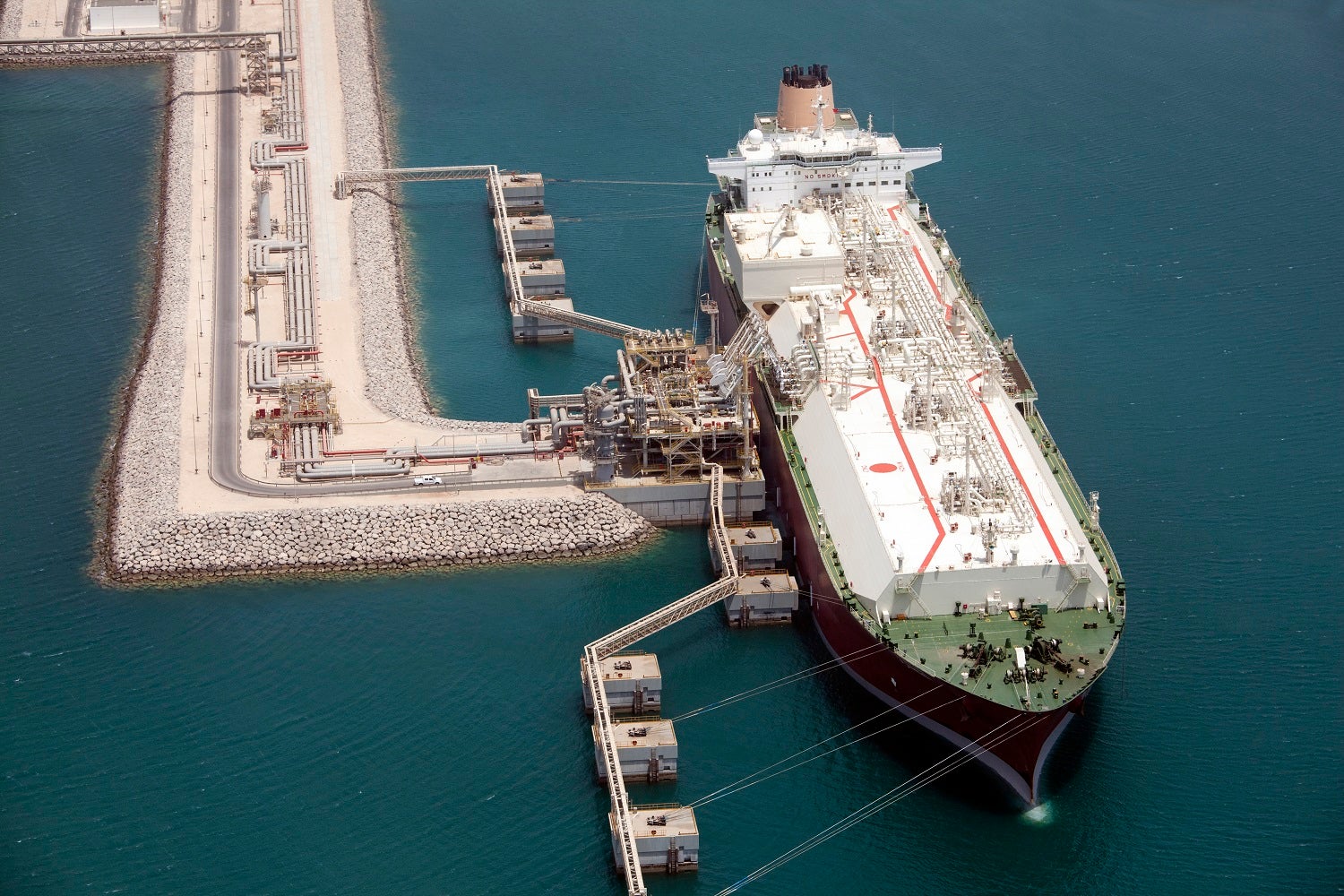
Kuwait National Petroleum Company (KNPC) has awarded local firm Gulf Dredging & General Contracting Company a $172m contract to help develop a new south arm facility at the Shuaiba oil pier.
The scope of the contract covers civil, marine, mechanical and electrical work, according to a statement.
Gulf Dredging & General Contracting Company is a subsidiary of Kuwait-headquartered Heisco.
The main contractor on the Shuaiba oil pier project is the Greek construction firm Archirodon. In October last year, KNPC awarded Archirodon a KD160m ($528m) contract to develop the new south arm facility.
The Shuaiba oil pier comprises several structures, including the approach trestle, the north arm facility and the south arm facility. A number of planned projects are to be developed at the Shuaiba port facilities.
The north arm facility consists of two berths, 31 and 32. When operational, it loads refined products for both KNPC and state-owned Petrochemicals Industries Company.
The north arm facility is currently not operational and will be upgraded as part of a separate project.
KNPC is a subsidiary of Kuwait Petroleum Corporation (KPC).
Last year, KPC chief executive Sheikh Nawaf Al-Sabah reiterated that the company plans to increase its oil production capacity to 4 million barrels a day by 2035.
About 90% of Kuwait’s oil production comes from Kuwait Oil Company, which also plans to achieve a daily gas production capacity of 1.5 trillion cubic feet by 2040.
Kuwait is estimated to have 100 billion barrels of oil reserves.
Under KPC’s 2040 strategy, it plans to invest $410bn, sourced from cash flow, debt and joint ventures with other businesses.
Of the $410bn, KPC and its subsidiaries intend to invest $110bn to accomplish the group’s energy transition targets.
https://image.digitalinsightresearch.in/uploads/NewsArticle/15791026/main.jpg