
Aramco selects contractors for $1.7bn offshore works
10 November 2023

Register for MEED’s guest programme
Saudi Aramco has selected contractors for three major contracts covering several structures at the Zuluf offshore oil and gas field development in Saudi Arabia. Their combined value is estimated to be about $1.7bn.
The Saudi energy giant has issued notices of award to contractors for tender numbers 135, 136 and 137 under its Contracts Release and Purchase Order (CRPO) system, according to sources.
The contractors selected to execute engineering, procurement, construction and installation (EPCI) on CRPOs 135, 136 and 137 and their estimated values are as follows:
- CRPO 135 – Lamprell (UAE/Saudi Arabia) – $390m
- CRPO 136 – NMDC Energy (UAE) – $900m
- CRPO 137 – NMDC Energy (UAE) – $400m
The contractors are in the process of arranging financial guarantees and meeting legal and compliance requirements, sources told MEED. Aramco is expected to issue official contract awards “within the next few weeks”, they added.
Aramco issued the three tenders to its Long-Term Agreement (LTA) pool of offshore contractors in August. Offshore LTA contractors submitted bids for the tenders by 17 September.
CRPOs 135, 136 and 137 are revised tenders for CRPOs 99, 100 and 101, it was previously reported. Aramco awarded those tenders to US-headquartered McDermott International, but cancelled the contracts due to the contractor’s financial problems.
The EPCI scope of work on CRPOs 135, 136 and 137 is as follows:
- CRPO 135 – Upgrade and installations at Zuluf tie-in platform (ZTP) 5:
- Upgrade of three production deck modules (PDMs)
- Installation of a slipover PDM
- Installation of a new PDM
- Upgrade of ZTP 5
- CRPO 136 – Upgrade and installations at ZTP 3:
- Upgrade of two PDMs
- Installation of seven slipover PDMs
- Installation of two 16-well PDMs
- Installation of auxiliary platforms
- Upgrade of ZTP 3
- CRPO 137 – Supply of structures at Zuluf:
- Provision of 22 15 kilovolt (kV) cables/pipelines covering a total length of 112 kilometres (km)
- Provision of eight cables/pipelines covering a total length of 23km.
Aramco’s LTA pool of offshore service providers comprises the following entities:
- Saipem (Italy)
- McDermott International (US)
- Larsen & Toubro Hydrocarbon Engineering (India) / Subsea 7 (UK)
- Dynamic Industries (US)
- National Petroleum Construction Company (UAE)
- Lamprell (UAE/UK) / Royal Boskalis Westminster (Netherlands)
- Sapura Energy (Malaysia)
- Technip Energies (France) / MMHE (Malaysia)
- China Offshore Oil Engineering Company (China)
- Hyundai Heavy Industries (South Korea)
Most of the kingdom’s oil and gas production comes from its offshore hydrocarbons resources in fields including Abu Safah, Arabiyah, Hasbah, Berri, Karan, Manifa, Marjan, Ribyan, Safaniya and Zuluf.
Aramco aims to maintain and gradually increase productivity at these fields, some of which are mature.
In line with this, the state enterprise is expected to award more than $7bn-worth of offshore EPCI deals to entities in its LTA pool of offshore contractors by the end of this year.
Robust offshore spending
Aramco has awarded approximately $5.3bn-worth of contracts as part of this projected spending so far this year.
A consortium of Indian contractor Larsen & Toubro Energy Hydrocarbon (LTEH) and UK-based Subsea7 has won seven offshore EPCI contracts from Saudi Aramco, estimated to be worth close to $2bn.
LTEH/Subsea7 won CRPOs 98, 120 and 121, which cover EPCI work on Saudi Arabia’s Zuluf, Hasbah and Manifa offshore oil and gas fields. The combined value of the three CRPOs, awarded to the consortium in March, is estimated to be $1bn.
In April, LTEH/Subsea7 won CRPOs 117, 118 and 119, which cover EPCI work on Saudi Arabia’s Marjan offshore oil and gas field development. The three tenders are estimated to be worth over $900m.
The LTEH/Subsea7 consortium is also understood to have secured the contract for CRPO 97, which relates to the EPCI of various units at the Abu Safah field.
Italian contractor Saipem confirmed in early April that it had won CRPO 96, estimated to have a value of $120m. The scope of work on the tender covers the EPCI of one platform topside and the associated subsea flexible, umbilical and cable systems at the Abu Safah and Safaniya fields.
Also in April, China Offshore Oil Engineering Company won the CRPO 122 contract, estimated to be worth $255m, covering the installation of 13 jackets at the Safaniya field.
Saipem has also won CRPO 124, a contract that is part of the third gas development phase of the Marjan hydrocarbons field.
Aramco awarded Abu Dhabi’s National Petroleum Construction Company, which has recently rebranded as NMDC Energy, the contract for CRPO 128, which is estimated to be worth more than $500m. CRPO 128 mainly entails the EPCI of a subsea pipeline between the Zuluf and Safaniya oil field developments.
More recently, Lamprell announced winning a pair of offshore contracts – CRPOs 125 and 126, which have a combined value estimated to be “upwards” of $400m.
ALSO READ: Aramco focuses on upstream capacity building


Register for MEED's guest program now to access this article.
Exclusive from Meed
-
-
 Frontrunner emerges for Bahrain’s Hidd IWP
6 July 2026
-
-
-
 PIF’s 2025 results back 2026-30 strategy shift
3 July 2026
All of this is only 1% of what MEED.com has to offer
Subscribe now and unlock all the 153,671 articles on MEED.com
- All the latest news, data, and market intelligence across MENA at your fingerprints
- First-hand updates and inside information on projects, clients and competitors that matter to you
- 20 years' archive of information, data, and news for you to access at your convenience
- Strategize to succeed and minimise risks with timely analysis of current and future market trends

Related Articles
-
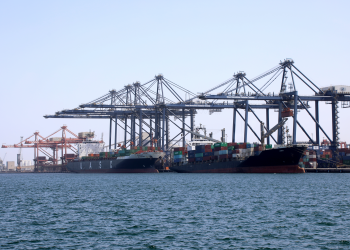
Iraq readies tender for additional Al-Faw port piers
6 July 2026
Iraq is preparing to issue a tender inviting international contractors to bid for a contract to build the remaining piers at Al-Faw Grand Port in Basra.
According to local media reports, construction work on the project's first phase is expected to be completed by the end of this year.
This will be followed by port operations, for which the client, state-owned General Company for Ports of Iraq, shortlisted three out of the initial 11 international companies that were invited to bid, as MEED reported last year.
At the time, the shortlisted companies included:
- China Merchants Port Group (China)
- Evergreen (Taiwan)
- CMA CGM (France)
- Mediterranean Shipping Company (Switzerland)
- Adani Group (India)
- International Container Terminal Services (Philippines)
- Cosco (China)
- ABM Global Shipping (UAE)
- AD Ports (UAE)
In April last year, Iraq’s Shafaq News Agency reported that the country was in talks with US-based KBR to assist in operating the Al-Faw port.
KBR was expected to provide training in port operations and management to Iraqi personnel, along with related services.
The first phase of the project is scheduled for completion by the end of this year, while the second phase is expected to be completed by 2029.
The first phase of the project cost approximately $5bn, including $2.5bn for its five main piers, which were constructed by South Korea’s Daewoo Engineering & Construction.
https://image.digitalinsightresearch.in/uploads/NewsArticle/17562198/main.jpg -
Frontrunner emerges for Bahrain’s Hidd IWP
6 July 2026
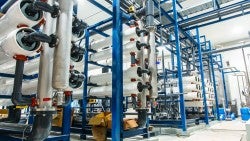
Saudi Arabia's Acwa has emerged as the frontrunner for a contract to develop and operate Bahrain’s Al-Hidd independent water project (IWP) following the disqualification of the only other bidder for the plant, a source has told MEED.
The seawater reverse osmosis (SWRO) plant is the state's first IWP project. It is expected to have a production capacity of about 60 million imperial gallons a day (MIGD), equivalent to roughly 272,000 cubic metres a day of potable water.
Acwa offered to develop the project at a levelised cost of water of BD0.276 ($0.73) a cubic metre, according to details published on Bahrain’s Tender Board on 2 July.
GS Inima (South Korea/Spain) was the only other bidder for the project.
Bids for the project had been submitted earlier this year.
The source added that Acwa's financial bid is now under evaluation and has yet to be selected as the preferred bidder. This will only be determined "subject to compliance with the [request for proposal] requirements".
Nine companies and consortiums had previously been shortlisted following the completion of the prequalification process last August.
The facility will be developed on a brownfield site and is expected to be fully operational by 2029. It will be developed using a build, own and operate (BOO) model for 20-25 years and aims to help expand Bahrain’s water infrastructure to meet projected demand based on its 2030 masterplan.
This includes doubling the state's installed power generation capacity to over 10GW by 2030, according to UK data analytics firm GlobalData.
Sitra IWPP
Bahrain's 1.2GW Sitra independent water and power plant (IWPP) project is also advancing, with two bids having been submitted for the plant in June.
The offers were made by Acwa and Abu Dhabi National Energy Company (Taqa). The technical element of the bid was opened on 18 June.
The Sitra IWPP is a combined-cycle gas turbine plant and is expected to have a production capacity of about 1,200MW of electricity. The project’s SWRO desalination facility will have a production capacity of 30 MIGD of potable water.
The plant is Bahrain’s fourth IWPP, replacing the previously planned Al-Dur 3. The Sitra IWPP is expected to be fully operational by the second quarter of 2029.
The Bahraini Electricity & Water Authority’s transaction advisory team for the two BOO projects comprises KPMG Fakhro as the financial consultant and Trowers & Hamlins as the legal consultant.
https://image.digitalinsightresearch.in/uploads/NewsArticle/17562089/main.jpg -
Chinese contractor completes 70% of Iraq oil project
6 July 2026
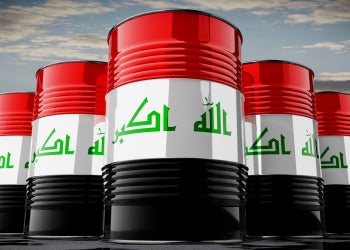
The project to develop new crude oil processing facilities at Iraq’s Rumaila field is 70% complete, according to industry sources.
The project scope for the planned plant in Mishrif Qurainat includes developing two new oil trains, each with a capacity of 120,000 barrels a day (b/d).
When it was originally announced, the planned plant in Mishrif Qurainat was the first new crude oil processing facility project at the oil field in 10 years.
In the fourth quarter of 2022, China Petroleum Engineering & Construction Corporation signed a contract for the design, procurement, construction and testing of the crude oil processing facilities.
The contract was valued at about $386m, and construction was expected to take three years to complete.
Since 2022, the project has seen significant delays and the date for completion is currently uncertain, according to industry sources, as bringing the new crude processing facility online is no longer a priority for the client.
One source said: “Work is continuing on this project at a slow pace because the client is not prioritising commissioning the oil trains.
“The companies that form the joint venture, which operates the Rumaila field, are dealing with a range of other issues right now as a result of the regional war and disruption to shipping through the Strait of Hormuz.”
Rumaila is operated by Rumaila Operating Organisation (ROO).
ROO is a joint venture formed by state-owned Basra Oil Company; Iraq’s State Oil Marketing Organisation (Somo); and Basra Energy Company, a joint venture owned by UK-based oil company BP and PetroChina.
PetroChina is the listed arm of state-owned China National Petroleum Corporation.
Oil exports from Iraq have dropped steeply since the US and Israel attacked Iran on 28 February, leading to a regional conflict.
The conflict has caused significant disruption to Iraq’s oil exports via the Strait of Hormuz.
This has had a knock-on impact for production in the country, where output from many major oil fields has had to stop or has been significantly lowered.
One source said: “At the moment, Basra Oil Company is prioritising restoring production, where it is possible, from assets that have seen reductions in output.
“They are using a lot of resources just to keep existing facilities online and restarting facilities that have stopped due to the crisis.
“Commissioning a brand new project, like the Mishrif Qurainat facilities, is unlikely to be a priority until Iraq’s oil sector returns to a situation that is more like business as usual prior to the conflict with Iran.”
Rumaila is the second-largest producing field in the world, and it is estimated to have about 17 billion barrels of recoverable oil remaining.
https://image.digitalinsightresearch.in/uploads/NewsArticle/17561830/main.jpg -
Riyadh awards Thumama Road eastern section contract
6 July 2026
Register for MEED’s 14-day trial access
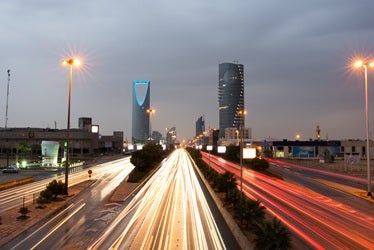
The Royal Commission for Riyadh City (RCRC) has awarded a contract for the eastern section of the Thumamah Road development project in Riyadh.
Yuksel Saudi, the local subsidiary of Turkish construction firm Yuksel Holding, won the contract.
The mobilisation works are expected to begin by mid-July and the project is expected to be completed by 2028.
The project covers about 8 kilometres (km) and includes three bridges and three tunnels. It is designed to handle up to 200,000 vehicles a day.
The RCRC is investing in upgrading the road networks in the capital. Earlier in July, it awarded another contract to local firm Sapac for the Jeddah Road development project.
Covering 29km, the scheme includes 14 bridges and five lanes.
Designed to handle up to 353,000 vehicles a day, the road is expected to be completed by 2028, with mobilisation works already under way.
The projects form part of the third package of the RCRC’s Riyadh Main and Ring Road Axes Development Programme, which was announced in January.
The other schemes include:
- Taif Road development project: The project stretches 15km and includes four bridges, each with four lanes. It also features two tunnels. It will have a capacity of up to 200,000 vehicles a day and will enhance connectivity between Riyadh’s southern and western districts and the city centre.
- Thumamah Road development project: The eastern section of the project will cover 8km and include three bridges and three tunnels, linking the northern and eastern parts of Riyadh. The project will have a daily capacity of up to 200,000 vehicles.
- King Abdulaziz Road development project: The northern section of the project stretches 4.7km and will include four bridges, four lanes and one tunnel, with a capacity of up to 450,000 vehicles a day.
- Othman Bin Affan Road development project: The northern section will cover 4.3km and include seven bridges and other related upgrades to enhance traffic flow in northern Riyadh. The project will have a daily capacity of up to 500,000 vehicles.
- Second phase of engineering enhancements for congested areas: This project targets eight locations in the city’s road network, where advanced engineering solutions will be applied to reduce congestion and improve intersection performance, increasing traffic capacity by 40%-60%.
The contract for the Thumamah Road development project is the latest of several high-profile deals awarded by the RCRC recently. In May, it awarded an estimated SR5bn ($1.3bn) contract to construct the Sheikh Jaber Al-Sabah Road project in Riyadh.
That contract went to a joint venture of Riyadh-based Al-Rashid Trading & Contracting Company and Turkiye’s IC Ictas.
Stretching 12km, the project runs from Khurais Road to Al-Thumama Road and is a key component of the Second Eastern Ring Road scheme.
Works include five interchanges: Prince Bandar, King Abdullah, Imam Abdullah, Dammam Road and Al-Thumama.
In 2021, Saudi Arabia’s Crown Prince Mohammed Bin Salman Bin Abdulaziz Al-Saud said the population of Riyadh would double to 15-20 million people by 2030.
He directed government entities to work closely with the RCRC to prepare the city’s development strategy.
As well as several road development projects in the capital, the RCRC’s major projects include Riyadh Metro, Riyadh Art, Sports Boulevard, King Salman International Park and Green Riyadh.
https://image.digitalinsightresearch.in/uploads/NewsArticle/17561818/main.jpg -
PIF’s 2025 results back 2026-30 strategy shift
3 July 2026
Saudi Arabia’s Public Investment Fund (PIF) has published its audited consolidated financial statements for the year ended 31 December 2025, the first full set of annual results to follow the board’s approval of the fund’s 2026-30 strategy.
The results show a sharp improvement in profitability last year even as leverage rose and volatility in its listed equity holdings widened. The performance helps explain the strategic shift towards capital discipline and focus on private sector partnerships set out in April.
In April, PIF’s board, chaired by Crown Prince Mohammed Bin Salman Al-Saud, approved a new five-year strategy structured around three portfolios, the Vision Portfolio, the Strategic Portfolio and the Financial Portfolio, and organised around six domestic ecosystems: tourism, travel and entertainment; urban development and liveability; advanced manufacturing and innovation; industrials and logistics; clean energy, water and renewables infrastructure; and Neom as a standalone ecosystem.
Project reprioritisation
The strategy followed a period of reprioritisation across PIF’s gigaproject portfolio and set out a renewed emphasis on private capital, with PIF stating it would “further enable the role of the private sector as an effective partner for sustainable economic development”.
PIF’s consolidated profit for 2025 rose to SR65.2bn ($17.4bn) in 2025, up 152% from SR25.8bn in 2024. The increase was driven by operating profit more than doubling, to SR78bn from SR34.7bn, as revenue growth outpaced cost of revenue and general and administrative expenses moderated relative to the prior year. Profit attributable to the owner of the fund rose to SR46.4bn, up from just SR1bn in 2024, a swing that accounts for most of the year-on-year improvement.
Total revenue, comprising SR312bn of operating revenue and SR137.9bn of income from investment activities, rose 8.8% to SR449.9bn. Core operating revenue alone was up 9.9%, from SR284bn in 2024.
Segment mix
The segment breakdown shows where that growth came from, and it lines up closely with the six ecosystems named in the 2026-30 strategy. Banking and financial services remained the largest single revenue line at SR85.3bn, followed by telecommunications at SR76.8bn ($20.5bn), which was down slightly on 2024. Mining revenue rose 19.3% to SR38.8bn, consistent with the strategy’s focus on industrials and logistics, while revenue from electronic gaming and related services held broadly flat at SR15.6bn, an area PIF governor Yasir Al-Rumayyan specifically cited as a sector for strategic investment alongside artificial intelligence and renewable energy. Agricultural and livestock revenue nearly tripled, to SR7.6bn from SR2.5bn, and revenue from events operations rose to SR7.6bn from SR6bn, both pointing to the diversification into domestic ecosystems the strategy describes. Real estate operations revenue and revenue from advanced electronics and aerospace both declined slightly year-on-year.
Total assets grew 5.1% to SR4.54tn from SR4.32tn, continuing the expansion PIF has reported since 2015, when the strategy document put assets under management at $150bn, against more than $900bn today. The two figures are not directly comparable, since the IFRS consolidated balance sheet captures the full assets of consolidated subsidiaries such as the fund’s banking, telecommunications and mining operations, while PIF’s publicly cited assets-under-management figure uses a different valuation methodology, but both point to the same order of scale.
Total equity, by contrast, fell 2% to SR2.63tn ($701bn) from SR2.68tn, despite the sharp rise in reported profit. The gap is explained by other comprehensive income, which swung to a loss of SR113.3bn for the year, driven primarily by a SR112.8bn fair-value loss on equity instruments measured at fair value through other comprehensive income. In other words, unrealised mark-to-market losses on part of PIF’s listed equity portfolio outweighed the operating profit improvement, leaving total comprehensive income attributable to the owner of the fund at a loss of SR64.7bn for the year, though this was narrower than the SR154.4bn loss recorded in 2024.
Total liabilities rose 16.7%, to SR1.91tn from SR1.64tn, driven mainly by loans and borrowings, which climbed 27.2% to SR725.3bn from SR570.4bn. Property, plant and equipment grew 6.3%, to SR429.6bn, reflecting continued capital spending across PIF’s real estate and gigaproject portfolio, including the stadium, hospitality and urban development programmes.
Strategy context
The scale of PIF’s investment activity in the run-up to 2025 is set out in the April strategy announcement rather than the financial statements themselves. Between 2021 and 2025, PIF says it invested more than $199bn in new projects in Saudi Arabia, contributed $243bn to real non-oil GDP and spent more than $157bn with the local private sector, alongside growing assets under management six-fold and delivering an annualised total shareholder return of more than 7% since 2017. Read against the 2025 results, the rise in mining, gaming, agricultural and events revenue is an early indication that this domestic ecosystem investment is beginning to show up in operating performance, even as the wider balance sheet shows the cost of that expansion in higher borrowing and greater sensitivity to listed equity markets.
The results reinforce a theme demonstrated by PIF’s ongoing award of construction contracts for Expo 2030, the 2034 Fifa World Cup and other gigaprojects in the kingdom. Growth is increasingly funded through a combination of retained earnings, debt and, with the new strategy, private co-investment, rather than balance-sheet expansion alone. The explicit retention of Neom as a named ecosystem in the 2026-30 strategy, despite the cancellation of several Trojena contracts and the loss of the Asian Winter Games over the past year, suggests PIF intends to continue funding the project, but within a more disciplined framework most likely centred on industrial development around the Port of Neom, which is also known as Oxagon.
The 2025 results and the 2026-30 strategy point to a fund entering a new phase: profit generation has improved markedly, but leverage has grown and comprehensive income remains exposed to swings in listed markets, both factors consistent with a strategy that emphasises capital efficiency, institutional excellence and a larger role for private capital rather than a further scaling-up of gigaproject spending on PIF’s own balance sheet.
https://image.digitalinsightresearch.in/uploads/NewsArticle/17540500/main.gif