
Aramco seeks consultant for carbon capture project
20 June 2025

Saudi Aramco has issued a tender for project management consultancy (PMC) services related to the first phase of its Accelerated Carbon Capture and Sequestration (ACCS) project. The objective of the project is to develop a large-scale CCS hub in Jubail Industrial City in Saudi Arabia’s Eastern Province that will have the capacity to store and sequester up to 9 million metric tonnes a year (t/y) of carbon dioxide (CO2).
Aramco has set a deadline of 30 June for firms to submit bids for the PMC tender, sources told MEED.
The project management consultant that is appointed will oversee engineering, procurement and construction (EPC) works on the first phase of the ACCS project, according to sources.
MEED reported in February that Larsen & Toubro Energy Hydrocarbon (LTEH), a subsidiary of India’s Larsen & Toubro Group, had been picked by Aramco to perform EPC work on the project. The value of the project’s main EPC contract is estimated to be about $1.5bn, sources said.
Following this, Al-Khobar-based contractor Denys Arabia won a contract for the EPC scope of work on the main pipeline network.
Separately, Saudi Steel Pipe Company announced that its subsidiary, Global Pipe Company, had won an order from Aramco for the supply of longitudinal submerged arc welding pipes for the ACCS project’s first phase. The value of the contract is SR910m ($243m) and its duration is 15 months, Saudi Steel Pipe Company said in a filing with the Saudi Stock Exchange (Tadawul) on 10 February.
Aramco signed a shareholders’ agreement in December with Germany-headquartered Linde and US-based oil field services provider SLB for the first phase of the ACCS project.
Under the agreement, Aramco took control of a 60% equity interest in the planned CCS hub in Jubail, with Linde and SLB taking 20% stakes each. In early 2023, MEED reported that Aramco had brought on board SLB (formerly Schlumberger), and Linde, the world’s largest industrial gas producer, as partners for phase one of the ACCS.
Construction of the planned CCS hub in Jubail is expected to be completed by the end of 2027. “Later phases are expected to further expand its capacity,” Aramco said in December.
UK-headquartered Wood Group has performed the front-end engineering and design works on the first phase of the ACCS scheme, MEED previously reported.
Japan’s Mizuho is understood to be the financial advisor for the ACCS scheme.
Aramco ACCS objectives
The objective of the ACCS scheme, which is expected to have nine phases in total, is to capture CO2 from Aramco’s northern gas plants of Wasit, Fadhili and Khursaniyah, as well as from the operations of its subsidiary Saudi Basic Industries Corporation (Sabic) and from Saudi industrial gases provider Air Products Qudra.
The ACCS project’s first phase is expected to have a capacity of about 9 million t/y, with the collection pipeline system designed to support a future expansion of the scheme.
The main facility that will be built in Jubail as part of the first phase of the ACCS will capture streams from the acid gas enrichment units of the Wasit, Fadhili and Khursaniyah plants. The CO2 will be compressed, dried and fed into the collection pipeline system.
The network will also absorb additional CO2 volumes from Sabic and Air Products Qudra after the initial compression and drying of the CO2 discharge at their respective facilities.
The combined gaseous CO2 stream will then be compressed at the centralised compression facility, located at Fadhili, into dense-phase CO2 and sent into the main pipeline for sequestration.
The main pipeline network will transport the CO2 about 240 kilometres away for injection into the Jaham-Duhul-Maqlah saline aquifer.
The scope of work on the ACCS project‘s first phase finishes at the injection well control skids. Injection wells and other associated units are outside the scope of the ACCS project, Aramco said in the solicitation of interest document that was released in January 2023.
Aramco sustainability measures
Aramco is making its core operations more environmentally friendly to meet its target of attaining net-zero carbon emissions by 2050, and in line with Saudi Arabia’s net-zero emissions by 2060 target.
“The [ACCS] project will support the company’s ambition to achieve net-zero Scope 1 and Scope 2 greenhouse gas emissions across its wholly-owned operated assets by 2050,” Aramco said in its December statement.
Unlike its international counterparts, Aramco does not face significant pressure from climate activists and investors to slash CO2 and greenhouse gas emissions and ramp up efforts to tackle climate change.
However, as the main engine of Saudi Arabia’s economy, Aramco is crucial in helping the kingdom to achieve its environmental commitments.
 READ THE JUNE 2025 MEED BUSINESS REVIEW – click here to view PDF
Gulf accelerates AI and data centre strategy; Baghdad keeps up project spending, but fiscal clouds gather; Banking stocks rise despite lower global oil prices
Distributed to senior decision-makers in the region and around the world, the June 2025 edition of MEED Business Review includes:
|
> AGENDA 1: Data centres churn investments
> AGENDA 2: Gulf seizes AI opportunities
> MEED TOP 100: Middle East stocks defy lower oil prices
> SAUDI ARABIA: Riyadh confirms capital expenditure cuts
> INTERVIEW: Mena crucial to Veolia’s growth plan
> GULF PROJECTS INDEX: Gulf projects index leaps 4.3%
> CONTRACT AWARDS: Region sees third month of weak awards activity
> ECONOMIC DATA: Data drives regional projects
> OPINION: Dealmaking trumps the Truman Doctrine
|

Register for MEED's guest program now to access this article.
Exclusive from Meed
-
 Iranian missiles hit Qatari and Kuwaiti fuel tankers
1 April 2026
-
-
-
 Drone strikes Kuwait International airport
1 April 2026
-
 Saudi Arabia’s Sadara halts chemical production
1 April 2026
All of this is only 1% of what MEED.com has to offer
Subscribe now and unlock all the 153,671 articles on MEED.com
- All the latest news, data, and market intelligence across MENA at your fingerprints
- First-hand updates and inside information on projects, clients and competitors that matter to you
- 20 years' archive of information, data, and news for you to access at your convenience
- Strategize to succeed and minimise risks with timely analysis of current and future market trends

Related Articles
-
Iranian missiles hit Qatari and Kuwaiti fuel tankers
1 April 2026
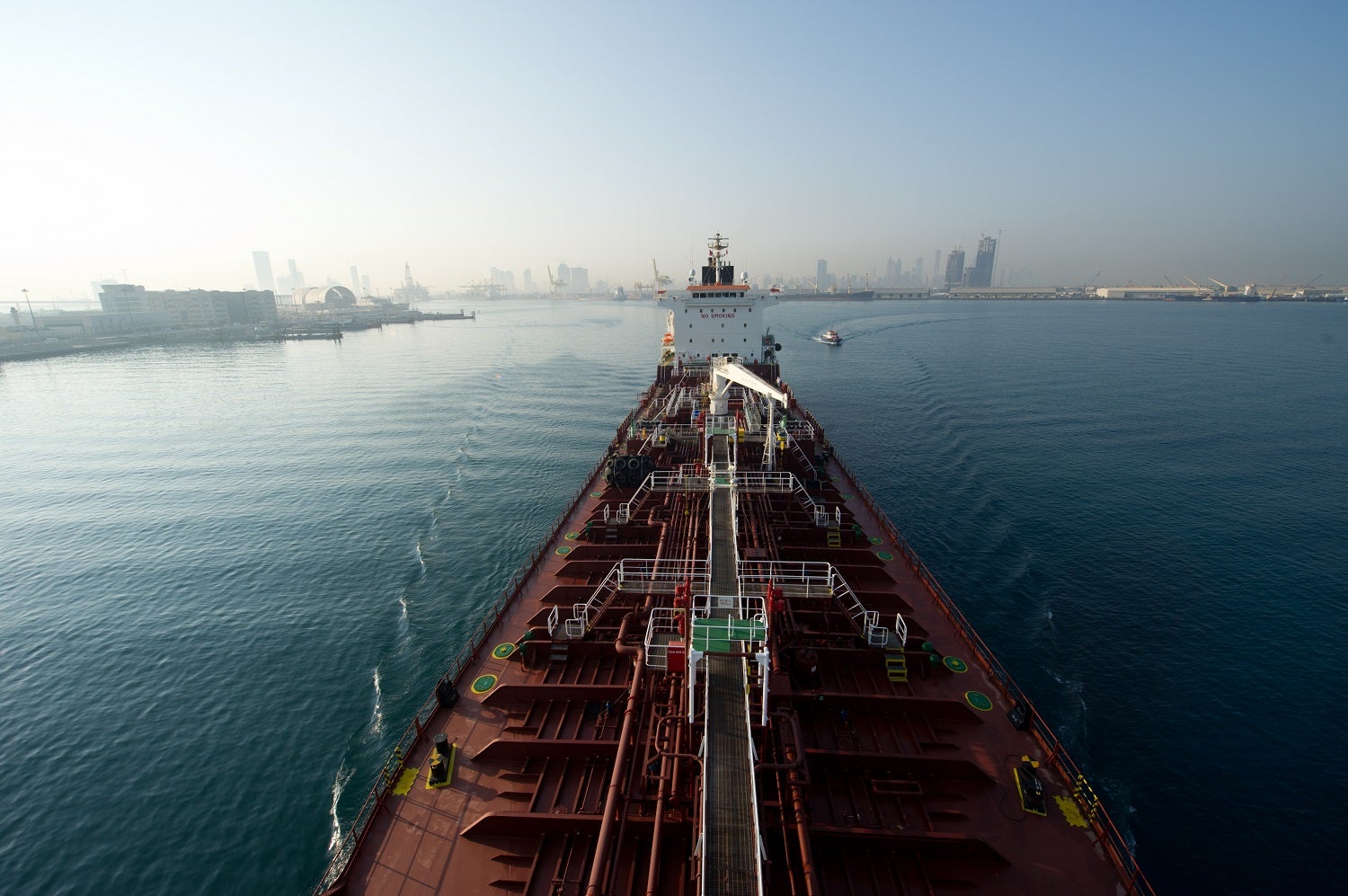
Iranian missiles have struck fuel tankers in Gulf waters belonging to Qatar and Kuwait, as Tehran continues to target energy, industrial and logistical assets in GCC countries.
A fuel oil tanker chartered by QatarEnergy, named Aqua 1, was struck by missiles in Qatar’s northern territorial waters in the early hours of 1 April, the company said in a statement.
“None of the crew members on board were injured, and there is no impact on the environment as a result of this incident,” QatarEnergy said.
Earlier, on 31 March, said one of its very large crude carriers, Al-Salmi, caught fire after being hit by an Iranian missile while anchored in UAE waters just outside Dubai.
The vessel’s crew, with support from UAE authorities, extinguished the fire by 04:26 Kuwait time on 31 March, KPC said. It added that all 24 crew members were safe and that no oil spill or environmental damage occurred.
“KPC is continuing to assess the damage in coordination with relevant authorities,” the Kuwaiti state energy conglomerate said.
ALSO READ: Iran strikes Gulf aluminium assets after hits on its steel sector
https://image.digitalinsightresearch.in/uploads/NewsArticle/16217670/main4010.jpg -
One killed and one injured in drone attacks on the UAE
1 April 2026
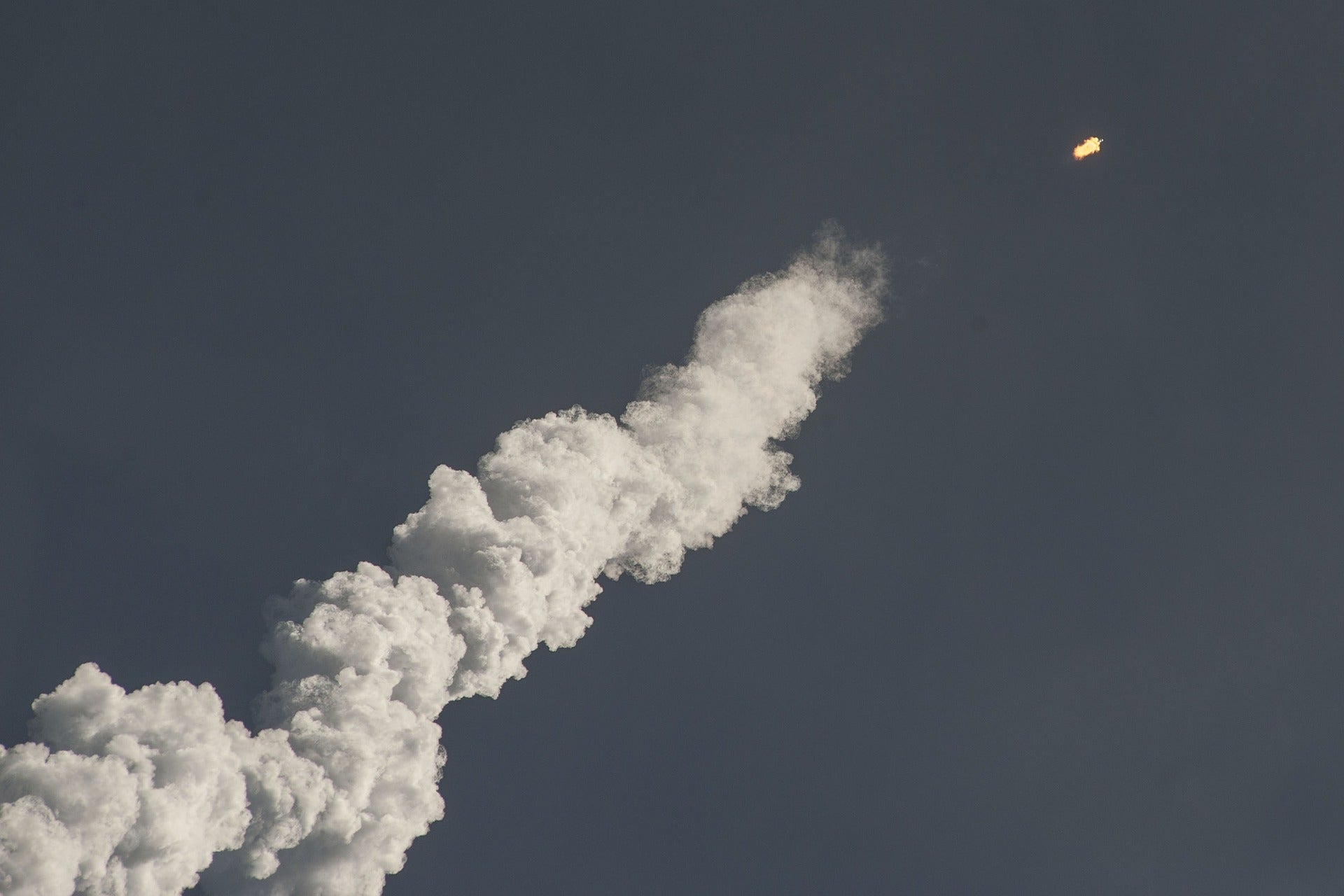
Debris falling from Iranian drones intercepted by the UAE’s air defence systems has killed one person in the emirate of Fujairah and injured another in Umm Al-Quwain in two separate incidents on 1 April.
A successful interception of a drone by UAE air defence forces resulted in debris falling on a farm in Fujairah, leading to the death of a Bangladeshi national.
The latest fatality brings the total death toll in the UAE since the start of the US-Israel-Iran war to 12. Most of the deaths have been caused by falling debris following interceptions. Among the deceased are two members of the UAE armed forces who died while performing their duties, as well as a Moroccan civilian contracted by the armed forces.
The remaining victims were of Bangladeshi, Indian, Nepali, Pakistani and Palestinian nationalities.
Hours after the Fujairah incident, authorities in Umm Al-Quwain confirmed that an Indian national was injured when debris from an intercepted drone fell in the emirate.
In a statement posted on its official social media channels, the Umm Al-Quwain government media office said the incident occurred near an industrial facility in the Umm Al-Thuoob area, after air defence systems successfully intercepted an unmanned aerial vehicle (UAV).
Meanwhile, the latest data from the UAE Ministry of Defence, released on 31 March, showed that air defence systems had engaged 36 UAVs, four cruise missiles and eight ballistic missiles in the previous 24 hours. Cumulatively, authorities said 1,977 drones, 19 cruise missiles and 433 ballistic missiles have been intercepted since the onset of the war on 28 February.
https://image.digitalinsightresearch.in/uploads/NewsArticle/16218126/main.jpg -
Contractors submit Al-Maktoum airport superstructure bids
1 April 2026
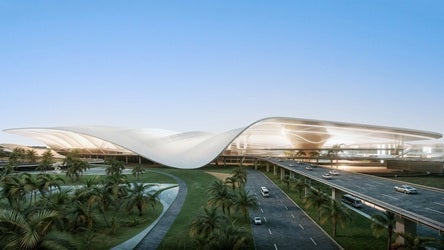
Dubai Aviation Engineering Projects (DAEP) received proposals on 31 March from contractors for three packages covering superstructure works for the first phase of the expansion of Al-Maktoum International airport.
MEED understands that the selected contractor will undertake superstructure works on three packages:
- West Terminal and concourse one
- Concourse two
- Concourse three
Construction on these packages began in November last year, when DAEP formally selected a contractor to deliver the substructure works.
According to an official description on DAEP’s website, the expanded airport’s West Terminal will be a seven-level, 800,000-square-metre facility with an annual capacity of 45 million passengers.
It will be the second of three terminals at Al-Maktoum International airport, linked to the airside by a 14-station automated people-mover (APM) system.
In August last year, MEED exclusively reported that DAEP had received bids from firms to build the APM at the airport.
The system will run under the apron of the entire airfield and the airport’s terminals. It will consist of several tracks, taking passengers from the terminals to the concourses.
Four underground stations will be built as part of the first phase. The overall plan includes 14 stations across the airport.
The airport’s construction is planned to be undertaken in three phases. The airport will cover an area of 70 square kilometres (sq km) south of Dubai and will have five parallel runways, five terminal buildings and 400 aircraft gates.
It will be five times the size of the existing Dubai International airport and will have the world’s largest passenger-handling capacity of 260 million passengers a year. For cargo, it will have the capacity to handle 12 million tonnes a year.
Construction progress
Construction on the first phase has already begun. In May last year, MEED exclusively reported that DAEP had awarded a AED1bn ($272m) deal to UAE firm Binladin Contracting Group to construct the second runway at the airport.
The enabling works on the terminal are also ongoing and are being undertaken by Abu Dhabi-based Tristar E&C.
Construction on the project’s first phase is expected to be completed by 2032.
The government approved the updated designs and timelines for its largest construction project in April 2024.
In a statement, the authorities said the plan is for all operations from Dubai International airport to be transferred to Al-Maktoum International within 10 years.
The statement added that the project will create housing demand for 1 million people around the airport.
In September 2024, MEED exclusively reported that a team comprising Austria’s Coop Himmelb(l)au and Lebanon’s Dar Al-Handasah had been confirmed as the lead masterplanning and design consultants on the expansion of Al-Maktoum airport.
Project history
The expansion of Al-Maktoum International, also known as Dubai World Central (DWC), is a long-standing project. It was officially launched in 2014, with a different design from the one approved in April 2024. At that time, it involved building the biggest airport in the world by 2050, with the capacity to handle 255 million passengers a year.
An initial phase, due to be completed in 2030, involved increasing the airport’s capacity to 130 million passengers a year. The development was to cover an area of 56 sq km.
Progress on the project slipped as the region grappled with the impact of lower oil prices and Dubai focused on developing the Expo 2020 site. Tendering for work on the project then stalled with the onset of the Covid-19 pandemic in early 2020.
https://image.digitalinsightresearch.in/uploads/NewsArticle/16215664/main.jpg -
Drone strikes Kuwait International airport
1 April 2026
Register for MEED’s 14-day trial access
Kuwait International airport was hit by further drone attacks on Wednesday, with strikes on fuel tanks sparking a major fire.
Kuwait’s state news agency Kuna said the attack caused significant damage to fuel tanks belonging to Kuwait Aviation Fuelling Company. No casualties were reported.
This was the second reported incident at the airport in recent days. Local media reported that the airport was attacked on 28 March by multiple drones, causing significant damage to its radar system.
The airport is currently undergoing expansion works that are expected to be completed by 2027, as MEED reported previously.
Project execution of the second terminal began in 2017, with the completion date pushed back from the original 2022 target.
The second terminal project consists of three packages.
These are:
- Package 1: Main works – $4,329m
- Package 2: Multistorey car park building, connection roads, bridges and landscaping works – $550m
- Package 3: Aircraft parking, runways and service buildings – $950m
Turkiye’s Limak Holding is executing the main works.
The terminal building was designed by Foster+Partners and Gulf Consult.
Spanish firm Ineco is providing the project management services for the new terminal building and the airfield.
The scope of the main package includes the new terminal building, a building for cooling and electricity supply facilities, and a building for the water supply and the future Automatic People Mover (APM) connection to the satellite building.
The terminal building will be three times the size of the original building and will have 36 boarding gates.
The building will cover more than 700,000 square metres and have five floors, one of which will be underground.
It will have the capacity, at maximum service level, for 25 million passengers a year once the first phase has been completed and up to 50 million passengers after further phases are completed.
The second package of works includes a new car park with approximately 5,000 parking spaces, connected to the new passenger terminal.
It also includes all new access roads to the airport and landscaping.
The scope of the third package comprises the main platform, new taxiways and several tunnels, including one under the platform between the terminal building and the future cargo area of the airport.
https://image.digitalinsightresearch.in/uploads/NewsArticle/16216797/main.png -
Saudi Arabia’s Sadara halts chemical production
1 April 2026
Register for MEED’s 14-day trial access
Sadara Chemical Company (Sadara), the Saudi Aramco-Dow Chemical joint venture producing petrochemicals and specialty chemicals, has announced a temporary shutdown of production, citing ongoing supply chain disruptions.
Sadara operates a sprawling chemical production complex in Jubail in Saudi Arabia’s Eastern Province, with a total output capacity of more than 3 million metric tonnes a year. Aramco and Dow established the Sadara petrochemicals complex – estimated to have cost $13bn – in 2016.
The suspension was announced in a filing on the Saudi Exchange (Tadawul) by Sadara Basic Services, which issues sukuk, or Islamic bonds, for its parent. “The shutdown was successfully completed in accordance with Sadara’s high safety standards and in a manner that safeguards operations and reduces risk,” the entity said in its filing on 31 March.
“Sadara cannot provide, at the present time, an estimate for the return to production, as this is contingent on domestic and international factors,” it said, adding the shutdown is expected to impact this year’s financial results.
The month-long war between Israel, the US and Iran has spread across the Middle East, disrupting energy supplies and threatening the global economy, as Tehran has responded to US and Israeli attacks by targeting regional energy and industrial infrastructure, as well as shipping.
ALSO READ: Sultan Al-Jaber calls Strait of Hormuz blockade “economic terrorism”
Separately, Sadara, in another Tadawul filing on 31 March, announced a net loss of SR5,793bn ($1.54bn) for the full year 2025, a further decline of about 40% compared to 2024. The company’s revenue in 2025 fell by about 15% year-on-year to $2.63bn.
The chemicals producer attributed the deepening of its losses in 2025 to a reduction in sales volumes, “which resulted from unplanned operational events and extended maintenance activities that temporarily impacted production availability”.
Sadara also pinned its augmented losses to “margin compression, and higher fixed costs associated with unplanned operational events and extended maintenance activities.
“In addition, the company experienced lower average selling prices across certain portfolio lines, which further contributed to the overall decrease in revenue,” Sadara said in the disclosure.
In addition, “the net loss for 2025 increased compared to 2024, mainly due to an accounting adjustment related to a debt modification that had a favourable impact on the prior year’s results,” the company added.
ALSO READ: Sabic registers $6.87bn net loss in 2025
https://image.digitalinsightresearch.in/uploads/NewsArticle/16215635/main2446.jpg