
Aramco nears contract award for Jafurah fifth expansion phase
6 October 2026

Saudi Aramco is believed to be close to awarding the main contract for a major project representing the fifth expansion phase of the Jafurah unconventional gas development programme in Saudi Arabia.
The main scope of work for the fifth expansion phase of Jafurah involves the engineering, procurement and construction (EPC) of three gas compression plants at the gas basin in the kingdom’s Eastern Province. Each plant will be capable of processing up to 200 million cubic feet a day (cf/d).
Indian contractor Larsen & Toubro Energy Hydrocarbon (L&TEH) is the favourite to win the main EPC contract, according to sources.
“Negotiations between Aramco and L&T have reached an advanced stage and the [Indian] contractor is now in pole position to clinch the deal,” one source told MEED.
MEED previously reported that China Petroleum Engineering & Construction Company (CPECC) was in a favourable position to secure the main EPC contract for the Jafurah fifth expansion phase, based on Aramco’s initial evaluation of proposals. The situation remained subject to change as Aramco negotiated with the project’s other bidders, MEED reported in August.
Aramco set 19 July as the final deadline for proposals, and contractors submitted their bids by that date, MEED previously reported.
ALSO READ: Aramco receives interest for major gas processing plant
The Saudi energy giant is understood to have issued the main EPC tender for the project in the first quarter of this year.
Aramco issued a solicitation of interest for the Jafurah fifth expansion phase in mid-November, with contractors submitting responses by 30 November, MEED previously reported.
UK-headquartered Wood Group has carried out the front-end engineering and design for the project.
The Jafurah basin is the largest liquid-rich shale gas play in the Middle East, spanning about 17,000 square kilometres. The reserve is estimated to contain 229 trillion cubic feet of gas and 75 billion stock-tank barrels of condensate.
Aramco recently brought the greenfield Jafurah gas processing plant online, with a production capacity of 450 million cf/d, marking the commissioning of the first phase of its $100bn capital expenditure programme to produce gas from the unconventional resource base.
The company previously stated that it expected to start gas production at Jafurah in 2025, with the intention of progressively ramping up to 2 billion cf/d of sales gas, 420 million cf/d of ethane and 630,000 barrels a day (b/d) of high-value liquids by 2030.
Aramco has said that its unconventional gas programme, at peak production, is expected to generate electricity equivalent to displacing 500,000 b/d of oil.
Jafurah gas development phases
Alongside nearing an EPC contract award decision for the fifth expansion phase at Jafurah, MEED also recently reported that Aramco had completed the solicitation of interest process with contractors for the unconventional gas programme’s sixth phase.
The main scope of work on the Jafurah sixth expansion phase is similar to the fifth phase, and involves the EPC of three gas compression plants at the giant gas reserve, each with an output capacity of 200 million cf/d.
Aramco also kicked off EPC works on the Jafurah fourth expansion phase in the second quarter of the year.
MEED reported in April that Aramco had selected Mumbai-headquartered L&TEH as the main contractor for the fourth phase, which sources estimate could be valued at about $1.5bn.
The main scope of work on Jafurah’s fourth expansion phase involves the EPC of two gas compression trains at the gas basin. Each plant will be able to process up to 200 million cf/d.
EPC work on the third phase of the Jafurah unconventional gas development programme is also advancing.
In July 2024, Aramco issued a non-binding letter of intent to a consortium of Tecnicas Reunidas and Sinopec Group for the EPC contract for phase three. The contract is estimated at $2.24bn.
The objective of the third expansion phase is similar to that of the fourth phase. The main scope of work involves the EPC of three gas compression plants, each with a capacity of 200 million cf/d.
The third phase’s scope of work also includes building a 230kV substation to power the new gas compression plants, and installing other utilities units, piping systems and safety equipment.
The selection of contractors for the third expansion phase came within weeks of Aramco officially awarding EPC contracts for the second phase, which aims to raise the field’s processing potential to up to 2 billion cf/d of raw gas.
Aramco awarded 16 contracts, worth a combined total of about $12.4bn, for the second expansion phase on 30 June 2024.
The EPC scope of work for that project involves the construction of gas compression facilities and associated pipelines, and the expansion of the Jafurah gas plant, including the construction of gas processing trains, utilities, sulphur and export facilities, Aramco said in a statement.
The main EPC packages of the Jafurah second expansion phase project, their estimated values and the selected contractors are:
- Package 1 – gas processing plant and main process units – $2.9bn: Larsen & Toubro Energy Hydrocarbon (India)
- Package 2 – utilities and offsites – $2.4bn: Hyundai Engineering (South Korea)
- Package 3 – gas compression units – $1bn: Larsen & Toubro Energy Hydrocarbon
- Riyas natural gas liquids (NGL) package 1 – NGL fractionation trains – $1bn: Tecnicas Reunidas / Refining & Chemical Engineering Group (part of China’s Sinopec Group)
- Riyas NGL package 2 – utilities, storage and export facilities – $2.2bn: Tecnicas Reunidas/Refining & Chemical Engineering Group
- Riyas NGL package 6 – site preparation works – $107m: Mofarreh Alharbi & Partners (Saudi Arabia)
- Riyas NGL package 9 – temporary construction facilities – $80m: Mofarreh Alharbi & Partners
Aramco kickstarted EPC works on the first phase of the programme in November 2021 by awarding $10bn-worth of subsurface and EPC contracts.
In February 2020, Aramco received a capital expenditure grant of $110bn from the Saudi government for the long-term phased development of the Jafurah unconventional gas resource base.
The Jafurah programme is central to Aramco’s goal of increasing gas production capacity. The target has recently been raised to 80%, with 2021 as the baseline, up from 60%, to meet rising domestic and global demand. The company expects life-cycle investment in Jafurah to exceed $100bn.
Aramco completed an $11bn lease-and-leaseback deal in late October 2025 for gas processing facilities at the Jafurah unconventional gas reserve with a consortium led by funds managed by Global Infrastructure Partners (GIP), part of US asset manager BlackRock.
Under the transaction, a newly formed subsidiary, Jafurah Midstream Gas Company (JMGC), will lease development and usage rights to the Jafurah field gas processing plant and the Riyas natural gas liquids fractionation facility.
After 20 years, JMGC will lease the assets back to Aramco. JMGC will collect a tariff payable by Aramco in exchange for granting Aramco the exclusive right to receive, process and treat raw gas from the Jafurah resource base.
Aramco will hold a 51% majority stake in JMGC, while the GIP-led consortium will hold the remaining 49%. Investors participating in the GIP-led consortium include Hassana Investment Company, the Arab Energy Fund and Aberdeen Investcorp Infrastructure Partners, as well as other institutional investors from North and Southeast Asia and the Middle East.

Register for MEED's guest program now to access this article.
Exclusive from Meed
-
 PDO awards contract for Al-Ghubar oil field project
12 November 2026
-
 Laing O’Rourke joins the international exit list
12 November 2026
-
 Poland’s Orlen terminates QatarEnergy LNG supply deal
11 November 2026
-
 Riyadh shifts bid deadline for King Salman Stadium works
11 November 2026
-
 Hormuz crisis sparks regional pipeline project boom
11 November 2026
All of this is only 1% of what MEED.com has to offer
Subscribe now and unlock all the 153,671 articles on MEED.com
- All the latest news, data, and market intelligence across MENA at your fingerprints
- First-hand updates and inside information on projects, clients and competitors that matter to you
- 20 years' archive of information, data, and news for you to access at your convenience
- Strategize to succeed and minimise risks with timely analysis of current and future market trends
Related Articles
-
PDO awards contract for Al-Ghubar oil field project
12 November 2026
Register for MEED’s 14-day trial access
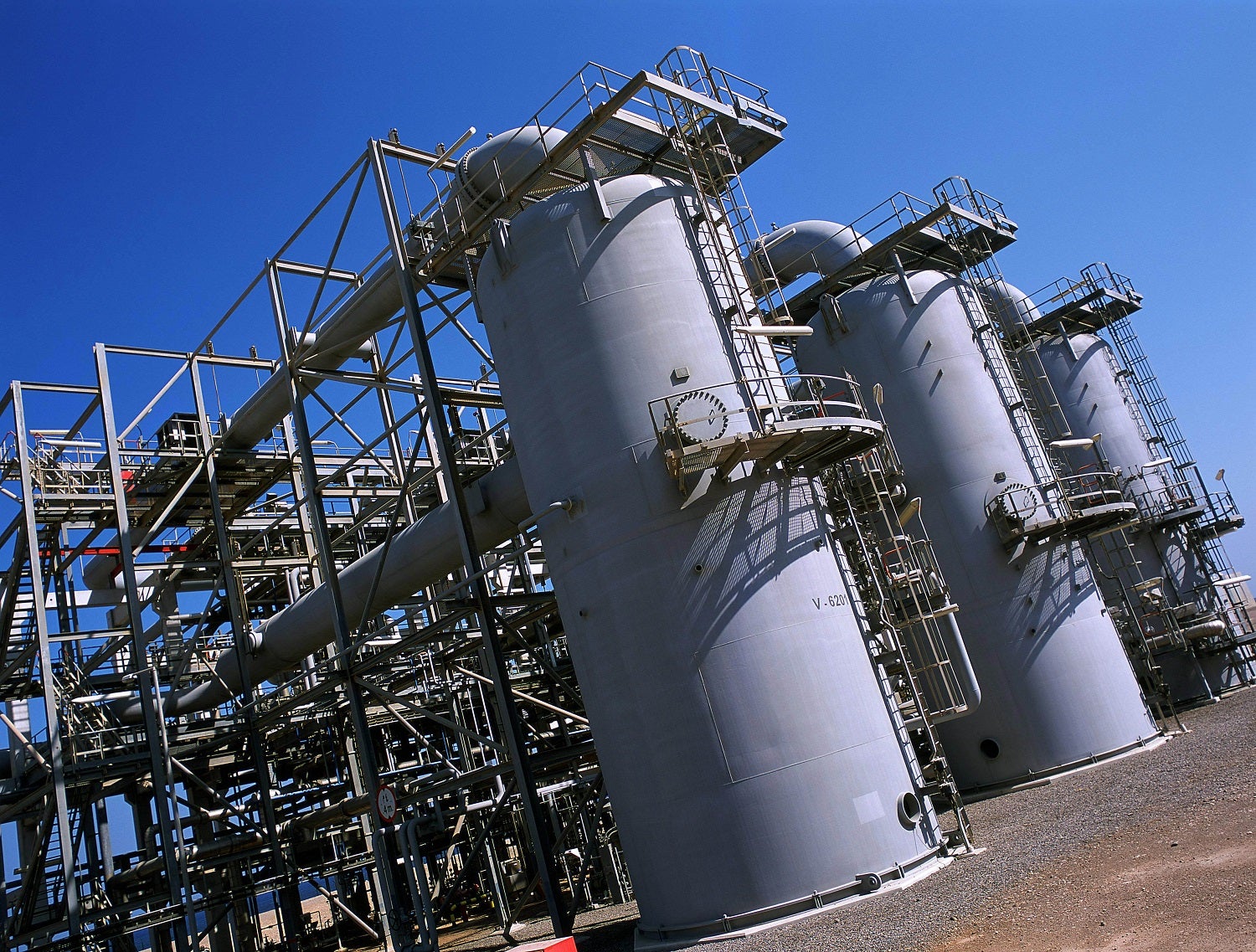
Petroleum Development Oman (PDO) has awarded the main contract for a project to build a facility to handle additional oil production from the Al-Ghubar field in the sultanate.
The Al-Ghubar field is located in the Ghaba Salt Basin at Qarn Alam, within majority state-owned PDO’s Block 6 concession area.
The Al-Ghubar gas-oil gravity drainage (GOGD) facility will be designed as a sour (hydrogen sulphide) facility and is expected to handle a maximum oil production rate of 1,800 standard cubic metres a day (cm/d), a total water flow rate of up to 10,421 standard cm/d and gas lift of up to 256,934 standard cm/d. Production from the planned Al-Ghubar GOGD facility will be exported to PDO’s main oil line.
China-based Jereh Group has won the contract for the Al-Ghubar GOGD facility project, sources told MEED.
A project kick-off meeting between PDO and Jereh has also recently taken place, the sources said.
MEED previously reported that Jereh had emerged as the lowest bidder for the project.
The following contractors, among others, are understood to have been bidding for the Al-Ghubar GOGD facility project:
- Engineering for the Petroleum & Process Industries (Egypt) / Petrojet (Egypt)
- GS Engineering & Construction (South Korea)
- Jereh (China)
- Larsen & Toubro Energy Hydrocarbon (India)
PDO floated the tender for the Al-Ghubar GOGD facility project in March, setting an initial bid submission deadline of 4 May, MEED previously reported.
PDO later extended the deadlines for the submission of technical and commercial bids to 26 July and 7 August, respectively. Contractors submitted technical proposals by the revised deadline, according to sources.
After receiving the technical bids for the project in July, PDO granted contractors until 16 August to submit commercial bids. It eventually extended the deadline to 1 September, with contractors submitting commercial proposals by that date, as MEED reported.
The scope of work on the Al-Ghubar GOGD project covers the engineering, procurement and construction (EPC) of the following:
- On-plot scope, consisting of:
- Production separator
- Test separator
- Concentric wash tank
- Wet oil pump
- Water bath heater
- Surge tank
- Gas injection/gas lift compressor (centrifugal)
- Utilities (instrument air compressors, chemical injection skids, drain system, vent system)
- Suction scrubber
- Air coolers
- Discharge scrubbers
- Condensate flash drum
- Atmospheric pressure knock-out drum
- Flare system
- Gas heater
- Water disposal pump
- Oil shipping pump
- 132kV substation and plant substation (housing 6.6kV and 415-Volt switchboard)
- Control room
- Off-plot scope consisting of:
- Off-plot pipeline network (bulk header, test header, gathering infrastructure/ gathering line header, instrument air header, water disposal header)
- Two remote manifold stations
- Tie-in connection to main oil line
- Tie-in to gas network pipeline
PDO previously intended to tender the Al-Ghubar GOGD project under its framework structure with selected EPC contractors, but ultimately tendered it separately.
PDO is the operator of Oman’s Block 6 hydrocarbons concession, the sultanate’s largest and most prolific concession. Situated onshore and covering an area of 75,119 square kilometres, Block 6 contains 202 oil fields and 43 gas fields. PDO produces approximately 680,000 barrels a day of oil and condensates from the fields.
The Omani government holds a 60% stake in PDO through Energy Development Oman. The other shareholders are UK-based Shell (34%), France’s TotalEnergies (4%) and Thailand’s state-owned PTTEP (2%).
https://image.digitalinsightresearch.in/uploads/NewsArticle/21345337/main2647.jpg -
Laing O’Rourke joins the international exit list
12 November 2026
 Commentary
Colin Foreman
EditorRegister for MEED’s 14-day trial access
Laing O’Rourke’s decision to seek a buyer for its Middle East business marks the end of an era for UAE construction.
In the early 2000s, the contractor was among the leading names in the market. Its work at Dubai International airport, the Atlantis hotel on the Palm Jumeirah and the ski slope at Mall of the Emirates made it arguably the UAE’s most prominent contractor during the pre-global financial crisis construction boom.
Its activities were not limited to Dubai. A partnering agreement with Aldar for Al-Raha Beach then made it the most active contractor in Abu Dhabi almost overnight.
The global financial crisis changed its fortunes. The Aldar Laing O’Rourke joint venture ended. Unsettled by payment problems and wider stress in the industry, the company took a more cautious approach to clients and projects in the region. One executive at the time told MEED: “You might see lots of tower cranes, but none of them are doing work that we would want to do.”
The contractor’s appetite partially returned in the late 2010s, when it won Al-Wasl Plaza at the Expo 2020 site in Dubai. It also became a leading player in the growing data centre market, delivering facilities for repeat clients, including Khazna and Equinix.
Data centres have since been its focus. These are significant projects, but they lack the public profile of the airport, Atlantis and Al-Wasl Plaza. As its profile faded, the company sold its UAE joinery arm to Dubai-based Arco Turnkey Solutions in 2025.
Laing O’Rourke now looks set to follow other international contractors that have, for various reasons, left the region, including Murray & Roberts, Balfour Beatty, Multiplex, Carillion and Bam. With a record £17.2bn order book anchored by UK and Australian infrastructure, the group’s priorities clearly lie elsewhere.
Whoever buys the business will inherit strong data centre credentials. For much of the market, however, Laing O’Rourke will be remembered for the landmark projects that defined the UAE’s boom years.
https://image.digitalinsightresearch.in/uploads/NewsArticle/21344577/main.jpg -
Poland’s Orlen terminates QatarEnergy LNG supply deal
11 November 2026
Register for MEED’s 14-day trial access
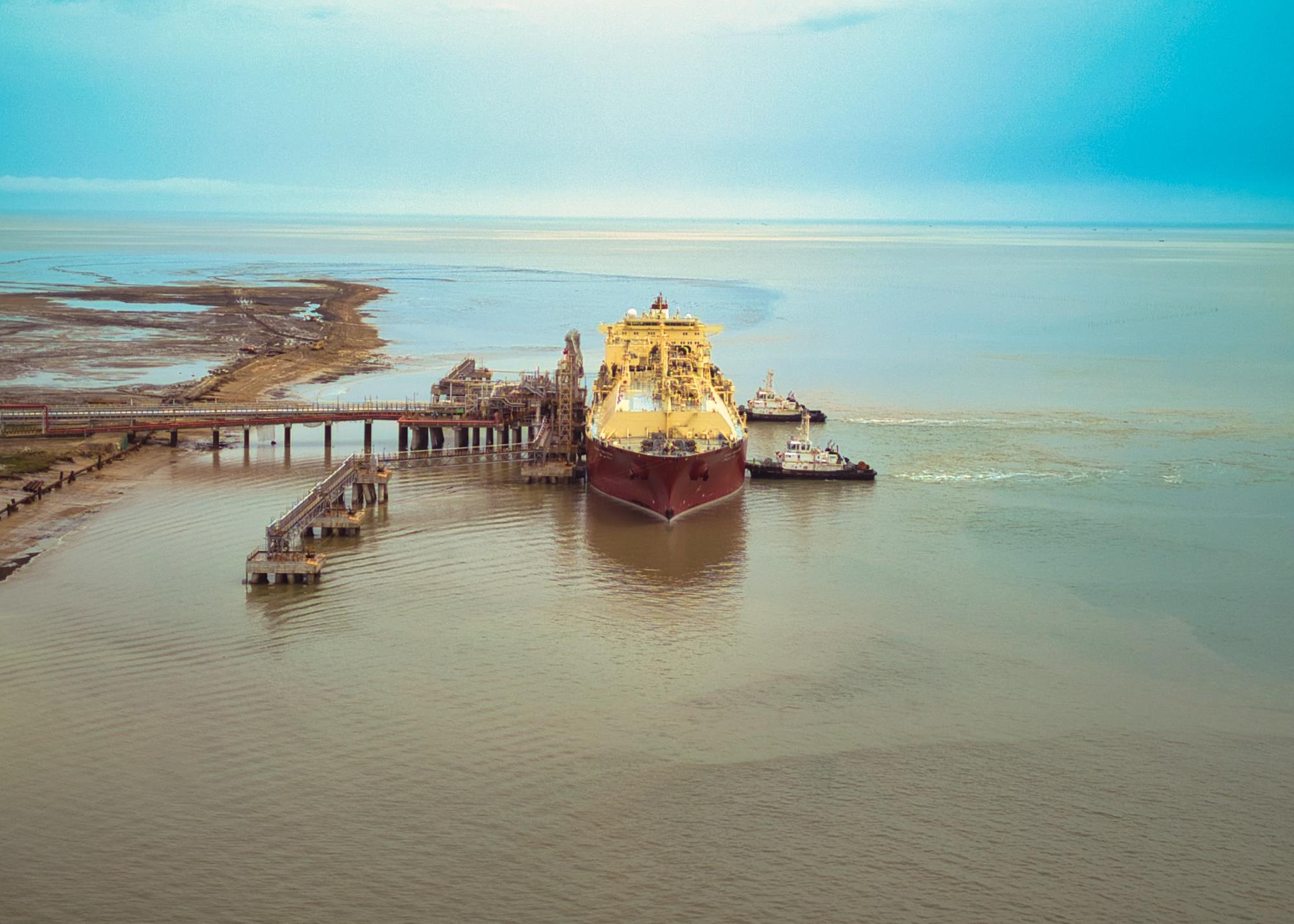
Poland’s Orlen has announced it has terminated one of two long-term contracts for the supply of liquefied natural gas (LNG) by QatarEnergy LNG, a subsidiary of state enterprise QatarEnergy. The termination follows an ongoing force majeure event “resulting in an inability to meet contractual delivery obligations”.
The agreement covered the supply of 1 million tonnes a year (t/y) of LNG, equivalent to approximately 15.3 terawatt-hours, with pricing linked to crude oil quotations. The estimated value of the agreement for 2026 is approximately €570m ($634.9m), Orlen said in a statement on 10 November.
The terminated agreement was originally signed by Polskie Gornictwo Naftowe i Gazownictwo and QatarEnergy on 29 June 2009. Deliveries under the agreement commenced in 2016 and were due to remain in force until 2034, the Polish energy company said.
The agreement will remain in force for a further 60 days following the notice of termination, Orlen said in its statement.
Orlen continues to honour its second agreement with QatarEnergy, which covers deliveries of up to 1 million t/y of LNG until 2034, under a pricing formula linked to gas price quotations.
“The decision to terminate the agreement does not affect the security of gas supplies. Gas production from the company’s own fields, together with its long-term gas supply agreements, ensures full coverage of Orlen Group’s gas requirements,” the company concluded.
It is not clear whether Orlen’s termination of one of its long-term LNG supply agreements with QatarEnergy is related to the Qatari energy giant declaring force majeure on two instances in March this year, when its energy infrastructure was hit in Iranian drone and missile attacks.
Force majeure episodes
On 4 March, QatarEnergy issued force majeure to customers that were affected by its decision to stop production and shipments of LNG and associated products after military attacks on the company’s operating facilities in Ras Laffan Industrial City and Mesaieed Industrial City in Qatar on 2 March.
Later that month, Qatar said Iranian missiles had caused extensive damage at Ras Laffan Industrial City on 18 March, with Saad Sherida Al-Kaabi, QatarEnergy’s CEO and Minister of State for Energy Affairs, saying that the Iranian strikes had knocked out about 17% of its LNG export capacity, causing an estimated $20bn in lost annual revenue.
At least two of Qatar’s 14 LNG trains and one of its two gas-to-liquids facilities were damaged in the Iranian strikes, Al-Kaabi told news agency Reuters at the time.
Repairing damaged assets will sideline 12.8 million t/y of LNG for three to five years, threatening supplies to European and Asian nations, including China and India, according to Al-Kaabi.
As a result, QatarEnergy said it would have to declare force majeure on long-term contracts for up to five years for LNG supplies bound for Italy, Belgium, South Korea and China. Poland was not specifically mentioned at the time.
“These are long-term contracts that we have to declare force majeure. We already declared, but that was a shorter term. Now it is whatever the period is,” Al-Kaabi said in March.
QatarEnergy currently has a nameplate LNG production capacity of 77.5 million t/y, with all its processing trains and export infrastructure located in Ras Laffan Industrial City, which lies about 90 kilometres to the north of Doha and is home to the largest LNG production and export facility in the world.
QatarEnergy’s LNG production capacity is on course to rise to 142 million t/y when the three phases of its $40bn North Field LNG expansion programme are commissioned by the end of the decade. Engineering, procurement and construction works on its North Field East, North Field South and North Field West projects are progressing, with the first phase expected to be operational by the end of this year.
https://image.digitalinsightresearch.in/uploads/NewsArticle/21333808/main2615.jpg -
Riyadh shifts bid deadline for King Salman Stadium works
11 November 2026
Saudi Arabia’s Sports Ministry has set a deadline of 1 December for a contract covering early works at the King Salman International Stadium in Riyadh.
The tender scope encompasses enabling works, site preparation and initial construction activities. The tender was issued on 11 October, carrying an initial submission deadline of 19 November. Contractors previously submitted prequalification statements for the main design-and-build contract in February.
Designed by US-based architectural firm Populous, the stadium will cover approximately 660,000 square metres (sq m), seat 92,000 spectators and stand adjacent to King Abdulaziz Park. Facilities will feature a 150-seat royal suite, 120 hospitality suites, 300 VIP seats and 2,200 dignitary seats.
The broader masterplan encompasses more than 360,000 sq m of ancillary facilities, featuring two training fields, fan zones, a closed sports hall, an Olympic-sized swimming pool, an athletics track, and outdoor courts for volleyball, basketball and padel.
Scheduled for completion by 2029, the venue will serve as the home base for the Saudi national football team and host the opening match and final of the 2034 Fifa World Cup.
Saudi stadium plans
In August 2024, MEED reported that Saudi Arabia plans to build 11 new stadiums and refurbish four existing venues for the 2034 tournament. Eight venues will be located in Riyadh, four in Jeddah, and one each in Al-Khobar, Abha and Neom.
An additional 10 cities will host team base camps: Al-Baha, Jazan, Taif, Medina, AlUla, Umluj, Tabuk, Hail, Al-Ahsa and Buraidah. Across the kingdom, organisers plan to deploy 134 training sites, comprising 61 existing facilities and 73 new builds.
Saudi Arabia was officially selected to host the 2034 Fifa World Cup during an online convention of member associations at the Fifa Congress on 11 December 2024.
https://image.digitalinsightresearch.in/uploads/NewsArticle/21325461/main.jpg -
Hormuz crisis sparks regional pipeline project boom
11 November 2026
 Analysis
Wil Crisp
Oil & gas reporterRegister for MEED’s 14-day trial access
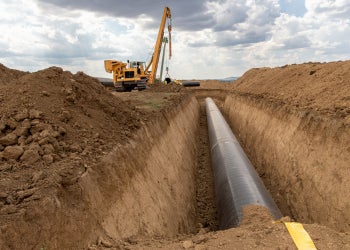
The ongoing disruption to shipping through the Strait of Hormuz and the Bab Al-Mandab Strait has sparked a regional pipeline project boom, as countries seek to diversify export routes for oil and gas.
Since the US and Israel attacked Iran on 28 February, several major pipeline projects have been announced, while others are being revived or accelerated.
Countries that are participating in this regional pipeline boom include Iraq, Syria and Egypt.
While the regional conflict has changed the dynamics within the oil and gas sectors of each of these countries in different ways, all of them see major pipeline projects as a key part of their strategic response to the conflict.
Iraqi expansion
Iraq is one of the region’s oil exporters that has been hit the hardest by the disruption to shipping through the Strait of Hormuz.
Prior to the start of the regional conflict, the country was routing 94% of its total exports through the strait, with about 3.4 million barrels a day (b/d) being exported through its southern ports at the start of the year.
At the same time, about 200,000 b/d was being exported via the Iraq-Turkiye Pipeline (ITP) in the north of the country.
In the wake of the disruption to shipping through the Strait of Hormuz, Iraq has increased the volumes being exported via the ITP and has boosted its crude exports by truck through Syria.
Earlier this month, domestic news outlets reported that Iraq’s State Oil Marketing Organisation was exporting 500,000 b/d through the ITP.
The daily exports consist of 125,000 barrels of Kirkuk crude, 175,000-200,000 barrels of Kurdistan Region crude and about 200,000 barrels of Basra crude, according to the reports.
The Basra oil reaches collection stations at Sarallu and Khurmala by truck and from there is pumped north to Ceyhan in Turkiye.
The volume of crude exported from Iraq by truck to the Syrian port of Baniyas has risen significantly in recent months.
In October, Youssef Qablawi, the chief executive of the state-owned Syrian Petroleum Company, said that about 1,000 trucks were transporting fuel oil to Syria each day, with each truck carrying about 220 barrels.
This represents exports of 220,000 b/d, which is a significant volume for Iraq, but transporting crude by truck is much more expensive than using a pipeline.
Because of this, Iraq sees pipeline projects as a long-term solution to its reliance on the Strait of Hormuz and is rapidly pushing ahead with projects that are designed to replace exports currently transported by road, as well as increasing the volumes that can be exported via both Syria and Turkiye.
Earlier this month, MEED reported that the governments of Iraq and Syria, state-owned oil companies and a consortium led by Qatar’s UrbaCon Contracting & Trading (UCC) were discussing the terms of a deal for four interconnected pipeline packages that are expected to have a total value of about $5bn.
Stakeholders expect a contract to be signed before the end of the year that will make the UCC-led coalition the selected developer responsible for tendering engineering, procurement and construction (EPC) contracts for the project.
The consortium includes US-based Chevron, investment company TI Capital and France’s TotalEnergies.
The four pipeline routes that are being discussed are:
- Basra to Najaf
- Najaf to Haditha
- Haditha to Fish Khapour
- Haditha to Banias Port in Syria
The proposed plan will use a fast-track framework to bring the pipelines online as quickly as possible.
Red Sea route
Iraq and Saudi Arabia are also considering reviving an old pipeline route between the Zubair oil field in Basra and the Red Sea port of Yanbu.
Operations of this 1,568-kilometre (km) pipeline were halted in August 1990 following Iraq's invasion of Kuwait and the onset of the Gulf War.
At the end of October, Saudi Arabia granted preliminary approval to revive the joint oil export pipeline project, according to a report published by Saudi Arabia’s Shafaq News, which cited anonymous sources.
If the pipeline is reinstated, it could allow Iraq to export oil via the Red Sea, reducing its reliance on the Strait of Hormuz.
The pipeline was originally built at a cost of more than $2.6bn and featured a large network of storage tanks and offshore loading terminals.
Syrian strategy
In addition to its involvement in Iraq’s strategic export pipeline project, Qatar’s UCC is developing a pipeline project in Syria that will increase the country’s ability to deal with future supply disruptions.
On 30 September, UCC announced that it had , which will extend 186km between Homs and Aleppo.
The 36-inch pipeline will have a transmission capacity of up to 11 million cubic metres a day of gas and will connect gas networks in Jordan to those in Turkiye via Syria.
In its announcement, UCC said that the project is scheduled for completion within 22 months and will contribute to strengthening Syria’s gas infrastructure; enhancing the capacity of its gas transmission network; and supporting regional connectivity with Jordan, Turkiye and Lebanon.
Hisham Al-Saleh, Syrian Petroleum Company’s deputy chief executive for the gas sector, has said that the project includes the installation of three compressors in Furqlus, which will allow gas to be transported in both directions between Turkiye and Jordan.
Speaking to the state-owned Syrian Arab News Agency, he said that the project will add an estimated 8 million cubic metres of storage capacity to the Syrian gas network, providing greater flexibility in managing gas production and use.
Egyptian ambitions
Egypt is also ramping up pipeline project activity in order to increase the number of oil and gas links that it has with neighbouring countries.
The North African nation has long had ambitions to try and become a major regional energy hub.
These plans have been given a boost by the ongoing disruption to shipping through the Strait of Hormuz and the Bab Al-Mandab Strait, which has reduced exports from nations like Qatar, Kuwait, Iraq, the UAE and Saudi Arabia.
Concerns about the reliability of exports from Iraq and the GCC have led to increased investment in oil and gas infrastructure in countries that are not reliant on these waterways to transport hydrocarbons.
In recent months, significant progress has been made on an integrated project that was launched to export offshore gas reserves in Cyprus via Egyptian energy infrastructure.
In October, Italian oil and gas company Eni signed the main EPC and drilling contracts for the project, which will develop the Cronos field.
The project includes contracts with several companies that will develop infrastructure in both Egypt and Cyprus.
The awards include a $170m contract that has been won by Egypt’s Petrojet for a new onshore gas pipeline in Egypt that will help to transport gas to Egypt’s Damietta liquefied natural gas (LNG) facility.
Separately, US-based Baker Hughes signed a contract for the design, procurement and construction of subsea production systems, including associated equipment and control systems.
In September, it was announced that US-headquartered McDermott will carry out offshore work for the project, including the transportation, installation and connection of subsea pipelines and equipment.
The Cronos development project will significantly increase the volume of gas being imported into Egypt, where it can be exported as LNG as well as helping to meet domestic demand.
On top of the major pipeline project allowing the importation of gas from Cyprus, Cairo is also looking at other regional pipeline projects, including gas links to Libya.
In a statement released earlier this month, Egyptian Foreign Minister Badr Abdelatty said that a Libyan team will visit Cairo soon to continue technical talks about the gas pipelines, as well as other energy projects, with Egypt’s petroleum and electricity ministers.
Pipeline problems
While the planned oil pipeline projects in Iraq are seen as a possible solution to the disruption to shipping through the Strait of Hormuz, they are also likely to face problems relating to the importation of necessary equipment that would normally be shipped through the waterway.
The Common Seawater Supply Project, designed to bring water from the sea to inject into oil fields, is behind schedule, largely because of problems importing the pipeline segments through the strait.
This issue could plague other planned pipeline projects in Iraq if the disruption to shipping continues, forcing contractors to use other, more costly, import routes.
Challenging conditions
Even when Iraq’s major export pipeline projects are completed, they may fail to resolve the country’s oil export problems to the extent many are expecting.
While the export pipelines will go some way towards diversifying away from reliance on exports through waterways where oil and gas tankers are vulnerable to militant attacks, many industry insiders say Iraq could just be replacing one vulnerable export route with another.
Oil pipelines in the Middle East and North Africa region have a long history of suffering attacks and often stretch long distances through remote regions where they are difficult to defend.
Ultimately, it is likely that finding a diplomatic solution to the regional conflict will be the only way that Iraq can reliably increase its oil exports in the long term.
https://image.digitalinsightresearch.in/uploads/NewsArticle/21305172/main.jpg