
Saudi housing entity awards infrastructure contract
24 November 2025

Saudi Arabia’s National Housing Company (NHC) has awarded Riyadh-based Alomaier Trading & Contracting Company a contract to carry out infrastructure works at its Khuzam residential development in Riyadh.
The scope of work covers all infrastructure works across an area of 4,000,000 square metres (sq m) in stage three, phase three of the Khuzam residential project.
Construction works have started, and the project is expected to be completed in 2028.
NHC’s Khuzam project is located to the north of Riyadh, near King Khalid International airport and the Expo 2030 site.
The development will offer more than 50,000 residential units and will include parks, commercial areas and other associated amenities.
It will also feature a grand park spanning an area of more than 4.5 million sq m.
MEED reported in 2020 that Riyadh planned to oversee the development of more than 1 million homes by 2025 to meet growing demand in the kingdom.
By 2030, the Saudi capital aims to more than double its population, from 7-8 million to 15-20 million, and become one of the 10 wealthiest cities in the world.
Alomaier Trading & Contracting is undertaking some major infrastructural development projects across the kingdom.
In 2023, MEED reported that Saudi Arabia’s National Water Company had awarded a contract worth SR371m ($99m) to Alomaier Trading & Contracting. It covers the construction of a sewage network in Dammam’s King Fahd suburb and adjacent areas.
The contract also involves the construction of regression lines with diameters of up to 700 millimetres (mm) and a total length of 300 kilometres (km), as well as five ejection lines with diameters of up to 500mm and a total length of 15km, according to data obtained from the regional projects tracker MEED Projects.
The firm specialises in the construction of roads, railways and other infrastructural development works.

Register for MEED's guest program now to access this article.
Exclusive from Meed
-
 Egypt brings new gas wells online
10 March 2026
-
 Kuwait Oil Company running on 30% workforce
10 March 2026
-
 Desalination plants hit amid escalating conflict
10 March 2026
-
 Renewables projects in Oman near completion
9 March 2026
-
 Dubai’s real estate faces a hard test
9 March 2026
All of this is only 1% of what MEED.com has to offer
Subscribe now and unlock all the 153,671 articles on MEED.com
- All the latest news, data, and market intelligence across MENA at your fingerprints
- First-hand updates and inside information on projects, clients and competitors that matter to you
- 20 years' archive of information, data, and news for you to access at your convenience
- Strategize to succeed and minimise risks with timely analysis of current and future market trends
Related Articles
-
Egypt brings new gas wells online
10 March 2026
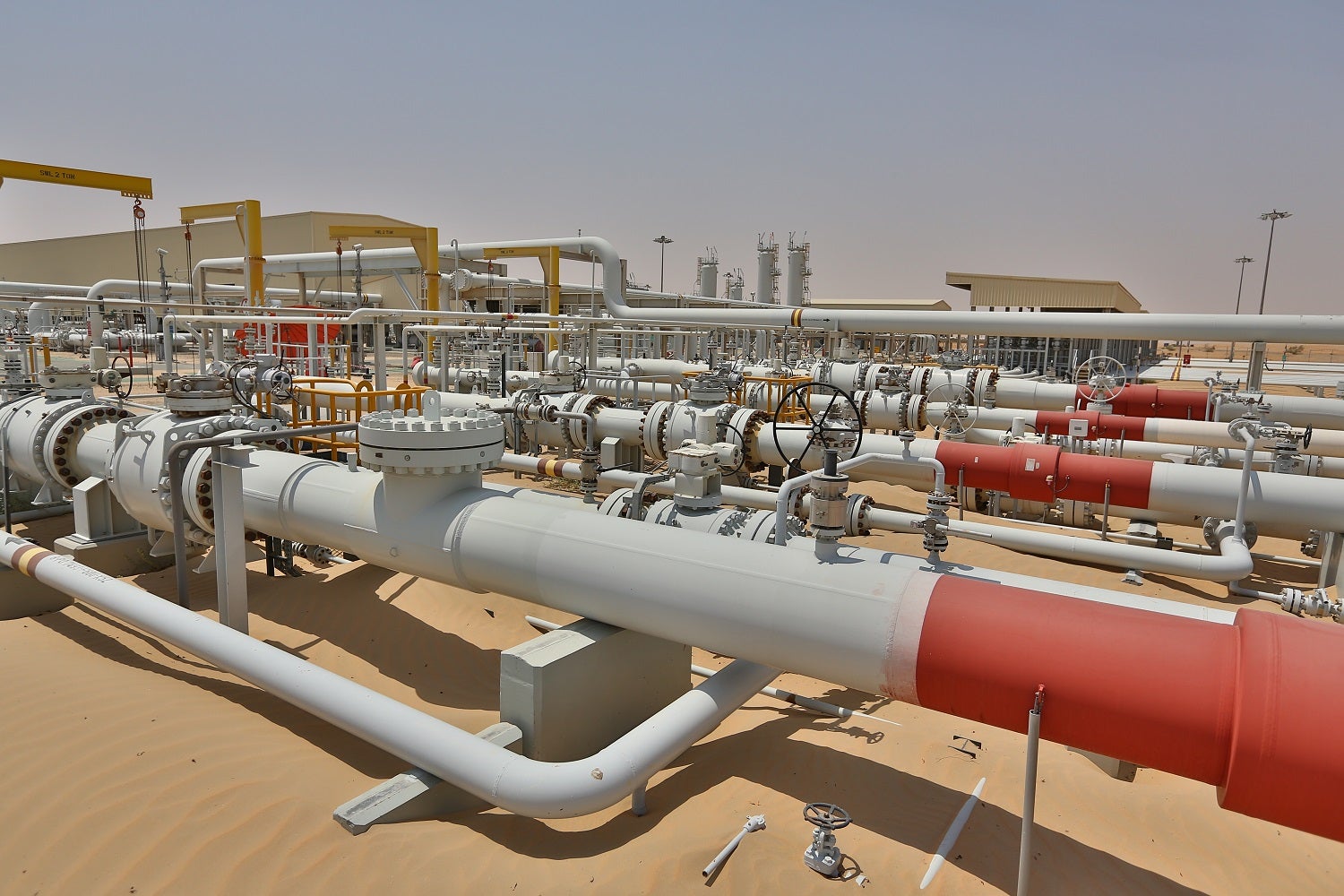
Egypt has brought new wells online in the Mediterranean Sea and the country’s Western Desert region, according to a statement from Egypt’s Petroleum & Mineral Resources Ministry.
In the Mediterranean, the second well in the West El-Burullus (WEB) offshore field was brought online, increasing the field’s output from about 25 to 37 million cubic feet a day (cf/d).
The project is being developed and produced through a joint‑venture vehicle known as PetroWeb, in which the lead partner is US-based Cheiron.
The production is forecast to exceed 70 million cf/d following the connection of the third well in the coming days, while the drilling of the fourth well has been completed with promising results, according to the ministry.
The development plan includes drilling two additional wells on the Papyrus platform, linked to WEB, to maximise the utilisation of the concession area's resources and accelerate production.
The well in the Western Desert has been brought on by Badr El-Din Petroleum Company (Bapetco), which is a joint venture of London-headquartered Shell and state-owned Egyptian General Petroleum Corporation.
Production tests showed rates of 10-15 million cf/d, in addition to 300–650 b/d of condensate, according to Egypt’s Petroleum & Mineral Resources Ministry.
The latest well has increased the confirmed reserves in the area from 15 billion cubic feet to 25 billion cubic feet.
Four more production wells are planned for in the Badr El-Din concession as Bapetco continues its push to ramp up production from the field.
Egypt is pushing to increase domestic production of gas amid soaring global prices due to the US and Israel’s war with Iran.
https://image.digitalinsightresearch.in/uploads/NewsArticle/15916500/main.jpg -
Kuwait Oil Company running on 30% workforce
10 March 2026
Register for MEED’s 14-day trial access
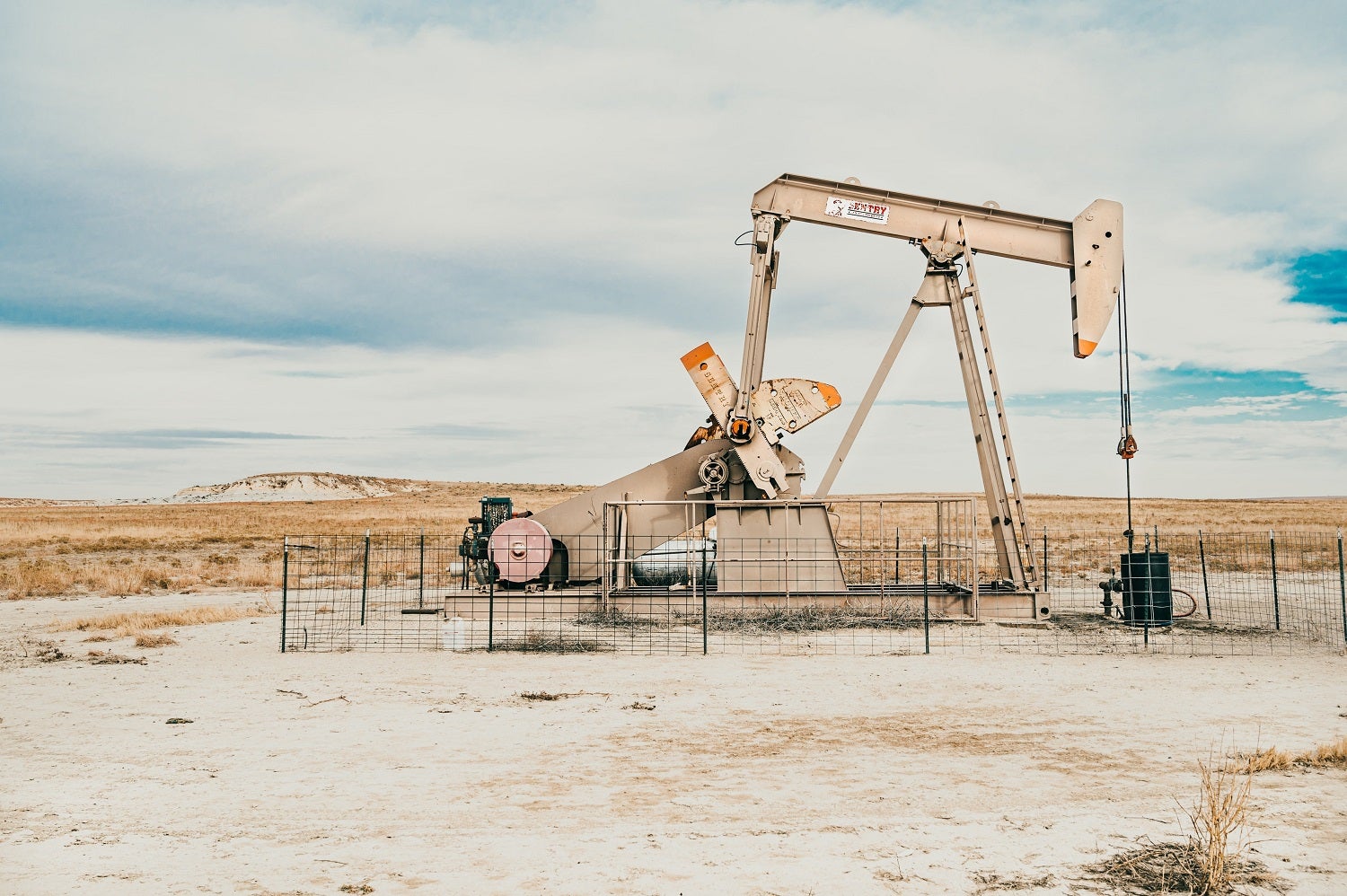
State-owned upstream operator Kuwait Oil Company (KOC) is operating with just 30% of its total workforce in their normal workplaces, according to industry sources.
The policy is similar to one that was used during the Covid-19 pandemic and has been implemented as a precaution due to the US and Israel’s conflict with Iran.
The policy does not apply to staff that are working in what are considered to be essential positions, sources said.
“Effectively, what this means is that if you work in a building that is normally staffed by one person, only one person will be in that building at any time,” said one source.
“KOC is rotating the staff so fewer people are in the workplace. Senior executives believe that this is a sensible policy given the current security situation.”
State-owned Kuwait Petroleum Corporation (KPC), KOC’s parent company, recently announced that it had started reducing crude oil production and refining throughput.
It said that it had declared force majeure “in light of the ongoing aggression by Iran against the State of Kuwait, including Iranian threats against safe passage of ships through the Strait of Hormuz”.
Force majeure, a French term meaning “superior force”, is a clause included in many international commercial contracts. It allows companies to suspend contractual obligations when extraordinary events happen that are beyond their control.
KPC said the reduction in production and refining is precautionary and will be reviewed as the situation develops.
https://image.digitalinsightresearch.in/uploads/NewsArticle/15916332/main.jpg -
Desalination plants hit amid escalating conflict
10 March 2026
Register for MEED’s 14-day trial access
Missile and drone attacks have damaged desalination infrastructure in the region amid the deepening conflict involving Iran and the US and Israel.
Bahrain’s Interior Ministry said three people were injured and a desalination plant was damaged after a drone attack on 8 March.
“As a result of the blatant Iranian aggression, three people were injured and material damage was inflicted on a university building in the Muharraq area after missile fragments fell,” the Bahrain Interior Ministry said in a statement.
“The Iranian aggression randomly bombs civilian targets and caused material damage to a water desalination plant following an attack by a drone,” it added.
Earlier, Tehran had accused the US of striking a freshwater desalination plant on Qeshm Island in southern Iran.
Iran’s Foreign Minister Seyed Abbas Araghchi said in a post on social media platform X on 7 March: “The US committed a blatant and desperate crime by attacking a freshwater desalination plant on Qeshm Island. Water supply in 30 villages has been impacted. Attacking Iran’s infrastructure is a dangerous move with grave consequences. The US set this precedent, not Iran.”
Iran’s parliament speaker also said on Saturday that the attack on the Qeshm Island desalination plant was carried out with support from an airbase in a southern neighbouring country. The claim has not been independently verified.
Later on 7 March, Iran’s Islamic Revolutionary Guard Corps (IGRC) said it had struck the United States’ Juffair base in Bahrain in response.
“In response to the aggression of American terrorists from the Juffair base against the Qeshm desalination plant, this American base was immediately struck by precision-guided solid-fuel and liquid-fuel missiles of the IRGC,” the Guards said on their website.
The reported attacks on desalination facilities have raised concerns about the risks to water security across the region.
Bahrain is almost completely dependent on desalination plants for its population of 1.6 million. According to regional project tracker MEED Projects, the country has several major desalination facilities in operation, including the Hidd complex, the Abu Jarjour desalination plant and the Durrat Al-Bahrain seawater reverse osmosis (SWRO) project.
The Hidd 3 complex is the largest desalination facility in Bahrain with a capacity of 227,124 cubic metres a day.
Unlike the GCC states, Iran obtains most of its water from dams, rivers and groundwater, with desaliantion accounting for only a small share of supply.
Despite this, Iran has completed over $1bn worth of desalination projects, according to MEED Projects.
Kaveh Madani, director of the UN University Institute for Water, Environment & Health, said in a post on X: “The reported strike on a desalination plant on Qeshm Island is deeply worrying. Millions depend on desalination across the Middle East.”
He added that “damage to water infrastructure, whether intentional or accidental, sets a dangerous precedent and risks depriving civilians of drinking water”.
https://image.digitalinsightresearch.in/uploads/NewsArticle/15911451/main.jpg -
Renewables projects in Oman near completion
9 March 2026
Three Oman-based renewable energy projects are nearing completion, according to OQ Alternative Energy (OQAE), part of Oman’s state-backed energy group OQ.
The Riyah 1, Riyah 2 and North Solar projects have a combined capacity of 330MW and are expected to be operational by the end of the year, the renewable energy firm said in a statement.
The Riyah 1 and Riyah 2 wind power plants are located in the Amin and West Nimr fields in southern Oman, while the North Solar project is located in northern Oman.
OQAE owns a 51% share in the three projects, which are being developed in partnership with France’s TotalEnergies for state-backed firm Petroleum Development Oman (PDO).
The schemes have a combined investment of more than $230m.
Once commissioned, PDO will purchase the electricity from the plants through long-term power-purchase agreements with the developer team, whose 49% shares are owned by TotalEnergies.
According to OQAE, the North Oman Solar project is approaching mechanical completion. About 95% of tracker and photovoltaic (PV) module installation has been completed, with full PV module installation expected by mid-March.
Construction is also progressing on the Riyah wind projects. Seven wind turbines with a tip height of 200 metres have been erected and installation works are continuing on the remaining units.
All 36 wind turbine generators have arrived in Oman and 19 have been transported from the port to the site. All wind turbine foundations have also been completed, allowing installation works to accelerate.
OQAE said the projects have achieved about 30% in-country value, with several local companies involved in the supply chain.
These include Voltamp, Oman Cables, Al-Kiyumi Switchgear and Al-Hassan Switchgear, which supplied electrical equipment and infrastructure components.
Substation engineering design was carried out by Worley Oman. Muscat-based business conglomerate Khimji Ramdas handled logistics and customs management for turbine components.
https://image.digitalinsightresearch.in/uploads/NewsArticle/15910036/main.jpg -
Dubai’s real estate faces a hard test
9 March 2026
 Commentary
Yasir Iqbal
Construction writerRegister for MEED’s 14-day trial access
Dubai entered 2026 from a position of historic strength. Dubai Land Department figures show AED917bn ($250bn) in real estate transactions in 2025 across more than 270,000 deals, with residential prices up 60%-75% since 2021.
In January 2026, the surge extended. Residential transaction values jumped 44% year-on-year to AED55bn. By most measures, it was Dubai’s strongest property cycle on record.
Then the drones and missiles arrived.
Iran has reportedly launched more than 1,000 drones and missiles towards UAE targets in recent days. Most of these attacks were neutralised, but debris struck its major assets, such as the Burj Al-Arab hotel and Dubai International airport. Explosions were also reported near the Fairmont the Palm hotel, the US Consulate and in Dubai Marina. These are not shocks that can be quietly absorbed by a market whose value proposition rests on being “safe”.
Dubai property has been stress-tested before. In 2008, prices fell 50%-60% and took six years to recover. A 2014-19 correction knocked off another 25%-30%. Covid-19 was sharper but shorter, with the market stabilising within 12-18 months. Dubai tends to correct hard, then rebound quickly once confidence returns.
What’s different now is the nature of the shock, which is the physical damage to the city itself. The core question is whether Dubai’s safe-harbour identity, which is what drew thousands of millionaires and billions in personal wealth last year, can survive missiles landing across the city for long.
Markets have reacted negatively, as expected. Emaar and Aldar shares fell about 5% in a few days. Developer bond markets are largely shut to new issuance. Off-plan sales, which are about 65% of 2025 transactions, are most exposed because buyers must commit capital years ahead of planned delivery dates amid uncertainty.
Fitch had already projected a correction of up to 15% in late 2025-26; UBS ranked Dubai fifth out of 21 cities for bubble risk.
There are offsets, however. Regional capital flight has historically flowed into Dubai, and a large expatriate base provides steady demand. But it is unwise to assume past recovery patterns will repeat amid the unprecedented times, and a 2026 delivery pipeline of over 131,000 units, which is already running ahead of population growth.
Dubai now faces two risks at once: a structural correction and a reputational shock. The outcome hinges less on the data than on one variable: how long the conflict lasts, and how close it stays.
https://image.digitalinsightresearch.in/uploads/NewsArticle/15910169/main.jpg