
Adnoc Gas expects Habshan to hit full capacity in 2027
11 August 2026
Adnoc Gas hopes to restore full output capacity at its Habshan gas processing facility in Abu Dhabi by the second quarter of next year, following attacks on the facility in March and April during the US-Iran conflict.
Adnoc Gas, the natural gas processing business of Abu Dhabi National Oil Company (Adnoc Group), said it has already restored 85% of the Habshan facility’s capacity, surpassing the year-end target set in May.
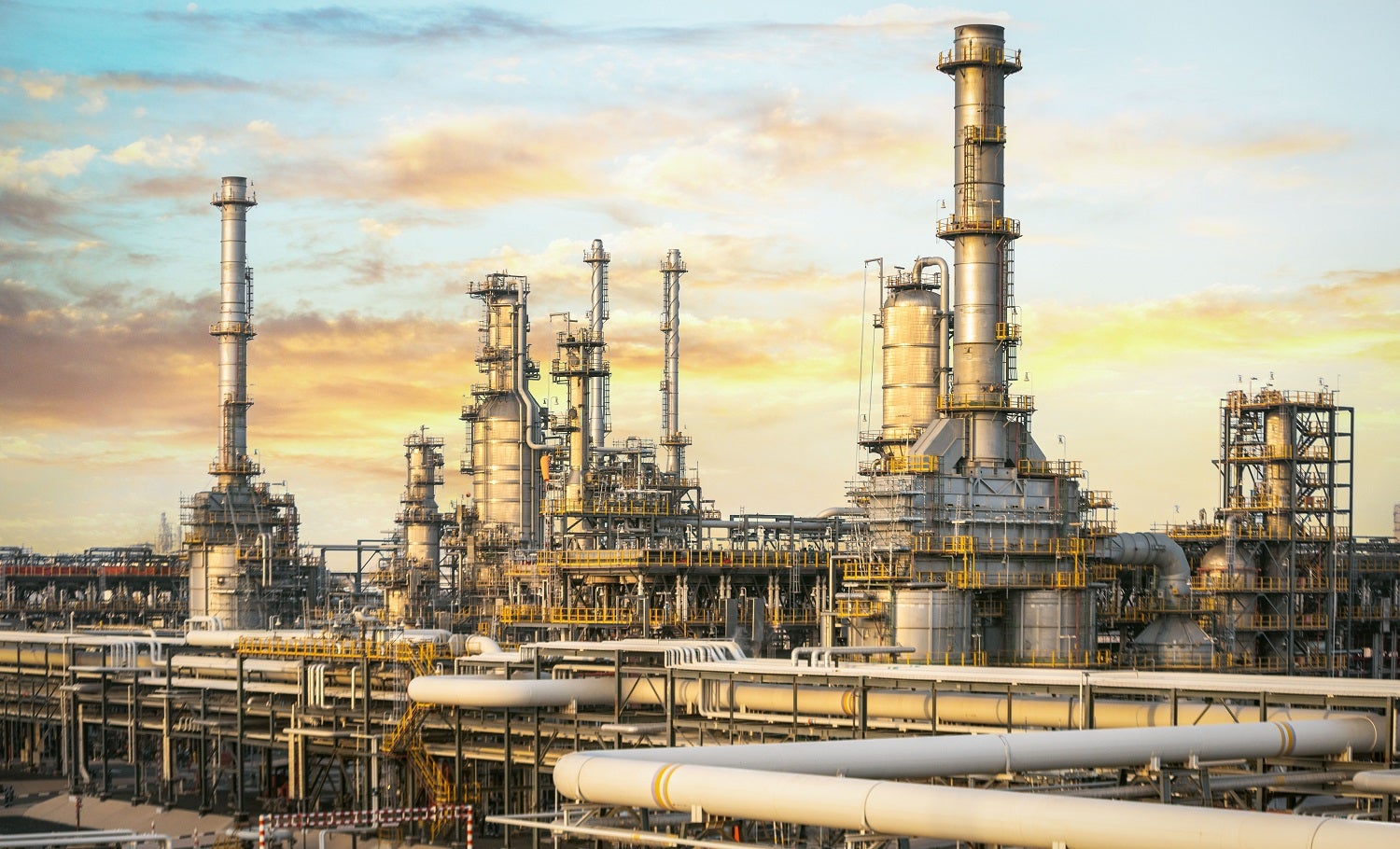
The Habshan complex is one of the largest gas processing facilities in the UAE and the wider Middle East and North Africa region. It has a processing capacity of 6.1 billion cubic feet a day. The complex comprises five trains and 14 processing units that receive gas feedstock from onshore and offshore fields in Abu Dhabi.
The Habshan facility was struck at least three times in March and April by Iranian drones and missiles. On 19 March, UAE authorities suspended operations at Habshan after it was affected by debris falling from Iranian missiles intercepted by the country’s air defence systems.
Adnoc Gas then announced on 23 March that operations were continuing safely across its asset base, after similar missile and drone attacks by Iran on facilities owned by its parent, Adnoc Group, although it did not specifically mention the Habshan plant.
The worst of the attacks on Habshan took place on 3 April, when Iranian drones intercepted by the UAE’s air defence systems caused damage at the site, resulting in the death of an engineer working at the facility for Egyptian contractor Petrojet during an evacuation. Four other contractors sustained minor injuries, but were later discharged from hospital after receiving treatment.
ALSO READ: Adnoc Gas to move prudently on Bab Gas Cap project
On 8 April, Abu Dhabi authorities said three people – two Emiratis and an Indian national – sustained minor injuries after debris fell at the Habshan gas complex following a successful interception by the UAE’s air defence systems.
The debris also sparked several fires at the facility, prompting a temporary suspension of operations as safety and response teams assessed the situation.
“Adnoc Gas responded swiftly to the security-related incidents at the Habshan site on 3 and 8 April, prioritising safety and minimising disruptions to customers,” the company said on 10 August.
“The company has concluded its technical assessment of the impact from these incidents and recovery has progressed ahead of schedule, with gas supply already restored to 85%,” Adnoc Gas said as part of its announcement of financial results for the second quarter of 2026.
During a press conference to discuss Adnoc Gas’ Q2 2026 results, Peter Van Driel, the company’s chief financial officer, said: “At the moment, we have progressed to 85% of supply being reinstated, so the balance will be reinstated between now and the first half of 2027.
“If I look at the cost impact, we are still firming up our estimates. There are uncertainties around the pricing of certain items that we need to install as part of the final reinstatement.
“If we look at the key driver for our results in the second half, the 85% reinstatement of supply is definitely important. We’re encouraged by the fact that the 85% was delivered ahead of schedule,” Van Driel told journalists.
Fatema Al-Nuaimi, Adnoc Gas’ CEO and board member, said: “If I may add one point: it might be 85%, but in reality, today we are supplying 100% of our customers’ requirements locally.”
She added: “On exports, of course, we try our best to satisfy requirements and work closely with customers. But in terms of gas supply to the UAE, we are at 100%.”
Role of robotics and AI
Responding to a question about the deployment of robotics and artificial intelligence (AI) to carry out damage assessment and repair work at the Habshan gas processing facility, Al-Nuaimi said: “One of the technical challenges in restoring the facilities quickly was that we had to inspect a significant part of our assets – some 600 kilometres of piping of different sizes across the facilities.
“If we had done this in the conventional way, we would have spent around 100 additional days putting up scaffolding and sending people to conduct manual and visual inspections.”
The CEO continued: “Instead, we used robotics supported by AI-driven software, which enabled us to shorten the inspection and response time and carry out repairs faster.
“It was not just about time; it was also about safety. It spared us from sending our people into critical areas that might not yet have been safe.”
She added: “We also used robotics in responding to fires and accessing certain parts of the assets.
“When we talk about AI, it is not a headline. It is real work and real value that we see every day in our business,” Al-Nuaimi further remarked.
ALSO READ: Adnoc announces FID on $6.2bn Umm Shaif gas cap project

Register for MEED's guest program now to access this article.
Exclusive from Meed
-
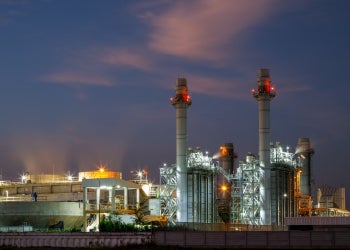 Rabigh 2 IPP expansion secures $2.58bn financing
5 October 2026
-
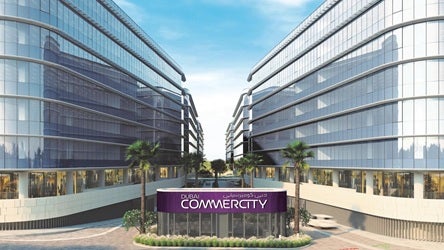 Dubai announces $490m e-commerce hub expansion plan
5 October 2026
-
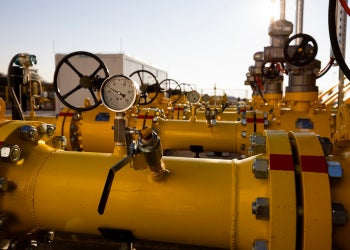 Iraq and Turkiye discuss oil and gas deal
5 October 2026
-
-
 Contractors submit bids for Libya refinery
5 October 2026
All of this is only 1% of what MEED.com has to offer
Subscribe now and unlock all the 153,671 articles on MEED.com
- All the latest news, data, and market intelligence across MENA at your fingerprints
- First-hand updates and inside information on projects, clients and competitors that matter to you
- 20 years' archive of information, data, and news for you to access at your convenience
- Strategize to succeed and minimise risks with timely analysis of current and future market trends

Related Articles
-
Rabigh 2 IPP expansion secures $2.58bn financing
5 October 2026
Saudi Arabia’s Rabigh 2 combined-cycle gas-turbine (CCGT) independent power project (IPP) expansion has reached financial close.
In a disclosure to the Saudi Exchange, Acwa said it had secured SR9.69bn ($2.58bn) in long-term financing for the project, which has a generation capacity of 2,313.5MW.
In April, MEED reported that Acwa and Saudi Energy (formerly Saudi Electricity Company) had signed a 31-year power purchase agreement (PPA) with Saudi Arabia’s principal buyer, Saudi Power Procurement Company (SPPC), for the project.
The project involves developing a CCGT plant in the Mecca region. It is being developed by Al-Morjan Two Electricity Company, with Acwa and Saudi Energy each owning a 40% stake in the project.
The contract is valued at SR11.5bn ($3.07bn), the companies said in separate stock exchange filings at the time. The carbon-capture-ready power plant will be implemented under a build, own and operate contract.
The financing has a tenor of about 34 years and was provided by a consortium of local, regional and international lenders.
The lenders are:
- Abu Dhabi Commercial Bank
- Alinma Bank
- Boubyan Bank
- China Minsheng Banking Corporation, Hong Kong Branch
- Commercial Bank of Dubai
- HSBC Bank Middle East
- Industrial and Commercial Bank of China
- Industrial Bank, Beijing Branch
- National Bank of Greece, Cyprus
- Riyad Bank
- Saudi Awwal Bank
- Saudi National Bank
- Standard Chartered Bank, Taiwan
- Sumitomo Mitsui Trust Bank, London Branch
The project scope also includes financing and expanding a 380kV electrical substation.
According to regional project tracker MEED Projects, construction works have commenced on the project, and a joint venture of Egypt’s Elsewedy Electric and China’s Sinohydro has been working as the main contractor.
Rabigh 1 extension
In January, Saudi Energy announced a separate energy conversion agreement with SPPC for the purchase of electricity from the Rabigh 1 power plant expansion.
The contract is valued at SR5.33bn ($1.42bn).
It covers the development, financing, construction, ownership and operation of the gas-fired power plant, which will have a generation capacity of 1,179MW.
A joint venture of Elsewedy Electric and Germany’s Siemens Energy is undertaking the engineering, procurement and construction work for the project, which is expected to be completed by the end of 2026.
US/India-based Synergy Consulting is the financial advisory consultant to Saudi Energy on this project.
Acwa also recently started initial commercial operations at the Taiba 1 and Qassim 1 CCGT power plants, as reported by MEED.
The plants have a combined generation capacity of about 3.8GW and are two of four projects procured under the first round of Saudi Arabia’s gas-fired IPP programme by SPPC.
A team of Saudi Energy and Acwa won the contract to develop and operate the projects in 2023.
MEED’s October 2026 report on Saudi Arabia includes:
> COMMENT: Saudi projects hold steady
> GOVERNMENT: Riyadh looks to reset its regional defence outlook
> ECONOMY: Conflict bolsters case for Saudi economic diversification
> BANKING: Saudi lenders readjust to lower lending and deposit climate
> UPSTREAM: Aramco upstream spending gathers pace
> DOWNSTREAM: Sabic steps up Saudi petchems investment
> POWER: Saudi Arabia’s power award activity slows
> WATER: Saudi water sector hits sharp slowdown
> CONSTRUCTION: Saudi construction defies the headwinds
> TRANSPORT: Saudi infrastructure pushes forward amid conflict
> DATABANK: Saudi data indicates project spending shiftTo see previous issues of MEED Business Review, please click herehttps://image.digitalinsightresearch.in/uploads/NewsArticle/20270643/main.jpg -
Dubai announces $490m e-commerce hub expansion plan
5 October 2026
Dubai CommerCity has launched a second expansion phase valued at more than AED1.8bn ($490m), adding over 91,000 square metres (sq m) of office, retail and logistics space across the free zone’s business, social and logistics clusters.
Dubai CommerCity is a joint venture of Dubai Airport Free Zone Authority (Dafza) and Dubai government-owned Wasl Asset Management Group.
The expansion is scheduled for delivery between the first quarter of 2027 and the fourth quarter of 2028.
The developer said the move builds on sustained demand at Dubai CommerCity, where occupancy has reached nearly 96% across its office, logistics and retail assets.
Phase two will comprise a series of developments across Dubai CommerCity’s three districts: the Business Cluster, Logistics Cluster and Social Cluster.
The Business Cluster comprises 13 office buildings with a total leasable area of 108,000 sq m. The Logistics Cluster consists of 84 logistics units with a leasable area of 68,000 sq m, while the Social Cluster features art galleries, restaurants and cafes. The development will also include 4,000 parking spaces.
Dafza and Wasl Asset Management Group announced plans to develop the AED2.7bn ($735m) e-commerce free zone In 2017.
 READ THE OCTOBER 2026 MEED BUSINESS REVIEW – click here to view PDF
Industry and logistics drive development at Neom; Saudi Arabia’s investment priorities realign amid conflict; MEED’s 2026 power developer ranking.
Distributed to senior decision-makers in the region and around the world, the October 2026 edition of MEED Business Review includes:
> AGENDA: Oxagon takes centre stage at Neom> MARKET FOCUS: Saudi projects hold steady> INDUSTRY REPORT: MEED’s 2026 GCC power developer ranking> LEADERSHIP: The future city does not need to hang above the groundTo see previous issues of MEED Business Review, please click herehttps://image.digitalinsightresearch.in/uploads/NewsArticle/20270228/main.jpg -
Iraq and Turkiye discuss oil and gas deal
5 October 2026
Iraq and Turkiye have opened talks in Ankara on a framework agreement for oil, gas and energy cooperation, according to a statement from the Iraqi Oil Ministry.
Iraq’s Oil Minister Bassem Mohammed Khudair Al-Abadi led the Iraqi side, while the Turkish Energy and Natural Resources Minister Alparslan Bayraktar led the Turkish side.
Officials discussed a proposed roadmap to deepen work on oil and gas infrastructure, petrochemicals, and trade in oil, gas and power.
Discussions about a future long-term deal to govern the Iraq-Turkiye Pipeline (ITP) were central to the talks.
The ITP exports oil from northern Iraq to the port of Ceyhan in Turkiye.
In July, Turkiye and Iraq signed a temporary agreement to allow crude flows through the ITP for a period of 12 months.
Before the temporary agreement was signed, the previous deal governing oil exports through the pipeline was due to expire on 27 July.
Speaking last month, Ali Al-Shatri, director general of Iraq’s state organisation for marketing oil (Somo), said the temporary deal was “a prelude” to a much bigger agreement.
As well as governing pipeline exports, the new agreement is expected to cover electricity, chemicals and gas deals as well as the construction of a new oil refinery in Ceyhan.
Under current plans, the new refinery will process Iraqi crude in order to produce refined products that can be exported to Europe.
Bayraktar said: “Following the crude oil transportation agreement signed between our national company … we are clarifying our roadmap for a new, longer-term and more comprehensive agreement.
“In this regard, we plan to activate our joint working groups to rapidly finalise oil and natural gas infrastructure, exploration and production, oil trading, refining-petrochemical and electricity projects.
“In close cooperation with the new Iraqi Government, we will strongly continue to implement these concrete projects for the stability and prosperity of our shared geography.”
Bayraktar said it was important to consider extending the Kirkuk-Ceyhan pipeline to reach Basra in southern Iraq.
He also said it was important to consider expanding the capacity of the ITP to create a strong alternative to the Strait of Hormuz.
The Strait of Hormuz is a key oil export route that has been disrupted by a regional war since the US and Israel attacked Iran on 28 February.
Bayraktar also said that he wanted state-owned Turkish Petroleum Corporation (TPAO) to expand its footprint in Iraq.
He said: “We aim for our national company TPAO to play an active role not only in the Kirkuk fields but also in different fields in Iraq, to reach the target of supplying one million barrels of crude oil as stated by Iraqi Prime Minister Ali ez-Zeydi; and to transform Ceyhan into a global energy hub by increasing trade volume.”
Bayraktar said that Turkiye wanted energy to be a key part of the plan for a north-south trade corridor from the Grand Faw Port to the Turkish border.
Under current plans, the corridor will combine a new railway and highway system.
Bayraktar said that Turkiye also wants the route to include oil and gas pipelines as well as electricity transmission lines.
READ THE OCTOBER 2026 MEED BUSINESS REVIEW – click here to view PDFIndustry and logistics drive development at Neom; Saudi Arabia’s investment priorities realign amid conflict; MEED’s 2026 power developer ranking.
Distributed to senior decision-makers in the region and around the world, the October 2026 edition of MEED Business Review includes:
> AGENDA: Oxagon takes centre stage at Neom> MARKET FOCUS: Saudi projects hold steady> INDUSTRY REPORT: MEED’s 2026 GCC power developer ranking> LEADERSHIP: The future city does not need to hang above the groundTo see previous issues of MEED Business Review, please click herehttps://image.digitalinsightresearch.in/uploads/NewsArticle/20268590/main.jpg -
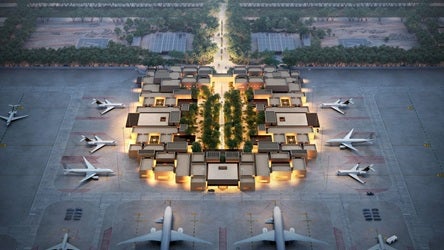
RTCC/Ictas wins $214m King Salman airport private aviation terminal
5 October 2026

Register for MEED’s 14-day trial access
Saudi Arabia’s King Salman International Airport Development Company (KSIADC) has awarded an estimated SR800m ($214m) construction contract to build the private aviation terminal.
The contract was awarded to a joint venture of Riyadh-based Al-Rashid Trading & Contracting (RTCC) and Turkiye’s IC Ictas.
The scope includes constructing a central courtyard, grand boulevard, parking facilities, access-control checkpoints, logistics and ground-support facilities, internal road networks and landscaping.
It also includes all civil, structural, architectural, and mechanical, electrical and plumbing (MEP) works, along with testing, commissioning and handover activities.
KSIADC is making rapid progress on its overall project masterplan. In July, it reported major progress on landside and airside infrastructure works linked to its third runway and private aviation facilities, as part of the wider airport expansion programme.
Project scale
The project covers an area of about 57 square kilometres (sq km), allowing for six parallel runways, and will include the existing terminals at King Khalid International airport. It will also include 12 sq km of airport support facilities, residential and recreational facilities, retail outlets and other logistics real estate.
The airport aims to accommodate up to 100 million passengers by 2030. The cargo target is to process 2 million tonnes a year by 2030.
Saudi Arabia plans to invest significantly in its aviation sector. Riyadh’s Saudi Aviation Strategy, announced by Gaca, aims to triple Saudi Arabia’s annual passenger traffic to 330 million travellers by 2030.
It also aims to increase air cargo traffic to 4.5 million tonnes and raise the country’s total air connections to more than 250 destinations.
MEED’s October 2026 report on Saudi Arabia includes:
> COMMENT: Saudi projects hold steady
> GOVERNMENT: Riyadh looks to reset its regional defence outlook
> ECONOMY: Conflict bolsters case for Saudi economic diversification
> BANKING: Saudi lenders readjust to lower lending and deposit climate
> UPSTREAM: Aramco upstream spending gathers pace
> DOWNSTREAM: Sabic steps up Saudi petchems investment
> POWER: Saudi Arabia’s power award activity slows
> WATER: Saudi water sector hits sharp slowdown
> CONSTRUCTION: Saudi construction defies the headwinds
> TRANSPORT: Saudi infrastructure pushes forward amid conflict
> DATABANK: Saudi data indicates project spending shiftTo see previous issues of MEED Business Review, please click herehttps://image.digitalinsightresearch.in/uploads/NewsArticle/20268414/main.jpeg -
Contractors submit bids for Libya refinery
5 October 2026
Bids have been submitted for the main contract for Libya’s planned South Refinery project and are currently under technical evaluation, according to industry sources.
The project, located in Ubari in southern Libya, has gained momentum over the past year, and the main contract is anticipated to be worth more than $600m.
The main contract is expected to use the engineering, procurement and construction (EPC) model.
The EPC work is expected to take 50 months, and the facility will be designed to process 30,000 barrels a day (b/d) of crude oil.
In March, US-based engineering company KBR was awarded a contract by Zallaf Exploration, Production & Refining of Oil & Gas Company to provide project management and technical services for the project.
Under the terms of the contract, KBR will provide contract management, project management and supporting technical services throughout the project’s EPC phases.
The refinery is expected to produce:
- Propane and butane for domestic and industrial uses
- Gasoline
- Kerosene
- Diesel
- Fuel oil
In March, KBR said that the project was aligned with its “long-standing commitment to advancing vital oil and gas infrastructure in Libya”.
Libya currently operates five main refineries with a combined nameplate capacity of 380,000 b/d, but actual throughput is closer to 180,000 b/d due to poor maintenance and damage from military clashes.
In addition to the South Refinery project, Libya also plans to upgrade the Zawiya refinery and carry out projects at the Serir, Brega, Tobruk and Ras Lanuf refineries.
READ THE OCTOBER 2026 MEED BUSINESS REVIEW – click here to view PDFIndustry and logistics drive development at Neom; Saudi Arabia’s investment priorities realign amid conflict; MEED’s 2026 power developer ranking.
Distributed to senior decision-makers in the region and around the world, the October 2026 edition of MEED Business Review includes:
> AGENDA: Oxagon takes centre stage at Neom> MARKET FOCUS: Saudi projects hold steady> INDUSTRY REPORT: MEED’s 2026 GCC power developer ranking> LEADERSHIP: The future city does not need to hang above the groundTo see previous issues of MEED Business Review, please click herehttps://image.digitalinsightresearch.in/uploads/NewsArticle/20267178/main.jpg