
Adnoc Drilling wins $1.5bn contract for jack-up rigs
28 May 2025
Register for MEED’s 14-day trial access
Adnoc Drilling has won a $1.5bn contract from fellow Abu Dhabi National Oil Company (Adnoc Group) subsidiary Adnoc Offshore to provide two jack-up rigs to support its offshore oil and gas operations.
The contract duration is 15 years, Abu Dhabi Securities Exchange-listed Adnoc Drilling said.
The rigs have been fabricated at UAE/Saudi Arabia-based contractor Lamprell’s facility in Hamriyah Free Zone in Sharjah.
“The rigs will leverage advanced digitalisation, real-time data analytics and artificial intelligence as Adnoc Drilling continues to deploy the technology throughout its fleet to improve safety, efficiency and maximise asset value and operational uptime,” the company said.
Adnoc Drilling said in its statement that the rigs are expected to commence operations around the end of the second quarter and deliver revenue in the second half of 2025 onwards.
“The contract will follow existing agreements, bringing accretive rates that generate long-term revenue and attractive returns,” it added.
This is Adnoc Drilling’s second contract from Adnoc Offshore in May. Earlier this month, Adnoc Offshore awarded a contract worth $806m to Adnoc Drilling to provide three island rigs, to be deployed at the Zakum offshore field development project.
Adnoc Drilling will build these new-generation island rigs in partnership with China’s Honghua Group. The rigs are expected to join the company’s fleet between 2027 and 2028.
First quarter financial results
Adnoc Drilling recently announced strong financial results for the first quarter of 2025. It achieved revenues of $1.17bn, which is a 32% increase compared to the same period last year.
Adnoc Drilling’s first-quarter net profit also increased 22% year-on-year to $341m, while earnings before interest, taxes, depreciation and amortisation (Ebitda) grew by 22% year-on-year to $533m.
With regards to the performance of the company’s business segments, the onshore unit saw revenue increase by 20% year-on-year to $494m, mainly due to new rigs commencing operations and a $30m contribution from the unconventional business.
Revenue for the offshore arm increased 2% year-on-year to $334m, mainly due to higher activity island rigs.
The oil field services business registered revenue growth of 134% year-on-year to $342m, mainly driven by $122m in revenue from the unconventional business, coupled with increased integrated drilling services activity and provision of more discrete services.

Register for MEED's guest program now to access this article.
Exclusive from Meed
-
 SAR tenders design review consultancy for GCC rail link
18 September 2026
-
 Tender issued for Libyan gas project
17 September 2026
-
 Nakheel awards $218m Dubai Islands buildings deal
17 September 2026
-
 Aldar and Mubadala acquire Masdar City Square
17 September 2026
-
 Neom tenders Oxagon highway contract
17 September 2026
All of this is only 1% of what MEED.com has to offer
Subscribe now and unlock all the 153,671 articles on MEED.com
- All the latest news, data, and market intelligence across MENA at your fingerprints
- First-hand updates and inside information on projects, clients and competitors that matter to you
- 20 years' archive of information, data, and news for you to access at your convenience
- Strategize to succeed and minimise risks with timely analysis of current and future market trends

Related Articles
-
SAR tenders design review consultancy for GCC rail link
18 September 2026

Register for MEED’s 14-day trial access
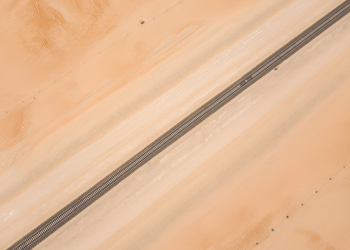
Saudi Arabia Railways (SAR) has issued a request for proposals (RFP) for a design management and review consultant to oversee engineering works on the GCC railway network, the latest step in advancing the long-delayed regional rail link.
The RFP was issued on 9 September, with a submission deadline of 18 October.
The tender seeks a consultant to manage, audit and verify deliverables produced by SAR's separately appointed design services consultant, rather than carry out the design itself. The tendering for the design services consultancy is currently in progress.
Construction will be tendered separately through competitive bidding once designs are approved.
The GCC railway will run for about 672 kilometres (km) inside Saudi Arabia, linking the kingdom's existing network to Kuwait, Qatar, the UAE and Bahrain, with four sections of about 141km, 200km, 151km and 21km, respectively.
The line is planned as a single-track, non-electrified corridor for mixed freight and passenger traffic, with a maximum axle load of 32.4 tonnes and passing loops for bidirectional working.
The appointed consultant will develop a design management and review plan covering governance, interdisciplinary coordination and stage-gate approvals, and will issue formal review and audit reports against SAR's requirements and international standards.
The scope also covers stakeholder engagement, interface management and oversight of land acquisition activity tied to the design consultant's land acquisition plan.
Key design stages are expected to take about 16 months: four months for concept design, six for preliminary design and six for issued-for-construction design, each with four weeks of contingency.
SAR has asked bidders to mobilise a core team from day one. These must include a project director, engineering and design manager, stakeholder manager and lead document controller, all based at SAR's offices, with minimum experience thresholds ranging from three years for junior operators up to 25 years, including 15 in rail, for the project director role.
GCC railway line
Under the overall plan, the railway will run from Kuwait, pass through Dammam in Saudi Arabia, reach Bahrain via a planned causeway, and continue from Dammam to Qatar, the UAE and, ultimately, Muscat via Sohar in Oman. The railway is reported to cover about 2,186km in total.
The route length within each member state is as follows:
- UAE – 684km
- Saudi Arabia – 672km
- Oman – 306km
- Qatar – 283km
- Kuwait – 145km
- Bahrain – 36km
The railway is designed for passenger trains travelling at 220 kilometres an hour (km/h) and freight trains operating at 80km/h–120km/h.
With high levels of project activity, governments in spending mode and renewed cooperation under the Al-Ula Declaration, the latest efforts to restart the GCC railway project may make more progress than previous attempts. If completed, the railway could prove transformational for a region that is globally connected but still divided by national borders.
 READ THE SEPTEMBER 2026 MEED BUSINESS REVIEW – click here to view PDF
Nuclear power ambitions gather pace; Kuwait keeps dealmaking alive despite war; Region invests in raising gas processing capacity.
Distributed to senior decision-makers in the region and around the world, the September 2026 edition of MEED Business Review includes:
> AGENDA: Gulf nuclear revival takes shape> MARKET FOCUS: Kuwait keeps dealmaking alive under fire> INDUSTRY REPORT: Gas processing takes centre stage in Mena regionTo see previous issues of MEED Business Review, please click herehttps://image.digitalinsightresearch.in/uploads/NewsArticle/19783331/main.gif -
Tender issued for Libyan gas project
17 September 2026
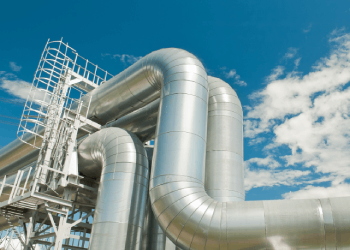
An invitation to bid has been issued for a contract to conduct environmental assessments for the project to expand the Mellitah oil and gas complex in Libya.
The bid submission deadline is 2pm today (17 September) Libyan time.
The scope of the project includes provision of:
- An environmental baseline study (EBS)
- An environmental impact assessment (EIA)
- An environmental management plan (EMP)
The client is Mellitah Oil & Gas (MOG), which is a joint venture of Italy’s Eni and Libya’s National Oil Corporation (NOC).
MOG is based in Tripoli and operates both onshore and offshore oil and gas facilities.
The joint venture owns and operates six major oil and gas fields across the North African country.
According to the tender documents, the company that is awarded the contract will need to prepare environmental management measures in compliance with:
- Libyan environmental legislation
- Ministry of Environment requirements
- NOC environmental guidelines
- Applicable international environmental standards and best practices
The expansion of the Mellitah oil and gas complex is part of a project estimated to be worth $8bn.
The wider project is known as the Mellitah Complex Expansion & CO2 Management Integrated Development Project.
It has six main packages:
- Onshore package
- Offshore Structure A
- Offshore Structure E
- Subsea pipeline package
- Site preparation work
- Carbon capture and storage facility
Security issues and political instability have been a major problem for Libya’s oil and gas sector since the country’s civil war started in 2011.
Earlier this month, the Mellitah oil and gas complex was forced to shut down temporarily due to a protest over deteriorating public services.
The existing onshore complex includes housing, processing units, storage facilities and export facilities.
It also serves as the launch point for the Greenstream pipeline, which delivers Libyan gas directly to Italy.
The planned expansion of the complex will involve:
- Construction of a new fourth gas processing train
- Construction of a third condensate train
- Construction of a third natural gas liquids fractionation train
- Construction of a fourth sulphur recovery unit train
- Installation of a hydrogen sulphide enrichment unit
- Installation of a sulphur recovery unit
- Construction of other associated facilities
The Mellitah complex is located about 100 kilometres west of Tripoli and is a key energy facility in the west of the country.
https://image.digitalinsightresearch.in/uploads/NewsArticle/19748920/main.png -
Nakheel awards $218m Dubai Islands buildings deal
17 September 2026
Register for MEED’s 14-day trial access
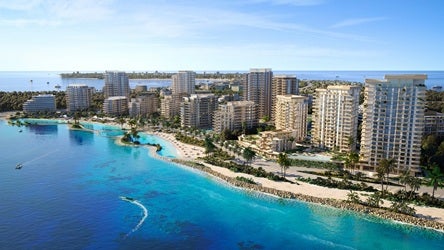
Dubai-based developer Nakheel, now part of Dubai Holding, has awarded a main construction contract worth more than AED800m ($218m) for phases one and three of Bay Grove Residences at Dubai Islands.
The contract was awarded to the local firm Metac General Contracting Company.
It covers the construction of 537 apartments, comprising one- to four-bedroom units, across seven residential buildings.
Phase one includes 296 units in four buildings, while phase three comprises 241 units across three buildings.
The works are scheduled for completion in late 2028.
Bay Grove Residences will ultimately comprise 1,154 homes across 15 buildings. Planning is under way for the remaining 617 homes in phases two and four, with further contract awards expected.
In August last year, Nakheel awarded a AED2.6bn ($708m) contract to Abu Dhabi-based Fibrex Contracting to build the Bay Villas project at Dubai Islands. The contract includes constructing 636 villas.
In April this year, another AED527m ($143m) contract was awarded to local firm Al-Nasr Contracting Company to construct the primary infrastructure and utilities works on Island B at the development.
The Dubai Islands development consists of five islands spanning 18.6 square kilometres. It features more than 59 kilometres (km) of waterfront and 20km of beaches, as well as parks, golf courses, promenades and cycling paths.
The offshore island project gained renewed momentum in 2022, when Nakheel unveiled a new masterplan and rebranded it as Dubai Islands.
The reclaimed islands were originally part of the Palm Deira project, which was partially completed before being put on hold in 2008.
READ THE SEPTEMBER 2026 MEED BUSINESS REVIEW – click here to view PDFNuclear power ambitions gather pace; Kuwait keeps dealmaking alive despite war; Region invests in raising gas processing capacity.
Distributed to senior decision-makers in the region and around the world, the September 2026 edition of MEED Business Review includes:
> AGENDA: Gulf nuclear revival takes shape> MARKET FOCUS: Kuwait keeps dealmaking alive under fire> INDUSTRY REPORT: Gas processing takes centre stage in Mena regionTo see previous issues of MEED Business Review, please click herehttps://image.digitalinsightresearch.in/uploads/NewsArticle/19748850/main.jpg -
Aldar and Mubadala acquire Masdar City Square
17 September 2026
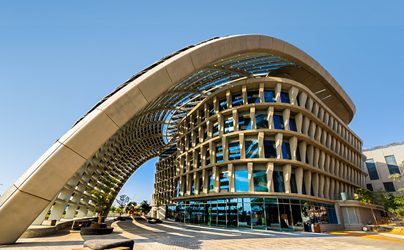
Abu Dhabi-based sovereign wealth fund Mubadala Investment Company and local developer Aldar have completed the acquisition of Masdar City Square at Masdar City, in a transaction valued at AED918m ($250m).
The deal was executed through their joint venture established in 2024.
Masdar City Square comprises more than 47,000 square metres (sq m) of net leasable area across seven office buildings.
Completed in Q1 2026, the development is 99% occupied. Tenants include Taqa, the Department of Energy, Emirates College and the Mohamed Bin Zayed University of Artificial Intelligence.
The transaction expands the joint venture’s real estate portfolio in Masdar City, which is now valued at AED4.7bn ($1.3bn).
Masdar City is one of the region’s leading hubs for clean energy, artificial intelligence, advanced research and sustainable urban development.
The joint venture acquired The Link project at Masdar City for AED654m ($178m) in April.
Comprising about 32,000 sq m of net leasable area across five buildings, The Link is fully leased to a portfolio of major tenants, including Abu Dhabi Future Energy Company (Masdar) and the Mohamed Bin Zayed University of Artificial Intelligence.
The asset includes Grade A, Leed Platinum office space, a net-zero-energy headquarters building, a multi-use hall and residential accommodation, supporting its position as a high-performing, integrated component of Masdar City.
https://image.digitalinsightresearch.in/uploads/NewsArticle/19748241/main5814.png -
Neom tenders Oxagon highway contract
17 September 2026
Saudi Arabia’s Neom has tendered a design-and-build contract covering permanent upgrade works on Highway 55 in the kingdom’s Oxagon region.
The first phase of the project includes constructing 14 kilometres of road, with two lanes in each direction. It also covers one bridge and three interchanges.
The project duration is 22 months.
Contractors have been given until 21 September to submit their proposals.
Highway 55 connects the Red Sea coast with the mainland in northwestern Saudi Arabia. It is currently the only road providing north-south connectivity between Duba and the Neom region.
MEED exclusively reported in August 2025 that contractors had submitted responses to the expressions of interest notice that Neom had issued earlier that month.
The project is expected to support the movement of cargo vehicles from Duba Port to other parts of the country and the wider region.
Neom tested a pilot initiative last year by handling a shipment that travelled from Cairo via the Port of Safaga, across the Red Sea to the Port of Neom, and then inland to Erbil, Iraq.
In a statement, Neom said: “The shipment travelled through an intermodal corridor spanning over 900 kilometres, marking a significant milestone in the kingdom’s transformation into a regional and global logistics hub.”
The Port of Neom is located on the Red Sea near the Arar border, a key entry point into Iraq.
READ THE SEPTEMBER 2026 MEED BUSINESS REVIEW – click here to view PDFNuclear power ambitions gather pace; Kuwait keeps dealmaking alive despite war; Region invests in raising gas processing capacity.
Distributed to senior decision-makers in the region and around the world, the September 2026 edition of MEED Business Review includes:
> AGENDA: Gulf nuclear revival takes shape> MARKET FOCUS: Kuwait keeps dealmaking alive under fire> INDUSTRY REPORT: Gas processing takes centre stage in Mena regionTo see previous issues of MEED Business Review, please click herehttps://image.digitalinsightresearch.in/uploads/NewsArticle/19746896/main.gif