
GCC rail projects attract global attention
20 February 2024

Progress on planned rail projects across the GCC has been a stop-start affair over the past decade.
While significant progress was made on Etihad Rail phases two and three in 2018, and work continued on the Riyadh and Doha metros, both awarded in 2013, little progress was made on major rail schemes such as the Saudi Landbridge, Bahrain Metro and Kuwait Metro.
Other significant schemes, including the Abu Dhabi and Jeddah metros, were put on hold.
With key opportunities not progressing, many international rail contractors gave up on the region and looked for opportunities elsewhere.
The decline in project activity was due to two factors. The first was the effect of low oil prices on government spending. The second, more subtle reason was a lack of high-level political buy-in. Rail projects were not a priority for the region’s leaders.
Today, the sentiment for rail in the GCC could not be more different. Progress is being made on a range of large-scale railway schemes, hence offering huge opportunities for international contractors to return to the region.
The spike in project activity levels in the regional rail sector means contractors will have plenty of opportunities to choose from.
The turning point came in January 2021 when GCC countries signed the Al Ula agreement. The official announcement by the GCC secretariat effectively restarted the GCC railway project, which will connect all six GCC countries with a sprawling railway link.
Since then, a string of recent moves and statements have meant all six bloc members have either declared or signalled their plans for their sections of the rail network.
Major markets
Saudi Arabia and the UAE stand out in terms of work opportunities for international contractors. Saudi Arabia, in particular, has moved towards starting significant rail projects, including the Saudi Landbridge and Riyadh metro extension.
The kingdom is preparing to start work on the $7bn Saudi Landbridge project this year as the negotiations for the final cost and financing of the project reach the closing stages.
Contractors will also be eyeing the doubling of the second track on the North-South Railway (NSR) network. In January, Saudi Arabia approved the project at an estimated investment of SR4bn ($1bn).
The Royal Commission for Riyadh City (RCRC) also received prequalification forms from consortium companies for the tender to design and build the next phase of the Riyadh Metro project. Three teams of local and international contractors have formed to bid for the contract.
The other significant railway scheme in the market is the Riyadh Metro Line Two extension, for which the Royal Commission for Riyadh City (RCRC) has issued a tender notice. According to sources close to the project, the tender is open only to the contracting groups working on the Line Two scheme.
These significant undertakings will link key cities and industrial hubs to boost the country’s logistics and industrial sectors and improve passenger transport infrastructure, especially in Riyadh.
In the UAE, the country has announced the partial completion of the Etihad Rail scheme, with freight trains beginning operations in February.
The country is now looking to strengthen its rail infrastructure further as it begins the procurement process for a railway link connecting the UAE with its neighbour Oman.
Oman Etihad Rail Company received bids in February from several consortiums comprising a mix of local and international contractors for three civil works packages for the UAE-Oman railway project.
The country is also preparing to start construction on the UAE’s high-speed rail project after asking contractors to express interest in the early works for the line connecting Abu Dhabi and Dubai. The client is expected to launch the prequalification process for the main contract tender in Q2 of this year.
Meanwhile, tendering activity is ramping up for the highly anticipated Dubai Metro’s new Blue Line. Dubai’s Roads & Transport Authority (RTA) has set a deadline of 19 May for consortiums to submit their bids for the design and build contract. It is one of Dubai’s largest upcoming infrastructure schemes, requiring international contractors to work in a joint venture with local partners.
Contractors have started work on the first phase of Abu Dhabi’s long-awaited light rail transit (LRT) system. The local National Infrastructure Construction Company (NICC) and National Projects & Construction (NPC) are carrying out the construction work.
Upcoming opportunities
In the coming years, several upcoming rail schemes in other GCC countries will also provide ample work opportunities for rail contractors.
Last year, Oman invited firms to prepare a pre-feasibility outline for the first phase of its planned Muscat Metro network. The project has long been discussed, and the tender for the preliminary consultancy work is a major step as it signals the government’s ambition to deliver the project.
Other planned metro projects are at a more advanced stage. Bahrain is expected to develop the initial phase of the upcoming metro scheme imminently. In February last year, Bahrain’s Transportation & Telecommunications Ministry prequalified firms that could bid for the tender for the upcoming project.
There are plans to extend the Red, Green and Gold lines in Doha, and the tendering activity is expected to start soon.
As projects move forward, the GCC’s railway sector presents a promising pipeline for contractors to capitalise on. With ambitious infrastructure projects under way and planned across the region, these schemes are expected to generate significant demand for skilled professionals and contractors.
By leveraging their expertise in the regional rail sector, contractors have the chance to play a vital role in shaping the future of transport in the region while filling their order books for years to come.

Register for MEED's guest program now to access this article.
Exclusive from Meed
-
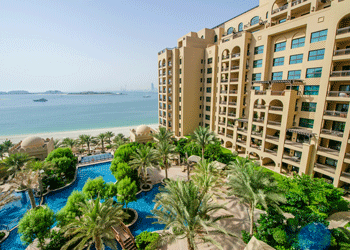 Accor expects Dubai hotel recovery by mid-2027
17 July 2026
-
 CCC selected for $600m Damascus Financial Centre
17 July 2026
-
-
 Medina tenders Quba Mosque expansion
17 July 2026
-
All of this is only 1% of what MEED.com has to offer
Subscribe now and unlock all the 153,671 articles on MEED.com
- All the latest news, data, and market intelligence across MENA at your fingerprints
- First-hand updates and inside information on projects, clients and competitors that matter to you
- 20 years' archive of information, data, and news for you to access at your convenience
- Strategize to succeed and minimise risks with timely analysis of current and future market trends
Related Articles
-
Accor expects Dubai hotel recovery by mid-2027
17 July 2026
Paris-headquartered hotel operator Accor expects Dubai’s hotel market to return to pre-conflict occupancy levels by the end of the first quarter or early second quarter of 2027, with room rates lagging the volume recovery by several months.
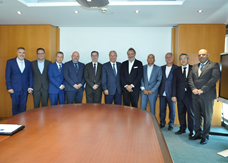
 Duncan O’Rourke, chief executive for the Middle East, Africa and Asia Pacific at the hotel operator (pictured right), said the group had maintained profitability across its Dubai portfolio during the conflict period through cost control and revenue management, but acknowledged that rates and occupancy had fallen materially from January and February levels.
“There is no question that this crisis affected Dubai,” O’Rourke said at a media briefing in Dubai on 26 June. “As for occupancy in Dubai, we managed – through profit protection and cost control – to keep the hotels in a positive position, so we weren’t losing money.”
He said the arrival of the summer low season provided a degree of relief. “If there is a time to slowly slide out of this crisis, it is the right time, which is now. What I see going forward is that volumes will come back. You will not have the rates immediately that you had in January and February. By the end of Q1 or Q2 next year, I think you will get close to where we were.”
Luxury first
O’Rourke said the luxury and upper-upscale segment was likely to lead the recovery, consistent with the pattern observed after previous crises.
“Generally, when you have a crisis, the first segment to click back quicker is the high-end luxury. People then think: it is not about whether I should go – it is, let’s go. We saw that in Covid. Fairmont is well positioned to do that, and the Sofitel and Maison brands are in the stage of recovery going forward.”
 Jean-Jacques Morin, group deputy chief executive at Accor (pictured right), said the UAE’s underperformance had been contained within Accor’s broader international portfolio that continued to grow.
“The Middle East is about 10% of the network,” he said. “That also explains why my tone on the capability of the results is so positive – not only do you have the hedging across geographies, but it is also, in the end, only one part of the business.”
Rate outlook
Morin dismissed concerns that the conflict had structurally weakened Dubai’s pricing power, drawing a parallel with the period following Covid-19.
“When we came out of Covid, everybody said those prices would never hold. The question at every analyst call was always the same: your pricing strategy is unsustainable. Guess what? Nothing changed. The prices now, three or four years later, are still the same.”
He argued that consumers consistently prioritise travel expenditure when reallocating budgets. “What you see when the economy goes sideways is that people reallocate disposable income differently. People are basically redirecting the way they do things and keeping the same amount they want to spend, but spending it differently.”
Morin also said Dubai has a track record of outpacing expectations after previous disruptions. “The first part of the world, post-Covid, that came back to positive RevPAR was the Middle East – it was Dubai. People forget that. The capacity of this part of the world to rebound, and the capacity of the industry to rebound in general, is always misunderstood.”
No pullback
Accor said it had not paused or cancelled any development commitments in the region as a result of the conflict. “We did not change anything from a strategic perspective,” Morin said. “The last thing you want is to pull back, because this is going to rebound.”
The group has also used the period to accelerate planned refurbishments and redeploy staff across the region rather than reduce headcount.
“We have 380 hotels here – we are the largest player in the Middle East. Where we accelerated refurbishments, we were able to take key employees and move them to larger hotels elsewhere in the region. What people learned during Covid was the cost of layoffs afterwards – bringing people back and retraining them. There was a massive learning curve. This time, discussions with partners about layoffs were less challenging; it was more about accommodating staffing needs during that period,” O’Rourke said.
 READ THE JULY 2026 MEED BUSINESS REVIEW – click here to view PDF
Stress test for Gulf aviation; Mixed performance as country outlooks diverge in the Levant; GCC tourism sector pivots from crisis to recovery mode.
Distributed to senior decision-makers in the region and around the world, the July 2026 edition of MEED Business Review includes:
> AIRPORTS: Dubai and Riyadh reaffirm airport ambitions> INDUSTRY REPORT: Dubai eyes tourism sector recovery> DATA CENTRES: Big Tech falls short on data centre promise> LEADERSHIP: Aramco’s citizen developers accelerate digital changeTo see previous issues of MEED Business Review, please click herehttps://image.digitalinsightresearch.in/uploads/NewsArticle/17695301/main.gif -
CCC selected for $600m Damascus Financial Centre
17 July 2026
Register for MEED’s 14-day trial access
Syrian developer Souria Holding has selected Consolidated Contractors Company (CCC) as the exclusive design-and-build contractor for the $600m Damascus Financial Centre (DFC) in Syria.
The two parties signed a memorandum of understanding on 6 July. The agreement covers design management, engineering, procurement, construction, testing and commissioning, handover and defects liability services. Souria Holding chairman Haytham Joud and CCC chairman Samer Khoury signed the agreement.
Souria Holding is developing the project in partnership with the Governorate of Damascus. The developer says the scheme is intended to support the city's long-term economic revitalisation and urban development.
The mixed-use development sits on Plot 47 in the Western Hejaz regulatory area of Damascus' Baramkeh district. The site covers about 32,000 square metres (sq m) and the development will have about 380,000 sq m of built-up area, making it one of the largest mixed-use schemes planned in Syria.
The DFC comprises a five-star hotel, including furnished apartments and serviced apartments; two residential towers; three grade-A office towers on a core-and-shell basis; retail and commercial space at ground and underground levels; and four basement levels for parking and supporting infrastructure.
The first phase of construction involves the delivery of three office buildings with a total above-ground built-up area of 72,000 sq m. The completion deadline is the fourth quarter of 2028.
Lebanon’s Dar Al-Handasah is the frontrunner for the design consultancy role, working for CCC as the design-and-build contractor.
https://image.digitalinsightresearch.in/uploads/NewsArticle/17695284/main5621.jpeg -
GCC downstream operators urged to seek used European equipment
17 July 2026
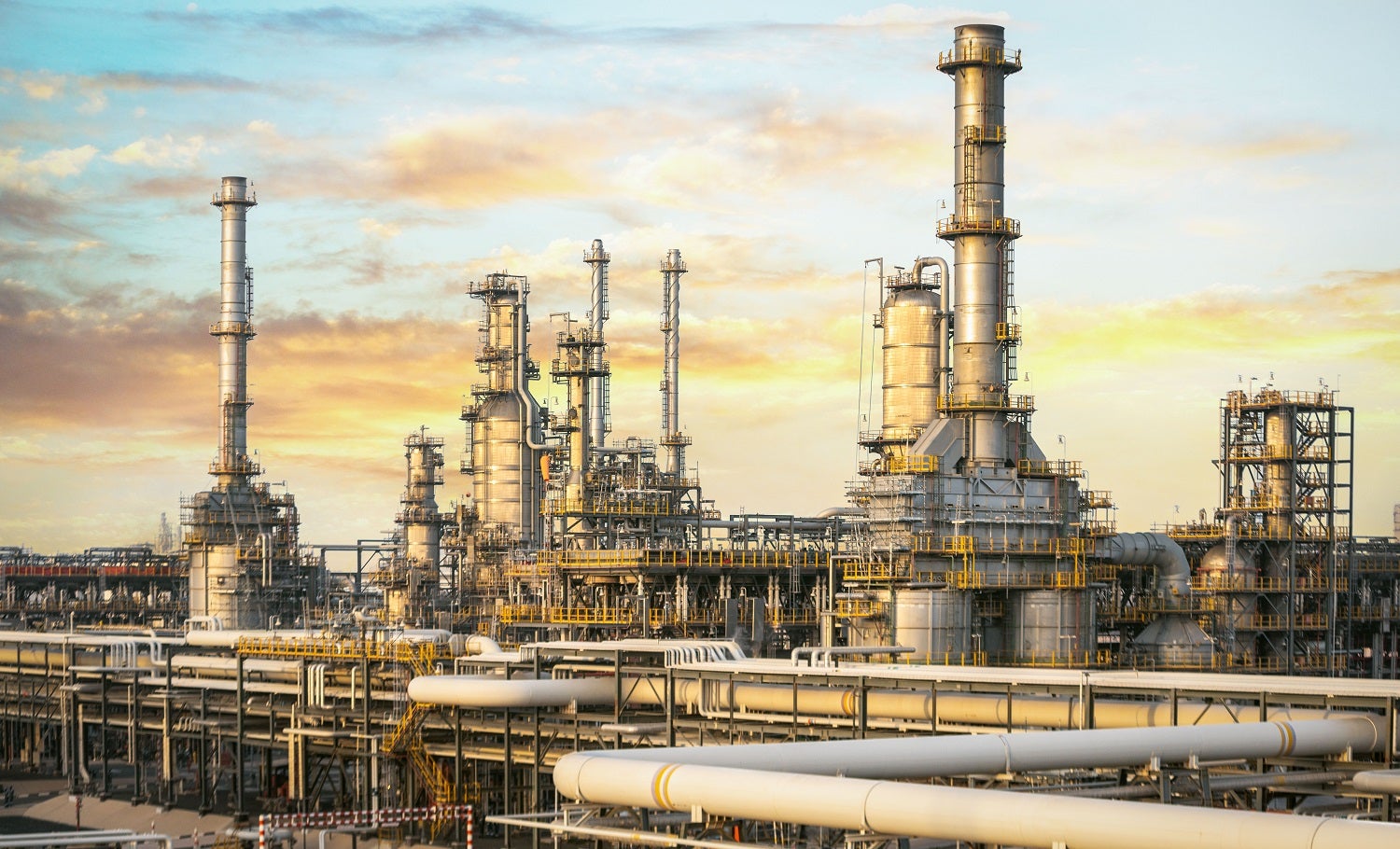
The operators of downstream oil and gas facilities in the GCC that are rebuilding after attacks during the regional war are being advised by the insurance industry to procure used equipment from Europe, where a large number of petrochemical facilities have closed down over recent years.
A wide range of refineries and petrochemical plants in the region are currently undertaking repairs and replacing damaged equipment after attacks by Iran.
The attacks started after the US and Israel launched attacks on sites in Iran on 28 February.
Nick Holland, the head of engineering for India, the Middle East and Africa at the US-based insurance broker Marsh, says that many downstream facilities carrying out repairs in the GCC could cut costs and reduce the time it takes to rebuild by making deals with companies in Europe.
“Many plants have shut down in Europe over the past five years,” he says. “These refinery and chemical-plant closures may create an opportunity for Gulf operators to acquire high-quality used equipment.
“We have some incredible demand in the Middle East to recover as quickly as possible, and I would certainly be encouraging operators to take the opportunity to procure second-hand equipment from facilities that have closed down in Europe.”
Earlier this month, Jim Ratcliffe, the chairman of the London-headquartered chemicals company Ineos, wrote an open letter to Ursula Von Der Leyen, the president of the European Commission, saying that the chemical industry in Europe is “highly stressed” and in the midst of a “closure phase”.
He said that nearly 200 European chemical plants had closed down during the past five years.
Holland says that companies in the GCC looking to minimise business disruption and rebuild as quickly as possible should reach out to companies in Europe to obtain equipment that would normally take a long time to procure from equipment manufacturers.
“A new large high-pressure reactor could have a lead time of approximately 110 weeks, so adapting an existing reactor could significantly accelerate recovery,” he says.
“Other possible items include pumps, compressors, rotating equipment and boilers.
“Reusing equipment is unusual but not unprecedented. Used equipment would require inspection, remaining-life assessment, re-engineering and confirmation that it is fit for the new operating conditions.”
Over recent months, there have been reports of downstream oil facilities being hit by Iranian attacks in Saudi Arabia, Kuwait, the UAE and Bahrain.
https://image.digitalinsightresearch.in/uploads/NewsArticle/17692930/main.jpg -
Medina tenders Quba Mosque expansion
17 July 2026
Register for MEED’s 14-day trial access
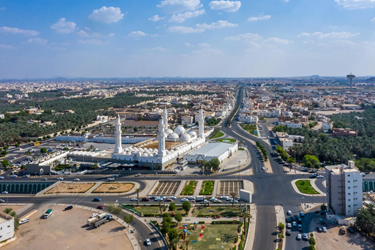
Madinah Region Development Authority (MRDA) has tendered a contract to expand Quba Mosque in the Medina region of Saudi Arabia.
The tender was issued earlier this month, with a bid submission deadline of 31 August.
MRDA has appointed local consulting firm Jasara as the project management consultant.
Jasara, in turn, has appointed London-based firm HKA to provide specialist procurement and delivery-model advice and to support the selection of a suitable contracting partner for the project.
Dar Al-Omran has prepared the design for the expansion.
Quba Mosque is located about five kilometres south of the Prophet’s Mosque in Medina.
Project background
Quba Mosque is considered the first mosque established in Islam, in 622 AD. The proposed expansion will increase the mosque’s area from 5,035 square metres (sq m) to 53,000 sq m and raise capacity to 66,000 worshippers, from 12,000.
The expansion will also include the restoration of 57 historical sites and the creation of three pathways to enhance Medina’s spiritual and cultural landscape.
https://image.digitalinsightresearch.in/uploads/NewsArticle/17691327/main.jpg -
Bahrain taps consultants for studying use of nuclear power
17 July 2026
Register for MEED’s 14-day trial access
Bahrain is exploring the use of nuclear power for domestic consumption as well as for potential export of surplus, with state energy conglomerate Bapco Energies tasked with studying the prospect of building a modular nuclear power plant.
According to sources, the proposed project is being led by BeVentures, the venture capital arm of Bapco Energies, which was launched in July 2024.
Under the plan being studied, power to be produced by the nuclear facility will be supplied mainly to major industrial complexes in the kingdom, such as Aluminium Bahrain (Alba) and Bapco Refining, for clean production of aluminium and refined products, respectively, in line with Bahrain’s ambition of achieving net-zero emissions by 2060.
BeVentures has, in turn, approached global consultancy firms such as Bechtel, Fluor, Kent, Technip Energies and Wood to assist with concept study and early-stage planning and assessment of the modular or small nuclear power project.
Bapco Energies and BeVentures are also considering tapping into private financing and/or equity partnerships, in part or in full, for the proposed project, sources told MEED.
Bapco Energies did not respond to MEED’s request for comment and additional information on the proposed modular nuclear project.
Mark Thomas, the group CEO of Bapco Energies, told MEED in an interview in April last year that BeVentures was considering investments in “ … new technologies that can both help existing business, as well as prepare … for the future, for the energy transition”.
“We’re looking at opportunities principally within our existing businesses around oil and gas production, refining and petrochemicals. But we’re also looking at elements that will prepare us for the future, more into renewables,” Thomas said, without explicitly mentioning nuclear power.
Case for nuclear power
Bahrain’s interest in exploring nuclear power has been driven primarily by the limitations of its hydrocarbon endowment. Given its small territorial size – about 786 square kilometres – Bahrain holds relatively modest hydrocarbon reserves compared with its Gulf peers.
The kingdom produces about 200,000 barrels a day (b/d) of oil, of which the Awali Field, also known as the Bahrain Field, contributes approximately 42,400 b/d.
Most of Bahrain’s crude production – about 145,000 b/d – comes from the offshore Abu Safah field, located in Gulf waters between Bahrain and Saudi Arabia and shared between Bapco Energies’ subsidiary Bapco Upstream and Saudi Aramco.
Bapco Energies has long pursued additional resources to boost oil and gas output. However, the discovery of the Khalij Al-Bahrain basin in 2018 – its biggest find in decades – has yet to live up to its promise. Initially estimated to hold 80 billion barrels of oil and 10-20 trillion cubic feet of gas, the find has not translated into production at the anticipated scale. Other, smaller exploration efforts with foreign players have also yet to yield the desired results.
The kingdom therefore remains heavily reliant on its larger neighbour, Saudi Arabia, for oil and gas supplies, importing about 350,000 b/d from Aramco via the AB-4 pipeline.
At the same time, given its environmental sustainability targets, other forms of renewable energy – mainly solar – are unlikely on their own to enable Bahrain to reach net zero by 2060.
Bapco Energies published emissions-reduction targets in July 2023, in one of the most detailed disclosures by any state energy enterprise in the GCC. It has also engaged advisers including Boston Consulting Group to help devise a strategy to meet its environmental goals, and Standard Chartered to support financing requirements.
Using 2017 as a baseline year, Bapco Energies has committed to reducing absolute Scope 3 emissions in Bahrain by 30% by 2035, and to reaching net-zero Scope 3 emissions by 2060.
In addition, Bapco Energies sets out net emissions-intensity reduction targets for Scope 1 and 2 – also using 2017 as a baseline – of 15% by 2025, 25% by 2030, 30% by 2035, 50% by 2040 and 75% by 2050, with the aim of achieving net-zero Scope 1 and 2 emissions by 2060.
Bahrain has been laying the groundwork to enable it to tap nuclear power for household and industrial needs in the future.
The kingdom is already operating under a Country Programme Framework (2024–29) with the International Atomic Energy Agency (IAEA), which establishes regulatory and safety benchmarks that must be in place before any commercial reactor construction begins.
In July last year, Manama also signed a civilian nuclear cooperation memorandum of understanding with the US. Financed under the US Foundational Infrastructure for Responsible Use of Small Modular Reactor Technology (FIRST) programme, the partnership provides Bahrain with technical support to develop secure, weaponisation-free civil nuclear infrastructure.
Small modular reactor (SMR) technology could be the most viable pathway forward for Bapco Energies in its quest to develop domestic nuclear power. Unlike conventional large-scale, capital-intensive gigawatt reactors, SMR units – typically under 300MW – require only a fraction of the land area needed for solar capacity of an equivalent output.
https://image.digitalinsightresearch.in/uploads/NewsArticle/17689719/main0822.jpg