
Opening Saudi Arabia’s palaces to the world
25 January 2024

Mark DeCocinis is leading Boutique Group’s efforts to leverage Saudi Arabia’s history and heritage and position the kingdom for a new future as a global tourism destination.
The CEO has two broad objectives. The first is to repurpose palaces in the kingdom into luxury hotels. The second, which runs concurrently, is to create Saudi Arabia’s first home-grown luxury hospitality brand.
“We have three palaces under construction now, at different phases,” says DeCocinis.
“There is Tuwaiq, in Riyadh’s Diplomatic Quarter [where Boutique Group’s headquarters are located], which has about 96 keys, and 56 of them are villas surrounding the main palace building.
“We have the Red Palace (pictured above), which has about 71 keys, and Al-Hamra, which is a massive project,” he adds.
“The land for Al-Hamra is almost 100,000 square metres, with a main palace building. It has 81 keys.”
The projects are at various stages of development. “The Red Palace is the most advanced. We hope to open all three of them in 2025. The Red Palace will probably be first, in the second quarter. Tuwaiq will open in the middle of the year, and Al-Hamra will probably open in late 2025.”

Renovation work
Boutique Group oversees the redevelopment of the palaces, working with consultants and contractors. “We have a project management team, and we also do the design and development work with the architects and the designers,” says DeCocinis. “We don’t do the actual construction, but we are in charge of the whole project.”
While he is unable to comment on the cost of the projects, DeCocinis, who has overseen projects worldwide before joining Boutique Group, confirms that renovating old buildings is more expensive than building something new. “In my experience, it is usually double [the cost],” he says.
“This is not about our return on investment (ROI),” he adds. “Of course, we don’t want to lose money, but the vision and the direction of [Crown Prince Mohammed bin Salman al-Saud] is to reflect Saudi culture, heritage and hospitality. That is the ROI for us. ”
Renovating palaces requires a delicate touch and a level of respect for their former owners.
“These were residences of former kings and their families, and although they will now be used for guests, we really had to protect the integrity of the design and the architecture, and the culture and heritage of each one,” says DeCocinis.
While technically complex, the construction work is only part of the story. “Boutique is about Saudi culture, history and hospitality. That is what makes the difference – we own the assets, and we will also manage them,” he says.
We are focusing on the very top 2 per cent of leisure and business travellers
Target market
Once the projects open, Boutique Group’s target market will be high-end tourists. “We are focusing on the very top 2 per cent of leisure and business travellers,” says DeCocinis.
This will be royal families and high-level government officials, financiers, wealthy entrepreneurs, sports stars and celebrities. “I would say over 60 per cent of them will be from Saudi Arabia, then there will be guests from the GCC, then Europe, and then the rest of the world. That is how we see it in percentage terms.”
Targeting the top 2 per cent of travellers will require a service-focused approach to operations.
“We will be there to serve our guests, but it will be unobtrusive and very personalised,” DeCocinis says, adding: “We won’t have service areas in public view because we want to treat our guests like royalty.”

Future plans
Boutique Group’s ambitions are not limited to the three projects already under development. “We have three other palaces that will be announced soon,” says DeCocinis. “We don’t have a goal of how many palaces we would like to own and operate. What we will do is carefully look at each location.”
The company also aims to expand internationally. “We could apply the same principles that we have developed here in Saudi Arabia in other markets,” says DeCocinis.
“The properties might not be palaces, but they could be other historic buildings. We could restore them and manage them.
“Many European countries have beautiful palaces, villas or buildings that can be converted. There are also places like Morocco,” he adds. “I think the opportunities are endless.”
While the ambition is to go global, the focus for now is on delivering in Saudi Arabia.
“We have to do our part here – start small, grow and evolve. But in the future we want to take the face of Saudi Arabia to the world. We are just the ambassadors to do that,” DeCocinis concludes.


Register for MEED's guest program now to access this article.
Exclusive from Meed
-
 Contractor wins $197m Doha infrastructure works
6 November 2026
-
 Stakeholders aim to sign Iraq pipeline deal by year end
6 November 2026
-
 Taqa shortlists 17 contractors for Mirfa-Liwa scheme
6 November 2026
-
 Gulf conflict cuts Emirates Group profit by 66%
6 November 2026
-
 King Salman airport tenders roads and utilities package
6 November 2026
All of this is only 1% of what MEED.com has to offer
Subscribe now and unlock all the 153,671 articles on MEED.com
- All the latest news, data, and market intelligence across MENA at your fingerprints
- First-hand updates and inside information on projects, clients and competitors that matter to you
- 20 years' archive of information, data, and news for you to access at your convenience
- Strategize to succeed and minimise risks with timely analysis of current and future market trends
Related Articles
-
Contractor wins $197m Doha infrastructure works
6 November 2026
Register for MEED’s 14-day trial access
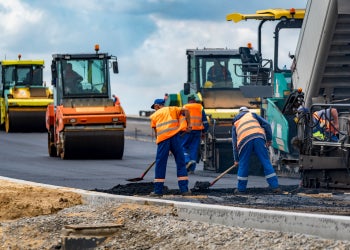
Qatar’s Public Works Authority (Ashghal) has awarded an estimated QR722m ($197m) contract to develop roads and infrastructure north of Al-Rifaa Street in Doha.
The contract was awarded to local firm Tadmur Contracting Company.
Six other contractors submitted bids:
- Qatar Trading & Contracting Group ($244m)
- Iris Construction Tourism Industry & Trade ($259m)
- Lotus Trading & Contracting ($260m)
- Generic Engineering Technologies & Contracting ($261m)
- Alghanim International / National Industrial Contracting ($268m)
- Hamad Bin Khalid Contracting Company ($281m)
The scope of work covers the construction of more than 34 kilometres of roads, dedicated plot developments, site clearance, backfill and earthworks.
The package also requires the installation of surface and groundwater drainage systems, a foul-water drainage network and treated sewage effluent lines.
In addition, the contractor will deliver a dedicated pumping station, an emergency flood area pond, 3,735 car parking spaces, road cross-sectional elements and verge parking bays.
Secondary infrastructure works include electrical distribution, water mains, utility lines, manholes, gully pots and house connections, along with kerbing, road pavement works, landscaping, street lighting, road markings and directional signage.
https://image.digitalinsightresearch.in/uploads/NewsArticle/21204827/main.jpg -
Stakeholders aim to sign Iraq pipeline deal by year end
6 November 2026
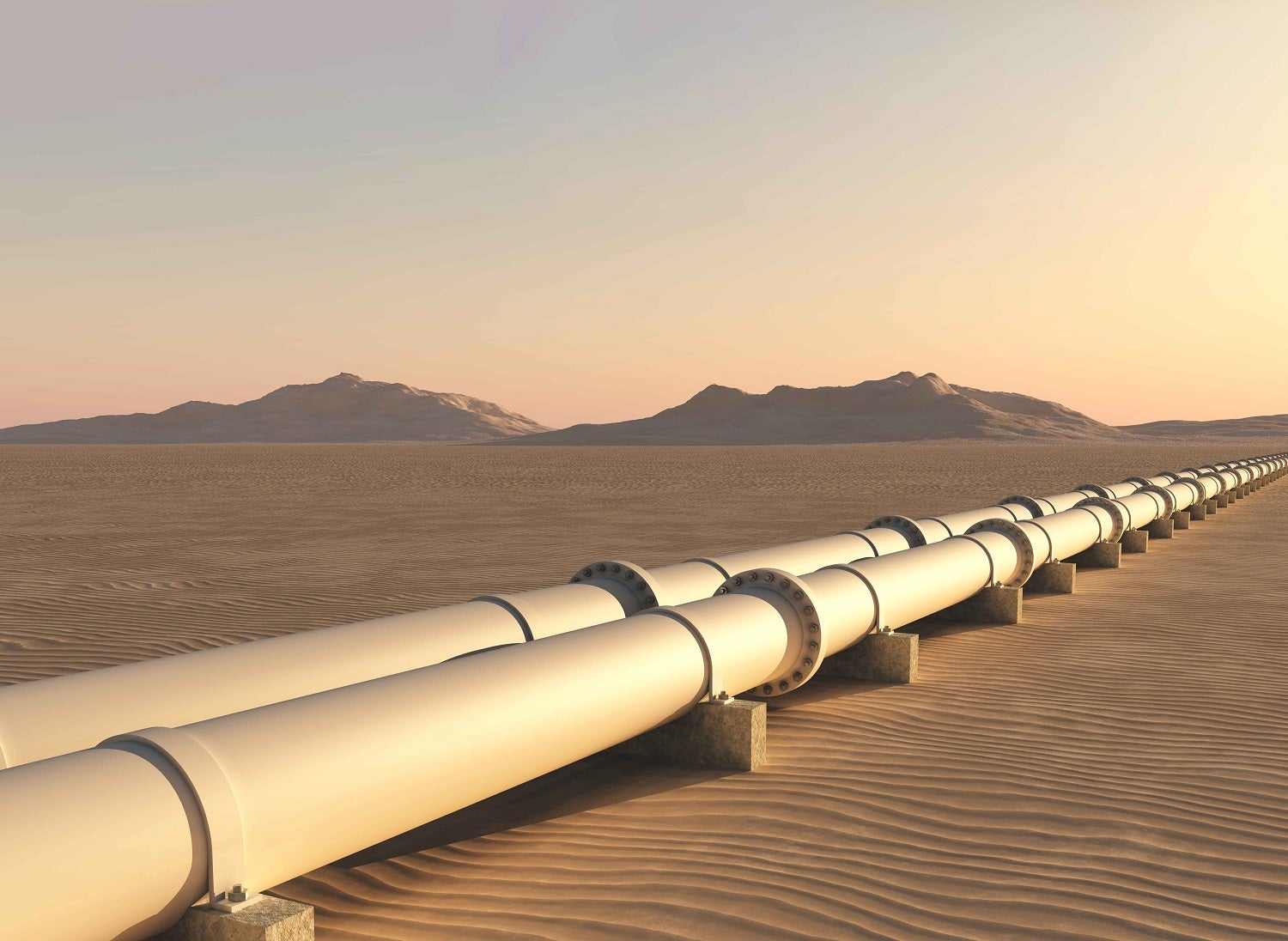
Stakeholders expect a key contract to be signed before the end of the year for the development of a major oil export pipeline network in Iraq, according to industry sources.
Iraq and Syria’s governments, state-owned oil companies and a consortium led by Qatar’s UCC are currently discussing the terms.
If all parties agree to the proposed deal, the UCC-led coalition will become the selected developer responsible for tendering engineering, procurement and construction (EPC) contracts for the project.
The consortium includes US-based Chevron, the investment company TI Capital and France’s TotalEnergies.
The proposed plan will use a fast-track framework to bring the pipelines online as quickly as possible.
One source said: “The plan that is being discussed is highly unusual, because it is such a large-scale pipeline project and it would be brought online in a relatively short timeframe.”
A team from UCC is currently in Iraq for meetings with government officials to discuss the project, one source said.
The project will be focused on four pipeline packages:
- Basra to Najaf
- Najaf to Haditha
- Haditha to Fish Khapour
- Haditha to Banias Port in Syria
In July, Iraq’s cabinet approved state-owned Basra Oil Company signing a heads of agreement and a non-disclosure agreement with the UCC-led consortium to explore possible future oil pipeline projects.
Under the terms of the agreement, the consortium is preparing technical and financial feasibility studies for strategic export pipeline projects.
Also in July, US-based KBR was awarded a consultancy contract for the section of pipeline due to extend from Basra to Haditha.
In April, Iraq announced the allocation of $1.5bn for the Basra-Haditha route, while the larger scheme is estimated at around $5bn.
https://image.digitalinsightresearch.in/uploads/NewsArticle/21181262/main.jpg -
Taqa shortlists 17 contractors for Mirfa-Liwa scheme
6 November 2026
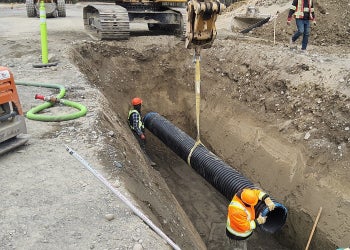
Up to 17 contractors have been invited to submit bids for a major water transmission and distribution scheme serving Mirfa, Madinat Zayed and Liwa in Abu Dhabi, a source close to the project has confirmed to MEED.
The project, originally estimated to cost $775m, comprises a water transmission system from Mirfa, alongside distribution networks serving farms and settlements in Abu Dhabi’s western region.
In October, MEED exclusively reported that a request for proposals had been issued, with bids due on 5 January 2027, following an extension from the initial deadline of 11 November 2026.
The Mirfa-Liwa scheme has been in procurement for several years and was previously tendered in December 2024 as an engineering, procurement and construction scheme, divided between transmission and distribution works.
As MEED understands, it was recently re-tendered under a design, build and operate model, extending the contractor’s responsibilities to operating the infrastructure after construction.
According to sources, the full list of contractors invited to bid for the tender includes:
- Afcons Infrastructure (India)
- Alkhorayef Water & Power Technologies (Saudi Arabia)
- China Machinery Engineering Corporation (China)
- China National Chemical Engineering (China)
- China Tiesiju Civil Engineering Group (China)
- Danway Electrical & Mechanical Engineering (UAE)
- Emarat Aloula Contracting (UAE)
- FCC Aqualia (Spain)
- Gulf Contractors Company (UAE)
- Hydropower Energy & General Construction (UAE)
- Jereh Oil & Gas Engineering Corporation (China)
- Mapa (Turkiye)
- Nesma & Partners Contracting Company (Saudi Arabia)
- Orascom Construction (Egypt)
- Power Construction Corporation of China (China)
- Tecton Engineering & Construction (UAE)
- Tristar Engineering & Construction (UAE)
According to details seen by MEED, the scope includes a pumping station at Mirfa with a capacity of 128 million imperial gallons a day, approximately 125 kilometres of transmission pipelines to Muzairah, with branches to Madinat Zayed and Liwa Summit, and storage tanks at the three locations.
The distribution network is divided into four geographic clusters covering Liwa East, Liwa West, Madinat Zayed and Seih Al-Kheir. The works include associated pipelines, pumping stations and storage facilities.
https://image.digitalinsightresearch.in/uploads/NewsArticle/21181223/main.jpg -
Gulf conflict cuts Emirates Group profit by 66%
6 November 2026
Register for MEED’s 14-day trial access
Dubai’s Emirates Group made a profit before tax of AED4.1bn ($1.1bn) in the first half of its 2026-27 financial year, 66% less than the AED12.2bn it made in the same period last year.
The six months to 30 September were the group’s first full half-year since military activity disrupted commercial air traffic across the Gulf on 28 February. Group revenue fell 12% to AED66.2bn ($18bn), from AED75.4bn a year earlier. Profit after tax fell 66% to AED3.6bn ($1bn).
Earnings before interest, tax, depreciation and amortisation (Ebitda) fell 41% to AED12.5bn ($3.4bn).
The results follow a record 2025-26 financial year. The group made a profit before tax of AED24.4bn in that year, on revenue of AED150.5bn.
“It has been a demanding six months, and once again our business model and our people stood up to the test,” said Sheikh Ahmed Bin Saeed Al-Maktoum, chairman and chief executive of Emirates Airline and Group. “Customer demand held firm and our cargo operations made a strong contribution, keeping revenue and cash levels healthy even as global jet fuel prices doubled against the same period last year.”
Airline performance
Emirates airline’s profit before tax fell 68% to AED3.7bn ($1bn), compared with AED11.4bn a year earlier. Its revenue fell 13% to AED56.9bn ($15.5bn). The airline carried 21.8 million passengers, 22% fewer than a year earlier. Capacity measured in available seat kilometres fell 17%, and the passenger seat factor dropped to 72% from 79.5%.
Cargo partly offset the drop in passenger numbers. Emirates SkyCargo carried 1.2 million tonnes, 1% less than a year earlier, but its revenue rose 52%. The conflict reduced the airfreight capacity available on the market, and disruption to shipping pushed shippers towards air transport.
Before hedging gains, fuel costs rose 60%, even though the airline uplifted 12% less fuel. Gains of AED7.1bn ($1.9bn) from fuel hedging cut the net increase in fuel costs to 13%. Fuel accounted for 34% of operating costs.
On 30 September, Emirates was operating 91% of its pre-disruption network, serving 150 airports in 78 countries and territories. On 31 March, it had been flying 58% of its passenger capacity to 122 destinations in 65 countries.
Fleet investment
The airline received nine Airbus A350s and five Boeing 777 freighters during the period. Its fleet grew to 289 aircraft, from 277 on 31 March. Emirates is continuing its cabin retrofit programme, a planned investment of more than $7bn. It refurbished 12 aircraft in the first half. In May, it broke ground on a $5.1bn engineering and maintenance, repair and overhaul (MRO) facility at Al-Maktoum International airport, which is expected to be completed in the mid-2030s.
The group’s cash position was AED54.1bn ($14.7bn) on 30 September, down from a record AED59.6bn on 31 March. The group said it had used its reserves to make pre-delivery payments for aircraft and to service existing debt. It also paid the remaining AED2bn of the AED3.5bn dividend declared for 2025-26 to its owner, the Investment Corporation of Dubai.
Ground services and travel company dnata made a profit before tax of AED410m ($112m), down 51%. Its revenue fell 7% to AED11bn ($3bn), and the group said dnata’s international businesses helped offset weaker traffic in the UAE.
The group’s workforce fell 2% to 128,237 people.
“We enter the second half of our 2026-27 financial year with measured optimism,” said Sheikh Ahmed.
https://image.digitalinsightresearch.in/uploads/NewsArticle/21198114/main.jpg -
King Salman airport tenders roads and utilities package
6 November 2026
Register for MEED’s 14-day trial access
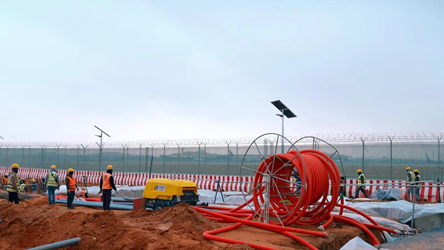
Saudi Arabia’s King Salman International Airport Development Company (KSIADC) has tendered the Zone C1+C2 roads, bridges and utility networks package for King Salman International airport (KSIA) in Riyadh.
The tender was issued on 26 October, and bids are due by 6 December.
The request for proposals covers the procurement, construction, testing and commissioning of civil infrastructure supporting Terminal 6, alongside the existing Terminals 1-5.
The scope includes upgrades to Airport Road 539, which runs west of Terminals 1-5, and to part of Mohamed Bin Faraj Road 5333, west of Junction 6.
It also includes new roads, ramps, service roads, and signalised at-grade junctions. An additional access road will connect the Terminal 6 site offices to Road 5333.
Structures will include the Junction 6 and Terminal 6 bridges, retaining walls and reinforced-soil structures.
The contractor will also construct the central ground services equipment (GSE) bridge. Before construction begins, the contractor must validate the design, complete any outstanding elements – including mechanically stabilised earth walls, approach slabs, drainage and lighting – and secure the required authority approvals.
Dry utilities will comprise high- and extra-high-voltage containment, a 13.8kV medium-voltage network with package substations, low-voltage distribution and street lighting, and security-surveillance systems.
Wet utilities will include potable water, fire water, irrigation water, treated sewage effluent, district cooling and wastewater networks. Wastewater pipes will range from 200mm u-PVC gravity lines to 1,700mm glass-reinforced plastic mains.
The stormwater network will include channels, culverts, ponds and pipes ranging from 400mm to 1,400mm in diameter. Crossings will be constructed using open-cut excavation, horizontal directional drilling or microtunneling.
Utilities serving the operational terminals will be diverted on a design-and-build basis. Enabling works will include earthworks and the relocation of the security fence and trees. The contractor will also demolish a temporary car park, existing bridges and a sewage pumping station.
Optional works comprise two design-and-build elements that will proceed only at the client’s instruction.
The first is the south GSE bridge. The second is an approximately 1,400-metre, multi-lane access road to the Terminal 6 Transportation Hub, including bridges, underpasses, ramps and tunnels, as well as provisions for future Wadi Loop utilities and structures.
https://image.digitalinsightresearch.in/uploads/NewsArticle/21176175/main.png