
Abu Dhabi and Riyadh rivalry extends to AI
24 January 2024
 Commentary
Jennifer Aguinaldo
Energy & technology editor
On 22 January, UAE President Mohamed bin Zayed al-Nahyan decreed the establishment of the Artificial Intelligence and Advanced Technology Council (AIATC).
The entity will be responsible for developing and implementing policies and strategies related to research, infrastructure and investments in artificial intelligence and advanced technology in Abu Dhabi.
The president named Abu Dhabi deputy ruler Tahnoun bin Zayed al-Nahyan as AIATC chairman and Abu Dhabi crown prince and Abu Dhabi Executive Council chairman Khaled bin Mohamed bin Zayed al-Nahyan as vice chairman.
Other AIATC council members include Khaldoon Khalifa al-Mubarak, Jassem Mohamed Bu Ataba al-Zaabi, Faisal Abdulaziz al-Bannai and Peng Xiao.
The move demonstrates that AI oversight in Abu Dhabi goes to the very top of the government and now involves all AI and technology bureaucrats in the public sector.
The creation of the AIATC is a culmination of several years of efforts by Abu Dhabi to build capacity in artificial intelligence, cybersecurity, quantum computing and biotech.
It is also a broad endorsement of AI’s vital role in the UAE’s economic future. In the words of G42’s Xiao in a recent interview in Davos, “We don’t really care if every company in our portfolio has a great five-year business plan showing us great cash return … if they don’t have an AI plan for the next five to 10 years, they don’t belong in our portfolio because AI will disrupt every single sector.”
Riyadh has also been busy staging its plan to be a regional AI and technology hub. The kingdom established the Saudi Authority for Data and Artificial Intelligence (SDAI) in 2019.
The authority recently released a guideline on generative AI, which includes a comprehensive review of its components, use cases, benefits, adoption methods, and impact on various digital applications and vital sector services.
SDAI has partnered with companies such as US technology firm Nvidia to create applications and undertake pioneering research in the field of generative AI.
Saudi Arabia’s $500bn futuristic city Neom includes plans for zero-carbon emissions, flying taxis, a ski resort and a luxury village folding on itself within a mountain, among others. AI, in one form or another, will be involved in executing these plans and projects, some of which are reminiscent of Dubai’s ambitions 25 years ago.
Related read: Creating an artificial intelligence ecosystem
Saudi Arabia’s sovereign wealth vehicle, the Public Investment Fund, and state-backed Saudi Aramco are key actors in the kingdom’s AI ambitions.
PIF launched a subsidiary focusing on AI and emerging technologies in the kingdom in 2022. Saudi Company for Artificial Intelligence is expected to foster innovation in strategic sectors and accelerate key national technological priorities.
For its part, Saudi Aramco has set up a fourth industrial revolution (4IR) hub in Dhahran, where experts can identify areas of its operations where AI could make the most impact. Aramco has mobilised 30 teams in its “digital factory”, which are working on producing new AI products every month to replace existing work processes.
Related read: Saudi Arabia and UAE acquire Nvidia chips
These developments highlight the growing rivalry between Riyadh and the UAE beyond developing tourism, luxury, industrial and logistics hubs.
Given the omnipresent role AI is expected to play in every sector going forward, it is also inevitable.

Register for MEED's guest program now to access this article.
Exclusive from Meed
-
 Firms prepare bids for NWC sewage treatment package 14
4 September 2026
-
 Egyptian contractor wins Abu Dhabi Ramhan Island deal
4 September 2026
-
 Dubai sets deadline for Jebel Ali waste-to-energy PPP
4 September 2026
-
 Egypt to invest $4.5bn in refinery upgrades
4 September 2026
-
 North Field West platform bidders get extra time
4 September 2026
All of this is only 1% of what MEED.com has to offer
Subscribe now and unlock all the 153,671 articles on MEED.com
- All the latest news, data, and market intelligence across MENA at your fingerprints
- First-hand updates and inside information on projects, clients and competitors that matter to you
- 20 years' archive of information, data, and news for you to access at your convenience
- Strategize to succeed and minimise risks with timely analysis of current and future market trends
Related Articles
-
Firms prepare bids for NWC sewage treatment package 14
4 September 2026

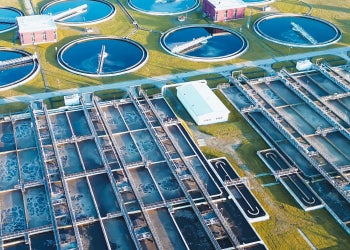
At least three contractors are preparing to make offers for package 14 of Saudi Arabia’s long-term operations and maintenance (LTOM) sewage treatment programme, according to sources.
Known as Eastern A Cluster (LTOM14), the package was tendered by the state-owned National Water Company (NWC) in April, with a bid submission deadline of 30 September.
The contract covers the upgrade of six existing sewage treatment plants (STPs), with a capacity expansion of 30,000 cubic metres a day (cm/d) at the Al-Jarodia STP.
This will increase total treatment capacity from about 263,000 cm/d to approximately 293,000 cm/d, with an estimated cost of $180m.
According to sources, the firms preparing to submit bids include:
- Alkhorayef Water & Power Technologies (Saudi Arabia)
- Civil Works Company (Saudi Arabia)
- Miahona (Saudi Arabia)
The latest phase follows the formal signing of a $347m contract between NWC and a Saudi-Chinese consortium for Northern Cluster Sewage Treatment Plants Package 10 (LTOM10) on 2 September.
The same consortium led by United Water (China) is not planning to bid for LTOM14 and is expected to formally sign a contract for LTOM11 in the coming months, a source said.
In April, MEED exclusively reported that the group had won the contract for package 11, which will have a combined capacity of about 440,000 cm/d.
It is also understood that Beijing Enterprises, a bidder for North Western B Cluster (LTOM12), is not preparing to bid for package 14.
In the meantime, the contract for LTOM12 is moving towards award, with bids currently under evaluation.
The contract covers the construction and upgrade of seven STPs with a combined capacity of about 162,000 cm/d. As previously reported, NWC opened financial bids for the project in April.
Future phases
In total, the LTOM programme comprises 19 packages split into two phases. In May 2024, NWC announced it had awarded $2.5bn-worth of contracts in the first phase. Phase two of the programme includes 10 packages covering 117 treatment plants.
In April, MEED exclusively reported that NWC had held several discussions regarding changes in scope details and potential expansions to upcoming projects. This involved “grouping some upcoming projects”.
The request for proposals for LTOM13 was subsequently put on hold and it is now understood that this tender has likely been merged with other packages in the programme.
According to a source, Eastern B Cluster (LTOM15) has also been cancelled and has likely been merged. LTOM15 had comprised two STPs with a total capacity of 152,000 cm/d.
The next contract to be tendered will be Central Cluster (LTOM16), potentially in November, a source added.
Under the original scope, LTOM16 covers the construction of 14 STPs with a total capacity of 153,000 cm/d.
https://image.digitalinsightresearch.in/uploads/NewsArticle/19358188/main.jpg -
Egyptian contractor wins Abu Dhabi Ramhan Island deal
4 September 2026
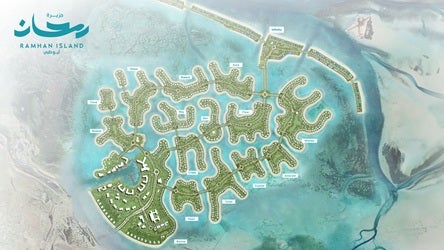
Egypt-headquartered contractor Rowad Modern Engineering has been awarded the main works contract for the Marina Apartments project on Ramhan Island, Abu Dhabi.
The contract was awarded by the local firm Eagle Hills, which is led by Mohamed Alabbar, the founder and chairman of Emaar Properties.
Rowad’s scope includes structural and architectural works, finishing, and mechanical, electrical and plumbing systems.
The company will also deliver infrastructure works, including utility connections to external networks, testing and commissioning.
The development comprises two residential towers offering 187 residential units.
The works will be carried out under the consultancy supervision of local engineering firm Mirage Leisure & Development.
The latest contract award follows Eagle Hills awarding the local firm Arabian Construction Company (ACC) an estimated AED2.5bn ($680m) construction contract to build about 500 villas at the Ramhan Island development, as reported by MEED previously.
Located off the coast of Abu Dhabi, the Ramhan Island development spans an area of over 4 million square metres.
The overall development includes the construction of 1,800 villas, 900 residences, a hotel and retail facilities.
Mohamed Alabbar launched the Ramhan Island development in May 2024.
https://image.digitalinsightresearch.in/uploads/NewsArticle/19355437/main.jpg -
Dubai sets deadline for Jebel Ali waste-to-energy PPP
4 September 2026
Register for MEED’s 14-day trial access
Dubai Municipality has set a 27 September deadline for developers to submit expressions of interest (EOIs) for its planned Jebel Ali waste-to-energy (WTE) public-private partnership (PPP), according to a source.
The greenfield facility is planned to treat up to 6,000 tonnes of municipal solid waste a day.
The municipality is seeking international and local developers to develop, finance and operate the facility. It is planning to prequalify developers later this year before issuing a request for proposals (RFP) in the first quarter of next year, a source said.
The Jebel Ali facility is intended to support Dubai’s waste-management strategy and its target of reducing reliance on landfill.
Dubai Municipality is being advised by a team led by Abu Dhabi’s Tribe Infrastructure Group, with UK-headquartered Ashurst and Germany’s Fichtner also involved.
It was confirmed to MEED that the project is separate from the planned second phase of the Warsan WTE facility, for which Dubai Municipality issued a consultancy tender in February.
That facility will be located in Warsan 2, next to the Al-Aweer sewage treatment plant. The expansion is expected to increase waste-conversion capacity at the existing Warsan site with an estimated budget of $500m. The consultancy contract has a duration of six years.
The original Warsan WTE plant, Dubai’s first major WTE public-private partnership (PPP) project, reached full commercial operations in 2024.
Located in the Warsan area, the AED4bn ($1.1bn) facility treats 1.9 million tonnes of municipal solid waste annually, generating up to 220MW of thermal energy that is fed into the local grid.
In February 2023, state utility Dubai Electricity & Water Authority (Dewa) and Dubai Waste Management Company signed the power-purchase agreement (PPA) for the project.
Dubai Waste Management Company, the special-purpose vehicle implementing the scheme, reached financial close in June 2021 for the project.
The Warsan project was developed under a 35-year PPP concession by a consortium comprising Dubai Holding, Dubai Aluminium, Tech Group and Itochu Corporation.
The main contractor was a joint venture of Belgium’s Besix Group and Hitachi Zosen Inova of Switzerland.
https://image.digitalinsightresearch.in/uploads/NewsArticle/19354502/main.jpg -
Egypt to invest $4.5bn in refinery upgrades
4 September 2026
Egypt is planning to invest $4.5bn in refinery upgrades, according to the country’s Minister of Petroleum and Mineral Resources, Karim Badawi.
Egyptian refineries are operating at 80% of capacity compared with 66% two years ago, according to Badawi, who wants further increases in utilisation of existing facilities.
“We aim to invest around $4.5bn to develop existing refineries and build new units to reduce imports and achieve self-sufficiency in refined products,” he said in a statement.
In May, Egypt said that it had increased its fuel import budget by almost 40% for the 2026-27 fiscal year amid higher global prices driven by the Iran war, which started when the US and Israel launched an attack on Iran on 28 February.
Brent crude prices are up about a third since the conflict started, trading at more than $90 a barrel for most of this month so far.
Badawi said a decline in Egypt’s oil and gas production between 2021 and 2024 occurred because foreign companies were reluctant to invest in the country’s energy sector due to unpaid government debts.
He said: “We have settled all the debt, which reached $6.1bn in June 2024. As a result, hydrocarbon exploration and production activity grew by nearly 20% this year.
“We are now moving in the right direction to increase oil and gas output gradually.”
Despite the ongoing push to develop projects in the country’s oil and gas sector, several key projects have seen significant delays in recent years.
These include a $2bn hydrocracking complex package that forms part of the wider Assiut oil refinery upgrade project.
Earlier this month, MEED revealed that mechanical completion of the hydrocracking package is now unlikely to be reached until early next year due to complications in the final stages of construction.
The hydrocracking complex package has experienced extensive delays over several years.
In April this year, Badawi called for work to accelerate on the Assiut oil refinery upgrade project, saying it is important for reducing the country’s spending on imported refined products.
At the time, the oil ministry said the project was 88% complete, with trial operations planned by the end of the year.
Assiut Oil Refining Company (ASORC), a subsidiary of state-owned Egyptian General Petroleum Corporation, is the project operator.
France’s Technip Energies is the main contractor, performing engineering, procurement and construction work on the Assiut hydrocracking complex under a $2bn contract awarded by ASORC in February 2020.
https://image.digitalinsightresearch.in/uploads/NewsArticle/19353521/main.jpg -
North Field West platform bidders get extra time
4 September 2026
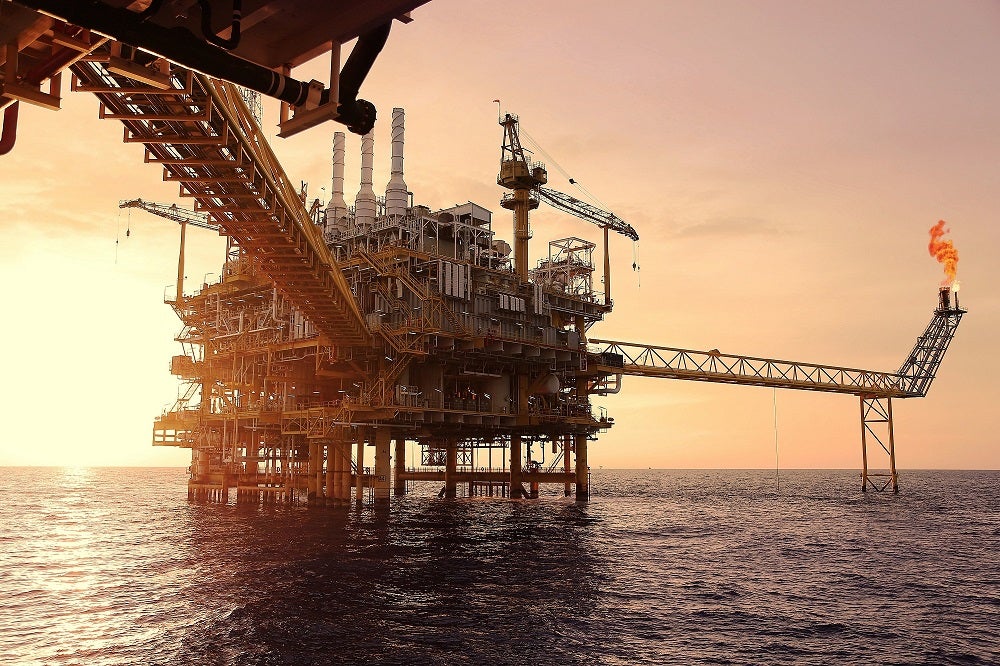
QatarEnergy has granted contractors additional time to prepare bids for a key tender for the engineering, procurement, construction and installation (EPCI) of large platforms for the giant North Field gas field in Qatari waters.
The tender, issued earlier this year, forms part of the wider North Field West (NFW) project, the third and last phase of the state enterprise’s North Field liquefied natural gas (LNG) expansion programme.
The core scope comprises the EPCI of four production deck modules (PDMs) and associated structures. The new PDMs will increase gas production from North Field reservoirs and provide additional gas feedstock for the NFW LNG development.
QatarEnergy has set 15 September as the deadline for technical bid submissions, while commercial bids are due on 10 November, according to sources.
The previous deadlines for submission of technical and commercial bids were 30 August and 25 October, respectively, MEED previously reported.
The following contractors, among others, are understood to be bidding:
- China Offshore Oil Engineering Company (China)
- Larsen & Toubro Energy Hydrocarbon (India)
- McDermott (US)
- Saipem (Italy)
Before issuing the PDM tender, QatarEnergy awarded McDermott a contract for the EPCI of four offshore jackets that will also support gas feedstock supply for the NFW LNG project. The contract is estimated to be worth about $200m, MEED reported in January.
North Field LNG expansion
QatarEnergy is advancing the three phases of its estimated $40bn North Field LNG expansion project. EPC works on all three giant projects are progressing.
QatarEnergy is understood to have committed nearly $30bn to the first two phases – North Field East (NFE) and North Field South (NFS) – which will lift Qatar’s LNG production capacity from 77.5 million tonnes a year (t/y) to 126 million t/y by 2028.
QatarEnergy awarded the main EPC contracts for NFE in 2021. The project was intended to raise LNG output to 110 million t/y by 2025. The $13bn EPC package – covering the EPCI of four LNG trains, each with a capacity of 8 million t/y – was awarded in February 2021 to a consortium of Japan’s Chiyoda and France’s Technip Energies.
In May 2023, QatarEnergy awarded the $10bn main EPC contract for NFS to a consortium of Technip Energies and Consolidated Contractors Company (CCC). The contract includes two LNG trains, each with a capacity of 7.8 million t/y.
Once fully operational, the first two phases are expected to add 48 million t/y of LNG supply to the global market.
QatarEnergy took the final investment decision on NFW this year, awarding an EPC contract estimated at $8bn to a joint venture comprising Technip Energies, CCC and Gulf Asia Contracting (GAC) in February.
Chiyoda carried out the front-end engineering and design (feed) work for the NFW LNG project.
The NFW scope covers the EPC of two LNG trains with a combined capacity of 16 million t/y, as well as associated facilities for gas treatment, natural gas liquids recovery and helium extraction.
In addition to LNG, NFW is expected to produce about 175,000 barrels of oil equivalent a day of condensate, ethane and LPG.
With all three phases now under EPC execution – and NFE scheduled for commissioning later this year – QatarEnergy is positioning itself to remain one of the world’s largest LNG suppliers over the long term.
https://image.digitalinsightresearch.in/uploads/NewsArticle/19352006/main.jpg