
Read MEED’s 2024 Yearbook
31 December 2023
 Commentary
Colin Foreman
Editor
A strong performance across various sectors and geographies in 2023 has resulted in a record year for the GCC projects market. By 21 November, according to regional projects tracker MEED Projects, 1,268 contracts totalling $178.6bn had been awarded in the region. The total breaks the previous full-year record of $173.5bn set in 2014 with more than a month to spare.
The market was driven by Saudi Arabia’s gigaprojects as they race to turn Vision 2030 into a reality, heavy investment into the oil and gas sector as national oil companies aim to increase their production capacities and upgrade existing infrastructure, continued investment in clean energy projects, and a buoyant property market in Dubai and the rest of the UAE.
It could be an even better year in 2024, as the market expects more of the same, together with contract awards for major new infrastructure projects, such as the Saudi Landbridge rail link, a new Blue Line for the Dubai Metro, and possibly even awards for building nuclear power plants in Saudi Arabia.
Although the omens may look good, a repeat of 2023 is not guaranteed. There is the ever-present fear that what goes up also comes down, and while the GCC economies have performed well, countries in North Africa and Levant have endured a difficult year as their economies flounder with rising inflation and high debt levels.
While initial fears of a broader regional dispute have largely subsided, the conflict in Gaza has served as a timely reminder that geopolitics is a risk that can never be discounted in the Middle East.
Internationally, the economic outlook is subdued. This will impact trade and put negative pressure on oil prices, which typically means a slowdown in project spending in key markets, including Saudi Arabia and the UAE.
Finally, the US is heading into a presidential election, and as the campaign unfolds throughout the year it will create opportunities and challenges for the region to navigate in 2024.
Published on 31 December 2023 and distributed to senior decision-makers in the region and around the world, the MEED Yearbook 2024 includes:
|
> REGIONAL OUTLOOK: GAZA CONFLICT PUTS THE REGION ON EDGE ONCE AGAIN
> MENA ECONOMIES: ANOTHER YEAR OF LIVING DANGEROUSLY
> GIGAPROJECTS: SAUDI GIGAPROJECTS TO CROSS $50bn OF AWARDS
> UPSTREAM: UPSTREAM SECTOR SEES RECORD YEAR
> DOWNSTREAM: SAUDI’S CHEMICAL AMBITIONS DEFINE DOWNSTREAM SECTOR
> CONSTRUCTION: HEADY TIMES FOR BIGGEST CONSTRUCTION MARKETS
> PROJECTS: GULF PROJECTS MARKET VALUE SWELLS IN 2023
> CONTRACTS: REGIONAL PROJECTS MARKET SET TO BREAK RECORD IN 2023
> AWARDS: MEED PROJECTS ANNOUNCES AWARD WINNERS
|
The MEED Yearbook 2024 country data files include:

Register for MEED's guest program now to access this article.
Exclusive from Meed
-
 Egypt seeks to accelerate gas pipeline project with Libya
10 November 2026
-
 Omani company signs Kuwait drilling contract
10 November 2026
-
 Adnoc Drilling wins $315m Kuwait offshore rig deals
10 November 2026
-
 Aramco-backed firm tenders logistics hub expansion
9 November 2026
-
 Prequalification begins for multibillion-dollar Dubai road
9 November 2026
All of this is only 1% of what MEED.com has to offer
Subscribe now and unlock all the 153,671 articles on MEED.com
- All the latest news, data, and market intelligence across MENA at your fingerprints
- First-hand updates and inside information on projects, clients and competitors that matter to you
- 20 years' archive of information, data, and news for you to access at your convenience
- Strategize to succeed and minimise risks with timely analysis of current and future market trends
Related Articles
-
Egypt seeks to accelerate gas pipeline project with Libya
10 November 2026
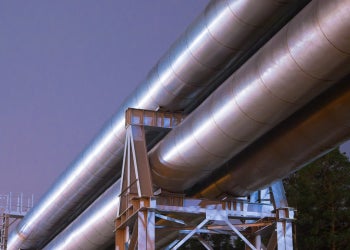
Egypt aims to accelerate a range of energy projects with Libya, including gas pipeline links, according to a statement from the Egyptian Foreign Minister Badr Abdelatty.
Other projects include a scheme to refine Libyan crude in Egypt and an electricity interconnection.
Abdelatty’s comments came in a ministry statement after a meeting with Libya’s acting oil and gas minister, Khalifa Abdulsadek, in the Libyan capital of Tripoli.
Egypt is currently trying to address an energy squeeze that has escalated due to elevated global liquefied natural gas (LNG) prices since the start of the US-Israeli war on Iran in February of this year.
In his statement, Abdelatty called for cooperation on petroleum products and the completion of projects to refine Libyan oil in Egypt and re-export it.
He also said that Abdulsadek would visit Cairo soon to continue technical talks with Egypt’s petroleum and electricity ministers.
The statement did not provide details on costs or the status of the projects.
Plans for new gas pipeline links with Libya are just one of several ambitious gas pipeline plans Egypt is pursuing.
In October, the Italian oil and gas company Eni signed the main engineering, procurement, construction and drilling contracts for a project to export gas from reserves in Cyprus using a major pipeline to Egypt.
The project includes contracts with several companies that will develop infrastructure in both Egypt and Cyprus.
The awards included a $170m contract won by Egypt’s Petrojet for a new onshore gas pipeline in Egypt that will help transport gas to Egypt’s Damietta LNG facility.
https://image.digitalinsightresearch.in/uploads/NewsArticle/21273777/main.jpg -
Omani company signs Kuwait drilling contract
10 November 2026
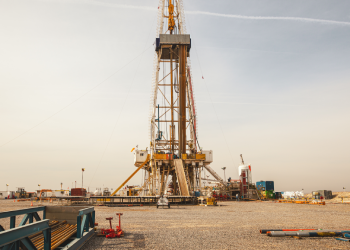
Oman’s MBPS has signed a drilling rig contract worth $127.3m with state-owned upstream operator Kuwait Oil Company (KOC).
Under the terms of the deal, MBPS will supply and operate three newly built 1,000-horsepower land rigs for drilling and workover operations, according to a company statement.
The UAE-based oil field services company Adnoc Drilling is a majority shareholder in MBPS.
The chief executive of MBPS, Salim Al-Harthy, said: “This is another important milestone for MBPS and a strong reflection of KOC’s confidence in our capabilities.
“It further strengthens our presence in Kuwait and our commitment to delivering safe, reliable and efficient drilling and workover services across the region.”
He : “My sincere appreciation to KOC for their continued trust, and to our MBPS team for their hard work and dedication in making this possible.”
In October last year, KOC said it planned to spend KD1.2bn ($3.92bn) on its exploration drilling programme through 2030.
The spending was part of a KD9.8bn budget, the company’s biggest ever, allocated for drilling and maintenance of up to 6,193 wells by the end of this decade.
https://image.digitalinsightresearch.in/uploads/NewsArticle/21273731/main.png -
Adnoc Drilling wins $315m Kuwait offshore rig deals
10 November 2026
Register for MEED’s 14-day trial access
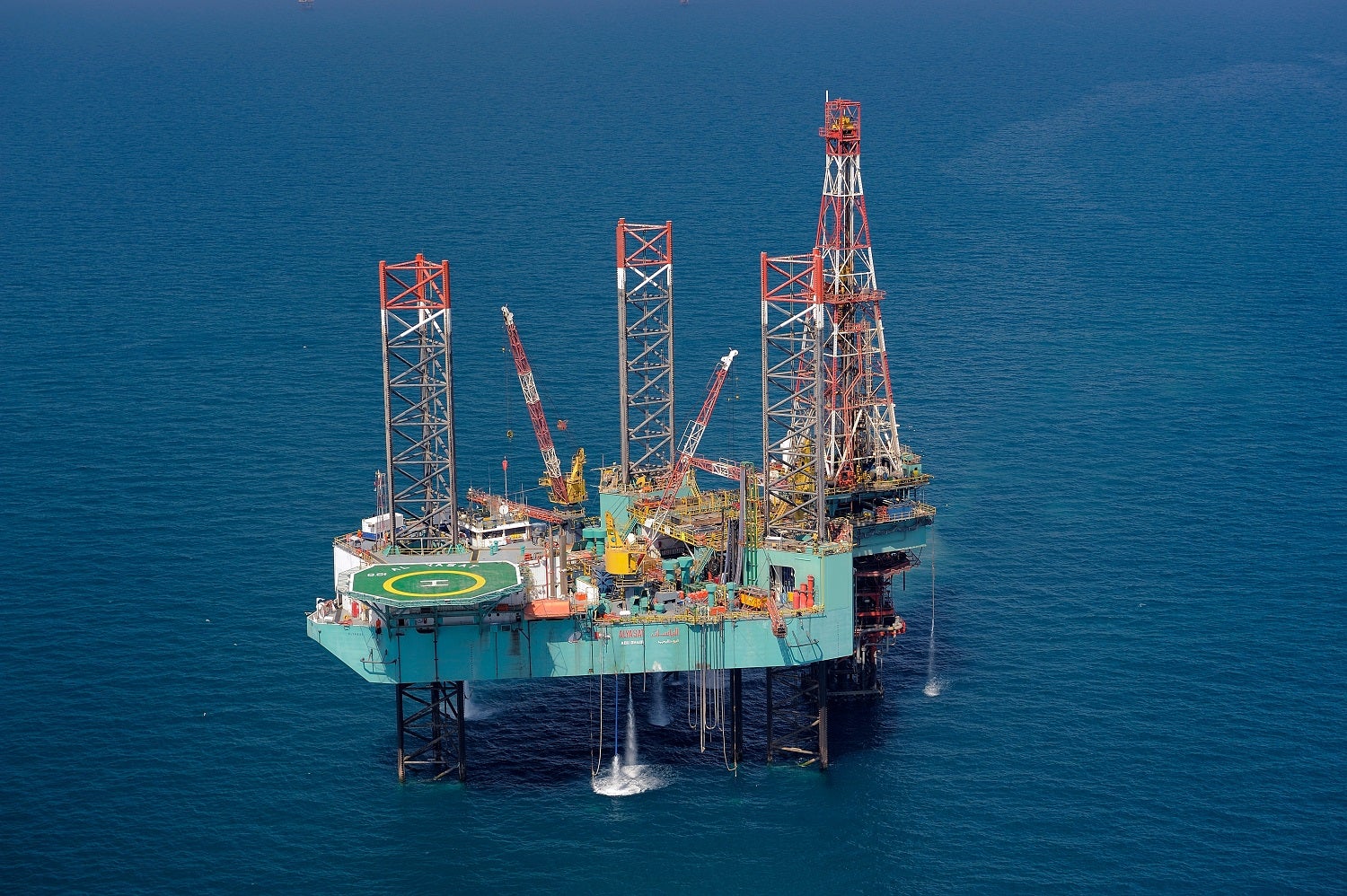
Abu Dhabi National Oil Company (Adnoc Group) subsidiary, Adnoc Drilling, has been selected for two offshore drilling rig contracts in Kuwait with a combined maximum value of KD96.55m ($315m), according to documents published by Kuwait’s Official Gazette.
The Higher Purchasing Committee of state-owned Kuwait Petroleum Corporation (KPC) has given approval for its subsidiary Kuwait Oil Company (KOC) to award the contracts to the Abu Dhabi-listed drilling contractor after Adnoc Drilling submitted the lowest compliant bids.
While the maximum combined contract value has been confirmed as KD96.55m ($315m), the individual contract values, rig identities, durations and expected commencement dates have not been disclosed.
The approval comes as Kuwait moves to expand offshore exploration and development following a series of discoveries in its territorial waters.
It is currently unclear how Kuwait will provide security for its planned offshore oil and gas projects in the Gulf, adding uncertainty to the outlook for these plans.
On 5 October, KPC chief executive Shaikh Nawaf Al-Sabah reiterated the company’s commitment to developing three major offshore oil discoveries in the region.
KPC initially launched the Al-Seef project to develop the three fields in February, just weeks before the US and Israel attacked Iran, triggering a regional war that has sparked a crisis in Kuwait’s oil and gas sector.
The regional conflict has seriously disrupted shipping through the Strait of Hormuz, a key export route for Kuwaiti oil.
The war has also led to dozens of attacks on Kuwaiti oil and gas infrastructure, with at least one causing damage to a Kuwaiti offshore platform.
This attack took place on 12 July, when a drone struck a KOC offshore drilling platform in Kuwaiti territorial waters, causing damage to the platform and injuring one worker.
https://image.digitalinsightresearch.in/uploads/NewsArticle/21273678/main2430.jpg -
Aramco-backed firm tenders logistics hub expansion
9 November 2026

Asmo, the logistics joint venture of Saudi Aramco and DHL Supply Chain, has set a 15 November deadline for a contract to expand the logistics complex at King Salman Energy Park (Spark) in Saudi Arabia’s Eastern Province.
The logistics hub will add over 124,000 square metres (sq m) at Spark.
Al-Khobar-based engineering firm House of Consulting Office is the project consultant.
The tender for the expansion works comes shortly after Asmo awarded an estimated SR820m ($218m) contract to build the logistics complex’s first phase in May this year.
The overall project will feature a 43,000 sq m, temperature-controlled Grade A warehouse; more than 3,000 sq m of offices and staff amenities; 5,300 sq m dedicated to chemicals storage; and an open yard covering about 1.2 million sq m.
Asmo signed an agreement with Bahrain‑headquartered Arcapita Group Holdings in February to deliver the project at Spark.
Planned for large-scale industrial use, the site is expected to incorporate advanced warehouse and building management systems, end-to-end digital connectivity, automation and robotics.
It will also be developed in line with internationally recognised sustainability standards, featuring solar photovoltaic readiness, electric-vehicle charging infrastructure and a target of Leed Gold certification.
The development aims to support the next stage of Saudi Arabia’s logistics and supply chain expansion.
Under the deal structure, Arcapita will provide funding and retain ownership of the asset, while Asmo will develop the facility and then lease and operate it under a 22-year occupational lease.
According to a statement, “the scheme will be executed via a forward-funding model, underscoring a long-term commitment to national infrastructure”.
Asmo added that this will be its first purpose-built logistics centre and one of four strategic locations planned to anchor its nationwide logistics network, aligned with the National Transport and Logistics Strategy under Saudi Vision 2030.
https://image.digitalinsightresearch.in/uploads/NewsArticle/21267403/main.gif -
Prequalification begins for multibillion-dollar Dubai road
9 November 2026
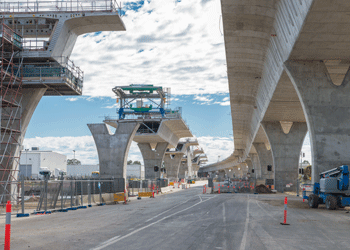
Dubai’s Roads & Transport Authority (RTA) has begun prequalifying contractors for a design-and-build contract for a multibillion-dollar new road that will run parallel to Sheikh Zayed Road.
Contractors have until 30 November to submit their prequalification statements.
The latest development follows contractors’ expressions of interest for the project on 10 October, as MEED reported.
The project’s scope covers about 30 kilometres (km) of works. These include about 15km of viaduct along First Al-Khail Street and more than 14.5km of bridge ramps, along with other associated infrastructure works.
The project is another significant initiative aimed at alleviating pressure on the existing Sheikh Zayed Road section from Hadiqa Street to Hessa Street.
Dubai has previously explored bold concepts to expand capacity on Sheikh Zayed Road, including proposals to introduce double-decker sections to add extra lanes without widening the existing corridor.
The idea was discussed in the context of rising congestion and limited right-of-way along one of the city’s busiest arterial roads, with elevated decks potentially carrying through traffic while existing at-grade lanes served local access.
The plans ultimately became standalone schemes, with subsequent efforts focusing instead on corridor-wide upgrades, interchange improvements and complementary public transport expansions to manage demand more sustainably.
The latest project aligns with Dubai’s continued investment in upgrading and expanding its road network to keep pace with rapid population growth and rising commuting demand.
Planning for growth
Dubai launched the 2040 Urban Master Plan in March 2021, referencing studies indicating that the emirate’s population will reach 5.8 million by 2040, up from 3.3 million in 2020. The daytime population is set to increase from 4.5 million in 2020 to 7.8 million in 2040.
In December 2022, Sheikh Mohammed Bin Rashid Al-Maktoum, Vice President and Prime Minister of the UAE and Ruler of Dubai, approved the 20-Minute City Policy as part of the second phase of the Dubai 2040 Urban Master Plan.
In addition to the road projects, the RTA’s Dubai Metro Blue Line extension and Dubai Metro Gold Line form part of Dubai’s plans to improve residents’ quality of life by cutting journey times, as outlined in the policy.
The policy aims to ensure residents can meet 80% of their daily needs within a 20-minute journey, on foot or by bicycle. This goal will be achieved by developing integrated service centres with all necessary facilities and increasing population density around mass transit stations.
https://image.digitalinsightresearch.in/uploads/NewsArticle/21266194/main.gif