
Gulf funds help reshape football
23 August 2023
 Commentary
Edmund O'Sullivan
Former editor of MEED
At 8pm on Friday 11 August, the referee blew his whistle to start the first match of the English Premiership season. It was a fresh start, but the outcome was unsurprising. Newly-promoted Burnley was soundly defeated by reigning champions Manchester City.
Once shaped by uncertainty, top-flight football – in England, at least – is increasingly predictable. In May, Manchester City won the premiership for the third consecutive season and the seventh time since it was acquired by Abu Dhabi’s Sheikh Mansour bin Zayed bin Sultan al-Nahyan 15 years ago. It is forecast to prevail again this year and dominate the English game for the foreseeable future.
Football at the highest levels is played by the rich and owned by the richer. And those watching it in England’s premiership grounds are as likely to be members of the professional middle class as manual workers, the game’s original core audience.
Football at the highest levels is played by the rich and owned by the richer
The transformation was due to technical change in the form of satellite television and the internet. This created a global football audience and brought billions in advertising revenue into a league that had been teetering on the brink of bankruptcy.
English football looked like an investable proposition for the first time in almost a century. But winning the premiership – created by the owners of the top clubs so they could keep most of the new income – depended on having the best players and training staff. This drove up wage bills and produced the perverse result that big clubs had more income, but limited profits.
Gulf capital
This has led to dominance by elite teams owned by private investors with an appetite for unconventional assets. More recently, the interested investors have increasingly been royal and sovereign parties from the Gulf states.
Patient and content with capital appreciation as much as dividend income, Sheikh Mansour has invested across Manchester City’s talent supply chain. Benefitting from Etihad’s sponsorship, the club can probably field two teams capable of winning every domestic competition and retaining the Uefa Champions League title it captured for the first time this year.
The Gulf wealth fund formula is producing results elsewhere. Paris St Germain has won the French league nine times since it was bought by Sheikh Tamim bin Hamad al-Thani, now ruler of Qatar, through the Qatar Investment Authority. Newcastle United, bought by Saudi Arabia’s Public Investment Fund in 2021, finished fourth in the premiership last season and is in the Uefa Champions League for the first time in 20 years.
Football, of course, remains unpredictable. But a new process is at work that means many of the surprises are now off the pitch, not on it.
Connect with Edmund O’Sullivan on Twitter
More from Edmund O’Sullivan:
> When a war crime is denied
> Embracing the new Washington consensus
> Trump, Turkiye and the trouble ahead
> A century of errors for the Middle East
> The pros and cons of the biometrics boom
> Learn from history or be doomed to repeat it
> In memory of Abdullah Jonathan Wallace
> Energy challenges cloud 2023 outlook
> Wobbling technology teaches digital caution
> Gulf stands to benefit from global turmoil


Register for MEED's guest program now to access this article.
Exclusive from Meed
-
 Houthi escalation targets Saudi airports
12 October 2026
-
 Egypt and Saudi Arabia sign oil and gas deal
12 October 2026
-
 JGC yet to return evacuated workers to Basra refinery
12 October 2026
-
 Contractors prepare Jordan stadium prequalification
12 October 2026
-
 Abu Dhabi plans Mussafah road upgrades
12 October 2026
All of this is only 1% of what MEED.com has to offer
Subscribe now and unlock all the 153,671 articles on MEED.com
- All the latest news, data, and market intelligence across MENA at your fingerprints
- First-hand updates and inside information on projects, clients and competitors that matter to you
- 20 years' archive of information, data, and news for you to access at your convenience
- Strategize to succeed and minimise risks with timely analysis of current and future market trends

Related Articles
-
Houthi escalation targets Saudi airports
12 October 2026
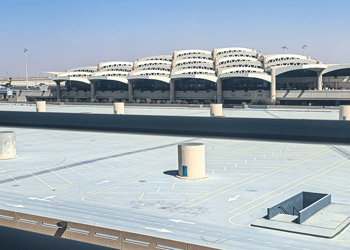
Yemen’s Houthis have placed Saudi Arabia’s civil aviation infrastructure at the centre of their campaign against the kingdom. Two strikes on King Khalid International airport in Riyadh over the weekend killed 13 people and injured 320.
The deadlier attack hit a passenger terminal on the afternoon of 10 October. The General Authority of Civil Aviation (Gaca) said it killed 12 people, including four Saudi citizens, and injured 309. Airport operations were suspended pending a damage assessment.
A second strike hit Terminal 4 on the afternoon of 11 October, sparking a fire that killed a Pakistani resident and injured 11 others, according to Gaca. The Saudi-led coalition reported intercepting a cruise missile near the airport that afternoon. Gaca also reported an attack on King Fahd International airport in Dammam that evening, following a coalition report of a projectile falling near the facility the previous night.
The weekend strikes followed attacks on Abha International airport on 6 October and on King Khalid International airport on 7 and 8 October, the last of which included a strike on a Saudia aircraft. Gaca figures put the toll from the week’s attacks on Saudi airports at 19 dead and more than 350 injured.
The Houthis said they would continue operations inside the kingdom and that all Saudi airports were potential targets, with the exception of those serving the holy cities. The group says it is acting in response to Riyadh’s support for Yemeni government forces and a Saudi air strike on Sanaa airport. It has also claimed attacks on Saudi oil facilities, which Saudi authorities have not confirmed.
Aviation exposure
The attacks strike a sector central to the kingdom’s diversification plans. King Khalid International airport’s existing terminals are to be absorbed into King Salman International airport (KSIA), a 57-square-kilometre development with six parallel runways targeting a capacity of 120 million passengers by 2030 and 185 million by 2050.
Procurement on KSIA has gathered pace this year. In July, a joint venture of China Civil Engineering Construction Corporation and Dammam-based Mofarreh AlHarbi & Partners won an estimated SR800m ($213m) contract for enabling and substructure works on Terminal 6, which will add capacity for 40 million passengers. Turkish contractor IC Ictas and Saudi Arabia’s Al-Rashid Trading & Contracting recently secured a SR800m ($213m) contract for the airport’s Private Aviation Terminal.
Government-owned Saudi Royal Aviation set 8 October as the bid deadline for an estimated SR3bn ($800m) contract to build an aviation complex within the KSIA masterplan, the same day the Houthis struck King Khalid International airport and a Saudia aircraft.
Airlines have already adjusted. Flydubai cancelled flights to Riyadh and Yanbu up to 10 October and to Abha up to 11 October, and Etihad Airways reported extended delays on its Abu Dhabi to Riyadh service after the airport closed on 8 October. The UK Foreign Office has advised against all travel to areas within 10km of the Yemeni border.
Market reaction
The Saudi stock market’s response has been muted so far. The Tadawul main index fell 15.54 points to close at 10,360.74 on 11 October, the first trading session after the Saturday attack, with turnover of SR2.6bn ($693m). The session closed before the second strike on King Khalid International airport and the attack on Dammam, and Monday’s trading will be the first to reflect the full weekend.
The weekend also brought a separate maritime incident. UK Maritime Trade Operations said an oil tanker was struck by an unidentified projectile in the Strait of Hormuz on 11 October, with its crew reported safe.
Diplomatic response
The coalition described the 10 October attack as a war crime and said it would respond decisively. It said on 10 October that it had destroyed 136 military targets in Houthi-controlled areas and was working to dismantle the group’s ballistic missile network.
Egypt, Pakistan and Turkiye joined Saudi Arabia in an R4 group statement condemning the attacks and supporting measures taken by the kingdom in response. The Arab League also voiced its support for Saudi Arabia. On 11 October, Iran’s foreign minister spoke by telephone with his Saudi counterpart, Prince Faisal Bin Farhan, to discuss the escalation. The US and UK have also signalled the possibility of further support for the kingdom.
The escalation comes against the backdrop of the regional conflict, which has drawn Saudi Arabia into a renewed Yemen front after several years of relative calm following the 2022 ceasefire. The extent of the damage at King Khalid International airport, which Gaca is still assessing, and the speed at which international carriers resume full schedules will determine how far the attacks disrupt the kingdom’s aviation programme.
https://image.digitalinsightresearch.in/uploads/NewsArticle/20505600/main.gif -
Egypt and Saudi Arabia sign oil and gas deal
12 October 2026
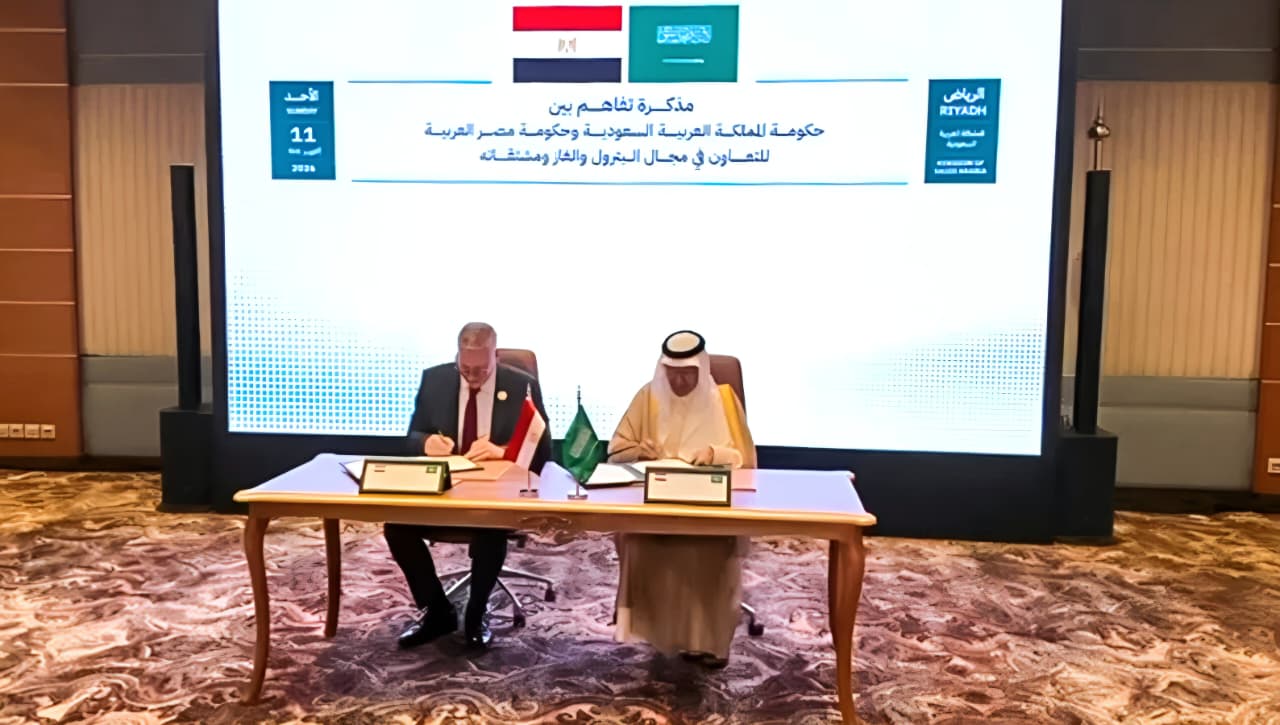
Egypt and Saudi Arabia have signed an agreement to strengthen cooperation in the oil, natural gas and petrochemicals sectors, according to a statement from Egypt’s Ministry of Petroleum & Mineral Resources.
The memorandum of understanding (MoU) was signed in Riyadh by Karim Badawi, Egypt’s minister of petroleum and mineral resources, and Abdulaziz Bin Salman, Saudi Arabia’s minister of energy.
Under the agreement, both sides will enhance cooperation in trading, transporting, storing and distributing crude oil, petroleum products and natural gas.
They will also expand cooperation on developing the infrastructure and logistics services that support these activities.
In its statement, Egypt’s Ministry of Petroleum & Mineral Resources said: “These efforts will contribute to improving energy market efficiency, enhancing the resilience and reliability of supply chains, and strengthening energy security.”
The MoU also provides for expanded cooperation in exchanging expertise and best practices in operating and developing fuel stations, as well as in transporting and tracking petroleum products and liquefied petroleum gas cylinders.
Additionally, the agreement seeks to explore investment opportunities in joint projects and promote exports.
The latest agreement comes as Egypt becomes an increasingly important export route for Saudi Arabia.
Due to disruptions and security risks affecting shipments through the Strait of Hormuz, Saudi Arabia has been redirecting crude exports via its East-West Pipeline to Yanbu on the Red Sea.
Meanwhile, the Bab El-Mandeb Strait, at the southern end of the Red Sea, has also become a security concern due to military activity in Yemen. Egypt offers an alternative route through the Sumed pipeline, which runs from Ain Sokhna on the Red Sea to Sidi Kerir on the Mediterranean.
https://image.digitalinsightresearch.in/uploads/NewsArticle/20503239/main.jpeg -
JGC yet to return evacuated workers to Basra refinery
12 October 2026
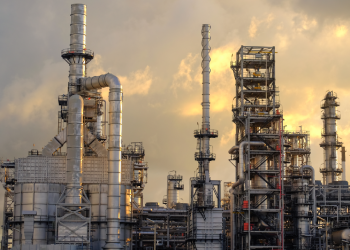
Japan’s JGC has yet to bring evacuated workers back to the Basra refinery project in Iraq, according to industry sources.
JGC evacuated its personnel from the site in the southern oil hub of Basra following the start of the regional conflict on 28 February, when the US and Israel attacked Iran.
The evacuation halted work on the project, which was in its final construction stage.
On 14 August 2026, Iraq’s Ministry of Oil announced that it had signed an agreement with JGC to resume work on the fluid catalytic cracking (FCC) project at Basra refinery.
One source said: “Even though the agreement to bring the evacuated workers back was signed about two months ago, there is still no sign of the evacuated workers on the project site.
“It is possible that they will return soon, but it is hard to tell what will happen next in the current security environment.”
Earlier this month, Iraq’s Ministry of Oil said it met with Japanese officials to discuss plans to commission the FCC unit under the Basra refinery upgrade project.
The statement did not say when the evacuated JGC workers would return to the project site.
Strategic project
Iraq’s state-owned South Refineries Company (SRC) sent JGC notice of the main contract award for the FCC package of the Basra refinery upgrade project in August 2020.
JGC was awarded the contract in consortium with South Korea’s Hyundai E&C.
The official contract signing ceremony was held in Baghdad on 1 October 2020.
The contract awarded to JGC, which uses the engineering, procurement, construction and commissioning model, was worth $3.78bn.
The FCC package is part of a broader project to upgrade the Basra refinery.
The project site is located about 12 kilometres east of Iraq’s southern city of Basra.
The wider upgrade project involves installing new facilities on land adjacent to the existing Basra refinery, including a vacuum distillation unit and a diesel desulphurisation unit.
In April 2021, France’s Axens won a contract in Iraq to provide four process technologies to SRC for the Basra refinery upgrade project.
The technologies that SRC selected are:
- Diesel hydrotreatment unit (Prime-D)
- Vacuum gasoil (VGO) hydrotreating unit
- VGO fluid catalytic cracker unit
- Oligomerisation unit (polynaphtha)
In addition, Axens is providing catalysts and adsorbents, proprietary equipment, training and technical services.
MEED’s latest report on Iraq includes:
> COMMENT: Iraq’s reform window narrows
> GOVERNMENT: Al-Zaidi takes Iraq’s premiership under US shadow
> BANKING: Financial challenge tests Iraq’s resolve
> ECONOMY: Iraq enters era of resilience, reform and rising risks
> OIL & GAS: Iraqi oil and gas sector in crisis
> POWER & WATER: Focus shifts to delivery of Iraq utilities expansion
> CONSTRUCTION: Momentum builds in Iraq’s post-war construction sectorTo see previous issues of MEED Business Review, please click herehttps://image.digitalinsightresearch.in/uploads/NewsArticle/20503212/main.png -
Contractors prepare Jordan stadium prequalification
12 October 2026
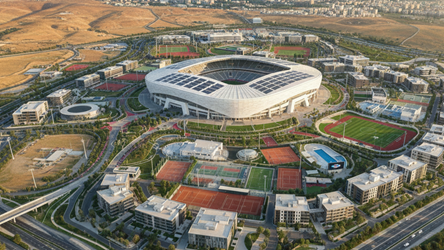
Contractors are preparing to submit prequalification statements on 14 October for a contract to build Jordan’s Al-Hussein Bin Abdullah II International Stadium, located east of the capital, Amman.
The project is part of the first phase of the Amra City development masterplan and is being implemented by Jordan Cities & Facilities Development Company, a Jordan Investment Fund-owned company.
Main works are expected to begin early next year, with the stadium slated for completion in 2029.
The project will cover about 1 million square metres, and the stadium will seat 50,000 spectators.
The stadium is being built within the Amra City development, which is located about 40 kilometres (km) from downtown Amman and 35km from Zarqa and Queen Alia International airport.
MEED reported that preliminary excavation and site preparation began in June.
The project forms part of Jordan’s Economic Modernisation Vision (EMV) 2023-25.
The EMV – Amman’s flagship reform programme – aims to increase real income per capita by an average of 3% annually, create 1 million jobs and more than double the country’s GDP over the next decade.
The strategy envisages a leading role for the private sector, which is expected to account for 73% of the estimated $58.8bn investment required.
 READ THE OCTOBER 2026 MEED BUSINESS REVIEW – click here to view PDF
Industry and logistics drive development at Neom; Saudi Arabia’s investment priorities realign amid conflict; MEED’s 2026 power developer ranking.
Distributed to senior decision-makers in the region and around the world, the October 2026 edition of MEED Business Review includes:
> AGENDA: Oxagon takes centre stage at Neom> MARKET FOCUS: Saudi projects hold steady> INDUSTRY REPORT: MEED’s 2026 GCC power developer ranking> LEADERSHIP: The future city does not need to hang above the groundTo see previous issues of MEED Business Review, please click herehttps://image.digitalinsightresearch.in/uploads/NewsArticle/20501232/main.png -
Abu Dhabi plans Mussafah road upgrades
12 October 2026
Abu Dhabi’s Department of Municipalities and Transport (DMT) has announced plans to upgrade roads in Mussafah, improving links between the industrial area, Mohamed Bin Zayed City and Zayed City.
The scheme covers about 13 kilometres of roads on the E30 and 8th Street. It aims to reduce congestion, improve road safety and cut journey times.
The works include a new three-lane highway in each direction along 8th Street, with parallel three-lane service roads on both sides providing access to local businesses and facilities.
The upgraded corridor is expected to accommodate up to 4,000 vehicles an hour.
Other works include upgrades to four E30 interchanges, improved links to 8th Street and the E20, and modifications to nine junctions.
The DMT also plans to build two bridges connecting Mussafah and Mohamed Bin Zayed City, along with a pedestrian bridge.
Abu Dhabi is planning major investments to upgrade its road network across the emirate.
Last week, it disclosed plans for a major new transport corridor in the capital, comprising a 37km coastal route linking Al-Hudayriyat Island with the E11 at Al-Nouf.
It is planned to have three lanes in each direction and will include a tunnel, about 7km of marine bridges and about 4km of causeways.
The scheme will provide a direct connection between Al-Dhafra, Al-Hudayriyat Island and Abu Dhabi Island via Halat Al-Bahrani, Al-Futaisi and Al-Aryam islands.
READ THE OCTOBER 2026 MEED BUSINESS REVIEW – click here to view PDFIndustry and logistics drive development at Neom; Saudi Arabia’s investment priorities realign amid conflict; MEED’s 2026 power developer ranking.
Distributed to senior decision-makers in the region and around the world, the October 2026 edition of MEED Business Review includes:
> AGENDA: Oxagon takes centre stage at Neom> MARKET FOCUS: Saudi projects hold steady> INDUSTRY REPORT: MEED’s 2026 GCC power developer ranking> LEADERSHIP: The future city does not need to hang above the groundTo see previous issues of MEED Business Review, please click herehttps://image.digitalinsightresearch.in/uploads/NewsArticle/20501218/main.jpg