Top 10 plans for Saudi Arabia’s $1 trillion capital
27 July 2023

> This package also includes: Saudi Arabia plans $1 trillion capital
Register for MEED's guest programme
1. New Murabba
In early 2023, Saudi Arabia’s Crown Prince Mohammed bin Salman bin Abdulaziz al-Saud launched New Murabba Development Company (NMDC) to develop the world’s largest modern downtown in Riyadh.
Located to the northwest of the capital, the development will cover an area of 19 square kilometres. It will feature more than 104,000 residential units, 9,000 hotel rooms and over 980,000 square metres of retail space.
The centrepiece will be the Mukaab, a 400 cubic-metre structure that will be the world’s first immersive destination, featuring digital and virtual technology. The Mukaab will include a tower atop a spiral base.
The estimated project cost is more than $50bn and it is scheduled for completion by 2030.
 Contractors win New Murabba early works deals

UK consultancy firm Atkins is working on the New Murabba project in Riyadh, which includes the 400-metre-cubed, Najdi-inspired Mukaab building. Another UK firm, Buro Happold, is working with Atkins on the project
2. Diriyah Gate
Announced in 2019, the Diriyah Gate project spans 7.1 million sq m to the northwest of Riyadh. The masterplan includes the three-phased development of several areas in Diriyah, including Wadi Safar, Wadi Hanifah Park, Bujairi District, Arts District, Samhan District and Diriyah Square.
Projects worth $12.6bn are in execution at Diriyah Gate, according to regional projects tracker MEED Projects, while $9.5bn-worth of schemes are in design and tendering stages.

Artist's rendition of Diriyah Gate’s King Salman Square, one of the meeting places planned for the 7.1 million square-metre development
3. King Salman Park
King Salman Park is being built on more than 16 sq km and will become the world’s largest urban park. The project was officially announced in 2019 and is split into three phases.
Saudi-based Modern Building Leaders is building the SR7.5bn ($2bn) Royal Art Complex. A joint venture of Freyssinet Saudi Arabia and the local Haif Company is carrying out the infrastructure works. Freyssinet is also delivering the main works package for the visitors’ centre at the park, and Saudi-based E A Juffali & Brothers is providing mechanical, electrical and plumbing services.
At King Salman Park, projects worth more than $5bn are in execution, while projects under design and tender are valued at about $2.7bn.
Contractors win $2.5bn of work at King Salman Park

Covering an area of 16.9 sq km, King Salman Park is located to the south of King Abdullah Road, to the north of Makkah al-Mukkarramah Road and to the west of the Eastern Ring Road. The east of the site has a military airbase with two runways
4. Sports Boulevard
Riyadh Sports Boulevard was unveiled in March 2019 by King Salman bin Abdulaziz al-Saud. The development will span 135km on Prince Mohammed bin Salman bin Abdulaziz Road.
The project will be split into eight zones and features the development of 50 sports facilities, arts and recreational facilities, and green and open spaces spanning 4.4 million sq m. As of March 2023, $3.1bn-worth of projects had been awarded.
In early 2023, the local Almabani secured a $2bn contract for the construction of five packages of the project.
Sports Boulevard Foundation invited firms to submit bids in early August for a contract to provide project management consultancy services for schemes that include several iconic buildings at Sports Boulevard.

Sports Boulevard runs across Riyadh from east to west. Once complete, it will be the world’s longest park at over 135km
5. Seven
Saudi Entertainment Ventures (Seven), a wholly owned subsidiary of the Public Investment Fund (PIF), began construction on the first of its two entertainment districts in Riyadh in January 2022. Named Exit 10, the project is being executed by Indian contractor Shapoorji Pallonji, which secured a deal worth more than $370m.
Exit 10 is at the most advanced stage of construction out of the 21 planned entertainment complexes in 14 cities across the kingdom.
A second entertainment district, Exit 15, is under construction in the Al-Nahdah area of Riyadh. The contractor on the scheme is Consolidated Contractors Company, and US-based Aecom is the consultant. The project is expected to be completed by the end of 2025.
6. Misk Nonprofit City
Mohammed bin Salman Nonprofit City (Misk) is a masterplanned development covering 3.4 sq km in Riyadh. It includes commercial, educational, cultural, exhibition, hospitality, residential and retail spaces located in different zones.
In November 2021, Crown Prince Mohammed bin Salman announced that the Misk Foundation development will be the world’s first non-profit city.
The consultants working on the project include Germany’s Albert Speer + Partner as masterplanner and architect, and UK-based Buro Happold as engineer. The project manager for the first phase of construction is UK-based Mace.
7. King Salman International airport
The development of King Salman International airport was announced in November 2022 by Crown Prince Mohammed bin Salman. The project is backed by PIF and will span an area of about 57 sq km.
The airport is expected to be one of the world’s largest, and will be powered by renewable energy.
It aims to accommodate 120 million passengers by 2030 and 185 million passengers by 2050, with the capacity to process 3.5 million tonnes of cargo.
The airport will have six parallel runways and will include the existing terminals at King Khalid International airport.

If completed on time in 2030, King Salman International airport will become the world’s largest airport in terms of passenger capacity
8. Roshn
Launched by PIF, Roshn is an initiative by the government to promote real estate sector activity in the kingdom and increase homeownership rates among Saudi citizens to 70 per cent by 2030.
Roshn is developing the Sedra community in northeast Riyadh, which is masterplanned to include 30,000 homes. Construction work is ongoing on packages from phases one and two.
Warefa is Roshn’s second community project. Located in the Al-Janadriyah district of Riyadh, it was announced in March 2023. The project will cover 1.4 million sq m and have more than 2,000 housing units.

Public Investment Fund-backed Roshn has integrated power-saving technologies and adopted water treatment and reuse across the communities it is developing in the kingdom
9. NHC Housing schemes
National Housing Company (NHC) is the investment arm of the Municipal, Rural Affairs & Housing Ministry in the residential and commercial real estate sectors. Its main suburban developments in Riyadh are Khuzam and Al-Fursan.
According to data from MEED Projects, packages worth over $784m are under execution in Khuzam.
In February, NHC announced the second phase, spanning more than 21 million sq m and including 30,000 homes.
NHC and Saudi Arabia’s Housing Ministry have also signed investment agreements totalling more than SR24bn ($6.4bn) to launch the Al-Fursan suburb in northeast Riyadh.
It is the largest scheme in terms of the area and the number of housing units that NHC is implementing in partnership with Saudi real estate developers. Delivery of the first batch of homes is set for 2026.
10. North Pole
PIF is planning a 2km megatall tower as part of an 18 sq km masterplanned development to the north of Riyadh.
The proposed tower will be more than double the height of the world’s tallest building, Dubai’s Burj Khalifa, which is 828 metres tall. The project could cost about $5bn to construct.
Several international architecture firms have been invited to participate in a design competition for the project. UK-headquartered EY conducted the feasibility study for the development.
Gigaproject seeks firms for Riyadh rail link
Qiddiya has sought consultants for its Q-Express rail link that will connect the entertainment city with King Salman airport

Main image credit: Riyadh Expo 2030

Register for MEED's guest program now to access this article.
Exclusive from Meed
-
 Jedco maps next phase of Jeddah airport expansion
22 September 2026
-
 Contractor wins $105m Medina university hospital deal
22 September 2026
-
 Oman tenders Thumrait Industrial City infrastructure
22 September 2026
-
 Kuwait halves drilling contractor pool
22 September 2026
-
 Abu Dhabi expects 45% emissions cut as electricity demand rises
21 September 2026
All of this is only 1% of what MEED.com has to offer
Subscribe now and unlock all the 153,671 articles on MEED.com
- All the latest news, data, and market intelligence across MENA at your fingerprints
- First-hand updates and inside information on projects, clients and competitors that matter to you
- 20 years' archive of information, data, and news for you to access at your convenience
- Strategize to succeed and minimise risks with timely analysis of current and future market trends
Related Articles
-
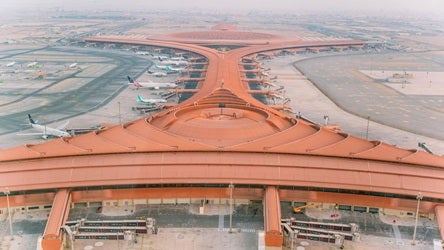
Jedco maps next phase of Jeddah airport expansion
22 September 2026
Jeddah Airports Company (Jedco) has outlined plans for the next phase of expansion at King Abdulaziz International airport (KAIA) in Jeddah.
The programme comprises six upcoming contractor packages spanning airside works, terminal upgrades and utilities as Jedco advances its long-term expansion plans.
The opportunities include airfield rehabilitation; a five-year construction framework covering multiple workstreams and facility types; a Terminal 3A (T3A) package; Terminal 1 (T1) optimisation; a fuel farm; and Concourse C works.
The packages cover terminal buildings and ancillary facilities, runways, taxiways and aprons, hangars, fuel systems, airside facilities, supporting infrastructure and utility networks.
Tendering and award activity will be staggered over the next two years. Airfield rehabilitation is targeted for Q3 2026. The construction framework is scheduled for Q4 2026 and will run for five years.
The T3A package is planned for Q1 2027 and will be delivered under an early contractor involvement contract. Local contractors are encouraged to bid as part of a joint venture with an experienced international partner.
T1 optimisation is planned for Q4 2027, the fuel farm for Q2 2027, and Concourse C – currently the latest of the six milestones – for Q2 2028.
The new packages add detail to Jedco’s wider expansion plans disclosed in 2023, when it was reported that the company would invest SR115bn ($31bn) to increase KAIA’s capacity to 114 million passengers a year, with an overall completion target of 2031.
Jedco has recently awarded several significant contracts linked to the airport’s upgrade programme.
In November 2024, a joint venture of local Algihaz Contracting and Turkey’s TAV was awarded a contract to rehabilitate the South Terminal to serve Umrah and Hajj pilgrims, with Singapore’s Surbana Jurong acting as consultant.
Earlier that year, Jedco also awarded France’s Alstom a contract to increase the capacity of the Innovia automated people mover at Terminal 1, including new cars and upgrades to signalling, communications and controls.
Surbana Jurong is expected to play a leading role in future KAIA expansion plans and is currently providing technical advisory and project management consultancy for more than 100 capital projects for Jedco, valued at over SR6bn ($1.6bn).
These upgrades are expected to boost KAIA’s annual capacity in line with Saudi Arabia’s Vision 2030 and National Aviation Strategy, enhancing the experience for domestic travellers and millions of Hajj and Umrah pilgrims.
https://image.digitalinsightresearch.in/uploads/NewsArticle/19877992/main.jpg -
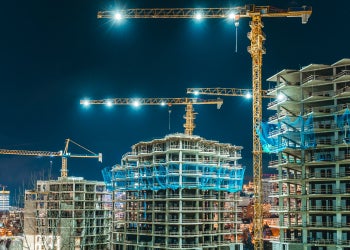
Contractor wins $105m Medina university hospital deal
22 September 2026
Riyadh-based construction firm Al-Mansouria General Contracting Company has been awarded a SR396m ($105.6m) contract to complete the remaining construction works on the Taiba University Hospital project in Medina.
The contract scope includes structural completion, remaining civil works, mechanical, electrical and plumbing installations, specialised clinical fit-outs and medical gas infrastructure to bring the long-stalled facility into operation.
Located on King Khalid Road along Medina’s Third Ring Road, the teaching hospital will have a capacity of 563 beds.
The contract duration is three years, with delivery targeted for late 2029.
The latest award follows a prolonged procurement cycle that began more than a decade ago as part of a public budget drive to expand Saudi Arabia’s higher education infrastructure.
The project’s first phase was initially signed in December 2011 with local firm Al-Muhaidib Contracting under a SR500m ($133.3m) contract.
Groundbreaking for the eight-storey complex took place in July 2013. The project covers a gross floor area of more than 200,000 square metres.
Progress stalled shortly thereafter due to reported structural delays and the reallocation of public capital budgets across the kingdom’s social infrastructure pipeline.
 READ THE SEPTEMBER 2026 MEED BUSINESS REVIEW – click here to view PDF
Nuclear power ambitions gather pace; Kuwait keeps dealmaking alive despite war; Region invests in raising gas processing capacity.
Distributed to senior decision-makers in the region and around the world, the September 2026 edition of MEED Business Review includes:
> AGENDA: Gulf nuclear revival takes shape> MARKET FOCUS: Kuwait keeps dealmaking alive under fire> INDUSTRY REPORT: Gas processing takes centre stage in Mena regionTo see previous issues of MEED Business Review, please click herehttps://image.digitalinsightresearch.in/uploads/NewsArticle/19870032/main.jpg -
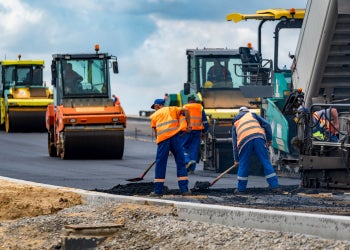
Oman tenders Thumrait Industrial City infrastructure
22 September 2026
Oman’s Public Establishment for Industrial Estates (Madayn) has tendered an estimated RO15m ($39m) contract to develop infrastructure for Thumrait Industrial City.
The tender was issued on 14 September, with bids due by 12 November.
The scope covers site-wide utilities and services, including an internal road network, stormwater channels and culverts. It also includes installing sewerage and water networks, along with landscaping works.
In addition, Madayn intends to build plug-and-play industrial units and a facilities building.
The first phase of the development will cover about 120,000 square metres (sq m).
Thumrait Industrial City is located in Oman’s Dhofar Governorate and spans an area of more than four million sq m.
The project location is close to concession blocks, quarry sites and the Najd agricultural areas. It is positioned to attract industrial investments in sectors such as mining and minerals processing (including gypsum and cement), food production, and a range of light and general manufacturing activities.
In March, Madayn said it is preparing to invest more than RO245m ($637m) to upgrade and expand infrastructure across its industrial cities between 2026 and 2030, as part of efforts to attract new investment and advance economic diversification.
According to media reports, Madayn chief executive Dawood Bin Salim Al-Hadabi said the programme is part of an expanded, phased plan aligned with Oman Vision 2040 and the authority’s long-term Madayn 2040 strategy.
The objective is to deepen Oman’s industrial base and spread growth across the sultanate’s governorates.
Madayn said the pipeline comprises about 90 strategic projects to improve industrial-city infrastructure, extend serviced land and increase the overall ease of doing business for investors.
https://image.digitalinsightresearch.in/uploads/NewsArticle/19866218/main.jpg -
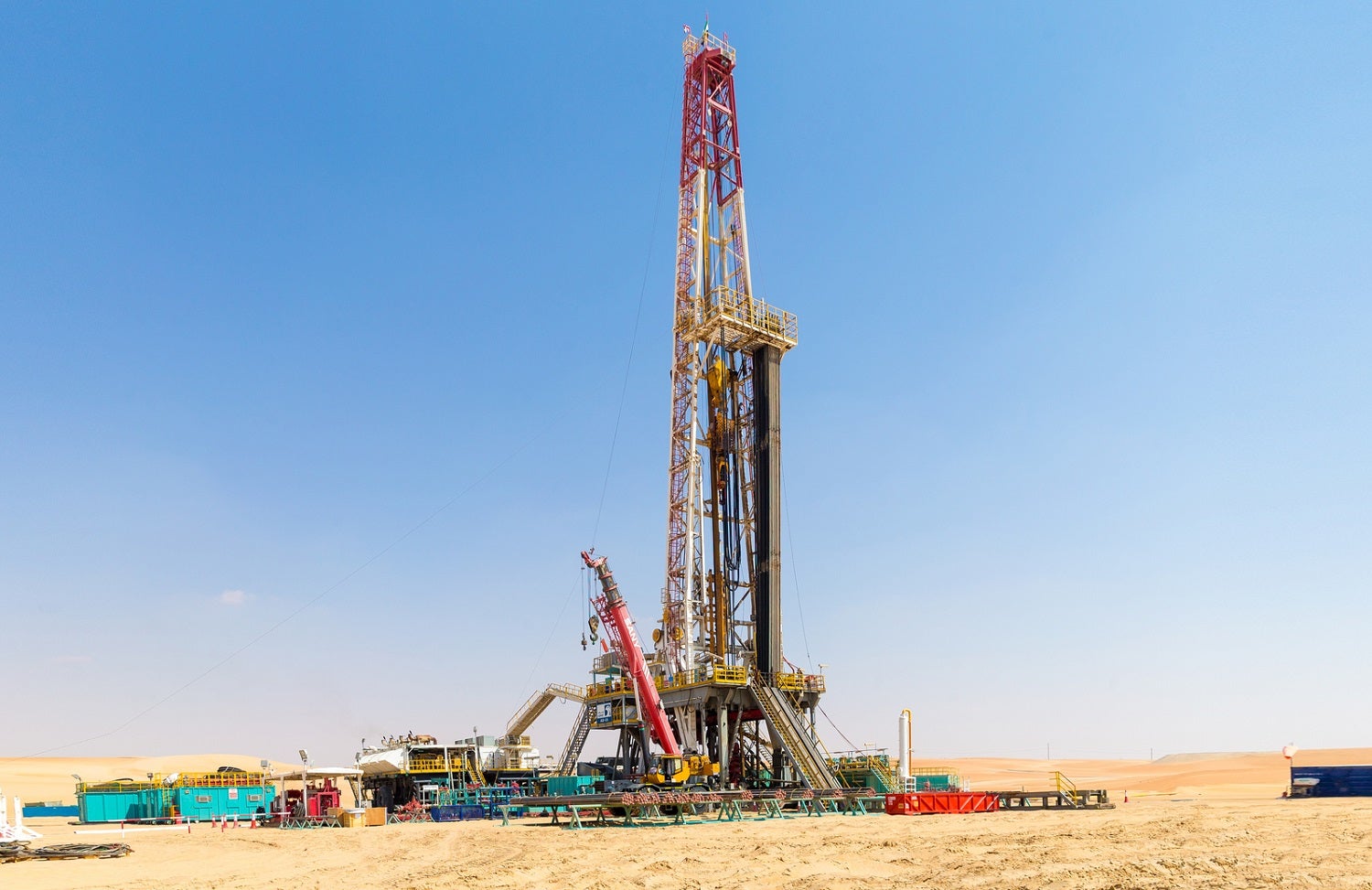
Kuwait halves drilling contractor pool
22 September 2026
State-owned upstream operator Kuwait Oil Company (KOC) has reduced the number of approved contractors for onshore drilling and shallow-well maintenance from 51 to 24.
Firms that are no longer qualified include major contractors such as Italy’s Saipem, Oklahoma-based Helmerich & Payne and Houston-based Patterson-UTI Energy.
The latest list still includes a wide range of Kuwaiti, regional and international companies, according to the latest update on its electronic system, published on 21 September 2026.
The full list of contractors that are now qualified to participate in tenders is:
- Burgan Company for Well Drilling, Trading & Maintenance (Kuwait)
- Kuwait Drilling Company (Kuwait)
- Sun Drilling Kuwait (Kuwait)
- TDL Kuwait for Oil Rigs & Natural Gas Extraction Activities, Services and Facilities (Kuwait)
- United Precision Drilling (Kuwait)
- Abraj Energy Services (Oman)
- Adnoc Drilling Company (UAE)
- Arabian Drilling Company (Saudi Arabia)
- Anton Oilfield Services (China)
- China Oilfield Services (China)
- Egyptian Drilling Company (Egypt)
- CNPC Bohai Drilling Engineering Company (China)
- Great Wall Drilling Company (China)
- John Energy (India)
- Kerui Oilfield Service (China)
- KCA Deutag Drilling (Germany)
- Mohammed Al-Barwani Petroleum Services (Oman)
- Nabors Drilling International (US)
- National Drilling & Services Company (Oman)
- Sea & Land Drilling Contractors (Oman)
- Sinopec International Petroleum Service Corporation (China)
- Karamay Jianye Energy (China)
- Modern Drilling Company (Egypt)
- Grey Wolf Drilling International (US)
An earlier list, which was published on 11 February, included 51 qualified companies.
The reduction in qualified drilling contractors follows KOC’s notice on 27 April this year, informing existing qualified contractors that they would need to reapply.
https://image.digitalinsightresearch.in/uploads/NewsArticle/19863744/main3435.jpg -
Abu Dhabi expects 45% emissions cut as electricity demand rises
21 September 2026
Register for MEED’s 14-day trial access
Abu Dhabi-based Emirates Water & Electricity Company (Ewec) expects carbon emissions from power and water production to fall by more than 45% by 2035 as the UAE expands renewable energy and reverse osmosis (RO) desalination.
The state offtaker's latest long-term system planning forecasts emissions will decline from about 42 million tonnes in 2019 to approximately 23 million tonnes in 2035.
The reduction is expected despite annual electricity demand that is forecast to rise by about 70% in 2026-33.
Ewec said the expansion of renewable energy and the shift towards RO desalination will be the principal drivers of the reduction.
The company plans to increase Abu Dhabi's solar capacity to 14GW by 2030 and more than 35GW by 2035. This will be supported by up to 15GW of battery storage capacity.
According to regional project tracker MEED Projects, Ewec has over $16bn-worth of power and water projects in the execution stage as part of its long-term procurement programme to increase renewable energy and low-carbon water production capacity.
This includes a 5.2GW Abu Dhabi solar and battery energy storage system (bess) round-the-clock renewable energy project, as well as three 1.5GW solar photovoltaic independent power projects (IPP): Al-Ajban, Al-Khazna and Al-Zarraf.
It also comprises the 1GW Al-Dhafra open-cycle gas turbine power plant, the 2.5GW Taweelah C combined-cycle gas turbine (CCGT) plant and a separate 400MW bess IPP.
As previously reported, it is expected that the developer's agreement for the 3.3GW Al-Nouf 1 CCGT IPP will be signed by the end of the year, while contractors are preparing to submit bids for a separate 2.6GW power plant project in Ajman.
The expansion of solar and battery storage is expected to reduce the system's reliance on gas-fired generation. However, gas-fired generation will continue to provide flexibility to support the system and balance intermittent renewable power output, according to Ewec.
The offtaker also expects RO desalination to account for more than 95% of total water production by 2035, with the procurement programme supporting the Abu Dhabi Department of Energy's Clean Energy Strategic Target 2035 for electricity production and the UAE Net Zero by 2050 Strategy.
READ THE SEPTEMBER 2026 MEED BUSINESS REVIEW – click here to view PDFNuclear power ambitions gather pace; Kuwait keeps dealmaking alive despite war; Region invests in raising gas processing capacity.
Distributed to senior decision-makers in the region and around the world, the September 2026 edition of MEED Business Review includes:
> AGENDA: Gulf nuclear revival takes shape> MARKET FOCUS: Kuwait keeps dealmaking alive under fire> INDUSTRY REPORT: Gas processing takes centre stage in Mena regionTo see previous issues of MEED Business Review, please click herehttps://image.digitalinsightresearch.in/uploads/NewsArticle/19849749/main.jpg