
Saudi gigaproject procurement tests supply chain
23 May 2023
Saudi Arabia gigaproject client Roshn has underlined the scale of the procurement challenge as the kingdom seeks to deliver its massive capital projects programme.
Speaking at the Future Projects Forum in Riyadh on 23 May, Ayman Baz, procurement associate director at Roshn, outlined the real estate developer’s materials requirements to deliver its housing programme, covering the construction of more than 10 communities in nine cities, with more than 50,000 units in total.
In total, Roshn estimates it needs:
- 40 million cubic metres of concrete
- 4.3 million windows
- 7 million metres of high-density polyethylene pipes
- 3.5 million air-conditioning units
- 4 million wooden doors
- 11.5 million LED light fittings
- 1 million steel doors
- 4.5 million square metres (sq m) of kitchen cabinets
- 80 million sq m of porcelain tiles
- 23 million wiring devices
- 250 million cubic metres of paint
- 6.5 million pieces of sanitary ware
Roshn is one of five official gigaproject clients that, when combined together, have a project pipeline of more than $700bn, a total that rises to more than $1tn when taking into account other construction and infrastructure projects in Saudi Arabia, according to regional projects tracker MEED Projects.
Delivering this pipeline is a significant challenge facing Saudi Arabia, especially given that it wants to source much of its procurement requirements domestically.
It remains to be seen whether there is sufficient labour, engineering, contracting and supplier capacity to complete the kingdom's projects within specified timeframes, and major clients are already looking to secure long-lead items in advance of a potential supply crunch or any inflation in material costs.
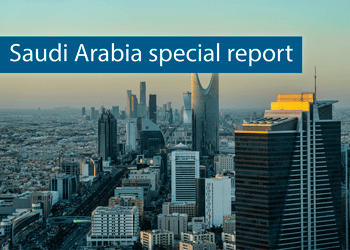
MEED's latest special report on Saudi Arabia includes:
> GIGAPROJECTS: Saudi Arabia under project pressure
> ECONOMY: Riyadh steps up the Vision 2030 tempo
> CONSTRUCTION: Saudi construction project ramp-up accelerates
> UPSTREAM: Aramco slated to escalate upstream spending
> DOWNSTREAM: Petchems ambitions define Saudi downstream
> POWER: Saudi Arabia reinvigorates power sector
> WATER: Saudi water begins next growth phase
> BANKING: Saudi banks bid to keep ahead of the pack
> DATABANK: Riyadh holds its buoyant economic heading

Register for MEED's guest program now to access this article.
Exclusive from Meed
-
 SAR prepares phosphate rail second section contract award
25 September 2026
-
 Meraas awards $272m Nad Al-Sheba Gardens villas deal
25 September 2026
-
 KBR opens new office in Libya
25 September 2026
-
 Contractors submit bids for jet fuel pipeline to Doha airport
25 September 2026
-
 Saudi projects hold steady
24 September 2026
All of this is only 1% of what MEED.com has to offer
Subscribe now and unlock all the 153,671 articles on MEED.com
- All the latest news, data, and market intelligence across MENA at your fingerprints
- First-hand updates and inside information on projects, clients and competitors that matter to you
- 20 years' archive of information, data, and news for you to access at your convenience
- Strategize to succeed and minimise risks with timely analysis of current and future market trends

Related Articles
-
SAR prepares phosphate rail second section contract award
25 September 2026

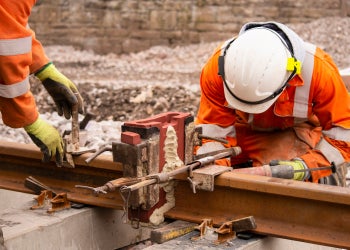
Saudi Arabian Railways (SAR) is preparing to formally award another multibillion-riyal contract to double the tracks on the existing phosphate transport railway network connecting the Waad Al-Shamal mines to Ras Al-Khair in the kingdom’s Eastern Province.
The contract covers construction works on the second section of the railway line, spanning more than 150 kilometres (km).
The scope of work includes civil works, alignment modifications, track and loop construction, and associated infrastructure such as bridges and culverts, as well as enhancements to signalling and telecommunications systems.
SAR floated the tender in February, and bids were submitted in April.
SAR is making significant progress on its Phosphate 3 rail programme. Last month, MEED exclusively reported that SAR had awarded an estimated SR4bn-plus ($1.1bn) contract to add another track to the first section of the existing phosphate transport railway network.
The contract was awarded to local firm Alomaier Trading & Contracting Company.
The scope includes track doubling, alignment modifications, utility bridges, culvert widening and hydrological structures, as well as the conversion of the AZ1 siding into a mainline track. It also covers support works for signalling and telecommunications systems.
The existing railway runs from the Waad Al-Shamal mines to Ras Al-Khair. The first-section works will cover about 100km, connecting the AZ1/Nariyah Yard to Ras Al-Khair.
Switzerland-based engineering firm ARX is the project consultant.
Formerly known as the North-South Railway, the North Train is a 1,550km freight line running from the phosphate and bauxite mines in the far north of the kingdom to the Al-Baithah junction. From there, it diverges into a line south to Riyadh and another line east to downstream fertiliser production and alumina refining facilities at Ras Al-Khair on the Gulf coast.
Adding a second track and freight yards will significantly increase the network’s cargo-carrying capacity and support growth in industrial production. Project implementation is expected to take four years.
State-owned SAR is also considering increasing the localisation of railway materials and equipment, including developing a cement sleeper manufacturing facility.
https://image.digitalinsightresearch.in/uploads/NewsArticle/19983928/main.jpg -
Meraas awards $272m Nad Al-Sheba Gardens villas deal
25 September 2026
Dubai-based real estate developer Meraas Holding, part of Dubai Holding, has awarded a AED1bn ($272m) contract for the construction of the seventh phase of the Nad Al-Sheba Gardens community.
The contract, which covers the delivery of 272 villas and townhouses, was awarded to local firm GCC Contracting.
The scope of work includes 130 villas, 142 three-bedroom townhouses, and associated utilities and infrastructure.
Construction has started, and the project is slated for completion in 2028.
Last year, Meraas awarded a AED690m ($188m) contract for the construction of the fourth phase of the Nad Al-Sheba Gardens community in Dubai.
Meraas awarded the contract to local firm Bhatia General Contracting.
The scope of that contract covers the construction of 92 townhouses, 96 villas and two pool houses.
In December last year, Meraas announced the eleventh and final phase of its Nad Al-Sheba Gardens residential community. This phase includes the development of 210 new villas and townhouses, as well as a school, located in the northwest corner of the development.
According to UK analytics firm GlobalData, the UAE’s construction industry will register annual growth of 3.9% between 2025 and 2027, supported by investments in infrastructure, renewable energy, oil and gas, housing, industrial and tourism projects.
The residential construction sector is expected to record an average annual growth rate of 2.7% between 2025 and 2028, supported by private investment in residential housing, along with government initiatives to meet rising demand.
https://image.digitalinsightresearch.in/uploads/NewsArticle/19983032/main.png -
KBR opens new office in Libya
25 September 2026
US-based KBR has opened a local branch office in Libya as it seeks to expand operations in the country, according to industry sources.
The local branch opening follows several significant contract wins in the country.
In March, KBR announced that it had been awarded a contract by Zallaf Exploration, Production & Refining of Oil & Gas Company to provide project management and technical services for the South Refinery Project in Libya’s southern city of Ubari.
Under the terms of the contract, KBR will provide contract management, project management and supporting technical services throughout the engineering, procurement and construction (EPC) phases of the project, according to a company statement.
The EPC work is expected to be executed over a 50-month period.
In its statement, KBR said that the project was aligned with its “long-standing commitment to advancing vital oil and gas infrastructure in Libya”.
KBR is currently re-evaluating the front-end engineering and design (feed) for the project to develop the J6 North Gialo field in Libya.
In February this year, KBR officials said registration procedures to open a local branch were being finalised and that the company was seeking the necessary operating permits.
KBR has previously provided engineering services for major national projects in Libya, but was forced to shut down its office in the country several times amid political instability and security issues.
When the company was known as Brown & Root, it worked on the Great Man-Made River Project in Libya, which is widely recognised as the largest irrigation project in the world.
https://image.digitalinsightresearch.in/uploads/NewsArticle/19981331/main.png -
Contractors submit bids for jet fuel pipeline to Doha airport
25 September 2026
Contractors have submitted technical bids for a QatarEnergy project to build a pipeline that will supply Jet A-1 fuel from its tank farm in Mesaieed Industrial City to Hamad International airport in Doha, a distance of approximately 53 kilometres.
According to information obtained by MEED Projects, the following locally based contractors are understood to have submitted technical bids for the project earlier in September:
- Doha Petroleum Construction Company (Dopet)
- Qatar Engineering & Construction Company (QCon)
- CAT Group (Qatar branch of Lebanese contractor)
- MedGulf Construction Company
Following the receipt of technical bids, QatarEnergy has requested commercial proposals for the project in October, according to MEED Projects.
The scope of work includes:
- Installation of a fully welded 53km steel pipeline, including pressure testing and non-destructive testing inspection
- Trenching, bedding, laying, backfilling, reinstatement, erosion control, landscaping and restoration works
- Construction of a pumping station, including motors and drives, redundancy provisions, safety systems, instrumentation and controls
- Implementation of a pigging system, including launchers and receivers, and provision for inspection, purging and isolation
- Installation of instrumentation and metering for flow, pressure and temperature monitoring and control
- Construction of electrical supply infrastructure, including substations, switchgear, earthing and emergency shutdown provisions
- Integration of a leak detection system, sectional block valves, SCADA communications and redundancy provisions
QatarEnergy operates crude oil refining facilities, including natural gas liquids units, petrochemical production complexes and other assets across the hydrocarbon value chain in Mesaieed Industrial City, located about 45km south of Doha.
https://image.digitalinsightresearch.in/uploads/NewsArticle/19957351/main.jpg -
Saudi projects hold steady
24 September 2026
 Commentary
Colin Foreman
EditorSaudi Arabia’s project market is holding steady in 2026, with contract awards reaching $68bn in the year so far. The resilience is notable given the regional conflict that began in February and ongoing security threats that have disrupted shipping through key maritime chokepoints.
The kingdom’s investment strategy has also shifted. After years of aggressive project spending through sovereign wealth vehicle the Public Investment Fund, Riyadh has moved towards event-driven procurement with fixed deadlines: the 2034 Fifa World Cup, Expo 2030 Riyadh and non-negotiable housing and healthcare commitments, together with a focus on the future economy with major investments earmarked for data centres.
The approach is leaner than the sprawling gigaproject model that characterised early Vision 2030 years, and more focused on achieving tangible milestones.
Construction contract awards hit $20bn in the first half of this year, maintaining momentum against the backdrop of geopolitical uncertainty and a GDP contraction in the second quarter.
Saudi Aramco’s upstream investment programme remains substantial, with $50bn-$55bn committed for 2026, split about 65%-70% towards oil and gas. Major projects including the Dorra gas field development and the Jafurah unconventional gas expansion are progressing, underpinned by the company’s strategy of maintaining oil production at 12 million barrels a day while expanding gas capacity.
Downstream activity is also contributing. Chemicals giant Saudi Basic Industries Corporation (Sabic) approved $3.6bn in projects this year, led by the San VII ammonia and urea complex, which was awarded to South Korea’s Samsung E&A for $3.47bn. The company is returning to significant capital investment after several years of constrained spending.
Power sector activity is shifting towards transmission and battery storage infrastructure to support renewable energy targets. The kingdom’s infrastructure pipeline encompasses $175bn of projects in the transport, rail, aviation and roads segments.
Private sector participation is expanding through public-private partnership (PPP) structures, with the National Centre for Privatisation & PPP managing about 200 projects in 17 sectors, worth approximately $190bn.
The market needs more awards. Project completions have reached $91.5bn in 2026, outpacing awards by 35%. While this reflects successful execution of work awarded in prior years, it also indicates that new deals are required in the coming months to maintain activity levels into 2027.
MEED’s September 2026 report on Saudi Arabia includes:
> GOVERNMENT: Riyadh looks to reset its regional defence outlook
> ECONOMY: Conflict bolsters case for Saudi economic diversification
> BANKING: Saudi lenders readjust to lower lending and deposit climate
> UPSTREAM: Aramco upstream spending gathers pace
> DOWNSTREAM: Sabic steps up Saudi petchems investment
> POWER: Saudi Arabia’s power award activity slows
> WATER: Saudi water sector hits sharp slowdown
> CONSTRUCTION: Saudi construction defies the headwinds
> TRANSPORT: Saudi infrastructure pushes forward amid conflictTo see previous issues of MEED Business Review, please click herehttps://image.digitalinsightresearch.in/uploads/NewsArticle/19794535/main.gif