
Middle East banks embrace ESG strategies
27 February 2023
Financial institutions in the Middle East and North Africa (Mena) are scaling up environmental, social and governance (ESG) principles in their business models, according to insights from US-based consultancy Arthur D. Little.
This is evidenced by a growing number of banks moving from defining ESG strategies towards implementation.
The region recorded $24.55bn worth of green and sustainable finance issuances in 2021, a 532 per cent year-on-year increase compared to $3.8bn raised in 2020.
Notable transactions included a $3bn green loan issued by Egypt; Etihad Airways raising $1.2bn through a sustainability-linked loan in October; and a $100m revolving green loan signed by Masdar in December.
The tail end of 2022 saw $1.25bn raised by retail conglomerate Majid al-Futtaim (MAF). Led by First Abu Dhabi Bank, the revolving credit facility is linked to MAF's ESG goals, such as reducing scope 1 and 2 emissions; implementing LEED certification for its buildings; and improving gender diversity.
Meanwhile, at the outset of 2023, Qatar said that it was eyeing $75bn worth of investments in sustainable finance.
Institutions, however, find that the complexity of ESG data has not been entirely captured and addressed by current data governance frameworks, leaving these banks to resort to ad hoc solutions for collecting, managing and governing ESG data.
"Banks in the Middle East have embraced the importance of a well-defined ESG strategy," says Nael Amin, senior manager, financial services practice at Arthur D. Little.
"During the next step, implementation and frameworks such as data governance are vitally necessary. The shift from strategy to implementation is complex and detail-oriented. Different use cases of ESG have different data requirements and multiple stakeholders who add to the complexity. Thus, there is no standard “one size fits all” in regard to ESG data.”
1. Dynamic ESG data requirements
2. Lack of data availability and transparency
3. Inconsistent data quality
Related reads:

Register for MEED's guest program now to access this article.
Exclusive from Meed
-
 Contractors confirm $683m Oman power plant contract
21 August 2026
-
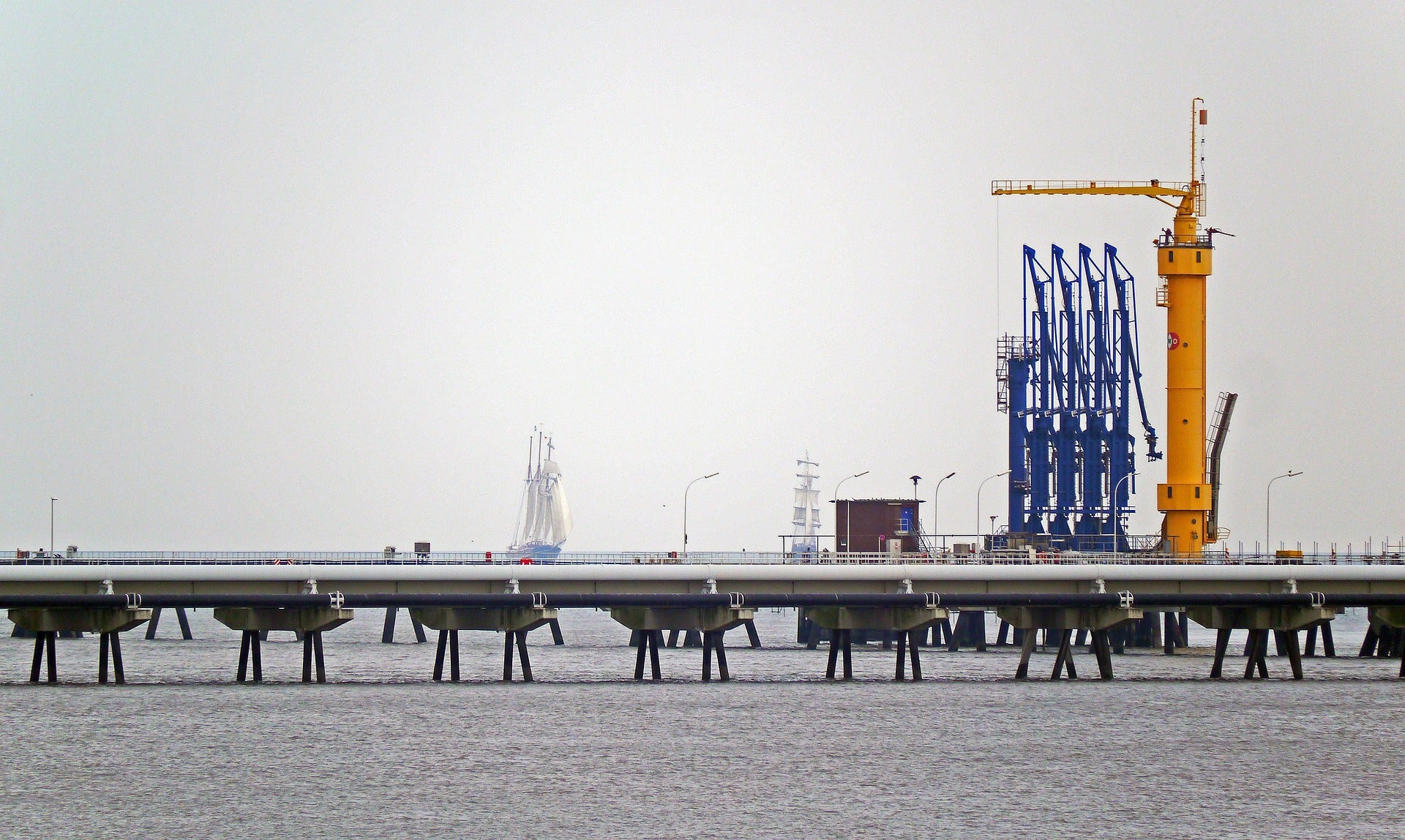 Adnoc plans new offshore-to-onshore oil transport pipeline
20 August 2026
-
 Contractors confirm Al-Maktoum airport people-mover award
20 August 2026
-
 Saudi Arabia awards estimated $1bn phosphate rail deal
20 August 2026
-
All of this is only 1% of what MEED.com has to offer
Subscribe now and unlock all the 153,671 articles on MEED.com
- All the latest news, data, and market intelligence across MENA at your fingerprints
- First-hand updates and inside information on projects, clients and competitors that matter to you
- 20 years' archive of information, data, and news for you to access at your convenience
- Strategize to succeed and minimise risks with timely analysis of current and future market trends

Related Articles
-
Contractors confirm $683m Oman power plant contract
21 August 2026
Register for MEED’s 14-day trial access
China-headquartered Shandong Electric Power Construction No. 3 Company (Sepco 3) and South Korea’s Doosan Enerbility have confirmed their involvement as contractors on the 1,700MW Misfah combined-cycle gas turbine (CCGT) project in Oman.
In a statement, Sepco 3 said it signed the contract on 20 August. On 21 August, Doosan disclosed a KRW930bn ($683m) contract with Jabel Power, the project company for the Misfah plant. The contract runs from 20 August 2026 to 1 April 2029.
The same consortium signed the engineering, procurement and construction (EPC) contract for the 890MW Duqm CCGT power plant in June. At the time, Doosan disclosed a contract worth about $350m.
In May, MEED exclusively reported that the group had been appointed as the main contractor for the two power plants, subject to the official signing.
State offtaker Nama Power & Water Procurement (Nama PWP) had previously signed power-purchase agreements (PPAs) for the development and operation of the plants.
The developer’s contract was awarded to a consortium comprising Korea Western Power (Kowepo), Qatar’s Nebras Power, the UAE’s Etihad Water & Electricity (EtihadWE) and Oman’s Bhawan Infrastructure Services.
As MEED understands, construction works have already commenced on the power plant projects. A China-based procurement listing in June shows that civil works procurement was under way for the Misfah independent power producer (IPP).
The civil package F tender covered piling, reinforcement cages, concrete works and pile testing, with work scheduled to start in July and finish by November
As reported in July, Germany’s Siemens Energy will supply power generation technology and long-term service agreements for the Misfah and Duqm IPP projects.
This includes the supply of six F-class gas turbines, six generators and 20-year long-term service agreements for the equipment.
The Misfah IPP will be led by Nebras Power and located in Wilayat Bousher in Muscat Governorate. The Duqm IPP will be led by Kowepo and located in Wilayat Duqm in Al-Wusta Governorate.
According to Nama PWP, the total investment for the two projects is estimated at approximately RO1bn ($2.6bn).
Synergy Consulting is the financial adviser and lead adviser to Nama PWP for these projects.
In November, Oman’s OQ Gas Networks received final investment approval to proceed with gas supply connections for the facilities.
The Misfah IPP will receive 8.5 million cubic metres a day (cm/d) of natural gas. The Duqm IPP will be supplied with 4.5 million cm/d of natural gas.
In March 2025, the same Sepco 3 and Doosan Enerbility consortium signed an EPC contract with Saudi Electricity Company to expand Riyadh Power Plant 12 (PP12). Located about 150 kilometres northwest of Riyadh, the 1,863MW power plant is expected to be completed in 2028.
 READ THE AUGUST 2026 MEED BUSINESS REVIEW – click here to view PDF
Saudi Arabia builds for the global stage; Rising uncertainty creates fresh set of challenges in the Maghreb; Gulf banks remain robust in the face of geopolitical tensions.
Distributed to senior decision-makers in the region and around the world, the August 2026 edition of MEED Business Review includes:
> WORLD CUP: What the 2026 World Cup means for Saudi Arabia 2034> MARKET FOCUS: Maghreb fortunes diverge> INDUSTRY REPORT: GCC banks prove resilient amid turmoil> LEADERSHIP: Private capital and the GCC infrastructure inflection> INTERVIEW: Developers look beyond standalone solarTo see previous issues of MEED Business Review, please click herehttps://image.digitalinsightresearch.in/uploads/NewsArticle/18911106/main.jpg -
Adnoc plans new offshore-to-onshore oil transport pipeline
20 August 2026

Register for MEED’s 14-day trial access
Abu Dhabi National Oil Company is moving ahead with an ambitious plan to build an oil pipeline network that will transport oil from its main offshore oil processing islands in the Gulf to its onshore crude export terminal in Jebel Dhanna, Abu Dhabi.
The planned pipeline network will source crude from Zirku Island and Das Island, where Adnoc gathers and treats oil produced at Abu Dhabi’s offshore fields, among other processing hubs, and transport those volumes across 300 kilometres inland to the Jebel Dhanna terminal.
According to sources, the proposed pipelines will eventually connect to the West-East crude pipeline network currently being built from Abu Dhabi’s Jebel Dhanna to the emirate of Fujairah, and is expected to be commissioned in 2027.
The Abu Dhabi energy giant has awarded a contract for concept studies and front-end engineering and design (feed) to Abu Dhabi-based NT Energies, a joint venture of Abu Dhabi-based contractor NMDC Energy and France’s Technip Energies, sources told MEED.
NT Energies is expected to carry out the concept studies and feed on a “fast-track basis”, with the work anticipated to take seven months, sources said.
A kick-off meeting between the client and the appointed consultant took place on 6 July, sources added.
Additionally, Adnoc has appointed Australia-headquartered Worley to provide project management consultancy (PMC) services, sources further said.
West-East oil pipeline
In May, Adnoc said it was accelerating work on the West-East crude transport pipeline project from Jebel Dhanna to Fujairah, upon directions from its board.
The West-East pipeline project involves constructing a cross-country pipeline to transport crude from Adnoc’s export terminal at Jebel Dhanna to the Fujairah terminal, covering a distance of about 520km.
The pipeline will double Adnoc’s crude export capacity through Fujairah on the Indian Ocean coast and enable shipments to bypass the geopolitically volatile Strait of Hormuz.
Crude will be sourced from Adnoc’s offshore processing centres at Das, Zakum and Umm Lulu islands before being stored at new storage facilities to be built at the Jebel Dhanna terminal.
The pipeline will be segmented into three sections:
- Jebel Dhanna to Habshan main pumping station (MPS) – 115km
- Habshan MPS to Sweihan depot – 254km
- Sweihan depot to Fujairah terminal – 153km
Adnoc awarded Egyptian contractor Engineering for Petroleum & Process Industries (Enppi) an engineering, procurement and construction management (EPCm) contract for the project in February 2024.
Adnoc’s total spend on EPCm works could be as high as $3bn, MEED previously reported.
Sources have told MEED that Adnoc has, in turn, appointed state-owned China Petroleum Pipeline (CPP) and locally based Bin Asheer to carry out construction works on the three segments of the West-East pipeline network.
READ THE AUGUST 2026 MEED BUSINESS REVIEW – click here to view PDFSaudi Arabia builds for the global stage; Rising uncertainty creates fresh set of challenges in the Maghreb; Gulf banks remain robust in the face of geopolitical tensions.
Distributed to senior decision-makers in the region and around the world, the August 2026 edition of MEED Business Review includes:
> WORLD CUP: What the 2026 World Cup means for Saudi Arabia 2034> MARKET FOCUS: Maghreb fortunes diverge> INDUSTRY REPORT: GCC banks prove resilient amid turmoil> LEADERSHIP: Private capital and the GCC infrastructure inflection> INTERVIEW: Developers look beyond standalone solarTo see previous issues of MEED Business Review, please click herehttps://image.digitalinsightresearch.in/uploads/NewsArticle/18887774/main0639.jpg -
Contractors confirm Al-Maktoum airport people-mover award
20 August 2026
Register for MEED’s 14-day trial access
A team of Japan’s Mitsubishi Corporation and Indian contractor Larsen & Toubro (L&T) has confirmed that it has won a design-and-build contract for the automated people-mover (APM) system for phase one of Al-Maktoum International airport in Dubai.
In a statement released earlier today, L&T classified the contract as large, a term the company uses to denote an order value of $261m-$523m.
MEED exclusively reported in July that Dubai Aviation Engineering Projects (DAEP) had selected a contractor to deliver the APM system as part of the first phase of the $35bn expansion of the airport.
The APM system will serve as a critical facility for operations at Al-Maktoum International. The system will run under the apron of the entire airfield and the airport’s terminals. It will consist of several tracks, taking passengers from the terminals to the concourses.
Four underground stations will be built as part of the first phase. The overall plan includes 14 stations at the airport.
The firms submitted the bids for the project in July last year, as MEED exclusively reported.
The contract is the latest in a series of awards signed by DAEP recently. It has awarded contracts valued at about AED13bn ($3.5bn), with construction works currently under way on several airport packages.
These include enabling works, the second runway and the initial structural foundations for passenger terminals and gates.
Upcoming awards
In June, DAEP said that it will award contracts worth over AED55bn ($15bn) by the end of this year for construction works at Al-Maktoum International airport.
The projects slated for contract awards include the substructure works for the western passenger terminal, the fourth aircraft concourse building and the baggage handling system, in addition to the superstructure works for the western passenger terminal and the first, second and third aircraft concourses.
The packages also encompass long-span structural frameworks for buildings covering about 1.5 million square metres (sq m), infrastructure works for the southern airfield area and power generation and district cooling plants supporting the construction programme.
The award of the facade and roofing packages is also planned for this year.
Construction progress
In May last year, MEED exclusively reported that DAEP had awarded a AED1bn ($272m) deal to UAE firm Binladin Contracting Group to construct the second runway at the airport.
The enabling works on the terminal were awarded to Abu Dhabi-based Tristar E&C.
Construction on the project’s first phase is expected to be completed by 2032.
Construction of substructure works began in November last year, when DAEP formally selected a contractor to deliver the package.
The government approved the updated designs and timelines for its largest construction project in April 2024.
In a statement, the authorities said the plan is for all operations from Dubai International airport to be transferred to Al-Maktoum International within 10 years.
According to an official description on DAEP’s website, the expanded airport’s West Terminal will be a seven-level, 800,000 sq m facility with an annual capacity of 45 million passengers.
It will be the second of three terminals at the airport.
In September 2024, MEED exclusively reported that a team comprising Austria’s Coop Himmelb(l)au and Lebanon’s Dar Al-Handasah had been confirmed as the lead masterplanning and design consultant on the expansion of Al-Maktoum.
The airport’s construction is planned to be undertaken in three phases. It will cover an area of 70 square kilometres south of Dubai and will have five parallel runways and 430 aircraft gates.
It will be five times the size of the existing Dubai International airport and will have the world’s largest passenger-handling capacity of 260 million passengers a year. For cargo, it will have the capacity to handle 12 million tonnes a year.
READ THE AUGUST 2026 MEED BUSINESS REVIEW – click here to view PDFSaudi Arabia builds for the global stage; Rising uncertainty creates fresh set of challenges in the Maghreb; Gulf banks remain robust in the face of geopolitical tensions.
Distributed to senior decision-makers in the region and around the world, the August 2026 edition of MEED Business Review includes:
> WORLD CUP: What the 2026 World Cup means for Saudi Arabia 2034> MARKET FOCUS: Maghreb fortunes diverge> INDUSTRY REPORT: GCC banks prove resilient amid turmoil> LEADERSHIP: Private capital and the GCC infrastructure inflection> INTERVIEW: Developers look beyond standalone solarTo see previous issues of MEED Business Review, please click herehttps://image.digitalinsightresearch.in/uploads/NewsArticle/18884056/main.png -
Saudi Arabia awards estimated $1bn phosphate rail deal
20 August 2026
Register for MEED’s 14-day trial access
Saudi Arabian Railways (SAR) has awarded an estimated SR4bn-plus ($1.1bn) contract to add another track to the first section of the existing phosphate transport railway network in the kingdom’s Eastern Province.
The contract was awarded to local firm Alomaier Trading & Contracting Company.
The scope includes track doubling, alignment modifications, utility bridges, culvert widening and hydrological structures, as well as the conversion of the AZ1 siding into a mainline track.
The scope also covers support for signalling and telecommunications systems.
The existing railway line runs from the Waad Al-Shamal mines to Ras Al-Khair. The new project will cover about 100 kilometres (km), connecting the AZ1/Nariyah Yard to Ras Al-Khair.
Switzerland-based engineering firm ARX is the project consultant.
The project is the first of four packages for the phosphate railway line that SAR is expected to award imminently.
In 2023, MEED reported that SAR was planning two projects to increase its freight capacity, including an estimated SR4.2bn ($1.1bn) project to install a second track on the North Train freight line and construct three new freight yards.
Formerly known as the North-South Railway, the North Train is a 1,550km-long freight line running from the phosphate and bauxite mines in the far north of the kingdom to the Al-Baithah junction. There, it diverges into a line southward to Riyadh and a second line running east to downstream fertiliser production and alumina refining facilities at Ras Al-Khair on the Gulf coast.
Adding a second track and the freight yards will significantly increase cargo-carrying capacity on the network and facilitate growth in industrial production. Project implementation is expected to take four years.
State-owned SAR is also considering increasing the localisation of railway-focused materials and equipment, including the construction of a cement sleeper manufacturing facility.
READ THE AUGUST 2026 MEED BUSINESS REVIEW – click here to view PDFSaudi Arabia builds for the global stage; Rising uncertainty creates fresh set of challenges in the Maghreb; Gulf banks remain robust in the face of geopolitical tensions.
Distributed to senior decision-makers in the region and around the world, the August 2026 edition of MEED Business Review includes:
> WORLD CUP: What the 2026 World Cup means for Saudi Arabia 2034> MARKET FOCUS: Maghreb fortunes diverge> INDUSTRY REPORT: GCC banks prove resilient amid turmoil> LEADERSHIP: Private capital and the GCC infrastructure inflection> INTERVIEW: Developers look beyond standalone solarTo see previous issues of MEED Business Review, please click herehttps://image.digitalinsightresearch.in/uploads/NewsArticle/18876428/main.jpg -
Libya and Tunisia reschedule joint oil and gas licensing round
19 August 2026
The Libyan-Tunisian Joint Oil Exploration, Exploitation & Petroleum Services Company (Joint Oil) has rescheduled its planned licensing round for offshore exploration and development projects in a zone spanning the waters of both countries.
The bidding process is now due to open on 7 September 2026, with bid submissions due by 8 January 2027.
Previously, in May, Joint Oil said it planned to open the bid round on 1 August 2026.
The upcoming round will offer two oil and gas packages. The first is an exploration package across the 3,000-square-kilometre Joint Oil Block, in water depths of 80-120 metres.
Significant data is available on the geology of this area, including 6,500km of 2D and 1,900 square kilometres of 3D seismic data. Data also exists from a run of legacy wells dating to 1976.
The second package covers development of the Zarat discovery specifically. This is a gas-condensate reservoir straddling the boundary between Tunisia’s national acreage and the jointly-held Joint Oil Block.
Joint Oil is equally owned by Tunisia’s national oil company, ETAP, and OLA Energy Holdings, a subsidiary of the Libya Africa Investment Portfolio (LAIP).
LAIP is a subsidiary of Libya’s sovereign wealth institution, the Libya Investment Authority.
Joint Oil was established under a bilateral agreement between Libya and Tunisia in 1988 to explore and develop hydrocarbons in offshore areas shared by the two countries.
The key dates from the new schedule for the licensing round are:
- 7 September 2026: Bid round opens; qualified offshore operators can apply for access to the Virtual Data Room
- 9 September 2026: Joint Oil presents the opportunity at the MMEA Scout Group meeting in London
- 29-30 September 2026: Joint Oil presents at the World Energy Summit in London
- 31 December 2026: Bid round closes
- 8 January 2027: Bid submissions due
- 26 February 2027: Winning bidders notified
- 30 April 2027: Formal awards expected
Texas-based Moyes & Co is acting as a strategic adviser on the licensing round.
Houston-headquartered Marathon discovered the Zarat field in 1992. It is estimated to hold around 0.4 trillion cubic feet of recoverable gas and 50 million barrels of liquids.
A previous development project concept centred on a mobile production unit, worth around $1bn, tied back to the nearby Miskar platform.
Despite this, the field has remained undeveloped for over three decades.
One of the key challenges to developing the reserve is its high carbon dioxide content.
Joint Oil has run bid rounds for the acreage before without success, including as recently as late 2023.
https://image.digitalinsightresearch.in/uploads/NewsArticle/18861047/main0914.jpg