
Frontrunners emerge for Saudi substation projects
9 November 2026

China’s TBEA Shandong Luneng Taishan Cable Company (TBEA) and Egypt’s Elsewedy have submitted the lowest bids for two substation projects in Riyadh Province, estimated to cost a combined $100m, sources have confirmed to MEED.
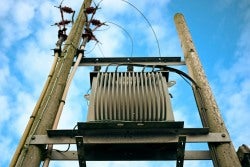
The $50m Qiddiya 2 Bulk Supply Point (BSP) project will provide a new bulk supply point to meet electricity demand in the Qiddiya development area. The scope includes constructing a main substation building and outdoor electrical yard, along with power transformers, high- and medium-voltage switchgear, protection and control systems, and supervisory control and data acquisition links.
The $50m Thadeq photovoltaic (PV) substation project will support grid connections and power exports from the Thadeq solar PV development. The scope includes a control building, outdoor switchyard, power transformers, switchgear, protection systems and Scada integration.
It is understood that both projects involve the construction of 380kV BSP substations.
Saudi Energy is the client for both projects.
The two tenders were issued earlier this year, with bids submitted in August and November for the Thadeq PV and Qiddiya 2 BSPs, respectively.
At Qiddiya, the additional infrastructure will support the development of entertainment, tourism, sports and residential facilities. Trading & Development Partnership is also developing a separate 380/132kV substation, known as BSP #9078, at Qiddiya.
The Thadeq project is part of the infrastructure required to connect new solar generation capacity to the national grid.
Saudi Energy has tendered several other 380kV substations and associated transmission lines this year, including projects serving planned solar and wind developments in the kingdom’s central, western and southern regions.
Bids were recently submitted for a separate BSP expansion project at Qurayyat in Al-Jawf Province, involving the construction of a 400kV substation to support higher power demand and improve grid reliability in the area.

Register for MEED's guest program now to access this article.
Exclusive from Meed
-
 Saudi Arabia signs $403m Syria infrastructure loans
9 November 2026
-
 Frontrunners emerge for Saudi substation projects
9 November 2026
-
 Contractor wins $197m Doha infrastructure works
6 November 2026
-
 Stakeholders aim to sign Iraq pipeline deal by year end
6 November 2026
-
 Taqa shortlists 17 contractors for Mirfa-Liwa scheme
6 November 2026
All of this is only 1% of what MEED.com has to offer
Subscribe now and unlock all the 153,671 articles on MEED.com
- All the latest news, data, and market intelligence across MENA at your fingerprints
- First-hand updates and inside information on projects, clients and competitors that matter to you
- 20 years' archive of information, data, and news for you to access at your convenience
- Strategize to succeed and minimise risks with timely analysis of current and future market trends
Related Articles
-
Saudi Arabia signs $403m Syria infrastructure loans
9 November 2026
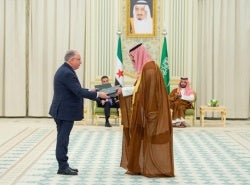
The Saudi Fund for Development (SFD) has signed six concessional loan agreements worth more than $403m to support power, water, healthcare, housing and other infrastructure projects in Syria.
The agreements include a $90m project to rehabilitate generating units at the Aleppo thermal power plant. The project is expected to benefit about 5 million people by restoring power-generation capacity and strengthening the stability of the national electricity grid.
The Aleppo thermal power plant has five generating units and an installed capacity of approximately 1,100MW. It is understood that at least three of the five generating units are out of operation and require rehabilitation. According to local media reports, rehabilitating these three units is estimated to take 18-24 months.
A further $30m will be allocated to upgrading Syria’s drinking water metering system. The project involves supplying and installing 300,000 smart water meters across several governorates, benefiting approximately 1.5 million people.
The remaining agreements cover civil defence, housing, healthcare and public finance.
A $105m loan will support the construction, rehabilitation and equipping of 25 civil defence centres across several governorates. The project is expected to benefit more than 7 million people and strengthen emergency response and disaster management capabilities.
A further $60m will finance the rehabilitation of up to 10,000 damaged housing units in various areas of the country.
The healthcare sector will receive $100m to rehabilitate, construct and equip hospitals and health centres. The funding will support restoring essential and specialised healthcare services and expanding access to medical facilities.
The final agreement, worth more than $18m, will support the digital transformation and institutional development of Syria’s Ministry of Finance by implementing an integrated financial services system.
The agreements were signed by SFD CEO Sultan Al-Marshad and Syrian Finance Minister Mohammed Yisr Barnieh in Riyadh on 5 November.
The financing is part of Saudi Arabia’s wider support for Syria’s recovery. In September 2025, the kingdom provided two grants to Syria to supply crude oil and cover part of government employees’ salaries for three months.
That same month, Saudi Arabia’s Acwa and Water Transmission Company (WTCO) signed a technical services agreement with Syria’s Ministry of Energy and German engineering group Fichtner to study the country’s water resources and identify future desalination and water transmission projects.
The work will examine the potential for desalination and water transmission capacity of up to 1.2 million cubic metres a day. WTCO has said the proposed transmission network could extend for about 400 kilometres.
https://image.digitalinsightresearch.in/uploads/NewsArticle/21211540/main0549.jpg -
Contractor wins $197m Doha infrastructure works
6 November 2026
Register for MEED’s 14-day trial access
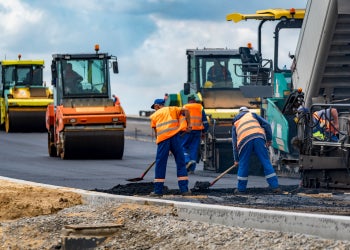
Qatar’s Public Works Authority (Ashghal) has awarded an estimated QR722m ($197m) contract to develop roads and infrastructure north of Al-Rifaa Street in Doha.
The contract was awarded to local firm Tadmur Contracting Company.
Six other contractors submitted bids:
- Qatar Trading & Contracting Group ($244m)
- Iris Construction Tourism Industry & Trade ($259m)
- Lotus Trading & Contracting ($260m)
- Generic Engineering Technologies & Contracting ($261m)
- Alghanim International / National Industrial Contracting ($268m)
- Hamad Bin Khalid Contracting Company ($281m)
The scope of work covers the construction of more than 34 kilometres of roads, dedicated plot developments, site clearance, backfill and earthworks.
The package also requires the installation of surface and groundwater drainage systems, a foul-water drainage network and treated sewage effluent lines.
In addition, the contractor will deliver a dedicated pumping station, an emergency flood area pond, 3,735 car parking spaces, road cross-sectional elements and verge parking bays.
Secondary infrastructure works include electrical distribution, water mains, utility lines, manholes, gully pots and house connections, along with kerbing, road pavement works, landscaping, street lighting, road markings and directional signage.
https://image.digitalinsightresearch.in/uploads/NewsArticle/21204827/main.jpg -
Stakeholders aim to sign Iraq pipeline deal by year end
6 November 2026
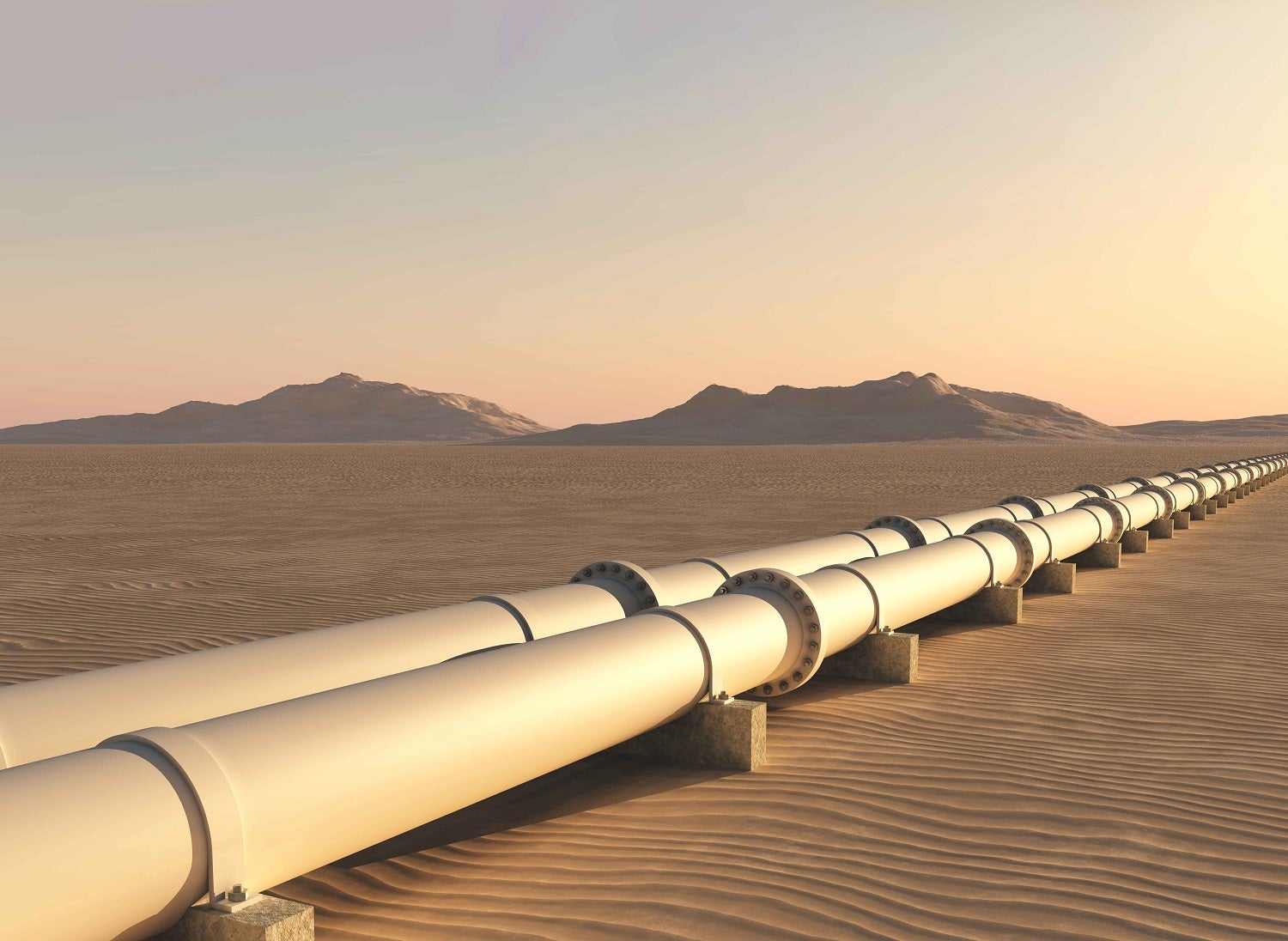
Stakeholders expect a key contract to be signed before the end of the year for the development of a major oil export pipeline network in Iraq, according to industry sources.
Iraq and Syria’s governments, state-owned oil companies and a consortium led by Qatar’s UCC are currently discussing the terms.
If all parties agree to the proposed deal, the UCC-led coalition will become the selected developer responsible for tendering engineering, procurement and construction (EPC) contracts for the project.
The consortium includes US-based Chevron, the investment company TI Capital and France’s TotalEnergies.
The proposed plan will use a fast-track framework to bring the pipelines online as quickly as possible.
One source said: “The plan that is being discussed is highly unusual, because it is such a large-scale pipeline project and it would be brought online in a relatively short timeframe.”
A team from UCC is currently in Iraq for meetings with government officials to discuss the project, one source said.
The project will be focused on four pipeline packages:
- Basra to Najaf
- Najaf to Haditha
- Haditha to Fish Khapour
- Haditha to Banias Port in Syria
In July, Iraq’s cabinet approved state-owned Basra Oil Company signing a heads of agreement and a non-disclosure agreement with the UCC-led consortium to explore possible future oil pipeline projects.
Under the terms of the agreement, the consortium is preparing technical and financial feasibility studies for strategic export pipeline projects.
Also in July, US-based KBR was awarded a consultancy contract for the section of pipeline due to extend from Basra to Haditha.
In April, Iraq announced the allocation of $1.5bn for the Basra-Haditha route, while the larger scheme is estimated at around $5bn.
https://image.digitalinsightresearch.in/uploads/NewsArticle/21181262/main.jpg -
Taqa shortlists 17 contractors for Mirfa-Liwa scheme
6 November 2026
Up to 17 contractors have been invited to submit bids for a major water transmission and distribution scheme serving Mirfa, Madinat Zayed and Liwa in Abu Dhabi, a source close to the project has confirmed to MEED.
The project, originally estimated to cost $775m, comprises a water transmission system from Mirfa, alongside distribution networks serving farms and settlements in Abu Dhabi’s western region.
In October, MEED exclusively reported that a request for proposals had been issued, with bids due on 5 January 2027, following an extension from the initial deadline of 11 November 2026.
The Mirfa-Liwa scheme has been in procurement for several years and was previously tendered in December 2024 as an engineering, procurement and construction scheme, divided between transmission and distribution works.
As MEED understands, it was recently re-tendered under a design, build and operate model, extending the contractor’s responsibilities to operating the infrastructure after construction.
According to sources, the full list of contractors invited to bid for the tender includes:
- Afcons Infrastructure (India)
- Alkhorayef Water & Power Technologies (Saudi Arabia)
- China Machinery Engineering Corporation (China)
- China National Chemical Engineering (China)
- China Tiesiju Civil Engineering Group (China)
- Danway Electrical & Mechanical Engineering (UAE)
- Emarat Aloula Contracting (UAE)
- FCC Aqualia (Spain)
- Gulf Contractors Company (UAE)
- Hydropower Energy & General Construction (UAE)
- Jereh Oil & Gas Engineering Corporation (China)
- Mapa (Turkiye)
- Nesma & Partners Contracting Company (Saudi Arabia)
- Orascom Construction (Egypt)
- Power Construction Corporation of China (China)
- Tecton Engineering & Construction (UAE)
- Tristar Engineering & Construction (UAE)
According to details seen by MEED, the scope includes a pumping station at Mirfa with a capacity of 128 million imperial gallons a day, approximately 125 kilometres of transmission pipelines to Muzairah, with branches to Madinat Zayed and Liwa Summit, and storage tanks at the three locations.
The distribution network is divided into four geographic clusters covering Liwa East, Liwa West, Madinat Zayed and Seih Al-Kheir. The works include associated pipelines, pumping stations and storage facilities.
https://image.digitalinsightresearch.in/uploads/NewsArticle/21181223/main.jpg -
 Gulf conflict cuts Emirates Group profit by 66%
6 November 2026
Register for MEED’s 14-day trial access
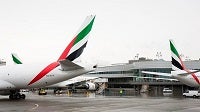
Dubai’s Emirates Group made a profit before tax of AED4.1bn ($1.1bn) in the first half of its 2026-27 financial year, 66% less than the AED12.2bn it made in the same period last year.
The six months to 30 September were the group’s first full half-year since military activity disrupted commercial air traffic across the Gulf on 28 February. Group revenue fell 12% to AED66.2bn ($18bn), from AED75.4bn a year earlier. Profit after tax fell 66% to AED3.6bn ($1bn).
Earnings before interest, tax, depreciation and amortisation (Ebitda) fell 41% to AED12.5bn ($3.4bn).
The results follow a record 2025-26 financial year. The group made a profit before tax of AED24.4bn in that year, on revenue of AED150.5bn.
“It has been a demanding six months, and once again our business model and our people stood up to the test,” said Sheikh Ahmed Bin Saeed Al-Maktoum, chairman and chief executive of Emirates Airline and Group. “Customer demand held firm and our cargo operations made a strong contribution, keeping revenue and cash levels healthy even as global jet fuel prices doubled against the same period last year.”
Airline performance
Emirates airline’s profit before tax fell 68% to AED3.7bn ($1bn), compared with AED11.4bn a year earlier. Its revenue fell 13% to AED56.9bn ($15.5bn). The airline carried 21.8 million passengers, 22% fewer than a year earlier. Capacity measured in available seat kilometres fell 17%, and the passenger seat factor dropped to 72% from 79.5%.
Cargo partly offset the drop in passenger numbers. Emirates SkyCargo carried 1.2 million tonnes, 1% less than a year earlier, but its revenue rose 52%. The conflict reduced the airfreight capacity available on the market, and disruption to shipping pushed shippers towards air transport.
Before hedging gains, fuel costs rose 60%, even though the airline uplifted 12% less fuel. Gains of AED7.1bn ($1.9bn) from fuel hedging cut the net increase in fuel costs to 13%. Fuel accounted for 34% of operating costs.
On 30 September, Emirates was operating 91% of its pre-disruption network, serving 150 airports in 78 countries and territories. On 31 March, it had been flying 58% of its passenger capacity to 122 destinations in 65 countries.
Fleet investment
The airline received nine Airbus A350s and five Boeing 777 freighters during the period. Its fleet grew to 289 aircraft, from 277 on 31 March. Emirates is continuing its cabin retrofit programme, a planned investment of more than $7bn. It refurbished 12 aircraft in the first half. In May, it broke ground on a $5.1bn engineering and maintenance, repair and overhaul (MRO) facility at Al-Maktoum International airport, which is expected to be completed in the mid-2030s.
The group’s cash position was AED54.1bn ($14.7bn) on 30 September, down from a record AED59.6bn on 31 March. The group said it had used its reserves to make pre-delivery payments for aircraft and to service existing debt. It also paid the remaining AED2bn of the AED3.5bn dividend declared for 2025-26 to its owner, the Investment Corporation of Dubai.
Ground services and travel company dnata made a profit before tax of AED410m ($112m), down 51%. Its revenue fell 7% to AED11bn ($3bn), and the group said dnata’s international businesses helped offset weaker traffic in the UAE.
The group’s workforce fell 2% to 128,237 people.
“We enter the second half of our 2026-27 financial year with measured optimism,” said Sheikh Ahmed.
https://image.digitalinsightresearch.in/uploads/NewsArticle/21198114/main.jpg