World’s tallest tower anchors Jeddah Economic City plans
6 October 2026

Development is accelerating at Jeddah Economic City. Jeddah Economic Company (JEC) will start formal talks with third-party developers for the first phase of the masterplan this year, as construction of the world’s tallest tower at the centre of the scheme rises past the 116th floor.
Fabien Toscano, chief executive officer of JEC, told MEED at its Shaping Mega Projects Conference on 29 September that infrastructure for the 1.7 million-square-metre (sq m) first phase is complete, with all plots serviced and individually titled. The tower, which will be the first building to exceed 1 kilometre in height, is due for completion in 2028, and JEC plans to release residential units for sale in 2027.
How big is the Jeddah Economic City masterplan?
Jeddah Economic City is in north Jeddah, adjacent to Obhur Creek and the Red Sea. The approved masterplan covers 5.3 million sq m and includes more than 14 million sq m of gross floor area (GFA), so that’s quite considerable. It is a full city with residential, retail and office assets, as well as extensive public realm to support the development.
The current focus is phase one. The first phase comprises 1.7 million sq m of land and just over 4 million sq m of GFA. For context, phase one is slightly larger than King Abdullah Financial District and is anchored by the tower. The tower is the heart of the project, and the priority is to deliver phase one before later focusing on phase two.
What stage is phase one at?
Phase one is largely ready from a master developer perspective. All the infrastructure is in place, including roads, traffic lights, sidewalks with granite kerbstones, electricity and water networks, and the district cooling network.
All phase one plots are serviced and have been individually titled.
When building the infrastructure, JEC elevated the roads to place the utilities. As a result, what would typically be ground level will function as a basement parking level for future developments. This will save developers time and cost because they won’t have to dewater. A further benefit is that, even at the ground floor level of the masterplan, the Red Sea is clearly visible because the site sits more than 14 metres above sea level in places.
How is construction of the tower progressing?
As of late September 2026, the tower had reached the 116th floor, about 466 metres above sea level, so it’s moving very well. More than 6,000 people are working on the tower each day. The project has surpassed 20 million hours without a lost-time incident, which is very important for us as a developer. The tower is moving at full speed, and we are making strong progress, so we’re very happy with that.
What’s your floor cycle rate right now?
For the core, the current rate is about five days per core. We are doing pretty well.
What are the technology challenges when building that high?
Times have changed since Burj Khalifa. Concrete can now be pumped to 1 kilometre. The tower is largely concrete up to the top, except for the last spine, and differs from Burj Khalifa in design. While there are always challenges on a project of this scale, construction technology has evolved, and we have a great team of architects and consultants to support us throughout the project, as well as a great contractor.
What are the components within the tower?
The tower will include a Four Seasons hotel with 182 keys, 97 Four Seasons-branded residences, and 325 Jeddah Tower apartments ranging from one-bedroom units to penthouses. The penthouses will be the highest residential units in the world.
It will also include duplexes, an observation deck with indoor and outdoor areas, more than 14,000 sq m of office space, and a range of resident and hotel amenities inside and outside the tower.
Can you reveal the final height of the tower?
Not today. It is 1 kilometre-plus, and will be the first building to actually exceed the 1-kilometre mark, making it the world’s tallest tower when completed. It is also important to say that this is only what you see. We ended up driving 270 piles down to 105 metres to support the building. A lot of work has gone into things people don’t see today, but we’re not yet ready to announce the height. It will come in time.
What is coming next for Jeddah Economic City?
There are two important dates for us. The first is Cityscape this year, where JEC will showcase the tower and the wider masterplan, with particular emphasis on phase one. This will also mark the start of more formal engagement with developers, as phase one land plots are ready for immediate development.
The second date will be in 2027, when JEC expects to release some of the tower’s residential units for sale.
Could you explain the relationship between the tower and the broader development?
They all complement each other. The reality is the tower is the icon. It’s the heart of the project. In fact, that will be the icon for Jeddah in the future. So the value is there. It will attract people. The broader city – its amenities and mixed-use offering – will encourage people to stay and support long-term value.
As JEC prepares to release plots, it plans a phased approach that prioritises essential amenities such as schools, hospitals, retail and residential uses to support the tower and the wider development. The masterplan also includes a water feature and public gathering spaces.
Jeddah is an incredible city that many people visit, but if you look at the numbers, very few people actually spend time in Jeddah. They come, they go to Mecca, they go to Medina. With a compelling attraction, we can create an anchor that encourages more people to visit and experience Jeddah through this project – and, of course, to come to live and work here as well.
With the right mix in place, you want people to have amenities from day one – and also the ability to live and work here, and to enjoy the destination as a vibrant public realm. Getting that mix right from the outset is essential, and that’s exactly what we’re focused on.
We have a plan. I’m not going to share it today, but it’s the framework we’re working to – and it will guide how we phase and cap development. When we speak with developers, it’s always within the context of that plan and our land-release strategy.
What heights will the other buildings reach?
Buildings across the development will range from mid-rise to high-rise. Some towers will eventually reach 450 metres, while other buildings will typically range from G+5 or G+6 upwards. This is a city centre-type project with density, a concentration of amenities and walkability; everything people talk about today is integrated into this masterplan.
How can investors participate in the project?
We are the master developer, so people can contact us. We are happy to discuss available opportunities and land plots, and we have a process that starts with a site visit, reviewing opportunities, and discussing whether it’s a land purchase or another type of structure. And of course, at Cityscape, we will be there. We will have a team there. We’ll be able to engage with people directly at Cityscape.
What construction opportunities lie ahead?
There is a lot of real estate to be built around all asset classes. Some of it may be done by us. Some of it will be done by a third party. Some of it may be done as a joint venture, but there will be opportunities across all asset classes, and eventually infrastructure for phases two and three when the time is right. Most of the tower work is now locked in, and we are now into delivery. The fit-out will come. The designs have been fixed. Right now, it’s mostly MEP, finishing the tower, and closing it out.
Jeddah is an established city that has been built up over a long time. What are you offering that’s different for investors? What kind of interest have you got so far?
A couple of elements will make this project a success. First, if you look west of our site, there is the sea; to the east is the mountain. If you go further south, there is an industrial zone. All the growth in Jeddah will happen to the north. It’s already happening, and I think that’s very important. Second, Jeddah is very well positioned today for growth.
In terms of our project specifically, we will have the tallest tower in the world. It has all the amenities, the social infrastructure, the water body, the retail, etc, to make it an interactive place. Second, we have quality infrastructure today, and third, it’s ready. We’re not talking about something that may happen. It is ready today. People can take a plot today and develop tomorrow. It’s there, all connected, all the utilities, the district cooling, everything that I mentioned earlier – it’s ready, and I think that is the big difference.
We’re also right on the sea. In fact, some of our plots are directly on the waterfront. We have two plots along the creek as well as plots on the open sea, so the site is fully connected along the water. That’s something I don’t think is really available anymore today.
Second, on density: when I think about Jeddah – and I’m fairly new to the city – it’s clearly evolving into a multi-centric city, growing in a way that will create several distinct centres over time. I believe our development will consolidate its position as one of those centres, especially given its density and its character as a city-centre-style project, supported by strong amenities.
How do your priorities change as the project moves toward completion?
The focus is very clear. The tower must be delivered to the right quality, on time, and on budget. We have to launch the tower to the world and keep our promises to the potential buyers. As for the city, anyone who works with us – whether an investor, a joint-venture partner or another stakeholder – is, in practice, a partner in building the destination.
It’s about choosing the right partners and releasing the right amount of land for sale at the right time. We need to manage the pace of release as we create value – that’s a key objective going forward. Everything we do adds value, but we have to do it thoughtfully and sensibly, and bring the right partners with us.
Ultimately, partnership is critical: we need the right capabilities for each asset class. Some things we will deliver ourselves, and for others we should rely on specialists who can do them better than we can. We have to be realistic about that.
Going back to that city idea, cities are not built by one person; they are built by a collective of people.
We’ll all learn from one another, and the destination will benefit overall from having different product types and different approaches to delivery. As master developer, though, we have a responsibility to put the right infrastructure in place, manage the city effectively, and release land in a disciplined, sensible way – so we create value both for ourselves and for everyone participating in the development.
Just to refresh, what are the key dates for the tower?
In terms of construction time, it is 2028.

Register for MEED's guest program now to access this article.
Exclusive from Meed
-
 Contractors compete for Riyadh airport Terminal 6 work
2 November 2026
-
 Contractors prepare bids for Morocco power line
2 November 2026
-
 Adnoc Onshore allows more time for Bab gas cap well tie-in bids
2 November 2026
-
 Gulf ministers insist Hormuz is still essential
2 November 2026
-
 Bahrain’s Gateway Gulf brings $20bn of deals
2 November 2026
All of this is only 1% of what MEED.com has to offer
Subscribe now and unlock all the 153,671 articles on MEED.com
- All the latest news, data, and market intelligence across MENA at your fingerprints
- First-hand updates and inside information on projects, clients and competitors that matter to you
- 20 years' archive of information, data, and news for you to access at your convenience
- Strategize to succeed and minimise risks with timely analysis of current and future market trends
Related Articles
-
Contractors compete for Riyadh airport Terminal 6 work
2 November 2026
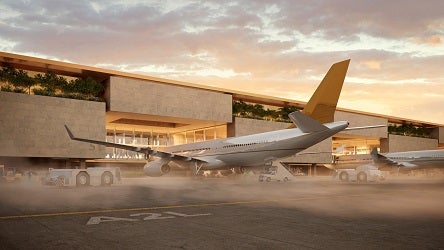
Contractors are preparing bids for the main construction contract for Terminal 6 at King Salman International airport (KSIA) in Riyadh.
MEED understands that the consortiums have been given until January to submit their proposals.
The participating consortiums are:
- Al-Gihaz Holding / TAV Construction / Webuild (local/Turkiye/Italy)
- Modern Building Leaders / Powerchina / Metallurgical Corporation of China (loca/China/China)
- UCC Holding / Consolidated Contractors Company (Qatar/Greece)
Last month, MEED exclusively reported that contractor teams have completed the early contractor involvement phase of the project.
Under the completed phase, the shortlisted teams submitted detailed construction methodologies and technical design proposals.
King Salman International Airport Development Company (KSIADC) is a subsidiary of Saudi sovereign wealth vehicle the Public Investment Fund.
Terminal 6 is planned to boost the airport’s annual capacity by 40 million passengers. KSIADC aims to complete the terminal ahead of Expo 2030 Riyadh.
In May 2025, MEED reported that US-based Bechtel had been appointed as delivery partner for the passenger terminals at KSIA.
UK-based Foster + Partners designed the masterplan, including the terminals, six parallel runways and a multi-asset real estate district.
US-based engineering firm Jacobs is providing specialist consultancy services for the masterplan and runway design, while UK-headquartered Mace is acting as delivery partner for the broader development. Local firm Nera secured the airspace design consultancy contract.
The KSIA project covers about 57 square kilometres (sq km) and incorporates the existing terminals at King Khalid International airport. The scheme will feature 12 sq km of airport support facilities, residential and recreational zones, retail assets and logistics parks.
The development is targeted to handle up to 120 million passengers a year by 2030 and 185 million passengers by 2050, in addition to an annual cargo throughput of 3.5 million tonnes by 2050.
https://image.digitalinsightresearch.in/uploads/NewsArticle/21087339/main.jpg -
Contractors prepare bids for Morocco power line
2 November 2026
Contractors are preparing bids for a 160-kilometre (km), 400kV transmission line linking Guercif and Fes East in Morocco, following a site visit on 1 October.
The project is being developed by the Office National de l'Electricite et de l'Eau Potable (Onee) to connect the Saka solar photovoltaic power plant to the national electricity grid.
According to sources, at least eight contractors attended the site visit last month, including:
- Butec (Lebanon)
- CEEC Northeast Electric No.2 (China)
- Cegelec (France)
- EPME Electric (Morocco)
- Hideleco (Egypt)
- Kec International (India)
- PowerChina (China)
- Transrail (India)
The project comprises two lots. The first involves a 90km transmission line between Guercif and Taza, while the second covers a 70km section between Taza and Fes East.
The scope of work includes the construction of tower foundations, installation of transmission supports and conductors, and associated high-voltage equipment. It also includes optical fibre cables for communications and monitoring, access roads and other supporting infrastructure.
The tender was issued in September with bids originally due by 21 October. The deadline has now been extended to 25 November.
The project is part of a wider programme by Onee to expand Morocco's electricity transmission network and accommodate additional renewable energy capacity.
In June, the utility commissioned a 274km, 400kV transmission line linking Chemaia and Mediouna, near Casablanca.
Onee plans to expand its high- and extra-high-voltage transmission network from more than 30,700km to 37,000km by 2030.
In August, it approved a $26.4bn investment programme for the 2026-30 period, covering electricity and drinking water infrastructure.
The programme has allocated about $21.9bn to electricity projects and $4.5bn to drinking water infrastructure, with about 72% of the investment to be financed by the private sector, according to Onee.
https://image.digitalinsightresearch.in/uploads/NewsArticle/21083507/main1257.jpg -
Adnoc Onshore allows more time for Bab gas cap well tie-in bids
2 November 2026
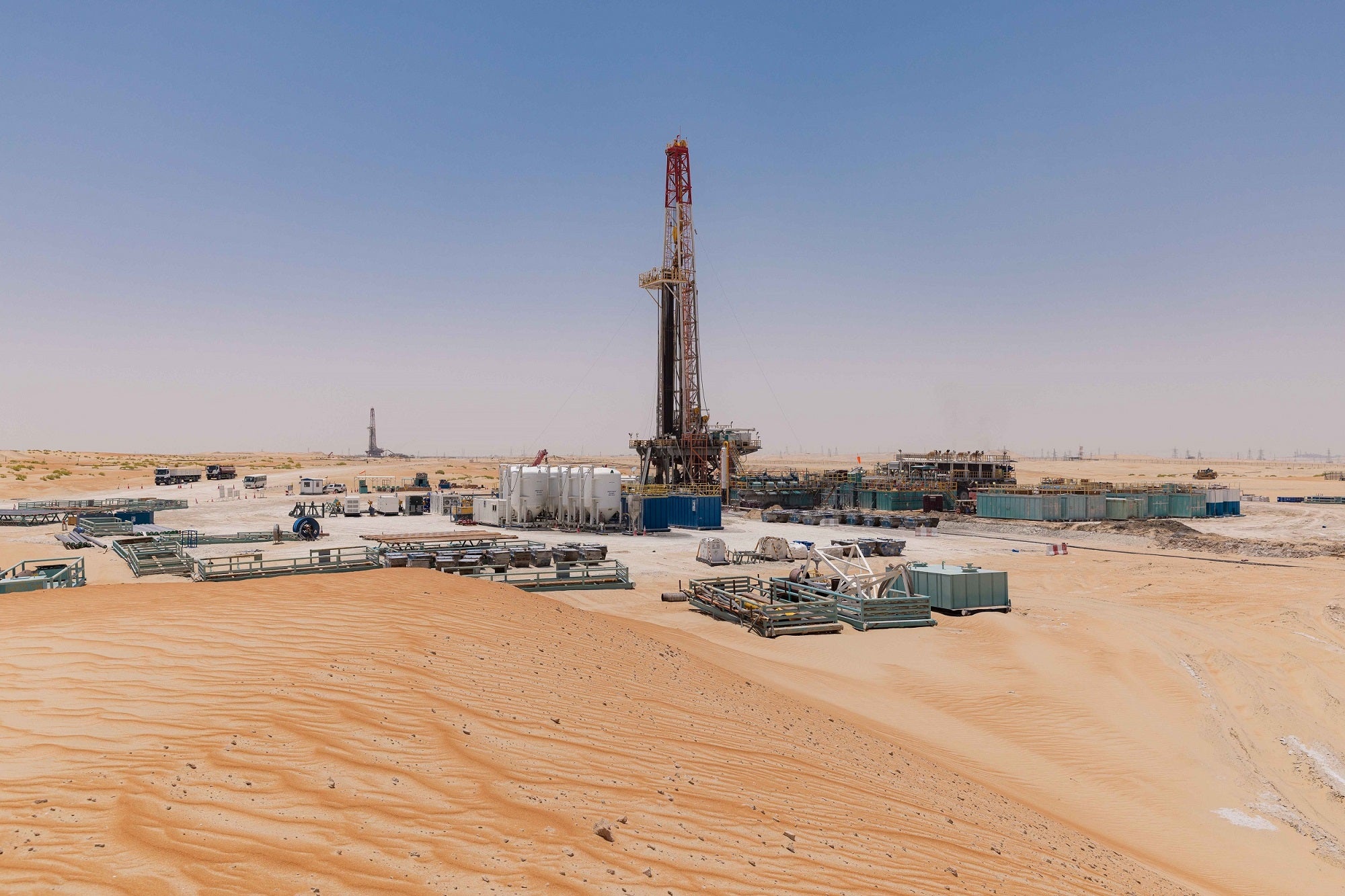
The onshore business of Abu Dhabi National Oil Company (Adnoc Onshore) has allowed contractors more time to prepare proposals for a project to tie in gas-producing and injection wells at the gas cap reservoirs of Abu Dhabi’s onshore Bab field.
The well tie-in scope, estimated to be worth more than $800m, forms part of Adnoc Group’s wider integrated Bab gas cap development programme.
The overall programme is being led and overseen by Adnoc Gas, another Adnoc Group subsidiary. Its central element is the construction of gas-processing infrastructure to handle incremental gas output expected from developing the Bab gas caps.
Adnoc Onshore issued the main tender for engineering, procurement and construction (EPC) works on the project in late September, MEED previously reported.
Contractors have been given until 16 November to submit technical bids for the project, according to sources. The previous deadline was 29 October.
MEED previously reported that Adnoc Onshore issued an expressions of interest (EoI) notice for the Bab gas production and injector well tie-in project on 13 May, with contractors submitting responses by 20 May.
The scope of work on the project covers the following:
- Tie-in of 99 new wells from Bab gas cap reservoirs KH-2, SH-1 and LK-1 (60 gas producers and 39 gas injectors);
- Installation of well gathering structures: 10 gas pads, six well bays and three virtual pads;
- Installation of a gas gathering network and a gas injection network;
- Rerouting of the LK-3 production from the existing trunkline in Remote Manifold Station 3 (RMS-3) to the project’s production trunkline, Bab Gas TL-2;
- Demolition of the existing 10-inch trunkline from RMS-3 to onshore gas development phase one.
In the EoI document, Adnoc Onshore said it intends to award the EPC contract in the last quarter of the year, with a 45-month duration of works.
Bab gas cap project infrastructure
As part of its 2030 upstream production increase goals, Adnoc Group is working to extract gas from four underdeveloped gas cap reservoirs at the Bab onshore field development – Thammama A, Thammama B, Thammama F and Thammama H.
While the Thammama A, B and H reservoirs are estimated to collectively produce 1.45 billion cubic feet a day (cf/d) of gas, output from the Thammama F gas cap is expected to be at a rate of 396 million cf/d.
Existing trains at the Habshan processing complex in Abu Dhabi will be unable to handle the new gas volumes. Therefore, Adnoc Gas is required to build new facilities to process an additional volume of up to 1.85 billion cf/d of raw gas.
Adnoc Gas is planning to build a gas processing plant in the Bab area, about 170 kilometres from Abu Dhabi, along with associated pipeline networks and other ancillary units, as part of the broader Bab gas cap development project. It has divided the EPC scope of work on the project into four packages:
- EPC package 1 – Main Bab gas cap plant
- EPC package 2 – Early civil works
- EPC package 3 – Pipelines
- EPC package 4 – Non-process area works
Abu Dhabi Securities Exchange-listed Adnoc Gas issued the tender for the main Bab gas cap plant on 25 June and set an initial deadline of 17 July for contractors to submit technical bids. The company then extended the technical bid submission deadline by four months, until 16 November, MEED previously reported.
Following a reshuffle of the consortiums gearing up to bid for the main Bab gas plant EPC package, estimated to be worth more than $6bn, the following teams have formed to compete in the main contract tendering round:
- Larsen & Toubro Energy Hydrocarbon (India) + Petrofac Emirates (UAE)
- Technip Energies (France) + JGC Corporation (Japan) + Sinopec (China)
- Tecnimont (Italy) + China Petroleum Engineering and Construction Corporation (CPECC)
The other three packages of the Bab gas cap project are also in the main contract tendering stages.
Prior to issuing the EoIs for the project packages, Adnoc Gas completed an early engagement process with contractors in September and October last year, as MEED previously reported.
In December last year, Adnoc Gas awarded the front-end engineering and design (feed) works for the development project to Australia-based consultancy Worley. The feed contract has a duration of more than 1.2 million man-hours, making it the largest-ever engineering job awarded by Adnoc Gas.
Bab Gas Cap concession
In addition to Adnoc Gas overseeing the main EPC tendering exercise for the gas processing plant, Abu Dhabi’s Supreme Council for Financial and Economic Affairs (SCFEA) awarded concession agreements in June for the development and production of the Bab gas cap reserve.
Adnoc will hold the majority 60% participating interest in the concession. The remaining stakes will be held by France’s TotalEnergies (10%), the UK’s BP (10%), China National Petroleum Corporation International (8%), Japan Oil Development Company Onshore (5%), China ZhenHua Oil (4%) and Korea GS E&P (3%).
According to the SCFEA, the Bab gas cap development and production concession represents the largest gas cap development project of its kind globally, the Abu Dhabi Media Office said in a report.
A gas cap refers to the free natural gas that sits above an underlying oil reservoir – in this case, the Bab onshore oil field in Abu Dhabi.
The project, operated by Adnoc Onshore, is expected to have a production capacity of approximately 1.5 billion cf/d of natural gas, equivalent to about 15% of Adnoc Gas’ total operational gas processing capacity.
https://image.digitalinsightresearch.in/uploads/NewsArticle/21083343/main.jpg -
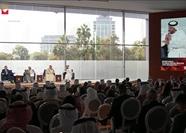
Gulf ministers insist Hormuz is still essential
2 November 2026
Register for MEED’s 14-day trial access
Senior Gulf officials have rejected suggestions that new pipelines and rail links will allow the region to do without the Strait of Hormuz, arguing that the waterway will remain essential to the GCC and the global economy.
Speaking at the Gateway Gulf investment forum in Manama on 1 November, GCC secretary-general Jasem Mohamed Albudaiwi said keeping the strait open is the responsibility of the international community, not of any one country or group of partners. "We hear some voices that maybe we should seek alternatives to Hormuz," he said. "Fine, we will get the pipelines. We will get the GCC railway. But that doesn't mean Hormuz is nobody's business."
Albudaiwi called for the strait to remain open in line with international law, including the 1982 UN Convention on the Law of the Sea.
Shipping through the strait has been severely restricted since the US and Israel launched strikes on Iran on 28 February and Iran retaliated with attacks on GCC states and commercial vessels.
Bahrain's Finance & National Economy Minister, Sheikh Salman Bin Khalifa Al-Khalifa, said building redundancy makes sense, but treating the strait as dispensable does not. He said the waterway carries 30% of global liquefied natural gas (LNG) exports, 20% of aluminium exports and 30% of fertiliser exports. "Any thinking about the alternative of Hormuz, as in we won't need it, is illogical, because we will need it for the world economy," he said.
UAE Economy & Tourism Minister Abdulla Bin Touq Al-Marri said that "Hormuz matters, and Hormuz will keep mattering", adding that an economy dependent on a single trade route is exposed if that route closes.
Sheikh Salman said the crisis has compressed years of GCC customs negotiations into weeks. During the conflict, containers cleared at Jeddah with final destinations in Bahrain or Kuwait moved on without further checks, and the same applied to cargo routed through Salalah and Fujairah, he said. GCC ministers have since agreed to make these emergency measures permanent.
He also cited Gulf Air operating out of Saudi airports for more than 40 days without a written agreement, and a $5bn swap between the UAE and Bahraini central banks to stabilise currencies.
Bin Touq said the bloc should use 2027 and 2028 to push through reforms, including removing remaining customs barriers between member states.
Albudaiwi said GCC leaders meeting in Jeddah on 28 April had tasked the secretariat with advancing water connectivity, expanding the GCC electricity grid, planning new logistics infrastructure including ports, accelerating the GCC railway and enhancing oil and gas pipeline links.
https://image.digitalinsightresearch.in/uploads/NewsArticle/21080732/main4958.jpg -
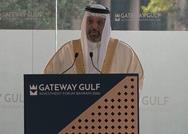
Bahrain’s Gateway Gulf brings $20bn of deals
2 November 2026
More than 110 announcements worth over $20bn will be made at the Gateway Gulf Investment Forum in Bahrain, according to the country's finance minister.
"Over the next two days at Gateway Gulf, more than 110 announcements worth over $20bn will be made," Sheikh Salman Bin Khalifa Al-Khalifa, Finance & National Economy Minister, said at the opening of the forum's fourth edition on 1 November in Bahrain.
He said the announcements will cover new partnerships, investments, projects and jobs. Sheikh Salman addressed an audience that included Bahrain's Crown Prince and Prime Minister, Prince Salman Bin Hamad Al-Khalifa.
The minister said the region's economies have been "tested as never before" since the previous edition of the forum a year earlier.
"In the face of unprecedented attacks, we did not waver," he said. He added that Bahrain has chosen to work more closely with its allies and partners to defend what it has built.
Sheikh Salman said the Gulf economy has grown to $2.4tn in GDP. Non-oil sectors account for more than 86% of Bahrain's GDP and more than 77% across the Gulf, he said.
He said Gulf banks hold more than $4tn in assets, while the region's sovereign wealth funds manage more than $5tn of investments. "These numbers describe a region that has chosen to build a more stable, a more prosperous future for its people," he said. "Bahrain is the gateway to that region."
The minister said Bahrain is focusing on regulation, infrastructure and people to attract investment.
He said the country has developed a regulatory framework over several decades that is "clear, modern and fast", allowing investors to commit with confidence.
On infrastructure, he highlighted logistics, connectivity, digital networks and industrial land as areas where Bahrain is building the foundations for businesses to expand. He also named finance, logistics, tourism, manufacturing, technology and telecommunications, and oil and gas as the sectors into which he expects domestic, regional and international capital to flow.
He said the investments will create jobs for young graduates and support the growth of family businesses.
https://image.digitalinsightresearch.in/uploads/NewsArticle/21080593/main2015.jpg