
Saudi pre-budget leans on borrowing to fund projects
2 October 2026
Saudi Arabia plans to spend SR1.39tn ($371.2bn) in 2027, according to the Finance Ministry’s pre-budget statement. That is 3% less than the estimated outturn for 2026, after regional conflict and the closure of the Strait of Hormuz pushed this year’s expenditure well past its allocation.
The ministry now expects 2026 spending to reach SR1.44tn, which is SR122bn or 9.3% above the SR1.31tn approved in the budget. Revenues are estimated at SR1.19tn, SR43bn above budget, leaving a deficit of SR245bn, equal to 4.9% of GDP. The original budget assumed a SR165bn deficit, or 3.3% of GDP.
For 2027, the statement projects revenues of SR1.2tn and a deficit of SR191bn, or 3.6% of GDP. Expenditure is forecast to rise to SR1.48tn in 2028 and SR1.54tn in 2029, with deficits of SR177bn and SR192bn projected for those years. On the ministry’s figures, the kingdom will run cumulative deficits of SR560bn ($149.3bn) between 2027 and 2029.
The economic backdrop has deteriorated sharply. The ministry expects real GDP to contract by 3.6% in 2026, driven by a 21.8% fall in oil activity, while non-oil activity grows by 3.2%. It forecasts a rebound to 12.8% real growth in 2027.
Capital spending
The statement does not publish a capital expenditure figure or a sector breakdown. Those will follow with the budget in Q4. It does signal that project spending will continue. As Vision 2030 enters what the statement calls its third phase, the government says efforts will focus on “accelerating the pace of delivery and capitalising on growth opportunities through continued government capital expenditure”. It also wants a stronger role for the Public Investment Fund (PIF) and the National Development Fund in stimulating domestic investment.
The ministry says it will “implement infrastructure-related programmes” and direct resources “towards priority programmes and projects”. It also commits to “maximise the utilisation of existing government assets and investments”. That wording points to a sharper focus on completing and monetising existing schemes rather than launching new ones.
The medium-term debt strategy is designed to ensure “the continuity of the implementation of priority projects without being linked to the fluctuations of the economic cycle”, according to the statement.
The government’s revenue scenarios hold expenditure at SR1.39tn in all three cases. Under the lowest revenue case of SR1.13tn, the deficit widens to SR259bn. The highest case of SR1.26tn narrows it to SR132bn. Any change falls on borrowing rather than on spending.
The ministry says debt will deliberately rise by the end of 2027, and the borrowing plan will be disclosed by the end of this year. Alongside bonds, sukuk and loans, the government plans to expand “alternative government financing, including financing of projects, infrastructure and export credit agencies” in 2027 and over the medium term.
Private capital
The statement presents private investment as a growing share of project delivery. Investment in privatisation and public-private partnership (PPP) projects reached about SR180bn by the end of 2025. The National Privatisation Strategy was approved in November 2025. Ten privatisation and PPP projects have been launched under it in the first half of 2026, including the Prince Naif Bin Abdulaziz International Airport PPP in Qassim. Contracts were signed for the Sabic Mental Health Hospital and the Jubail Container Terminal, taking the total to 83 partnership contracts. Private capital investment has exceeded SR56.2bn, against a target of SR240bn by 2030.
The National Infrastructure Fund has committed SR10.5bn since 2022 to projects with a combined value of about SR59.3bn, of which SR44.1bn is private investment. Projects it has backed include the Neom green hydrogen project, the Shuaibah solar photovoltaic plants, the Prince Mohammad Bin Abdulaziz Airport expansion, the Jubail-Buraidah independent water transmission pipeline and the Ezditek data centre. The fund plans to expand into healthcare, education, sports and artificial intelligence.
PIF’s domestic investments totalled about SR750bn between 2021 and 2025. The statement lists several recent contracts across its portfolio. Diriyah Company, the PIF-owned developer of the Diriyah gigaproject, awarded a SR1.8bn contract to a consortium of local companies to build the Saudi Museum of Contemporary Art. PIF-owned Soudah Development signed a SR1.3bn agreement with National Grid SA, the transmission subsidiary of Saudi Electricity Company, to deliver electricity infrastructure for the Soudah Peaks project. Saudi Entertainment Ventures, also owned by PIF, plans 14 destinations across 13 cities, with investment of more than SR45bn. The Saudi Export-Import Bank plans to provide SR41.6bn of financing and insurance to non-oil exporters in 2027.
Logistics investment has also become a priority since the disruption to Gulf shipping. The share of non-oil exports passing through Red Sea ports rose to 40.7% during the crisis, from 19.3% before it. In July, the General Ports Authority signed contracts worth up to SR1bn for seven logistics centres at Jeddah Islamic Port and Al-Khumrah. A separate logistics corridors initiative connects Gulf ports to the Red Sea by road and rail.
The final 2027 budget is due for approval in Q4.
MEED’s October 2026 report on Saudi Arabia includes:
> COMMENT: Saudi projects hold steady
> GOVERNMENT: Riyadh looks to reset its regional defence outlook
> ECONOMY: Conflict bolsters case for Saudi economic diversification
> BANKING: Saudi lenders readjust to lower lending and deposit climate
> UPSTREAM: Aramco upstream spending gathers pace
> DOWNSTREAM: Sabic steps up Saudi petchems investment
> POWER: Saudi Arabia’s power award activity slows
> WATER: Saudi water sector hits sharp slowdown
> CONSTRUCTION: Saudi construction defies the headwinds
> TRANSPORT: Saudi infrastructure pushes forward amid conflict
> DATABANK: Saudi data indicates project spending shift

Register for MEED's guest program now to access this article.
Exclusive from Meed
-
 Diriyah cancels construction contract for One Hotel
20 November 2026
-
 Bahrain keeps moving through a difficult year
20 November 2026
-
 Gulf needs $40bn of pipelines to bypass Hormuz
20 November 2026
-
 Riyadh gives bidders more time for aviation complex
20 November 2026
-
 Dar Global launches Trump project in Qatar
20 November 2026
All of this is only 1% of what MEED.com has to offer
Subscribe now and unlock all the 153,671 articles on MEED.com
- All the latest news, data, and market intelligence across MENA at your fingerprints
- First-hand updates and inside information on projects, clients and competitors that matter to you
- 20 years' archive of information, data, and news for you to access at your convenience
- Strategize to succeed and minimise risks with timely analysis of current and future market trends
Related Articles
-
Diriyah cancels construction contract for One Hotel
20 November 2026
Register for MEED’s 14-day trial access
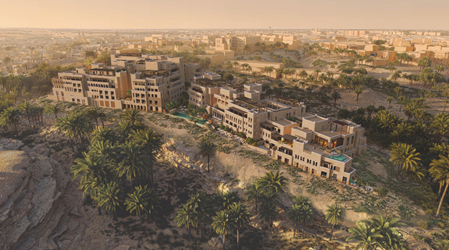
Saudi Arabia’s Diriyah Company has cancelled the main construction works contract for the One Hotel project in the Diriyah Two area of its masterplan.
The contract was awarded to a joint venture of India’s Ashoka Buildcon for Contracting and BEC Arabia Contracting Company, as MEED reported in February.
In a filing to the Bombay Stock Exchange, Ashoka Buildcon said: “Diriyah Company has now notified the joint venture that the said project has been cancelled due to internal reasons attributable to the employer.”
Ashoka Buildcon holds a 49% stake in the joint venture.
The project comprises a four-storey hospitality building with approximately 325 guest rooms, on a 31,000-square-metre plot. French engineering firm Egis was the project consultant.
The development follows several recent tender cancellations, particularly in Saudi Arabia’s water sector. Earlier this month, MEED exclusively reported that Water Transmission Company (WTCO) had cancelled tenders for Package B and the combined Packages C1 and C3 of its New Water Pipeline to Feed Riyadh City 2 scheme.
The packages, with a combined estimated value of about $556m, cover a long-distance potable-water transmission system intended to reinforce supplies to Riyadh. Bidders were notified of the decision in November.
Before that, Saudi Water Authority (SWA) also cancelled the tender for a 300-million-litres-a-day seawater reverse osmosis desalination plant in Yanbu.
India’s VA Tech Wabag announced in July 2025 that it had received the estimated $272m main contract for the project. However, on November 14, it said SWA had subsequently cancelled the tender through the Etimad government procurement platform, citing internal reasons.
MEED’s October 2026 report on Saudi Arabia includes:
> COMMENT: Saudi projects hold steady
> GOVERNMENT: Riyadh looks to reset its regional defence outlook
> ECONOMY: Conflict bolsters case for Saudi economic diversification
> BANKING: Saudi lenders readjust to lower lending and deposit climate
> UPSTREAM: Aramco upstream spending gathers pace
> DOWNSTREAM: Sabic steps up Saudi petchems investment
> POWER: Saudi Arabia’s power award activity slows
> WATER: Saudi water sector hits sharp slowdown
> CONSTRUCTION: Saudi construction defies the headwinds
> TRANSPORT: Saudi infrastructure pushes forward amid conflict
> DATABANK: Saudi data indicates project spending shiftTo see previous issues of MEED Business Review, please click herehttps://image.digitalinsightresearch.in/uploads/NewsArticle/21612890/main.png -
Bahrain keeps moving through a difficult year
20 November 2026
 Commentary
Colin Foreman
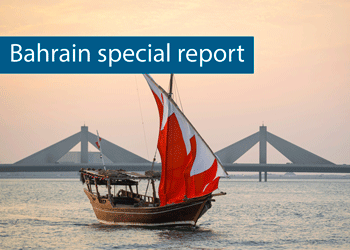
EditorWhen Formula 1 cars took to the grid at Malaysia’s Sepang International Circuit on 4 October, they were racing in the Bahrain Grand Prix. The race, originally scheduled for April, was postponed because of the regional conflict. Rather than lose its place on the calendar, Bahrain backed a one-off arrangement to stage it in Southeast Asia as the Formula 1 Gulf Air Bahrain Grand Prix in Malaysia.
The episode captures Manama’s approach to 2026. With the Strait of Hormuz closed and the country’s airspace shut for 40 days, Bahrain has sought alternative routes to keep its economy moving.
Gulf Air relocated its hub to Saudi Arabia’s Dammam airport during the airspace closure, taking passengers by road across the King Fahd Causeway, and expects to report higher revenues this year than in 2025. Aluminium Bahrain (Alba) is running at about 80% of capacity, with 300-350 trucks a day delivering alumina using ports in Oman and Saudi Arabia. The company has also agreed the $2.2bn acquisition of the Aluminium Dunkerque smelter in France.
Project activity has continued. Gulf Petrochemical Industries Company has appointed Fluor and Honeywell for its planned Sitra aromatics complex. Bids for the $1.5bn Sitra independent water and power project are under evaluation.
Construction contract awards reached $737m by the end of October, already exceeding the total for 2025.
In early November, Manama went ahead with the fourth edition of the Gateway Gulf investment forum, which produced more than 110 announcements valued at over $20bn.
The cost of the regional conflict is nonetheless steep. The Washington-based IMF expects the economy to contract by 11.3% this year. Public debt reached BD20.3bn ($54bn) at the end of August, and foreign exchange reserves have been supported by a BD2bn ($5.3bn) currency swap line from the UAE.
Lasting recovery will depend on factors that lie largely beyond Bahrain’s control. The IMF is forecasting real GDP growth of 13.9% in 2027, but this is contingent on the reopening of Gulf trade routes and a return to normal levels of energy production.

MEED’s December 2026 report on Bahrain includes:
> GOVERNMENT: Bahrain creaks under the strain of war
> BANKING: Manama’s lenders hold out for better times
> OIL & GAS: GPIC’s expansion project lifts Bahrain’s energy sector
> POWER & WATER: Bahrain’s utility pipeline shows signs of progress
> CONSTRUCTION: Bahrain construction activity remains subduedTo see previous issues of MEED Business Review, please click herehttps://image.digitalinsightresearch.in/uploads/NewsArticle/21389640/main.gif -
Gulf needs $40bn of pipelines to bypass Hormuz
20 November 2026
Register for MEED’s 14-day trial access
Gulf producers would need to spend about $40bn on new pipelines to route most of their oil exports around the Strait of Hormuz, according to the International Energy Agency (IEA).
The estimate, published in the agency's World Energy Outlook 2026, covers 6.8 million barrels a day (b/d) of export capacity that is either under construction or proposed in Saudi Arabia, the UAE and Iraq. The IEA calculates that the investment would add about $2 to the cost of each barrel exported from the Middle East.
The figure gives the clearest indication yet of the scale of the pipeline programme that could follow the 2026 crisis, which the IEA describes as the largest energy supply shock the world has faced. Oil volumes transiting the strait collapsed from 20 million b/d to an average of about 3 million b/d in March, April and May.
Project pipeline
The only scheme under construction in the IEA’s list is Abu Dhabi National Oil Company’s (Adnoc) West-East pipeline, which will add 1.8 million b/d of capacity. MEED has reported that the 520-kilometre line from Jebel Dhanna to Fujairah is being built in three sections. It is expected to double Adnoc’s crude export capacity through Fujairah when it is commissioned in 2027.
Separately, Adnoc expects to tender the main engineering, procurement and construction (EPC) contract for a new offshore line linking its Gulf processing islands to Jebel Dhanna, which will eventually connect to the West-East pipeline, by the end of the year.
The largest proposed project is a 3 million b/d expansion of Saudi Aramco’s East-West pipeline from Abqaiq to Yanbu on the Red Sea. Aramco president and CEO Amin Nasser has said engineering work began in the early days of the conflict. Saudi Energy Minister Prince Abdulaziz bin Salman said in October that the kingdom is looking to expand its crude export capacity by pipeline to as much as 10 million b/d.
In Iraq, the IEA counts two 1 million b/d lines from Haditha. One would run to Baniyas in Syria. The other would run to Fishkhabur, where it would link to the Iraq-Turkiye pipeline to Ceyhan. MEED has reported that a consortium led by Qatar’s UCC, including Chevron and TotalEnergies, is discussing terms for four interconnected pipeline packages worth about $5bn, with a contract expected to be signed before year-end. Iraq and Saudi Arabia are also considering reviving the 1,568km pipeline from Zubair to Yanbu, which was halted in 1990.
The agency says the new routes would not help all Gulf producers. Bahrain, Kuwait and Qatar would still depend on the strait for their exports.
Bypass flows
About 8 million b/d of bypass pipeline capacity is already available, according to the report. These lines carried about 2 million b/d in 2025 and ramped up to a peak of 6.8 million b/d during the crisis.
In the IEA’s Stated Policies Scenario (STEPS), only the Adnoc project is completed and bypass flows return to about 3 million b/d by 2035. If every existing, under-construction and proposed route were built and used to capacity, bypass flows could reach about 14.5 million b/d. Most Saudi and UAE exports, along with more than 60% of Iraq’s, would then avoid the strait.
The IEA’s new Low Hormuz Case adds higher output from producers outside the Gulf and demand cuts by importers. In that case, oil transit through the strait falls below 2 million b/d by 2035. Raising supply outside the strait would require about $200bn of additional upstream investment between 2025 and 2035.
Security caveats
The agency cautions that the pipelines would not remove the risk. Drone attacks temporarily shut the East-West pipeline in September, and any exports to the Red Sea must pass through the Bab Al-Mandab Strait. MEED has reported that Houthi attacks on Aramco’s Red Sea assets since July, including the Jizan refinery, have cost Riyadh that alternative route. Even in the Low Hormuz Case, the Middle East still exports nearly 15 million b/d in 2035, about 20% of global oil trade.
The IEA also notes that if the strait is at least partially open, Gulf producers would have few reasons not to use it. That could weaken the commercial case for the most expensive bypass schemes.
Execution risks are emerging in Iraq. MEED has reported that the Common Seawater Supply Project is behind schedule, largely because pipeline segments cannot easily be imported through the strait. The same problem could force contractors on new export lines to use more costly routes.
The IEA says there is no feasible bypass for liquefied natural gas (LNG). About 110 billion cubic metres of gas passed through the strait in 2025, most of it from Qatar. Adnoc is pursuing a 4 million tonne-a-year LNG export facility at Fujairah, fed by pipeline from Abu Dhabi. MEED has reported that it has selected three teams for front-end engineering and design work.
Cost pressures
The wider upstream picture is less encouraging for contractors. The IEA expects global upstream oil and gas investment to rise by about 1% to $550bn in 2026, with increases elsewhere largely offset by reductions in the Middle East. Its Upstream Capital Cost Index is forecast to rise by about 8% this year, which the agency says will raise the risk of overruns and delays.
The agency also warns that a resolution of the crisis could create a buyers’ market for oil and gas. Lower prices would test whether the security case for bypass pipelines survives once the strait reopens.
https://image.digitalinsightresearch.in/uploads/NewsArticle/21612651/main.jpg -
Riyadh gives bidders more time for aviation complex
20 November 2026
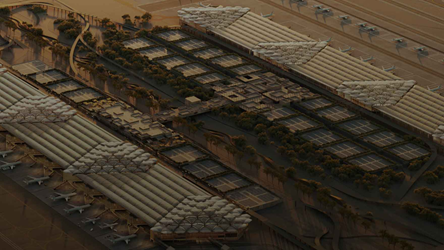
Contractors have been given an extension until 31 January to submit proposals for an estimated SR3bn ($817m) contract to build an aviation complex within the King Salman International airport master development in Riyadh.
Government-owned aviation organisation Saudi Royal Aviation (SRA) tendered the contract in August, with an initial bid submission deadline of 8 October, which was later extended to 19 November.
Phase one of the programme comprised the concept design stage, which the design consultant has completed.
SRA is now seeking to deliver the second phase, covering design development, detailed design, procurement, construction, testing, commissioning and close-out of the works.
The scope covers 30 landside buildings, including 16 screening areas and gates, plus 15 airside buildings, including four gates.
The assets include maintenance hangars, workshops, office and administrative buildings (including interior fit-out), warehouses, storage, security and catering facilities, aprons and access roads, and site utilities and civil works.
King Salman International airport will provide primary utilities to designated tie-in points, with the contractor taking responsibility from there.
Although the site is within King Salman International airport’s boundaries, it is classified as landside and is a greenfield development. The contractor must therefore meet airport security, safety and access requirements, in addition to SRA’s own clearance processes.
Project scale
The King Salman International airport project covers an area of about 57 square kilometres (sq km), allowing for six parallel runways, and will include the existing terminals at King Khalid International airport. It will also include 12 sq km of airport support facilities, residential and recreational facilities, retail outlets and other logistics real estate.
The airport aims to accommodate up to 100 million passengers by 2030. The goal for cargo is to process 2 million tonnes a year by 2030.
Saudi Arabia plans to invest significantly in its aviation sector. The Saudi Aviation Strategy, announced by the General Authority of Civil Aviation, aims to triple Saudi Arabia’s annual passenger traffic to 330 million travellers by 2030.
It also aims to increase air cargo traffic to 4.5 million tonnes and raise the country’s total air connections to more than 250 destinations.
 READ THE NOVEMBER 2026 MEED BUSINESS REVIEW – click here to view PDF
Gulf projects keep moving amid conflict; UAE's state spending and oil output flexibility cushion Iran war shock; Project finance lenders weigh risk against infrastructure needs.
Distributed to senior decision-makers in the region and around the world, the November 2026 edition of MEED Business Review includes:
> AGENDA: GCC projects market holds its nerve> MARKET FOCUS: UAE economy shows resilience> INDUSTRY REPORT: Project financiers hold the line> STADIUMS: Stadium spending set to jump 39% in 2027> CONFLICT: Hormuz closure wipes out growth in 2026> INTERVIEW: WSP regional president Dean McGrail> INTERVIEW: Ministry of Energy & InfrastructureTo see previous issues of MEED Business Review, please click herehttps://image.digitalinsightresearch.in/uploads/NewsArticle/21611358/main.png -
Dar Global launches Trump project in Qatar
20 November 2026
London-listed developer Dar Global and The Trump Organisation have launched the QR2.5bn ($686m) Trump International Simaisma development in Qatar.
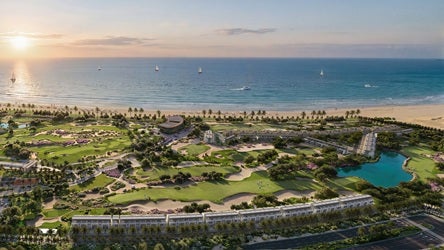
The project combines beachfront residences, a golf course and lifestyle amenities, according to senior company officials speaking at a launch ceremony in Palm Beach, Florida.
The residential element, Trump Residences, will comprise a gated community of three-, four- and five-bedroom branded villas. Each villa will have beach access and views of the sea and golf course.
The development will also include the Trump International Golf Club, Simaisma, Qatar, anchored by an 18-hole championship golf course, a members-only clubhouse and a beach club.
A private community centre will provide sports, recreation and wellness facilities for residents.
The project forms part of Qatar’s wider Simaisma tourism development, launched by Qatar’s Ministry of Municipality in June 2024.
The Simaisma project covers eight square kilometres and extends along seven kilometres of beachfront on Qatar’s eastern coast, north of Doha. It includes 16 tourism zones available for private sector development, with planned resorts, a theme park, an 18-hole golf course, residential villas, a yacht marina, restaurants and retail facilities.
Qatari Diar Real Estate Investment Company is managing the wider development.
The integrated tourism project supports the objectives of Qatar’s Third National Development Strategy 2024-30, which aims to increase the contribution of non-oil sectors to the economy.
The launch extends the partnership between Dar Global and The Trump Organisation into Qatar.
Dar Global develops luxury residential and hospitality projects across Europe and the Middle East.
As of 30 June 2026, Dar Global’s portfolio had a total gross development value of $23bn, the company said.
READ THE NOVEMBER 2026 MEED BUSINESS REVIEW – click here to view PDFGulf projects keep moving amid conflict; UAE's state spending and oil output flexibility cushion Iran war shock; Project finance lenders weigh risk against infrastructure needs.
Distributed to senior decision-makers in the region and around the world, the November 2026 edition of MEED Business Review includes:
> AGENDA: GCC projects market holds its nerve> MARKET FOCUS: UAE economy shows resilience> INDUSTRY REPORT: Project financiers hold the line> STADIUMS: Stadium spending set to jump 39% in 2027> CONFLICT: Hormuz closure wipes out growth in 2026> INTERVIEW: WSP regional president Dean McGrail> INTERVIEW: Ministry of Energy & InfrastructureTo see previous issues of MEED Business Review, please click herehttps://image.digitalinsightresearch.in/uploads/NewsArticle/21609076/main.jpeg