
ADES completes acquisition of Saipem’s Saudi drilling business
18 September 2026
Register for MEED’s 14-day trial access
Al-Khobar-based ADES Holding Company has completed a transaction to acquire Italian oil and gas contractor Saipem’s shallow-water drilling subsidiary based in Saudi Arabia.
Under the deal, ADES Saudi, an indirect subsidiary of Saudi Stock Exchange (Tadawul)-listed ADES Holding, will acquire Saudi Arabian Saipem, which operates a fleet of five jack-up rigs.
The fleet includes three owned rigs – Perro Negro 7, Perro Negro 8 and Perro Negro 10 – as well as two leased rigs, Perro Negro 11 and Perro Negro 13. Four of the acquired rigs operate in Saudi Arabia, while Perro Negro 10 operates in Mexico under a charter structure and retains a valid contract in Saudi Arabia.
ADES began the transaction to acquire Saudi Arabian Saipem in June, when it was estimated to be valued at about $285m. The deal was structured on a debt-free, cash-free basis, which was to be settled entirely in cash upon closing.
Following completion, ADES operates a fleet of 128 units, comprising 88 offshore units – including 51 premium units – and 40 onshore rigs.
The transaction also marks ADES’ entry into Mexico, extending the company’s international footprint to 21 countries, and adds approximately SR3.7bn ($992.9m) in backlog as of the completion date.
The purchase of Saudi Arabian Saipem by ADES Holding follows the company’s takeover of Dubai-based, Oslo-listed Shelf Drilling in November last year, in a transaction valued at $379m. Following the completion of the cash merger, Shelf Drilling was wholly delisted from the Oslo Stock Exchange.
The combined Shelf Drilling-ADES entity has been operating as a global player in shallow-water drilling in the world’s most prolific basins, with a fleet of 83 offshore jack-ups, including 46 premium jack-ups and 40 onshore rigs. The acquisition expanded ADES Holding’ global footprint from 13 to 19 countries, allowing entry and deeper operational integration into Southeast Asia, India, West Africa, the North Sea and the broader Mediterranean.
Saudi Arabian Saipem generated revenues of SR636m ($170m) in 2025, highlighting the scale of the business being transferred.
The divestment aligns with Saipem’s broader industrial strategy of reducing exposure to mature shallow-water drilling markets and concentrating resources on deepwater and harsh-environment offshore projects, where technical complexity and barriers to entry are generally higher.
These segments have attracted growing investment in recent years as operators pursue offshore developments in regions such as the North Sea, Brazil, West Africa and the US Gulf of Mexico.
For ADES, the acquisition further expands its presence in the Middle East offshore drilling market, particularly in Saudi Arabia, one of the world’s largest offshore jack-up rig markets, driven by activity from Saudi Aramco.
Saipem previously said proceeds from the transaction will be used in accordance with the objectives outlined in its industrial plan. The Milan-listed company was advised on the transaction by Moelis & Company as financial adviser and Clifford Chance, together with AS&H Clifford Chance, as legal counsel.
 READ THE SEPTEMBER 2026 MEED BUSINESS REVIEW – click here to view PDF
Nuclear power ambitions gather pace; Kuwait keeps dealmaking alive despite war; Region invests in raising gas processing capacity.
Distributed to senior decision-makers in the region and around the world, the September 2026 edition of MEED Business Review includes:
|
> AGENDA: Gulf nuclear revival takes shape
> MARKET FOCUS: Kuwait keeps dealmaking alive under fire
> INDUSTRY REPORT: Gas processing takes centre stage in Mena region
|

Register for MEED's guest program now to access this article.
Exclusive from Meed
-
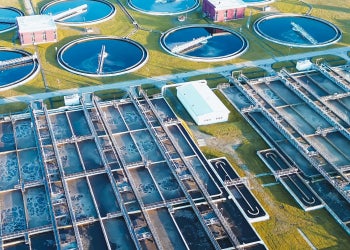 Contractors express interest in Qiddiya wastewater projects
23 November 2026
-
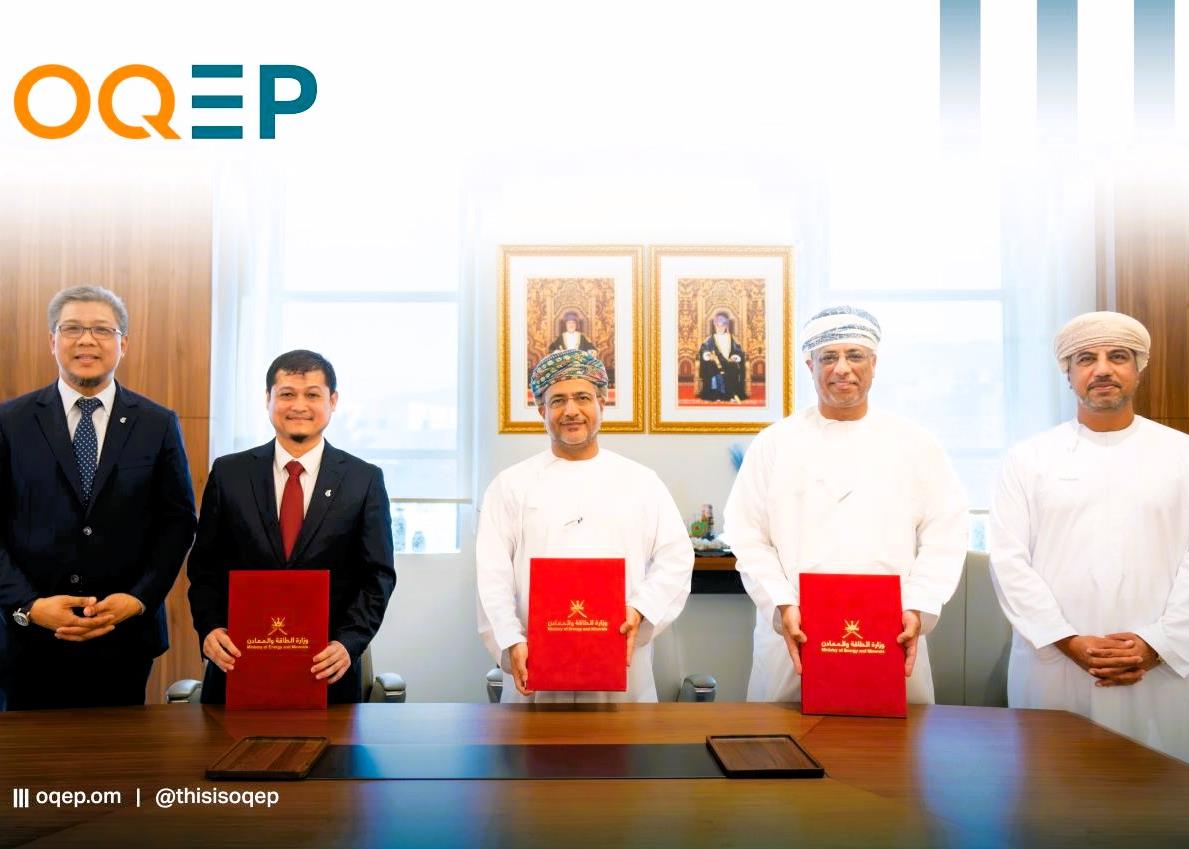 OQEP and Petronas sign offshore block study deal
23 November 2026
-
 Emirates NBD lends AED385m to Samana Developers
23 November 2026
-
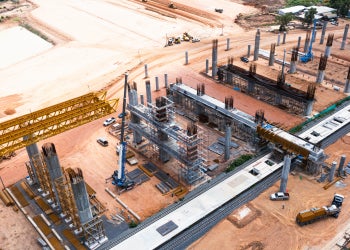 Contractors submit final offers for Oxagon infrastructure
23 November 2026
-
 Three contractors compete for Kuwait LNG import project
23 November 2026
All of this is only 1% of what MEED.com has to offer
Subscribe now and unlock all the 153,671 articles on MEED.com
- All the latest news, data, and market intelligence across MENA at your fingerprints
- First-hand updates and inside information on projects, clients and competitors that matter to you
- 20 years' archive of information, data, and news for you to access at your convenience
- Strategize to succeed and minimise risks with timely analysis of current and future market trends
Related Articles
-
Contractors express interest in Qiddiya wastewater projects
23 November 2026

Contractors have expressed interest with Qiddiya Investment Company (QIC) for two wastewater infrastructure packages at Qiddiya City, southwest of Riyadh.
According to a source, expressions of interest (EoI) were submitted on 22 November, with at least eight contractors understood be interested in the project.
The scope covers the design, construction, commissioning and operation of two wastewater treatment plants (WWTPs), as well as a centralised sludge treatment facility.
The first package covers WWTP11 in District 24, with a treatment capacity of 60,000 cubic metres a day (cm/d), alongside a sludge treatment facility.
The second package involves WWTP2 in District 18, with a capacity of 9,000 cm/d. It will also include a reverse osmosis facility to provide tertiary treatment and produce treated sewage effluent suitable for reuse.
The following contractors have submitted EoIs for the project, industry sources told MEED:
- AlFanar (Saudi Arabia)
- AlKhorayef (Saudi Arabia)
- Aqualia (Spain)
- Cox (Spain)
- Lantania (Spain)
- Nesma (Saudi Arabia)
- Tawzea (Saudi Arabia)
- Wetico (Saudi Arabia)
The deadline had initially been set for 8 November. It was extended to 18 November and then to 22 November to allow additional contractors to participate in the process, upon request.
Included in the second wastwater package is a sludge treatment facility, which will have an initial processing capacity of approximately 415 cm/d of thickened sludge. Its scope comprises sludge stabilisation, dewatering, anaerobic digestion, biogas recovery and combined heat and power generation. The facility will also incorporate solar sludge drying, with a capacity of approximately 172 cm/d, to produce Class A biosolids.
QIC has said it intends to procure the works under a design, build and operate model. The initial operations and maintenance period will be two years, with an option for QIC to extend this to five years.
The two packages will be tendered under a single request for proposals (RFP). Contractors will be required to submit separate technical and commercial proposals for each package, as well as a combined proposal. QIC said it may award the packages separately or collectively.
The release of the RFP had initially been scheduled for December, with contract awards targeted for June 2027.
The infrastructure package will cater to Saudi Arabia’s 360-square-kilometre Qiddiya entertainment city.
QIC, which is owned by Saudi sovereign wealth vehicle the Public Investment Fund, is overseeing the development of Qiddiya City, including its supporting utilities infrastructure.
https://image.digitalinsightresearch.in/uploads/NewsArticle/21714953/main.jpg -
OQEP and Petronas sign offshore block study deal
23 November 2026
Oman’s state-owned upstream firm OQ Exploration & Production (OQEP) and Malaysia’s state energy company Petronas have signed an agreement to jointly study hydrocarbons resources in offshore blocks 83 and 84.
Blocks 83 and 84 cover 10,875 square kilometres (sq km) and 14,147 sq km, respectively, in waters of the Gulf of Oman, off the sultanate’s Qurayyat coast near Muscat.
The joint study agreement between OQEP and Petronas covers geological and geophysical studies to evaluate the resource potential and commercial viability of the two blocks.
After failing to discover hydrocarbons earlier in this decade in Oman’s first deepwater exploration well in Block 52, in which OQEP had been a minority stakeholder, the sultanate has been pushing hard in its campaign to find oil and gas reserves in its territorial waters.
In February this year, OQEP acquired a 30% participating interest in offshore Block 18, following the Energy & Minerals Ministry’s award of exploration rights to a joint venture of OQEP subsidiary OQ Exploration & Production Al-Batinah Offshore and PC Oman Ventures, a wholly owned subsidiary of Petronas.
Located off Oman’s northeastern coast, Block 18 covers more than 21,000 sq km in the Sea of Oman, with water depths of 50-3,000 metres. No confirmed discoveries have previously been reported in the block.
ALSO READ: Oman and ExxonMobil partner for integrated gas and LNG project
Under the concession agreement, Petronas holds a 70% participating interest and operatorship, while OQEP holds the remaining 30%.
In June, the ministry signed an with OQEP and state-owned Turkiye Petroller AO, granting the companies exclusive exploration, appraisal, development and production rights for offshore Block 80.
The block covers approximately 5,737 sq km in the Gulf of Oman, near the Strait of Hormuz and off Musandam Governorate. It includes the producing Bukha and West Bukha oil and gas fields.
The agreement stipulates a minimum exploration investment commitment of $90m over an initial eight-year exploration period. The work programme is divided into two phases to evaluate the block’s hydrocarbons potential.
Separately, the ministry awarded OQEP exploration rights for three hydrocarbons blocks – 36, 43A and 66 – in the sultanate.
Under the agreements, OQEP will conduct geological and geophysical surveys, analysis and modelling, and will drill exploratory wells at the three blocks, with the aim of developing recoverable reserves.
Neither the ministry nor OQEP disclosed the blocks’ locations, areas or prospective reserves in their statement.
OQEP portfolio
Omani state energy group OQ Group holds the majority 75% stake in OQEP, with the remaining 25% shares trading on the Muscat Stock Exchange since October 2024, following an initial public offering from which OQ earned proceeds of $2bn.
OQEP’s portfolio comprises 14 upstream oil and gas exploration and production assets in Oman, covering onshore and offshore operations and assets held under service contracts.
Formerly known as Oman Oil Company Exploration & Production, OQEP’s flagship assets include Block 60, which contains the Abu Tubul and Bisat oil fields, and Block 48. The company also holds strategic interests in gas-producing blocks 9, 10 and 61.
OQEP also expanded its producing portfolio in April this year through the acquisition of a 35% interest in onshore Block 27 from Japan's Mitsui E&P Middle East. The transaction was valued at RO28.8m ($75m).
Block 27 is operated by US-based Occidental Petroleum, which holds a 65% participating interest under an exploration and production sharing agreement valid until 2035.
ALSO READ: OQEP signs agreement with Indonesian state energy firm
https://image.digitalinsightresearch.in/uploads/NewsArticle/21714285/main5234.jpeg -
Emirates NBD lends AED385m to Samana Developers
23 November 2026
Dubai-based Emirates NBD has signed a four-year, AED385m ($105m) bilateral financing facility with local real estate developer Samana Developers.
The facility includes a term loan and a Real Estate Regulatory Agency (Rera) guarantee, the bank said in a statement on 23 November. It will fund land acquisition and the development of real estate projects across Dubai.
The repayment structure allows the developer to use receivables from some of its existing projects.
Emirates NBD said the deal builds on its existing relationship with the developer.
Samana Developers was established in 2017. It says it was the fifth-largest off-plan developer in Dubai by sales activity in 2025.
The company has a portfolio of 56 projects with a combined gross development value of about AED17.5bn ($4.8bn). Its schemes are concentrated in residential communities including Jumeirah Village Circle, Arjan, Dubai Sports City and Dubai Studio City.
The developer says its development pipeline is worth more than AED12.5bn ($3.4bn).
Emirates NBD said structured financing remains an important tool for established developers pursuing new opportunities, as investor interest in off-plan developments continues to support activity in Dubai's real estate market.
https://image.digitalinsightresearch.in/uploads/NewsArticle/21714643/main3116.png -
Contractors submit final offers for Oxagon infrastructure
23 November 2026
Register for MEED’s 14-day trial access
Contractors have submitted their best and final offers for an infrastructure package at Oxagon, Saudi Arabia’s industrial and logistics city at Neom.
The scope covers wet and dry infrastructure networks, civil works and limited earthworks. The wet infrastructure works include combined potable and firewater, irrigation, domestic wastewater, industrial wastewater and stormwater networks.
The dry infrastructure works include optional 33kV medium-voltage power networks running from primary substation switchgear to defined asset interface points. The package also covers 230/400V low-voltage networks serving street and pedestrian lighting, control networks, radio systems, smart city systems, Saudi Electricity Company and ICT active components, pumping stations and other public-realm loads.
The contractor will also install security systems, underground ICT pathways for transmission and distribution containment, security networks, service-provider networks and Interior Ministry fibre networks. The scope includes fibre-optic networks for Enowa power lines and wet-services instrumentation, control and automation packages.
The civil infrastructure works comprise roads and pavements, road furniture, signage, wayfinding and landscaping within the right-of-way.
Construction of the main Highway 55 and demolition of the existing highway are excluded, except for agreed under-Highway 55 crossings and defined tie-ins at approved interface points.
Bulk earthworks and rough grading will be carried out by others. The appointed contractor will undertake local trimming, trenching, backfilling, compaction and preparation to achieve issued-for-construction finish levels.
Tendering activity has intensified at Oxagon in recent months. Contractors have submitted best and final offers for a design-and-build contract to upgrade Highway 55 in the Oxagon region. The first phase includes 14 kilometres (km) of road with two lanes in each direction, one bridge and three interchanges, and is expected to take 22 months to complete.
Highway 55 connects the Red Sea coast with the mainland in northwestern Saudi Arabia and is currently the only road providing north-south connectivity between Duba and the Neom region.
Consultants also submitted bids on 31 October for a contract covering the concept design, feasibility study and route-alignment studies for a freight railway connecting the Port of Neom at Oxagon to Saudi Arabia Railways’ North-South Railway at the Al-Baseeta junction.
The proposed rail line is expected to extend for more than 400km.
https://image.digitalinsightresearch.in/uploads/NewsArticle/21712937/main.jpg -
Three contractors compete for Kuwait LNG import project
23 November 2026
Register for MEED’s 14-day trial access
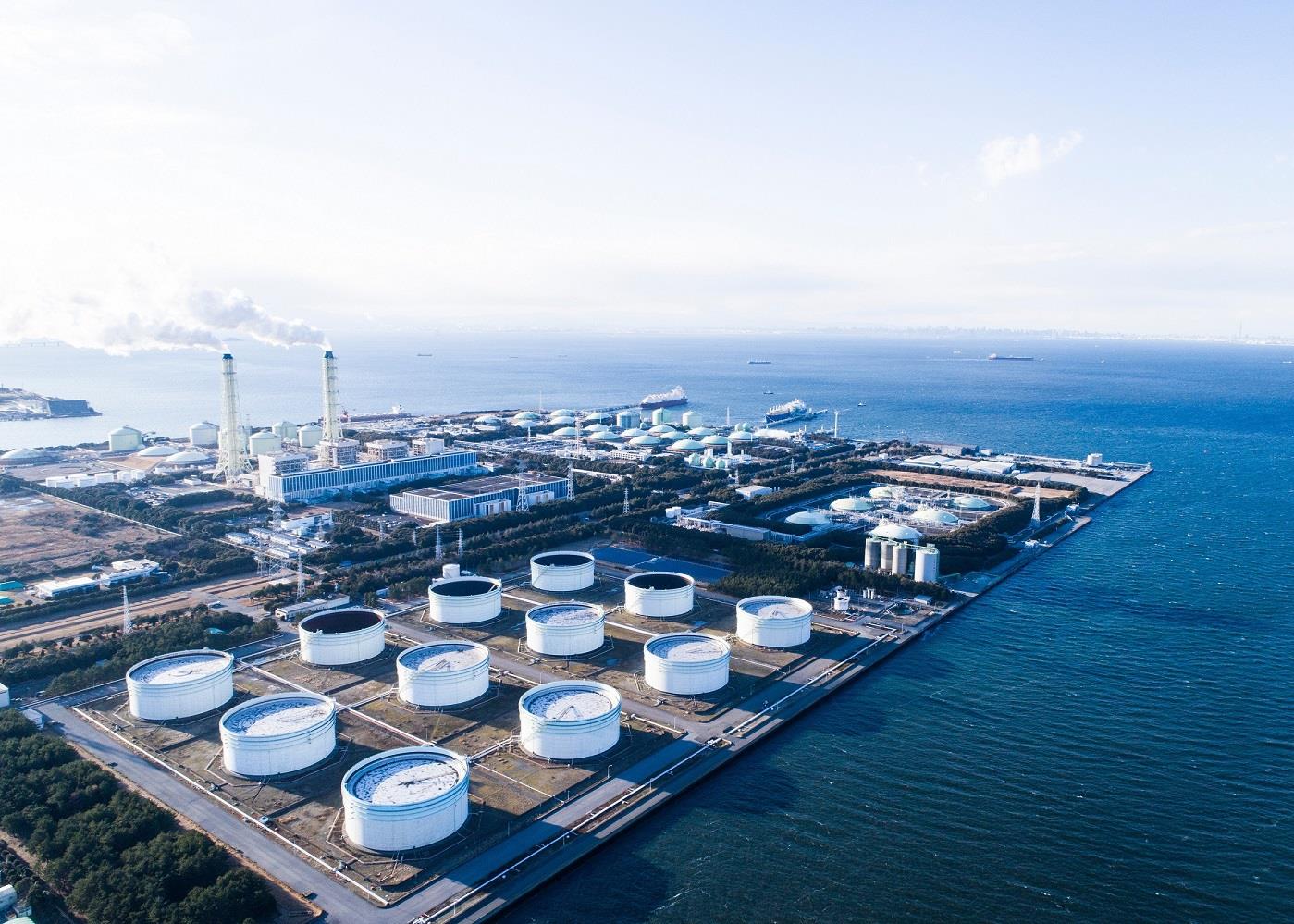
At least three companies are engaging with the tendering process for a planned project to develop a reliquefication facility for Kuwait’s Al-Zour liquified natural gas (LNG) import terminal, according to industry sources.
The project focuses on developing a boil-off gas (BOG) unit at the terminal and was tendered by state-owned Kuwait Integrated Petroleum Industries Company (Kipic).
The companies that sources say are currently engaging with the tender process are:
- Sinopec, China
- Hyundai Engineering Company (HEC), South Korea
- Tecnicas Reunidas (TR), Spain
A pre-tender meeting for the project on 18 October was attended by HEC, TR and India’s Larsen & Toubro (L&T), sources said.
However, L&T is no longer believed to be interested in participating in the tender.
Sinopec did not attend the pre-tender meeting, but is now planning to submit a bid for the project, sources said.
Originally, the project was tendered with a bid deadline of 22 December.
This deadline was extended on 10 November, when Kipic issued a statement citing a new deadline of 2 February 2027.
The project scope includes engineering, procurement and construction works, along with pre-commissioning, commissioning and performance testing services.
A BOG unit at an LNG facility captures, compresses and processes natural gas vapours that evaporate from cryogenic storage tanks, enabling the gas to be recycled back into the system rather than flared.
In April, MEED reported that contractors expected the project to be worth about $200m.
https://image.digitalinsightresearch.in/uploads/NewsArticle/21708088/main1912.jpg