
Consultant progresses work on Petro Rabigh project
7 August 2026

Saudi Arabia's Rabigh Refining & Petrochemical Company (Petro Rabigh) is overseeing progress on a project to build additional units at its integrated refining and petrochemical complex in Rabigh, on the kingdom’s Red Sea coast.
Petro Rabigh, which is majority-owned by Saudi Aramco, appointed Australia-headquartered Worley to provide engineering and project management consultancy (PMC) services for the project in the first quarter of this year, sources told MEED.
The overall scope of work on the project covers the construction of the following units:
- Light naphtha isomerisation unit
- De-asphalting and dewaxing unit
- Ebullated bed configuration
- Sulphur block (SRU/ARU/SWS/SFU)
- Sales gas allocation and pipeline construction
- Utilities unit outside battery limit
- Auxiliary piping modifications
- Utility and hydrocarbon tie-ins.
Under the contract, the consultant will perform engineering studies and PMC functions, and assist the client in developing cost estimates and project-specific execution and technical procedures, based on Aramco guidelines for both the design basis scoping paper (DBSP) stage and, subsequently, the front-end engineering and design (feed) stage.
Petro Rabigh will draw on the consultant’s advice on design, procurement and the development of new processing technologies, including for light naphtha isomerisation; vacuum residue processing technologies such as de-asphalting and dewaxing; an ebullated-bed configuration integrated with the diesel hydrotreating section; and unconverted oil hydrotreatment.
According to sources, Petro Rabigh issued the tender for engineering and PMC services for the additional units project on 30 May last year.
It set an initial bid submission deadline of 29 June last year, which it then extended to 17 July and again to 24 July, with engineering firms submitting their proposals by that date, sources said.
Following months of evaluation, discussions and negotiations with bidders, Petro Rabigh selected Worley for the contract.
Red Sea downstream complex
Petro Rabigh was originally established in 1989 as a basic topping refinery with crude oil processing facilities in Rabigh, along Saudi Arabia’s Red Sea coastline, about 165 kilometres to the north of Jeddah in Mecca Province.
Saudi Aramco and Japan’s Sumitomo Chemical Company formed an equal joint venture in 2005 to transform the Petro Rabigh crude oil refining complex into an integrated refinery and petrochemicals complex, with the strategic objective of expanding Saudi Arabia’s annual production capacity of refined products and petrochemicals.
Three years after the creation of the Petro Rabigh joint venture, the partners floated 25% of its shares in an initial public offering on the Saudi Stock Exchange (Tadawul) in 2008, following which Aramco and Sumitomo Chemical each held 37.5% shares in Petro Rabigh, with the remaining shares listing on the Tadawul.
In October last year, however, Aramco completed the acquisition of an additional 22.5% stake in Petro Rabigh from Sumitomo Chemical. Following the completion of the transaction, valued at $702m or SR7 a share, Aramco became the majority shareholder in Petro Rabigh, with an equity stake of 60%, while Sumitomo retains an interest of 15%. The remaining 25% shares of Petro Rabigh continue to trade on the Tadawul.
ALSO READ: Petro Rabigh and Indian firm to study joint project investment
Following the formation of the Petro Rabigh joint venture in 2005, Aramco and Sumitomo Chemical launched the expansion of the refining facility into an integrated refining and petrochemicals complex in 2006, investing $9.8bn in the project, 60% of which was secured through external financing. Engineering, procurement and construction works on phase one were completed in 2009, with the integrated downstream complex entering operations in November of that year.
The Petro Rabigh downstream complex consists of a topping refinery that has a 340,000 barrel-a-day (b/d) crude distillation unit, a 47,000 b/d hydrotreater, a 12 million cubic-feet-a-day hydrogen plant, a 75,000 b/d naphtha merox unit and a 60,000 b/d kerosene merox unit, along with supporting utilities, product tankage and a marine terminal.
Aramco and Sumitomo Chemical initiated Petro Rabigh’s phase two expansion project, valued at $8bn, in 2014. The second expansion phase was commissioned in 2018 and added 15 chemicals plants to the Petro Rabigh complex, raising the facility’s total production capacity to 18.4 million tonnes a year (t/y) of petroleum-based products.
The expansion also increased Petro Rabigh’s capacity to process an additional 30 million cubic feet a year of ethane into 2.4 million t/y of ethylene and propylene-based derivatives, and achieved a naphtha output of 3 million t/y.
Expansion of the main existing chemicals plant and the establishment of a clean fuels complex comprising polyether polyols, naphtha treating and sulphur recovery units were also part of the phase two project.
In addition to awarding Worley the engineering and PMC services contract this year, Petro Rabigh awarded US-based KBR a 10-year contract in February this year to provide maintenance services covering the company’s polymer plants in Rabigh, on the kingdom’s Red Sea coast.
Work on the operations and maintenance contract will be executed by KBR’s business line, which operates under the Houston-headquartered firm’s Technology Solutions portfolio, sources told MEED.
Prior to this contract, in March 2024, Petro Rabigh awarded KBR a similar five-year asset condition monitoring programme contract. As part of that job, KBR is to provide predictive maintenance services at Petro Rabigh’s main plant.

Register for MEED's guest program now to access this article.
Exclusive from Meed
-
 Jedco maps next phase of Jeddah airport expansion
22 September 2026
-
 Contractor wins $105m Medina university hospital deal
22 September 2026
-
 Oman tenders Thumrait Industrial City infrastructure
22 September 2026
-
 Kuwait halves drilling contractor pool
22 September 2026
-
 Abu Dhabi expects 45% emissions cut as electricity demand rises
21 September 2026
All of this is only 1% of what MEED.com has to offer
Subscribe now and unlock all the 153,671 articles on MEED.com
- All the latest news, data, and market intelligence across MENA at your fingerprints
- First-hand updates and inside information on projects, clients and competitors that matter to you
- 20 years' archive of information, data, and news for you to access at your convenience
- Strategize to succeed and minimise risks with timely analysis of current and future market trends
Related Articles
-
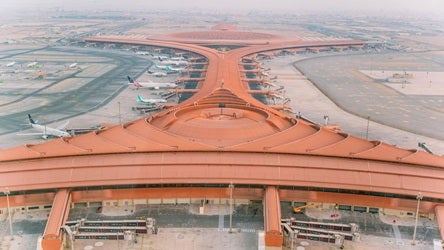
Jedco maps next phase of Jeddah airport expansion
22 September 2026
Jeddah Airports Company (Jedco) has outlined plans for the next phase of expansion at King Abdulaziz International airport (KAIA) in Jeddah.
The programme comprises six upcoming contractor packages spanning airside works, terminal upgrades and utilities as Jedco advances its long-term expansion plans.
The opportunities include airfield rehabilitation; a five-year construction framework covering multiple workstreams and facility types; a Terminal 3A (T3A) package; Terminal 1 (T1) optimisation; a fuel farm; and Concourse C works.
The packages cover terminal buildings and ancillary facilities, runways, taxiways and aprons, hangars, fuel systems, airside facilities, supporting infrastructure and utility networks.
Tendering and award activity will be staggered over the next two years. Airfield rehabilitation is targeted for Q3 2026. The construction framework is scheduled for Q4 2026 and will run for five years.
The T3A package is planned for Q1 2027 and will be delivered under an early contractor involvement contract. Local contractors are encouraged to bid as part of a joint venture with an experienced international partner.
T1 optimisation is planned for Q4 2027, the fuel farm for Q2 2027, and Concourse C – currently the latest of the six milestones – for Q2 2028.
The new packages add detail to Jedco’s wider expansion plans disclosed in 2023, when it was reported that the company would invest SR115bn ($31bn) to increase KAIA’s capacity to 114 million passengers a year, with an overall completion target of 2031.
Jedco has recently awarded several significant contracts linked to the airport’s upgrade programme.
In November 2024, a joint venture of local Algihaz Contracting and Turkey’s TAV was awarded a contract to rehabilitate the South Terminal to serve Umrah and Hajj pilgrims, with Singapore’s Surbana Jurong acting as consultant.
Earlier that year, Jedco also awarded France’s Alstom a contract to increase the capacity of the Innovia automated people mover at Terminal 1, including new cars and upgrades to signalling, communications and controls.
Surbana Jurong is expected to play a leading role in future KAIA expansion plans and is currently providing technical advisory and project management consultancy for more than 100 capital projects for Jedco, valued at over SR6bn ($1.6bn).
These upgrades are expected to boost KAIA’s annual capacity in line with Saudi Arabia’s Vision 2030 and National Aviation Strategy, enhancing the experience for domestic travellers and millions of Hajj and Umrah pilgrims.
https://image.digitalinsightresearch.in/uploads/NewsArticle/19877992/main.jpg -
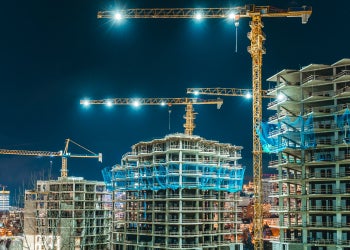
Contractor wins $105m Medina university hospital deal
22 September 2026
Riyadh-based construction firm Al-Mansouria General Contracting Company has been awarded a SR396m ($105.6m) contract to complete the remaining construction works on the Taiba University Hospital project in Medina.
The contract scope includes structural completion, remaining civil works, mechanical, electrical and plumbing installations, specialised clinical fit-outs and medical gas infrastructure to bring the long-stalled facility into operation.
Located on King Khalid Road along Medina’s Third Ring Road, the teaching hospital will have a capacity of 563 beds.
The contract duration is three years, with delivery targeted for late 2029.
The latest award follows a prolonged procurement cycle that began more than a decade ago as part of a public budget drive to expand Saudi Arabia’s higher education infrastructure.
The project’s first phase was initially signed in December 2011 with local firm Al-Muhaidib Contracting under a SR500m ($133.3m) contract.
Groundbreaking for the eight-storey complex took place in July 2013. The project covers a gross floor area of more than 200,000 square metres.
Progress stalled shortly thereafter due to reported structural delays and the reallocation of public capital budgets across the kingdom’s social infrastructure pipeline.
 READ THE SEPTEMBER 2026 MEED BUSINESS REVIEW – click here to view PDF
Nuclear power ambitions gather pace; Kuwait keeps dealmaking alive despite war; Region invests in raising gas processing capacity.
Distributed to senior decision-makers in the region and around the world, the September 2026 edition of MEED Business Review includes:
> AGENDA: Gulf nuclear revival takes shape> MARKET FOCUS: Kuwait keeps dealmaking alive under fire> INDUSTRY REPORT: Gas processing takes centre stage in Mena regionTo see previous issues of MEED Business Review, please click herehttps://image.digitalinsightresearch.in/uploads/NewsArticle/19870032/main.jpg -
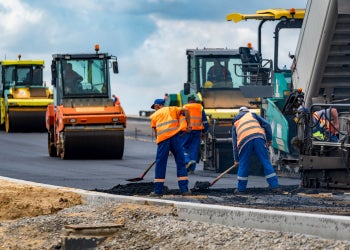
Oman tenders Thumrait Industrial City infrastructure
22 September 2026
Oman’s Public Establishment for Industrial Estates (Madayn) has tendered an estimated RO15m ($39m) contract to develop infrastructure for Thumrait Industrial City.
The tender was issued on 14 September, with bids due by 12 November.
The scope covers site-wide utilities and services, including an internal road network, stormwater channels and culverts. It also includes installing sewerage and water networks, along with landscaping works.
In addition, Madayn intends to build plug-and-play industrial units and a facilities building.
The first phase of the development will cover about 120,000 square metres (sq m).
Thumrait Industrial City is located in Oman’s Dhofar Governorate and spans an area of more than four million sq m.
The project location is close to concession blocks, quarry sites and the Najd agricultural areas. It is positioned to attract industrial investments in sectors such as mining and minerals processing (including gypsum and cement), food production, and a range of light and general manufacturing activities.
In March, Madayn said it is preparing to invest more than RO245m ($637m) to upgrade and expand infrastructure across its industrial cities between 2026 and 2030, as part of efforts to attract new investment and advance economic diversification.
According to media reports, Madayn chief executive Dawood Bin Salim Al-Hadabi said the programme is part of an expanded, phased plan aligned with Oman Vision 2040 and the authority’s long-term Madayn 2040 strategy.
The objective is to deepen Oman’s industrial base and spread growth across the sultanate’s governorates.
Madayn said the pipeline comprises about 90 strategic projects to improve industrial-city infrastructure, extend serviced land and increase the overall ease of doing business for investors.
https://image.digitalinsightresearch.in/uploads/NewsArticle/19866218/main.jpg -
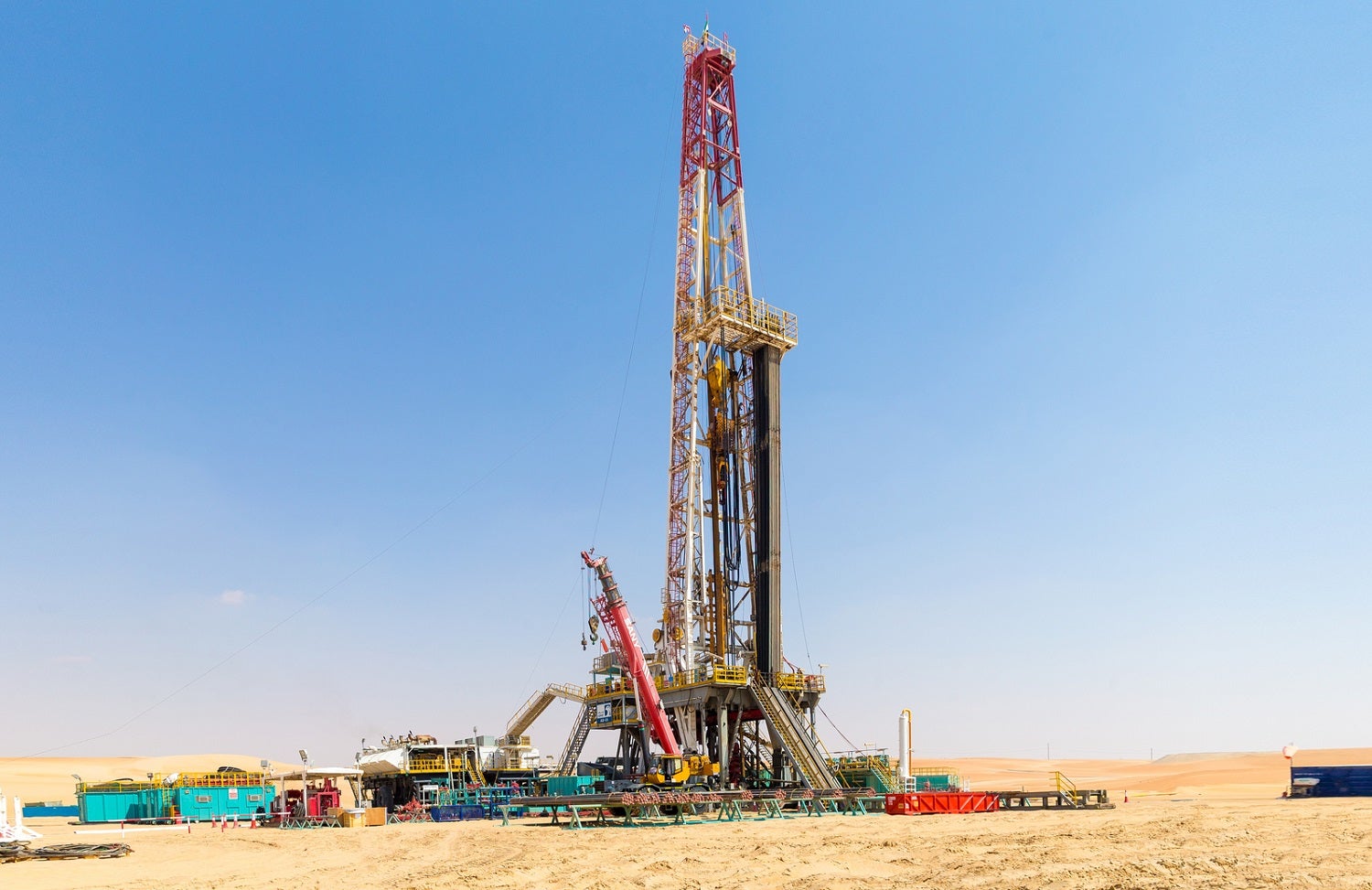
Kuwait halves drilling contractor pool
22 September 2026
State-owned upstream operator Kuwait Oil Company (KOC) has reduced the number of approved contractors for onshore drilling and shallow-well maintenance from 51 to 24.
Firms that are no longer qualified include major contractors such as Italy’s Saipem, Oklahoma-based Helmerich & Payne and Houston-based Patterson-UTI Energy.
The latest list still includes a wide range of Kuwaiti, regional and international companies, according to the latest update on its electronic system, published on 21 September 2026.
The full list of contractors that are now qualified to participate in tenders is:
- Burgan Company for Well Drilling, Trading & Maintenance (Kuwait)
- Kuwait Drilling Company (Kuwait)
- Sun Drilling Kuwait (Kuwait)
- TDL Kuwait for Oil Rigs & Natural Gas Extraction Activities, Services and Facilities (Kuwait)
- United Precision Drilling (Kuwait)
- Abraj Energy Services (Oman)
- Adnoc Drilling Company (UAE)
- Arabian Drilling Company (Saudi Arabia)
- Anton Oilfield Services (China)
- China Oilfield Services (China)
- Egyptian Drilling Company (Egypt)
- CNPC Bohai Drilling Engineering Company (China)
- Great Wall Drilling Company (China)
- John Energy (India)
- Kerui Oilfield Service (China)
- KCA Deutag Drilling (Germany)
- Mohammed Al-Barwani Petroleum Services (Oman)
- Nabors Drilling International (US)
- National Drilling & Services Company (Oman)
- Sea & Land Drilling Contractors (Oman)
- Sinopec International Petroleum Service Corporation (China)
- Karamay Jianye Energy (China)
- Modern Drilling Company (Egypt)
- Grey Wolf Drilling International (US)
An earlier list, which was published on 11 February, included 51 qualified companies.
The reduction in qualified drilling contractors follows KOC’s notice on 27 April this year, informing existing qualified contractors that they would need to reapply.
https://image.digitalinsightresearch.in/uploads/NewsArticle/19863744/main3435.jpg -
Abu Dhabi expects 45% emissions cut as electricity demand rises
21 September 2026
Register for MEED’s 14-day trial access
Abu Dhabi-based Emirates Water & Electricity Company (Ewec) expects carbon emissions from power and water production to fall by more than 45% by 2035 as the UAE expands renewable energy and reverse osmosis (RO) desalination.
The state offtaker's latest long-term system planning forecasts emissions will decline from about 42 million tonnes in 2019 to approximately 23 million tonnes in 2035.
The reduction is expected despite annual electricity demand that is forecast to rise by about 70% in 2026-33.
Ewec said the expansion of renewable energy and the shift towards RO desalination will be the principal drivers of the reduction.
The company plans to increase Abu Dhabi's solar capacity to 14GW by 2030 and more than 35GW by 2035. This will be supported by up to 15GW of battery storage capacity.
According to regional project tracker MEED Projects, Ewec has over $16bn-worth of power and water projects in the execution stage as part of its long-term procurement programme to increase renewable energy and low-carbon water production capacity.
This includes a 5.2GW Abu Dhabi solar and battery energy storage system (bess) round-the-clock renewable energy project, as well as three 1.5GW solar photovoltaic independent power projects (IPP): Al-Ajban, Al-Khazna and Al-Zarraf.
It also comprises the 1GW Al-Dhafra open-cycle gas turbine power plant, the 2.5GW Taweelah C combined-cycle gas turbine (CCGT) plant and a separate 400MW bess IPP.
As previously reported, it is expected that the developer's agreement for the 3.3GW Al-Nouf 1 CCGT IPP will be signed by the end of the year, while contractors are preparing to submit bids for a separate 2.6GW power plant project in Ajman.
The expansion of solar and battery storage is expected to reduce the system's reliance on gas-fired generation. However, gas-fired generation will continue to provide flexibility to support the system and balance intermittent renewable power output, according to Ewec.
The offtaker also expects RO desalination to account for more than 95% of total water production by 2035, with the procurement programme supporting the Abu Dhabi Department of Energy's Clean Energy Strategic Target 2035 for electricity production and the UAE Net Zero by 2050 Strategy.
READ THE SEPTEMBER 2026 MEED BUSINESS REVIEW – click here to view PDFNuclear power ambitions gather pace; Kuwait keeps dealmaking alive despite war; Region invests in raising gas processing capacity.
Distributed to senior decision-makers in the region and around the world, the September 2026 edition of MEED Business Review includes:
> AGENDA: Gulf nuclear revival takes shape> MARKET FOCUS: Kuwait keeps dealmaking alive under fire> INDUSTRY REPORT: Gas processing takes centre stage in Mena regionTo see previous issues of MEED Business Review, please click herehttps://image.digitalinsightresearch.in/uploads/NewsArticle/19849749/main.jpg