
Foundations progressing for Iraq gas gathering project
21 May 2026

The construction of foundations is ongoing for the $1.61bn project to develop a gas processing complex at Iraq’s Ratawi oil and gas field, according to industry sources.
In May last year, China Petroleum Engineering & Construction Corporation (CPECC) was awarded the engineering, procurement and construction (EPC) work for the project.
The Ratawi gas processing complex is one of four projects constituting Iraq’s Gas Growth Integrated Project (GGIP), which is being developed by French energy major TotalEnergies and its partners. TotalEnergies is the main operator of the GGIP scheme. Basra Oil Company (30%) and QatarEnergy (25%) are the other stakeholders.
The consortium formalised the investment agreement for the project with the Iraqi government in September 2021.
The GGIP is estimated to have a total value of $27bn, and the first phase of the project is worth about $10bn.
When commissioned, the planned facility is expected to process 300 million cubic feet a day (cf/d) of gas. Its capacity is expected to double when a second expansion phase comes online.
The Ratawi gas processing facility project aims to improve Iraq’s electricity supply by capturing associated gas that would have otherwise been flared at several oil fields, including:
- Luhais
- Majnoon
- Ratawi
- West Qurna 2
- Tuba
Large volumes of gas are flared from these oil fields, causing significant environmental damage. Collecting and processing flared gas will generate increased hydrocarbon revenues and reduce ecological damage.
The gas tapped and processed from the oil fields will then be used to supply power plants, helping to reduce Iraq’s power import bill.
As well as supplying to Iraq’s national gas network to generate electricity, the Ratawi gas processing complex will increase the production of gas products, including liquefied petroleum gas and condensates.
US-based consultant KBR has performed the front-end engineering and design work on the project.
GGIP masterplan
The GGIP programme is focused on developing four major projects in Iraq:
- The Common Seawater Supply Project (CSSP)
- The Ratawi gas processing complex
- A 1GW solar power project for Iraq’s electricity ministry
- A field development project at Ratawi, known as the Associated Gas Upstream Project (AGUP)
The CSSP is designed to support oil production in Iraq’s southern oil and gas fields – mainly Zubair, Rumaila, Majnoon, West Qurna and Ratawi – by delivering treated seawater for injection, a method used to boost crude recovery rates and improve long-term reservoir performance.
In August last year, TotalEnergies awarded China Energy Engineering International Group the EPC contract for the 1GW solar project at the Ratawi field. A month later, QatarEnergy signed an agreement with TotalEnergies to acquire a 50% interest in the project.
Civil works and piping work have started for the project to develop a second central processing facility (CPF) at Iraq’s Ratawi oil and gas field as part of the AGUP portion of the GGIP.
In September, Turkiye’s Enka signed a contract to develop the second CPF at Iraq’s Ratawi field as part of the second phase of the field’s development.
Enka has yet to give a value for the contract, but it is believed to be worth more than $1bn.
In November, US-based KBR was selected by Enka to provide detailed design services for the project.
Enka’s contract covers the engineering, procurement, supply, construction and commissioning of the CPF for the project.
The aim of the project is to process oil and associated gas from the Ratawi oil field to increase production capacity to 210,000 barrels a day of oil and 154 million standard cf/d of gas.
The 1GW Ratawi solar scheme will be developed in phases, with each phase coming online between 2025 and 2027. It will have the capacity to provide electricity to about 350,000 homes in Iraq’s Basra region.
The project, consisting of 2 million bifacial solar panels mounted on single-axis trackers, will include the design, procurement, construction and commissioning of the photovoltaic power station site and 132kV booster station.
Separately, in June, TotalEnergies awarded China Petroleum Pipeline Engineering an EPC contract worth $294m to build a pipeline as part of a package known as the Ratawi Gas Midstream Pipeline.
Also, TotalEnergies awarded UK-based consultant Wood Group a pair of engineering framework agreements in April 2025, worth a combined $11m, under the GGIP scheme.
The agreements have a three-year term under which Wood will support TotalEnergies in advancing the AGUP.
One of the aims of the AGUP is to debottleneck and upgrade existing facilities to increase production capacity to 120,000 barrels a day of oil on completion of the first phase, according to a statement by Wood.
 READ THE MAY 2026 MEED BUSINESS REVIEW – click here to view PDF
Global energy sector forced to recalibrate; Conflict hits debt issuance and listings activity; UAE’s non-oil sector faces unclear recovery period amid disruption.
Distributed to senior decision-makers in the region and around the world, the May 2026 edition of MEED Business Review includes:
|
> REGIONAL LNG: War undermines business case for Middle East LNG
> CAPITAL MARKETS: Damage avoidance frames debt issuance
> MARKET FOCUS: Conflict tests UAE diversification
|

Register for MEED's guest program now to access this article.
Exclusive from Meed
-
 Joint venture wins $246m RCRC bridges contract
16 October 2026
-
 Humain tenders 100MW Riyadh AI data centre
16 October 2026
-
 Construction progresses at Iraq oil refinery
16 October 2026
-
 Adnoc steps up crude expansion
15 October 2026
-
 Joint venture wins Oman desalination contract
15 October 2026
All of this is only 1% of what MEED.com has to offer
Subscribe now and unlock all the 153,671 articles on MEED.com
- All the latest news, data, and market intelligence across MENA at your fingerprints
- First-hand updates and inside information on projects, clients and competitors that matter to you
- 20 years' archive of information, data, and news for you to access at your convenience
- Strategize to succeed and minimise risks with timely analysis of current and future market trends
Related Articles
-
Joint venture wins $246m RCRC bridges contract
16 October 2026
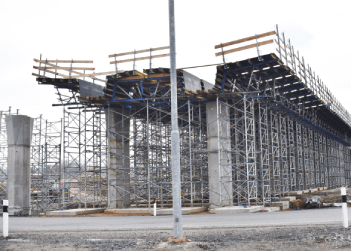
A joint venture of local contractor Mofarreh Group and Turkey-based Gulsan Holding has won an estimated SR923m ($246m) contract from the Royal Commission for Riyadh City (RCRC) to construct a series of grade-separated steel flyovers across the capital.
The contract, known as Package 2 (Groups 2 and 3), is part of RCRC’s urgent bridges programme under the wider project to build steel bridges at 10 junctions across Riyadh.
The works have a 12-month execution timeline to fast-track traffic decongestion across major arterial corridors.
The joint venture’s scope covers the engineering and construction of grade-separated steel bridge interchanges across seven key intersections:
- IC04: Al-Khair Road and King Salman Bin Abdulaziz Road
- IC05: Prince Turki Road and Imam Saud Road
- IC06: Al-Takhassosi Road and Saeed Al-Sulami Road
- IC07: Khurais Road and Al-Hareth Bin Abdullah Road
- IC08: Khurais Road and Ash-Sharq Road
- IC09: Khurais Road and Marmar Road
- IC10: Al-Kharj Road and Al-Hilla Road
The total length of the flyovers is 8.86 kilometres, excluding Junction IC10.
In addition to the structural steel superstructures, concrete bridge foundations, decks and approach ramps, the contract includes retaining walls, utility diversions, temporary phased traffic arrangements, associated roadworks, drainage networks, roadway lighting, intelligent transportation systems and landscaping.
The client received commercial proposals from several local and international contractors. Other bidders included:
- Masco
- Nesma & Partners
- Al-Omaier Trading & Contracting Company
- Yuksel Saudia
- Batco
- Modern Building Leaders
- Sapac
The urgent bridges initiative is part of Riyadh’s rapid transport infrastructure programme to improve traffic throughput, enhance safety and ease vehicular congestion across central and ring-road corridors ahead of major events, including Expo 2030 and the 2034 Fifa World Cup.
In July, Mofarreh Group and Turkiye’s Gulsan Holding formed a joint venture to bid for and deliver transport infrastructure projects in Riyadh for RCRC.
The joint venture said it will target road, bridge, viaduct and interchange projects.
Mofarreh will provide local market access and operational capacity, while Gulsan will contribute international experience in large-scale transport projects.
The companies said the new venture will support knowledge transfer and localisation, and promote the use of international engineering and construction standards aligned with Saudi Arabia’s Vision 2030 infrastructure and sustainability goals.
https://image.digitalinsightresearch.in/uploads/NewsArticle/20663255/main.png -
Humain tenders 100MW Riyadh AI data centre
16 October 2026
Saudi artificial intelligence infrastructure developer Humain has issued a request for proposals for an engineering, procurement and construction (EPC) contract to deliver a 100MW artificial intelligence (AI) data centre facility in Riyadh’s Al-Saad area.
The tender was issued on 17 September, with bids due by 8 November.
The contract includes core-and-shell works; civil works; mechanical, electrical and plumbing installation; testing and commissioning; and site infrastructure across a 350,200-square-metre plot.
The project also includes an optional expansion phase that could raise total site capacity to 200MW.
The initial 100MW development is split into two equal 50MW phases, structured across two single-storey IT buildings housing four 25MW data halls.
Phase one targets a ready-for-service date by October 2028, followed by phase two in January 2029.
Under the optional phase three, an additional 100MW facility would be brought online by July 2029.
The data centre will be designed to support high-density graphics processing unit clusters and AI-compute workloads, with rack densities of 240kW to 250kW.
The facility will be built to Uptime Institute Tier III topology and LEED Silver standards as a baseline, targeting LEED Gold.
The operational design targets an annualised power usage effectiveness below 1.35.
Power will be delivered through four 33kV connections supplied by Saudi Electricity Company from two separate high-voltage/medium-voltage primary substations. The scope requires 15 transformers, 15 static 2,250kW IT uninterruptible power supply (UPS) units, and 450kW mechanical UPS systems with lithium-ion battery storage for each 25MW block.
Backup emergency diesel generators will be provided on an owner-furnished, contractor-installed basis, with the EPC contractor handling their installation, connection and testing. Fuel storage will provide 24 hours of autonomous run-time, split between on-site underground bulk tanks and generator belly tanks.
Thermal management combines air and liquid cooling. High-density server racks will be equipped with direct-to-chip liquid cooling loops using coolant distribution units and technical water distribution, paired with air-cooled chillers operating in dual high- and low-temperature loops, alongside fan-wall units.
The total construction timeline is capped at 25 months from site handover or contract signing, with pre-execution early mobilisation scheduled to start in January 2027.
https://image.digitalinsightresearch.in/uploads/NewsArticle/20661045/main.jpg -
Construction progresses at Iraq oil refinery
16 October 2026
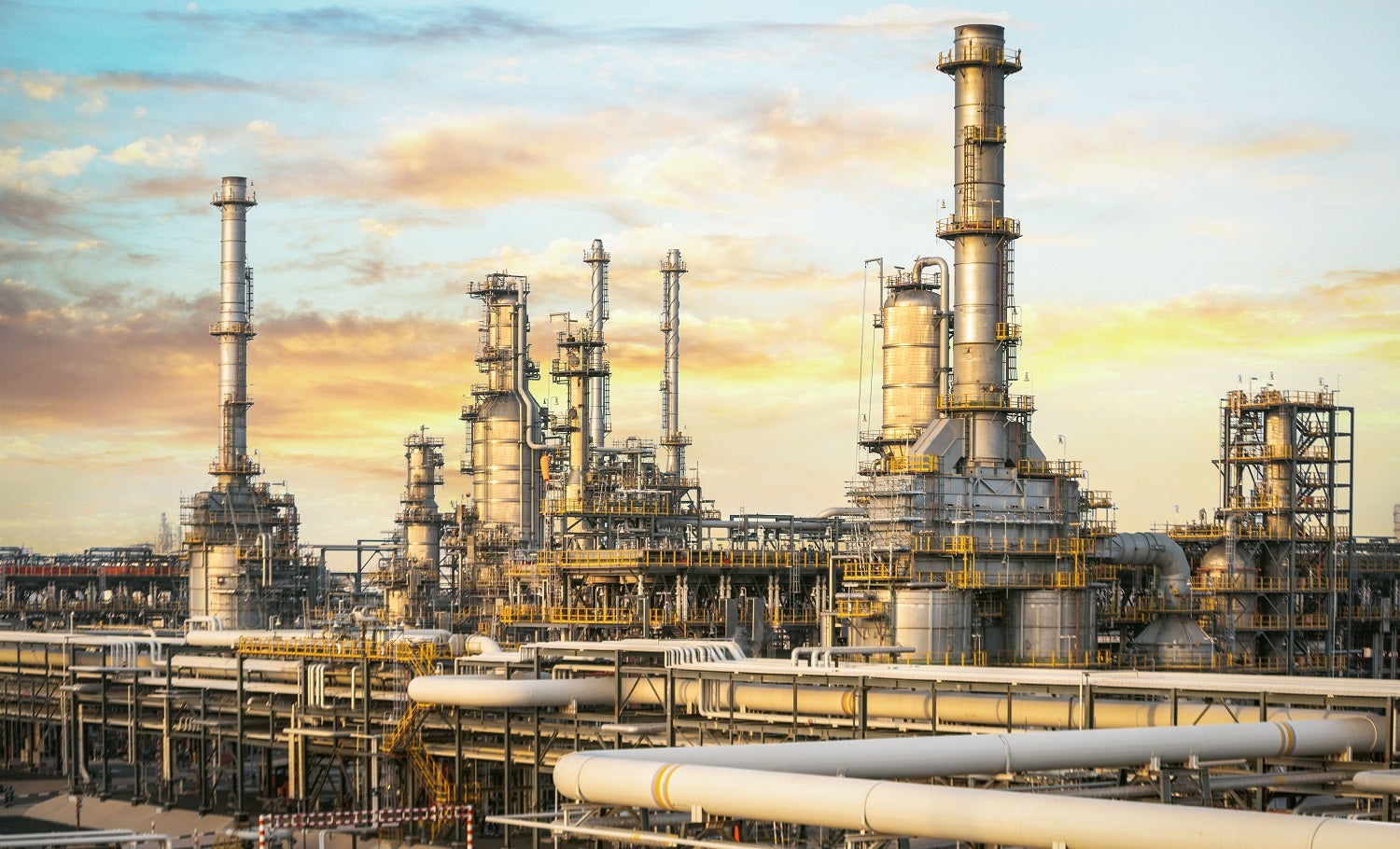
Construction is progressing on Iraq’s $800m Al-Diwaniyah oil refinery expansion project, according to industry sources.
The project’s main contract was awarded to Iraq’s Al-Barham Group in January 2025 under an engineering, procurement, construction and commissioning model.
The scope has been split into two phases.
Phase one focuses on the development of:
- A crude distillation unit (CDU)
- A liquid petroleum gas complex
- Utilities
- Offsites and gantry systems
Phase two focuses on the development of:
- A naphtha hydrotreater
- An isomerisation unit
- A fixed bed platforming (FBP) unit, licensed from Honeywell UOP
An FBP unit is a type of catalytic reforming unit used in refineries to convert low-octane naphtha into high-octane reformate that can be blended into gasoline.
The client on the project is state-owned Midland Refineries Company and Iraq’s Ministry of Oil.
The CDU will have the capacity to process 70,000 barrels a day (b/d), while the gasoline complex will have the capacity to process 18,000 b/d.
https://image.digitalinsightresearch.in/uploads/NewsArticle/20636740/main.jpg -
Adnoc steps up crude expansion
15 October 2026
Abu Dhabi National Oil Company (Adnoc Group) is entering a new phase of upstream investment as the UAE’s withdrawal from Opec opens the way for greater oil production flexibility. After spending an estimated $37bn on upstream projects in 2023 and 2024, the state-owned energy company continues to invest heavily in expanding crude production capacity and developing domestic gas supplies.
The investment programme supports two key targets: raising crude production capacity to 5 million barrels a day (b/d) by 2027 and achieving gas self-sufficiency by the end of the decade.
Following the UAE’s withdrawal from Opec in May 2026, Adnoc Group has nearly matched its 2024 upstream project spending level so far this year and is on course to surpass it by a significant margin.
The UAE had invested billions of dollars in expanding crude production capacity, but output quotas under the Opec+ framework had constrained its ability to translate that capacity into higher production and additional oil revenues in a high-price environment.
The UAE’s exit from Opec gives Adnoc greater flexibility to utilise its spare capacity, accelerate progress towards its 5 million b/d target and potentially exceed it. The company is positioning itself to capitalise on rising oil demand while retaining the flexibility to respond to market conditions.
Robust offshore spending
So far this year, Adnoc Offshore has awarded major contracts for projects involving the Satah Al-Razboot (Sarb) deep gas development, the expansion of the Nasr oil field and an increase in the Upper Zakum oil field’s output capacity to 1.5 million b/d.
Adnoc reached a final investment decision (FID) on the Sarb project in January and awarded the main engineering, procurement and construction (EPC) contract to US-based McDermott International. The contract is estimated to be worth around $500m, sources told MEED.
The project is expected to deliver 200 million cubic feet a day (cf/d) of gas by the end of the decade – enough to power more than 300,000 homes.
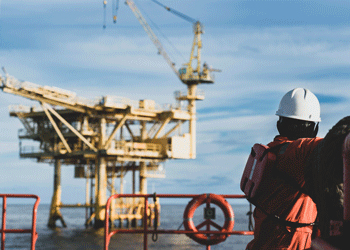
The scope includes the EPC of an offshore wellhead tower with four gas production wells, which will be connected to Das Island for processing through Adnoc Gas facilities. The works also include the installation of pipelines and intra-field connections linking the Sarb field to Das Island.
Also in January, Adnoc Offshore awarded McDermott a $942m contract for the Nasr-115 project, which will increase production capacity at the Nasr offshore field to 115,000 b/d. The field is located about 130 kilometres northwest of Abu Dhabi.
McDermott’s scope covers engineering, procurement, construction and installation services for two topside structures, a new manifold tower, a jacket, a bridge, associated pipelines, subsea cables and brownfield modifications.
UZ 1.5MMBD project
Located 84km offshore Abu Dhabi, Upper Zakum is the world’s second-largest offshore oil field and fourth-largest oil field overall. The UZ 1.5MMBD project is Adnoc Offshore’s latest crude production expansion scheme at the Upper Zakum field.
The project scope is divided into three packages. The first EPC package covers surface facilities required on the field’s existing artificial islands, including integrated gas-lift compressors, produced-water reinjection units, water treatment plants, pre-assembled manifolds and related facilities.
The second package covers offshore facilities and comprises several segments of subsea pipelines and subsea cables.
The third package covers work on Adnoc’s existing Zirku Island and will require additional oil tanks, a water treatment unit, an export gas compressor, a condensate treatment unit, and associated power and utilities facilities.
Adnoc Offshore awarded the first and third EPC packages of the UZ 1.5MMBD project to Spanish contractor Tecnicas Reunidas, while Abu Dhabi-based NMDC Energy won the second package. The overall scheme is estimated to be worth more than $10bn.
Umm Shaif Gas Cap
Gas production has also been a key capex area this year, with Adnoc and its foreign partners reaching a $6.2bn FID in July for a major project to produce up to 600 million cf/d of natural gas by developing the Umm Shaif Gas Cap in Abu Dhabi.
The Umm Shaif Gas Cap reserve lies within the offshore Umm Shaif and Nasr hydrocarbons concession, in which Adnoc is the majority stakeholder. Other stakeholders in the concession are Italy’s Eni, France’s TotalEnergies and China National Petroleum Corporation.
Adnoc said the FID includes three EPC packages totalling $5.1bn for large-scale offshore infrastructure, awarded to the following contractors:
- First offshore package – fabrication of a 30,000-tonne gas compression system: Larsen & Toubro Energy Hydrocarbon (India) / Lamprell (Saudi Arabia/UAE)
- Second offshore package – fabrication of another 30,000-tonne gas compression system: McDermott (US)
- Onshore package – EPC of gas inlet and processing systems on Das Island: China Petroleum Engineering & Construction Company (CPECC)
As part of the FID, Adnoc also awarded a $365m contract to its subsidiary Adnoc Drilling for a 14-well drilling and integrated drilling services scope, to be delivered over 18 months using three existing rigs.
Separate from the Umm Shaif Gas Cap development, Adnoc Offshore is preparing to issue the main tender for the next expansion phase of the Umm Shaif oil and gas field offshore Abu Dhabi.
Contractors expressed interest to Adnoc Offshore in June in participating in the main tendering exercise for the Umm Shaif long-term development plan 2.1 (LTDP-2.1) project.
The project’s primary objective is to maintain Umm Shaif’s oil production capacity at approximately 390,000 b/d, while enabling peak output of up to 430,000 b/d.
The project includes constructing a new combined artificial island at Umm Shaif, equipped with drilling, processing, utilities and supporting infrastructure. It also includes installation of an optimised crude-stabilisation train at Adnoc’s existing Das Island facilities.
Located about 150km northwest of Abu Dhabi city, Umm Shaif is one of Adnoc’s oldest offshore oil-producing assets. In 2022, the company marked the 60th anniversary of the UAE’s first export of Umm Shaif crude, which took place in July 1962.
https://image.digitalinsightresearch.in/uploads/NewsArticle/20634497/main.gif -
Joint venture wins Oman desalination contract
15 October 2026
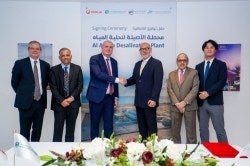
Bahwan Veolia Water, a joint venture of France’s Veolia and Oman’s Bahwan Engineering Company, has signed a five-year operations and maintenance (O&M) contract for the Al-Asilah desalination plant in the sultanate.
The Al-Asilah plant has a production capacity of 80,000 cubic metres a day and helps supply drinking water to about 600,000 residents across South Al-Sharqiyah governorate. It also has an on-site solar farm to support lower-carbon water production.
The plant entered commercial operation in January 2022 under a build-own-operate arrangement. A consortium of Bahwan Engineering and Japan-headquartered JGC Corporation developed it.
South Korea’s Doosan Heavy Industries & Construction, now known as Doosan Enerbility, carried out the engineering, procurement and construction (EPC) works.
Oman’s first independent water project (IWP), the Sur IWP, also serves residents in Al-Sharqiyah governorate.
The main contract for the project was awarded in 2007, with Veolia carrying out EPC works and acting as shareholder in Sharqiyah Desalination Company, which owns the plant.
Bahwan Veolia Water signed a 22-year O&M agreement for the project that same year.
https://image.digitalinsightresearch.in/uploads/NewsArticle/20631273/main.jpg