
War undermines business case for Middle East LNG
13 April 2026

The US and Israel’s conflict with Iran is undermining the business case for Middle East liquefied natural gas (LNG) projects by driving up prices, destroying demand for the super-chilled fuel, damaging infrastructure and eroding confidence in the reliability of the region’s suppliers.
By blocking the Strait of Hormuz, the conflict has removed around 20% of global LNG supply from the market and, for some importers, has effectively doubled prices.
Dubbed by some analysts “the champagne of fuels”, LNG was already seen as being on the verge of becoming unaffordable for many energy-importing nations prior to the latest conflict.
The current wave of high prices has exacerbated concerns about LNG price volatility and has already changed the minds of some countries and businesses that were planning to make large investments to facilitate LNG imports.
If these projects do not go ahead as planned, it could limit future global LNG demand, dimming the long-term outlook for businesses that depend on LNG export revenues.
As well as facing longer-term demand likely to fall short of previous expectations, LNG operators in the UAE and Qatar are also being hit in the short term as infrastructure has been damaged by Iranian strikes and sales are being blocked by disruptions to shipping through the Strait of Hormuz.
The lost revenues and ongoing security issues are casting a shadow over major LNG export expansion plans in the GCC, collectively worth more than $35bn, which could now face significant delays.
Dubbed by some analysts “the champagne of fuels”, LNG was already seen as being on the verge of becoming unaffordable for many energy-importing nations prior to the latest conflict
Affordability issues
LNG production stopped in Qatar on 2 March 2026 and QatarEnergy declared force majeure on 4 March, removing around 80 million tonnes a year (t/y) of LNG supply from global markets.
The North Field East expansion project, currently under construction and expected to add 32 million t/y, was anticipated to start up in November 2026, but could now face considerable delays.
The project is estimated to be worth $28.8bn, making it the biggest LNG project ever sanctioned
In a statement released last month, Daniel Toleman, a research director at Wood Mackenzie, said continued disruption to shipping in the Strait of Hormuz lasting five to six months would push annual global LNG supply into a year-on-year decline.
“Even if supply were maintained at 2025 levels, the market would still face demand destruction in Asia, lower storage injections in Europe, and sustained upward pressure on gas and LNG prices,” he added.
“Each additional month of disruption removes around 1.5% from annual global LNG availability.”
Beyond the closure of the strait, Qatar’s LNG business has also been dealt a significant setback by Iranian attacks on infrastructure.
Saad Sherida Al-Kaabi, QatarEnergy’s CEO and minister of state for energy affairs, said the Iranian strikes had knocked out about 17% of its LNG export capacity, causing an estimated $20bn in lost annual revenue.
Repairs to damaged assets will sideline 12.8 million t/y of LNG for three to five years, threatening supplies to European and Asian nations, including China and India, according to Al-Kaabi.
UAE setbacks
The UAE has also seen significant disruption to its LNG operations, with shipments from its only LNG export terminal, located on Das Island, severely disrupted by the closure of the Strait of Hormuz.
Although it has not formally declared force majeure, virtually all of its LNG output has been removed from global markets because it has no pipeline or alternative routes for LNG exports.
The ongoing energy crisis has increased uncertainty about the UAE’s planned $5.5bn LNG export terminal, being developed at the Ruwais industrial complex.
In recent weeks, the Ruwais industrial complex was targeted by Iran, causing a fire at the site. The location could also face similar shipping problems to the Das Island facility in the future, as it too requires LNG exports to pass through the Strait of Hormuz.
Oman exports
With its LNG export terminals located on the country’s northeast coast, Oman’s exports do not require the Strait of Hormuz to be open, and it has escaped most of the negative impacts that have hit the UAE and Qatar.
However, Oman’s state-owned integrated energy company, OQ, has still been affected by disruption to shipping through the Strait of Hormuz due to its activities as an LNG trader.
Last month, OQ Trading, the company’s international trading and marketing arm, declared force majeure on LNG shipments to Bangladesh’s state-owned Petrobangla.
Replacing LNG
Analysts say the demand destruction now taking place in LNG-importing nations is likely to have a long-term impact on future LNG demand.
Countries where planned LNG import-related projects have been cancelled or are being reconsidered include Vietnam, China and New Zealand.
Christopher Doleman, a gas specialist at the Institute for Energy Economics and Financial Analysis (Ieefa), believes that long-term demand for LNG will be eroded by the current crisis.
“Prior to the war, a lot of countries were already somewhat hesitant to develop new LNG import infrastructure,” he said.
“There were existing concerns about the high price of LNG and potential volatility, and these concerns have increased significantly since the war began, leading several developers to consider other options, which in some cases include renewables projects.
“Everybody’s starting to realise that there is something inherently insecure about the LNG supply chain and they don’t want to have to deal with an affordability crisis every four years.”
On 30 March, China’s state-owned energy company Sinopec said it was terminating a planned LNG import terminal project worth 5.6bn yuan ($820m) and reallocating the money to developing domestic gas resources.
The company said developing domestic resources was more cost-effective than developing LNG import infrastructure.
In Vietnam, conglomerate Vingroup has asked the government to allow it to replace a planned $6bn LNG power project – previously set to be the country’s largest – with a renewable energy project, citing surging fuel prices linked to the Middle East conflict.
US-based GE Vernova, which had been selected to supply gas turbines and generators for the 4.8GW project, was informed of Vingroup’s revised plans in a document sent on 25 March.
Instead of the LNG-powered plant, Vingroup asked Vietnam’s industry ministry to consider an investment plan for a hybrid renewable energy project combined with a battery energy storage system (bess).
A bess stores electricity from renewable sources to maximise its use by discharging power during peak demand.
The document did not specify the type of renewable energy to be used, but estimated the cost of the bess project at around $25bn, saying it would be a viable alternative to the LNG-powered plant if equipped with appropriate transmission infrastructure.
If Vietnam follows through on its pivot away from LNG towards renewables, it could directly affect future export deals for Qatar, which is currently one of the country’s LNG suppliers.
Everybody’s starting to realise that there is something inherently insecure about the LNG supply chain and they don’t want to have to deal with an affordability crisis every four years
Christopher Doleman, Institute for Energy Economics and Financial Analysis
Second thoughts
In New Zealand, plans announced last year for a new LNG terminal on the country’s North Island are becoming increasingly uncertain.
In February, the government shortlisted contractors to build the facility in Taranaki. But on 30 March, Prime Minister Christopher Luxon said the government would only approve the project if the business case made sense.
“If it doesn’t stack up, we won’t be doing it. Until we see the commercials on it, we’ll make the decision then,” he said.
Mike Roan, chief executive of New Zealand’s Meridian Energy, said US President Donald Trump’s decision to attack Iran on 28 February had made the project much less likely to go ahead.
“It feels like the Americans might have put a bazooka, literally, through that proposal,” he said.
It has been reported that ministers are considering replacing the project with a major hydroelectric power station, which was referred to the country’s fast-track consent panel in the last week of March.
The future of a planned $3bn project to develop an LNG import terminal and gas power plant in South Africa is also now in doubt after executives delayed the final investment decision (FID).
Speaking at a conference on 4 March, Oliver Naidu from Netherlands-based Royal Vopak said the company now plans to decide on the $3bn terminal in the first quarter of 2028.
The power station and regasification complex, slated for development in the Durban area, would have had the capacity to produce 1.0-1.8GW of electricity.
Nuclear and coal
In South Korea, Korea Hydro & Nuclear Power (KHNP) restarted unit 2 at its Kori nuclear power plant this month.
The facility had been offline for three years since its original 40-year operating permit expired in April 2023.
Commenting on the restart, KHNP president Kim Hoe-Cheon said: “In a situation where energy supply instability persists, the continued operation of nuclear power plants based on safety is an important means of securing national energy security.”
Across Asia, there has also been a surge in the use of both solar and coal amid high LNG prices.
In Pakistan, the country’s Power Minister, Awais Leghari, said that the country would pivot away from LNG to focus on domestically produced coal.
“With a reduction in LNG generation, plants running on locally mined coal will be able to produce more during off-peak hours,” Leghari told Reuters.
Similar coal ramp-ups are also taking place in Vietnam, the Philippines and Thailand.
Doleman believes increased use of both coal and renewables could mean LNG’s role in the global energy mix falls short of previous expectations over the coming years.
“It’s possible that we will see a dual surge – where both renewables and coal use are ramped up,” he said.
“This is an interesting prospect because it will effectively remove gas as a so-called ‘bridge-fuel’ and we may see the transition progressing more directly to the use of renewables and battery storage, with less of a role for gas than was previously expected.
“Really, it’s turned out that LNG was just a bridge to volatility and insecurity compared to something like solar, which is very reliable and predictable.”
Eroded outlook
The demand destruction in LNG-importing countries driven by the current energy crisis is likely to mean that the long-term market for LNG exports could be significantly smaller than previously thought, negatively impacting LNG producers worldwide.
Qatar and the UAE are likely to be hit harder than producers in other regions for several reasons.
Attacks on infrastructure and disruptions to shipping are preventing them from capitalising on the current period of high prices, while producers in other regions are recording windfall profits.
In addition, dealing with the logistical and financial consequences of the conflict is likely to divert resources away from progressing new projects, pursuing efficiencies and securing future customers.
Another factor likely to weigh on LNG operators in Qatar and the UAE is the persistence of customer concerns about the reliability of shipping LNG via the Strait of Hormuz.
This could compel Adnoc Gas and QatarEnergy to sell at a relative discount compared with sellers in other regions, or to increase contractual flexibility.
It could even push these producers to rethink future projects to diversify export routes. For Qatar, this could take the form of a gas pipeline via neighbouring countries. For the UAE, one option could be developing an LNG terminal on the other side of the Strait of Hormuz, reducing reliance on the bottleneck controlled by Iran.
While the current conflict is a major setback for LNG operators in the UAE and Qatar, once the Strait of Hormuz reopens and security risks diminish, it is likely that exports will ramp up relatively quickly and former clients will return.
However, questions remain about when this will happen. If safe passage for LNG tankers can be secured within days or weeks, the long-term impact is likely to be limited.
If disruption continues for longer, it could transform the outlook for the Middle East’s LNG sector for years to come.

Register for MEED's guest program now to access this article.
Exclusive from Meed
-
 Dubai evaluates Tasreef drainage bids
24 November 2026
-
 Muscat financial centre opens for business
24 November 2026
-
 Mecca university tenders water infrastructure projects
24 November 2026
-
 Oman’s OQT formalises Pakistan fuel supply agreement
24 November 2026
-
 Contractors bid for Aramco-backed logistics hub
24 November 2026
All of this is only 1% of what MEED.com has to offer
Subscribe now and unlock all the 153,671 articles on MEED.com
- All the latest news, data, and market intelligence across MENA at your fingerprints
- First-hand updates and inside information on projects, clients and competitors that matter to you
- 20 years' archive of information, data, and news for you to access at your convenience
- Strategize to succeed and minimise risks with timely analysis of current and future market trends
Related Articles
-
Dubai evaluates Tasreef drainage bids
24 November 2026
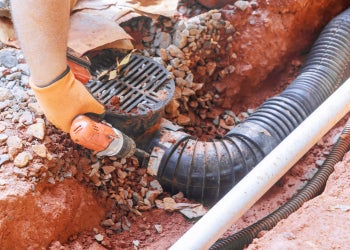
Up to eight stormwater and drainage projects under the next phase of Dubai Municipality’s AED30bn ($8.2bn) Tasreef programme have moved into the bid evaluation stage in recent weeks as procurement activity continues to drive the wider water infrastructure sector.
The projects cover major stormwater drainage networks, pumping stations, storage tanks and sewerage infrastructure. They include schemes serving Dubai South, Abu Hail, the area surrounding Dubai International airport, Dubailand and Al-Awir.
According to regional project tracker MEED Projects, the eight tenders have an estimated combined value of at least $800m. The tenders cover the following projects:
- DS-316-C1: Drainage networks serving Hind 4
- TF-24-C1: Connections to the stormwater network in Dubailand
- TF-25-C1: Stormwater trunk line serving Hind 3, Hind 4 and Umm Al-Daman
- TF-07-C1: Strategic stormwater drainage network between Sheikh Mohammed bin Zayed Road and Emirates Road
- TF-21-C1: Stormwater system upgrade and rehabilitation in Abu Hail
- TF-30-C1: Stormwater storage tanks serving the Dubai International airport area
- TF-06-C2: Stormwater drainage system connecting Al-Maktoum International airport and Dubai South
- DS317-C1: Sewerage and stormwater infrastructure in New Al-Awir 1st
According to sources, local firms Nael Construction & Contracting, Al-Nasr Contracting and Arifco Building Contracting are among those that submitted bids for the Dubailand stormwater network project (TF-24-C1) in October. The bidders for this tender do not include the local DeTech Contracting, which won the estimated $350m engineering, procurement and construction contract for a package on Al-Wasl Road (TF-15-C1), earlier this year.
On 29 October, DeTech, Mohammed Abdulmohsin Al-Kharafi & Sons and Green Oasis General Contracting Company were among those that submitted bids for TF-07-C1, sources told MEED.
It is undersood that both DeTech and Kharafi also submitted offers on 12 November for a contract to upgrade and rehabilitate the stormwater system in Abu Hail (TF-21-C1). The Abu Hail project comprises a stormwater pumping station with a total discharge capacity of 26 cubic metres a second. The wider project involves a major stormwater gravity drainage network, including large-diameter pipelines, and is estimated to cost up to $163m.
Meanwhile, the the municipality is preparing to receive bids for a further scheme (TF-06-C1) on 26 November, involving the construction of a stormwater pond connecting Al-Maktoum airport and Dubai South. Al-Nasr Contracting and Green Oasis are among those preparing to bid, sources said.
In October, the municipality confirmed it had awarded four contracts worth AED3bn ($817m) to expand the emirate’s stormwater drainage network by about 100 square kilometres under phase three of the Tasreef programme.
The projects will cover Jumeirah, Umm Suqeim, Al-Quoz, Al-Barsha, Al-Wasl and Al-Marmoom. The works include constructing and extending main stormwater drainage lines with diameters of up to 3 metres.
The Tasreef programme aims to increase the emirate’s stormwater drainage capacity by 700% and reduce costs associated with pumping stations, network operations and maintenance by 20%.
https://image.digitalinsightresearch.in/uploads/NewsArticle/21756439/main.jpg -
Muscat financial centre opens for business
24 November 2026
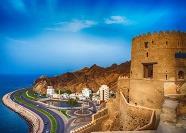
The International Financial Centre of Oman (IFC Oman) has opened its headquarters at Al-Mouj Business Park in Muscat and registered its first 13 companies.
Sayyid Theyazin bin Haitham Al-Said, Oman's Deputy Prime Minister for Economic Affairs and chairman of IFC Oman, opened the headquarters on 23 November. The ceremony also marked the official start of company registration, which allows local and international businesses to set up within the centre's jurisdiction.
The first 13 companies received their certificates of incorporation at the event. The centre was set up by Royal Decree No. 8/2026 in January, so the move from setting up a legal framework to taking in businesses has taken 10 months.
Registration follows royal decrees that put in place IFC Oman's operating law, regulatory law and courts law. Five core regulations sit alongside them and cover operations, companies, partnerships, foundations and interpretation. Together they set the rules for setting up and running a business in the centre, including corporate governance, regulatory obligations and dispute resolution.
Businesses can apply through a new digital registry platform. A separate regulatory framework for financial services is still being drafted, and licensing for those activities is expected to start in early 2027.
Finance Minister Sultan bin Salim Al-Habsi, who is vice-chairman of IFC Oman, said the decision by 13 companies to join from the start "reflects the strength of the business and investment environment the centre offers".
"We will maintain this momentum as we complete the regulatory framework ahead of the start of financial services licensing early next year," he said.
Sayyid Theyazin said the framework "lays the foundation for a stable and competitive business environment" and will strengthen Oman's appeal to international investors and financial institutions.
He also chaired a board meeting. It reviewed progress on finishing the centre's legal, regulatory and operational infrastructure and set priorities for attracting companies and investment.
IFC Oman aims to connect the national economy more closely to international capital and to support growth in financial and professional services, in line with the Oman Vision 2040 economic diversification programme.
The centre goes up against established regional financial hubs, including Dubai International Financial Centre, Abu Dhabi Global Market and Qatar Financial Centre.
https://image.digitalinsightresearch.in/uploads/NewsArticle/21756636/main5305.gif -
Mecca university tenders water infrastructure projects
24 November 2026
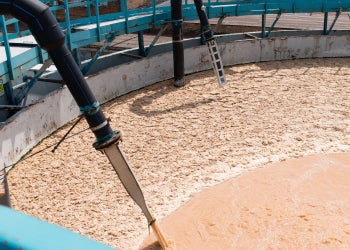
Mecca-based Umm Al-Qura University has issued two tenders for wastewater and water storage infrastructure at its student campus in the Al-Abidiyah district.
The first tender covers the second phase of the university’s main water storage scheme. The project involves building seven tanks with a combined capacity of 14,700 cubic metres.
The scope includes three ground-level tanks with a total capacity of 7,500 cubic metres and four elevated tanks with a combined capacity of 7,200 cubic metres.
It also includes a 2.1-kilometre backup water supply pipeline with a diameter of 400 millimetres, as well as pumping stations, inlet and outlet pipework, valves and water control systems.
The second tender covers the construction of a wastewater treatment plant with a capacity of 4,000 cubic metres a day at the university’s student campus. The contract duration is listed as two years.
The projects will expand the campus’s water infrastructure, adding storage capacity and wastewater treatment facilities to support its operational requirements.
Both tenders were issued in November. Bids for the water storage tanks and wastewater plant are due by 14 December and 13 December, respectively.
https://image.digitalinsightresearch.in/uploads/NewsArticle/21752745/main.jpg -
Oman’s OQT formalises Pakistan fuel supply agreement
24 November 2026
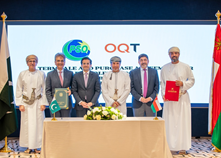
Oman's state-owned commodity trader OQT has signed a petroleum products supply agreement with Pakistan State Oil (PSO), the South Asian country's national oil marketing company.
The deal was signed on 8 October and formally marked at a ceremony in Muscat on 22 November. It was made under the Oman-Pakistan intergovernmental framework and gives OQT a structured arrangement for supplying petroleum products to PSO.
The two companies have yet to disclose the agreement's value, volumes or duration.
The agreement builds on an existing trading relationship. OQT says it has supplied more than 1 million tonnes of gasoline to PSO in 2026.
OQT also supplies Pakistan's liquefied petroleum gas (LPG) market, selling to both state-owned and private buyers. The company expects its LPG deliveries to Pakistan to pass 120,000 tonnes by the end of the year.
"This agreement gives us a stronger framework to build on that relationship, combining OQT's international trading capabilities with PSO's position in the Pakistani market," said OQT chief executive Wail Al-Jamali.
PSO chief executive Jawwad Ahmed Cheema said the partnership is now "formal, government-backed and built for the long term under the Oman-Pakistan Intergovernmental Agreement".
"For PSO, this is about more than supply. It is about ensuring that Pakistan has the fuel it needs, when it needs it, on terms that protect our national interest," he said.
Oman's Energy & Minerals Minister Salim Al-Aufi and Pakistan's Petroleum Minister Ali Pervaiz Malik attended the ceremony, along with Mulham Al-Jarf, deputy president of investment at the Oman Investment Authority, which owns OQT.
The companies said the agreement will support reliable supply at a time of continued volatility in regional energy markets. They will now focus on implementation and deliveries, and will continue talks on wider petroleum and energy cooperation.
OQT trades crude oil, refined products, petrochemicals, LPG, liquefied natural gas, fertilisers and carbon-related products, and is expanding into metals. It has offices in Muscat, Dubai, London, Rotterdam, Singapore, Houston and Shanghai.
https://image.digitalinsightresearch.in/uploads/NewsArticle/21750539/main1214.jpeg -
Contractors bid for Aramco-backed logistics hub
24 November 2026
Asmo, the logistics joint venture of Saudi Aramco and DHL Supply Chain, received proposals from contractors on 15 November for a contract to expand the logistics complex at King Salman Energy Park (Spark) in Saudi Arabia’s Eastern Province.
The logistics hub will add over 124,000 square metres (sq m) at Spark.
Al-Khobar-based engineering firm House of Consulting Office is the project consultant.
The tender for the expansion works comes after Asmo awarded an estimated SR820m ($218m) contract to build the logistics complex’s first phase in May this year.
The overall project will feature a 43,000 sq m, temperature-controlled Grade A warehouse; more than 3,000 sq m of offices and staff amenities; 5,300 sq m dedicated to chemicals storage; and an open yard covering about 1.2 million sq m.
Asmo signed an agreement with Bahrain‑headquartered Arcapita Group Holdings in February to deliver the project at Spark.
Planned for large-scale industrial use, the site is expected to incorporate advanced warehouse and building management systems, end-to-end digital connectivity, automation and robotics.
It will also be developed in line with internationally recognised sustainability standards, featuring solar photovoltaic readiness, electric-vehicle charging infrastructure and a target of Leed Gold certification.
The development aims to support the next stage of Saudi Arabia’s logistics and supply chain expansion.
Under the deal structure, Arcapita will provide funding and retain ownership of the asset, while Asmo will develop the facility and then lease and operate it under a 22-year occupational lease.
According to a statement, “the scheme will be executed via a forward-funding model, underscoring a long-term commitment to national infrastructure”.
Asmo added that this will be its first purpose-built logistics centre and one of four strategic locations planned to anchor its nationwide logistics network, aligned with the National Transport and Logistics Strategy under Saudi Vision 2030.
https://image.digitalinsightresearch.in/uploads/NewsArticle/21747071/main.gif