
Redefining the region’s arbitration landscape
27 March 2026

In the midst of increasing international investments and commercial transactions in the Middle East, arbitration remains a key component for the resolution of complex commercial disputes. Its effectiveness, however, depends not only on arbitral tribunals, but also on how national courts define their roles in oversight and enforcement.
Recent trends in the Middle East have shown a more disciplined judicial approach with a clearer delineation of roles between courts and arbitral tribunals.
Enforcement: a narrower approach
Enforcement of foreign awards has been a key area of development.
In the UAE, the Committee for the Unification of Federal and Local Judicial Principles ruled in Petition No. 1 of 2025 that an award shall be valid and enforceable provided the arbitrators sign only the final page. Referring to earlier Dubai Court of Cassation decisions (1), the Committee noted that procedural rules should not be used to defeat substantive rights and that legal procedures are meant to serve justice, not to create technical barriers.
The Dubai Court of Cassation adopted the same approach, confirming that arbitrators are not required to sign every page of the award and that issues already examined during arbitration, including signatory capacity, cannot be reopened at the enforcement stage. (2)
A similar emphasis on clarity can be seen in Saudi Arabia, where the Arbitration Law is currently under review, with the aim of modernising the legislative framework and enhancing predictability. The draft reform includes clearer provisions regarding court–tribunal interaction, permits courts to stay annulment proceedings or enforcement challenges for up to 60 days to enable tribunals to cure defects, and confirms that partial and interim awards have the authority of a final judgment and are directly enforceable.
The ADGM and Dubai Courts have also introduced a system of reciprocal enforcement of ratified arbitral awards without the need to re-examine the underlying award.
These developments therefore suggest a narrower approach and a reduced scope for expansive review at the enforcement stage.
Recent trends have shown a more disciplined judicial approach with a clearer delineation of roles between courts and arbitral tribunals
Judicial intervention: limits of review
Courts have also refined the scope of annulment and supervisory review.
The Abu Dhabi Court of Cassation clarified that annulment is not an appeal on the merits. Courts may not reweigh evidence or revisit a tribunal’s interpretation of the law. The grounds of annulment remain limited to the statutory grounds set out in the Federal Arbitration Law. (3)
Egyptian courts likewise limit grounds for annulment to exhaustively listed statutory grounds, excluding reassessment of the merits.
In the wider regional landscape, Morocco’s arbitration reform demonstrates a similar trajectory. The updated framework modernises the regime and clarifies the supportive role of domestic courts, reinforcing a structured balance between oversight and arbitral autonomy.
Across these jurisdictions, review powers are increasingly exercised within defined legal parameters rather than through re-examination of arbitral reasoning.
Public policy: a limited exception
Public policy continues to be a ground for refusing enforcement, but recent decisions suggest it is applied with greater restraint. For instance, in the UAE, the imposition of compound interest is not considered to be in contravention of public policy. (4) At the DIFC level, the Court specified that the refusal on public policy grounds is subject to a high standard and is only justified where enforcement would “violate the forum state’s most basic notions of morality and justice”. (5)
Saudi Arabia recognises sharia compliance and public policy as potential grounds for refusal. While rooted in the foundations of its legal system, they operate within defined statutory boundaries.
Public policy therefore functions as a defined safeguard rather than a vehicle for broad review.
Implications for cross-border activity
Where enforcement review is confined to the grounds set out in the New York Convention and annulment remains limited to statutory bases, the interaction between tribunals and courts becomes more predictable. In disputes involving assets across multiple states, this delineation contributes to greater certainty at the post-award stage.
The complementary role of the ICC
Institutional practice operates alongside these developments.
The ICC Court and its Secretariat ensure proceedings are conducted with care, independence, impartiality and integrity, in strict compliance with the Court’s obligations and duties under its rules. In doing so, the Court and the Secretariat monitor cases to safeguard due process and procedural fairness.
One of the distinctive features of ICC arbitration and a cornerstone of the Rules is the Court’s scrutiny of all draft awards. Such a process serves to enhance the quality of the award, improve its general accuracy and persuasiveness; and maximise its legal effectiveness by identifying any defects that could be used in an attempt to have it set aside at the place of arbitration or resist its enforcement elsewhere.
In complex, multi-contract and multi-jurisdictional disputes, this scrutiny plays an important role in safeguarding enforceability across different jurisdictions.
As courts continue to define the limits of intervention, institutional discipline and judicial oversight increasingly operate side by side, reinforcing confidence in arbitration across the Middle East.
1. Dubai Court of Cassation – Cases No. 109/2022 and No. 403/2020 2. Dubai Court of Cassation – Appeals Nos. 778 and 887 of 2025 3. Abu Dhabi Court of Cassation – Cases Nos. 1115/2024 and No. 166/2024 4. Dubai Court of Cassation – Appeals Nos. 778 and 887 of 2025 5. DIFC Court of Appeal’s decision dated 9 January 2025
About the author
Laetitia Rabbat is deputy counsel, ICC International Court of Arbitration, Abu Dhabi

Register for MEED's guest program now to access this article.
Exclusive from Meed
-
 Al-Maktoum airport is key to Dubai’s aviation hub status
27 November 2026
-
 Emaar tenders Dubai Creek Harbour mall
27 November 2026
-
 Contractor wins Arabian Beauty Horses Village in Qatar
27 November 2026
-
 King Salman airport sets new infrastructure bid deadline
27 November 2026
-
 PIF secures inaugural A+ rating from S&P
26 November 2026
All of this is only 1% of what MEED.com has to offer
Subscribe now and unlock all the 153,671 articles on MEED.com
- All the latest news, data, and market intelligence across MENA at your fingerprints
- First-hand updates and inside information on projects, clients and competitors that matter to you
- 20 years' archive of information, data, and news for you to access at your convenience
- Strategize to succeed and minimise risks with timely analysis of current and future market trends
Related Articles
-
Al-Maktoum airport is key to Dubai’s aviation hub status
27 November 2026
 Commentary
Colin Foreman
EditorDubai’s position as a global aviation hub is central to its economy, and the expansion of Al-Maktoum International airport is critical to maintaining that role.
On 26 November, Dubai awarded AED56.5bn ($15bn) of contracts for the airport expansion, taking the total value of contracts awarded to more than AED80bn ($21.8bn). A workforce of 14,000 is working on the project, which will provide capacity for more than 260 million passengers a year when complete.
The economic stakes are high. A study published by Emirates Group and Dubai Airports in October 2024 found that aviation accounted for 27% of Dubai’s GDP in 2023. The sector contributed AED137bn ($37.3bn) in gross value added and supported 631,000 jobs – about one in five jobs in the emirate. The study forecast that aviation’s share of GDP would rise to 32% by 2030, contributing AED196bn in gross value added and supporting 816,000 jobs.
This year has demonstrated both the vulnerability and resilience of Dubai’s aviation model. Regional conflict has disrupted commercial air traffic across the Gulf since 28 February. Emirates Group’s profit before tax fell 66% year on year to AED4.1bn in the six months to 30 September, while Emirates carried 21.8 million passengers, down 22% on the prior-year period.
However, the network recovered quickly. By 30 September, Emirates was operating 91% of its pre-disruption network, serving 150 airports in 78 countries and territories. Emirates SkyCargo revenue rose 52%, the fleet increased to 289 aircraft, and the airline broke ground in May on a $5.1bn maintenance facility at Al-Maktoum International airport.
Maintaining that connectivity will require additional capacity. If aviation accounts for almost one-third of Dubai’s economy by 2030, as Emirates Group and Dubai Airports forecast, Al-Maktoum International airport will be central to the emirate’s ability to retain its position in global air travel.
https://image.digitalinsightresearch.in/uploads/NewsArticle/21894329/main.jfif -
Emaar tenders Dubai Creek Harbour mall
27 November 2026
Register for MEED’s 14-day trial access
Dubai developer Emaar Properties has invited contractors to submit bids by 9 December for the main construction package of the Dubai Creek Harbour mall, known as Dubai Square.
The development covers a total retail, hospitality and commercial area of 2.6 million square metres, and is scheduled to open within three years.
Emaar unveiled Dubai Square in December 2025 as the anchor of its AED180bn ($49bn) Dubai Creek Harbour development.
The scheme has undergone several redesigns. MEED first reported on Emaar’s plans for a major retail centre at Dubai Creek Harbour in 2016. At the time, the project was envisioned to surpass Dubai Mall as the world’s largest retail destination, though its scale and layout have since evolved.
The mall will connect directly to the planned Dubai Creek Tower at the centre of the development.
UK-headquartered Brewer Smith Brewer Group is the project’s lead consultant, executive architect, architect of record and structural engineer. It is also the construction supervision consultant.
Dubai-based contractor Dutco Construction began mobilising last year for early site works.
In March last year, MEED reported that Emaar was preparing to relaunch development of both the tower and the mall. The developer had earmarked roughly AED14bn ($3.81bn) for the two assets as part of a wider AED65bn ($18bn), five-year capital expenditure programme.
Progress on the tower has been slower. First launched in 2015, it was promoted as the world’s tallest structure, designed to exceed the 828-metre Burj Khalifa. The original design was led by Spanish architect Santiago Calatrava and UK-based RMJM. The project stalled after concrete pile-cap works were completed in 2018.
In 2023, Emaar founder Mohamed Alabbar confirmed design works were continuing following an international design competition. In January 2026, Alabbar stated that a tender for the redesigned tower would be issued within three months. He later said the tender would be deferred until regional geopolitical tensions ease.
 READ THE NOVEMBER 2026 MEED BUSINESS REVIEW – click here to view PDF
Gulf projects keep moving amid conflict; UAE's state spending and oil output flexibility cushion Iran war shock; Project finance lenders weigh risk against infrastructure needs.
Distributed to senior decision-makers in the region and around the world, the November 2026 edition of MEED Business Review includes:
> AGENDA: GCC projects market holds its nerve> MARKET FOCUS: UAE economy shows resilience> INDUSTRY REPORT: Project financiers hold the line> STADIUMS: Stadium spending set to jump 39% in 2027> CONFLICT: Hormuz closure wipes out growth in 2026> INTERVIEW: WSP regional president Dean McGrail> INTERVIEW: UAE Ministry of Energy & InfrastructureTo see previous issues of MEED Business Review, please click herehttps://image.digitalinsightresearch.in/uploads/NewsArticle/21892263/main.jpg -
Contractor wins Arabian Beauty Horses Village in Qatar
27 November 2026
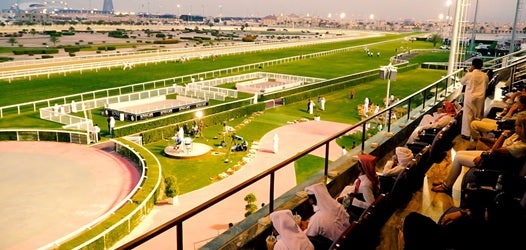
Qatar’s Culture Village Foundation (Katara) has awarded Qatar Trading & Contracting Group a QR574m ($158m) contract to build the Arabian Beauty Horses Village in Al-Uqdah Zone 74, in the Al-Khor area.
The project will include supporting infrastructure and public facilities designed for Arabian show horses and equestrian operations in the Al-Uqdah district.
Zone 74 is already an important centre for Qatar’s equestrian sector, anchored by the Al-Uqdah Equestrian Complex. The Qatar Racing & Equestrian Club began operating the complex in 2020 in coordination with Qatar’s Ministry of Culture and Sports.
The Arabian Beauty Horses Village is part of a broader, multistage state strategy to develop Al-Uqdah, on the outskirts of Al-Khor, as Qatar’s second major equestrian hub, alongside Al-Rayyan and Al-Shaqab in Doha.
According to UK analytics firm GlobalData, Qatar’s commercial construction sector is expected to grow at an average annual rate of 4.5% between 2025 and 2028, supported by investment in hotels, logistics facilities and data centres.
READ THE NOVEMBER 2026 MEED BUSINESS REVIEW – click here to view PDFGulf projects keep moving amid conflict; UAE's state spending and oil output flexibility cushion Iran war shock; Project finance lenders weigh risk against infrastructure needs.
Distributed to senior decision-makers in the region and around the world, the November 2026 edition of MEED Business Review includes:
> AGENDA: GCC projects market holds its nerve> MARKET FOCUS: UAE economy shows resilience> INDUSTRY REPORT: Project financiers hold the line> STADIUMS: Stadium spending set to jump 39% in 2027> CONFLICT: Hormuz closure wipes out growth in 2026> INTERVIEW: WSP regional president Dean McGrail> INTERVIEW: Ministry of Energy & InfrastructureTo see previous issues of MEED Business Review, please click herehttps://image.digitalinsightresearch.in/uploads/NewsArticle/21890026/main.jpg -
King Salman airport sets new infrastructure bid deadline
27 November 2026
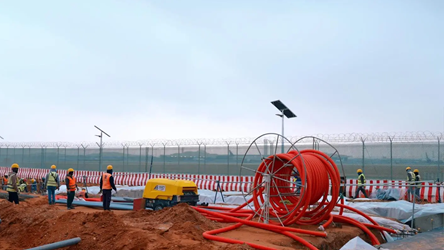
Saudi Arabia’s King Salman International Airport Development Company (KSIADC) has set a 10 January deadline for bids for the Zone C1+C2 roads, bridges and utility networks package for King Salman International airport (KSIA) in Riyadh.
The tender was issued on 26 October, with an initial bid-submission deadline of 6 December.
The request for proposals covers the procurement, construction, testing and commissioning of civil infrastructure supporting Terminal 6, alongside the existing Terminals 1-5.
The scope includes upgrades to Airport Road 539, which runs west of Terminals 1-5, and part of Mohamed bin Faraj Road 5333, west of Junction 6.
It also includes new roads, ramps, service roads and signalised at-grade junctions. An additional access road will connect the Terminal 6 site offices to Road 5333.
Structures will include the Junction 6 and Terminal 6 bridges, retaining walls and reinforced-soil structures.
The contractor will also construct the central ground services equipment (GSE) bridge. Before construction begins, the contractor must validate the design, complete any outstanding elements – including mechanically stabilised earth walls, approach slabs, drainage and lighting – and secure the required authority approvals.
Dry utilities will comprise high- and extra-high-voltage containment, a 13.8kV medium-voltage network with package substations, low-voltage distribution and street lighting, and security-surveillance systems.
Wet utilities will include potable water, fire water, irrigation water, treated sewage effluent, district cooling and wastewater networks. Wastewater pipes will range from 200mm u-PVC gravity lines to 1,700mm glass-reinforced plastic mains.
The stormwater network will include channels, culverts, ponds and pipes ranging from 400mm to 1,400mm in diameter. Crossings will be constructed using open-cut excavation, horizontal directional drilling or microtunneling.
Utilities serving the operational terminals will be diverted on a design-and-build basis. Enabling works will include earthworks and the relocation of the security fence and trees. The contractor will also demolish a temporary car park, existing bridges and a sewage pumping station.
Optional works comprise two design-and-build elements that will proceed only at the client’s instruction.
The first is the south GSE bridge. The second is an approximately 1,400-metre, multi-lane access road to the Terminal 6 Transportation Hub, including bridges, underpasses, ramps and tunnels, as well as provisions for future Wadi Loop utilities and structures.
READ THE NOVEMBER 2026 MEED BUSINESS REVIEW – click here to view PDFGulf projects keep moving amid conflict; UAE's state spending and oil output flexibility cushion Iran war shock; Project finance lenders weigh risk against infrastructure needs.
Distributed to senior decision-makers in the region and around the world, the November 2026 edition of MEED Business Review includes:
> AGENDA: GCC projects market holds its nerve> MARKET FOCUS: UAE economy shows resilience> INDUSTRY REPORT: Project financiers hold the line> STADIUMS: Stadium spending set to jump 39% in 2027> CONFLICT: Hormuz closure wipes out growth in 2026> INTERVIEW: WSP regional president Dean McGrail> INTERVIEW: Ministry of Energy & InfrastructureTo see previous issues of MEED Business Review, please click herehttps://image.digitalinsightresearch.in/uploads/NewsArticle/21887157/main3955.png -
PIF secures inaugural A+ rating from S&P
26 November 2026
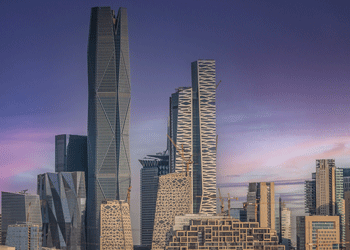
Saudi Arabia’s Public Investment Fund (PIF) has received an inaugural A+ long-term foreign and local currency issuer credit rating from S&P Global Ratings, with a stable outlook.
The fund’s existing A-1 short-term rating from S&P is unchanged. PIF said its ratings are in line with those of Saudi Arabia.
PIF said S&P’s assessment cited its diversified funding profile, moderate leverage and its focus on value realisation under its 2026-30 strategy. The agency also pointed to the fund’s role in driving the kingdom’s economic transformation.
“The inaugural A+ long-term rating from S&P marks an important milestone in the continued development of PIF’s credit profile and our long-term funding plan,” said Ziyad Alfawzan, head of capital finance strategy at PIF.
The new rating makes PIF one of a small number of sovereign wealth funds with long-term credit ratings from all three leading agencies.
Moody’s Ratings confirmed PIF’s Aa3 long-term issuer rating and aa3 baseline credit assessment in September after a periodic review, with a stable outlook. In October, Fitch Ratings affirmed the fund’s long-term foreign and local currency issuer default ratings at A+, also with a stable outlook.
The Moody’s rating is one notch higher than the A+ grades from S&P and Fitch.
Debt is an increasingly important source of funding for PIF as it pays for domestic investment programmes and gigaprojects.
The fund raised $2bn in January from a 10-year sukuk, its first debt sale of 2026. In May, it raised $7bn from a three-tranche bond, its first hard-currency public issuance since the Iran conflict disrupted regional capital markets.
A full set of long-term ratings is likely to widen PIF’s investor base for future bond and sukuk issuance. The fund also borrows through loans and other debt instruments as part of its funding mix.
PIF is entering what it calls the value realisation phase of its strategy, covering 2026 to 2030. Over this period, it aims to deliver sustainable financial returns while continuing to drive the diversification of the Saudi economy.
MEED’s latest report on Saudi Arabia includes:
> COMMENT: Saudi projects hold steady
> GOVERNMENT: Riyadh looks to reset its regional defence outlook
> ECONOMY: Conflict bolsters case for Saudi economic diversification
> BANKING: Saudi lenders readjust to lower lending and deposit climate
> UPSTREAM: Aramco upstream spending gathers pace
> DOWNSTREAM: Sabic steps up Saudi petchems investment
> POWER: Saudi Arabia’s power award activity slows
> WATER: Saudi water sector hits sharp slowdown
> CONSTRUCTION: Saudi construction defies the headwinds
> TRANSPORT: Saudi infrastructure pushes forward amid conflict
> DATABANK: Saudi data indicates project spending shiftTo see previous issues of MEED Business Review, please click herehttps://image.digitalinsightresearch.in/uploads/NewsArticle/21868102/main.gif