
Sharakat plan signals next phase of Saudi water expansion
10 March 2026

Sharakat, formerly Saudi Water Partnership Company, released its latest seven-year statement in March, outlining the next phase of the kingdom’s water infrastructure plans.
According to the document, desalination capacity from Sharakat-procured projects is expected to rise from about 3.88 million cubic metres a day (cm/d) in 2025 to roughly 7.18 million cm/d by 2031, reflecting the continued reliance on desalinated water to meet rising urban demand.
The expansion will be supported by seven additional independent water plants (IWPs) with a combined capacity of about 2.8 million cm/d, alongside projects already operating, under construction or in procurement.
Against this backdrop, 2025 proved to be the busiest year for desalination awards since before the Covid-19 pandemic. Total water infrastructure awards also remained strong at $10bn, despite dipping on the two previous years.
Desalination projects accounted for $2.2bn across four schemes. The largest award was the $700m Shoaiba 6 seawater reverse osmosis (SWRO) desalination plant, which will have a capacity of 500,000 cm/d.
Another key development came when Sharakat awarded the contract to develop the Ras Mohaisen IWP on the Red Sea coast.
The project will treat 300,000 cm/d of seawater using reverse osmosis technology and will supply areas including Mecca and Al-Bahah. The developer consortium is led by Acwa Power, which holds a 45% stake, alongside Haji Abdullah Ali Reza & Partners with 35% and Al-Kifah Holding with 20%.
Transmission projects
Large transmission infrastructure continues to move forwards, with new contracts reaching $6.2bn in 2025, more than 60% of total awards.
This includes a contract with Sharakat to develop and operate the kingdom’s second independent water transmission pipeline (IWTP) project. The winning consortium comprises local firms Aljomaih Energy & Water, Nesma Company and Buhur for Investment Company.
The 587-kilometre (km) pipeline, capable of transporting 650,000 cm/d of water, will link Jubail in the Eastern Province with Buraydah in the Qassim region. Construction is expected to begin in the second quarter of 2026.
In December, local firm Vision Invest was named as the preferred bidder to develop and operate the 859km Riyadh-Qassim IWTP, Sharakat’s third IWTP project.
Vision Invest’s offer to develop the project with a levelised tariff of SR2.627 ($0.70) a cubic metre was almost 20% lower than the next nearest bidder
Further transmission projects are also advancing through Saudi Arabia’s Water Transmission Company (WTCO).
Bidding opened in September for the Jubail-Buraydah transmission scheme and the Ras Mohaisen-Baha-Mecca independent water transmission system, which together will deliver more than 1.38 million cm/d of water across central and western Saudi Arabia. An initial deadline was set for the end of the year, although this has been extended several times.
WTCO has also issued a tender for the construction of a $700m IWTP project in Qassim, including a 350km water transmission pipeline and 11 storage tanks. The main contract bids are expected in the coming weeks.
Storage and wastewater treatment
Saudi Arabia’s national water strategy aims to build reserves equivalent to seven days of municipal demand, requiring more than 115 million cubic metres of storage capacity by 2030.
Alongside this, Sharakat’s seven-year plan envisages wastewater treatment capacity rising from 1.79 million cm/d to about 3.19 million cm/d.
In February, a consortium of Saudi utilities provider Marafiq, the regional business of France’s Veolia and Bahrain/Saudi Arabia-based Lamar Holding reached financial close on a $500m wastewater treatment plant in Jubail Industrial City 2
The project will be developed under a concession-style model similar to a public-private partnership, with the developer consortium responsible for building and operating the plant over a 30-year period.
Some developers have also started to return to the Saudi water market, with Metito CEO, Rami Ghandour, explaining: “We took a break for a few years from bidding for municipal projects in the kingdom as we felt the market was overheating.”
A consortium of Metito, Etihad Water & Electricity (EtihadWE) and SkyBridge was named the preferred bidder for the Hadda independent sewage treatment (ISTP) in December with a levelised tariff of SR2.354 ($0.63) a cubic metre.
Meanwhile, a group comprising Miahona, Marafiq and Buhur for Investment Company was selected as the preferred bidder for the Arana ISTP with a levelised tariff of SR1.35 ($0.36) a cubic metre. Both the Hadda and Arana ISTP projects in Mecca Province are set to reach financial close this year.
Outlook
The project pipeline suggests that large transmission projects will continue drive contract activity. About $9.3bn of projects are currently under bid evaluation, with water pipeline schemes accounting for more than half, while a further $12bn of projects are in prequalification.
The request for proposals has already been issued for the Riyadh East ISTP, which will have a treatment capacity of 200,000 cm/d in its first phase, expanding to 400,000 cm/d in the second phase. The bid submission deadline is 2 April.
On the desalination front, IWP schemes at Ras Al-Khair, Tabuk, Shuqaiq and Jizan, have seen shifts in expected procurement timelines following earlier prequalification rounds.
The largest of these is phase two of the Ras Al-Khair IWP, which has been in development for more than a decade and involves the construction of a 600,000 cm/d reverse osmosis desalination plant.
According to the revised timeline, the $400m Al-Shuqaiq 4 IWP project will be the first of seven planned IWPs to reach commercial operations in 2029. The main contract is set to be tendered later this year.

Register for MEED's guest program now to access this article.
Exclusive from Meed
-
 Oman invites bids for Musandam renewables study
25 August 2026
-
 US launches sanctions campaign against Iran
25 August 2026
-
 Iraq-GCC grid link delayed amid security concerns
25 August 2026
-
 L&T announces Jafurah fourth expansion phase contract award
24 August 2026
-
 Saudi Arabia battery storage awards provide fresh lift
24 August 2026
All of this is only 1% of what MEED.com has to offer
Subscribe now and unlock all the 153,671 articles on MEED.com
- All the latest news, data, and market intelligence across MENA at your fingerprints
- First-hand updates and inside information on projects, clients and competitors that matter to you
- 20 years' archive of information, data, and news for you to access at your convenience
- Strategize to succeed and minimise risks with timely analysis of current and future market trends

Related Articles
-
Oman invites bids for Musandam renewables study
25 August 2026
Oman’s Nama Power & Water Procurement Company (PWP) has issued a request for proposals (RFP) for techno-economic consultancy services to assess the feasibility of renewable energy options in Musandam Governorate.
The study will examine solar photovoltaic (PV), wind and hybrid renewable energy configurations. It will also assess battery energy storage systems (bess) and other renewable energy and energy storage technologies.
The consultant will be required to determine which technologies are technically and economically justified for the governorate.
The bid submission deadline is 24 September.
The Musandam power system is served primarily by the 123MW Musandam independent power plant (IPP), which began operating in 2017. The governorate has historically relied on small diesel-fired units, but has been seeking to move away from diesel-fired power generation for several years.
Nama PWP has previously said it was exploring renewable energy options in Musandam to meet future additional capacity requirements.
Its latest seven-year statement, released in March, forecasts peak electricity demand in Musandam to rise from 91MW in 2024 to 130MW in 2031, an average annual increase of 5%. Average demand is forecast to rise from 52MW to 73MW over the same period.
The plan says demand growth is being driven by distribution-level load and projects aimed at boosting tourism, economic and commercial activity.
Separately, the utility recently invited bids for financial and commercial consultancy services covering three 1GW solar IPPs targeted for commercial operation by the second quarter of 2030.
The bid submissions deadline is 10 September.
The three projects covered by the financial and commercial consultancy tender are understood to also be part of the 4GW programme, for which a technical advisory tender was issued on 15 July.
Bidding for this tender closes on 26 August.
 READ THE AUGUST 2026 MEED BUSINESS REVIEW – click here to view PDF
Saudi Arabia builds for the global stage; Rising uncertainty creates fresh set of challenges in the Maghreb; Gulf banks remain robust in the face of geopolitical tensions.
Distributed to senior decision-makers in the region and around the world, the August 2026 edition of MEED Business Review includes:
> WORLD CUP: What the 2026 World Cup means for Saudi Arabia 2034> MARKET FOCUS: Maghreb fortunes diverge> INDUSTRY REPORT: GCC banks prove resilient amid turmoil> LEADERSHIP: Private capital and the GCC infrastructure inflection> INTERVIEW: Developers look beyond standalone solarTo see previous issues of MEED Business Review, please click herehttps://image.digitalinsightresearch.in/uploads/NewsArticle/18983679/main.jpg -
US launches sanctions campaign against Iran
25 August 2026
The US has launched a sweeping sanctions campaign against Iran and the entities that trade with it, imposing measures on almost 60 individuals, companies and vessels while expanding the reach of secondary sanctions across five sectors of the Iranian economy.
The campaign, named Operation Economic Outcast, was announced on 24 August by US treasury secretary Scott Bessent, who described it as an economic D-Day for Iran. He said Washington’s objective was to sever every economic lifeline sustaining the Iranian regime.
The treasury’s Office of Foreign Assets Control (Ofac) issued five sectoral sanctions determinations under Executive Order 13902, covering digital assets, technology, gold, aviation and shipping. The determinations allow Ofac to sanction any person operating in those sectors, regardless of location. Washington said Iran uses cryptocurrency for sanctions evasion, seeks advanced technology for its weapons programmes, uses gold to stabilise the rial, and relies on commercial aviation and shipping networks to move fighters, weapons and oil revenue.
The measures build on earlier determinations targeting Iran’s financial, petroleum and petrochemical sectors.
Ofac also sanctioned close to 60 entities, individuals and vessels across multiple jurisdictions, including UAE-based entities, over alleged involvement in nuclear and missile procurement, cyber operations and oil revenue networks. The designations named a network of brokers, companies and shadow fleet vessels operating across the UAE, Hong Kong, China, Singapore, Switzerland and other regions to transport Iranian oil and channel revenue to the Islamic Revolutionary Guard Corps.
Among those designated were shipping brokers and bunkering firms based in the UAE that Washington said facilitated Iranian oil shipments and provided services to sanctioned vessels. The treasury also identified several shadow fleet tankers as blocked property, saying they had moved millions of barrels of Iranian crude and petroleum products, mainly to China.
Separately, the treasury targeted a procurement network spanning the Middle East and East Asia that it said supported Iran’s acquisition of proliferation-sensitive equipment, along with a cyber group directed by Iran’s Ministry of Intelligence & Security.
Bessent said Washington was pressing governments to shut down Iran-related activity within defined timelines, warning that entities facilitating money laundering or sanctions evasion for Iran risked being cut off from the US financial system. He declined to name specific countries.
The campaign follows the UAE’s own move against Tehran. On 19 August, the UAE suspended all trade, commercial exchanges and financial transactions with Iran with immediate effect, citing regional escalation. The UAE has historically been one of Iran’s most significant trading partners, with much of the relationship built on re-export trade routed through Dubai.
https://image.digitalinsightresearch.in/uploads/NewsArticle/18983152/main.jpg -
Iraq-GCC grid link delayed amid security concerns
25 August 2026
Iraq has postponed the planned commissioning of its 500MW electricity interconnection with Kuwait despite completing about 96% of the project.
According to local media reports, Iraq Electricity Ministry spokesman Ahmed Turki said: “The announcement of the completion of the electricity interconnection project with Kuwait has been postponed due to the security situation and the current events in the region.”
The project had been scheduled to be completed and commissioned in September, connecting Iraq to the six-member Gulf Cooperation Council (GCC) electricity network.
The GCC-Iraq grid link involves a double-circuit 400-kilovolt (kV) transmission line from the Wafra station in Kuwait to the Al-Faw station in south Iraq, with a total transmission capacity of 1,800MW and a length of 295 kilometres.
As MEED previously reported, construction on the project began in June 2023, with an initial completion period of 24 months.
Earlier that year, the GCC Interconnection Authority (GCCIA) awarded contracts to the following contractors: KEC International (local), Kalpataru Power Transmission (India), Calik Enerji (Turkiye), Cegelec Saudi Arabia (local/France) and National Contracting Company (NCC).
In January 2020, Iraq signed a memorandum of understanding to import 500MW of electricity from the GCCIA.
The project was initially due to begin operating in April this year. However, in May, Iraq Electricity Ministry spokesman Ahmed Mousain said the interconnection line had reached an area in Kuwait where Kuwaiti forces were deployed because of the US-Iran war, with the security situation disrupting the project’s final stages.
Iraq currently produces about 28GW of electricity, according to the Electricity Ministry, but demand during peak summer periods is estimated at more than 50GW. The shortfall continues to cause widespread outages and put pressure on the national grid.
In parallel, Iraq’s power sector is undergoing one of its largest expansion programmes in decades as the government attempts to address chronic electricity shortages, diversify fuel sources and strengthen regional grid connectivity. As of May, over $40bn-worth of projects were under execution, following $4.2bn in new contracts last year.
https://image.digitalinsightresearch.in/uploads/NewsArticle/18963936/main.jpg -
L&T announces Jafurah fourth expansion phase contract award
24 August 2026
Indian contracting conglomerate Larsen & Toubro (L&T) has announced that its subsidiary, L&T Energy Hydrocarbon Onshore (LTEH Onshore), has won a contract to undertake a gas compression facilities project “for a prestigious client in the Middle East”.
LTEH Onshore received the letter of award during India’s 2026 financial year, which starts on 1 April, Mumbai-headquartered L&T said in a statement, describing the order as ‘ultra-mega’ – a term the company uses for contracts valued at more than INR150bn ($1.57bn).
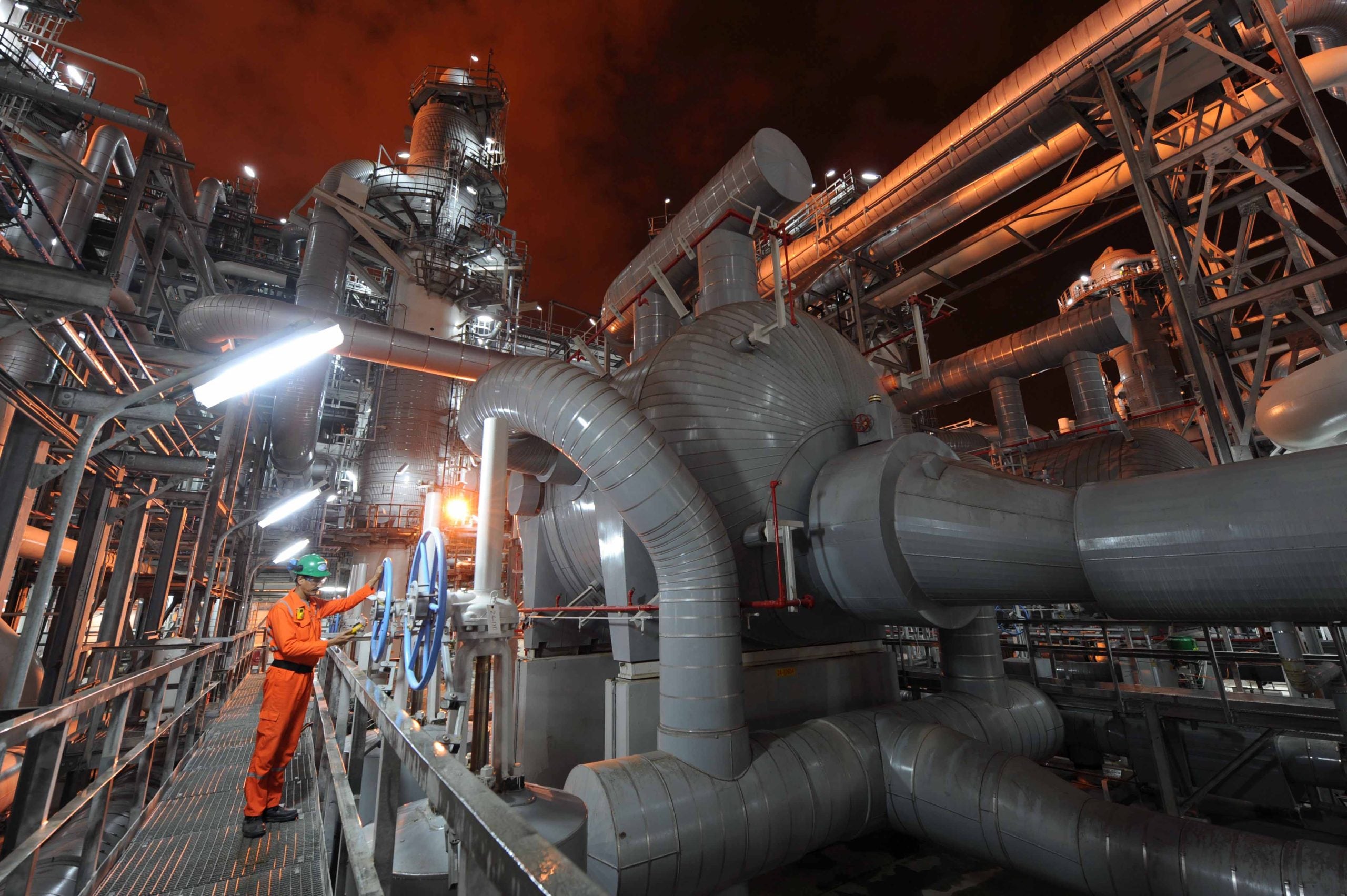
The project involves the engineering, procurement and construction (EPC) of gas compression plants, comprising gas inlet facilities, gas compression systems, condensate and produced-water handling systems, propane refrigeration systems and all associated utilities, L&T said in its statement on 24 August.
“The facilities will be developed for new onshore installations to process sour gas in compliance with applicable client standards, codes and project requirements,” the Bombay Stock Exchange-listed company said.
To meet the power requirements of the gas compression plants, L&T’s Power Transmission & Distribution business will execute two 230kV extra-high-voltage substations, L&T added.
MEED understands that the contract award relates to the fourth expansion phase of the Jafurah unconventional gas development in Saudi Arabia, for which Saudi Aramco selected LTEH for EPC works earlier this year.
MEED previously reported that LTEH started work on the Jafurah fourth expansion phase during the second quarter of the year, with sources estimating the contract value at around $1.5bn.
The main scope of work on the Jafurah fourth expansion phase project involves the EPC of two gas compression trains at the giant gas basin in the kingdom’s Eastern Province. Each plant will be able to process up to 200 million cubic feet a day (cf/d).
The detailed scope of work involves the EPC of the following process and utilities units at the south field of the Jafurah reserve:
- Two gas compression trains of 200 million cf/d capacity each, measuring 400 metres by 400 metres
- Gas compression plant inlet area
- Gas compression plant condensate and produced-water handling
- Instrumentation and plant air unit
- Nitrogen generation unit
- Raw/potable/water utilities
- Chemical injection systems
- Diesel systems
- Flare and flare gas recovery systems
- Gas compression plant burn pit
- Closed drain system
- Oily water system
- Sanitary water system
- Stormwater system
- Firewater system
- Fire and gas protection system
- All buildings located within the gas compression plant, excluding security buildings
- Outside battery limit buildings
Contractors submitted proposals for the Jafurah fourth expansion phase project by the deadline of 15 January 2025, MEED previously reported. After the bids were submitted, Aramco initially asked contractors to extend their bid validity until the end of September, as it needed more time to evaluate the proposals.
The Saudi energy giant then asked contractors to extend the validity of their base proposals until February this year, and the bidders complied, MEED reported.
Along with requesting a second bid-validity extension, Aramco also sought an alternative set of commercial proposals from contractors, sources said. Bidders submitted the second price option to the client in December, the sources added.
The following contractors are among those that are understood to have submitted bids for the Jafurah fourth expansion phase project:
- China Petroleum Engineering & Construction
- Larsen & Toubro Energy Hydrocarbon (India)
- Samsung E&A (South Korea)
- Tecnicas Reunidas (Spain) / Sinopec Group (China)
Aramco issued the main tender for the project in July 2024. Contractors invited to bid were initially set a deadline of 15 October that year to submit technical bids and their In-Kingdom Total Value Add (IKTVA) credentials. Commercial bids were due to be submitted by 31 October, with the deadline extended to 31 December, then to 15 January, 2025.
Jafurah gas development phases
The Jafurah basin is the largest liquid-rich shale gas play in the Middle East, spanning around 17,000 square kilometres. The reserve is estimated to contain 229 trillion cubic feet of gas and 75 billion stock-tank barrels of condensate.
Aramco brought the greenfield Jafurah gas processing plant online in early December, with a production capacity of 450 million cf/d, marking the commissioning of the first phase of its $100bn capital expenditure programme to produce gas from the unconventional resource base.
The Saudi oil company had earlier said it expected to start gas production at Jafurah in 2025, with the intention of progressively ramping up to 2 billion cf/d of sales gas, 420 million cf/d of ethane and 630,000 barrels a day (b/d) of high-value liquids by 2030.
Aramco has said that, at peak production, its unconventional gas programme is expected to generate electricity equivalent to displacing 500,000 b/d of oil.
Along with overseeing EPC works on the Jafurah fourth expansion phase project, Aramco is also nearing a decision on awarding the main EPC contract for the fifth expansion phase of the mammoth Jafurah unconventional gas development programme.
MEED recently reported that a frontrunner has emerged for the main EPC contract for the Jafurah fifth expansion phase, whose scope is similar to the programme’s fourth phase that has been awarded to LTEH.
Dubai-headquartered Wood Group has carried out the front-end engineering and design (feed) on the fifth expansion phase.
Progress on the fourth and fifth expansion phases of the Jafurah unconventional gas development programme continues as EPC work on the third phase advances.
In July 2024, Aramco issued a non-binding letter of intent to a consortium of Tecnicas Reunidas and Sinopec Group for the EPC contract for the Jafurah third expansion phase. The value of the contract is estimated to be $2.24bn.
The objective of the third expansion phase of Jafurah is similar to that of the fourth phase of development. The main scope of work involves the EPC of three gas compression plants, each with a capacity of 200 million cf/d.
The third phase’s scope of work also includes building a 230kV substation to power the new gas compression plants and installing other utilities units, piping systems and safety equipment.
The selection of contractors for the third expansion phase of the Jafurah development came within weeks of Aramco officially awarding EPC contracts for the second expansion phase, which aims to raise its processing potential to up to 2 billion cf/d of raw gas produced from the Jafurah field.
Aramco awarded 16 contracts, worth a combined total of about $12.4bn, for the second expansion phase on 30 June 2024.
The EPC scope of work on the project involves the construction of gas compression facilities and associated pipelines and the expansion of the Jafurah gas plant, including the construction of gas processing trains, utilities, sulphur and export facilities, Aramco said in a statement.
The main EPC packages of the Jafurah second expansion phase project, their estimated values and the selected contractors are:
- Package 1 – gas processing plant and main process units – $2.9bn: Larsen & Toubro Energy Hydrocarbon (India)
- Package 2 – utilities and offsites – $2.4bn: Hyundai Engineering (South Korea)
- Package 3 – gas compression units – $1bn: Larsen & Toubro Energy Hydrocarbon
- Riyas natural gas liquids (NGL) package 1 – NGL fractionation trains – $1bn: Tecnicas Reunidas / Refining & Chemical Engineering Group (part of China’s Sinopec Group)
- Riyas NGL package 2 – utilities, storage and export facilities – $2.2bn: Tecnicas Reunidas/Refining & Chemical Engineering Group
- Riyas NGL package 6 – site preparation works – $107m: Mofarreh Alharbi & Partners (Saudi Arabia)
- Riyas NGL package 9 – temporary construction facilities – $80m: Mofarreh Alharbi & Partners
Aramco kickstarted EPC works on the first phase of the programme in November 2021 by awarding $10bn-worth of subsurface and EPC contracts.
In February 2020, Aramco received a capital expenditure grant of $110bn from the Saudi government for the long-term phased development of the Jafurah unconventional gas resource base.
The Jafurah unconventional gas development programme is central to Aramco’s goal of increasing gas production capacity. The target has recently been raised to 80%, with 2021 as the baseline, up from 60%, to meet rising domestic and global demand. The company expects life-cycle investment in Jafurah to exceed $100bn.
Prior to the commissioning of the Jafurah gas plant in the last quarter of this year, Aramco completed an $11bn lease-and-leaseback deal in late October for gas processing facilities at the Jafurah unconventional gas reserve with a consortium led by funds managed by Global Infrastructure Partners (GIP), part of US asset manager BlackRock.
Under the transaction, which Aramco started in August, a newly formed subsidiary – Jafurah Midstream Gas Company (JMGC) – will lease development and usage rights to the Jafurah field gas processing plant and the Riyas natural gas liquids (NGL) fractionation facility.
After 20 years, JMGC will lease the assets back to Aramco. JMGC will collect a tariff payable by Aramco in exchange for granting Aramco the exclusive right to receive, process and treat raw gas from the Jafurah resource base.
Aramco will hold a 51% majority stake in JMGC, while the GIP-led consortium will hold the remaining 49%. Investors participating in the GIP-led consortium include Hassana Investment Company, The Arab Energy Fund (TAEF) and Aberdeen Investcorp Infrastructure Partners, as well as other institutional investors from North and Southeast Asia and the Middle East.
https://image.digitalinsightresearch.in/uploads/NewsArticle/18962987/main4448.jpg -
Saudi Arabia battery storage awards provide fresh lift
24 August 2026
 Commentary
Mark Dowdall
Power & water editorThe latest battery storage awards provide a welcome injection of investment into Saudi Arabia’s power market, which has seen a sharp slowdown in contract awards this year.
Saudi Power Procurement Company’s four Group 1 storage service agreements, announced last week, are worth more than $1.16bn and cover 2,000MW of capacity.
That is significant against the wider market. According to regional project tracker MEED Projects, Saudi Arabia recorded $19.7bn in power sector contract awards in the first seven months of 2025, compared with just $2.5bn in new awards in the same period this year.
The battery energy storage system (bess) awards therefore account for a sizeable share of the activity recorded so far this year and provide a much-needed source of new contracting activity.
Importantly, this is not a one-off. SPPC issued the request for proposal (RFP) for its second group of bess projects in July, covering six projects with a combined capacity of 3,000MW and 12,000MWh.
With the Group 1 tender taking around 18 months from RFP to contract award, it is reasonable to expect Group 2 contracts to be signed in 2027.
At the same time, the awards for six independent renewable plants under Round 7 of Saudi Arabia’s National Renewable Energy Programme (NREP), with a combined capacity of 5,300MW, are also likely to move into next year, with the latest bid deadlines now extending into September.
Although a substantial pipeline remains in procurement, it is only once these projects move from tender to award and into construction that this pipeline translates into market activity.
It is important that these tenders continue to progress at the pace established by the early rounds of Saudi Arabia’s renewable energy programme and now also SPPC’s independent storage provider bess scheme.
https://image.digitalinsightresearch.in/uploads/NewsArticle/18962923/main.jpg