
Lessons learnt from a power plant decommissioning
26 February 2026

Al-Kamil power plant, a 280MW, gas-fired power plant in the Sharqiya region of Oman, was recently decommissioned following nearly 20 years of operations as the country’s second independent power plant.
The plant reached commercial operation in 2002, at which time it started to supply electricity to Nama Power & Water Procurement Company under a 15-year power purchase agreement that was later extended to the end of 2021. No further extension was granted so, in 2022, the decommissioning process was initiated.
Al-Kamil power plant was one of the first privately owned power plants in Oman to be decommissioned. The entire process took significantly longer than planned – three years compared to an initial target of 12 months. This was not unexpected, however, as there were not yet any standard processes to follow. Everything was being done for the first time, and proper procedures had to be established.
Starting decommissioning
The decommissioning of a power plant is a complex process and can take as much time to complete as it takes to build a plant. It involves environmental considerations, health and safety protocols, detailed surveys, de-energisation, dismantling, demolition, waste management and the segregation and storage of secondary valuables.
 Careful planning and management are essential to ensure that decommissioning is accomplished safely, cost-effectively and in accordance with all government environmental standards.
Consulting on the decommissioning of Al-Kamil were Dubai’s Golden Sands Marketing Consulting (GSMC), appointed in 2021, alongside Abu Dhabi’s Sustainable Water & Power Company (SWPC) and Dubai’s Tractebel Engineering Company (TEC).
One of the first steps that GSMC undertook was to prepare a master plan covering the entire decommissioning process (see right).
A site investigation was undertaken by GSMC and SWPC early in the process to determine the condition of the power assets and the overall site.
The Al-Kamil power plant was found to have been well maintained, with no major health, safety, security and environment (HSSE) issues.
SWPC prepared the dismantling guidelines covering all plant equipment, and these were reviewed by TEC. The guidelines covered three main phases: the shut down and isolation of all assets; the de-
energisation process; and the dismantling of the plant equipment, its removal from site and the demolition of all remaining civil works.
GSMC designed a sales strategy for the plant equipment, taking into consideration the secondary market for power-related equipment, as well as the scrap market in Oman. A competitive procurement process was also followed in an effort to maximise sales revenues from plant equipment.
A separate tender was issued to appoint a demolition contractor to remove the remaining civil works, and once this work was complete, a local environmental engineering company undertook a final environmental report to demonstrate that the site was properly cleared and ready for handover to the original owner, the Housing & Urban Planning Ministry.
Final results
The decommissioning project went well in terms of HSSE considerations, with no fatalities, no lost-time injuries and no first aid injuries over the more than 243,000 total workhours at the site.
There were no material environmental spills or incidents to report, and all above- and below-ground structures were demolished and safely removed from the site in accordance with local requirements.
The final environmental report, completed just before handover, showed that the site was effectively in the same condition as it was when originally taken over at the start of construction.
The decommissioning was also successful from a financial perspective, as revenues from the sale of plant equipment and diesel fuel were beyond what was required to cover the costs associated with the decommissioning process.
Lessons learnt
Many lessons were learnt during the process that can benefit future power plant decommissioning efforts in the region.
> Notify key stakeholders early: Key stakeholders are those that have a vested interest in the project, either through ownership of certain assets on site, such as grid connection assets, or via regulation, such as the environmental authority. Many of these stakeholders take time to respond, so notifying key stakeholders early in the process can ensure that unnecessary delays are avoided.
> Prioritise HSSE: For any future decommissioning project, HSSE must be a top priority, and this should be the focus throughout the entire decommissioning process – at all levels of work and management.
The site manager at Al-Kamil installed a 24/7 closed-circuit television camera, which proved to be extremely effective in terms of monitoring progress and identifying potential HSSE issues before they became an incident. This simple and cost-effective practice should be replicated for all future decommissioning projects.
> Appoint the environmental consultant early in the process: It is advisable to appoint an environmental consultant early in the process. The consultant is needed to coordinate activities with the local environmental authority and obtain a no-objection letter or certificate, complete an environmental management report and an update of the environmental impact assessment, which includes an environmental baseline.
Ideally, these reports and environmental authority approvals should be completed well before any work is under way at the site. This information is also useful to potential bidders for the sale of equipment, or to contractors involved in the dismantling and demolition process.
> Submit an environmental management plan for approval: It is unlikely that any environmental authority will provide a no-objection letter or certificate without reviewing the environmental plan. It is therefore necessary to complete the plan early, prior to informing the environmental authority. This can minimise potential delays in starting the decommissioning process.
As a general practice, an environmental consultant should be brought on board early in the process, ideally once the overall master plan is approved by the company.
> Establish a proactive steering committee: This was done at Al-Kamil and proved to be effective when it came to overseeing project progress and dealing with issues as they arose. Certain members of the steering committee visited the site regularly and undertook spot HSSE inspections.
At Al-Kamil, the overall decommissioning was relatively straightforward as the plant was in a remote area. However, decommissioning a power plant in a busier location, or when part of the power plant remains in operation, is more challenging. Under these circumstances, a steering committee is vital.
> Set realistic delivery and completion timelines: Decommissioning a power plant is a complex process. The initial timeline to complete the process for Al-Kamil was one year, which was the best estimate at the time as there were no benchmarks or references in Oman. However, the actual completion time turned out to be three years – longer than the approximately 2.5 years it took to build the plant, from the start of construction in early 2001 to full commercial operation in July 2003.
Realistic delivery dates should be set for contractors, suppliers and others involved in the decommissioning process. This is likely to result in better pricing, as bidders tend to factor in higher contingencies with shorter or fast-track delivery dates. More realistic delivery dates also help management to allocate staff resources and manage the decommissioning budget.
Finally, realistic delivery dates help to manage owner and shareholder expectations regarding project completion.
Given the experience with Al-Kamil, a reasonable decommissioning timeline for a power plant is probably close to the actual construction timeline for the plant involved.
> Allow time to maximise revenues from the sale of assets: The market value for Al-Kamil’s power assets was estimated at a value significantly higher than the prevailing scrap value. This was based in part on the value of similar gas turbine units, after adjusting for age, usage and other factors that affect the net market value. However, the company realised a much lower value, even after retendering the equipment sales in an effort to get a better price.
It appears that prices close to the market rate are only achievable if there is time to find a suitable buyer. This can take many months or even years – typically a longer time than the owners of power plants wish to take.
Moreover, as renewables continue to penetrate the market, there is less worldwide demand for used gas turbine units. Prevailing market supply and demand conditions also have a bearing on the sale price for secondary equipment, and this factor needs to be considered.
If time is of the essence, then power plant owners need to accept the fact that the expected revenues will likely be on the low side, although still higher than the scrap value of the assets.
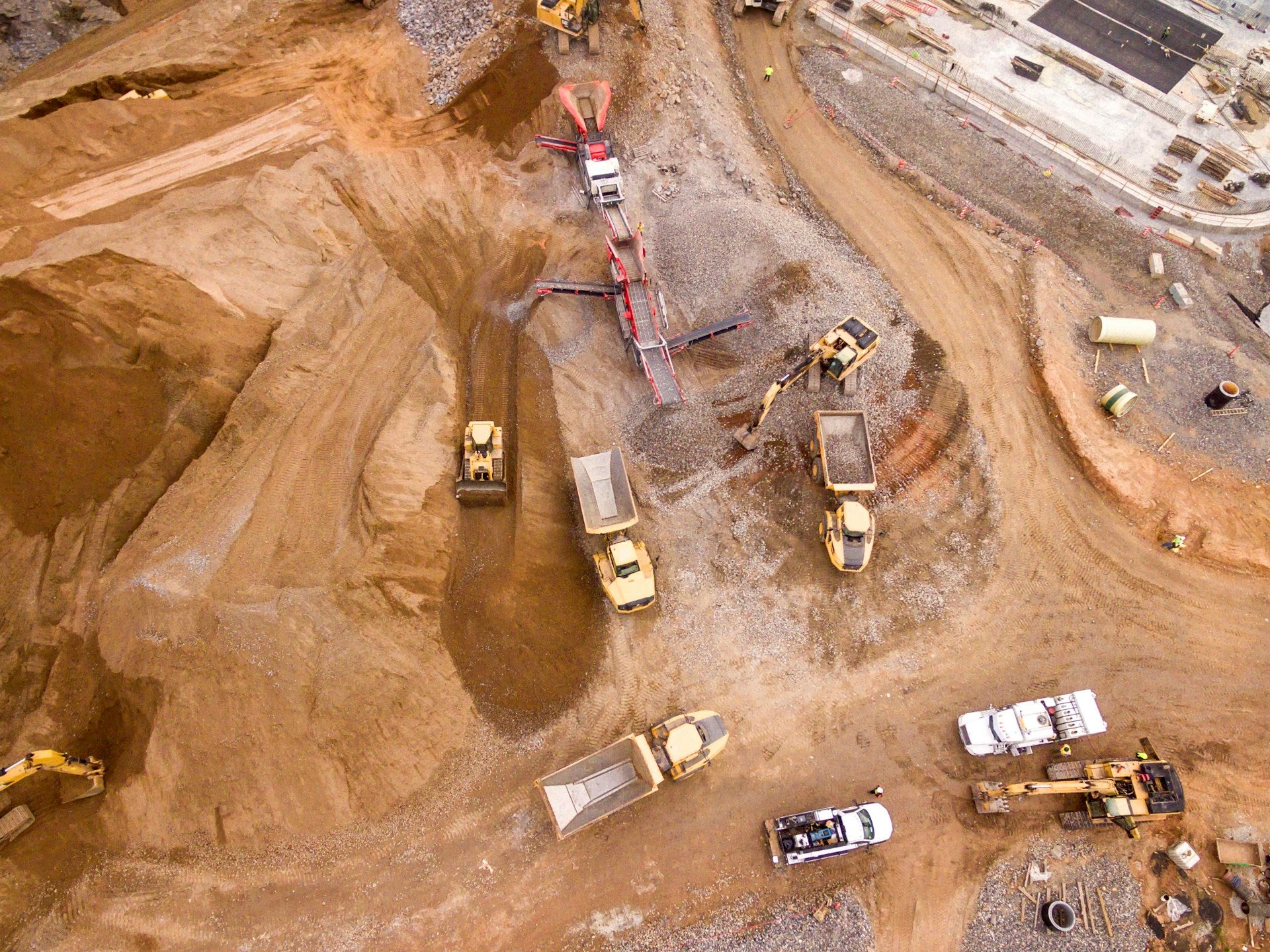
Main image: Picture 1: Al-Kamil power plant as constructed; Picture 2: Post decommissioning

Register for MEED's guest program now to access this article.
Exclusive from Meed
-
 Algeria tenders upstream oil project contract
25 June 2026
-
 Chinese firm wins $265m Saudi hospital contract
24 June 2026
-
 Kuwait extends deadline for $718m drainage tender
24 June 2026
-
 Contractor wins Emaar Dubai Harbour project deal
24 June 2026
-
All of this is only 1% of what MEED.com has to offer
Subscribe now and unlock all the 153,671 articles on MEED.com
- All the latest news, data, and market intelligence across MENA at your fingerprints
- First-hand updates and inside information on projects, clients and competitors that matter to you
- 20 years' archive of information, data, and news for you to access at your convenience
- Strategize to succeed and minimise risks with timely analysis of current and future market trends
Related Articles
-
Algeria tenders upstream oil project contract
25 June 2026
Algeria’s state-owned national oil and gas company, Sonatrach, has tendered a contract for the development and rehabilitation of the central processing facility (CPF) at the Bir Berkine oil and gas field.
The scope of the contract includes the study, supply, construction and commissioning of a project to rehabilitate the CPF facilities at the field, which is located in the Hassi Mesaoud region.
Sonatrach says in the tender documents that the objective of the project is to ensure the continuity of production activities “under stable and secure operating conditions”.
It also says the project aims to improve production yields and quality.
The contract includes both initial and detailed studies as well as the supply of all equipment and materials.
It also includes the execution of works, the assembly of all equipment and materials, and the commissioning of all relevant facilities.
The tender has a two-stage submission process, with the first stage requiring technical bids to be submitted by 23 August.
https://image.digitalinsightresearch.in/uploads/NewsArticle/17423013/main3916.jpg -
Chinese firm wins $265m Saudi hospital contract
24 June 2026
Zhejiang Construction International, the local subsidiary of Chinese contractor Zhejiang Construction Investment Group, has won a $265m contract to build the Prince Mohammed Bin Fahd University Speciality Hospital in Al-Khobar.
Construction is expected to take three years from the start date.
Prince Mohammed Bin Fahd University awarded the contract.
Located in Al-Raja district, Al-Khobar, in Saudi Arabia’s Eastern Province, the hospital project will cover about 60,000 square metres.
The contract covers the construction of a 10-storey hospital building, two five-storey auxiliary buildings connected by corridors and a basement.
Work will include civil works, mechanical and electrical installation, curtain walling, landscaping, detailed design and the procurement of medical equipment.
The award is the latest in a series of contracts secured by Chinese contractors from Saudi entities in recent months.
Last week, MEED reported that Saudi Arabia’s Ministry of Municipalities & Housing awarded contracts worth more than SR1.9bn ($506m) to Chinese contractors for two residential developments in the kingdom.
China Architectural Construction Corporation won the first contract, valued at SR875m ($233m), to build 2,010 housing units at the Al-Ruba residential project in Riyadh.
China State Construction Engineering Corporation secured the other contract, valued at more than SR1bn ($266m), for the Al-Rasha Al-Faisaliah residential project in Dammam, comprising 2,426 housing units.
GlobalData expects Saudi Arabia’s construction industry to record average annual growth of 5.2% in 2025-28, supported by investments in transport, electricity, housing and tourism infrastructure, as well as the $850bn-plus gigaprojects programme.
https://image.digitalinsightresearch.in/uploads/NewsArticle/17412846/main.jpg -
Kuwait extends deadline for $718m drainage tender
24 June 2026
Kuwait’s Ministry of Public Works (MPW) has extended the deadline for a major drainage tender estimated to be worth about KD222m ($718m).
The new bid submission deadline is 19 July.
The tender scope covers the construction of rainwater drainage networks across the residential areas of Sabah Al-Ahmad, South Sabah Al-Ahmad, Al-Khairan and Al-Wafra.
The MPW floated the tender on 22 March. The most recent deadline was 21 June.
According to regional projects tracker MEED Projects, the works include the construction of a major concrete sewer, three collection basins and extensive stormwater drainage basins.
Rainwater collection tanks will be connected through an independent network, with outlets to the sea via the Nuwaiseeb exit to manage overflow.
The infrastructure will also filter pollutants such as oils, minerals and sediments to protect water quality and support environmental sustainability.
The project aims to reduce surface runoff, prevent street and urban flooding, and improve groundwater recharge.
Kuwait’s MPW currently has several contracts out for tender for infrastructure works across various parts of the country.
Also, in March, the client released two additional tenders covering the construction of a treated water system in Kuwait’s southern region and another in Kuwait’s northern region.
Bids for both projects are due by 28 June.
Meanwhile, the MPW is planning to begin construction of the $3.3bn North Kabd sewage treatment plant, which has a planned capacity of up to 1 million cubic metres a day.
China State Construction Engineering Corporation (CSCEC) won the contract to build the plant earlier this year.
> Be recognised among the best in the industry at the MEED Projects Awards 2026 …
 https://image.digitalinsightresearch.in/uploads/NewsArticle/17411675/main.jpg
 -
Contractor wins Emaar Dubai Harbour project deal
24 June 2026
Register for MEED’s 14-day trial access
Local construction firm Al-Sahel Contracting Company has won a contract to build The Bristol Luxury Hotels & Resorts project in Dubai.
The contract was awarded by local real estate developer Emaar Properties.
The Bristol Luxury Hotels & Resorts is located at Emaar Beachfront in Dubai Harbour.
The project comprises a 54-storey mixed-use building with about 150 hotel keys and 227 one- to four-bedroom apartments.
Enabling works have been completed by local firm Dutch Foundation.
Dubai-based Mirage Leisure & Development is the project’s consultant.
Construction is expected to be completed by 2028.
The contract award follows Emaar’s appointment of Dubai-based Aroma International Building Contracting to build the Address Grand Downtown tower.
The award also comes shortly after Emaar reported strong operating momentum in 2025, led by record property sales of AED80.4bn ($21.9bn), up 16% year on year.
The company’s revenue backlog from property sales rose to AED155bn ($42bn), supporting visibility on future revenue recognition.
Total revenue for 2025 reached AED49.6bn ($13.5bn), a 40% year-on-year increase. Earnings before interest, taxes, depreciation and amortisation grew 33% to AED25.6bn ($7bn), while net profit before tax rose 36% to AED25.7bn ($7bn).
Emaar’s platform continued to support performance across property development, malls, hospitality, leisure and international operations.
> Be recognised among the best in the industry at the MEED Projects Awards 2026 …
https://image.digitalinsightresearch.in/uploads/NewsArticle/17411104/main.jpg -
Saudi Arabia launches new mineral exploration licensing round
24 June 2026
Register for MEED’s 14-day trial access
Saudi Arabia’s Ministry of Industry & Mineral Resources (MIMR) has launched its tenth round of a mineral exploration licensing competition, qualifying 24 local and international companies and consortiums to participate.
The exploration opportunities offered under Round 10 cover about 13,000 square kilometres across the regions of Medina, Mecca, Riyadh, Qassim and Hail. They encompass several highly prospective mineralised belts that are said to contain significant deposits of gold, copper, silver, zinc and nickel.
One of the key areas offered in the round is the Nabithah-Ad Duwayhi (Dahlat Shabeb) Belt, which hosts the Ad-Duwayhi Mine, one of Saudi Arabia’s largest gold-producing operations, with annual production of approximately 180,000 ounces of gold.
Other notable exploration zones include the Sukhaybarat-Al-Safra Belt, recognised for its gold and base metals potential and home to the Sukhaybarat and Bulghah mining operations, as well as the Al-Nuqrah Belt, known for substantial gold resources and volcanogenic massive sulphide mineralisation rich in copper and zinc.
According to MIMR, 17 companies that previously qualified under Round 9 have retained their eligibility, while seven additional companies and consortiums successfully completed the Round 10 prequalification process.
The newly qualified bidders in Round 10 are:
- Anaam Al-Qarat for Trading / Sahara Mining Company consortium
- Danakali / Masadar Al-Zamarda for Mining consortium
- Power Metallic Mines
- PT ANTAM Tbk
- Saudi Arabian Mining Company (Maaden)
- Thurb Al-Hayya for Trading Company
- Wildsky Resources
The previously qualified participants from Round 9 are:
- Al-Ghazal Al-Arabi Mining Company
- Almasar Minerals Holding
- Al-Tasnim Enterprises
- Aurum Global Group
- Batin Al-Ard for Gold Company
- China National Geological and Mining Corporation
- DesertEx
- Eqleed-Indotan Mining Company
- Helderberg
- Jacaranda Minerals
- Midana Exploration
- Royal Road Arabia
- Saudi Gold Refinery
- Sierra Nevada Gold
- Sun Peak Metals
- The Distinguished Consortium Mining Company
- Vedanta
In a statement carried by the official Saudi Press Agency, MIMR said exploration licence competitions are conducted through a structured three-stage process designed to ensure transparency, competitiveness and equal opportunity for all participants.
The process begins with prequalification assessments covering technical expertise and financial capability, followed by a site-selection phase through the ministry’s digital mining platform, Taadeen. Where multiple bidders compete for the same exploration site, the process advances to a public, multi-round bidding stage, with licences awarded based on exploration expenditure commitments and predefined evaluation criteria.
The next phase of Round 10 will allow qualified bidders to select available exploration sites via the Taadeen platform, in accordance with established procedures that promote fair competition and enable companies to pursue opportunities aligned with their technical capabilities and investment strategies.
ALSO READ: Aramco and Maaden seek to form joint venture
“The continued participation of major international and regional mining companies reflects growing confidence in Saudi Arabia’s mining sector and the effectiveness of its transparent licensing framework,” MIMR said in its statement.
Jarrah Aljarrah, a ministry spokesperson, said increasing participation in successive exploration licensing rounds demonstrates growing investor confidence in the kingdom’s mining ecosystem, supported by regulatory reforms, improved availability of geological data, transparent licensing mechanisms and a steadily expanding pipeline of exploration opportunities.
Saudi Arabia’s metals and mining sector is pivotal to the country’s non-oil growth trajectory. Commercial exploitation of the kingdom’s mineral resource base – most of which remains untapped – is a key component of the Saudi Vision 2030 socio-economic transformation strategy.
The kingdom took a first step towards realising the commercial potential of its mineral resources when it enacted the Mining Investment Law in 2021. Since the law came into effect, MIMR has awarded about 3,248 mining permits to local and foreign firms under its accelerated exploration initiative, including alone.
Addressing the Future Minerals Forum in Riyadh in January 2024, Bandar Alkhorayef, the kingdom’s minister of industry and mineral resources, said Saudi Arabia’s natural resources are worth $2.5tn – an increase of more than 90% compared to the 2016 estimate.
This near-doubling of natural resource estimates – which exclude fossil fuels and include phosphate, gold and rare earths – is expected to provide a stimulus to the kingdom’s nascent mining industry.
ALSO READ: Maaden mineral resources grow by 7.8 million ounces
https://image.digitalinsightresearch.in/uploads/NewsArticle/17398549/main.jpg