
Egypt’s oil and gas sector shows bright spots
11 February 2026

The discovery of the supergiant Zohr gas field in the eastern Mediterranean by Italian energy major Eni in 2015 created the possibility of Egypt becoming a regional gas hub and a major exporter.
When Zohr entered production in 2017, Egypt’s Ministry of Petroleum & Mineral Resources said the field would produce 2.7 billion cubic feet a day (cf/d) until 2039. However, after rising to a peak of about 3.4 billion cf/d in 2019, output from the offshore field began a steady decline. Reasons cited include early overproduction and Eni and its partners reducing activity in response to Cairo’s delayed arrears and other payments.
Production at Zohr now stands at about 1 billion cf/d, accounting for roughly a fifth of Egypt’s total gas output. With domestic power demand surging, Egypt has made urgent, concerted efforts to ensure local and international operators ramp up production of both natural gas and crude oil to reduce the country’s import bill.
In addition, the Ministry of Petroleum & Mineral Resources, led by Karim Badawi, is overseeing a major five-year exploration campaign to increase Egypt’s hydrocarbon resources and, in turn, support production growth.
Exploration drive
The strategy involves drilling up to 480 wells over the next five years, including 101 wells in 2026 alone. The drilling programme is estimated to require total investment of $5.7bn, with the ministry primarily courting overseas majors.
Over the past few months, Egypt has secured investments – or at least commitments – from international exploration and production (E&P) companies, including an $8bn pledge from Eni and a plan by the UK’s BP to invest $5bn in the upstream sector.
In November, Arcius Energy, a 51:49 joint venture of BP and Abu Dhabi National Oil Company’s (Adnoc) international arm, XRG, signed a deal to acquire the Harmattan gas discovery offshore Egypt.
As part of the development plan for the prospect, located in the El-Burg offshore concession, Arcius Energy will invest $3.7bn to drill up to three wells and build infrastructure, including a fixed offshore platform connected by a 50-kilometre pipeline to onshore processing facilities near Port Said. Production is expected to start in 2028.
UAE-based Dana Gas recently reported progress in 2025 on its $100m capital expenditure (capex) plan under a concession agreement it signed with Egypt in late 2024. During 2025, the company drilled four wells and completed a workover programme on three additional wells, adding approximately 30 million cf/d of new production and 36 billion cubic feet of reserves.
Dana Gas plans to drill a further seven wells in Egypt during 2026 under its capex programme. The first of these, the Daffodil exploration well, was spudded in January.
Separately, in November, the Ministry of Petroleum & Mineral Resources launched a new bid round for oil and gas exploration in four Red Sea blocks. Run by the state-owned South Valley Egyptian Petroleum Holding Company (Ganope) via the Egypt Upstream Gateway (EUG) digital platform, the round marks the first time Egypt has offered E&P companies a profitability-based production-sharing model.
Chemical investments
Beyond the upstream sector, several petrochemical and speciality chemical projects in Egypt have also advanced in recent months. The largest is a planned $2bn project by Egypt-based Anchorage Investments to establish a petrochemicals complex in the Suez Canal Economic Zone (SCZone).
Under the terms of a memorandum of understanding (MoU), the Suez Canal Authority will take an equity stake in the Anchor Benitoite complex, to be developed in Ain Sokhna in the northwest of the Gulf of Suez.
The facility will be built on land owned by the Suez Canal Authority. It will include a propane dehydrogenation (PDH) unit and a polypropylene (PP) plant with a capacity of 750,000 metric tonnes a year (t/y), according to a Suez Canal Authority statement.
The authority said the facility represents the first phase of a larger project and will support future expansion into downstream and complementary industrial units. Future phases are expected to include integrated chemical facilities, with an estimated investment of about $4.5bn and a targeted output of 1.9 million t/y of chemical products.
Meanwhile, the Egyptian government is seeking to accelerate an estimated $680m project to develop a new soda ash facility. In November, the cabinet granted the state-owned Egyptian Soda Ash Company a ‘golden licence’ to develop the plant, which will also produce soda ash derivatives.
A golden licence is a single cabinet approval that consolidates multiple permits into one, in an effort to speed up project delivery. It covers permits relating to land allocation, construction, operation and management.
The plant is expected to produce 600,000 t/y of soda ash and derivatives, making it one of the largest industrial projects of its kind in the region. The project is being developed on a 1.12 million-square-metre plot in the industrial zone of New Alamein City.
Last February, China National Chemical Corporation was appointed as the project’s main contractor.
Separately, China National Chemical Engineering Group Corporation (CNCEC) No. 16 Chemical Construction Co. signed a land purchase agreement with the Suez Canal Authority this February to establish another soda ash manufacturing facility.
To be developed in three phases in Ain Sokhna, the complex will have the potential to produce up to 30,000 t/y of soda ash.
MEED’s March 2026 report on Egypt also includes:
> GOVERNMENT: Egypt adapts its foreign policy approach
> ECONOMY & BANKING: Egypt nears return to economic stability
> POWER & WATER: Egypt utility contracts hit $5bn decade peak
> CONSTRUCTION: Coastal destinations are a boon to Egyptian construction

Register for MEED's guest program now to access this article.
Exclusive from Meed
-
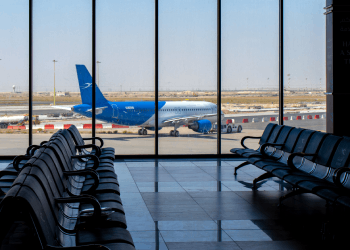 Kuwait schedules Terminal 2 operator price negotiations
23 November 2026
-
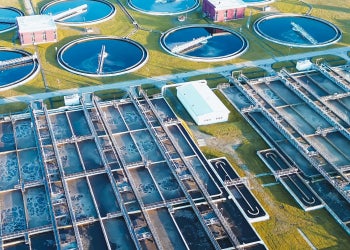 Contractors express interest in Qiddiya wastewater projects
23 November 2026
-
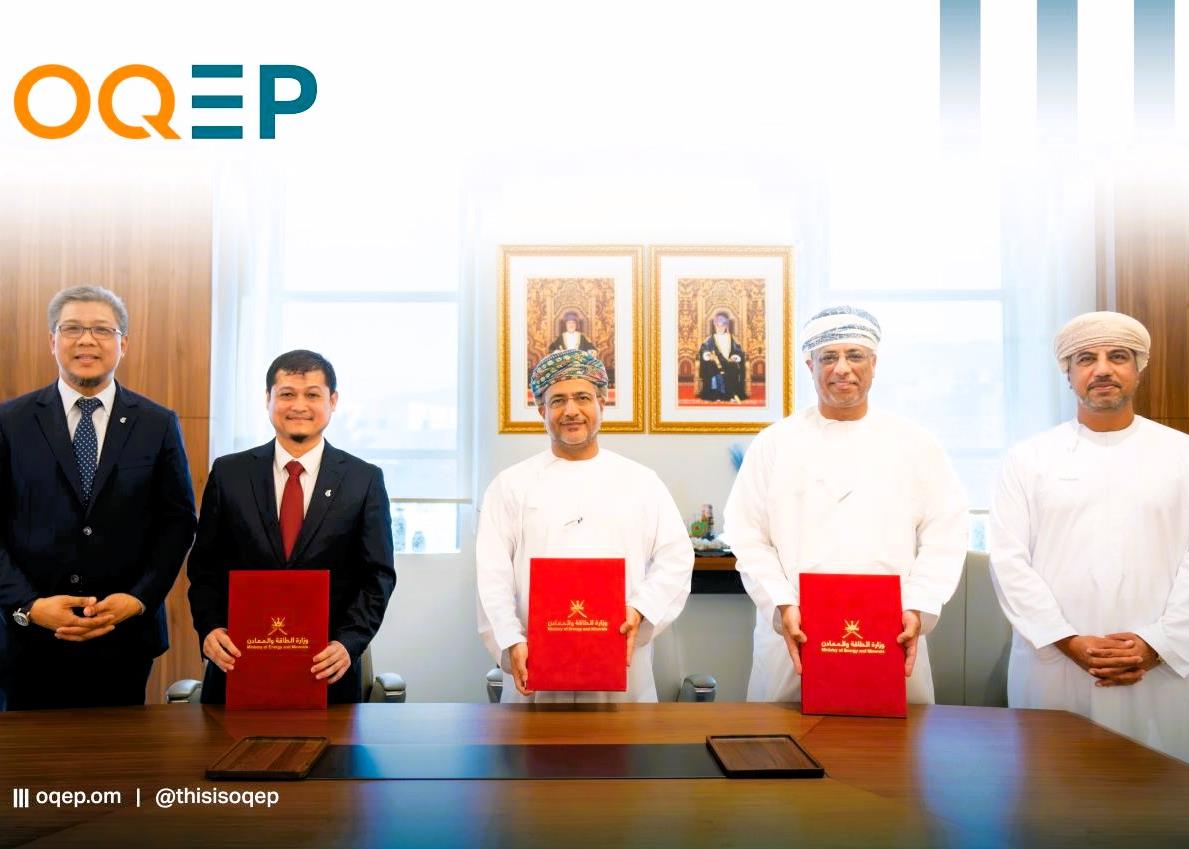 OQEP and Petronas sign offshore block study deal
23 November 2026
-
 Emirates NBD lends AED385m to Samana Developers
23 November 2026
-
 Contractors submit final offers for Oxagon infrastructure
23 November 2026
All of this is only 1% of what MEED.com has to offer
Subscribe now and unlock all the 153,671 articles on MEED.com
- All the latest news, data, and market intelligence across MENA at your fingerprints
- First-hand updates and inside information on projects, clients and competitors that matter to you
- 20 years' archive of information, data, and news for you to access at your convenience
- Strategize to succeed and minimise risks with timely analysis of current and future market trends
Related Articles
-
Kuwait schedules Terminal 2 operator price negotiations
23 November 2026
Kuwait's Central Agency for Public Tenders (Capt) has scheduled a price negotiation session for a contract to operate, manage and develop the new passenger Terminal 2 (T2) at Kuwait International airport.
According to local media reports, Capt's board members have approved holding the session on 30 November.
The decision responds to a request from the Public Authority for Civil Aviation (Paca) to establish suitable pricing agreements.
The negotiations will involve two pre-qualified companies.
The contract covers the operation, management and service development of T2 and its associated aircraft aprons, as well as centralised operations and maintenance management across the airport.
Lowest bidder
Ireland's DAA International was the lowest bidder for the contract, submitting an offer of KD419m ($1.35bn), according to official price-opening records released by Capt on behalf of the Directorate General of Civil Aviation.
Three international airport operators submitted commercial bids.
DAA International's proposal undercut its nearest rival by about 45%. Turkiye's TAV Airports Holding submitted the second-lowest offer of KD764.15m ($2.46bn), while South Korea's Incheon International Airport Corporation bid KD959.48m ($3.1bn). All three proposals were marked as approved in the tender committee's price disclosure.
The remit includes corporate management of centralised operations and maintenance across the wider Kuwait International airport complex, centralising operational procedures, systems integration and service delivery.
Technical documents indicate that the winning operator will oversee facility management, terminal operational readiness, passenger processing systems, apron operations and staff development programmes before and after the terminal's commercial launch.
The session forms part of Paca's efforts to take over the new terminal from the Ministry of Public Works, which is currently overseeing the project on the authority's behalf.
Responsibility for management and operations will transfer to Paca once the project is complete.
MEED reported in June 2023 that six airport operators had initially been invited to bid for the T2 operating concession.
T2 is the centrepiece of Kuwait International airport's multibillion-dollar expansion, which aims to increase total handling capacity to 25 million passengers a year. Turkish contractor Limak Insaat is executing the main terminal building under an estimated $4.34bn contract awarded in 2016.
https://image.digitalinsightresearch.in/uploads/NewsArticle/21716345/main.png -
Contractors express interest in Qiddiya wastewater projects
23 November 2026
Contractors have expressed interest with Qiddiya Investment Company (QIC) for two wastewater infrastructure packages at Qiddiya City, southwest of Riyadh.
According to a source, expressions of interest (EoI) were submitted on 22 November, with at least eight contractors understood be interested in the project.
The scope covers the design, construction, commissioning and operation of two wastewater treatment plants (WWTPs), as well as a centralised sludge treatment facility.
The first package covers WWTP11 in District 24, with a treatment capacity of 60,000 cubic metres a day (cm/d), alongside a sludge treatment facility.
The second package involves WWTP2 in District 18, with a capacity of 9,000 cm/d. It will also include a reverse osmosis facility to provide tertiary treatment and produce treated sewage effluent suitable for reuse.
The following contractors have submitted EoIs for the project, industry sources told MEED:
- AlFanar (Saudi Arabia)
- AlKhorayef (Saudi Arabia)
- Aqualia (Spain)
- Cox (Spain)
- Lantania (Spain)
- Nesma (Saudi Arabia)
- Tawzea (Saudi Arabia)
- Wetico (Saudi Arabia)
The deadline had initially been set for 8 November. It was extended to 18 November and then to 22 November to allow additional contractors to participate in the process, upon request.
Included in the second wastwater package is a sludge treatment facility, which will have an initial processing capacity of approximately 415 cm/d of thickened sludge. Its scope comprises sludge stabilisation, dewatering, anaerobic digestion, biogas recovery and combined heat and power generation. The facility will also incorporate solar sludge drying, with a capacity of approximately 172 cm/d, to produce Class A biosolids.
QIC has said it intends to procure the works under a design, build and operate model. The initial operations and maintenance period will be two years, with an option for QIC to extend this to five years.
The two packages will be tendered under a single request for proposals (RFP). Contractors will be required to submit separate technical and commercial proposals for each package, as well as a combined proposal. QIC said it may award the packages separately or collectively.
The release of the RFP had initially been scheduled for December, with contract awards targeted for June 2027.
The infrastructure package will cater to Saudi Arabia’s 360-square-kilometre Qiddiya entertainment city.
QIC, which is owned by Saudi sovereign wealth vehicle the Public Investment Fund, is overseeing the development of Qiddiya City, including its supporting utilities infrastructure.
https://image.digitalinsightresearch.in/uploads/NewsArticle/21714953/main.jpg -
OQEP and Petronas sign offshore block study deal
23 November 2026
Oman’s state-owned upstream firm OQ Exploration & Production (OQEP) and Malaysia’s state energy company Petronas have signed an agreement to jointly study hydrocarbons resources in offshore blocks 83 and 84.
Blocks 83 and 84 cover 10,875 square kilometres (sq km) and 14,147 sq km, respectively, in waters of the Gulf of Oman, off the sultanate’s Qurayyat coast near Muscat.
The joint study agreement between OQEP and Petronas covers geological and geophysical studies to evaluate the resource potential and commercial viability of the two blocks.
After failing to discover hydrocarbons earlier in this decade in Oman’s first deepwater exploration well in Block 52, in which OQEP had been a minority stakeholder, the sultanate has been pushing hard in its campaign to find oil and gas reserves in its territorial waters.
In February this year, OQEP acquired a 30% participating interest in offshore Block 18, following the Energy & Minerals Ministry’s award of exploration rights to a joint venture of OQEP subsidiary OQ Exploration & Production Al-Batinah Offshore and PC Oman Ventures, a wholly owned subsidiary of Petronas.
Located off Oman’s northeastern coast, Block 18 covers more than 21,000 sq km in the Sea of Oman, with water depths of 50-3,000 metres. No confirmed discoveries have previously been reported in the block.
ALSO READ: Oman and ExxonMobil partner for integrated gas and LNG project
Under the concession agreement, Petronas holds a 70% participating interest and operatorship, while OQEP holds the remaining 30%.
In June, the ministry signed an with OQEP and state-owned Turkiye Petroller AO, granting the companies exclusive exploration, appraisal, development and production rights for offshore Block 80.
The block covers approximately 5,737 sq km in the Gulf of Oman, near the Strait of Hormuz and off Musandam Governorate. It includes the producing Bukha and West Bukha oil and gas fields.
The agreement stipulates a minimum exploration investment commitment of $90m over an initial eight-year exploration period. The work programme is divided into two phases to evaluate the block’s hydrocarbons potential.
Separately, the ministry awarded OQEP exploration rights for three hydrocarbons blocks – 36, 43A and 66 – in the sultanate.
Under the agreements, OQEP will conduct geological and geophysical surveys, analysis and modelling, and will drill exploratory wells at the three blocks, with the aim of developing recoverable reserves.
Neither the ministry nor OQEP disclosed the blocks’ locations, areas or prospective reserves in their statement.
OQEP portfolio
Omani state energy group OQ Group holds the majority 75% stake in OQEP, with the remaining 25% shares trading on the Muscat Stock Exchange since October 2024, following an initial public offering from which OQ earned proceeds of $2bn.
OQEP’s portfolio comprises 14 upstream oil and gas exploration and production assets in Oman, covering onshore and offshore operations and assets held under service contracts.
Formerly known as Oman Oil Company Exploration & Production, OQEP’s flagship assets include Block 60, which contains the Abu Tubul and Bisat oil fields, and Block 48. The company also holds strategic interests in gas-producing blocks 9, 10 and 61.
OQEP also expanded its producing portfolio in April this year through the acquisition of a 35% interest in onshore Block 27 from Japan's Mitsui E&P Middle East. The transaction was valued at RO28.8m ($75m).
Block 27 is operated by US-based Occidental Petroleum, which holds a 65% participating interest under an exploration and production sharing agreement valid until 2035.
ALSO READ: OQEP signs agreement with Indonesian state energy firm
https://image.digitalinsightresearch.in/uploads/NewsArticle/21714285/main5234.jpeg -
Emirates NBD lends AED385m to Samana Developers
23 November 2026
Dubai-based Emirates NBD has signed a four-year, AED385m ($105m) bilateral financing facility with local real estate developer Samana Developers.
The facility includes a term loan and a Real Estate Regulatory Agency (Rera) guarantee, the bank said in a statement on 23 November. It will fund land acquisition and the development of real estate projects across Dubai.
The repayment structure allows the developer to use receivables from some of its existing projects.
Emirates NBD said the deal builds on its existing relationship with the developer.
Samana Developers was established in 2017. It says it was the fifth-largest off-plan developer in Dubai by sales activity in 2025.
The company has a portfolio of 56 projects with a combined gross development value of about AED17.5bn ($4.8bn). Its schemes are concentrated in residential communities including Jumeirah Village Circle, Arjan, Dubai Sports City and Dubai Studio City.
The developer says its development pipeline is worth more than AED12.5bn ($3.4bn).
Emirates NBD said structured financing remains an important tool for established developers pursuing new opportunities, as investor interest in off-plan developments continues to support activity in Dubai's real estate market.
https://image.digitalinsightresearch.in/uploads/NewsArticle/21714643/main3116.png -
Contractors submit final offers for Oxagon infrastructure
23 November 2026
Register for MEED’s 14-day trial access
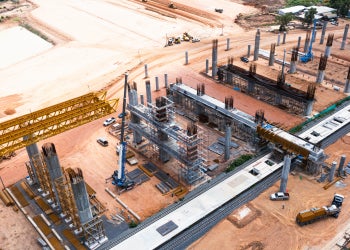
Contractors have submitted their best and final offers for an infrastructure package at Oxagon, Saudi Arabia’s industrial and logistics city at Neom.
The scope covers wet and dry infrastructure networks, civil works and limited earthworks. The wet infrastructure works include combined potable and firewater, irrigation, domestic wastewater, industrial wastewater and stormwater networks.
The dry infrastructure works include optional 33kV medium-voltage power networks running from primary substation switchgear to defined asset interface points. The package also covers 230/400V low-voltage networks serving street and pedestrian lighting, control networks, radio systems, smart city systems, Saudi Electricity Company and ICT active components, pumping stations and other public-realm loads.
The contractor will also install security systems, underground ICT pathways for transmission and distribution containment, security networks, service-provider networks and Interior Ministry fibre networks. The scope includes fibre-optic networks for Enowa power lines and wet-services instrumentation, control and automation packages.
The civil infrastructure works comprise roads and pavements, road furniture, signage, wayfinding and landscaping within the right-of-way.
Construction of the main Highway 55 and demolition of the existing highway are excluded, except for agreed under-Highway 55 crossings and defined tie-ins at approved interface points.
Bulk earthworks and rough grading will be carried out by others. The appointed contractor will undertake local trimming, trenching, backfilling, compaction and preparation to achieve issued-for-construction finish levels.
Tendering activity has intensified at Oxagon in recent months. Contractors have submitted best and final offers for a design-and-build contract to upgrade Highway 55 in the Oxagon region. The first phase includes 14 kilometres (km) of road with two lanes in each direction, one bridge and three interchanges, and is expected to take 22 months to complete.
Highway 55 connects the Red Sea coast with the mainland in northwestern Saudi Arabia and is currently the only road providing north-south connectivity between Duba and the Neom region.
Consultants also submitted bids on 31 October for a contract covering the concept design, feasibility study and route-alignment studies for a freight railway connecting the Port of Neom at Oxagon to Saudi Arabia Railways’ North-South Railway at the Al-Baseeta junction.
The proposed rail line is expected to extend for more than 400km.
https://image.digitalinsightresearch.in/uploads/NewsArticle/21712937/main.jpg