
Adnoc and Oxy shelve Shah gas plant expansion project
16 January 2026
Abu Dhabi National Oil Company (Adnoc) and its partner, US energy company Occidental Petroleum (Oxy), have shelved the engineering, procurement and construction (EPC) tendering process for a major project to expand the Shah gas processing plant in Abu Dhabi.
The Shah gas plant is operated by Adnoc Group subsidiary, Adnoc Sour Gas – a 60:40 joint venture of Adnoc and Oxy. The project aimed to increase the Shah gas plant’s sour gas processing capacity from 1.28 billion cubic feet a day (cf/d) to 1.85 billion cf/d.
Adnoc and Oxy decided to put the EPC tendering exercise for the Shah gas plant expansion project on hold owing to commercial proposals submitted by bidders exceeding their budget, according to sources.
“High EPC prices submitted by the bidders are thought to be the main reason why the project has been put on hold,” one source said.
Another source said: “Along with the price issue stalling the project, there could be other factors at play, such as the partners not being aligned, cost economics and offtake agreements.”
Adnoc Sour Gas is understood to have issued the main EPC tender for the Shah gas plant expansion project in December 2024. MEED reported that contractors submitted technical bids for the project by 13 May and commercial bids by 31 July last year.
Adnoc had been in negotiations with bidders for months following the submission of proposals for the Shah gas plant expansion project. Based upon initial evaluation of bids, China Petroleum Engineering & Construction Company (CPECC) had emerged as the lowest bidder, MEED reported in early October.
Adnoc, however, remained in talks with the other bidders, and in the weeks since, Italian contractor Tecnimont emerged as a “strong contender” for the project contract, as per sources.
Contractors that submitted bids for the Shah gas plant expansion project are understood to include:
- China Petroleum Engineering & Construction Company
- Petrofac (UK)
- Saipem (Italy) / Samsung E&A (South Korea)
- Tecnimont (Italy)
UK-headquartered Wood Group has performed front-end engineering and design works on the project, having won a contract in January 2024.
Adnoc and Oxy initially planned to execute the project using a feed-to-EPC model. This process requires the operator to shortlist contractors for the project’s front-end engineering and design (feed) work, with the firm that submits the best feed proposal being awarded the contract for the EPC works.
Contractors expressed interest in participating in the feed-to-EPC competition for the Shah gas plant scheme in September 2023.
Adnoc Sour Gas later cancelled the feed-to-EPC model and opted for a conventional project execution approach, according to sources.
A fresh feed tender for the project was issued “during the last quarter” of 2023, sources said at the time.
Shah gas plant expansion
The Shah gas plant, located 210 kilometres southwest of the city of Abu Dhabi, came online in 2015 with a processing capacity of 1.28 billion cf/d.
The facility draws associated gas produced from the onshore Shah oil field, which has an output capacity of 70,000 barrels a day. In January, Adnoc announced that the Shah field had achieved a carbon intensity of 0.1 kilogrammes of carbon dioxide (CO2) equivalent per barrel of oil equivalent.
The field reached this milestone through optimised field development and the deployment of digitalisation, artificial intelligence (AI) and other technologies to maximise efficiencies and minimise emissions. The field also benefits from Adnoc’s electrification of its onshore assets, which are powered by nuclear and solar energy sources.
To increase the Shah gas plant’s output to a potential 1.45 billion cf/d, Adnoc Sour Gas undertook the Optimum Shah Gas Expansion (OGSE) project in 2021. Italian contractor Saipem was awarded a $510m contract in June of that year to execute EPC works on the project. The OGSE project is now in the commissioning stage.
Adnoc Sour Gas expects to raise the asset’s production potential to 1.85 billion cf/d through the Shah gas plant expansion project.
Shah gas plant CO2 recovery
Last year, Adnoc Sour Gas undertook a project to capture and transport CO2 emissions from the facility’s operations.
The project aimed to recover, dehydrate, compress and transport CO2 from the Shah gas plant’s operations to the Bab onshore oil field for enhanced oil recovery (EOR).
However, Adnoc Sour Gas suspended the Shah gas plant CO2 recovery project, with sources expecting it could be revived this year.
The Shah gas plant CO2 recovery project is expected to deliver up to 1.37 billion cf/d of CO2 with a 95.5 mole percentage. The CO2 recovery facilities are to be designed for a target availability of 95%, with less than 400 parts per million by volume hydrogen sulphide and less than 20 pounds of water per million cubic feet a day.
The recovered CO2 will be supplied through an approximately 125-kilometre pipeline to the Bab field for re-injection into the wells at 210-barg pressure for EOR purposes.
Adnoc Sour Gas has stipulated the use of Shell’s Cansolv CO2 capture licensed technology by the EPC contractor for the project.
Adnoc Sour Gas production
Adnoc Sour Gas, in which Adnoc Group holds the majority 60% stake and US energy company Occidental Petroleum (Oxy) holds the other 40%, currently produces 1.28 billion cf/d of gas and 4.2 million tonnes a year of sulphur from the Shah onshore sour gas field.
The Shah gas production complex in Abu Dhabi is understood to be the world’s largest ultra-sour gas facility. It includes gas processing units and a sulphur granulation plant that features four of the largest sulphur recovery units in the world.
Adnoc Sour Gas processes more than 1 billion cf/d of ultra-sour gas, with a hydrogen sulphide content of more than 23%, from a single, integrated field-gas plant development. The company accounts for about 5% of global production.
About 17,000 tonnes of granulated sulphur produced by Adnoc Sour Gas from the Shah and Habshan fields are transported by Etihad Rail to Adnoc’s Ruwais terminal every day. From there, it is exported to markets worldwide for use in fertiliser manufacturing.
Adnoc Sour Gas also produces condensates, ethane and natural gas liquids. All products, except sulphur, are delivered to Adnoc Group companies for further processing or distribution to domestic consumers.
ALSO READ: Adnoc awards Sarb offshore gas development contract

Register for MEED's guest program now to access this article.
Exclusive from Meed
-
 Saudi Arabia’s power award activity slows
10 September 2026
-
 Groundworks under way for major Iraqi water project
10 September 2026
-
 Oil prices rise above $100 a barrel as conflict escalates
9 September 2026
-
 What actually slows a gigaproject down
9 September 2026
-
 Qatari firm wins $221m Qiddiya stadium MEP deal
9 September 2026
All of this is only 1% of what MEED.com has to offer
Subscribe now and unlock all the 153,671 articles on MEED.com
- All the latest news, data, and market intelligence across MENA at your fingerprints
- First-hand updates and inside information on projects, clients and competitors that matter to you
- 20 years' archive of information, data, and news for you to access at your convenience
- Strategize to succeed and minimise risks with timely analysis of current and future market trends
Related Articles
-
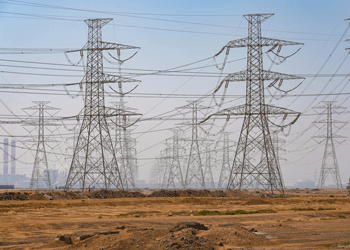
Saudi Arabia’s power award activity slows
10 September 2026

Saudi Arabia’s power market has seen a sharp fall in contract awards in 2026 following a major wave of renewable energy investment last year.
According to regional project tracker MEED Projects, about $3.38bn of power sector contracts were awarded in the kingdom as of early September, compared with $27.5bn in 2025, $54.2bn in 2024 and $26.1bn in 2023.
The relatively low level of contract awards this year has partly been influenced by a shift towards wider infrastructure such as battery energy storage systems (bess) and transmission projects, alongside delays in the procurement of renewable energy projects under the National Renewable Energy Programme (NREP) Round 7.
In September, Saudi Power Procurement Company (SPPC) awarded four Group 1 storage service agreements representing more than SR4.35bn ($1.16bn) of investment. The projects will provide a combined 2,000MW of capacity and 8,000MWh of storage.
Three bess projects, Al-Muwyah, Haden and Al-Kahafa, were awarded to a consortium of Saudi Energy, Acwa and Al-Sharif Contracting & Commercial Development Company. Another consortium of France’s Engie and Haji Abdullah Alireza & Co won the contract for the remaining Al-Khushaybi bess project.
Transmission awards
The battery storage projects are part of a broader shift towards the infrastructure needed to support Saudi Arabia’s expanding power system, with transmission accounting for most of the contracts awarded this year, reaching $3.35bn in new awards.
The largest is the estimated $500m contract awarded to Alfanar Projects in March for the 500kV overhead transmission line linking Saudi Arabia’s Eastern and Central operating areas. The 508-kilometre project will have a transmission capacity of 3,000MW.
Saudi Energy, formerly Saudi Electricity Company, is implementing a $58.7bn grid investment programme through 2030, including 130 high-voltage substations, about 12,900km of overhead transmission lines and 1,100km of underground cables.
Saudi Energy is the largest owner by value so far this year, accounting for about $1.9bn of contract awards, while SPPC has awarded more than $1.1bn in new contracts.
The focus on storage and transmission follows strong growth in renewable generation investment in 2025. Wind power contract awards reached $4.4bn, while 11 major solar contracts were also awarded.
In May 2025, developers signed $8.3bn of power purchase agreements with SPPC for five solar plants and two wind farms with a combined capacity of 15,000MW, somewhat inflating last year’s figures. The projects, backed by the Public Investment Fund, reached financial close in November.
Renewables projects
The next major phase of renewable procurement is now moving through the tender process. The seventh round of NREP, tendered in January, will add 5,300MW through four solar and two wind projects.
Based on the procurement timeline for the Round 6 projects, which were tendered and awarded in 2026, it was reasonable to expect Round 7 to follow a similar schedule.
However, according to one developer, rising supply costs have been a factor in recent deadline extensions for these projects, with those involved “waiting till these come down”.
With the latest bid submission deadlines set for September, the timing of the procurement process means contracts from NREP Round 7 may now fall into 2027 rather than materially lifting this year’s total.
The solar projects comprise the 1,400MW Tabarjal 2, 600MW Mawqqaq, 600MW Tathleeth and 500MW South Al-Ula independent power projects (IPPs). The round also includes the 1,300MW Bilgah and 900MW Shagra wind IPPs.
This helps explain why Saudi Arabia’s power sector contracting could remain relatively subdued in 2026 despite a substantial volume of projects progressing through procurement.
Project pipeline
According to MEED Projects, about $5.1bn of power projects are currently under bid evaluation and a further $7.3bn are at the main contract tender stage.
Solar projects make up the largest share, at about $5.1bn, or 41% of the total. There continues to be relatively strong diversification, with cable and overhead-line projects accounting for about $3bn, followed by wind at $2.2bn, oil and gas-fired power at $1.1bn and substations at about $1bn.
Renewable energy remains a particularly significant part of the development programme. Saudi Arabia raised its renewable energy target to 130GW by 2030 in 2023 and needs to add roughly 20GW of capacity a year to meet it.
Large-scale storage is also expected to continue expanding. The latest SPPC projects build on five bess facilities awarded by Saudi Energy through National Grid Saudi Arabia to Alfanar in 2025. The facilities have a combined capacity of up to 2,500MW, equivalent to about 10,000MWh.
SPPC has also issued the request for proposals for the second phase of its independent bess programme in Saudi Arabia. The Group 2 programme comprises six independent storage provider projects with a total capacity of 3GW, equivalent to 12,000MWh based on a four-hour storage duration. Developers are due to submit bids in October.
The timing means the Group 2 projects could contribute to contracting activity in 2027, alongside this next batch of renewable projects under NREP Round 7.
Nuclear power could provide another potential source of activity over the next 12 months. The US and Saudi Arabia signed a civil nuclear cooperation agreement in July, providing the legal foundation for a long-term, multibillion-dollar nuclear partnership.
While the agreement is unlikely to translate immediately into major contract values, further progress on Saudi Arabia’s nuclear programme could add another area of activity in the sector as the kingdom moves into 2027.
https://image.digitalinsightresearch.in/uploads/NewsArticle/19535830/main.gif -
Groundworks under way for major Iraqi water project
10 September 2026
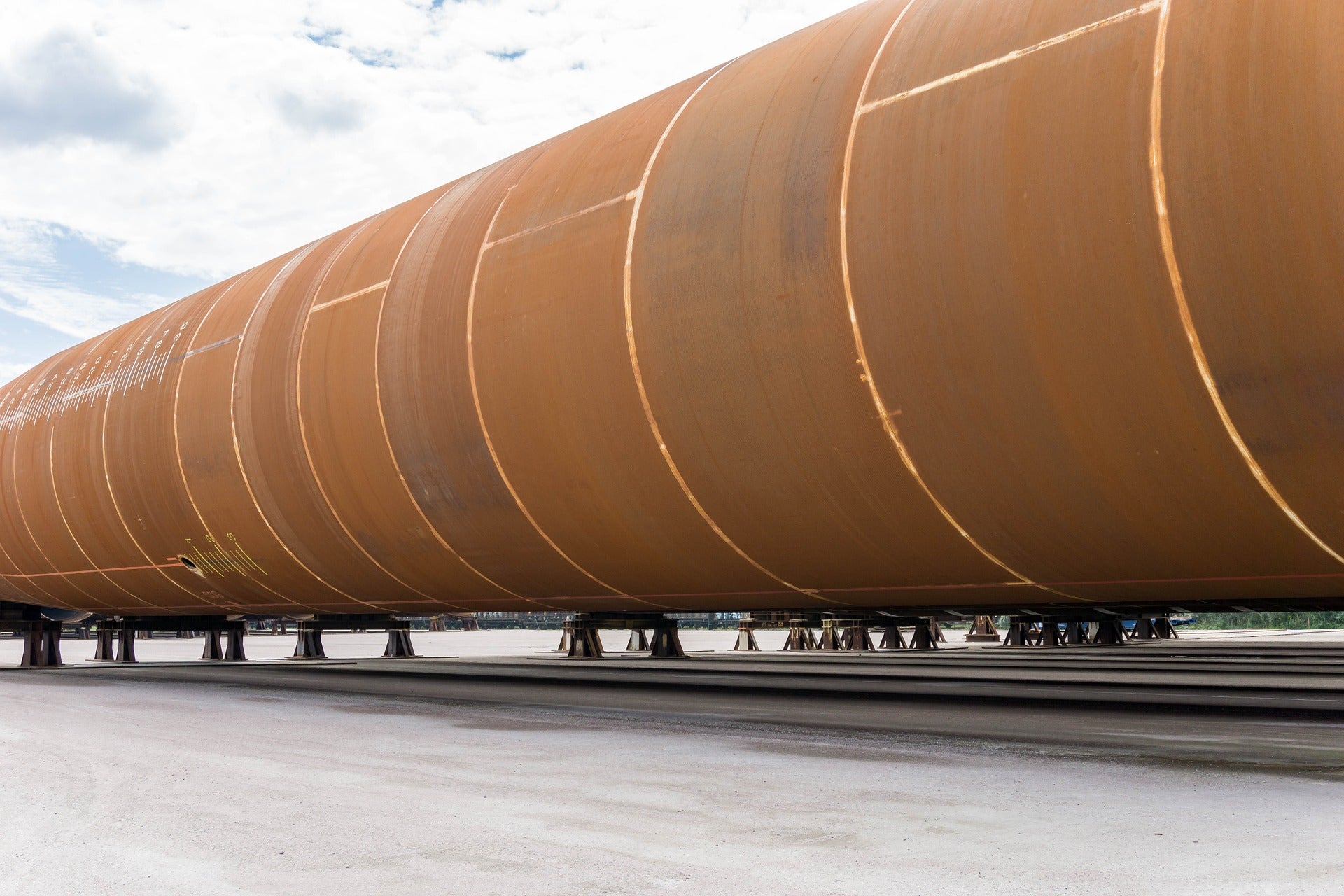
Early groundworks have started for Iraq’s Common Seawater Supply Project (CSSP), according to industry sources.
Design work is ongoing, and the project is currently scheduled to start up in late 2028 or early 2029, sources said.
Austria’s ILF Consulting Engineers is supervising the project, which has been split into two packages.
The first package focuses on developing pipelines, and the second on developing a water treatment facility.
China Petroleum Pipeline Engineering (CPP) is executing the contract for the pipeline package.
It signed a $2.5bn contract with Iraq’s state-owned Basra Oil Company (BOC) for the pipeline package in September last year.
The seawater treatment facility is expected to have a capacity of 5 million barrels a day (b/d), potentially rising to 7-8 million b/d in later phases.
In September last year, South Korea’s Hyundai announced that it had signed a contract worth KRW4.39tn ($3.16bn) for the processing plant package.
South Korea’s Hyundai Livart has won a contract worth KRW117.8bn ($80m) to build worker accommodation, offices and other infrastructure at the CSSP site in Basra.
South Korea’s Maeil Business Newspaper reported that Hyundai Livart secured the contract through a competitive bidding process against several Middle Eastern construction firms.
Work on the accommodation and infrastructure package is scheduled for completion by June next year.
Processed water from the CSSP project will be injected into some of Iraq’s largest oil fields – Rumaila, Zubair, West Qurna 1, West Qurna 2 and Majnoon – and also used in the Maysan and Dhi Qar fields.
Iraq’s Oil Ministry said the injected water will help maintain reservoir pressure and sustain crude production.
The CSSP is part of the broader Gas Growth Integrated Project (GGIP), which has an estimated total value of $27bn and a first phase worth an estimated $10bn.
GGIP is being developed by France’s TotalEnergies, Iraq’s Basra Oil Company and QatarEnergy, which hold stakes of 45%, 30% and 25%, respectively.
The GGIP programme is focused on developing four major projects in Iraq:
- CSSP
- The Ratawi gas processing complex
- The 1GW solar power project for Iraq’s electricity ministry
- A field development project at Ratawi, known as the Associated Gas Upstream Project (AGUP)
All four of these projects are currently under execution, though there have been some delays related to the regional war that started when the US and Israel attacked Iran on 28 February.
The conflict has caused significant disruption to shipping through the Strait of Hormuz, which Iraq uses to export crude oil and import equipment and materials for projects.
https://image.digitalinsightresearch.in/uploads/NewsArticle/19528731/main.jpg -
Oil prices rise above $100 a barrel as conflict escalates
9 September 2026
Register for MEED’s 14-day trial access
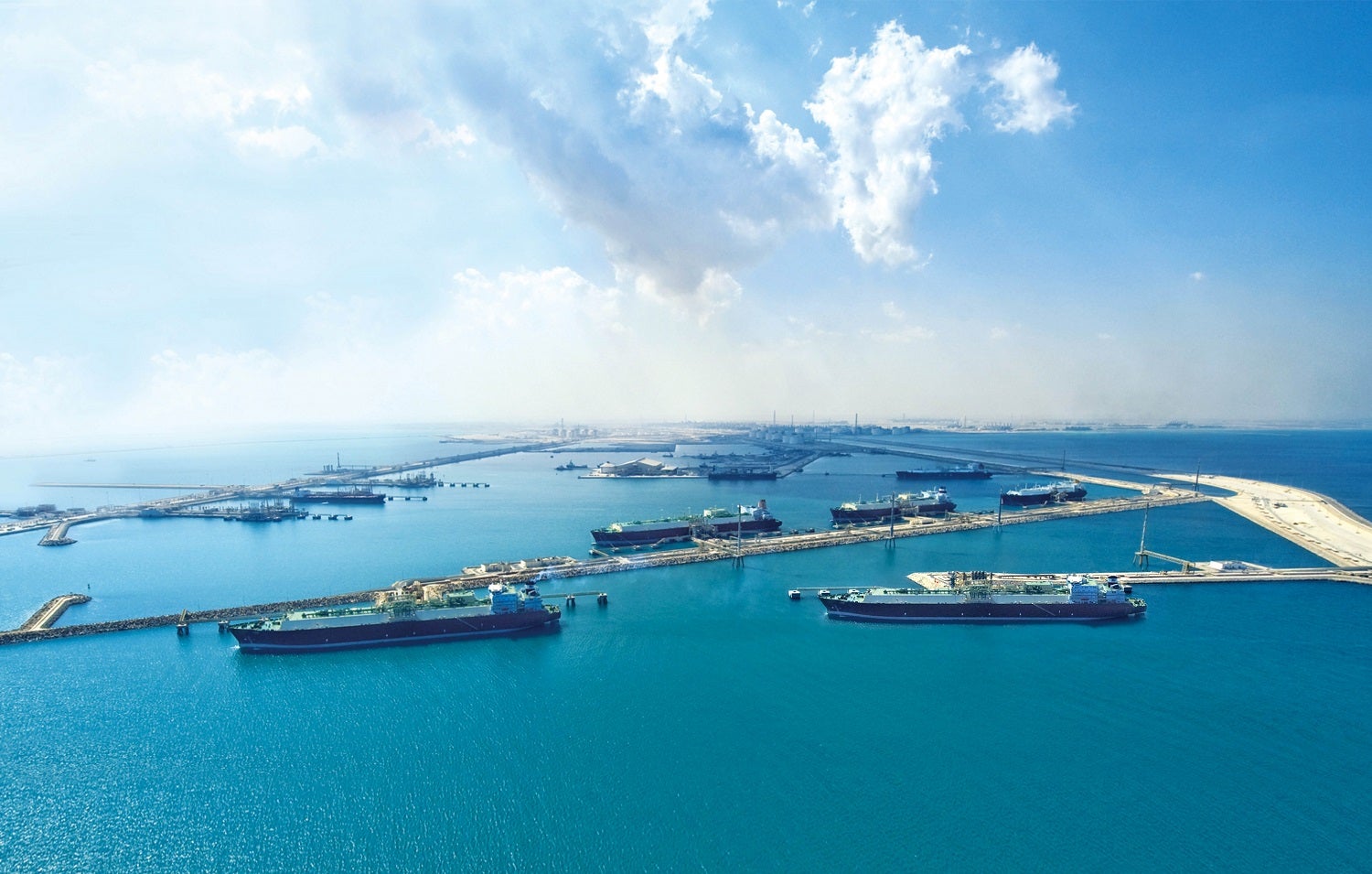
Oil prices rose above $100 a barrel on 9 September for the first time since July as the US-Iran conflict escalated and Iran-backed Houthi forces attacked Saudi energy infrastructure.
Brent crude futures reached $100.95 a barrel, while US benchmark West Texas Intermediate (WTI) rose to $95.60. Brent had last traded above $100 on 24 July.
The latest escalation has heightened concerns about oil supplies from the region, with shipping through both the Strait of Hormuz and the Red Sea facing disruption.
Flows through the Strait of Hormuz had fallen below 2 million barrels a day (b/d) from about 8-9 million b/d before the latest escalation, according to Rystad Energy.
At the same time, Houthi attacks on Saudi Arabia threaten another important route for oil exports, with the group targeting energy infrastructure and shipping in and around the Red Sea.
US strikes on Iranian tankers
US forces destroyed five Iranian crude oil carriers on 8 September after Iran’s Islamic Revolutionary Guard Corps (IRGC) targeted a US Navy warship with ballistic missiles.
The US Central Command (Centcom) said the warship successfully evaded two Iranian attacks and that no US personnel were harmed.
Four of the Iranian vessels – Kaviz, Charminar, Horizon 1 and Riesco – were struck in the Gulf of Oman, while the Derya was attacked near Kharg Island, Iran’s main crude export hub.
The M/T Riesco subsequently sank in the Gulf of Oman, according to Centcom.
Iran responded by launching ballistic missiles towards Jordan. Jordan’s armed forces said 18 of 20 missiles were intercepted, with the remaining two falling in unpopulated areas.
Iran’s IRGC also said it had attacked two US naval vessels, eight oil tankers and 10 other vessels in the Gulf, although it did not identify the vessels or provide evidence of the attacks.
The latest exchanges mark a further escalation in the US-Iran conflict, which began on 28 February.
Houthi attacks raise supply concerns
The conflict has also widened into a renewed confrontation between Saudi Arabia and Yemen’s Iran-backed Houthi movement.
On 8 September, Saudi authorities said Houthi attacks had targeted civilian and economic sites in Abha, Khamis Mushait, Jazan and Najran in the south of the kingdom, injuring 73 people.
Saudi Arabia’s Ministry of Energy said several energy sector facilities and installations had been targeted, causing fires and forcing a temporary halt to some operations.
The Houthis said their attacks were in response to Saudi military action in Yemen, including what they described as attacks on Houthi positions and a Saudi blockade of ports and airports.
Riyadh condemns attacks
Saudi Arabia has strongly condemned the Houthi attacks and warned that it would take measures to defend its territory and national assets.
In a statement on 8 September, the Ministry of Energy said authorities were working to address the impact of the attacks and ensure the safety of facilities and personnel while maintaining operations in accordance with approved plans.
Saudi Arabia’s Ministry of Foreign Affairs also condemned the attacks and said the kingdom had the right to take measures to defend its sovereignty and protect its citizens, residents and national assets.
https://image.digitalinsightresearch.in/uploads/NewsArticle/19505512/main0138.jpg -
What actually slows a gigaproject down
9 September 2026
Ask anyone delivering a major programme in the GCC what causes delays and sequencing will come up early. Utilities go in too late. Approvals lag behind construction. Stations, depots and access roads are procured as if they belong to different projects rather than one system.
“None of this is new. The industry has understood these risks for years,” says Alan Caldwell, managing director for transport and infrastructure at WSP Middle East.
For Caldwell, that is what makes the pattern worth interrogating rather than simply restating.
“The more important question is why the same issues around interfaces, approvals, stakeholder alignment and delivery sequencing continue to slow major programmes when the risks are already so well understood,” he says.
The answer, he argues, is not that these programmes are too big or too technically complex. What breaks a schedule is a wider system delivered as a set of disconnected parts; an approval sitting with an authority team with no visibility of the construction sequence downstream; or a station package proceeding without the utilities diversion it depends on.
“Infrastructure programmes do not struggle because a railway is too large or a highway network is too complex,” Caldwell says. “They encounter difficulties when interconnected elements are delivered in the wrong order.”
Sequencing decisions are rarely purely technical either, he adds. They are commercial – shaped by which assets need to unlock value first, which phases are tied to funding, and where sales or investment assumptions depend on infrastructure landing in a particular order.
Approvals sit at the centre of that logic. On many programmes, they become one of the biggest sources of lost time – not because the requirements are unreasonable, but because approvals are not planned, evidenced or owned as part of the delivery logic from day one.
Caldwell has seen the same pattern across three decades of Gulf delivery, from early work on Palm Jumeirah to today’s region-wide transport programmes.
“The decisive factor has often been the same: whether interfaces, approvals, responsibilities and delivery sequencing are aligned early enough to prevent complexity becoming delay.”
Integration needs to be well understood
“Most programme teams in the region would say they understand the need for integration,” Caldwell says. Fewer are structured to deliver it. “The harder task is turning that understanding into the way projects are actually set up and managed,” he argues.
Riyadh Metro is the reference point he returns to, precisely because engineering complexity was not the deciding factor in its delivery.
Coordinating a city-scale transport system meant aligning design, construction, systems, utilities and stakeholder interfaces across every delivery vertical.
“The lesson for the region today is clear,” Caldwell says. “Ambitious programmes need a delivery model that gives every contributor a shared view of progress, risk, decision-making and the business case driving programme priorities.”
That shared view, he argues, will be what the next phase of Gulf delivery is judged on.
Whether clients, consultants, contractors, operators and approval authorities can work to a single delivery logic will be key.
“This requires more than coordination meetings. It requires integrated ways of working, shared common data environments and governance structures that make risks, decisions and dependencies visible before they become delays,” he says.
From reporting progress to managing risk before it lands
Digital tools have a role here, Caldwell says, but not as a headline in themselves.
Digital twins, programme visualisation and data-led modelling matter only if they help teams identify and address problems before they affect the wider programme.
“The real value is not technology for its own sake,” he says. “It is the ability to see, in one place, where approvals are outstanding, where interfaces are unresolved, where programme dates are slipping, where clashes are emerging and where decisions need to be escalated."
None of it works without governance behind it, he cautions. “A dashboard will not resolve a delayed approval if nobody knows who owns the decision, when it needs to be made, or how it should be escalated.”
Data only has value if the processes and responsibilities around it are clear, which is why Caldwell frames the shift the region needs not as digitisation, but as a move “from programme management as a discipline focused mainly on reporting and coordination, and towards project and programme intelligence”.
With many of the region’s programmes running for a decade or more, he adds, delivery models also need to flex as funding assumptions, user needs and policy priorities change along the way.
“The ambition behind the Gulf’s transformation programmes is not in question,” Caldwell says.
What will determine how much of it is realised on time is whether delivery models evolve at the same pace: earlier integration, clearer approval pathways, shared data environments, and every contributor working to a delivery logic that connects technical sequencing with the funding and operational case behind it.
“The region’s next challenge is not imagining bigger projects,” he says. “It is changing the way they are delivered, operated and adapted over time.”
https://image.digitalinsightresearch.in/uploads/NewsArticle/19502016/main.gif -
Qatari firm wins $221m Qiddiya stadium MEP deal
9 September 2026
Register for MEED’s 14-day trial access
Qatari contractor Elegancia MEP, part of Estithmar Holding, has won a SR829m ($221m) mechanical package contract for the Prince Mohammed Bin Salman Stadium in Qiddiya, Saudi Arabia.
The contract covers full mechanical, electrical and plumbing (MEP) works for the stadium, and is Elegancia MEP’s largest award in Saudi Arabia to date.
The 45,000-seat stadium will feature a fully combined retractable pitch, roof and LED wall.
The stadium’s main construction works are being undertaken by a joint venture of Spanish firm FCC Construction and local firm Nesma & Partners.
Saudi gigaproject developer Qiddiya Investment Company awarded an estimated SR15bn ($4bn) deal to build the stadium in October 2024, as MEED exclusively reported.
The contract covered the construction of a multipurpose stadium on top of the 200-metre-high Tuwaiq cliff in the new sports and entertainment district of Qiddiya City.
Once completed, the stadium will be the home ground for Saudi Pro League football clubs Al-Nassr and Al-Hilal.
US-based architect Populous is the project consultant.
The stadium is one of the venues for the kingdom’s 2034 Fifa World Cup bid and will host events such as the Saudi King Cup, the Asian Cup and the 2034 Asian Games.
https://image.digitalinsightresearch.in/uploads/NewsArticle/19501493/main.jpg