
Contractors confirm Adnoc contracts for Hail and Ghasha
18 January 2023
Contractors have confirmed signing a pre-construction services agreement (PCSA) with Abu Dhabi National Oil Company (Adnoc) for the onshore scope of the Hail and Ghasha offshore sour gas field development.
France-headquartered Technip Energies, South Korean contractor Samsung Engineering and Italy’s Tecnimont, which have formed a consortium for the Hail and Ghasha onshore package, have issued statements about being awarded the PCSA. The contractors revealed the value of the contract to be approximately $80m.
The onshore work on the Hail and Ghasha scheme involves the construction of a gas process plant, pipeline network and new gas gathering units.
As part of the PCSA, the contractors are required to perform initial detailed engineering and procurement services of critical long lead items.
“The PCSA scope of work also includes the preparation of an open book cost estimate for the project delivery of the onshore scope, which will be considered as part of the client’s [Adnoc] final investment decision making process,” they said in their statements.
Under the terms of the other PCSA, Italian contractor Saipem, Abu Dhabi’s National Petroleum Construction Company (NPCC) and state-owned China Petroleum Engineering & Construction Company (CPECC) will work together on the offshore package, which covers the installation of offshore platforms, gas compression facilities and more than 400 kilometres of subsea pipelines.
The offshore contractors have confirmed the value of their PCSA with Adnoc to be $60m.
Project progress
MEED in September last year reported on contractors submitting proposals for the detailed engineering work on the Hail and Ghasha megaproject as part of an early engagement process.
The PCSAs Adnoc has signed with the two consortiums are understood to be based on the proposals received last year.
The early engagement process with contractors is expected to precede the start of the full engineering, procurement and construction (EPC) execution phase of the strategic scheme.
US engineering firm Bechtel completed the project’s original front-end engineering and design (feed) in 2019, with tenders for what were four EPC packages issued soon after.
However, following the submission of commercial bids in early 2021, Adnoc opted to make revisions to the feed as part of an optimisation process started by Technip Energies in November 2021.
The revised feed aimed to reduce the scheme’s overall capital expenditure, which was previously estimated to be as high as $15bn.
As part of the optimisation process, the four original EPC packages were consolidated into two integrated offshore and onshore packages, which are now estimated to be as high as $5bn and $5.5bn, respectively, as per sources and based on the previous version of the project.
Following the award of the PCSAs, the consortiums will get to work on the detailed design aspect of their respective packages, with the aim of putting together a final offer for the main EPC work on Hail and Ghasha.
The timing of the award of the final EPC contracts is unknown at this point, but considering the fast-track execution schedule Adnoc is known to have planned for the Hail and Ghasha project, it could be expected to take place before the end of this year.
Hail and Ghasha fields
The Hail and Ghasha fields, along with the Hair Dalma, Satah, Bu Haseer, Nasr, Sarb, Shuwaihat and Mubarraz fields, are located in Abu Dhabi’s offshore Ghasha concession.
Adnoc holds the majority 55 per cent stake in the Ghasha concession. The other stakeholders are Italian energy major Eni with 25 per cent; Germany’s Wintershall Dea with 10 per cent; and Austria’s OMV and Russia’s Lukoil, each with 5 per cent.
Adnoc plans to produce more than 1.5 billion cubic feet a day of sour gas from the Ghasha concession by the middle of this decade. This target is aligned with the company’s broader goal of achieving gas self-sufficiency for the UAE by 2030.
In November 2021, Adnoc and its partners in the Ghasha concession awarded two EPC contracts for the Dalma offshore sour gas development project. Abu Dhabi’s NPCC and Spain-headquartered Tecnicas Reunidas won contracts worth $1.46bn for executing offshore and onshore EPC works on the Dalma project, respectively.
Four artificial islands have already been completed in the Ghasha concession, and development drilling is under way.
In addition, Adnoc awarded two contracts totalling $2bn to its subsidiary Adnoc Drilling in July last year for the Hail and Ghasha offshore sour gas field development project.
The awards comprise a $1.3bn contract for integrated drilling services and fluids, and a $711m contract for the provision of four island drilling units. Their duration is 10 years.
Adnoc also awarded a third contract, valued at $681m, to another subsidiary company, Adnoc Logistics & Services, to provide offshore logistics and marine support services for the planned Hail and Ghasha development.


Register for MEED's guest program now to access this article.
Exclusive from Meed
-
 Read the October 2026 MEED Business Review
30 September 2026
-
 Aramco receives interest for major gas processing plant
30 September 2026
-
 Libya refinery expected to be worth more than $600m
30 September 2026
-
 Joint venture wins $230m Ras El-Hekma buildings
30 September 2026
-
 Neom tenders Oxagon freight rail design
30 September 2026
All of this is only 1% of what MEED.com has to offer
Subscribe now and unlock all the 153,671 articles on MEED.com
- All the latest news, data, and market intelligence across MENA at your fingerprints
- First-hand updates and inside information on projects, clients and competitors that matter to you
- 20 years' archive of information, data, and news for you to access at your convenience
- Strategize to succeed and minimise risks with timely analysis of current and future market trends

Related Articles
-
Read the October 2026 MEED Business Review
30 September 2026
Download / Subscribe / 14-day trial access For all the talk of cancellations and cutbacks, Neom is still building – and its biggest completed project to date offers a clue to where the $500bn gigaproject is heading. Our October Agenda feature examines how Oxagon is moving to the centre of Neom’s strategy, as investment shifts towards projects with the potential to generate tangible commercial returns, from green hydrogen and ports to AI data centres and logistics infrastructure.
 Read the full analysis in the October issue of MEED Business Review.
As Neom reshapes its priorities, Saudi Arabia’s wider project market continues to show resilience. Contract awards have reached $68bn in 2026, despite regional conflict and economic uncertainty, with activity spanning energy, infrastructure, power and the future economy.
But with $91.5bn of projects completed this year, new awards will be crucial to maintaining momentum into 2027.
This edition also includes MEED’s 2026 power developer ranking, revealing the companies driving the region’s rapidly expanding power market.
The issue also explores key trends shaping the region, from AI’s growing demands on grid capacity and the implications of ICE Futures Abu Dhabi’s wind-down for Gulf commodity markets, to how the Hormuz crisis is redirecting oil companies’ focus to North Africa. Our Leadership feature asks whether the future city really needs to hang above the ground.
We hope our valued subscribers enjoy the October 2026 issue of MEED Business Review.

Must-read sections in the October 2026 issue of MEED Business Review include:
 > AGENDA: Oxagon takes centre stage at Neom
INDUSTRY REPORT:
MEED’s 2026 power developer ranking
> Regional power market diversifies
> Battery storage broadens IPP market> POWER: AI is creating a grid capacity problem
> LEGAL: What IFAD’s wind-down means for Gulf commodity markets
> OIL: Oil companies focus on North Africa amid Hormuz crisis
> LEADERSHIP: The future city does not need to hang above the ground
> SAUDI ARABIA MARKET FOCUS:
> COMMENT: Saudi projects hold steady
> GOVERNMENT: Riyadh looks to reset its regional defence outlook
> ECONOMY: Conflict bolsters case for Saudi economic diversification
> BANKING: Saudi lenders readjust to lower lending and deposit climate
> UPSTREAM: Aramco upstream spending gathers pace
> DOWNSTREAM: Sabic steps up Saudi petchems investment
> POWER: Saudi Arabia’s power award activity slows
> WATER: Saudi water sector hits sharp slowdown
> CONSTRUCTION: Saudi construction defies the headwinds
> TRANSPORT: Saudi infrastructure pushes forward amid conflict
> DATABANK: Saudi data indicates project spending shift> MEED COMMENTS:
> Dubai Inc steps in as developers turn cautious
> Saudi Arabia redirects towards AI
> Kuwait plans biggest oil and gas contract award in 10 years
> Saudi Arabia battery storage awards provide fresh lift> GULF PROJECTS INDEX: Saudi Arabia and UAE lead Gulf index gains
> AUGUST 2026 CONTRACTS: Middle East contract awards
> ECONOMIC DATA: Data drives regional projects
> OPINION: The boomers’ last act
> BUSINESS OUTLOOK: Finance, oil and gas, construction, power and water contracts
To see previous issues of MEED Business Review, please click herehttps://image.digitalinsightresearch.in/uploads/NewsArticle/20134595/main.gif -
Aramco receives interest for major gas processing plant
30 September 2026
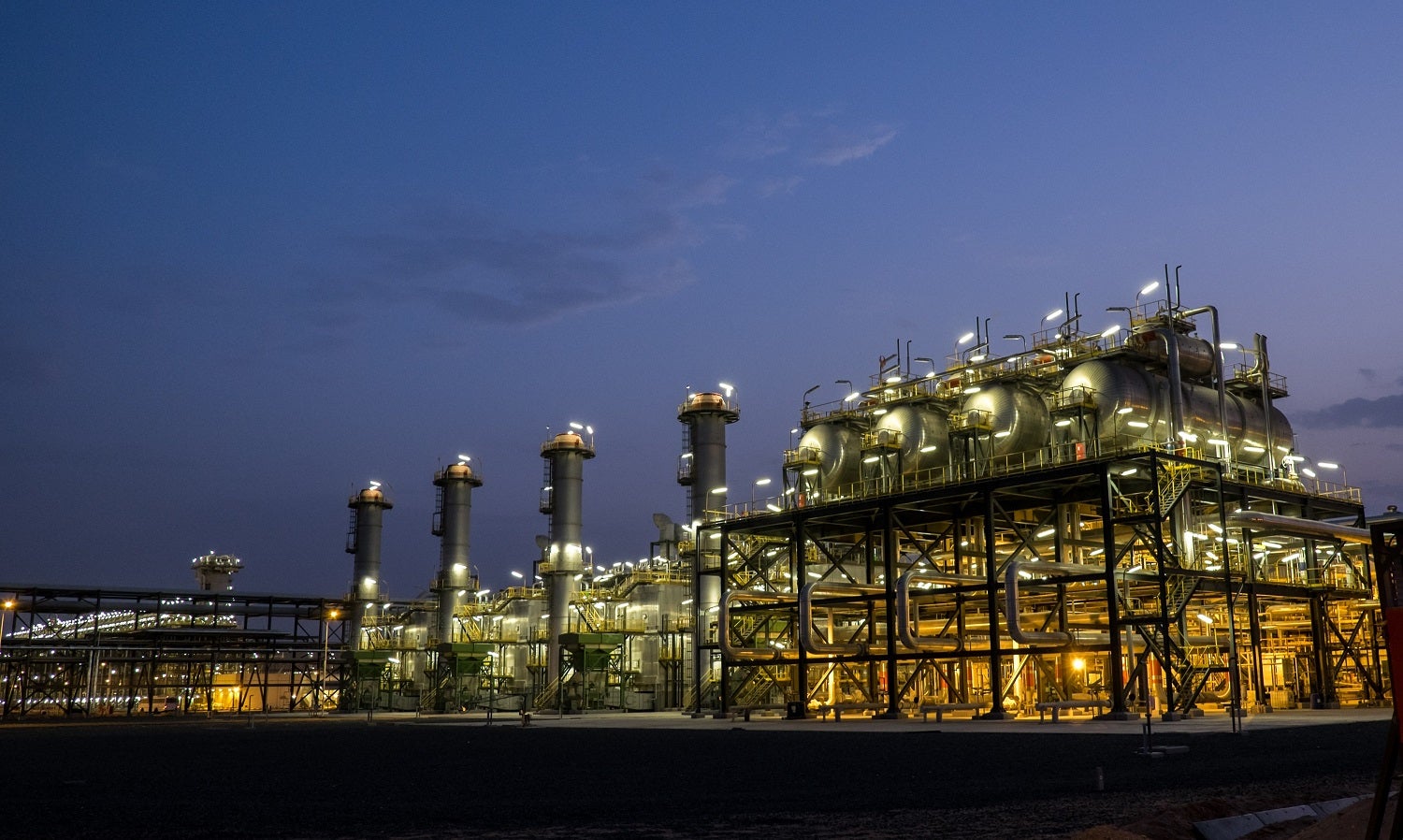
Saudi Aramco has received expressions of interest from contractors to participate in the main tendering exercise for a project to expand the Alhada gas processing plant, located about 85 kilometres northwest of Jubail in Saudi Arabia’s Eastern Province.
The Alhada gas processing plant expansion is critical to Aramco’s goal of increasing gas production capacity by 80% by 2030 from a 2021 baseline.
Aramco issued a solicitation of interest document for the main tendering exercise in early September, with contractors submitting responses by 17 September, sources told MEED.
The engineering, procurement and construction (EPC) scope of work has been divided into three main packages, sources said.
The first EPC package relates to the main gas treatment facilities, primarily three processing trains, along with:
- Three acid gas removal units
- Triethylene glycol (TEG) dehydration unit
- Two high-pressure and two low-pressure flares
- Two flare gas recovery units
- Two T&l flares
- Two burn pits
- A digital twin
The acid gas removal units will treat sour gas by removing hydrogen sulphide and carbon dioxide to produce sales gas, as well as acid-gas feed for the downstream acid gas enrichment unit and sulphur recovery unit.
The acid gas removal units will also process gas from the flare gas recovery units through a dedicated amine contactor to meet specifications for use as fuel gas. The TEG dehydration unit will then remove water from the treated gas to meet sales-gas specifications.
The project’s second EPC package covers the sulphur recovery units. The third package involves inlet channels for monoethylene glycol, as well as common utilities and supporting structures.
ALSO READ: Contractors express interest in sixth Jafurah expansion phase
https://image.digitalinsightresearch.in/uploads/NewsArticle/20127671/main4900.jpg -
Libya refinery expected to be worth more than $600m
30 September 2026
The main contract for Libya’s planned South Refinery project is expected to be worth more than $600m, according to industry sources.
The project, located in Ubari in southern Libya, has gained momentum over the past year. The main contract is expected to be procured under an engineering, procurement and construction (EPC) model.
In March, US-based engineering company KBR was awarded a contract by Zallaf Exploration, Production & Refining of Oil & Gas Company to provide project management and technical services for the project.
Under the terms of the contract, KBR will provide contract management, project management and supporting technical services throughout the project’s EPC phases.
The EPC work is expected to take 50 months, and the facility will be designed to process 30,000 barrels a day (b/d) of crude oil.
The refinery is expected to produce:
- Propane and butane for domestic and industrial uses
- Gasoline
- Kerosene
- Diesel
- Fuel oil
In March, KBR said that the project was aligned with its “long-standing commitment to advancing vital oil and gas infrastructure in Libya”.
Libya currently operates five main refineries with a combined nameplate capacity of 380,000 b/d, but actual throughput is closer to 180,000 b/d due to poor maintenance and damage from military clashes.
In addition to the South Refinery project, Libya also plans to upgrade the Zawiya refinery and carry out projects at the Serir, Brega, Tobruk and Ras Lanuf refineries.
https://image.digitalinsightresearch.in/uploads/NewsArticle/20124329/main.jpg -
Joint venture wins $230m Ras El-Hekma buildings
30 September 2026
A joint venture of UK-based Innovo Build and Egypt’s Redcon Construction has won a contract worth about E£12bn ($230m) to carry out infrastructure and construction works for the DP03 East package of the Wadi Yemm development at Ras El-Hekma on Egypt’s North Coast.
Wadi Yemm is being developed by the UAE’s Modon Development as the first phase of its Ras El-Hekma masterplan, which will comprise 17 planned districts.
DP03 East has a built-up area of 323,000 square metres and is scheduled for completion within 21 months.
The scope of work includes more than 660 residential units – comprising standalone villas and townhouses – as well as public service areas, lakes, a commercial mall, landscaping and roadworks.
The delivery of units at Wadi Yemm is expected to begin in the third quarter of 2029.
Ras El-Hekma is located on a spur of land on Egypt’s northern Mediterranean coast, about 240 kilometres west of Alexandria.
Abu Dhabi-based holding company ADQ appointed Modon Holding as master developer for the Ras El-Hekma project in 2024. Modon will oversee the overall development, which covers more than 170 million square metres (sq m).
Modon will develop the first phase, covering 50 million sq m. The remaining 120 million sq m will be developed in partnership with private developers, under the supervision of the recently established ADQ subsidiary Ras El-Hekma Urban Development Project Company and Modon.
https://image.digitalinsightresearch.in/uploads/NewsArticle/20123189/main.jpg -
 Hassan Allam wins $1bn Cairo mixed-use project deal
30 September 2026
Register for MEED’s 14-day trial access
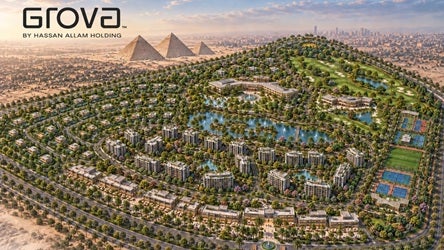
Grova Developments, the real estate development arm of Egypt’s Hassan Allam Holding, has awarded Hassan Allam Construction a $1bn contract to deliver the Grova Westfields project in West Cairo.
Hassan Allam Construction’s scope of work includes a 150-key five-star hotel, branded residences, luxury villas and apartments, as well as infrastructure and landscaping works.
The project spans about 1.2 million square metres and is being developed in partnership with the Egyptian Kuwaiti Company for Real Estate Development.
Broadway Malyan has been appointed to lead the master planning and architectural design.
In October last year, Hassan Allam Construction announced that it had won a $550m contract to build another mixed-use development spanning more than 128 hectares in New Cairo.
That development comprises villas, townhouses, commercial and office space, mixed-use buildings, infrastructure and other associated facilities.
Hassan Allam Properties is co-developing the project with Grova Developments.
https://image.digitalinsightresearch.in/uploads/NewsArticle/20123048/main.jpeg