
Aramco Stadium races towards completion
12 November 2025

Register for MEED’s 14-day trial access
The Aramco Stadium in Khobar is moving forward at an impressive pace as the fast-track project races towards completion in 2026.
The 47,000-seat stadium will be the new home for the Aramco-owned Al-Qadsiah Club and a key venue for the 2027 AFC Asian Cup and the 2034 Fifa World Cup.
The project’s progress stems from detailed planning and an accelerated delivery strategy. The project was conceived in May 2023, with the design process, managed by Aramco, commencing shortly thereafter.
“We completed the design within six months,” said Mohammed Subhi, the Aramco Stadium’s project manager.

The project advanced quickly due to thorough planning and a fast-track delivery approach. Initiated in May 2023, the design phase—overseen by Aramco—was completed within six months
An early engagement approach with the main contractor – a joint venture of Besix and Al-Bawani – was instrumental in maintaining momentum. This partnership began early in 2024, allowing for collaborative input on critical construction elements.
This upfront collaboration minimised pre-construction time, ensuring a rapid transition to site work.
Engineering challenges
 The stadium’s architectural design, inspired by the natural whirlpools of the Gulf and featuring interwoven transparent sails, presents significant engineering challenges, particularly in the structural steel and façade work. For spectator comfort, the stadium is equipped with full cooling systems and designed to the highest international standards.
Logistics management is another crucial facet of the project, which is located in central Khobar. With thousands of workers on site, the movement of materials is tightly controlled to minimise community disruption.
“We control how many trucks can enter the site and at what time. For example, we cannot cast concrete during the day. It has to be after 6pm, up until the early morning,” said Subhi.
A key priority on site is health and safety, an area where the organisation’s legacy from its oil and gas operations is clearly visible. Subhi explains that the principle of health and safety is part of the company’s DNA and is embodied in the deployment of advanced technology and rigorous standards, which have collectively resulted in over 10 million safe working hours to date.
The project employs a sophisticated Smart Safety Command Centre (SCC), which utilises artificial intelligence-based monitoring and 24/7 surveillance. One key feature of the centre is the crane collision prevention system – a key technological advancement in heavy machinery coordination and a first for the region.
“We have tower cranes and crawler cranes talking to each other. The anti-collision system means cranes talk to each other without human interference, and they automatically shut down when they are too close to each other,” said Subhi.

A key technological advancement is the crane collision prevention system, which means the cranes talk to each other and shut down if they become too close
In addition to ground operations, the project is leveraging aerial technology to mitigate risk in high-altitude work.
“We have used drones for the inspection of the cranes and inspection of the steel structure itself to minimise the risk of working at height,” said Subhi.

Drones have been adopted on-site to mitigate the risk of working at height
Worker welfare
The project’s commitment extends beyond mere regulatory compliance to comprehensive worker welfare, establishing a high standard for construction sites in the region.
With current staffing reaching approximately 11,000 direct and indirect workers, welfare provisions are a core priority, linking directly back to Aramco’s corporate standards.
In a region where extreme heat is a constant challenge, the project has implemented advanced heat stress management protocols. This includes the installation of heat sensors with alarm systems, mandatory work stoppage during peak heat hours and regular briefings on heat exhaustion symptoms. Fully air-conditioned rest areas are provided for breaks and meals.
Aramco is also committed to developing national talent. A significant proportion of the staff are young, and about 20% of the team are women.
The relationship with the joint-venture contractor is defined by collaboration rather than traditional client-contractor hierarchy. “We are one team, working together,” said Subhi. This approach has fostered a cooperative environment that is accelerating the on-site progress towards the 2026 completion goal.

Register for MEED's guest program now to access this article.
Exclusive from Meed
-
 Dubai evaluates Tasreef drainage bids
24 November 2026
-
 Muscat financial centre opens for business
24 November 2026
-
 Mecca university tenders water infrastructure projects
24 November 2026
-
 Oman’s OQT formalises Pakistan fuel supply agreement
24 November 2026
-
 Contractors bid for Aramco-backed logistics hub
24 November 2026
All of this is only 1% of what MEED.com has to offer
Subscribe now and unlock all the 153,671 articles on MEED.com
- All the latest news, data, and market intelligence across MENA at your fingerprints
- First-hand updates and inside information on projects, clients and competitors that matter to you
- 20 years' archive of information, data, and news for you to access at your convenience
- Strategize to succeed and minimise risks with timely analysis of current and future market trends
Related Articles
-
Dubai evaluates Tasreef drainage bids
24 November 2026
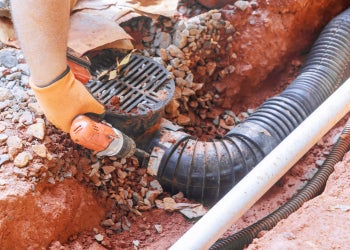
Up to eight stormwater and drainage projects under the next phase of Dubai Municipality’s AED30bn ($8.2bn) Tasreef programme have moved into the bid evaluation stage in recent weeks as procurement activity continues to drive the wider water infrastructure sector.
The projects cover major stormwater drainage networks, pumping stations, storage tanks and sewerage infrastructure. They include schemes serving Dubai South, Abu Hail, the area surrounding Dubai International airport, Dubailand and Al-Awir.
According to regional project tracker MEED Projects, the eight tenders have an estimated combined value of at least $800m. The tenders cover the following projects:
- DS-316-C1: Drainage networks serving Hind 4
- TF-24-C1: Connections to the stormwater network in Dubailand
- TF-25-C1: Stormwater trunk line serving Hind 3, Hind 4 and Umm Al-Daman
- TF-07-C1: Strategic stormwater drainage network between Sheikh Mohammed bin Zayed Road and Emirates Road
- TF-21-C1: Stormwater system upgrade and rehabilitation in Abu Hail
- TF-30-C1: Stormwater storage tanks serving the Dubai International airport area
- TF-06-C2: Stormwater drainage system connecting Al-Maktoum International airport and Dubai South
- DS317-C1: Sewerage and stormwater infrastructure in New Al-Awir 1st
According to sources, local firms Nael Construction & Contracting, Al-Nasr Contracting and Arifco Building Contracting are among those that submitted bids for the Dubailand stormwater network project (TF-24-C1) in October. The bidders for this tender do not include the local DeTech Contracting, which won the estimated $350m engineering, procurement and construction contract for a package on Al-Wasl Road (TF-15-C1), earlier this year.
On 29 October, DeTech, Mohammed Abdulmohsin Al-Kharafi & Sons and Green Oasis General Contracting Company were among those that submitted bids for TF-07-C1, sources told MEED.
It is undersood that both DeTech and Kharafi also submitted offers on 12 November for a contract to upgrade and rehabilitate the stormwater system in Abu Hail (TF-21-C1). The Abu Hail project comprises a stormwater pumping station with a total discharge capacity of 26 cubic metres a second. The wider project involves a major stormwater gravity drainage network, including large-diameter pipelines, and is estimated to cost up to $163m.
Meanwhile, the the municipality is preparing to receive bids for a further scheme (TF-06-C1) on 26 November, involving the construction of a stormwater pond connecting Al-Maktoum airport and Dubai South. Al-Nasr Contracting and Green Oasis are among those preparing to bid, sources said.
In October, the municipality confirmed it had awarded four contracts worth AED3bn ($817m) to expand the emirate’s stormwater drainage network by about 100 square kilometres under phase three of the Tasreef programme.
The projects will cover Jumeirah, Umm Suqeim, Al-Quoz, Al-Barsha, Al-Wasl and Al-Marmoom. The works include constructing and extending main stormwater drainage lines with diameters of up to 3 metres.
The Tasreef programme aims to increase the emirate’s stormwater drainage capacity by 700% and reduce costs associated with pumping stations, network operations and maintenance by 20%.
https://image.digitalinsightresearch.in/uploads/NewsArticle/21756439/main.jpg -
Muscat financial centre opens for business
24 November 2026
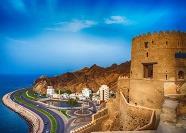
The International Financial Centre of Oman (IFC Oman) has opened its headquarters at Al-Mouj Business Park in Muscat and registered its first 13 companies.
Sayyid Theyazin bin Haitham Al-Said, Oman's Deputy Prime Minister for Economic Affairs and chairman of IFC Oman, opened the headquarters on 23 November. The ceremony also marked the official start of company registration, which allows local and international businesses to set up within the centre's jurisdiction.
The first 13 companies received their certificates of incorporation at the event. The centre was set up by Royal Decree No. 8/2026 in January, so the move from setting up a legal framework to taking in businesses has taken 10 months.
Registration follows royal decrees that put in place IFC Oman's operating law, regulatory law and courts law. Five core regulations sit alongside them and cover operations, companies, partnerships, foundations and interpretation. Together they set the rules for setting up and running a business in the centre, including corporate governance, regulatory obligations and dispute resolution.
Businesses can apply through a new digital registry platform. A separate regulatory framework for financial services is still being drafted, and licensing for those activities is expected to start in early 2027.
Finance Minister Sultan bin Salim Al-Habsi, who is vice-chairman of IFC Oman, said the decision by 13 companies to join from the start "reflects the strength of the business and investment environment the centre offers".
"We will maintain this momentum as we complete the regulatory framework ahead of the start of financial services licensing early next year," he said.
Sayyid Theyazin said the framework "lays the foundation for a stable and competitive business environment" and will strengthen Oman's appeal to international investors and financial institutions.
He also chaired a board meeting. It reviewed progress on finishing the centre's legal, regulatory and operational infrastructure and set priorities for attracting companies and investment.
IFC Oman aims to connect the national economy more closely to international capital and to support growth in financial and professional services, in line with the Oman Vision 2040 economic diversification programme.
The centre goes up against established regional financial hubs, including Dubai International Financial Centre, Abu Dhabi Global Market and Qatar Financial Centre.
https://image.digitalinsightresearch.in/uploads/NewsArticle/21756636/main5305.gif -
Mecca university tenders water infrastructure projects
24 November 2026
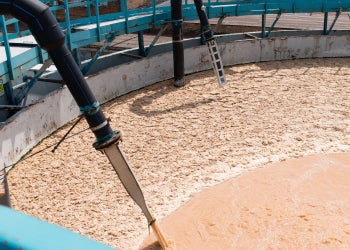
Mecca-based Umm Al-Qura University has issued two tenders for wastewater and water storage infrastructure at its student campus in the Al-Abidiyah district.
The first tender covers the second phase of the university’s main water storage scheme. The project involves building seven tanks with a combined capacity of 14,700 cubic metres.
The scope includes three ground-level tanks with a total capacity of 7,500 cubic metres and four elevated tanks with a combined capacity of 7,200 cubic metres.
It also includes a 2.1-kilometre backup water supply pipeline with a diameter of 400 millimetres, as well as pumping stations, inlet and outlet pipework, valves and water control systems.
The second tender covers the construction of a wastewater treatment plant with a capacity of 4,000 cubic metres a day at the university’s student campus. The contract duration is listed as two years.
The projects will expand the campus’s water infrastructure, adding storage capacity and wastewater treatment facilities to support its operational requirements.
Both tenders were issued in November. Bids for the water storage tanks and wastewater plant are due by 14 December and 13 December, respectively.
https://image.digitalinsightresearch.in/uploads/NewsArticle/21752745/main.jpg -
Oman’s OQT formalises Pakistan fuel supply agreement
24 November 2026
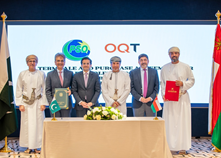
Oman's state-owned commodity trader OQT has signed a petroleum products supply agreement with Pakistan State Oil (PSO), the South Asian country's national oil marketing company.
The deal was signed on 8 October and formally marked at a ceremony in Muscat on 22 November. It was made under the Oman-Pakistan intergovernmental framework and gives OQT a structured arrangement for supplying petroleum products to PSO.
The two companies have yet to disclose the agreement's value, volumes or duration.
The agreement builds on an existing trading relationship. OQT says it has supplied more than 1 million tonnes of gasoline to PSO in 2026.
OQT also supplies Pakistan's liquefied petroleum gas (LPG) market, selling to both state-owned and private buyers. The company expects its LPG deliveries to Pakistan to pass 120,000 tonnes by the end of the year.
"This agreement gives us a stronger framework to build on that relationship, combining OQT's international trading capabilities with PSO's position in the Pakistani market," said OQT chief executive Wail Al-Jamali.
PSO chief executive Jawwad Ahmed Cheema said the partnership is now "formal, government-backed and built for the long term under the Oman-Pakistan Intergovernmental Agreement".
"For PSO, this is about more than supply. It is about ensuring that Pakistan has the fuel it needs, when it needs it, on terms that protect our national interest," he said.
Oman's Energy & Minerals Minister Salim Al-Aufi and Pakistan's Petroleum Minister Ali Pervaiz Malik attended the ceremony, along with Mulham Al-Jarf, deputy president of investment at the Oman Investment Authority, which owns OQT.
The companies said the agreement will support reliable supply at a time of continued volatility in regional energy markets. They will now focus on implementation and deliveries, and will continue talks on wider petroleum and energy cooperation.
OQT trades crude oil, refined products, petrochemicals, LPG, liquefied natural gas, fertilisers and carbon-related products, and is expanding into metals. It has offices in Muscat, Dubai, London, Rotterdam, Singapore, Houston and Shanghai.
https://image.digitalinsightresearch.in/uploads/NewsArticle/21750539/main1214.jpeg -
Contractors bid for Aramco-backed logistics hub
24 November 2026
Asmo, the logistics joint venture of Saudi Aramco and DHL Supply Chain, received proposals from contractors on 15 November for a contract to expand the logistics complex at King Salman Energy Park (Spark) in Saudi Arabia’s Eastern Province.
The logistics hub will add over 124,000 square metres (sq m) at Spark.
Al-Khobar-based engineering firm House of Consulting Office is the project consultant.
The tender for the expansion works comes after Asmo awarded an estimated SR820m ($218m) contract to build the logistics complex’s first phase in May this year.
The overall project will feature a 43,000 sq m, temperature-controlled Grade A warehouse; more than 3,000 sq m of offices and staff amenities; 5,300 sq m dedicated to chemicals storage; and an open yard covering about 1.2 million sq m.
Asmo signed an agreement with Bahrain‑headquartered Arcapita Group Holdings in February to deliver the project at Spark.
Planned for large-scale industrial use, the site is expected to incorporate advanced warehouse and building management systems, end-to-end digital connectivity, automation and robotics.
It will also be developed in line with internationally recognised sustainability standards, featuring solar photovoltaic readiness, electric-vehicle charging infrastructure and a target of Leed Gold certification.
The development aims to support the next stage of Saudi Arabia’s logistics and supply chain expansion.
Under the deal structure, Arcapita will provide funding and retain ownership of the asset, while Asmo will develop the facility and then lease and operate it under a 22-year occupational lease.
According to a statement, “the scheme will be executed via a forward-funding model, underscoring a long-term commitment to national infrastructure”.
Asmo added that this will be its first purpose-built logistics centre and one of four strategic locations planned to anchor its nationwide logistics network, aligned with the National Transport and Logistics Strategy under Saudi Vision 2030.
https://image.digitalinsightresearch.in/uploads/NewsArticle/21747071/main.gif