
Adnoc extends deadline for Umm Shaif gas cap bids
10 October 2025

Abu Dhabi National Oil Company’s offshore arm, Adnoc Offshore, has extended the technical bid submission deadline for a major project to increase gas and condensate production from the Umm Shaif hydrocarbons field.
The primary objective of Adnoc Offshore’s Umm Shaif gas cap and surface pressure boosting project is to increase gas production by 550 million cubic feet a day (cf/d) and raise associated condensate output by 50 million barrels a day (b/d).
Adnoc Offshore intends to feed about 520 million cf/d of the additional produced gas volumes into its parent Adnoc Group’s sales gas grid.
Adnoc Offshore has divided the engineering, procurement and construction (EPC) scope of the project’s first phase into three packages. The broad scopes of the two offshore packages and one onshore package are as follows:
- Offshore package 1 – fabrication of a 30,000-tonne gas compression system
- Offshore package 2 – fabrication of a 30,000-tonne gas compression system
- Onshore package – EPC of gas inlet and processing systems on Das Island
Contractors now have until 30 October to submit technical bids for the three EPC packages of the Umm Shaif gas cap and surface pressure boosting project, according to sources.
The previous technical bid submission deadlines were 1 September, 31 July and 10 October, MEED previously reported.
The following contractors are among those that are understood to be bidding for the offshore packages:
- China Offshore Oil Engineering Company (COOEC)
- Hyundai Heavy Industries (South Korea)
- Lamprell (Saudi Arabia/UAE)
- Larsen & Toubro Energy Hydrocarbon (India)
- McDermott (US)
- NMDC Energy (UAE)
- Saipem (Italy)
The following contractors, among others, are understood to be bidding for the onshore package:
- Archirodon (Greece)
- Petrofac (UK)
- Target Engineering Construction Company (UAE)
The project operator is understood to have issued the main EPC tender for the Umm Shaif gas cap and surface pressure boosting project in the first quarter of this year.
Australian firm Worley has performed front-end engineering and design (feed) work on the project.
Umm Shaif gas production
Adnoc Offshore operates the Umm Shaif hydrocarbons development, which is located 150 kilometres (km) northwest of the city of Abu Dhabi. The Umm Shaif field is located in Abu Dhabi’s offshore Umm Shaif and Nasr hydrocarbons concession, previously operated by former Adnoc Group companies Adma-Opco and Zadco.
Between March and April 2018, Adnoc awarded a 10% stake in the Umm Shaif and Nasr offshore block to Italy’s Eni, 20% to France’s TotalEnergies and 10% to China National Petroleum Corporation. Adnoc Group retained the majority 60% interest. The operators produce a total of about 460,000 b/d of oil from the Umm Shaif and Nasr block.
Gas is produced from the Umm Shaif Khuff and Uweinat reservoirs, as well as from the Arab C and Arab D Early Production Scheme 2. The Umm Shaif Khuff reservoir is a formation that consists of dry gas volumetric reservoirs located in the Umm Shaif field.
Khuff reservoirs have been in production in Abu Dhabi since August 1989. Umm Shaif Khuff gas is currently produced from 28 active wells within the Umm Shaif field. A majority of these wells supply gas to Adnoc Group subsidiaries Adnoc LNG and Adnoc Gas Processing, with the remaining supporting oil reservoirs at the Umm Shaif field through gas injection.
The Umm Shaif Super Complex (USSC) processes and transports oil, condensates and natural gas in separate pipelines to Das Island for further processing and export. The condensates collected from the USSC are transported to Das Island through an 18-inch pipeline stretching 34.4km or spiked into the 36-inch Adnoc main oil line.
The gas collected from the USSC is transported to Das Island through two 46-inch pipelines, which also run 34.4km.
Pressure at the Umm Shaif Khuff gas reservoirs will start to decline by the end of 2028. The flowing wellhead pressures at some of the Khuff gas wellhead towers are likely to reduce, so boosting well deliverability and increasing the flowrates is necessary.
Therefore, new Khuff surface pressure boosting facilities are required to maintain the plateau – with a goal of achieving a 90% gas recovery factor – and increase production beyond the end of the plateau by lowering pressure at the Khuff reservoirs.
Project tendering exercise
Adnoc Offshore has been making attempts to advance the Umm Shaif gas cap project since at least 2019, and has experimented with several project execution models.
According to the original schedule, the project was due to be commissioned in 2023, but progress slowed down, primarily due to the Covid-19 pandemic.
Adnoc Offshore launched a feed-to-engineering, procurement, construction and installation (EPCI) competition for the project in May 2019, and selected the following three entities based on their feed submissions:
- McDermott (US)
- National Petroleum Construction Company (UAE) / TechnipFMC (France)
- Saipem (Italy) / Petrofac (UK)
Technical bids for the EPCI works on the estimated $1.5bn project were submitted in January 2020 and commercial bids were submitted by August of that year.
The Saipem/Petrofac consortium emerged as the lowest bidder for the project in September 2020, MEED reported.
Petrofac is said to have eventually pulled out of the consortium and was replaced by state-owned China Petroleum Engineering & Construction Company (CPECC).
In 2022, the Saipem/CPECC consortium is understood to have remained the lone bidder on the Umm Shaif gas cap project. Adnoc Offshore engaged the consortium for a revised feed exercise, and went on to receive commercial offers on a single-source basis.
In 2023, Adnoc Offshore cancelled the tendering process for the project and later decided to proceed with a conventional EPC-based project execution model.
Last year, the operator appointed Worley to undertake feed works on the renewed Umm Shaif gas cap project. Worley has a legacy of involvement in the Umm Shaif hydrocarbons development.
ALSO READ: Adnoc marks steel cutting on Umm Shaif oil field project

Register for MEED's guest program now to access this article.
Exclusive from Meed
-
 Firms submit Jebel Ali sewage PPP prequalifications
24 July 2026
-
-
-
 Qiddiya tenders Dragon Ball theme park package
24 July 2026
-
All of this is only 1% of what MEED.com has to offer
Subscribe now and unlock all the 153,671 articles on MEED.com
- All the latest news, data, and market intelligence across MENA at your fingerprints
- First-hand updates and inside information on projects, clients and competitors that matter to you
- 20 years' archive of information, data, and news for you to access at your convenience
- Strategize to succeed and minimise risks with timely analysis of current and future market trends

Related Articles
-
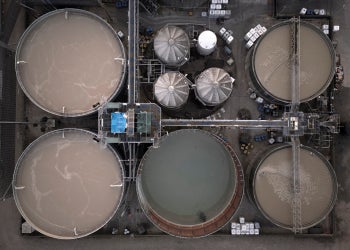
Firms submit Jebel Ali sewage PPP prequalifications
24 July 2026
Dubai Municipality received statements of qualification on 23 July from firms interested in delivering phase three of the Jebel Ali sewage treatment plant (STP) expansion project.
Known as DS150/3, the project will be delivered under a public-private partnership (PPP) model on a design, build, finance, own, operate and transfer basis.
The project involves the development of a new water resource recovery facility with an ultimate treatment capacity of up to 1 million cubic metres a day (cm/d).
It is being procured through Dubai Municipality’s sewerage and recycled water projects department and will be delivered via a two-stage operational approach over a 30-year concession period.
It is understood that the following firms are among those likely to qualify for the project:
- Acciona (Spain)
- Alkhorayef (Saudi Arabia)
- Besix (Belgium)
- Etihad WE (UAE)
- GS Inima (Spain)
- Metito (UAE)
- Miahona (Saudi Arabia)
- Samsung E&A (South Korea)
- Saur (France)
- Suez (France)
- Taqa Water Solutions (UAE)
- Veolia (France)
The municipality issued a request for qualifications notice in May with an intial bid submission deadline of 18 June. UK-headquartered Deloitte is acting as financial adviser, Aecom is the project's technical adviser and CMS is the legal adviser.
Dubai Municipality said the project will also include additional land uses and community-focused amenities as part of broader sustainability and urban integration objectives.
Phase one and two expansion
On 9 July, firms submitted bids for an engineering, procurement and construction contract covering the expansion of the Jebel Ali STP phases one and two.
Located on a 670-hectare site in Jebel Ali, the original wastewater facility has a treatment capacity of about 675,000 cm/d, following the completion of phase two in 2019, combining approximately 300,000 cm/d from phase one and 375,000 cm/d from phase two.
The upgraded facility will be capable of treating an additional sewage flow of 100,000 cm/d, with the expansion estimated to cost $300m.
UK-headquartered KPMG and UAE-based Tribe Infrastructure are serving as financial advisers on the project.
 READ THE JULY 2026 MEED BUSINESS REVIEW – click here to view PDF
Stress test for Gulf aviation; Mixed performance as country outlooks diverge in the Levant; GCC tourism sector pivots from crisis to recovery mode.
Distributed to senior decision-makers in the region and around the world, the July 2026 edition of MEED Business Review includes:
> AIRPORTS: Dubai and Riyadh reaffirm airport ambitions> INDUSTRY REPORT: Dubai eyes tourism sector recovery> DATA CENTRES: Big Tech falls short on data centre promise> LEADERSHIP: Aramco’s citizen developers accelerate digital changeTo see previous issues of MEED Business Review, please click herehttps://image.digitalinsightresearch.in/uploads/NewsArticle/17735401/main.jpg -
Contractors submit interest for Riyadh Expo substructure
24 July 2026
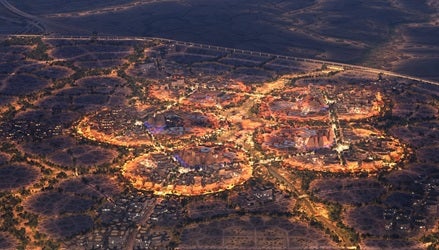
Contractors have submitted expressions of interest on 23 July for a contract to deliver the early works and substructure works for several assets at the Expo 2030 Riyadh site.
Expo 2030 Riyadh Company (ERC) is tasked with delivering the Expo 2030 Riyadh venue. Saudi sovereign wealth vehicle, the Public Investment Fund, launched ERC – a wholly owned subsidiary – in June 2025 to build and operate facilities for the event.
The assets include the Icon; the convention centre; and thematic pavilions, including the Culture of Wisdom, Place & Planet and Adaptation & Innovation pavilions.
The Icon will be located at the entrance of the Expo 2030 Riyadh site, within the Collaboration Precinct.
The structure will be connected to the metro station and will serve as a gateway to the event.
It will be 66 metres tall and will comprise an observation platform, food and beverage (F&B) outlets and other features.
The convention centre will cover about 22,000 square metres. It will be the first point of arrival for visitors to the expo.
The Culture of Wisdom pavilion will be a 25-metre-tall building that will feature exhibition galleries, innovation laboratories and conference and learning spaces.
The Place & Planet building will also be 25 metres tall, and will include indoor and outdoor exhibition spaces, F&B and retail facilities and support areas.
The Adaptation & Innovation pavilion will be located within the Loop of Nations precinct and will comprise a 29-metre-tall building.
Construction progress
The tendering of the pavilion structures followed progress on the site’s infrastructure development works.
In April, ERC awarded two contracts for the next phase of infrastructure works at the site to local firm Al-Yamama Company.
The scope covered the construction of road networks and infrastructure for water, sewage, electricity, telecommunications and electric vehicle charging.
These awards followed ERC’s January award of an estimated SR1bn ($267m) contract for initial infrastructure works at the site to local firm Nesma & Partners. That scope covered about 50 kilometres of integrated infrastructure networks, including internal roads and essential utilities such as water, sewage, electrical and communications systems, and electric vehicle charging stations.
The overall infrastructure works – covering the construction of main utilities and civil works at Expo 2030 Riyadh – are split into three packages:
- Lot 1 covers the main utilities corridor;
- Lot 2 includes the northern cluster of the Nature Corridor;
- Lot 3 comprises the southern cluster of the Nature Corridor.
The masterplan encompasses an area of 6 square kilometres, making it one of the largest sites ever designated for a World Expo event. Situated to the north of the Saudi capital, the site will be located near the future King Salman International airport and will provide direct access to landmarks within Riyadh.
READ THE JULY 2026 MEED BUSINESS REVIEW – click here to view PDFStress test for Gulf aviation; Mixed performance as country outlooks diverge in the Levant; GCC tourism sector pivots from crisis to recovery mode.
Distributed to senior decision-makers in the region and around the world, the July 2026 edition of MEED Business Review includes:
> AIRPORTS: Dubai and Riyadh reaffirm airport ambitions> INDUSTRY REPORT: Dubai eyes tourism sector recovery> DATA CENTRES: Big Tech falls short on data centre promise> LEADERSHIP: Aramco’s citizen developers accelerate digital changeTo see previous issues of MEED Business Review, please click herehttps://image.digitalinsightresearch.in/uploads/NewsArticle/17739044/main.jpg -
Oil price rises above $100 a barrel after Red Sea attacks
24 July 2026
Oil prices rose to their highest level in nearly two months on 23 July after the latest escalation in the US-Iran conflict threatened severe new disruptions to global energy supplies.
Global benchmark Brent crude closed 7% higher, at $100.69 a barrel on 23 July. Earlier in the trading day, it rose as high as $102 a barrel. That is its highest level in eight weeks, since the end of May.
Brent was trading at over $100 a barrel in the early hours of 24 July, but later pared gains to settle around $99.63 a barrel as of 11am Gulf Standard Time (GST).
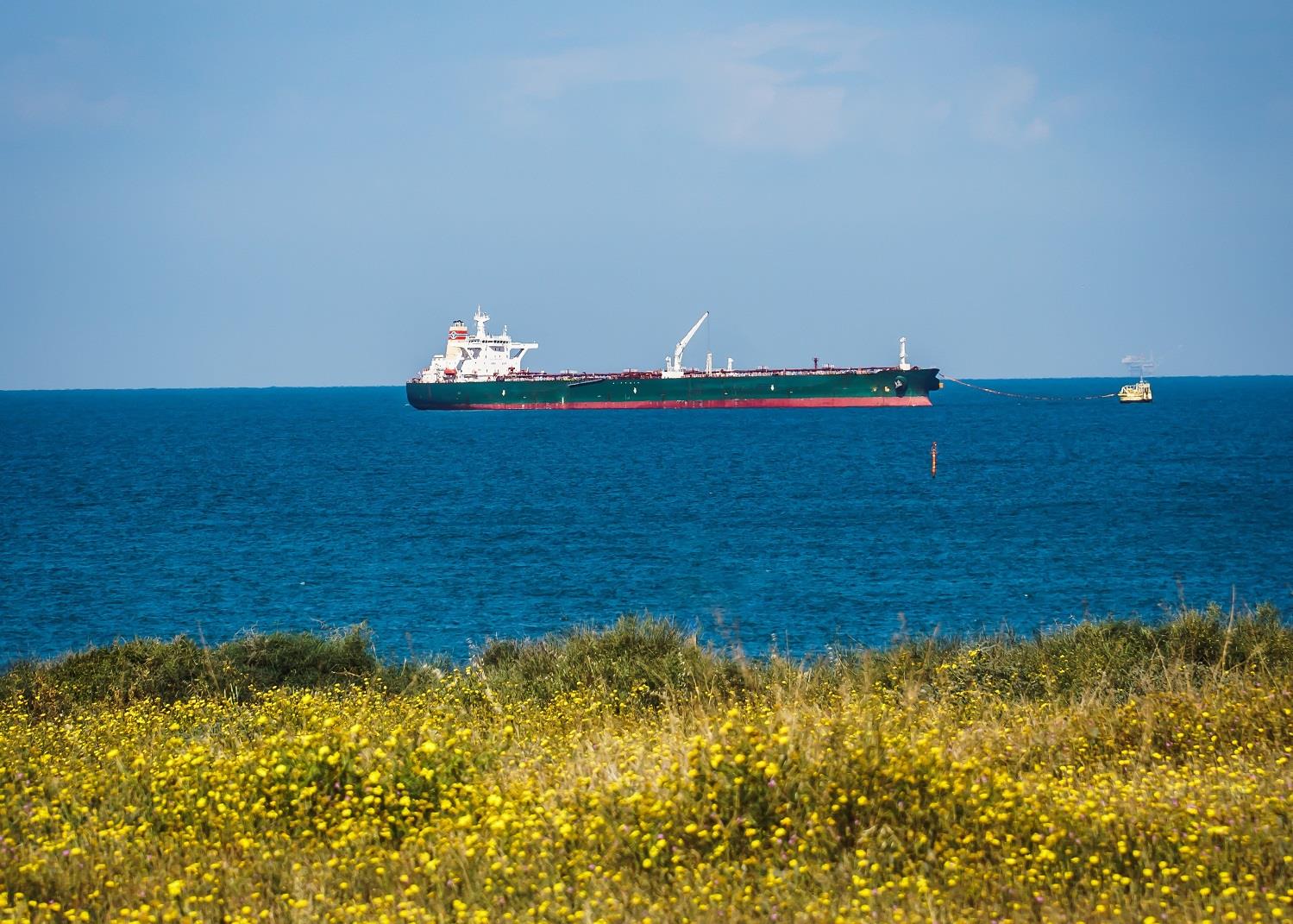
The surge in the Brent price came after Iran-backed Houthi rebels claimed attacks on two Saudi oil tankers in the Red Sea following their announcement of a naval blockade on Saudi Arabia.
It appeared to be the first time since the regional war began that attacks on oil tankers and other commercial ships had extended beyond the Strait of Hormuz, opening up a new front in the volatile conflict.
The Houthi threat is unsettling to oil markets because millions of barrels a day pass through the Bab El-Mandeb Strait to reach global markets.
ALSO READ: Opec+ holds the line on unwinding of production cuts
About 12%-15% of global maritime trade, worth more than $1tn, transits the waterway every year.
It has also served as an alternative to the Strait of Hormuz, where traffic remains largely at a standstill, with ship crossings falling to single digits on 21 July.
Since the start of July, oil prices have risen about 35%. Those prices are more than 60% higher than at the start of the year. This has erased much of the progress made in bringing prices down after the US and Iran signed a memorandum of understanding in mid-June.
The interim peace deal has now collapsed, with US President Donald Trump threatening on 22 July to blow up an Iranian bridge or power plant for every vessel Tehran attacks.
This was followed by the Houthi claim to have hit two tankers in the Red Sea.
The UK’s Maritime Trade Office reported a tanker “struck by an unknown projectile” north of the Bab El-Mandeb Strait, and state-run Saudi Press Agency (Spa) reported that a vessel named Encelia was set ablaze by an attack while it was sailing overnight in the Red Sea, citing an unidentified source from the General Authority of Transport. Spa did not mention the other vessel, which is understood to be called Layla.
READ THE JULY 2026 MEED BUSINESS REVIEW – click here to view PDFStress test for Gulf aviation; Mixed performance as country outlooks diverge in the Levant; GCC tourism sector pivots from crisis to recovery mode.
Distributed to senior decision-makers in the region and around the world, the July 2026 edition of MEED Business Review includes:
> AIRPORTS: Dubai and Riyadh reaffirm airport ambitions> INDUSTRY REPORT: Dubai eyes tourism sector recovery> DATA CENTRES: Big Tech falls short on data centre promise> LEADERSHIP: Aramco’s citizen developers accelerate digital changeTo see previous issues of MEED Business Review, please click herehttps://image.digitalinsightresearch.in/uploads/NewsArticle/17739553/main4051.jpg -
Qiddiya tenders Dragon Ball theme park package
24 July 2026
Qiddiya Investment Company (QIC) has tendered a contract to undertake the back-of-house works on the Dragon Ball theme park in Qiddiya, Saudi Arabia.
The scope covers the construction of plant rooms, facilities management buildings, workshops, storage warehouses and central processing kitchens.
It also includes a monorail service depot, a fire station, parking, utilities and other associated infrastructure.
The bid submission deadline is 13 September.
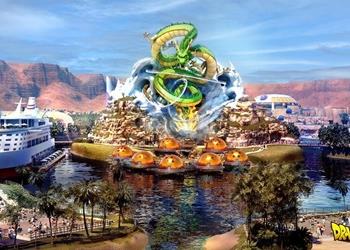
The Dragon Ball theme park will cover more than 500,000 square metres and will have seven themed zones inspired by the Japanese media franchise, including Kame House, Capsule Corporation and Beerus’ Planet.
The park will offer more than 30 rides with five main attractions, including a rollercoaster that passes through a 70-metre landmark based on the series’ wish-granting dragon Shenron.
The development will also include themed hotels.
In September 2024, US-based firm Falcon’s Creative Group announced that it is undertaking the masterplan and attraction design and is the creative lead for the theme park.
QIC formally launched the Dragon Ball theme park in March 2024.
The announcement came after QIC signed an agreement with Japanese firm Toei Animation, the producer of the Dragon Ball anime series.
The Dragon Ball theme park is one of several major projects within the wider Qiddiya development. Other projects include an e-games arena, Prince Mohammed Bin Salman Stadium, a horse racing venue, a performing arts centre, the Speed Park and Six Flags theme parks and Aquarabia waterpark.
The project is a key part of Riyadh’s strategy to boost leisure tourism in the kingdom. According to UK analytics firm GlobalData, leisure tourism in Saudi Arabia has experienced significant growth in recent years.
READ THE JULY 2026 MEED BUSINESS REVIEW – click here to view PDFStress test for Gulf aviation; Mixed performance as country outlooks diverge in the Levant; GCC tourism sector pivots from crisis to recovery mode.
Distributed to senior decision-makers in the region and around the world, the July 2026 edition of MEED Business Review includes:
> AIRPORTS: Dubai and Riyadh reaffirm airport ambitions> INDUSTRY REPORT: Dubai eyes tourism sector recovery> DATA CENTRES: Big Tech falls short on data centre promise> LEADERSHIP: Aramco’s citizen developers accelerate digital changeTo see previous issues of MEED Business Review, please click herehttps://image.digitalinsightresearch.in/uploads/NewsArticle/17738622/main.jpg -
Saudi Arabia appoints developer for hybrid power plant
24 July 2026
Saudi Arabia-based Lamar Holding has signed a contract to develop a hybrid power plant at the Empty Quarter (Rub Al-Khali) land port in Saudi Arabia, according to a source.
The public-private partnership (PPP) project aims to reduce diesel fuel use with renewable energy and ensure a long-term power supply at the Empty Quarter land port. It includes the construction of 15MW of total hybrid installed capacity, installation of a 7 megawatt-peak solar photovoltaic system and eight 1MW internal combustion engines.
In March, MEED exclusively reported that Lamar had been given preferred bidder status and was in advanced discussions with Saudi Arabia’s Zakat, Tax & Customs Authority (Zatca) for the contract.
MEED understands that the proposed plant will have the capacity to produce 25 gigawatt-hours of electricity annually. It will be implemented under a design, build, finance, operate, maintain and transfer contract model for 25 years, excluding the construction period.
US/India-based Synergy Consulting is acting as financial advisor to Lamar on the project. Egyptian firm Eternal Consultation Engineering Services is acting as the technical support consultant and Dubai-headquartered Aktech is the technical consultant for the project.
Lamar Holding and Dubai’s SirajPower submitted bids for the Empty Quarter hybrid power plant project in July 2025, as previously reported by MEED.
Zatca, in collaboration with the National Centre for Privatisation & PPP, had previously prequalified the following four companies to bid for the contract in October 2024:
- Alfanar Company (Saudi Arabia)
- Lamar Holding (Saudi Arabia)
- Olayan Energy (Saudi Arabia) / Enerwhere Sustainable Energy (UAE)
- Siraj Power for Renewable Energy (UAE)
Prior to that, in July 2024, 12 Saudi companies and local branches of international companies, along with 11 overseas-based companies, submitted statements of qualifications for the contract.
In addition to building and operating the power plant, the project scope includes ensuring the facility operates to defined requirements and output specifications. It also involves managing power generation and the connection to the Zatca interface point for the entire project term.
READ THE JULY 2026 MEED BUSINESS REVIEW – click here to view PDFStress test for Gulf aviation; Mixed performance as country outlooks diverge in the Levant; GCC tourism sector pivots from crisis to recovery mode.
Distributed to senior decision-makers in the region and around the world, the July 2026 edition of MEED Business Review includes:
> AIRPORTS: Dubai and Riyadh reaffirm airport ambitions> INDUSTRY REPORT: Dubai eyes tourism sector recovery> DATA CENTRES: Big Tech falls short on data centre promise> LEADERSHIP: Aramco’s citizen developers accelerate digital changeTo see previous issues of MEED Business Review, please click herehttps://image.digitalinsightresearch.in/uploads/NewsArticle/17733327/main.jpg