Saudi Arabia attracts $32bn in FDI inflows
30 September 2025

Saudi Arabia attracted SR119bn ($31.7bn) in foreign direct investment (FDI) inflows in 2024, marking a 24% increase from the previous year. This updated data from Saudi Arabia’s General Authority for Statistics (Gastat) reveals a revised figure that is 37% higher than the initial estimate, according to Bloomberg, and signals renewed investor interest, even as inflows remain short of the government’s $100bn annual target for 2030.
Until April 2025, leading analysts and data indicated a 19% YoY decline. The updated figure marked a sharp turnaround from earlier readings, when inflows were thought to have fallen to their lowest level since 2021. Analysts note the new data captures a wider range of market activity, including mid- and small-cap firms, offering a fuller picture of investment flows, signalling a turning point in sentiment. “This shows that inflows are no longer tentative but part of a sustained trend, marking one of the kingdom’s strongest years on record,” said Hamzeh Jalal B Al-Gaaod, Mena analyst at TS Lombard.
Sector focus
The manufacturing sector led FDI inflows with SR35bn ($9.3bn), accounting for 29% of the total. This was followed by wholesale and retail trade (including vehicle repair) and construction, each accounting for 15% of the share at SR18bn. Financial and insurance services also represented a significant share, totalling approximately SR14bn (12%). This distribution aligns with Riyadh’s efforts to expand industrial capacity, strengthen supply chains and deepen financial services as part of its Vision 2030 diversification programme.
The push is reinforced by new agreements: On 29 September 2025, Saudi Arabia’s Minister of Industry and Mineral Resources Bandar Alkhorayef held a series of bilateral meetings in Shanghai with senior executives of leading Chinese industrial companies to explore opportunities for localising high-value industries and expanding investment in the Kingdom, illustrating how FDI is being channelled into building local supply chains and technology capacity.
Source markets
The UAE remained Saudi Arabia's top source of FDI for the fourth consecutive year. Inflows from the US and Germany more than tripled compared to 2023, while Hong Kong’s contribution surged to $2bn, marking a tenfold increase year-on-year. In contrast, investments from France and Spain declined.
Outflows ease
Saudi outbound investment fell sharply in 2024, dropping 74% year-on-year, according to Gastat. The steep decline marks a structural shift: while Saudi Arabia has long been a major source of global capital, it is now positioning itself as a destination for international inflows. This aligns with Saudi Arabia’s broader economic transformation in the second half of 2024, shifting from exporting capital to attracting and retaining it.
“The breadth of capital sources highlights the global reach of Saudi’s reforms, and the sharp fall in outflows shows investors are choosing to invest locally rather than leverage Saudi capital abroad,” Al-Gaaod said. “Outflows are no longer dominating the picture; the Kingdom is now drawing capital in rather than sending it out.”
Political dynamics have also influenced sentiment. Al-Gaaod noted that Trump’s endorsement of the Gulf states helped re-ignite investment flows from abroad, reinforcing the perception that Saudi Arabia is a safer long-term destination.
Reform dividend
Recent regulatory changes have also strengthened Saudi Arabia’s investment environment. A unified investor framework now covers both domestic and foreign firms, featuring simplified registration procedures and expanded investment incentives. Restrictions have been eased in sectors such as renewable energy, technology and logistics, opening the market to a wider range of international players.
Key measures include easing foreign ownership caps in selected sectors, the introduction of securitisation rules to deepen capital markets, and the White Land Law aimed at unlocking idle real estate supply. These steps go beyond headline reforms, signaling Riyadh’s attempt to create a more competitive and transparent business environment.
Another initiative under trial is a fund-of-funds model giving international investors exposure to mid- and small-cap companies on the Saudi exchange, broadening access beyond the large-cap names that have traditionally dominated foreign portfolios.
These changes are intended to lower entry barriers and support the government’s long-term diversification goals. Al-Gaaod noted that the streamlined framework and new incentives are not merely symbolic; foreign investors are now visibly more comfortable in committing capital.
Analysts caution, however, that while the reforms mark progress, further steps will be needed to provide long-term certainty and fully align the investment climate with international expectations.
Diversification push
Beyond regulatory change, investment is flowing into priority sectors aligned with Saudi Arabia’s diversification goals. In the automotive industry, Public Investment Fund (PIF)-backed Saudi electric vehicle (EV) firm Ceer is developing the kingdom’s first electric vehicle brand and aims to begin production in 2025. Additionally, PIF and South Korea’s Hyundai Motor Group announced a $500m joint venture in 2023 to build a Saudi EV plant, expected to be completed in 2026 with an annual capacity of 50,000 units.
In the energy sector, Aramco and BlackRock (via Global Infrastructure Partners) announced an $11bn investment in the Jafurah midstream gas network, which will supply the power needed for manufacturing and large-scale data centres. The mining sector is also expanding, with plans for lithium processing, battery production and metals development to secure clean energy supply chains.
This trend is regional as well. Abu Dhabi’s Masdar is shifting its focus from green hydrogen and ammonia to data centres, reflecting a shift in ESG and renewable energy investment strategies. Al-Gaaod stated that this reflects a new role for hydrocarbons: “Energy is still a driver, but now it powers industry and infrastructure rather than serving only exports, a change reflected in projects from Jafurah to Masdar.”
Looking ahead
Saudi Arabia is gaining traction in attracting international capital, with inflows approaching previously achieved record levels. While the $31.7bn recorded in 2024 is still below the government’s $100bn annual target for 2030, analysts stress that consistent inflows at lower levels would still be meaningful.
“Even if inflows stabilise around $20-30bn annually, that will still mark a solid achievement for the non-oil economy,” said Al Gaaod.
Preliminary data shows $6.4bn in inflows during Q1 2025, indicating continued activity. The upcoming wave of foreign capital is expected to focus on technology and digital infrastructure, with over $80bn in artificial intelligence and data centre projects already announced.
Beyond digital, the pipeline also spans EV and battery production and large-scale desalination projects, reinforcing diversification in both industry and utilities. At the same time, growth in debt capital markets and recent fiscal discipline, including scaling back parts of Neom Line project and cancelling certain contracts, underline that ex-oil expansion rests on multiple pillars, not FDI alone.
MEED’s October 2025 special report on Saudi Arabia includes:
> GOVERNMENT: Riyadh confronts rising regional chaos
> ECONOMY: Riyadh looks to adjust investment approach
> BANKING: New funding sources solve Saudi liquidity challenge
> OIL & GAS: Aramco turns attention to strategic projects
> GAS: Saudi Arabia and Kuwait accelerate Dorra gas field development
> POWER: Saudi Arabia accelerates power transformation
> WATER: Transmission projects drive Saudi water sector growth
> CONSTRUCTION: Saudi construction pivots from gigaprojects to events
> TRANSPORT: Infrastructure takes centre stage in Saudi strategy

Register for MEED's guest program now to access this article.
Exclusive from Meed
-
 Brent hits $112 a barrel following Saudi oil field attack
22 October 2026
-
 Riyadh awards $301m Sheikh Jaber Road contract
22 October 2026
-
 Dewa International signs energy and infrastructure MoUs
22 October 2026
-
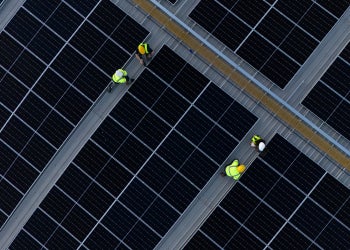 QatarEnergy and TotalEnergies to develop Lebanon solar plant
22 October 2026
-
 Deal signed for 1,620-home Baghdad residential scheme
22 October 2026
All of this is only 1% of what MEED.com has to offer
Subscribe now and unlock all the 153,671 articles on MEED.com
- All the latest news, data, and market intelligence across MENA at your fingerprints
- First-hand updates and inside information on projects, clients and competitors that matter to you
- 20 years' archive of information, data, and news for you to access at your convenience
- Strategize to succeed and minimise risks with timely analysis of current and future market trends
Related Articles
-
Brent hits $112 a barrel following Saudi oil field attack
22 October 2026
Register for MEED’s 14-day trial access
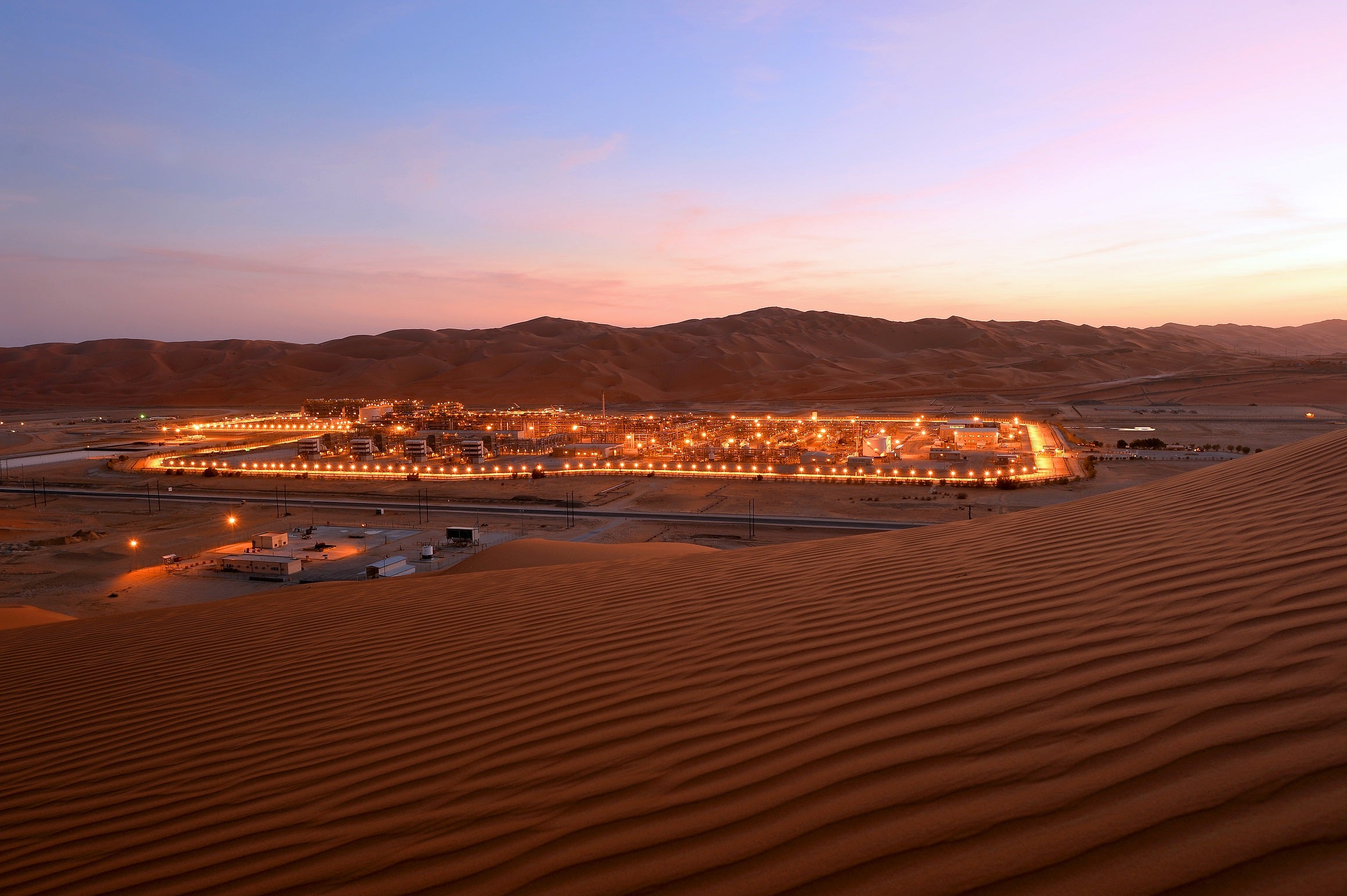
Oil prices climbed more than 3% on 22 October after a drone targeting Saudi Aramco’s Shaybah oil field development killed two people and injured two others a day earlier, adding to concerns over energy supplies as attacks on Saudi energy infrastructure intensified.
Global benchmark Brent crude hit $112.30 in early trading on 22 October, but later pared gains and was trading at $111.52 a barrel as of 11am GST.
Three residents and a Saudi citizen were killed in two separate incidents in Saudi Arabia’s Eastern Province on 21 October, authorities said, as attacks on the kingdom accelerated following an escalation of hostilities with the Iran-backed Houthi group in neighbouring Yemen.
Overnight, the Saudi-led coalition fighting the Houthis in Yemen announced that it had intercepted and destroyed four drones in the Eastern Province.
Saudi air defences intercepted a drone attempting to target a processing facility at Saudi Aramco’s Shaybah oil field development on the morning of 21 October, the Saudi Ministry of Energy said.
The official Saudi Press Agency (SPA) carried a statement quoting an energy ministry official as saying the attempted attack resulted in the deaths of two residents – a Filipino and a Nepali – and injuries to two others – an Indian and a Pakistani – after debris fell due to the interception.
Following the interception, a fire broke out in a vehicle belonging to a contractor at the Shaybah oil field, outside the facility’s perimeter, with no impact on operations.
Dammam airport attack
Separately, a Houthi attack on King Fahd International airport in Dammam on the evening of 21 October killed an Indian resident and a Saudi citizen.
Eight people were also injured in the attack, including a Saudi national, a Nepali, and two nationals each from India, Yemen and Bangladesh. Injuries ranged from minor to critical, the Saudi General Authority of Civil Aviation (Gaca) said the next day.
“The attack also caused property damage, the extent of which is currently being assessed. Further updates will be provided,” Gaca said, adding that operations had since resumed at Dammam airport.
Saudi Arabia has come under sustained attack from the Iran-aligned Houthi rebel group in October, including strikes on Riyadh’s international airport in what authorities described as the kingdom’s deadliest incidents in years, as the war with the group escalates.
The Houthi militias also struck an administrative building at Aramco’s headquarters in Dhahran, in the Eastern Province, on 13 October, resulting in a limited fire.
The Houthi rebels opened a new front in the regional war between Iran and the US in mid-July, when they breached a four-year truce with Saudi Arabia in Yemen’s civil war, which began in 2014, and started attacking Saudi vessels and Aramco energy assets along the Red Sea, including repeated strikes on the Jizan refinery.
The 1,200-kilometre East-West pipeline operated by Aramco was also hit by Houthi missiles in September, and once directly by Iran in April.
The East-West pipeline transports crude from Saudi Arabia’s Eastern Province oil fields to the Red Sea port city of Yanbu on the kingdom’s west coast. It has a pumping capacity of 7 million barrels a day.
Saudi Arabia relies heavily on the East-West pipeline to bypass the volatile Strait of Hormuz maritime chokepoint and ship crude from its Red Sea coast. Riyadh has increasingly used the line to route exports away from Hormuz since the US-Iran conflict began on 28 February – a tactical advantage most of its Gulf neighbours lack.
Aramco resumed crude exports via the pipeline at the start of October.
https://image.digitalinsightresearch.in/uploads/NewsArticle/20841984/main.jpg -
Riyadh awards $301m Sheikh Jaber Road contract
22 October 2026
Register for MEED’s 14-day trial access
The Royal Commission for Riyadh City (RCRC) has awarded an estimated SR1.13bn ($301m) contract to local firm Alomaier Trading & Contracting Company to upgrade a section of Sheikh Jaber Al-Ahmad Al-Sabah Road in the capital.
The project covers the construction of an urban road about 3 kilometres (km) long, with a right-of-way width of about 120 metres.
The scope of work includes the delivery of three interchanges featuring post-tensioned, voided-slab concrete bridges; a cut-and-cover tunnel; and three box culverts designated IC02, IC03 and IC04.
The contract also encompasses pumping and lifting stations, stormwater drainage and irrigation networks, earthworks, asphalt paving, roadway lighting, power distribution systems, mechanically stabilised earth retaining walls and landscaping works.
The award forms part of RCRC’s wider programme to upgrade Riyadh’s arterial road network, decongest critical bottlenecks and expand transportation capacity in the city ahead of Expo 2030 and the 2034 Fifa World Cup.
The contract award follows RCRC’s appointment in May of a joint venture of Riyadh-based Al-Rashid Trading & Contracting Company and Turkiye’s IC Ictas for an estimated SR5bn ($1.3bn) contract to construct another section of Sheikh Jaber Al-Sabah Road.
That project covers 12km from Khurais Road to Al-Thumama Road and is a component of Riyadh’s Second Eastern Ring Road scheme.
Alomaier Trading & Contracting Company has secured several contracts in recent months.
In August, Saudi Arabian Railways awarded the contractor an estimated SR4bn-plus ($1.1bn) contract to add a second track to the first section of the existing phosphate railway in the kingdom’s Eastern Province.
The railway package covers about 100km between AZ1/Nariyah Yard and Ras Al-Khair. Works include track doubling, alignment modifications, utility bridges, culvert widening, hydrological structures, conversion of the AZ1 siding into a mainline track, and enabling works for signalling and telecommunications systems.
 READ THE OCTOBER 2026 MEED BUSINESS REVIEW – click here to view PDF
Industry and logistics drive development at Neom; Saudi Arabia’s investment priorities realign amid conflict; MEED’s 2026 power developer ranking.
Distributed to senior decision-makers in the region and around the world, the October 2026 edition of MEED Business Review includes:
> AGENDA: Oxagon takes centre stage at Neom> MARKET FOCUS: Saudi projects hold steady> INDUSTRY REPORT: MEED’s 2026 GCC power developer ranking> LEADERSHIP: The future city does not need to hang above the groundTo see previous issues of MEED Business Review, please click herehttps://image.digitalinsightresearch.in/uploads/NewsArticle/20833960/main.jpg -
Dewa International signs energy and infrastructure MoUs
22 October 2026
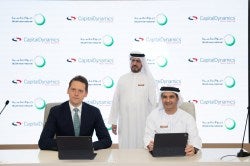
Dubai Electricity & Water Authority’s (Dewa) new development arm, Dewa International, has signed four memorandums of understanding (MoUs) with international partners to explore investment and project development opportunities in the energy, water and infrastructure sectors.
The agreements, signed during Dubai’s Water, Energy, Technology and Environment Exhibition (Wetex 2026), follow the launch of the wholly owned subsidiary in June, as reported by MEED.
At the time, the utility said the arm would be used to export Dubai’s energy and water infrastructure model, with a focus on developing conventional and clean energy projects for global markets.
At Wetex, Dewa International signed an MoU with France’s EDF Power Solutions to explore potential joint participation in solar, wind, battery energy storage and pumped-storage hydropower projects.
A separate agreement with China Energy International Group explores the company’s potential role as an engineering, procurement and construction (EPC) partner for major energy, water and infrastructure projects. The MoU also covers cooperation in project development and EPC services.
A further agreement with UK-based Capital Dynamics focuses on potential joint investments in operational clean energy assets in Europe. The parties will also explore establishing an investment vehicle for future clean energy infrastructure investments.
Dewa International also signed a fourth agreement with Mumbai-Headquartered Tata Consultancy Services, exploring the company’s potential role as a technical consultancy partner. The scope covers technology strategy, information technology and operational technology integration, and asset performance management solutions.
Dewa currently has almost $7bn-worth of power and water projects under execution across the UAE, according to regional projects tracker MEED Projects.
Its flagship Mohammed Bin Rashid Al-Maktoum Solar Park is the largest single-site solar park in the world. The utility is currently advancing the project’s seventh phase, with Abu Dhabi Future Energy Company (Masdar) recently submitting the lowest bid for the project, as exclusively reported by MEED.
https://image.digitalinsightresearch.in/uploads/NewsArticle/20828111/main0128.jpg -
QatarEnergy and TotalEnergies to develop Lebanon solar plant
22 October 2026
Register for MEED’s 14-day trial access
State-owned QatarEnergy and France’s TotalEnergies have agreed to jointly develop a solar power plant in Lebanon.
The agreement was announced on 16 October during the Qatari prime minister’s official visit to Beirut, where he held a joint press conference with Lebanese Prime Minister Nawaf Salam.
According to a statement published by the Lebanese Prime Minister's Office, the plant will be an initial project under a broader framework for energy cooperation between Qatar and Lebanon. Its capacity, location, investment value and implementation schedule have yet to be disclosed.
Qatar’s Prime Minister Sheikh Mohammed Bin Abdulrahman Bin Jassim Al-Thani said: “The aim is to develop a major investment project that benefits the Lebanese economy, as well as the Qatari companies and entities participating in it.”
Separately, Salam said the Lebanese and Qatari governments were “close to reaching an agreement” to rehabilitate, develop and modernise Lebanon’s electricity-generation infrastructure.
The proposed project would cover the country’s various electricity-generation sources and associated infrastructure, aiming to improve the reliability of electricity supplies and reduce costs.
The project would use a build, operate and transfer model, under which Qatari entities would finance, implement and operate the facilities without upfront investment costs for the Lebanese treasury, Salam said.
Salam also said the proposal was being prepared with support from the International Finance Corporation, and that he hoped to present it to the Lebanese government soon.
The wider initiative is intended to address Lebanon’s longstanding electricity-generation shortfall and overcome financing constraints that have delayed infrastructure projects in the sector.
As MEED previously reported, the Lebanese government continues to advance broader reforms to the country’s electricity sector.
In August, Lebanon’s Electricity Regulatory Authority invited private sector companies to submit expressions of interest (EoIs) for several upcoming power-generation projects.
The EoIs cover up to five grid-connected solar photovoltaic projects with a combined installed capacity of 350 megawatts-peak. The projects are also expected to include battery energy storage systems with a combined capacity of 1,000 megawatt-hours.
The regulator is also seeking proposals for distributed dual-fired thermal power plants with net capacities of 20MW-100MW.
READ THE OCTOBER 2026 MEED BUSINESS REVIEW – click here to view PDFIndustry and logistics drive development at Neom; Saudi Arabia’s investment priorities realign amid conflict; MEED’s 2026 power developer ranking.
Distributed to senior decision-makers in the region and around the world, the October 2026 edition of MEED Business Review includes:
> AGENDA: Oxagon takes centre stage at Neom> MARKET FOCUS: Saudi projects hold steady> INDUSTRY REPORT: MEED’s 2026 GCC power developer ranking> LEADERSHIP: The future city does not need to hang above the groundTo see previous issues of MEED Business Review, please click herehttps://image.digitalinsightresearch.in/uploads/NewsArticle/20827458/main.jpg -
Deal signed for 1,620-home Baghdad residential scheme
22 October 2026
Iraq’s National Investment Commission (NIC) has signed an investment contract with local developer Al-Ab’ad Al-Dhahabiya for Investment & Real Estate Development to construct the Abraaj Al-Ameriya residential project in Baghdad.
The development will comprise 1,620 housing units in the Ameriya district of the capital, located behind the American University of Baghdad.
Al-Ab’ad Al-Dhahabiya is a subsidiary of Iraq-based Al-Kamil Holding Group.
The signing was attended by NIC chairman Adel Dakhil Muhammad Al-Yasiri and deputy chairman Salar Muhammad Amin, in addition to a delegation from Al-Kamil Holding Group led by chairman Mustafa Kamil Abboud and Al-Ab’ad Al-Dhahabiya managing director Muhannad Kamil Abboud.
The project forms part of Iraq’s broader programme to engage private sector developers and international investors to address a nationwide housing deficit of an estimated 3 million units through new residential compounds and masterplanned satellite cities.
READ THE OCTOBER 2026 MEED BUSINESS REVIEW – click here to view PDFIndustry and logistics drive development at Neom; Saudi Arabia’s investment priorities realign amid conflict; MEED’s 2026 power developer ranking.
Distributed to senior decision-makers in the region and around the world, the October 2026 edition of MEED Business Review includes:
> AGENDA: Oxagon takes centre stage at Neom> MARKET FOCUS: Saudi projects hold steady> INDUSTRY REPORT: MEED’s 2026 GCC power developer ranking> LEADERSHIP: The future city does not need to hang above the groundTo see previous issues of MEED Business Review, please click herehttps://image.digitalinsightresearch.in/uploads/NewsArticle/20809147/main.jpg