
Wood Group accepts Sidara takeover deal
1 September 2025
Register for MEED’s 14-day trial access
UK-based Wood Group has agreed to a $292m conditional takeover bid from Dubai-based Sidara, according to statements issued by both companies.
The acceptance of the offer by Wood is expected to end negotiations that have lasted more than a year and involved several rejected offers.
Under the terms of the deal, Sidara will take on $1.6bn of Wood Group's debt and inject $450m of cash into the company.
The deal is conditional on Wood Group publishing its delayed results and ensuring that certain debt facilities are not terminated, among other requirements.
At the end of April, Wood Group’s shares were suspended on the London Stock Exchange because the company did not publish its accounts for 2024 on time.
The company, which is struggling with ongoing financial problems, employs more than 4,000 people in the Middle East, having increased its headcount by 500 in 2024.
Recently, Sidara lowered its bid proposal for Wood Group after Britain's Financial Conduct Authority launched a probe into some of Wood Group's contracts and charges.
Wood Group’s chairman, Roy Franklin, is now due to step down following a court meeting on 7 January 2026, when shareholders will vote on the acquisition.
Despite the company’s ongoing financial problems, it has continued to win contracts in the Middle East and North Africa region.
In May, the company secured a contract to perform detailed engineering work on an engineering, procurement and construction (EPC) package that is part of a $7.5bn project to boost oil production at the Lower Zakum offshore hydrocarbons concession in Abu Dhabi.
The work was awarded to Aberdeen-headquartered Wood as a sub-contract by Abu Dhabi-based Target Engineering Construction Company, the main contractor performing EPC works on package five of the Lower Zakum Long-Term Development Plan 1 project.
Also in May, the company was awarded several decarbonisation contracts with a total value of about $100m, for flare gas reduction and carbon efficiency project solutions across Iraq’s largest oil fields.
Under the terms of the contracts, Wood will deliver brownfield EPC and modifications solutions to “enhance operational efficiency and minimise environmental impacts”, according to a statement released by the company.
In its statement, Wood said that the projects will support Iraq’s commitment to reduce gas flaring by 78% by the end of 2025.

Register for MEED's guest program now to access this article.
Exclusive from Meed
-
 Kuwait signs $16bn oil pipeline infrastructure deal
27 July 2026
-
 Consortiums submit bids for Shagaya zone two plant
27 July 2026
-
 GCC banks prove resilient amid turmoil
27 July 2026
-
-
 Contractor wins The Chedi residences Dubai contract
27 July 2026
All of this is only 1% of what MEED.com has to offer
Subscribe now and unlock all the 153,671 articles on MEED.com
- All the latest news, data, and market intelligence across MENA at your fingerprints
- First-hand updates and inside information on projects, clients and competitors that matter to you
- 20 years' archive of information, data, and news for you to access at your convenience
- Strategize to succeed and minimise risks with timely analysis of current and future market trends

Related Articles
-
Kuwait signs $16bn oil pipeline infrastructure deal
27 July 2026
Register for MEED’s 14-day trial access
Kuwait Oil Company (KOC) has signed a $16bn infrastructure agreement with a consortium comprising Blackstone, Brookfield and KKR to establish a joint venture covering the country’s domestic and export crude oil pipeline network.
Structured as a 20.5-year lease-and-leaseback transaction, the deal covers all 13 of KOC’s crude oil pipelines, spanning about 320 kilometres.
Known as Project Peregrine, the transaction is set to become Kuwait’s largest energy infrastructure partnership and the largest foreign direct investment in the country’s history.
Under the agreement, KOC will retain a 51% ownership stake in the newly formed joint venture, while Blackstone, Brookfield and KKR will collectively own the remaining 49%, with each investor holding an equal share. KOC will maintain full ownership, operation and maintenance of the pipeline system.
The joint venture will lease the pipeline usage rights from KOC and grant the company exclusive rights to operate the network in exchange for a volume-based tariff. The agreement does not affect Kuwait’s authority over crude production or refinery throughput.
The transaction is expected to generate $7.85bn in upfront proceeds for KOC, supporting Kuwait Petroleum Corporation’s capital investment programme, including its goal of increasing crude oil production capacity to 4 million barrels a day by 2035.
KPC deputy chairman and CEO Shaikh Nawaf Saud Al-Sabah said the agreement marks a milestone for Kuwait’s energy sector while preserving state control of critical infrastructure.
“Project Peregrine represents the largest foreign direct investment in Kuwait’s history while preserving full national ownership and operational control,” Al-Sabah said.
The agreement also marks the first time major global institutional investors have committed long-term capital to Kuwait’s midstream infrastructure.
Representatives of Blackstone, Brookfield and KKR said the investment reflects confidence in Kuwait’s energy sector and long-term infrastructure strategy.
The transaction remains subject to customary regulatory approvals and closing conditions.
https://image.digitalinsightresearch.in/uploads/NewsArticle/17786431/main4812.jpg -
Consortiums submit bids for Shagaya zone two plant
27 July 2026

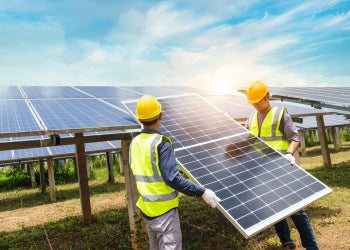
At least three consortiums have submitted bids for zone two of the third phase of Kuwait’s Al-Dibdibah power and Al-Shagaya renewable energy project.
The Kuwait Authority for Partnership Projects (Kapp) is procuring the 500MW solar photovoltaic (PV) independent power project (IPP) in partnership with Kuwait’s Ministry of Electricity, Water & Renewable Energy (MEWRE).
According to a source, bids were submitted on 26 July. The bidding consortiums are:
- Abu Dhabi Future Energy Company (Masdar, UAE) / Al-Ghanim International (Kuwait)
- Acwa (Saudi Arabia) / Arabian Engineering Projects Contracting Company (Kuwait)
- EDF Renewables (France) / Al-Kharafi & Sons (Kuwait) / Korea Western Power Company
Kapp issued a tender to develop the project last November. In October 2025, MEED reported that five consortiums and five individual companies had prequalified to participate in the project.
The Al-Dibdibah power and Al-Shagaya renewable energy phase three zone two project is located within the administrative boundaries of Kuwait’s Jahra governorate, west of Kuwait City.
The winning bidder will design, finance, construct and maintain the project.
The zone two scheme is the fourth renewable energy project to be developed under Kuwait’s public-private partnership programme.
Zone one
Kuwait aims to have a renewable energy installed capacity of 22,100MW by 2030 as part of the 20-year strategy announced in March 2025 and ending in 2050.
In July, MEED reported that a frontrunner had emerged for the Al-Dibdibah and Al-Shagaya phase three, zone one contract following the opening of financial bids.
The phase three, zone one IPP will have a total power generating capacity of 1,100MW.
Similar to the zone two project, EY and DLA Piper, together with DNV, are advising the client on the zone one solar IPP.
Separately, Kuwait-based contractor Power Grid Company recently won a KD48.6m ($158.7m) contract to build a 400kV overhead transmission line linking the Shagaya solar energy generation station with Wafra in southern Kuwait.
The transmission line will connect Shagaya to the Wafra (Z) transformer station and is part of the wider Shagaya masterplan. The contract was awarded by MEWRE, with Power Grid one of three firms that submitted bids last year.
https://image.digitalinsightresearch.in/uploads/NewsArticle/17786075/main.jpg -
GCC banks prove resilient amid turmoil
27 July 2026
Gulf banks are proving adept at navigating the economic and geopolitical turbulence that comes with operating in the region. These skills have come to the fore this year, as regional lenders draw on stable funding profiles and ample capital and liquidity buffers that protect them from near-term credit risks.
GCC banks’ fundamentals have proved remarkably resilient to the Iran-related turmoil, assuming the intensity of the February-April stage of the military conflict does not resume.
There have not been any significant outflows of external funding. While anecdotal evidence suggests some depositors briefly moved funds out of the region at the start of the war, ratings agency S&P Global notes that their return reflects confidence that the war will prove short-lived.
Funding strength
Metrics for the early part of the year revealed a robust picture. Domestic deposits held up strongly in the first quarter of 2026, total GCC domestic deposits rising by 16.9% in year-on-year terms, compensating for the decline in interbank funding.
State-linked deposits grew at a particularly rapid pace, led by the UAE and Kuwait, which offset decelerating private-sector deposit growth in those countries.
Domestic deposits accelerated in April, a pointer to GCC governments’ proactive stances in shielding their banking systems from undue stress. The inflow of public deposits accelerated quite significantly in this period, although that pace will likely subside as conditions gradually normalise.
Such deposits continue to underpin GCC banks’ wider performances. “Funding and liquidity is generally a strength for the region. Government deposits typically make up 20%-30% of the banking sector deposits. That is really important as these are sticky deposits,” says Redmond Ramsdale, head of Middle East ratings at Fitch Ratings.
Funding and liquidity is generally a strength for the region
Gulf states’ heavy reliance on public sector and government-related deposits has proved valuable in the current environment, anchoring banks’ funding profiles and helping reduce potential risks.
Fund outflows have not materialised to any significant degree. “We had some anecdotal evidence of funds being withdrawn, but they returned in the following weeks,” says Ramsdale.
Solid fundamentals
GCC banks entered the conflict period in strong shape. According to S&P, domestic private sector credit growth in the region remained robust in the first quarter – the annualised growth rate was 8% at the end of March.
Core capital buffers are about 15%-16% – higher still for the top lenders – ensuring total loss-absorbing capacity stays below 9% of equity. Regulatory ratios exceed relevant thresholds, providing a significant buffer, according to ratings agency Moody’s.
“If you look at the whole region, the proportion of the lending book that is non-performing, on a weighted average basis, sits around 2%,” says Badis Shubailat, a senior analyst at Moody’s.
“Against this solid level of asset quality, you have a cushion of provisions for expected losses that more than covers the existing stock of problem loans, which provides a strong first line of defence.”
Then, as a second line of defence, are core capital buffers that remain high by global standards, with levels around 15%-16%. Put together, this explains why the banks are sitting on comfortable positions in terms of loss-absorption capacity.
At the end of Q1 2025, the top 45 GCC banks reported an average Tier 1 capital ratio of 17%, with coverage ratios of 155.8%, according to S&P.
“Credit losses are at historical lows of 50 basis points (bps) for the region, and there are very good provisioning buffers – all of which helps to mitigate the negative consequences of the expected asset quality deterioration,” says Tatjana Lescova, director and lead analyst at S&P.
According to Shubailat, the fact that the conflict impact on GCC banks has not been as pronounced as on other sectors reflects that over the past three years – and until right before the conflict started – the region as a whole, and its banking systems, had demonstrated remarkable resilience. In contrast, major advanced economies were struggling with inflationary pressures and subdued economic growth.
“This was visible in Saudi Arabia and the UAE, the two largest economic diversification engines in the region, which happen to also represent more than two-thirds of total banking system assets,” says Shubailat.
Limited exposure
Gulf banks have also been helped by the fact that those economic sectors most impacted by conflict – tourism, hospitality, energy – do not generally form a large part of their collective loans books.
“There will be weaker performance of borrowers in the most obvious affected sectors like infrastructure, tourism, logistics, transport and real estate, but tourism is actually a pretty small exposure for the banks – less than 3% of loan books,” says Ramsdale. “There might be a bit of pressure on small and medium-sized enterprises (SMEs), which are less able to cope with the pressures than the larger corporates, but again, for banks, SME lending is not very big.”
Banks’ exposure to the real estate and construction sectors is highest in Qatar – 31% of total credit at the end of March – while the exposure in Kuwait stands at 25%, with Saudi Arabia at 16% and Bahrain at 12%, notes S&P. UAE banks have been consistently reducing their exposure to these sectors, down to 13% at the end of March, compared to 21% at year-end 2020.
Moody’s Shubailat says that developers in the UAE sit on solid balance sheets and strong revenue backlogs, while banks’ exposure to the construction sector has declined. “So the quantum is lower, the credit quality of the exposure is better, and the banks are sitting on higher capital and provisioning buffers,” he notes.
Gulf bankers are not resting on their laurels. They know that even if bad loans have been limited, they cannot forestall the possibility of problem exposures further down the road.
“Asset quality deterioration is a risk that we expect to materialise later in the year. This is because of weaker macro expectations, and negative impact on some of the corporate sectors, albeit varying across different GCC countries,” says Lescova.
On average, for the region, S&P expects 20 bps of increases in credit losses for this year. When it comes to asset quality, the regulatory forbearance measures announced by three central banks will help alleviate the impact.
Policy support
Central bank moves have added another layer of support. Forbearance measures from the UAE, Kuwait and Qatar central banks have allowed additional headroom.
For example, in mid-March, the Central Bank of the UAE launched a five-pillar resilience package that relaxed capital buffer stipulations, representing more than $272bn in support.
Kuwait eased liquidity requirements, raised maximum lending limits and released a portion of the capital conservation buffer to expand refinancing and credit quality absorption capacity. Qatar, meanwhile, has cut the reserve requirement from 4.5% to 3.5% for deposits.
Forbearance measures from the UAE, Kuwait and Qatar central banks have allowed additional headroom
Such measures were not a response to a banking crisis, says Ramsdale. “Some of the support packages that we have seen coming out of the central banks, in the UAE, Qatar and Kuwait, were preventative support measures,” he says.
“They were designed to boost confidence and limit that pass through from temporary deposit volatility. It was not to do with acute banking stress.”
Market confidence
Larger banks are better positioned to cope with straitened economic times. They are generally more geographically diversified beyond their domestic markets, and international operations have historically been a growth driver for them.
“When there is increased market uncertainty, larger banks may benefit from a flight-to-quality movement, with deposits moved away from smaller banks. Based on Q1 results, only a few smaller banks have reported a contraction in the customer deposits,” says Lescova.
The GCC’s largest banks, including Al-Rajhi Banking & Investment Corporation, Saudi National Bank, First Abu Dhabi Bank, Qatar National Bank, Abu Dhabi Commercial Bank and Emirates NBD, remain highly profitable, although they may not perform as strongly as they would have had the conflict not occurred.
“We already expected some softening in profitability before the conflict, because of the normalisation of the cost of risk upwards from incredibly low levels over the last three years, [which] were driven by a very strong recovery performance from the banks,” says Shubailat.
“In turn, this current situation adds a layer of pressure to the normalising profitability story by increasing provisioning needs in light of the recent economic shocks,” he adds.
Confidence in GCC banks was evident from the outset of the conflict. In early April, Emirates NBD priced a $750m AT1 capital issuance, the first international debt capital markets transaction by a GCC issuer since late February.
“The first ceasefire saw things like private placements start happening again, and that slowly translated into the opening up of public markets.
“Emirates NBD was one of the first banks to open up that market, and we are seeing the largest banks issuing again,” says Ramsdale.
The operating environment for Saudi Arabia is ranked BBB+ – a strong position, all things considered. Ramsdale notes that Riyadh’s reprioritisation of large projects associated with Vision 2030 “means growth will probably be slightly slower in Saudi Arabia”, but adds: “That is actually a good thing, because growth was so strong it was beginning to pressure funding, liquidity and capitalisation.
“Taking off some of that pressure is a positive for banks.”
Growth prospects
Stronger earnings performances will allow banks to bankroll mergers and acquisitions (M&A), building on inorganic routes to growth. Within the past year, the National Bank of Bahrain and Bank of Bahrain & Kuwait (BBK) have agreed to explore a merger, while BBK has also absorbed HSBC’s retail banking business.
Emirates NBD is reported to be looking to acquire HSBC’s business in Turkiye, a country where the Dubai bank already has a presence through its takeover of DenizBank in 2019. It also grew its stake in India’s RBL Bank this year to 60%.
“Certainly the big banks will remain opportunistic over M&A – where the value comes at the right price, then they are interested. And if the big international banks are going to pull out, they tend to have some of the best-quality assets, so you can understand why regional players might be interested in them,” says Ramsdale.
Such moves should provide reassurance that, despite recent challenges, GCC banks are well placed to ride out the remainder of 2026 and resume the positive trajectory that was evident before the Iran war shook the region.
https://image.digitalinsightresearch.in/uploads/NewsArticle/17722682/main.gif -
Saudi Arabia issues RFQ for third round of gas-fired IPPs
27 July 2026
Saudi Power Procurement Company (SPPC) has issued the request for qualifications (RFQ) for the third round of its combined-cycle gas turbine (CCGT) independent power producer (IPP) programme.
According to the documents, the deadline for developers to submit statements of qualification is 16 August.
SPPC expects to issue notices of prequalification on 11 September, after which request for proposals documents will be issued to qualified applicants.
The latest date for the submission of clarification questions is 9 August.
The RFQ covers future CCGT IPPs, although the document does not specify the number, locations or capacities of the projects.
Earlier in July, MEED reported that Saudi Arabia had begun qualification for CCGT plants to be built with provision for future carbon capture units.
The projects will comprise new CCGT plants developed on a build-own-operate basis. Each project will be implemented through a special-purpose project company wholly owned by the successful bidder.
The project companies will sell the entire capacity and output of the plants to SPPC under 25-year power-purchase agreements starting from the respective commercial operation dates. SPPC will be responsible for dispatching electricity from the plants.
The plants will use advanced H-class or J-class gas turbine technology. Each IPP is expected to comprise two or three gas turbine generators, corresponding heat recovery steam generators with duct firing, and one or two steam turbine generators.
Natural gas will be the primary fuel, with diesel used as a backup. SPPC will be responsible for supplying both fuels under the power-purchase agreements.
CCGT IPP programme
SPPC said the procurement marks the next stage of its CCGT IPP programme.
The first four projects comprise Taiba 1, Taiba 2, Qassim 1 and Qassim 2, with a combined capacity of 7,200MW.
The second group comprises Rumah 1, Rumah 2, Nairyah 1 and Nairyah 2, also with a combined capacity of 7,200MW.
All eight plants are under construction, with Qassim 1 and Taiba 1 expected to reach commissioning in 2028.
Developers that were prequalified as financial or technical members for the Rumah and Nairyah projects can request to maintain the same qualification for the upcoming CCGT projects. They must submit the request and updated financial information by the 16 August deadline.
For new applicants, financial members must have reached financial close on at least two non-recourse IPP, IWPP, IWP or ISTP projects since January 2010. At least one must have involved senior debt of $500m or more. Applicants must also have a minimum net worth of $350m.
Technical members must demonstrate development experience on at least two conventional energy IPPs with a combined capacity of 2,000MW since January 2016. They must also have ownership experience on at least two such projects totalling 3,000MW and relevant operations and maintenance experience.
US/India-based Synergy Consulting is the financial adviser for the procurement, Germany’s Fichtner is the technical adviser and UK-headquartered Eversheds Sutherland is the legal adviser.
https://image.digitalinsightresearch.in/uploads/NewsArticle/17785272/main.jpg -
Contractor wins The Chedi residences Dubai contract
27 July 2026
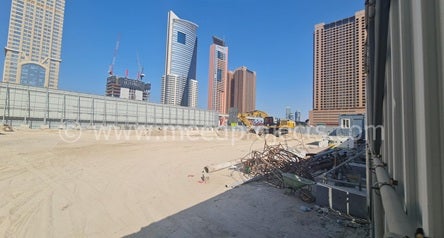
Dubai-based firm Ancient Builders Constructions has won a contract to build The Chedi Private Residences, located in the Barsha Heights area near Sheikh Zayed Road.
The contract was awarded by local developer Al-Seeb Real Estate Development.
The project comprises a 250-metre-tall, 44-storey tower and will offer about 117 residential units upon completion.
Enabling works are under way and are being undertaken by local firm Soiltec Piling & Foundation.
Dubai-based High Art Engineering Consultancy is the project consultant.
Local architectural firms Bruno Guelaff and BG Group are the project designers.
Construction is expected to be completed by 2029.
Al-Seeb Real Estate Development’s latest contract award in the UAE market comes amid heightened real estate activity in the construction sector. Schemes worth more than $323bn are in the execution or planning stages, according to UK-based analytics firm GlobalData.
GlobalData forecasts that output from the UAE’s residential construction sector will grow by 3% in real terms over 2026-29, supported by infrastructure, energy and utilities developments, as well as residential construction projects.
https://image.digitalinsightresearch.in/uploads/NewsArticle/17785193/main.png