
Maghreb economies battle trading headwinds
8 July 2025

Investors in Morocco’s stock market are enjoying a strong bull run. In the first six months of this year, the Moroccan All Shares Index gained 24%, following a 22% rise last year. It hit a record close of 18,690 points in early June this year and, after a brief dip, was growing strongly again in early July, threatening to break through the 19,000-point barrier for the first time.
A combination of low interest rates and strong performances from local companies is helping to boost the market. There is also optimism sparked by the country’s role as a co-host of the 2030 football World Cup (alongside Spain and Portugal) and all the infrastructure spending that will flow from that.
The country’s relative economic strength is also reflected in project activity. Of the 749 projects currently planned or under way across the Maghreb region, 322 are in Morocco, according to data from MEED Projects. The leading sectors are power and water, transport and construction.
There are, though, reasons for caution. While Morocco’s stock market traders may have been doing well, all the Maghreb economies are facing some tricky international trading conditions, which could become more severe in the coming months and years.
Of the 749 projects currently planned or under way across the Maghreb region, 322 are in Morocco, according to data from MEED Projects
Global headwinds
Weak economic conditions in Europe, the region’s most important trading partner, pose a particular threat. Key markets, such as France, Germany and Italy, are experiencing anaemic growth rates, which could lead to softer demand for the Maghreb region’s exports, as well as weaker tourism and investment flows across the Mediterranean.
The imposition of tariffs by US President Donald Trump is also having a negative impact. However, the chaotic way in which the policy is being enacted means it is unclear just how much pain the duties might ultimately cause. Algeria, Libya and Tunisia look set to be worst affected, with tariff rates of 28-31% on their exports to the US, compared to 10% for Morocco.
The region’s direct trade with the US is relatively limited, but if higher tariffs dent global demand, that could have a larger impact on more export-oriented economies such as Morocco and Tunisia.
Oil market trends are likely to add to the pressure on Algeria and Libya this year, as producers continue to ramp up output. On 5 July, the eight Opec+ countries – which include Algeria, Saudi Arabia and the UAE – agreed to produce an additional 548,000 b/d from August. That will put further downward pressure on oil prices.
“A sharp drop in activity in emerging markets will be a negative for global oil demand for the rest of 2025 and into 2026,” said Edward Bell, chief economist of the Dubai-based bank Emirates NBD on 7 July. “Just the fear of policy uncertainty will be enough to limit investment.”
Other issues are also hard for the Maghreb countries to control. For example, the frequent droughts of recent years have dented agricultural activity and exports.
Among other challenges, most governments are running budget deficits and are struggling to create enough jobs for their growing populations. Unemployment in Morocco remains at around 13%, according to the IMF. It is in double figures in neighbouring countries too, according to the International Labour Organisation; Libya’s unemployment rate is probably nearer 20%.
Inward FDI into Algeria rose by 18% last year to reach $1.4bn, while in Tunisia it was up 21% to $936m and in Morocco it increased 55% to $1.6bn
Rising resilience
The Maghreb region is nevertheless showing signs of resilience, despite the various negative pressures. Inflation has been easing back in most countries in recent years and foreign direct investment (FDI) has been growing strongly.
According to the latest Unctad World Investment Report, inward FDI into Algeria rose by 18% last year to reach $1.4bn, while in Tunisia it was up 21% to $936m and in Morocco it increased 55% to $1.6bn.
A few industries are attracting some large investment deals, with Gulf money often to the fore. The UAE, for example, is helping to finance a 7,000-kilometre, $25bn gas pipeline from Nigeria to Morocco. A consortium of the UAE-based Masdar, Egypt’s Infinity and Germany’s Conjuncta is also backing a $34bn green hydrogen project in neighbouring Mauritania.
More recently, albeit on a far smaller scale, the Saudi Fund for Development signed a $38m loan agreement on 27 June this year to set up the Oasis Hub Project in southern Tunisia, which includes rural housing, infrastructure and agriculture schemes.
Some big projects have come unstuck, though. A plan by UK-based Xlinks to export power from Morocco to the UK via a 4,000km subsea cable has lost the support of the London government. On 26 June, junior energy minister Michael Shanks told the UK parliament it had decided the project was “not in the UK national interest at this time”.
There was disappointment in Morocco at the turn of events. In the short term, however, economic growth this year is expected to be a healthy 3.9% in Morocco and 3.5% in Algeria – equal to or better than last year, according to IMF data. Mauritania is expected to grow by 4.4%, which is less than in recent years, but still ahead of its neighbours.
Tunisia is expected to lag behind, at just 1.4%, as the country’s authoritarian leadership struggles to come up with a viable economic model. A draft of the 2026-30 development plan has been promised before the end of the year by the Ministry of Economy and Planning secretary-general, Faouzi Ghrab. Libya’s outlook depends on domestic political factors that look as far from resolution as ever.
Morocco, meanwhile, is intent on solidifying its position as a regional industrial and financial hub, with its thriving stock market serving as an important lever. It is still ranked as a frontier market by index company MSCI, but is hoping for promotion to emerging market status.
The launch of derivatives trading in May is part of efforts to attract more liquidity and secure that higher ranking. Some simpler reforms might also be useful – MSCI pointed out in a June report that stock market information was not always readily available in English, which hindered its accessibility.
Yet, if the market continues to grow as rapidly as it has recently, investors are likely to find a way to address such shortcomings.


Register for MEED's guest program now to access this article.
Exclusive from Meed
-
 Oxagon takes centre stage at Neom
29 September 2026
-
 Contractors submit bids for Oxagon Highway 55 upgrade
29 September 2026
-
 Contractors express interest in sixth Jafurah expansion phase
29 September 2026
-
 Delivery unlocks gigaproject investment
29 September 2026
-
 Giga developers absorb supply chain shocks
29 September 2026
All of this is only 1% of what MEED.com has to offer
Subscribe now and unlock all the 153,671 articles on MEED.com
- All the latest news, data, and market intelligence across MENA at your fingerprints
- First-hand updates and inside information on projects, clients and competitors that matter to you
- 20 years' archive of information, data, and news for you to access at your convenience
- Strategize to succeed and minimise risks with timely analysis of current and future market trends

Related Articles
-
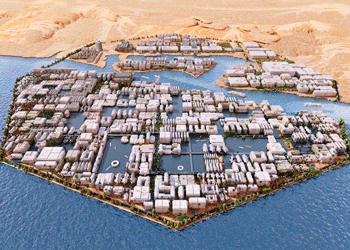
Oxagon takes centre stage at Neom
29 September 2026
For all the talk of cancellations, Neom completed its biggest project yet in August, commissioning the $8.5bn Neom Green Hydrogen project.
The project reflects Neom’s reprioritisation, which has seen the $500bn gigaproject shift from a speculative vision towards a delivery-focused industrial development.
This shift was clearly signalled in April, when Public Investment Fund (PIF) governor Yasir Al-Rumayyan publicly backed Oxagon, Neom’s planned industrial and manufacturing hub on the Red Sea coast. Since then, there have been increasing signs that the development is taking precedence over the rest of the giga-portfolio.
Announced strategy
 Al-Rumayyan’s remarks, delivered as PIF unveiled its 2026-30 strategy, were the clearest public articulation yet of where the fund’s priorities lie. Asked whether The Line needed to be delivered, he was blunt: it would be good to have, but it was not essential.
 Oxagon, on the other hand, was described as “the fundamental part of Neom”.
The comment reframed two years of speculation about scaled-back ambitions at Neom into something closer to a strategic decision, with capital following the assets capable of generating revenue, and the industrial city sitting at the top of that list.
The shift in language also matters, since PIF has been at pains to stress that no Neom projects have been formally cancelled, even as billions of dollars of contracts have been terminated or re-scoped over the past two years.
Under the new strategy, Neom has effectively been reclassified as its own reporting line within PIF’s portfolio, separated from the fund’s other domestic holdings. That separation gives Oxagon room to be judged on its own commercial merits, while distancing it from the reputational weight still carried by more conceptual elements of the wider development.
There have been increasing signs that Oxagon is taking precedence over the rest of the giga-portfolio
Conflict acceleration
The reprioritisation was already under way before the region’s latest conflict began. PIF has spent the past two years pushing Neom to identify which elements of the gigaproject were fundamental and which were aspirational, a process that has as much to do with capital discipline as geopolitics.
With the fund committing to direct roughly 80% of its $925bn portfolio towards domestic investment, while simultaneously funding Expo 2030 and the 2034 World Cup, Riyadh needed its flagship projects to start showing commercial returns rather than absorbing capital indefinitely.
Oxagon, with a port, an export-ready hydrogen plant and land that could be leased to industrial tenants, was always the part of Neom best placed to answer that requirement, and the regional conflict that began in late February only accelerated the shift. The closure of the Strait of Hormuz to a fraction of its normal commercial throughput has hit Saudi Arabia’s oil export capacity hard and pushed the kingdom into a sizeable quarterly fiscal deficit.
Riyadh has also had to contend with direct disruption to its own energy infrastructure, including the temporary closure of the East-West oil pipeline following drone strikes. Against that backdrop, an industrial city with its own deep-water port on the Red Sea, outside the Strait of Hormuz chokepoint, has taken on added strategic weight.
Oxagon offers the kingdom a second maritime gateway, one that is not exposed to the same geopolitical risks as the Gulf coast terminals that have historically carried Saudi trade. For a government having to defend every riyal of committed capital spending, a project that can plausibly generate port fees, hydrogen export revenue and data-centre hosting income within the current decade is a far easier sell than a 170-kilometre linear city that is still taking shape.
Construction ramps up
The clearest evidence of that pivot is what has actually broken ground at Oxagon recently. At a time when Neom’s recent news flow has been about contract terminations, Oxagon’s has been about starts.
The most visible of these is the artificial intelligence (AI) data-centre campus being developed by Humain, the PIF-owned AI company, in partnership with digital infrastructure developer DataVolt.
Construction on the first 100MW of a planned 360MW first phase began this year, as part of a wider 1.5GW campus that builds on the companies’ original 2025 agreement, backed by roughly $5bn of investment. The facility is designed to draw on Oxagon’s pre-zoned industrial land, renewable power and subsea cable links to Europe and Africa, with the first 100MW targeted for service in 2028.
For Neom, the project answers a question that has dogged the gigaproject for years: namely, what, beyond real estate and tourism, Oxagon actually sells.
Connectivity is following the same pattern. Neom issued an expression of interest in September for consultancy services to plan a freight rail line of more than 400km linking the Port of Neom at Oxagon to Saudi Arabia Railways’ North-South Railway at the Al-Baseeta junction.
The North-South network currently serves the kingdom’s phosphate and bauxite mining sector, running from Al-Jalamid and Baitha to the Gulf coast industrial cluster around Ras Al-Khair, Jubail and Dammam, with branches to Riyadh and the Jordanian border.
A connection to Oxagon would give that network a second maritime outlet on the Red Sea and would finally give the Port of Neom a direct rail link into the kingdom’s interior, something it has lacked since operations began in 2022.
Cargo currently depends on road transport or an additional sea leg, a constraint that has limited the port’s usefulness beyond a regional hub.
Utilities work is quietly keeping pace with the more visible projects. Neom has tendered an industrial wastewater treatment plant at Oxagon, with proposals due in early October. The scheme has an initial capacity of 35,000 cubic metres a day, (cm/d) expandable to a maximum of 45,000 cm/d as demand grows.
The plant is expected to cater to the wider industrial developments planned at Oxagon and points towards it developing into a full-fledged industrial cluster rather than a single-phase development.
Road infrastructure has moved in parallel. A design-and-build tender is currently out for the permanent upgrade of Oxagon’s Highway 55, which connects the Red Sea coast with the mainland in northwestern Saudi Arabia.
It currently serves as the only road providing north-south connectivity between Duba and the Neom region. The project is expected to support the anticipated increase in construction activity at Oxagon and facilitate the movement of cargo vehicles from Duba Port to other parts of the country and the wider region.
These construction packages represent the unglamorous groundwork needed before an industrial city can function at scale, and that foundational build-out is already being mirrored in Neom’s external connectivity. In April, a new multimodal logistics corridor linking Europe, Egypt, Neom and the GCC was enabled, offering a faster and more flexible route for European cargo entering the region.
The most advanced element of the build-out remains the port itself. Dutch marine contractor Boskalis has completed the deepening and widening of the main access channel, and Belgian contractor Besix has finished more than 4.6km of quay wall across seven berths, some with draughts of up to 18.5 metres.
The Terminal 1 development, a 900-metre, fully automated container facility designed to be one of the first ports in the kingdom to use automated ship-to-shore cranes, is being phased in through 2026. This will take capacity from the port’s current 250,000 twenty-foot equivalent units (TEUs) towards a 2030 target of 1.5 million TEUs, and an eventual ambition of 12 million TEUs once fully built out. The facility has been described as an accelerator for the kind of integrated, end-to-end supply chain the wider Oxagon concept was built around.
A development this capital-intensive will require continued private and foreign investment
Project rationale
Set against the rest of Neom’s portfolio, Oxagon’s advantage stands out. It has the potential to produce things that can be sold, shipped or leased within a timeframe investors and government auditors can underwrite.
Green hydrogen converted into green ammonia for export; port capacity sold by the container; data-centre capacity sold by the megawatt; industrial land leased by the hectare. These are conventional infrastructure economics, not the largely unprecedented urban-planning bet represented by The Line or other components of the wider Neom masterplan.
There is also a coherence to Oxagon’s individual pieces that is harder to find elsewhere in the Neom story. A port needs rail and road connections to move cargo inland. An AI data-centre campus needs power, land and subsea connectivity – things an industrial port city is well placed to provide. A green hydrogen plant needs an export terminal close by. Each project reinforces the case for the others, in a way that an industrial city announced in 2021 as one vision among several has arguably never quite managed to replicate.
Oxagon is not without risk. Schedules have already slipped once, and a development this capital-intensive will require continued private and foreign investment if its backers are serious about reducing direct funding exposure.
The direction of travel this year has been positive. With the green hydrogen plant entering commissioning, a hyperscale AI campus breaking ground, a new rail corridor being planned and a port moving towards its next phase, Oxagon is reinforcing its position as one of the kingdom’s flagship projects for the future.
https://image.digitalinsightresearch.in/uploads/NewsArticle/20095152/main.gif -
Contractors submit bids for Oxagon Highway 55 upgrade
29 September 2026
Contractors submitted bids on 28 September for a design-and-build contract to upgrade Highway 55 in Saudi Arabia’s Oxagon region.
The first phase of the project includes the construction of 14 kilometres of road with two lanes in each direction, as well as one bridge and three interchanges.
The project duration is 22 months.
Highway 55 connects the Red Sea coast with the mainland in northwestern Saudi Arabia. It is currently the only road providing north-south connectivity between Duba and the Neom region.
MEED reported exclusively in August last year that contractors had submitted responses to an expression of interest notice that Neom issued earlier that month.
The project is expected to support cargo movement from Duba Port to other parts of the kingdom and the wider region.
Last year, Neom tested a pilot initiative by handling a shipment that travelled from Cairo via the Port of Safaga, across the Red Sea to the Port of Neom, and then inland to Erbil, Iraq.
In a statement, Neom said: “The shipment travelled through an intermodal corridor spanning over 900 kilometres, marking a significant milestone in the kingdom’s transformation into a regional and global logistics hub.”
The Port of Neom is located on the Red Sea near the Arar border, a key entry point into Iraq.
https://image.digitalinsightresearch.in/uploads/NewsArticle/20093715/main.jpg -
Contractors express interest in sixth Jafurah expansion phase
29 September 2026
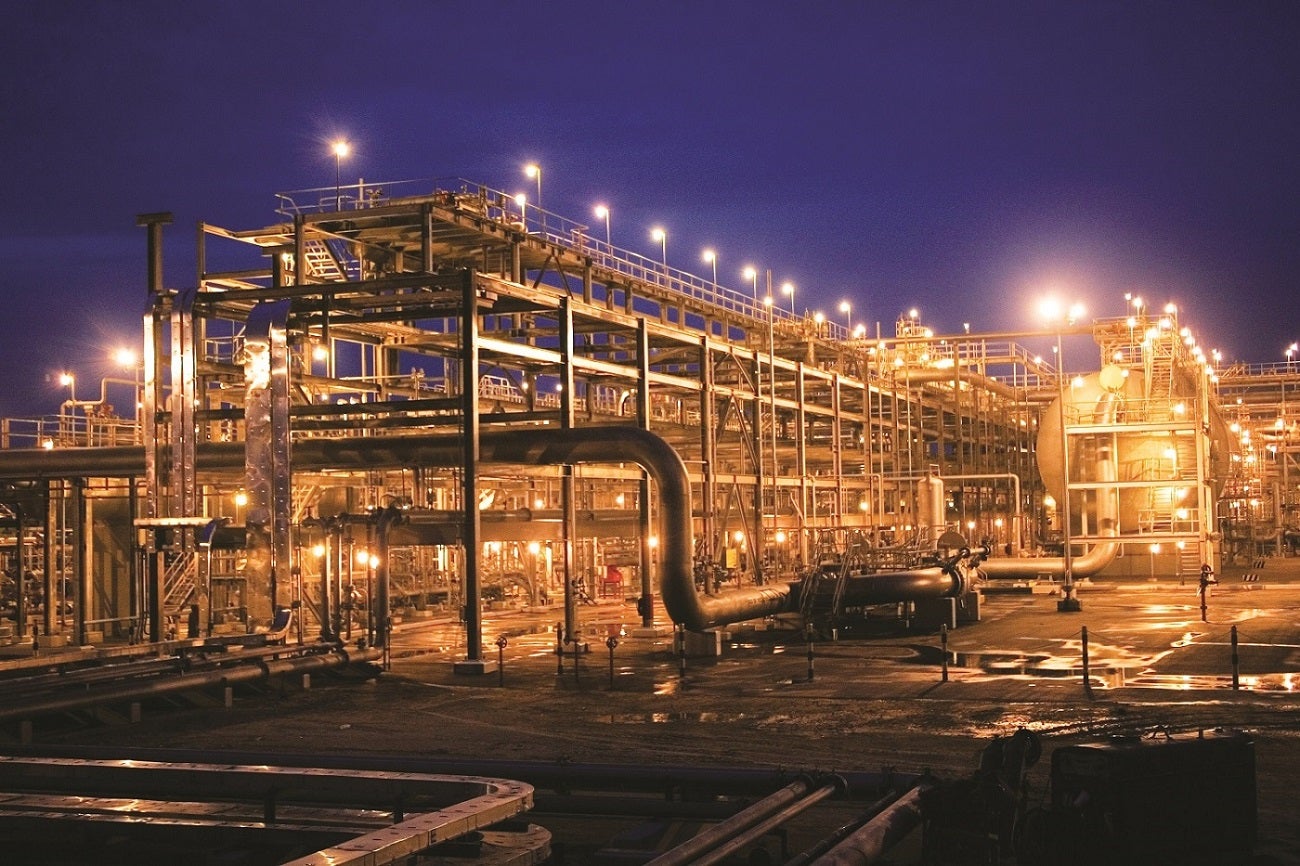
Contractors have expressed interest to Saudi Aramco in the next major expansion phase of the Jafurah unconventional gas development programme in Saudi Arabia.
According to sources, the main scope of work for the sixth expansion phase of Jafurah involves the engineering, procurement and construction (EPC) of three gas compression plants at the gas basin in the kingdom’s Eastern Province. Each plant will be capable of processing up to 200 million cubic feet a day (cf/d).
Aramco is said to have issued a solicitation of interest for the project in August, with contractors submitting responses within the same month, sources told MEED.
The Jafurah basin is the largest liquid-rich shale gas play in the Middle East, spanning about 17,000 square kilometres. The reserve is estimated to contain 229 trillion cubic feet of gas and 75 billion stock-tank barrels of condensate.
In December last year, Aramco brought the greenfield Jafurah gas processing plant online, with a production capacity of 450 million cf/d, marking the commissioning of the first phase of its $100bn capital expenditure programme to produce gas from the unconventional resource base.
The company had previously stated it expected to start gas production at Jafurah in 2025, with the intention of progressively ramping up to 2 billion cf/d of sales gas, 420 million cf/d of ethane and 630,000 barrels a day (b/d) of high-value liquids by 2030.
Aramco has said that its unconventional gas programme, at peak production, is expected to generate electricity equivalent to displacing 500,000 b/d of oil.
In February 2020, Aramco received a capital expenditure grant of $110bn from the Saudi government for the long-term phased development of the Jafurah unconventional gas resource base. Since then, the Saudi energy giant has moved at pace and scale through subsequent expansion phases of the Jafurah unconventional gas development programme.
Jafurah gas development phases
As Aramco prepares to issue the main EPC tender for the Jafurah sixth expansion phase, it is also at an advanced bid evaluation stage for the programme’s fifth phase.
MEED reported in August that China Petroleum Engineering & Construction Company (CPECC) had emerged as a frontrunner to win the main contract for the Jafurah fifth expansion phase, based on Aramco’s initial evaluation of proposals.
The main scope of work for the fifth expansion phase also involves the EPC of three gas compression plants at the Jafurah gas basin, with each plant having a gas processing capacity of 200 million cf/d.
Aramco had set 19 July as the final deadline for proposals, and contractors submitted their bids by that date, MEED previously reported.
The Saudi energy giant is understood to have issued the main EPC tender for the project in the first quarter of this year.
Aramco issued a solicitation of interest for the Jafurah fifth expansion phase in mid-November, with contractors submitting responses by 30 November, MEED previously reported.
UK-headquartered Wood Group has carried out the front-end engineering and design for the project.
ALSO READ: Aramco moves apace with Jafurah unconventional gas campaign
Along with evaluating bids for EPC works on the fifth expansion phase project at Jafurah, Aramco has also recently kicked off EPC works on the fourth expansion phase.
MEED reported in April that Aramco had selected Indian contractor Larsen & Toubro Energy Hydrocarbon (L&TEH) as the main contractor for the fourth phase, which sources estimate could be valued at about $1.5bn.
The main scope of work on Jafurah’s fourth expansion phase involves the EPC of two gas compression trains at the gas basin. Each plant will process up to 200 million cf/d.
Aramco has issued only a draft letter of award for the project to L&TEH; however, based on this, the contractor has started EPC works. The official contract award and final investment decision are pending, according to sources.
EPC work on the third phase of the Jafurah unconventional gas development programme is also advancing.
In July 2024, Aramco issued a non-binding letter of intent to a consortium of Tecnicas Reunidas and Sinopec Group for the EPC contract for phase three. The value of the contract is estimated at $2.24bn.
The objective of the third expansion phase is similar to that of the fourth phase. The main scope of work involves the EPC of three gas compression plants, each with a capacity of 200 million cf/d.
The third phase scope of work also includes building a 230kV substation to power the new gas compression plants, and installing other utility units, piping systems and safety equipment.
The selection of contractors for the third expansion phase came within weeks of Aramco officially awarding EPC contracts for the second phase, which aims to raise the field’s processing potential to up to 2 billion cf/d of raw gas.
Aramco awarded 16 contracts, worth a combined total of about $12.4bn, for the second expansion phase on 30 June 2024.
The EPC scope of work on that project involves the construction of gas compression facilities and associated pipelines, and the expansion of the Jafurah gas plant, including the construction of gas processing trains, utilities, sulphur and export facilities, Aramco said in a statement.
The main EPC packages of the Jafurah second expansion phase project, their estimated values and the selected contractors are:
- Package 1 – gas processing plant and main process units – $2.9bn: Larsen & Toubro Energy Hydrocarbon (India)
- Package 2 – utilities and offsites – $2.4bn: Hyundai Engineering (South Korea)
- Package 3 – gas compression units – $1bn: Larsen & Toubro Energy Hydrocarbon
- Riyas natural gas liquids (NGL) package 1 – NGL fractionation trains – $1bn: Tecnicas Reunidas / Refining & Chemical Engineering Group (part of China’s Sinopec Group)
- Riyas NGL package 2 – utilities, storage and export facilities – $2.2bn: Tecnicas Reunidas/Refining & Chemical Engineering Group
- Riyas NGL package 6 – site preparation works – $107m: Mofarreh Alharbi & Partners (Saudi Arabia)
- Riyas NGL package 9 – temporary construction facilities – $80m: Mofarreh Alharbi & Partners
Aramco kickstarted EPC works on the first phase of the programme in November 2021 by awarding $10bn-worth of subsurface and EPC contracts.
The Jafurah programme is central to Aramco’s goal of increasing gas production capacity. The target has recently been raised to 80%, with 2021 as the baseline, up from 60%, to meet rising domestic and global demand. The company expects life-cycle investment in Jafurah to exceed $100bn.
Aramco completed an $11bn lease-and-leaseback deal in late October 2025 for gas processing facilities at the Jafurah unconventional gas reserve with a consortium led by funds managed by Global Infrastructure Partners (GIP), part of US asset manager BlackRock.
Under the transaction, a newly formed subsidiary, Jafurah Midstream Gas Company (JMGC), will lease development and usage rights to the Jafurah field gas processing plant and the Riyas natural gas liquids fractionation facility.
After 20 years, JMGC will lease the assets back to Aramco. JMGC will collect a tariff payable by Aramco in exchange for granting Aramco the exclusive right to receive, process and treat raw gas from the Jafurah resource base.
Aramco will hold a 51% majority stake in JMGC, while the GIP-led consortium will hold the remaining 49%. Investors participating in the GIP-led consortium include Hassana Investment Company, the Arab Energy Fund and Aberdeen Investcorp Infrastructure Partners, as well as other institutional investors from North and Southeast Asia and the Middle East.
https://image.digitalinsightresearch.in/uploads/NewsArticle/20090894/main5646.jpg -
Delivery unlocks gigaproject investment
29 September 2026
Register for MEED’s 14-day trial access
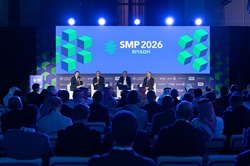
Completed infrastructure and open assets are making it easier to attract private developers and foreign investors to Saudi Arabia’s gigaprojects, said speakers at MEED’s Shaping Mega Projects conference in Riyadh on 28 September.
Dale Chadwick, acting CEO of King Salman Park Foundation, said investor appetite had grown as construction advanced. The foundation has received 23 expressions of interest from private developers, and Chadwick said that number was increasing.
“What the private sector is looking for in terms of investment is surety of what we’re doing,” he said. “As soon as a private developer comes in and sees what we’re doing, they’re blown away. The closer we get to completion, the greater the appetite.”
He said interest from foreign direct investors was also rising, and that a deal the foundation expects to award soon involves foreign investment.
The foundation times its private asset awards to follow infrastructure and landscaping works. “They don’t have to take the leap of faith that we are going to execute on our side of the equation,” said Chadwick. “They can see it.”
Partnership model
Mohamed Saad, president of DevCo at Diriyah Company, said investors wanted a relationship rather than a transaction.
“The first thing they’re looking for is partners,” he said. "They’re looking for master developers who act as true partners to them.”
Saad said master developers acted as the catalyst, investing in infrastructure and anchor assets before the private sector joins. He said investors also wanted healthy supply and demand, and a market able to absorb commercial assets in phases.
He said Diriyah had prioritised delivery over publicity. “People want to see to believe,” said Saad. “We are delivering on the ground, and when people come and visit, they’re pleasantly surprised.”
Chadwick said developers also wanted flexibility, with some seeking more height or a different mix of uses. “We ourselves have a plan, but in order to make that more attractive, we have to be prepared to make adjustments as well,” he said.
Ben Edwards, group head of cost, commercial and procurement at Red Sea Global, said the operating track record of The Red Sea and Amaala was now its strongest pitch to investors.
"We’ve gone past the field of dreams approach of ‘if you build it, they will come',” he said. "We’ve built it now. The tourists are coming.”
Edwards said Red Sea Global was at various stages of negotiation on several joint venture opportunities for future projects.
The developer’s utilities public-private partnership (PPP) at The Red Sea is fully operational. Its Amaala equivalent is in final testing and commissioning and is due to be operational before the end of the year. Edwards expects the model to spread.
"I’m sure the PPP market will continue to expand into the different infrastructure sectors here, and then lead into other sectors, from schools to hospitals,” he said.
He added that Red Sea Global’s environmental credentials were a selling point for investors.
Don’t miss MEED’s SMP 2026.
Secure your place as an attendee by clicking here, or email us at meedevents@meed.com
https://image.digitalinsightresearch.in/uploads/NewsArticle/20084647/main.jpeg -
 KBR seeks renewable energy contracts in Libya
29 September 2026
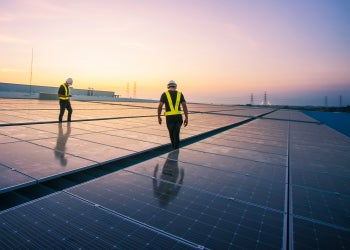
The US-headquartered technology and engineering company KBR is seeking renewable energy project contracts in Libya.
Representatives from KBR met with Abdussalam Elansari, chairman of the Renewable Energy Authority of Libya, earlier this month to discuss project opportunities, sources said.
The meeting with Elansari followed KBR’s opening of a new branch in Libya and its securing of several contract awards in the oil and gas sector.
In March, KBR announced that it had been awarded a contract by Zallaf Exploration, Production & Refining of Oil & Gas Company to provide project management and technical services for the South Refinery Project in Libya’s southern city of Ubari.
Under the terms of the contract, KBR will provide contract management, project management and supporting technical services throughout the engineering, procurement and construction (EPC) phases of the project, according to a company statement.
The EPC work is expected to be executed over a 50-month period.
KBR is also carrying out work to re-evaluate the front-end engineering and design (feed) for the project to develop Libya’s J6 North Gialo field.
In January, KBR signed a memorandum of understanding (MoU) with the state-owned Libyan Post, Telecommunications & Information Technology Company.
Under the MoU, KBR agreed to support efforts to develop and improve Libya’s communications infrastructure and enhance fifth-generation (5G) mobile networks in the country.
KBR has previously provided engineering services for major national projects in Libya, but was forced to shut down its office in the country several times amid political instability and security issues.
When the company was known as Brown & Root, it worked on the Great Man-Made River Project in Libya, which is widely recognised as the largest irrigation project in the world.
https://image.digitalinsightresearch.in/uploads/NewsArticle/20081880/main.jpg