
GCC real estate faces a more nuanced reality
3 July 2025

The GCC real estate market in 2025-26 is characterised by dynamic growth, largely propelled by ambitious government-led diversification strategies and large-scale masterplanned projects.
Robust sales and significant development pipelines have been interpreted as indomitable market fundamentals across the region, particularly in Saudi Arabia and the UAE.
This year, a more balanced perspective has emerged that reveals new challenges as markets cope with external threats including a weakening global economy and regional geopolitical tensions, combined with domestic challenges such as oversupply and affordability.
Concerns about potential oversupply in certain residential and retail segments, especially in Dubai and Riyadh, are notable, with ratings agencies such as Fitch forecasting price corrections.
With so many real estate projects planned in the GCC region, the construction sector is poised for continued expansion, yet concerns are growing over delivery as capacity is constrained and contractors are becoming increasingly risk averse as their orderbooks fill.
Balancing population growth with project pipelines and the delivery of national visions will be critical in shaping the market’s performance in the future.
Investors and developers will need to navigate these complexities if they are to continue enjoying the success they have achieved in the past four years.
Bahrain
Bahrain’s real estate sector performed steadily in 2024, led by the residential market, which benefitted from demographic growth, improved affordability and supportive government initiatives.
Updated immigration policies such as the introduction of a Golden Visa programme have encouraged more expatriates to purchase properties, which has been stimulating demand.
The price of high-end apartments increased modestly year-on-year, with an increase of 1.4% in 2024, while villa prices remained stable, indicating strengthening demand for premium properties with modern amenities, according to real estate services company Savills.
There was an even greater increase in rental values, which rose by 23% across Bahrain in 2024, with the Capital Governorate accounting for 48% of rental transactions, Savills says.
The country’s commercial office market faced challenges in 2024, however, with limited demand and relatively flat rental growth, despite new developments such as SayaCorp Tower entering the market, Savills reports.
Conversely, Bahrain’s retail sector showed signs of recovery last year, driven by luxury brands opening new stores in Marassi Galleria, increasing foot traffic and demand.
For industrial space, larger warehouses saw a slight increase in rental rates, with a 2.1% year-on-year growth, while rates for smaller units remained stable, Savills says. This sector remains integral to Bahrain’s economic diversification strategy, with further infrastructure investments expected to support demand.
Kuwait
 Kuwait’s residential prices have softened over the past year. Overall residential sales in the first quarter of 2025 declined by 24% quarter-on-quarter, marking the weakest growth since Q2 2024, but only dipped by 2% year-on-year despite an 11.7% rise in transactions, potentially indicating a shift towards smaller or lower-value units in outer areas, according to National Bank of Kuwait (NBK).
The residential price index remained negative, falling by 1.7% year-on-year in its eighth consecutive quarterly decline, although at a slower pace, suggesting abatement of downward pressure, NBK says.
The slowdown in residential sales in Q1 2025 indicates potential market sensitivity to seasonal factors and a normalisation from strong previous levels.
The fiscal deficit for 2025 is expected to be -4.2% of GDP, up from -3.1% in 2024 on the back of declining oil revenue due to lower prices.
Fiscal pressures could impact government spending on projects if oil prices remain low or decline even further.
Oman
Oman’s real estate sector is experiencing steady growth, supported by the country’s broader economic expansion.
The residential market has registered a 3.6% increase in supply, adding about 38,400 new units in 2024.
Despite the increase, occupancy rates remained stable at 85.2%, with villas and houses experiencing higher demand. The growth in residential supply is essential to meet the projected housing demand gap by 2035, which underscores the need for proactive planning to avoid potential shortfalls.
Oman’s tourism sector has also contributed positively to the real estate market, with guest arrivals at three- to five-star hotels up 3.6%, leading to a 6.1% rise in revenue. Hotel occupancy rates improved to 53.5%, indicating a gradual recovery in demand.
Looking ahead, Oman’s real estate sector is expected to benefit from government initiatives under Vision 2040, which aims to attract investment and foster economic diversification. Anticipated population and workforce growth will drive demand for housing and commercial properties.
Challenges such as market dynamics and potential delays in project completions will require careful management. Overall, the outlook for Oman’s real estate sector remains stable, with opportunities for strong growth in both residential and tourism-
related developments.
Qatar
 Qatar’s real estate market has continued to adapt to evolving demand patterns and macroeconomic conditions, according to real estate consultancy Knight Frank. While some sectors showed resilience, overall trends point to a period of moderation across the residential, commercial and retail segments.
In the residential sales market, average villa and apartment prices declined by 5% year-on-year. Despite the fall, demand for homes in locations such as Pearl Island and West Bay Lagoon remains stable. Abu Hamour recorded the highest average villa sale price at QR8,587 ($2,359) a square metre (sq m), while the Waterfront led the apartment segment at QR14,300/sq m.
Mortgage activity rose sharply, with a 168% year-on-year increase in Q4 2024, partly attributed to declining interest rates.
Rental rates in the villa segment dropped by 2.6% in 2024, averaging QR15,875 a month, although premium areas such as West Bay Lagoon continued to command higher rents. The apartment rental market remained relatively stable, with luxury developments such as Pearl Island seeing sustained demand and rents for three-bed properties averaging QR15,721 a month.
In the office market, Grade A rents dipped by 2.3%, settling at QR90/sq m. Prime areas like West Bay and Marina District remain in demand, although vacancy rates in secondary locations are contributing to downward rental pressure.
Retail rents declined by 1.5% amid increasing supply and shifting consumer behaviour. Lifestyle and experiential retail developments outperformed, while secondary malls faced growing competition.
E-commerce also continued to gain ground, with online sales surging 32% year-on-year in December 2024.
The outlook for Qatar’s real estate market will depend on the pace of economic diversification … and broader regional stability
Qatar’s hospitality sector saw marked improvements, supported by a 25% rise in tourist arrivals in 2024. Key performance indicators, including occupancy rates and revenue per available room, recorded double-digit growth, reflecting the country’s appeal as a leisure and business destination.
The outlook for Qatar’s real estate market will depend on the pace of economic diversification, infrastructure investment and broader regional stability. While high-end residential and hospitality sectors appear well positioned, other segments may find the outlook more challenging.
Saudi Arabia
 Saudi Arabia’s real estate market has displayed a mixed performance across all sectors, with momentum in residential and tourism-led hospitality markets counterbalanced by slower activity in the office and retail segments, according to real estate agency CBRE’s latest market review.
In Riyadh, residential sales remained resilient, underpinned by population growth, ongoing reforms and increased demand from Saudi nationals and expatriates. Despite high mortgage rates, key developments such as Diriyah and King Salman Park continue to attract investor attention.
Demand in Jeddah is more subdued, with price growth stabilising after recent surges. Supply constraints and the government’s focus on increasing home ownership to 70% by 2030 remain influential drivers.
The hospitality sector showed significant growth, particularly in the religious and leisure tourism segments. Strong visitor numbers to Mecca and Madina supported high hotel occupancy rates, while developments in Al-Ula and the Red Sea contributed to the expansion of the kingdom’s tourism offering.
Saudi Arabia recorded a surge in international tourist arrivals, reflecting its broader push to diversify the economy through the Vision 2030 strategy. Major global hotel brands continued to announce new projects, signalling long-term confidence in the sector’s prospects.
The office market remained relatively stable, although demand patterns are evolving. In Riyadh, Grade A office spaces remained in demand amid limited supply, while older or lower-grade buildings experienced elevated vacancy levels.
In Jeddah and Dammam, activity was more modest, with tenants preferring flexible leasing arrangements. CBRE notes that public sector activity and government-backed gigaprojects continue to play a significant role in driving office demand.
Retail sector performance varied, with experiential and lifestyle-focused retail formats gaining traction, while traditional malls faced ongoing pressure from e-commerce growth and shifting consumer behaviours. Developments in Riyadh and Jeddah reflect a broader industry shift towards mixed-use destinations with entertainment and leisure at the core.
Looking ahead, Saudi Arabia’s real estate outlook remains cautiously optimistic. Continued progress on gigaprojects such as Neom, Qiddiya and the Red Sea developments are expected to support long-term demand across several asset classes.
However, affordability challenges, financing constraints and evolving global economic conditions could temper short-term momentum.
UAE
 After four strong years, Dubai’s residential market has shown signs of plateauing in 2025.
The market recorded more than 42,000 sales transactions in the first quarter of this year, reflecting a 10% quarterly decline due to fewer new project launches and seasonal factors, according to property consultant Cavendish Maxwell.
At the same time, year-on-year performance remained strong, with transaction volumes rising by 23.1% and total sales value reaching AED114.4bn ($31bn), a 29.6% increase.
Residential rents increased by 1% quarter-on-quarter and 14.4% year-on-year in Q1 2025, marking the slowest quarterly rise in two years. Gross rental yields averaged 7.3% for apartments and 5% for villas and townhouses in March 2025.
In May, Fitch Ratings forecast a residential price correction in Dubai, starting in H2 2025 into 2026, driven by a record increase in new supply. This is a direct cause-and-effect relationship, where past sales, leading to new projects, are now translating into future supply, which will likely dampen price growth.
Fitch Ratings forecasts a residential price correction in Dubai starting in H2 2025 into 2026, driven by a record increase in new supply
Residential prices surged approximately 60% between 2022 and Q1 2025. Simultaneously, a record number of new property projects were initiated in 2023-24, with a peak delivery of 120,000 units expected
in 2026.
Fitch says that this average 16% increase in supply in 2025-27 will exceed the forecast population growth of about 5%. This imbalance is the direct cause of the predicted 15% fall in residential property prices.
Rental yields are already showing pressure. While a correction is anticipated, Fitch also notes that UAE banks and developers are well-equipped to handle the downturn due to improved leverage and capital buffers. This suggests that the market is maturing, and stakeholders have learnt from previous cycles, potentially leading to a moderate correction rather than a significant crash.

Register for MEED's guest program now to access this article.
Exclusive from Meed
-
-
 Algeria tenders upstream oil project contract
25 June 2026
-
-
-
 Chinese firm wins $265m Saudi hospital contract
24 June 2026
All of this is only 1% of what MEED.com has to offer
Subscribe now and unlock all the 153,671 articles on MEED.com
- All the latest news, data, and market intelligence across MENA at your fingerprints
- First-hand updates and inside information on projects, clients and competitors that matter to you
- 20 years' archive of information, data, and news for you to access at your convenience
- Strategize to succeed and minimise risks with timely analysis of current and future market trends
Related Articles
-
Firms prepare Hudayriat East PPP tunnels advisory bids
25 June 2026
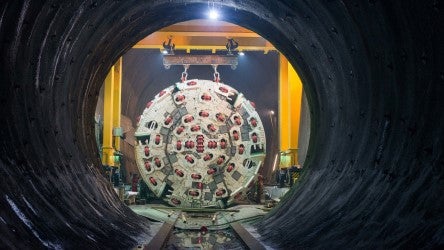
Abu Dhabi’s Modon Infrastructure, formerly Gridora, has tendered a contract for technical advisory services for the construction of two underwater tunnels connecting the eastern side of Hudayriat Island with mainland Abu Dhabi.
Consultants have until 26 June to submit their proposals.
The project includes the construction of a 4.8-kilometre (km) highway, with four lanes in each direction, connecting Hudayriat Island to Mussafah 8th Street.
The project will be delivered on a public-private partnership (PPP) basis in coordination with the Abu Dhabi Department of Municipalities and Transport and the Abu Dhabi Investment Office.
The contract term is expected to be 25 years.
The latest infrastructure development in Abu Dhabi follows Modon Infrastructure’s invitation in May for firms to register for the next phase of Abu Dhabi’s Mid Island Parkway Project (MIPP), which will also be developed on a PPP basis.
Modon Infrastructure will act as the lead developer, holding the majority equity stake in the project company. It will award the engineering, procurement and construction contract, as well as the operations and maintenance services and advisory appointments.
The second phase of the MIPP involves the construction of about 11km of highways, including a mix of three-, four- and five-lane sections. The highways will connect the Um-Yifeenah, Al-Jubail, Al-Sammaliyyah and Sas Al-Nakhl islands to Khalifa City and the E10 road.
The scope also covers the construction of three interchanges: the E20, E10 and Dumbbell interchanges on Al-Sammaliyyah Island.
The project includes several major structures, such as the E20 interchange, which will feature cast-in-place box-girder and void-slab bridges, and the E10 interchange with cast-in-place box-girder bridges. It also includes I-girder bridges between Raha Beach West and Sas Al-Nakhl Island, as well as a causeway at Sas Al-Nakhl Island.
Further key elements include a cast-in-place balanced cantilever bridge between Sas Al-Nakhl Island and Al-Sammaliyyah Island; a tunnel between Al-Sammaliyyah Island and Bilrimaid Island; and a cut-and-cover (open) tunnel on Bilrimaid Island. The project will be completed with another tunnel connecting Bilrimaid Island to Um-Yifeenah Island.
> Be recognised among the best in the industry at the MEED Projects Awards 2026 …
 https://image.digitalinsightresearch.in/uploads/NewsArticle/17410214/main.jpg
 -
Algeria tenders upstream oil project contract
25 June 2026
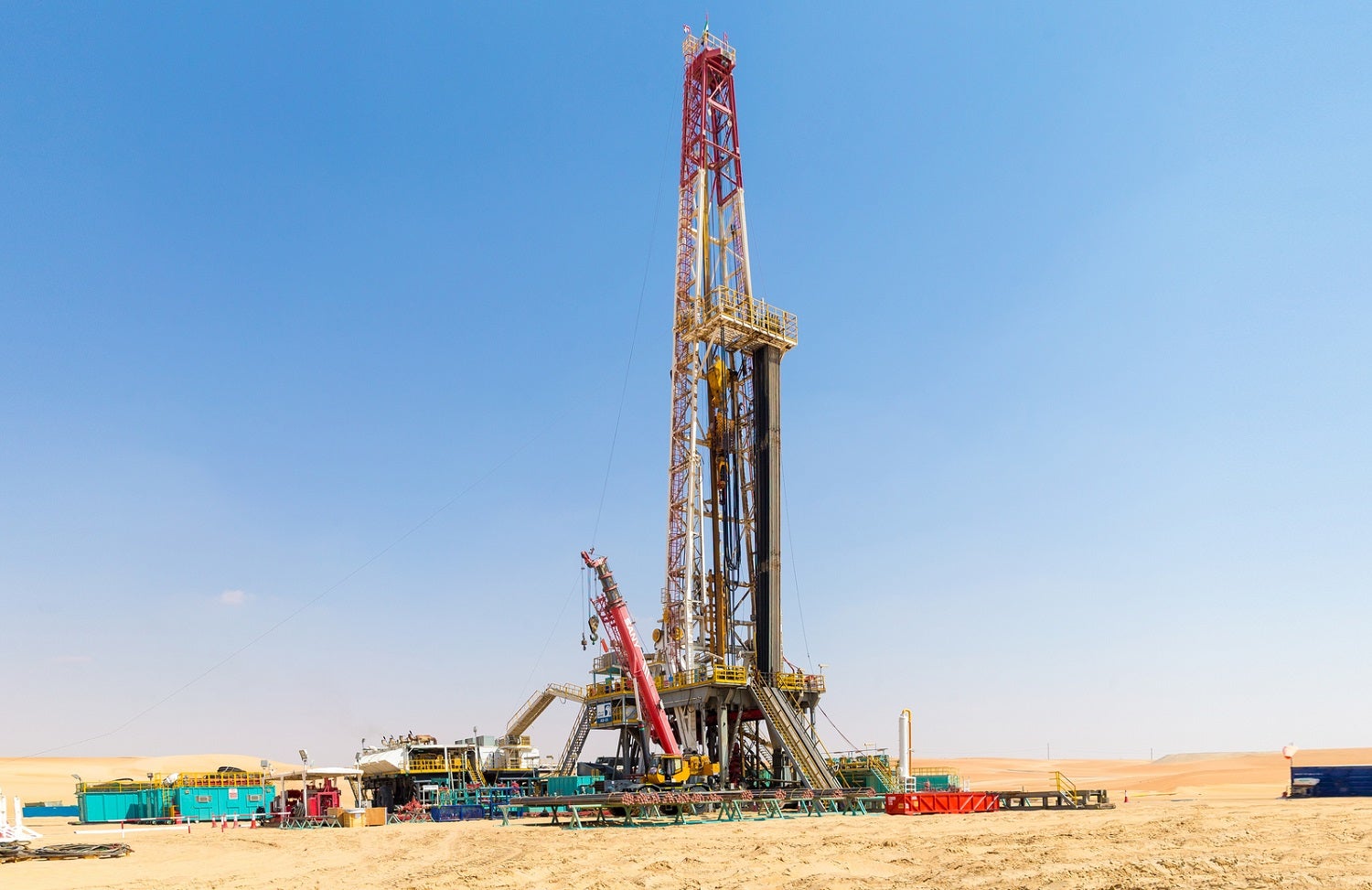
Algeria’s state-owned national oil and gas company, Sonatrach, has tendered a contract for the development and rehabilitation of the central processing facility (CPF) at the Bir Berkine oil and gas field.
The scope of the contract includes the study, supply, construction and commissioning of a project to rehabilitate the CPF facilities at the field, which is located in the Hassi Mesaoud region.
Sonatrach says in the tender documents that the objective of the project is to ensure the continuity of production activities “under stable and secure operating conditions”.
It also says the project aims to improve production yields and quality.
The contract includes both initial and detailed studies as well as the supply of all equipment and materials.
It also includes the execution of works, the assembly of all equipment and materials, and the commissioning of all relevant facilities.
The tender has a two-stage submission process, with the first stage requiring technical bids to be submitted by 23 August.
https://image.digitalinsightresearch.in/uploads/NewsArticle/17423013/main3916.jpg -
Red Sea Global tenders King Salman Bay construction work
25 June 2026
Saudi gigaproject developer Red Sea Global (RSG) has tendered a contract inviting firms to undertake marine infrastructure works at King Salman Bay on the Red Sea coast, north of Jeddah.
The scope includes dredging and earthworks, as well as quay wall and edge protection works spanning about 11 kilometres.
The bid submission deadline is 31 July.
King Salman Bay is expected to be a waterfront development aimed at reshaping the city’s northern Red Sea frontage into a mixed-use destination, anchored by public-realm improvements and leisure-led development.
The update follows RSG’s award of an estimated SR100m ($27m) contract to construct a solid waste management centre at its Red Sea Project. The scope includes four buildings: a material recycling facility, a transfer station, an administration building and a vehicle maintenance building.
In October last year, MEED reported that RSG had secured a SR6.5bn ($1.7bn) credit facility to further develop Amaala, its luxury tourism destination on Saudi Arabia’s northwestern Red Sea coast.
According to an official statement, “The funding is led by Riyad Bank as the sole underwriter, along with Saudi Investment Bank and Bank Al-Bilad as mandated lead arrangers.
“The loan arrangement comprises a mix of conventional and Islamic financing and adheres to RSG’s Green Loan Framework, which was first established when it secured private funding from a consortium of four banks for the Red Sea destination in 2021,” the statement added.
The announcement followed RSG’s opening of its first properties for sale at Amaala, including branded residential communities and a five-bedroom villa on a private island.
 https://image.digitalinsightresearch.in/uploads/NewsArticle/17430045/main.jpg
 -
MECC submits lowest bid on three Kuwaiti oil and gas contracts
25 June 2026
Kuwait-based Mechanical Engineering & Contracting Company (MECC) has submitted the lowest bid across three separate contracts tendered by the state-owned upstream operator Kuwait Oil Company (KOC).
The total value of the low bids is $427m, and all of the contracts are focused on developing substations to power industrial lift pumps and remote header manifolds
Five companies submitted bids for a contract to develop several substations to power industrial lift pumps and remote header manifolds in areas 6, 10 and 12 in southern and eastern Kuwait.
The bidders were:
- MECC: KD65,760,000 ($212m)
- Heavy Engineering Industries & Shipbuilding Company: KD70,630,000 ($228m)
- Amco Engineering & Construction: KD73,446,100 ($237m)
- Combined Group Contracting Company: KD76,186,000 ($246m)
- Nasser Mohammed Al-Badah & Partner General Trading & Contracting: KD79,332,417 ($256m)
Six companies submitted bids for a contract to develop several substations to power industrial lift pumps and remote header manifolds in areas 8 and 13 in southern and eastern Kuwait.
The bidders were:
- MECC: KD30,760,000 ($99m)
- Badr Al-Mulla & Brothers: KD32,662,040 ($106m)
- Heavy Engineering Industries & Shipbuilding Company: KD34,139,000 ($110m)
- Industrial Company for Electrical Projects: KD36,375,520 ($118m)
- Nasser Mohammed Al-Badah & Partner General Trading & Contracting: KD37,278,526 ($120m)
- Combined Group Contracting Company: KD37,790,000 ($122m)
Eight companies submitted bids for a contract focused on developing several substations to power industrial lift pumps and remote header manifolds in areas 7, 9, and 11 in southern and eastern Kuwait.
The bidders were:
- MECC: KD35,760,000 ($116m)
- Badr Al-Mulla & Brothers: KD39,447,165 ($127m)
- Amco Engineering & Construction: KD39,736,800 ($128m)
- Heavy Engineering Industries & Shipbuilding Company: KD40,105,000 ($130m)
- Industrial Company for Electrical Projects: KD43,238,265 ($140m)
- Engineering Company for Petroleum & Chemical Industries (Enppi): KD43,514,805 ($141m)
- Combined Group Contracting Company: KD43,650,000 ($141m)
- Nasser Mohammed Al-Badah & Partner General Trading & Contracting: KD43,706,826 ($141m)
Kuwait’s oil and gas sector has been in crisis in recent months due to disruption from the regional conflict that started after the US and Israel attacked Iran on 28 February 2026.
A preliminary peace agreement between the US and Iran, which was announced on 14 June, has increased optimism that disruption to the sector will decrease in the coming weeks.
Under the terms of the agreement, both sides have stated that the free flow of vessels will be permitted through the Strait of Hormuz, through which nearly all of Kuwait’s crude oil is normally exported.
 READ THE JUNE 2026 MEED BUSINESS REVIEW – click here to view PDF
GCC looks beyond the Strait; Iraq’s reform window narrows as fiscal assumptions shatter; MEED Top 100 companies.
Distributed to senior decision-makers in the region and around the world, the June 2026 edition of MEED Business Review includes:
> AGENDA: Gulf races to reroute trade> EXPORT ROUTES: Regional war boosts oil and gas pipeline project activity> CURRENT AFFAIRS: UAE’s Opec departure fulfils multiple ends> MEED TOP 100: Middle East stocks recover unevenly> LEADERSHIP: Building the infrastructure that makes net zero possible> TRADE DEAL: UK-GCC trade deal talks concludeTo see previous issues of MEED Business Review, please click herehttps://image.digitalinsightresearch.in/uploads/NewsArticle/17423009/main.jpg -
Chinese firm wins $265m Saudi hospital contract
24 June 2026
Zhejiang Construction International, the local subsidiary of Chinese contractor Zhejiang Construction Investment Group, has won a $265m contract to build the Prince Mohammed Bin Fahd University Speciality Hospital in Al-Khobar.
Construction is expected to take three years from the start date.
Prince Mohammed Bin Fahd University awarded the contract.
Located in Al-Raja district, Al-Khobar, in Saudi Arabia’s Eastern Province, the hospital project will cover about 60,000 square metres.
The contract covers the construction of a 10-storey hospital building, two five-storey auxiliary buildings connected by corridors and a basement.
Work will include civil works, mechanical and electrical installation, curtain walling, landscaping, detailed design and the procurement of medical equipment.
The award is the latest in a series of contracts secured by Chinese contractors from Saudi entities in recent months.
Last week, MEED reported that Saudi Arabia’s Ministry of Municipalities & Housing awarded contracts worth more than SR1.9bn ($506m) to Chinese contractors for two residential developments in the kingdom.
China Architectural Construction Corporation won the first contract, valued at SR875m ($233m), to build 2,010 housing units at the Al-Ruba residential project in Riyadh.
China State Construction Engineering Corporation secured the other contract, valued at more than SR1bn ($266m), for the Al-Rasha Al-Faisaliah residential project in Dammam, comprising 2,426 housing units.
GlobalData expects Saudi Arabia’s construction industry to record average annual growth of 5.2% in 2025-28, supported by investments in transport, electricity, housing and tourism infrastructure, as well as the $850bn-plus gigaprojects programme.
https://image.digitalinsightresearch.in/uploads/NewsArticle/17412846/main.jpg