Sepco 3 to undertake Al-Zour North 2 & 3 EPC
6 May 2025

A utility developer team comprising Saudi Arabia's Acwa Power and the local Gulf Investment Company (GIC) is understood to have partnered with China-headquartered Shandong Tiejun Electric Power Company (Sepco 3) in its bid to develop Kuwait's second independent water and power project (IWPP).
The Al-Zour North 2 & 3 IWPP will have a power generation capacity of 2,700MW and a desalination capacity of 120 million imperial gallons a day (MIGD).
On 5 May, Kuwait's Ministry of Electricity, Water & Renewable Energy (MEWRE), through the Kuwait Authority for Partnership Projects (Kapp), opened the financial envelopes submitted for the contract by the lone bidder, the Acwa Power-GIC team.
The procurement authority said it opened the financial envelopes in the presence of qualified investors that had previously obtained the project's proposal request.
MEED understands that the financial envelopes contain the annual equivalent payment (AEP) value offer and the share price (SHP) offer.
Based on an uploaded picture on the Kapp website, the AEP value is about KD522.38m ($1.7bn).
The signing of the power and water purchase agreement by the Acwa Power team and MEWRE is expected to take place at a later date, an industry source said.
The project company will sign a 25-year energy conversion and water purchase agreement with MEWRE starting from the project’s commercial operation date.
The Al-Zour North 2 & 3 IWPP will use liquefied natural gas and high-pressure natural gas, with gas oil as a backup fuel, and will connect to the national grid via a 400-kilovolt transmission substation.
According to industry sources, Sepco 3 will be undertaking the project's engineering, procurement and construction (EPC) contract.
Unlike in most GCC states, where bidders submit separate levelised electricity and water costs – expressed in $cents a kilowatt-hour and per cubic metre – for IWPP tenders, Kuwait has two bid evaluation parameters.
The AEP value is a combination of average power and water costs within a year, while the SHP, or equivalent share price, is the amount of equity divided by the number of shares.
Separate tariffs for the power and water desalination plants may have been submitted but will not likely be disclosed publicly, one of the sources said.
Located about 100 kilometres south of Kuwait City, the Al-Zour North 2 & 3 IWPP will be adjacent to the western border of the first Al-Zour North facility for electric power generation and water desalination, which is currently in operation, and on the northern border of the Al-Zour South station.
The project struggled to take off partly due to stakeholder indecision, with the government undergoing several changes and transitions in the past few years.
The plan to develop Kuwait's second IWPP was first announced in 2016-17, following the commissioning of its first IWPP, Al-Zour North 1, in late 2016.
Following a series of delays and scope changes, Kapp finally tendered the contract to develop the Al-Zour North 2 & 3 IWPP in March last year. The tender was issued three years after Kapp had selected a team comprising three UK-headquartered firms – EY, Atkins and Addleshaw Goddard – as transaction advisers for this project, along with another planned IWPP in Al-Khiran, in April 2021.
First IWPP
Kuwait's erstwhile Partnerships Technical Bureau selected the winning consortium of UK/French company GDF Suez, now Engie; Japan's Sumitomo; and Kuwait's AH Sagar & Brothers Group as the preferred bidder for the Al-Zour North 1 IWPP in February 2012.
According to MEED archives, the successful consortium submitted the lowest bid to build the project, with an AEP value of KD127.1m ($453m) at the time.
The project company, Shamal Az-Zour Al-Oula, awarded South Korea’s Hyundai Heavy Industries and France’s Sidem the EPC contract to build the plant.
The combined-cycle power plant produces 1,539.2MW in net contracted power capacity from five General Electric GTG 9F-3 turbines generating 225.8MW each, and two General Electric STG D1 turbines generating 251MW each.
The integrated facility has a multiple-effect distillation unit capable of producing 107 MIGD, the equivalent of 486,400 cubic metres a day of desalinated water.
Public trading of shares
In line with Kuwait's Public-Private Partnership Law, Shamal Az-Zour Al-Oula began trading shares on the Kuwait stock exchange in 2020, after Kapp distributed 50% of its total shares to individual Kuwaiti investors in the last quarter of 2019.
Several public and private entities own the remaining 50% of the company's shares. They are:
- Azour North One Holding Company, owned by a consortium comprising Engie, Sumitomo Corporation and Abdullah Hama Al-Sagar & Brothers (40%);
- Kuwait Investment Authority (5%);
- Public Institution for Social Security (5%).

Register for MEED's guest program now to access this article.
Exclusive from Meed
-
 WEBINAR: End-of-Year Mena Market Review
13 November 2026
-
 PDO awards contract for Al-Ghubar oil field project
12 November 2026
-
 Laing O’Rourke joins the international exit list
12 November 2026
-
 Poland’s Orlen terminates QatarEnergy LNG supply deal
11 November 2026
-
 Riyadh shifts bid deadline for King Salman Stadium works
11 November 2026
All of this is only 1% of what MEED.com has to offer
Subscribe now and unlock all the 153,671 articles on MEED.com
- All the latest news, data, and market intelligence across MENA at your fingerprints
- First-hand updates and inside information on projects, clients and competitors that matter to you
- 20 years' archive of information, data, and news for you to access at your convenience
- Strategize to succeed and minimise risks with timely analysis of current and future market trends
Related Articles
-
WEBINAR: End-of-Year Mena Market Review
13 November 2026
Webinar: The big questions shaping the Gulf market. You decide what gets debated.
Tuesday 24 November 2026 | 11:00 AM GST | Register now
What makes this session particularly interesting is that the audience gets to decide the agenda. Registrants can vote for the topics they’d like Ed and Colin to debate, with the most popular questions forming the final shortlist for the live session.
Topics in the ballot:
- Is the Gulf trying to build too much, too quickly?
- Saudi Arabia or the UAE: where would you place your next big bet?
- Are gigaprojects the best use of public money?
- Who is really responsible when projects go wrong?
- Should the lowest-price tender become a thing of the past?
- Can private capital take over from the government in financing infrastructure and diversification?
- Is the Gulf’s AI and data centre boom a smart bet or the next overbuilding risk?
- Should the Gulf double down on hydrocarbons to fund diversification?
- Is localisation strengthening the economy or making delivery harder?
- Are Gulf countries building complementary economies or competing for the same customers?
The session will also feature live audience polling and Q&A, giving attendees an opportunity to share their views.
Hosted by:
Edward James, head of content and analysis at MEED
 A well-known and respected thought leader in Mena affairs, Edward James has been with MEED for more than 19 years, working as a researcher, consultant and content director. Today, he heads up all content and research produced by the MEED group. His specific areas of expertise are construction, hydrocarbons, power and water, and the petrochemicals market. He is considered one of the world’s foremost experts on the Mena projects market. He is a regular guest commentator on Middle East issues for news channels such as the BBC, CNN and ABC News and is a regular speaker at events in the region.
Colin Foreman, editor of MEED
 Colin Foreman is editor and a specialist construction journalist for news and analysis on MEED.com and the MEED Business Review magazine. He has been reporting on the region since 2003, specialising in the construction sector and its impact on the broader economy. He has reported exclusively on a wide range of projects across the region including Dubai Metro, the Burj Khalifa, Jeddah Airport, Doha Metro, Hamad International airport and Yas Island. Before joining MEED, Colin reported on the construction sector in Hong Kong.https://image.digitalinsightresearch.in/uploads/NewsArticle/21380319/main.gif
-
PDO awards contract for Al-Ghubar oil field project
12 November 2026
Register for MEED’s 14-day trial access
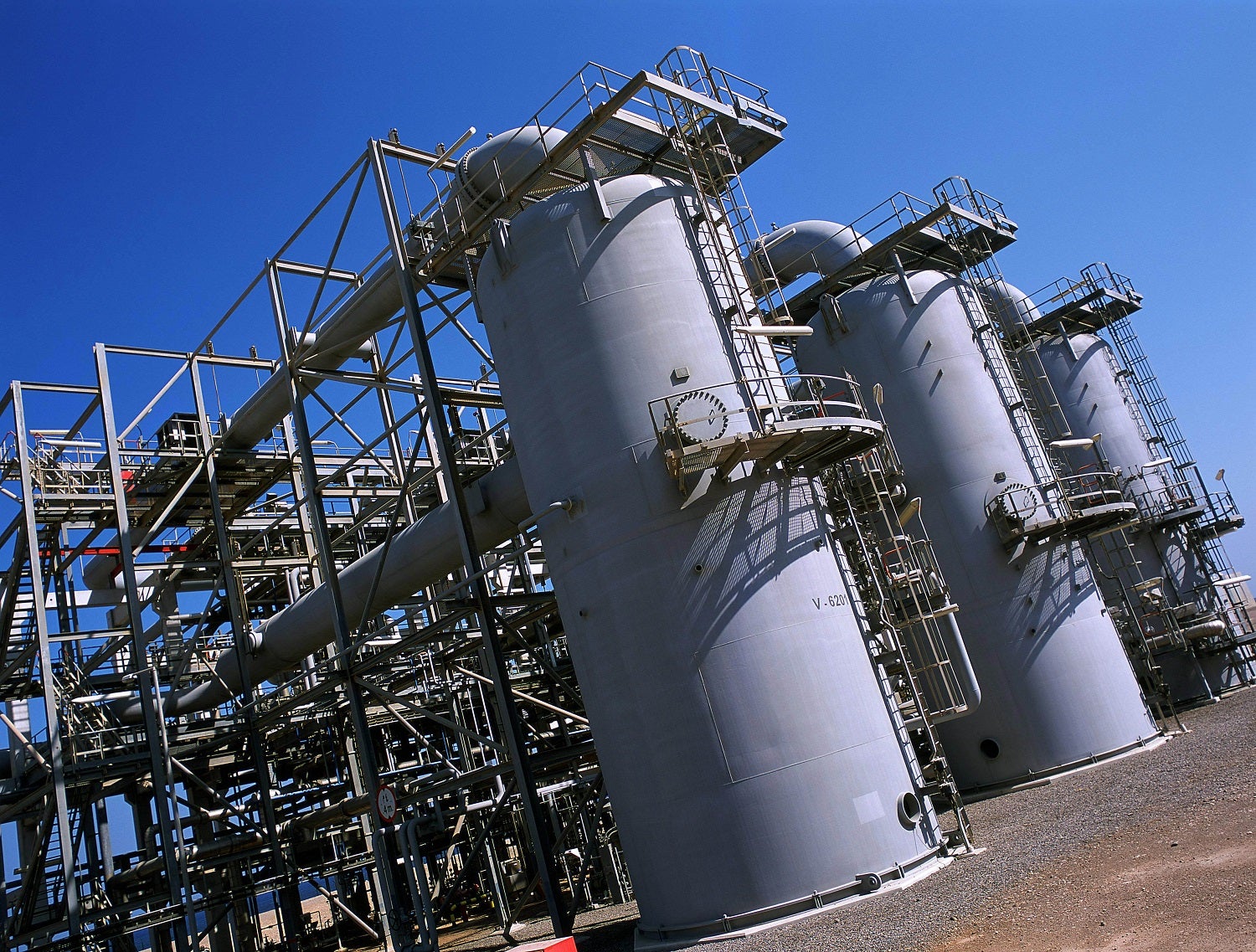
Petroleum Development Oman (PDO) has awarded the main contract for a project to build a facility to handle additional oil production from the Al-Ghubar field in the sultanate.
The Al-Ghubar field is located in the Ghaba Salt Basin at Qarn Alam, within majority state-owned PDO’s Block 6 concession area.
The Al-Ghubar gas-oil gravity drainage (GOGD) facility will be designed as a sour (hydrogen sulphide) facility and is expected to handle a maximum oil production rate of 1,800 standard cubic metres a day (cm/d), a total water flow rate of up to 10,421 standard cm/d and gas lift of up to 256,934 standard cm/d. Production from the planned Al-Ghubar GOGD facility will be exported to PDO’s main oil line.
China-based Jereh Group has won the contract for the Al-Ghubar GOGD facility project, sources told MEED.
A project kick-off meeting between PDO and Jereh has also recently taken place, the sources said.
MEED previously reported that Jereh had emerged as the lowest bidder for the project.
The following contractors, among others, are understood to have been bidding for the Al-Ghubar GOGD facility project:
- Engineering for the Petroleum & Process Industries (Egypt) / Petrojet (Egypt)
- GS Engineering & Construction (South Korea)
- Jereh (China)
- Larsen & Toubro Energy Hydrocarbon (India)
PDO floated the tender for the Al-Ghubar GOGD facility project in March, setting an initial bid submission deadline of 4 May, MEED previously reported.
PDO later extended the deadlines for the submission of technical and commercial bids to 26 July and 7 August, respectively. Contractors submitted technical proposals by the revised deadline, according to sources.
After receiving the technical bids for the project in July, PDO granted contractors until 16 August to submit commercial bids. It eventually extended the deadline to 1 September, with contractors submitting commercial proposals by that date, as MEED reported.
The scope of work on the Al-Ghubar GOGD project covers the engineering, procurement and construction (EPC) of the following:
- On-plot scope, consisting of:
- Production separator
- Test separator
- Concentric wash tank
- Wet oil pump
- Water bath heater
- Surge tank
- Gas injection/gas lift compressor (centrifugal)
- Utilities (instrument air compressors, chemical injection skids, drain system, vent system)
- Suction scrubber
- Air coolers
- Discharge scrubbers
- Condensate flash drum
- Atmospheric pressure knock-out drum
- Flare system
- Gas heater
- Water disposal pump
- Oil shipping pump
- 132kV substation and plant substation (housing 6.6kV and 415-Volt switchboard)
- Control room
- Off-plot scope consisting of:
- Off-plot pipeline network (bulk header, test header, gathering infrastructure/ gathering line header, instrument air header, water disposal header)
- Two remote manifold stations
- Tie-in connection to main oil line
- Tie-in to gas network pipeline
PDO previously intended to tender the Al-Ghubar GOGD project under its framework structure with selected EPC contractors, but ultimately tendered it separately.
PDO is the operator of Oman’s Block 6 hydrocarbons concession, the sultanate’s largest and most prolific concession. Situated onshore and covering an area of 75,119 square kilometres, Block 6 contains 202 oil fields and 43 gas fields. PDO produces approximately 680,000 barrels a day of oil and condensates from the fields.
The Omani government holds a 60% stake in PDO through Energy Development Oman. The other shareholders are UK-based Shell (34%), France’s TotalEnergies (4%) and Thailand’s state-owned PTTEP (2%).
https://image.digitalinsightresearch.in/uploads/NewsArticle/21345337/main2647.jpg -
Laing O’Rourke joins the international exit list
12 November 2026
Commentary
Colin Foreman
EditorRegister for MEED’s 14-day trial access
Laing O’Rourke’s decision to seek a buyer for its Middle East business marks the end of an era for UAE construction.
In the early 2000s, the contractor was among the leading names in the market. Its work at Dubai International airport, the Atlantis hotel on the Palm Jumeirah and the ski slope at Mall of the Emirates made it arguably the UAE’s most prominent contractor during the pre-global financial crisis construction boom.
Its activities were not limited to Dubai. A partnering agreement with Aldar for Al-Raha Beach then made it the most active contractor in Abu Dhabi almost overnight.
The global financial crisis changed its fortunes. The Aldar Laing O’Rourke joint venture ended. Unsettled by payment problems and wider stress in the industry, the company took a more cautious approach to clients and projects in the region. One executive at the time told MEED: “You might see lots of tower cranes, but none of them are doing work that we would want to do.”
The contractor’s appetite partially returned in the late 2010s, when it won Al-Wasl Plaza at the Expo 2020 site in Dubai. It also became a leading player in the growing data centre market, delivering facilities for repeat clients, including Khazna and Equinix.
Data centres have since been its focus. These are significant projects, but they lack the public profile of the airport, Atlantis and Al-Wasl Plaza. As its profile faded, the company sold its UAE joinery arm to Dubai-based Arco Turnkey Solutions in 2025.
Laing O’Rourke now looks set to follow other international contractors that have, for various reasons, left the region, including Murray & Roberts, Balfour Beatty, Multiplex, Carillion and Bam. With a record £17.2bn order book anchored by UK and Australian infrastructure, the group’s priorities clearly lie elsewhere.
Whoever buys the business will inherit strong data centre credentials. For much of the market, however, Laing O’Rourke will be remembered for the landmark projects that defined the UAE’s boom years.
https://image.digitalinsightresearch.in/uploads/NewsArticle/21344577/main.jpg -
Poland’s Orlen terminates QatarEnergy LNG supply deal
11 November 2026
Register for MEED’s 14-day trial access
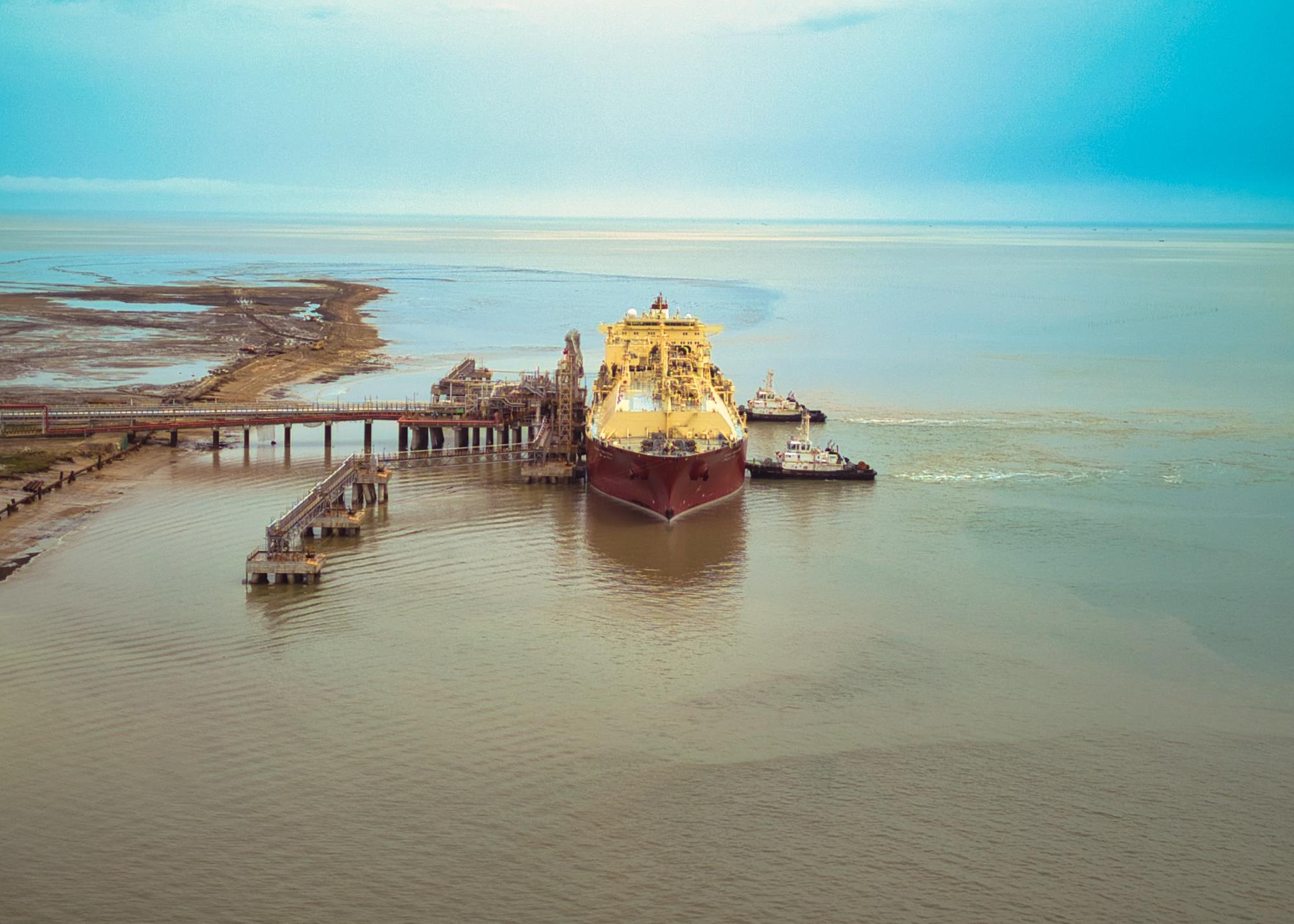
Poland’s Orlen has announced it has terminated one of two long-term contracts for the supply of liquefied natural gas (LNG) by QatarEnergy LNG, a subsidiary of state enterprise QatarEnergy. The termination follows an ongoing force majeure event “resulting in an inability to meet contractual delivery obligations”.
The agreement covered the supply of 1 million tonnes a year (t/y) of LNG, equivalent to approximately 15.3 terawatt-hours, with pricing linked to crude oil quotations. The estimated value of the agreement for 2026 is approximately €570m ($634.9m), Orlen said in a statement on 10 November.
The terminated agreement was originally signed by Polskie Gornictwo Naftowe i Gazownictwo and QatarEnergy on 29 June 2009. Deliveries under the agreement commenced in 2016 and were due to remain in force until 2034, the Polish energy company said.
The agreement will remain in force for a further 60 days following the notice of termination, Orlen said in its statement.
Orlen continues to honour its second agreement with QatarEnergy, which covers deliveries of up to 1 million t/y of LNG until 2034, under a pricing formula linked to gas price quotations.
“The decision to terminate the agreement does not affect the security of gas supplies. Gas production from the company’s own fields, together with its long-term gas supply agreements, ensures full coverage of Orlen Group’s gas requirements,” the company concluded.
It is not clear whether Orlen’s termination of one of its long-term LNG supply agreements with QatarEnergy is related to the Qatari energy giant declaring force majeure on two instances in March this year, when its energy infrastructure was hit in Iranian drone and missile attacks.
Force majeure episodes
On 4 March, QatarEnergy issued force majeure to customers that were affected by its decision to stop production and shipments of LNG and associated products after military attacks on the company’s operating facilities in Ras Laffan Industrial City and Mesaieed Industrial City in Qatar on 2 March.
Later that month, Qatar said Iranian missiles had caused extensive damage at Ras Laffan Industrial City on 18 March, with Saad Sherida Al-Kaabi, QatarEnergy’s CEO and Minister of State for Energy Affairs, saying that the Iranian strikes had knocked out about 17% of its LNG export capacity, causing an estimated $20bn in lost annual revenue.
At least two of Qatar’s 14 LNG trains and one of its two gas-to-liquids facilities were damaged in the Iranian strikes, Al-Kaabi told news agency Reuters at the time.
Repairing damaged assets will sideline 12.8 million t/y of LNG for three to five years, threatening supplies to European and Asian nations, including China and India, according to Al-Kaabi.
As a result, QatarEnergy said it would have to declare force majeure on long-term contracts for up to five years for LNG supplies bound for Italy, Belgium, South Korea and China. Poland was not specifically mentioned at the time.
“These are long-term contracts that we have to declare force majeure. We already declared, but that was a shorter term. Now it is whatever the period is,” Al-Kaabi said in March.
QatarEnergy currently has a nameplate LNG production capacity of 77.5 million t/y, with all its processing trains and export infrastructure located in Ras Laffan Industrial City, which lies about 90 kilometres to the north of Doha and is home to the largest LNG production and export facility in the world.
QatarEnergy’s LNG production capacity is on course to rise to 142 million t/y when the three phases of its $40bn North Field LNG expansion programme are commissioned by the end of the decade. Engineering, procurement and construction works on its North Field East, North Field South and North Field West projects are progressing, with the first phase expected to be operational by the end of this year.
https://image.digitalinsightresearch.in/uploads/NewsArticle/21333808/main2615.jpg -
Riyadh shifts bid deadline for King Salman Stadium works
11 November 2026
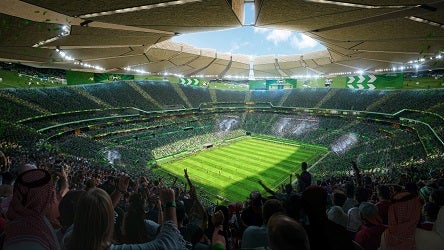
Saudi Arabia’s Sports Ministry has set a deadline of 1 December for a contract covering early works at the King Salman International Stadium in Riyadh.
The tender scope encompasses enabling works, site preparation and initial construction activities. The tender was issued on 11 October, carrying an initial submission deadline of 19 November. Contractors previously submitted prequalification statements for the main design-and-build contract in February.
Designed by US-based architectural firm Populous, the stadium will cover approximately 660,000 square metres (sq m), seat 92,000 spectators and stand adjacent to King Abdulaziz Park. Facilities will feature a 150-seat royal suite, 120 hospitality suites, 300 VIP seats and 2,200 dignitary seats.
The broader masterplan encompasses more than 360,000 sq m of ancillary facilities, featuring two training fields, fan zones, a closed sports hall, an Olympic-sized swimming pool, an athletics track, and outdoor courts for volleyball, basketball and padel.
Scheduled for completion by 2029, the venue will serve as the home base for the Saudi national football team and host the opening match and final of the 2034 Fifa World Cup.
Saudi stadium plans
In August 2024, MEED reported that Saudi Arabia plans to build 11 new stadiums and refurbish four existing venues for the 2034 tournament. Eight venues will be located in Riyadh, four in Jeddah, and one each in Al-Khobar, Abha and Neom.
An additional 10 cities will host team base camps: Al-Baha, Jazan, Taif, Medina, AlUla, Umluj, Tabuk, Hail, Al-Ahsa and Buraidah. Across the kingdom, organisers plan to deploy 134 training sites, comprising 61 existing facilities and 73 new builds.
Saudi Arabia was officially selected to host the 2034 Fifa World Cup during an online convention of member associations at the Fifa Congress on 11 December 2024.
https://image.digitalinsightresearch.in/uploads/NewsArticle/21325461/main.jpg